|
The Safer Mobility Report
The Latest in Vehicle Safety, Technology, and Policy
November 16, 2026
Issue #19
| |
From the Editor
A Step Forward But More Work To Do
| |
In a November 10th release the National Highway Traffic Safety Administration (NHTSA) estimated that road fatalities fell 2.5% in the first half of 2026, from 17,175 in the first half of 2025 to 16,750. NHTSA says this would be the second-lowest first-half total in US history and projections show lower fatality rates in 35 states and Puerto Rico.
Even so, far too many lives are still being lost.
In 2025, more than 36,600 people died in US road collisions, including over 6,700 pedestrians and over 1,100 bicyclists. Crashes remain at or near the top cause of death for Americans under 24, and most are linked to impairment, distraction, speeding, or not wearing a seatbelt.
How do we keep moving toward a safe system approach and make roads truly safer?
We should look to communities where local government, residents, and safety advocates work together to promote what works, regardless of federal or other pressure against these tools. We should highlight places that apply the safe system approach as a whole, then double down on what works and expand it beyond what we think is possible.
We need more protected bike lanes and we must resist efforts to remove them.
We need to expand automated enforcement cameras for speeding and red-light violations and explain how they differ from cameras like Flock.
We need more road diets to slow down traffic, allow for more pedestrian and bicyclist friendly spaces, and we need to expand daylighting so that all road users can better see around corners.
We need to advance truck redesign in the US toward better driver visibility and equip trucks already on the road with life saving technologies such as surround-camera systems. Vulnerable road users need more protection, such as alert systems and visible virtual barriers that tell bicyclists when trucks are turning, and more US trucks need sideguards to keep pedestrians and bicyclists from being trapped between the front and rear wheels.
We need to stop super speeders with laws requiring intelligent speed assistance for repeat offenders, particularly those who speed in school zones.
And we must find technology solutions for distracted and impaired driving and get them into vehicles without delay.
Fleets can act on many of these measures now, without waiting for an executive order, new regulation, or local or state law. If resources are limited, start small and prioritize what matters most. Begin with the basics: telematics, standardized global crash reporting, and driver training and development. Then build a safe fleet transition plan, test and evaluate it, and either adjust course or expand.
NHTSA's news is promising, but much more remains to be done.
Our lives depend on it.
| |
Feature Story:
Uber Launches Global Coalition to
Advance Motorcycle Safety
By Kristin Smith
Head of Road Safety Policy, Uber
(Originally Published on Uber Newsroom
November 12, 2026)
| |
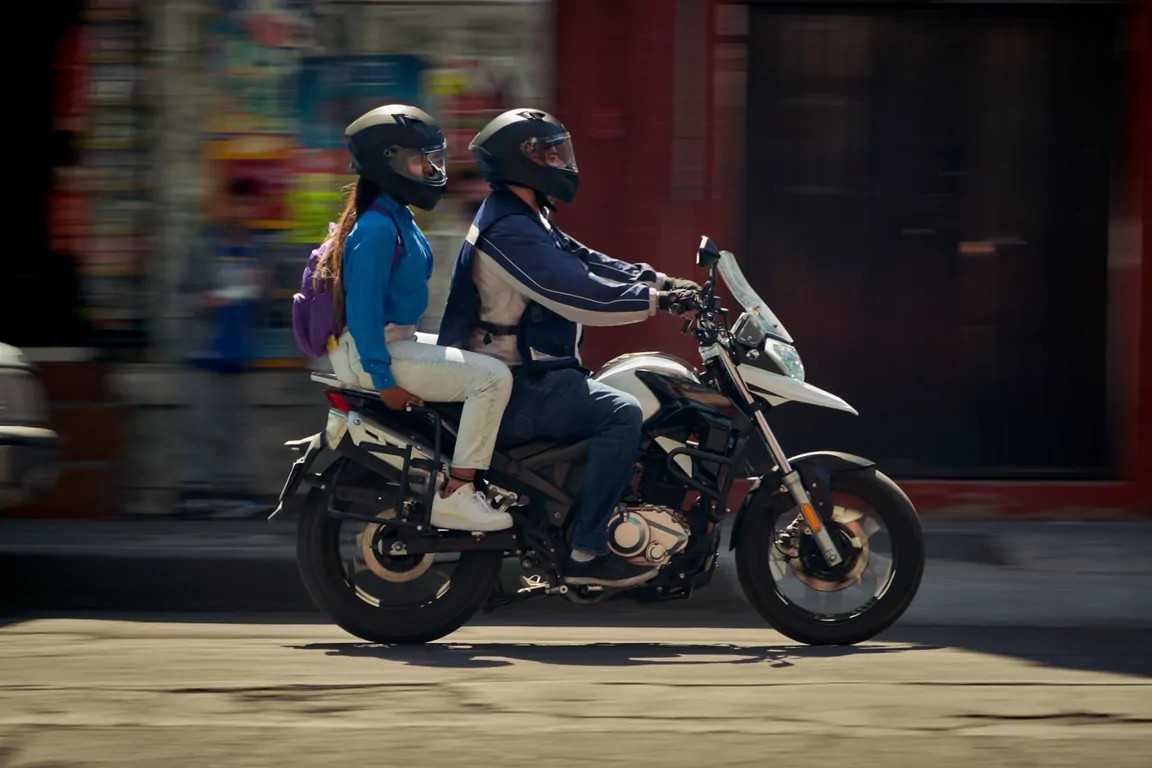
Motorcycles help millions of people around the globe get where they need to go and earn a living.
Today, we’re launching the Global Motorcycle Safety Coalition, with Honda Brazil, the Fédération Internationale de l’Automobile (FIA), the International Road Assessment Programme (iRAP), and the Global Alliance of NGOs for Road Safety.
Together, this coalition will work on practical ways to improve motorcycle safety, starting in Brazil and expanding to other countries over time. Our shared focus is on better training, safer roads and policies that improve safety for motorcycle drivers, passengers and others sharing the road.
Since launching in 2016, Uber Moto has connected people with affordable motorcycle trips and given drivers a way to earn, while bringing safety tools such as Share My Trip and RideCheck to those journeys. Without the protection of a car, motorcycle drivers and passengers are especially vulnerable to speeding, dangerous intersections and unsafe road conditions.
"Motorcycles are essential to how millions of people move and earn a living, but they also represent one of the greatest challenges in global road safety," said Annie Duvnjak, Global Head of Safety, Uber. "Uber has an opportunity and a responsibility to help change that. By bringing together leading organizations across the road safety ecosystem, we can address risks that no single company can solve alone and make motorcycle transportation safer for everyone."
A shared approach to safety
The coalition brings together expertise in motorcycle safety and training, road infrastructure, safety standards and advocacy, and Uber’s commitment to support safety with technology.
Our work will follow the Safe System Approach, which recognizes that roads, vehicles, speeds and road users all have a role in preventing deaths and serious injuries. That means looking at the whole journey: how a driver prepares to carry a passenger, the roads they travel and the conditions they encounter along the way.
Starting in Brazil
Brazil will be the first country where we put this collaboration into practice, with an initial focus on Rio de Janeiro. The launch comes alongside an Uber Moto product event in Brazil, where we’re also introducing new safety features — including moto safety preferences, a driver bluetooth button to reduce phone interaction, and women-recommended moto drivers.
"Motorcycle transportation is essential to daily life in Brazil, and as Uber Moto grows, we're investing in technologies and partnerships to make these journeys safer. " said Silvia Penna, General Manager, Uber Brazil. "We're proud that Brazil will be the first country to put this global coalition into action, combining international expertise and local leadership to address some of our most pressing road safety challenges."
Honda Brazil: Expanding motorcycle driver training
Honda Brazil will bring its longstanding expertise in motorcycle safety education to the coalition, offering hands-on training tailored to transporting passengers. The program will cover defensive riding, braking, navigating intersections, motorcycle maintenance and protective equipment.
The first phases aim to reach 1,250 Uber Moto drivers in Brazil through Honda's rider training facilities, mobile training events and online education. Uber and Honda Brazil will assess the program's impact and explore opportunities to expand motorcycle safety training across Brazil.
"Improving motorcycle safety requires collaboration across the entire road safety ecosystem," said Leonardo Almeida, Brazil Training Manager, Honda Brazil. "Through this partnership with Uber, we're bringing Honda's decades of motorcycle safety expertise directly to the drivers who transport passengers every day. By expanding access to practical training and education, we can help make motorcycle transportation safer across Brazil."
FIA: Advancing driver training and safety standards
Uber will work with FIA, the governing body of Formula 1 motorsports, and its Brazilian Auto Clubs to offer in-person motorcycle safety training, drawing on their local expertise and facilities.
We’ll also explore how the FIA Road Safety Index can better account for motorcycle safety and help strengthen safety practices across motorcycle ride-hailing and delivery services. This builds on Uber’s three-star rating—the highest available—in the Index’s independent assessment of its global mobility operations, including both car and motorcycle services.
"The private sector has a critical role to play in improving road safety as motorcycle ride-hailing and delivery services continue to grow," said Luca Pascotto, Head of Road Safety & Global Advocacy, FIA. "Through the FIA Road Safety Index, we help companies strengthen their safety practices and advance higher standards for motorcycle safety. It is encouraging to see Road Safety Index awardees Uber and Honda Brasil working together to advance motorcycle road safety agenda in Brazil, with the active involvement of local FIA Member Clubs in rolling out the FIA Road Safety Index across the country and driving broader engagement from the private sector."
Source: Uber Newsroom
Click here to read more
| |
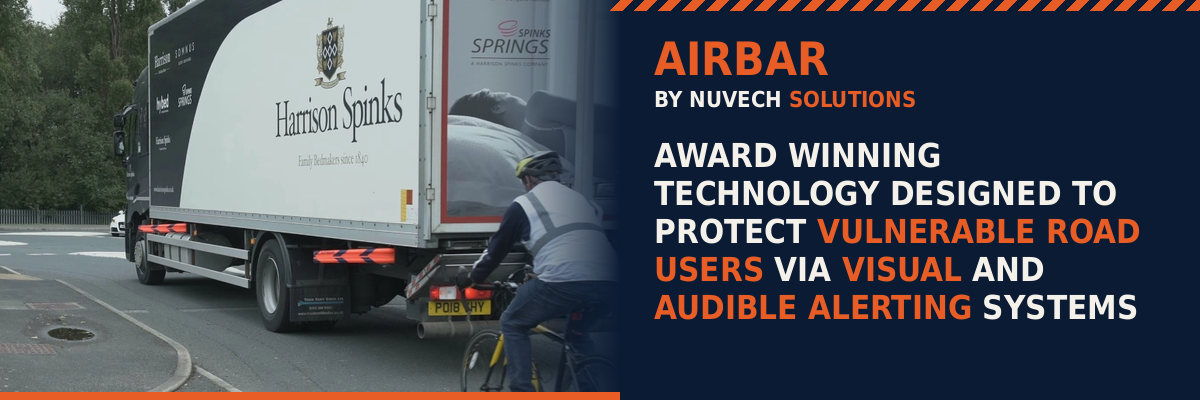
Roadside workers, including tow truck operators, food and freight delivery drivers, waste collection workers, and fuel delivery teams, often have to work right beside live traffic, where a single distracted driver can be deadly. Far too many of these workers are struck and killed while carrying out essential services and emergency services. The AirBar by Nuvech Solutions is an inflatable, high-visibility warning system with built-in LEDs. It signals approaching drivers that people are working in the roadway, helping them react sooner and lowering the risk of a crash.
The AirBar also protects cyclists who may be passing or riding close to a truck. When a truck is making a turn at slow speeds AirBar will deploy and its bright, inflatable profile and LED lighting make the maneuver easy to spot, so bike riders can see what the vehicle is about to do and steer clear of the danger zone beside it. That added visibility helps prevent one of the most common and most deadly types of collisions between large trucks and cyclists.
To learn more click here.
| |
CoMotion LA 2026 will take place on November 18th and 19th at and surrounding the Japanese American National Museum and Museum of Contemporary Art in the heart of Little Tokyo, DTLA
Over 1,200 world leaders in transportation, road safety, technology, infrastructure, and government are expected and CoMotion LA is a great opportunity to connect with these experts to discuss how AI, mega-events and new forms of mobility are reshaping how cities move people and goods. With Los Angeles preparing for a defining decade of global events, the conversations will move beyond ideas to the projects, decisions, and collaborations needed now.
Speakers include Mayor Rex Richardson, City of Long Beach; Andrew Glass Hastings, Executive Director Open Mobility Foundation; Dani Simons VP Communications and Public Affairs, Alstom;Tiya Gordon, Co-Founder and COO of it's electric; Karina Ricks, Partner, Cityfi Advisors; Leah Shahum, Founder and Director of the Vision Zero Network; Steve Greenfield, General Partner, Automotive Ventures; Ryan Russo, VP Public Sector Strategy and Partnerships, Revolution; Paul Comfort, Host and Producer of Transit Unplugged; Doug Bermudez, MSM, Chief, Fare Programs and Customer Experience Miami-Dade County DTPW, and many more.
Click here for more information
You can also read my Q and A with CoMotion Founder and CEO John Rossant here.
|
National Sleep Foundation’s 2026 Drowsy Driving Report
Drowsy driving remains a major public health and safety issue in the United States. More than 1 in 5 crash-related fatalities are linked to drowsy driving. That means thousands of people die each year from this preventable form of driver impairment. Many in the United States have likely experienced some level of impact from drowsy driving, whether it has directly affected them or their loved ones.
It’s everyone’s responsibility to help prevent drowsy driving, starting with getting enough quality sleep to be alert behind the wheel. The best way to avoid drowsy driving is to Sleep First. Drive Alert. Many U.S. adults continue to drive while drowsy, and most don’t reliably recognize the signs that they’re too tired to be behind the wheel.
Each year, NSF surveys Americans about drowsy driving beliefs, awareness, and behaviors. For the first time, the 2026 survey asked Americans how ready they are for vehicle technology and policy to help prevent drowsy driving.
Source: National Sleep Foundation
Click here to read more
Bogotá’s Motorcycle Boom and Growing Road Safety Crisis
Driving through Bogotá is stressful enough, with roadworks, concerns over personal safety and rush-hour gridlock confronting motorists at almost every turn. Yet private car owners must contend with another increasingly visible challenge: swarms of motorcycles jostling for pole position at traffic lights and weaving through congested lanes. Once dominated by private cars, buses, taxis and bicycles, the Colombian capital is experiencing a rapid expansion in motorcycle traffic, transforming not only how residents move around the city but also the nature of its road-safety crisis.
The motorcycle has become an increasingly affordable alternative for thousands of Bogotá residents seeking to meander gridlocked traffic, reduce commuting costs and navigate a city where travelling relatively short distances can consume hours. Yet the rapid growth of two-wheeled transport is producing a troubling contradiction: the vehicle that promises greater mobility is increasingly associated with collisions, injuries, fatalities and the disruption of traffic across the capital. According to the Registro Único Nacional de Tránsito (RUNT), Bogotá ended 2025 with 517,725 registered motorcycles. However, the effective number circulating on the city’s roads is considerably higher when motorcycles registered in neighboring municipalities but used daily in the capital are included. Estimates published in 2026 put that figure above 550,000.
The expansion is part of a national phenomenon. Colombia closed 2025 with more than 13.5 million registered motorcycles, representing approximately 63% of the country’s registered vehicle fleet. In Bogotá, the growing presence of motorcycles is increasingly visible on major arterial roads, where the traditional relationship between private vehicles and motorcycles is being tested by limited road space and increasingly aggressive driving practices. The consequences are reflected in the mortality figures. Bogotá recorded 612 traffic-related deaths in 2025 according to preliminary figures from the city’s Health Observatory, drawing on data from the National Forensic Institute – Medicina Legal. Motorcyclists now represent 45.1% of fatalities, while pedestrians account for 39.54%. Men represent more than three-quarters of all victims.
Source: The City Paper
Click here to read more
iRAP and China’s Research Institute of Highway Renew Landmark Partnership To Accelerate Safer Roads
The International Road Assessment Programme (iRAP) and China’s Research Institute of Highway (RIOH) have signed a renewed Memorandum of Understanding (MOU) in London, reaffirming their nearly 20-year partnership and shared commitment to eliminating high-risk roads and preventing deaths and serious injuries in China and globally.
Building on a collaboration formalised in 2009, the agreement recognises RIOH’s continuing role as an iRAP Centre of Excellence and ChinaRAP’s contribution to safer roads. It strengthens cooperation in road safety research, assessment, innovation, technology, strategic investment and capacity building.
Over nearly two decades, the partnership has helped embed road safety assessment into China’s national approach to infrastructure design and management. More than 300,000 kilometres of roads have been assessed across China, with ChinaRAP supporting successive phases of the country’s Highway Safety Enhancement Project (HSEP), including the identification and treatment of high-risk roads and the integration of Star Rating targets into infrastructure investment.
Source: iRap
Click here to read more
| |
Together For Safer Roads
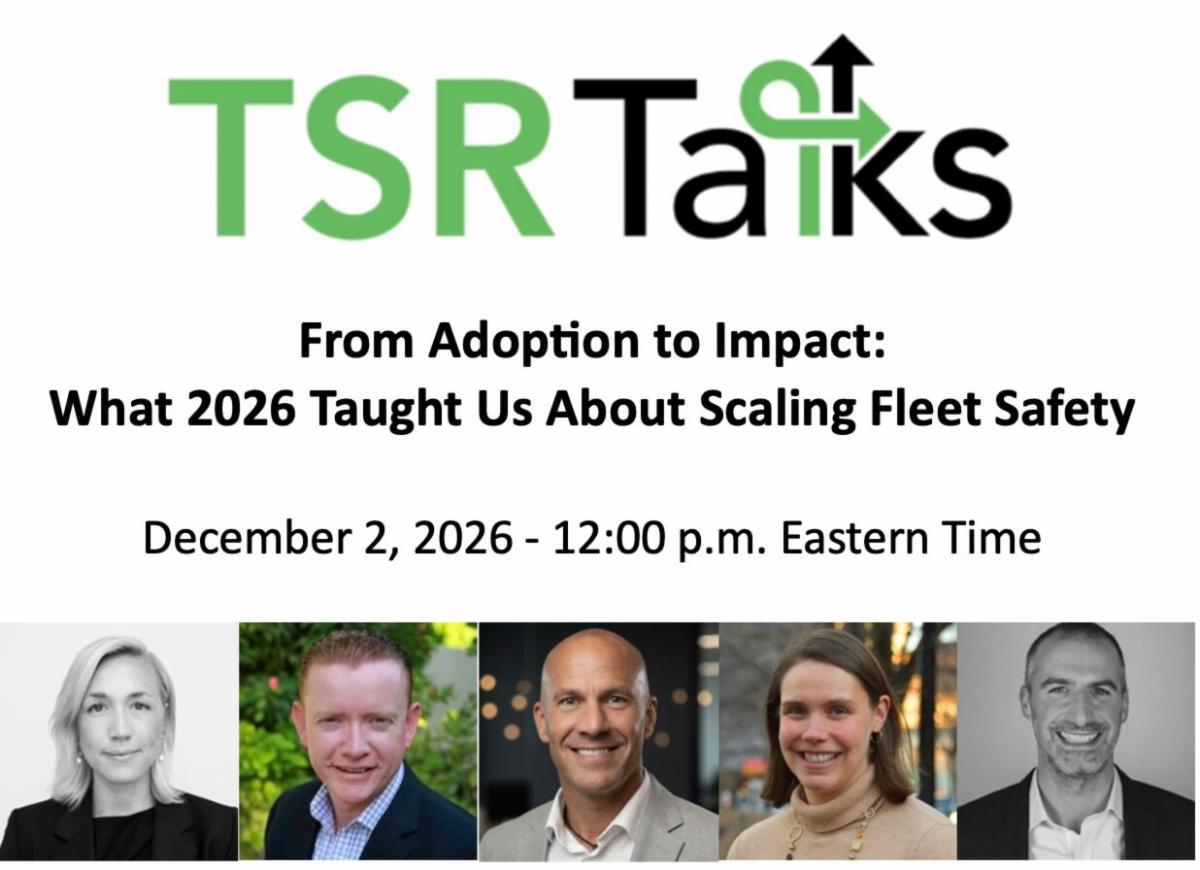
TSR Talks Webinar
“From Adoption to Impact: What 2026 Taught Us About Scaling Fleet Safety”
| |
Fleet safety has no shortage of promising technologies, policies or proven practices. The harder challenge is moving them from pilots and individual vehicles into sustained use across entire fleets, industries and markets.
This year-end TSR Talks, being held on December 2nd, will explore what 2026 taught us about making that transition—and what fleet leaders, manufacturers, technology providers and public agencies can do differently in 2027.
Bringing together perspectives from vehicle design, large-scale fleet operations, AI and safety data, and the public-sector, the discussion will focus on three connected themes:
Designing and identifying safer solutions is only the beginning.
Safer cab design, improved direct vision and AI-based risk analysis offer different ways to address fleet safety challenges. Their impact depends on how well they respond to operating conditions and driver needs, and whether organizations can put them to practical use.
Adoption becomes impact through everyday fleet management.
Purchasing a safer vehicle or introducing a new data platform creates an opportunity. Realizing that opportunity requires driver engagement, training, coaching, maintenance and management accountability.
Organizations have more power to help safety scale than they may recognize.
Public agencies and private fleets influence safety through the vehicles they purchase, the fleets they operate, the expectations they set and the information they use and share. Those decisions can help safer practices spread across industries and markets.
Participating road safety leaders:
Johanna Forseke, Chief Executive Officer, Greater Than
Cormac Gilligan, Global Head, Health and Safety UPS
Bryan Fenster, Product Manager, Connected Fleets McNeilus Truck and Manufacturing, Inc.
Angie B Byrne, Safety Practice Lead, Toole Design, Inc.
Moderated by Peter Goldwasser, Executive Director, Together for Safer Roads
Click here to register
| |
November 16
Cities & States Lean into Vehicle Safety Strategies
Vision Zero Network Webinar
Click here for more information
November 18
Public Sector Vehicle Forum
Leicester Tigers Stadium, United Kingdom
Click here for more information
November 18-19
COMOTION Los Angeles 2026
Japanese American National Museum and Museum of Contemporary Art in the heart of Little Tokyo, DTLA
Click here for more information
December 16-17
National School Bus Safety Summit
Washington, DC
Click here for more information
January 10–14, 2027
Transportation Research Board (TRB) Annual Meeting
Washington, D.C.
Click here for more information
January 19, 2027
Vision Zero Peer Cities Webinar
Insights from Helsinki, London, Auckland, and more
Co-hosted by ProjectEDWARD and EBR Safety Solutions
Click here for more information
February 9, 2027
ITE Webinar: Safe for Whom?
Vehicles as the Overlooked Variable in Safe System Implementation
Click here for more information
| |
|
About the Safer Mobility Report
The Safer Mobility Report exists to bridge the gap between innovation and implementation. We will be sharing the technologies, policy discussions, research, and real world applications that can help companies, organizations, governments, and professional fleets make transportation safer. If one idea, technology, or shift in thinking saves one life, it will more than justify this effort.
| | | | |