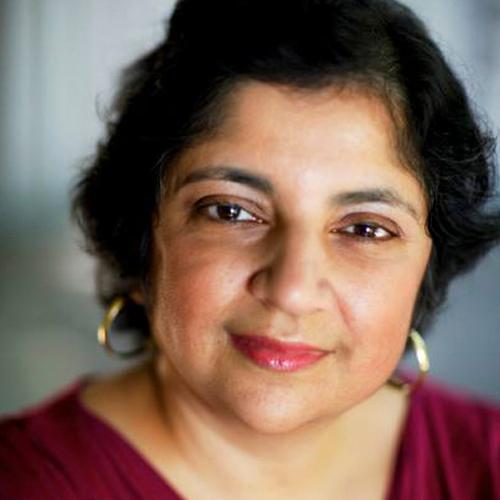
Madhulika Sikka is a media executive.
(Photo by Kainaz Amaria)
|
|
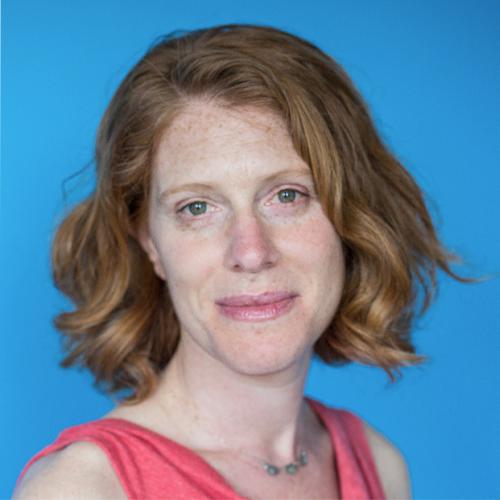
Alison MacAdam is a freelance editor.
(Photo by NPR/Bria Granville)
|
|
When executive editor Dean Baquet went on “The Daily” to discuss the decision, he seemed to suggest that the news organization was still learning how to apply the same standards and practices to audio as it did to other storytelling. This week, 20 of the largest public radio stations sent a letter to the Times, objecting to the lack of transparency in that episode of “The Daily,” which the stations had aired, and to the ongoing prominence of audio producer Andy Mills. The Times has apologized, and in a response today to the Public Radio Program Directors Association, assistant managing editor Sam Dolnick, a member of the family that owns the news organization, said, “Please also be assured that our standards are the same in audio as they are across all of The New York Times.”
There’s a long journalism tradition of investigative storytelling told through audio, so we asked veteran editors Madhulika Sikka and Alison MacAdam to describe the editorial process for producing airtight programs. Sikka is now executive editor at Crown Publishing and previously worked at the Washington Post as an executive producer for audio and at NPR as the executive editor of the newsroom; MacAdam is a freelance editor working on longform audio journalism, formerly senior editor of NPR’s “All Things Considered” and NPR’s audio storytelling trainer. MacAdam co-edited the investigative podcast, “Believed.”
Can you walk us through the basic steps of fact-gathering and verification for a podcast series? In what ways is this process similar to and different from reporting for print and other platforms?
Sikka: I actually don’t think it’s different. We’re all trying to do the same thing, which is to tell stories that stand up to the rigor of journalism that we would apply to any medium. I think that’s what sparked my concern about that [Dean Baquet] quote that I highlighted in the tweet, this idea that it has to be something different. It doesn’t, I mean the core is still the same. I just don’t think there are different rules for different media. …
When you’re a text-first organization, going into new platforms, don’t be beguiled or dismissive of these other platforms. Just do the same kind of journalistic work that you would be doing and make sure that you have professionals at every level who understand what it is you’re doing and how best to present the story in this medium.
MacAdam: It depends on what you are making. More podcasts call themselves “investigative” these days than actually are. But if you are genuinely investigating something in a journalistic way, the same rules apply as they would in any medium. Can you articulate the big idea of the story/series (i.e. What are you revealing/exposing? What is wrong or bad? Why does it matter?)? Are your conclusions supported by your evidence? And then, can you stress-test them against alternative explanations and evidence? Also, good fact-checkers rule!
What can be vastly different from print is the audiocraft all this reporting entails. But that’s a whole other Q&A!
What are your top tips for editing investigative work rigorously when presented in podcast form?
Sikka: Did you ever listen to “Believed?” It was a podcast about the U.S. gymnastics team and the doctor [Larry Nassar]. It used the voices of the young women who were treated by him and what he did to them. It looked at documents, court records, police records — just exactly what you’d do for any kind of story. I think we go off on an unnecessary side road if we somehow justify something going wrong in one medium as being a result of the fact that it’s on that medium. A newsroom project is a newsroom project is a newsroom project. I just don’t buy the idea that there’s something different and distinctive that you have to do in terms of your core investigative challenge, and how you tell a story is different, but the core of it — ultimately it has to be right. And it has to be right whether you put it in a tweet or whether you put it in a podcast or whether you put it in a 5,000 word story in a Sunday paper or a one-hour documentary on TV. It has to be right.
MacAdam: One of the editor’s jobs is to maintain enough distance to be able to respectfully challenge reporters and producers if they haven’t yet presented an airtight story. And to support them and insulate them from other pressures, so they can achieve the strongest, truest version of their story.
Another tip is to think hard about the complicated relationship between journalism and storytelling. Sometimes they work hand-in-hand and sometimes they conflict. Editors have to be clear-eyed about those conflicts and work to reconcile them.
For example, narrative storytelling (in all mediums) is usually character-driven, and individual characters stand in for larger truths. That’s essential for telling a compelling story, but it’s also problematic because no one person can perfectly represent the truth of a collective. So editors need to make sure they understand each character’s role and what the characters are intended to represent, to seek evidence that might undermine that representation, and to decide how to express those facts in the story. Or to remove the character from the story.
Here’s one last tip about transparency: Sometimes we avoid facts because they don’t fit neatly into our narrative; every podcast must leave things out. At the same time, we can’t let the rules of narrative stop us from telling complex truths. When you need to explain something complicated, you can often resolve that by simply telling your listeners. It’s OK to pause the narrative and be transparent with your audience about the reporting you’ve done, what you don’t know, and what you want them to understand. As long as you can still stand by your reporting, this transparency builds trust with the listener.
What did you learn about investigative podcasts since “Believed” was released?
MacAdam: Mostly, I’ve learned that very few podcasts like “Believed” exist. They take years to make, multiple talented staffers, and incredibly careful work. They cost a lot of money, and they are not sure financial hits. Few organizations — beyond NPR and its member stations, APM Reports (which produces the excellent “In The Dark”), Serial Productions, “99% Invisible” and “Reveal” — have a track record of making that kind of investment, though more are emerging. And that’s exciting!
I’ve also come to feel frustration with the conflation of investigative podcasts with the “true crime” genre. True crime is a popular entertainment category, but it is an uncomfortable fit for public service investigative journalism. I hope as the industry surrounding on-demand audio develops, companies will see the value of investing in investigative journalism that teaches us about the world and holds the powerful accountable.
|
|
We start 2021 with a COVID vaccine, but the rollout has been slower than planned and a coordinated public health communication effort is needed to convince people to get vaccinated. Public opinion research shows a number of challenges: some people are justifiably skeptical of “big Pharma” and government; others are actively working to spread disinformation about the vaccine; and many remain unconvinced of the vaccine’s safety. What is being done to overcome these challenges, how can communicators be most effective, and how can reporters best cover the vaccination story and combat the disinformation?
Join the National Press Club Journalism Institute and the National Press Club Communicators Committee for a candid conversation on the COVID vaccine: Communication challenges for public health efforts & reporters. Registration is now open for this program, which will take place from 12-1 p.m. EST on Wednesday, January 13, 2021.
The panel will feature Jesse Holland, Assistant Professor of Journalism at George Washington University, author, scholar and African American history expert; Nick Sugai, Vice President at the Ad Council, which is leading a national public education campaign to encourage vaccination; Susan Winckler, CEO of the Reagan-Udall Foundation for the Food and Drug Administration, who will share public opinion research on the vaccination. The conversation will be moderated by Alison Fitzgerald Kodjak, Investigations Editor at The Associated Press, and the 112th president of the National Press Club.
|
|
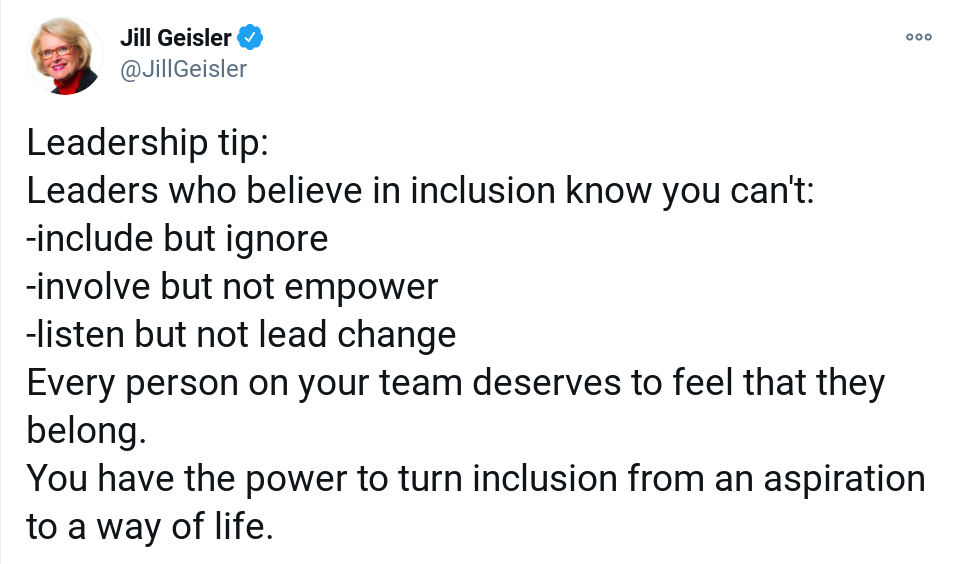
Belonging means having more than a seat at the table — it’s having your ideas, concerns and needs heard and put into action. Good leaders know that their day-to-day decisions turn inclusive conversations into teammates’ feeling genuinely valued — and that’s a way of life that we can all get behind.
Advice from Jill Geisler, Bill Plante Chair in Leadership & Media Integrity, Loyola University Chicago, Freedom Forum Fellow in Women’s Leadership
|
|
|
This newsletter is written & edited by the National Press Club Journalism Institute staff: Beth Francesco, Holly Butcher Grant, and Julie Moos. Send us your questions and suggestions for topics to cover.
|
|
|
|
|
|
|