Roller Compacted Concrete Pavement Council | | |
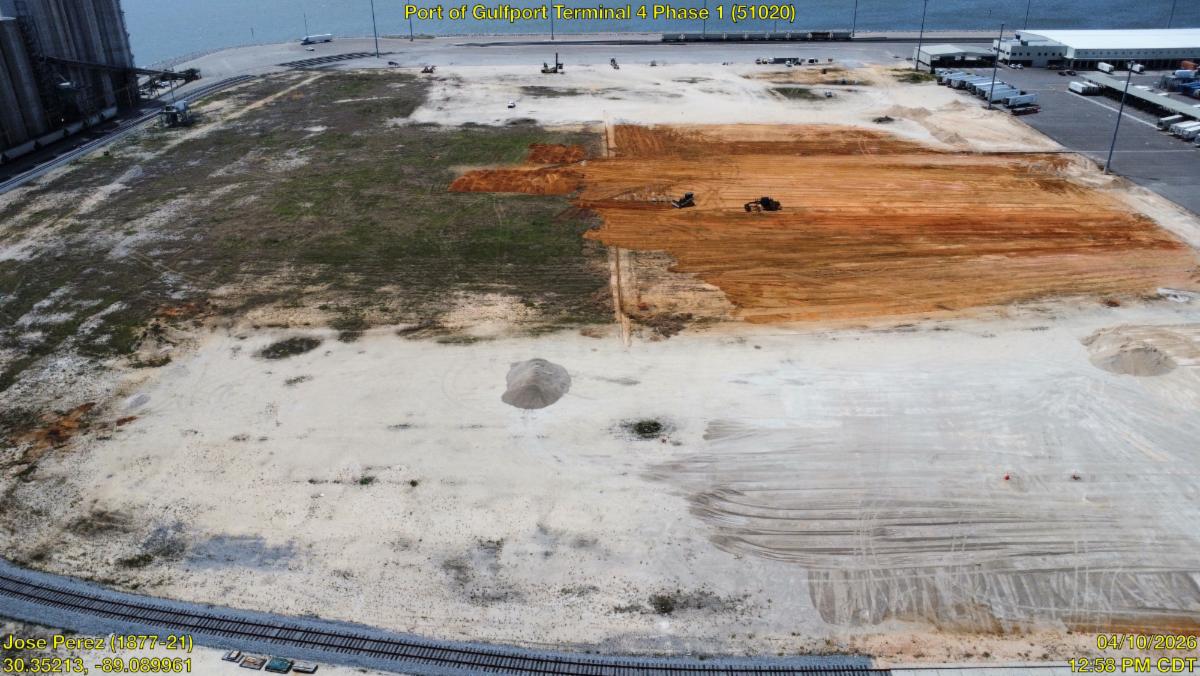
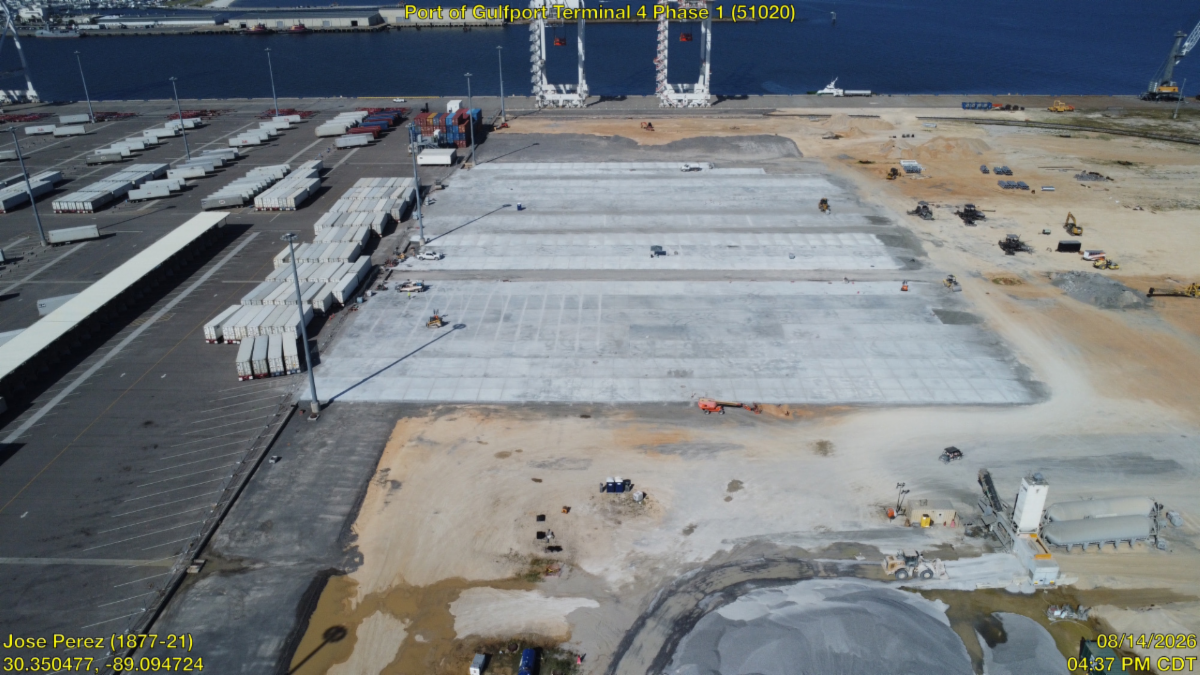
Port of Gulfport — West Pier Terminal 4,
Phase 1 — Gulfport, Mississippi
| | With Rollcon, LLC serving as general contractor and paving contractor, and an engineering team spanning Hatch, Nigel Nixon Partners, and Chiniche Engineering, West Pier Terminal 4 Phase 1 stands as another example of how RCC delivers mission-critical infrastructure on demanding schedules — even when the jobsite doubles as an active operational environment. | | RCC Pavement Council News & Events | | |
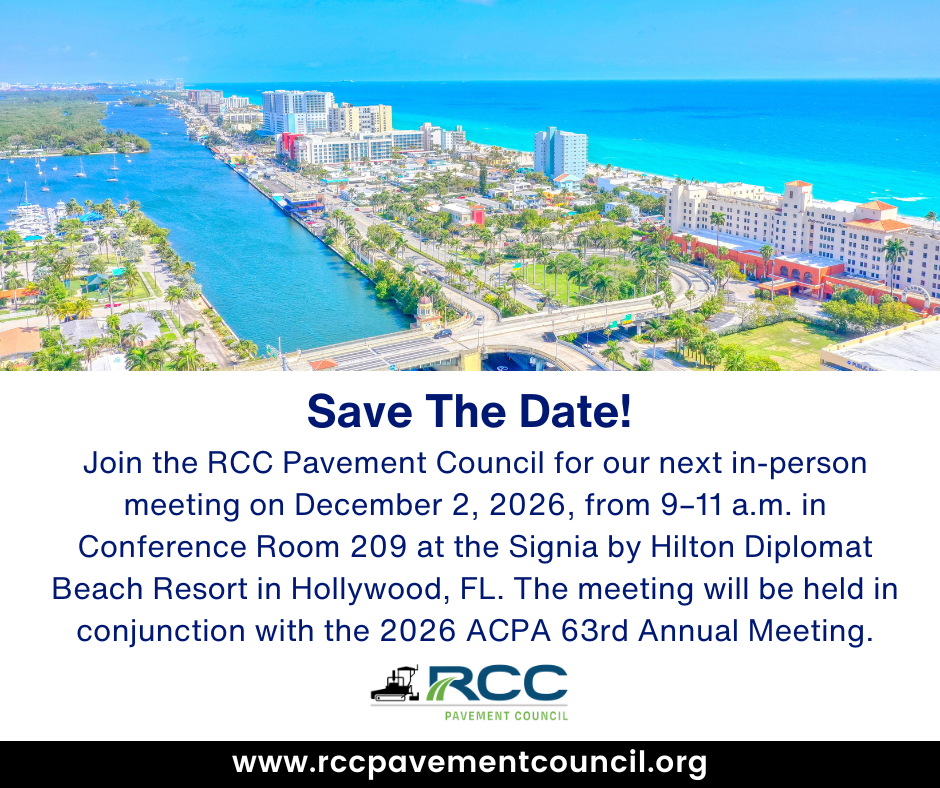
Save the Date! Join the RCC Pavement Council at their next in-person meeting on December 2nd, 2026, at the Signia by Hilton Diplomat Beach Resort in Hollywood, FL, held in conjunction with the 2026 ACPA 63rd annual meeting.
Register for ACPA’s meeting here.
| Will we see you in Raleigh this December? | |
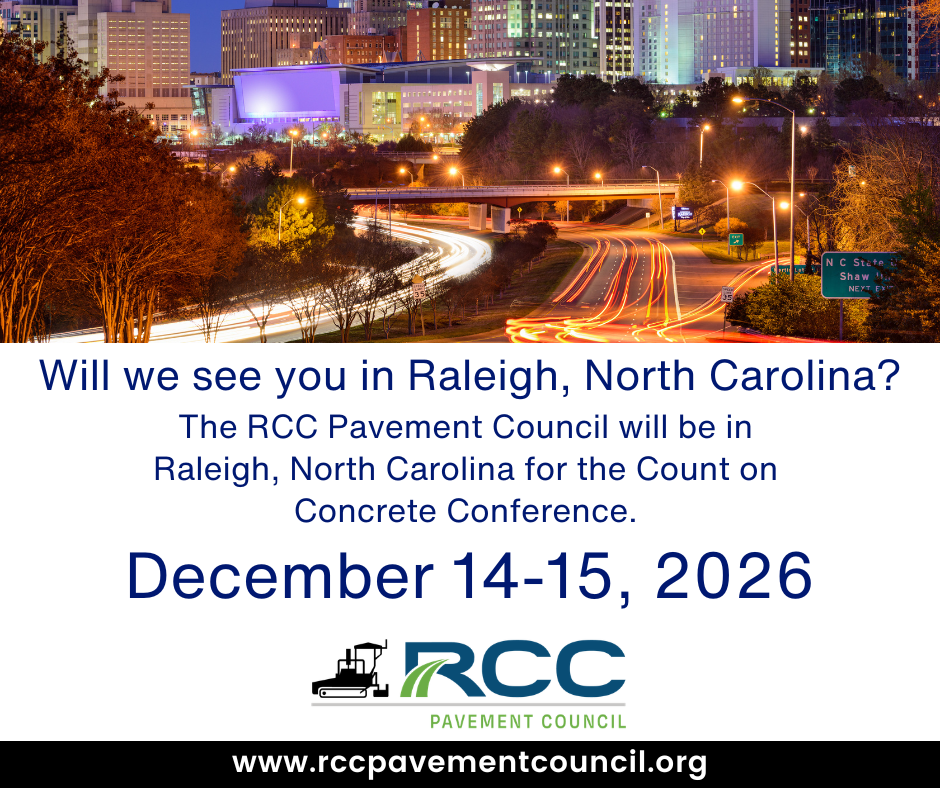
The Count on Concrete Conference has moved from January to Dec. 14-15, 2026, at the McKimmon Center in Raleigh, North Carolina. The RCC Pavement Council is proud to be a sponsoring partner for this event, which brings DOT and industry professionals together to share practical advances in concrete infrastructure.
Plan to attend the RCC session on Dec. 15 from 11:30 a.m. to noon: "I-40 Recovery from Hurricane Helene: A Look Back and Forward, RCC Use for Slope Protection." Josh Deyton of NCDOT and Blake Soblesky of RS&H will discuss how roller-compacted concrete is helping protect slopes along a critical corridor.
For agencies planning disaster recovery or long-term resilience work, this session offers real-world insight from the field. DOT and government employees can register for $175, and the conference offers 5 PDHs.
We look forward to connecting. Register here..
| | | RCC Resources Available for You! | | How Port Houston builds heavy-duty container terminals with roller compacted concrete | |
Port Houston sits 50 miles inland, yet it leads the nation in general cargo and ranks third in container volume. This video shows how roller compacted concrete (RCC) lets the port's container terminals carry extreme loads on some of the most difficult soils in the U.S.
Civil engineers, contractors, DOT decision-makers and pavement specialists will see the full heavy-duty pavement system, from subgrade to surface.
You'll see how engineers design for expansive clays with a plasticity index of up to 70, along with dredged soils that are unsuitable for construction. The video walks through how the pavement section is layered—lime- and cement-treated subgrade, a geotextile, 4 inches of ballast rock, 12 inches of cement-treated base and 18 inches of RCC placed in two 9-inch lifts. You'll also learn how RCC is produced in on-site pugmill plants, placed with high-density pavers and compacted to as much as 98% of reference wet density, what the design requires in terms of 5,000 psi compressive strength and 550 psi flexural strength at 28 days, and why the port omits saw-cut joints and lets the RCC develop tight, natural cracks.
Each top loader wheel carries 75,000 pounds. Containers stacked five high place about 60,000 pounds on each corner. On shifting soils, conventional roadway pavements cannot carry these loads without serious damage and disruptions to port operations.
RCC needs no forms or reinforcement. It also gains enough strength to support construction traffic within three to four days. Port Houston has placed nearly 500,000 cubic yards of RCC since 2008, giving it a proven record of durable, high-performance pavement that keeps cargo moving.
| | | Have you used our project sheets yet? | |
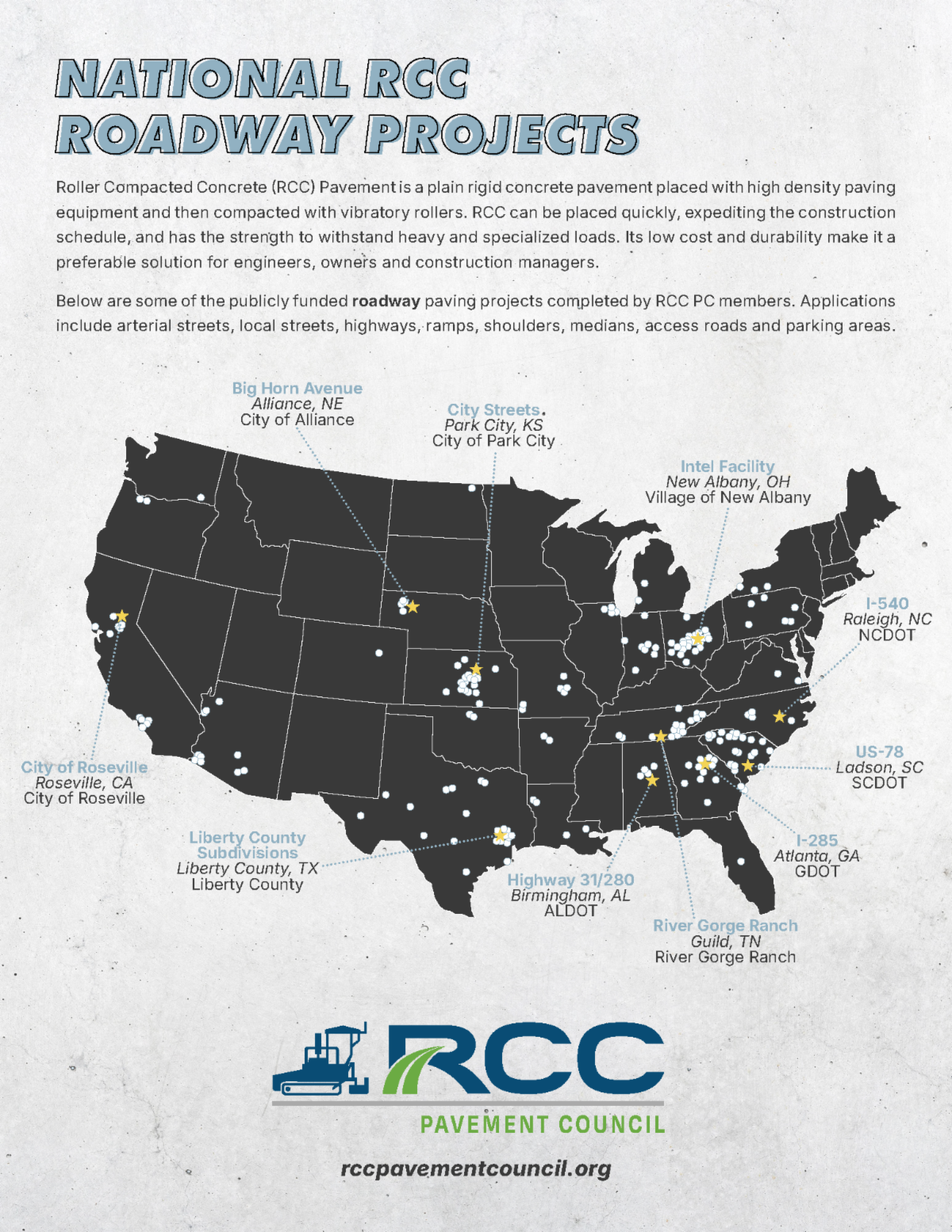
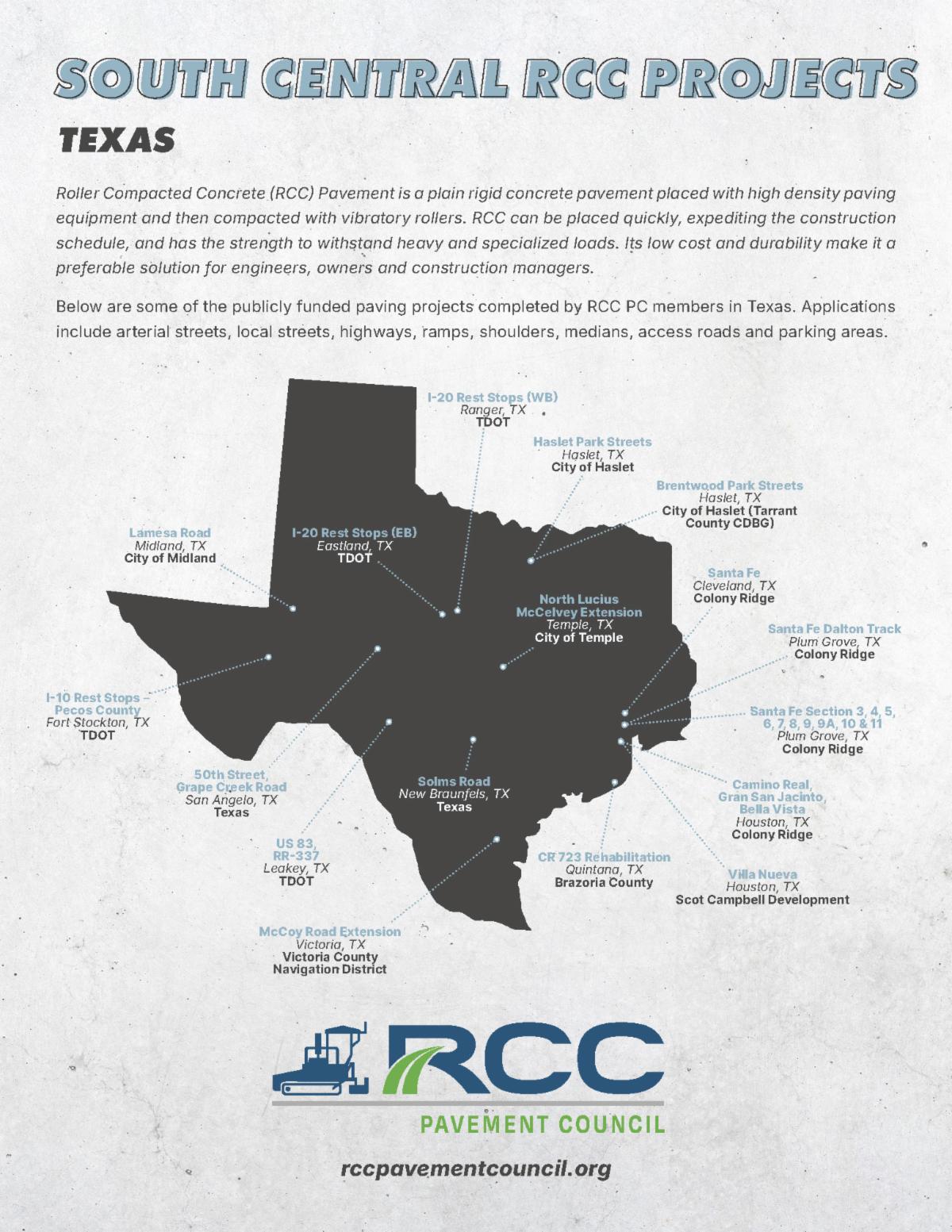
We’ve added a valuable resource to our website highlighting Roller Compacted Concrete (RCC) pavement used in roadway projects across the country.
RCC is a type of rigid concrete pavement placed with high-density paving equipment and compacted with vibratory rollers, allowing for rapid installation and accelerated construction schedules. Known for its strength and durability, RCC is built to withstand heavy and specialized loads—making it a reliable, cost-effective solution for engineers, owners and construction managers.
This resource showcases publicly funded RCC roadway projects from across the nation, completed by RCC Pavement Council members. It demonstrates the versatility of RCC in a wide range of applications, including arterial and local streets, highways, ramps, shoulders, medians, access roads and parking areas.
Explore this resource to see how RCC is making an impact on roadway infrastructure nationwide.
| | | RCC State Sheet Resources! | |
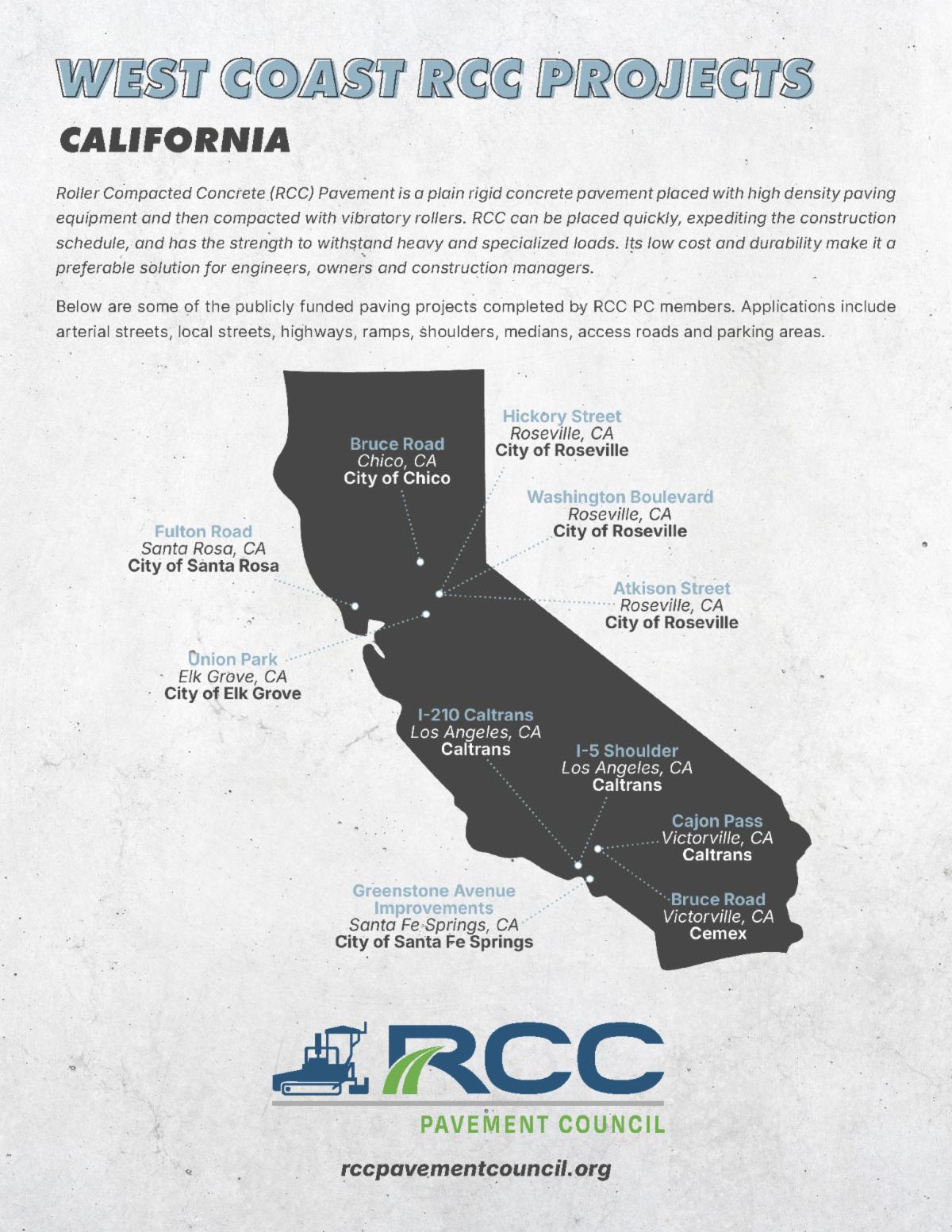
Looking for reliable, state-specific insights on roller compacted concrete? The RCC Pavement Council’s resource page is packed with detailed state sheets designed to help you understand RCC applications tailored to your region. Whether you're planning a project or exploring innovative paving solutions, these resources are your go-to guide.
Explore the state sheets today and discover how RCC can transform your next project.
| | | Are you an RCC Pavement Council member? | | | |  | |
Submit Your RCC Projects Here!
Are you a member and want to see your project displayed on the Roller Compacted Concrete Pavement Council website, newsletter and social media? Submit your project here today!
| | | |
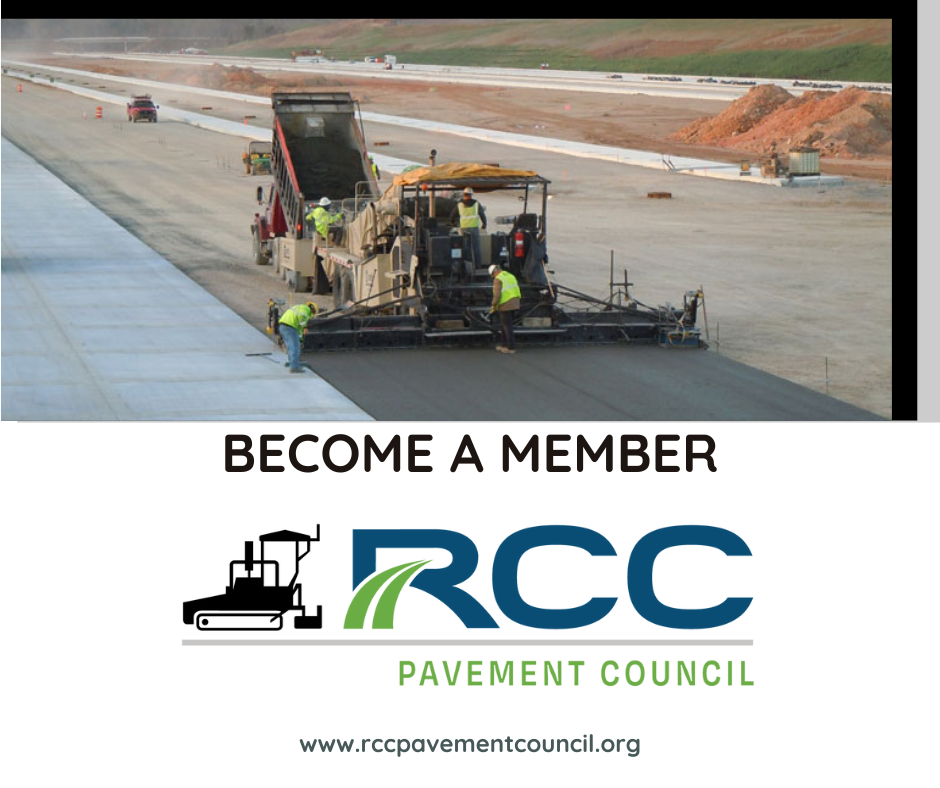
Joining the Council will place your company at the forefront of this emerging pavement technology. With the Council’s focus on end-users, all members will benefit by the increased project opportunities generated by Council members. In addition, contractors, equipment vendors, materials suppliers and pavement engineers will have access to the needs and concerns of their customer base as well as the opportunity to benchmark and develop best construction practices. The members also participate in and learn from emerging research and product development, allowing them to better serve both existing and future customers. The RCC Pavement Council represents the most knowledgeable and experienced group of companies associated with roller compacted concrete pavements today. Learn more about joining the council here.
| | | | |
www.rccpavementcouncil.org |
| | | |