Rail Workers Weekly News Digest
Number 37 - December 3rd, 2019
|
|
Below is a series of articles compiled over the previous week.
They are of interest to railroad workers.
_____________________________________________
|
|
Article 1
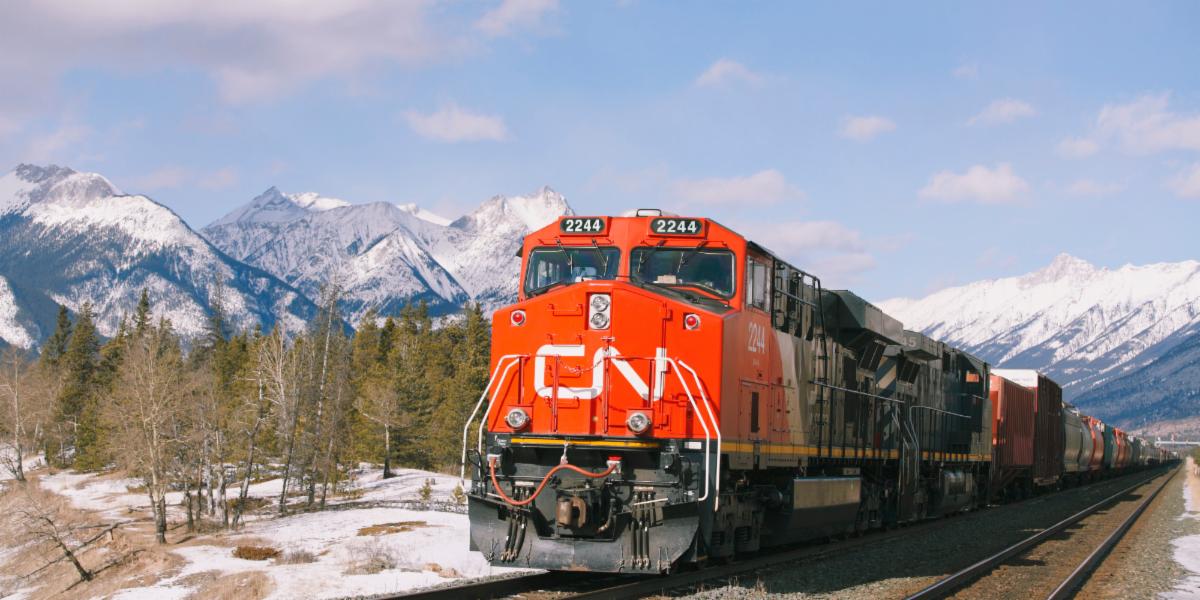
CN Launches Post-strike 'Recovery Plan'
(Editor's Note: During the strike, CN could handle just 10% of normal business. After 8 days, the corporation was hurting. All of North American rail labor owes a debt of thanks to the brothers and sister of the TCRC for standing tall and making it clear to the rail carriers that there will be a price the corporation will pay when they do not treat us right!)
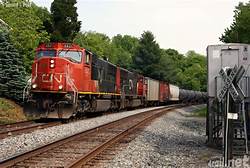
MONTREAL — Canadian National has announced it is implementing a “recovery plan” to respond to the traffic backlog created by an eight-day strike, Canada's longest rail work stoppage in a decade — an effort that could include bringing back some recently laid-off workers.
The railroad and Teamsters Canada Rail Conference, representing conductors, train persons, and yard workers, announced a tentative agreement on Tuesday. The
Winnipeg Free Press reports
that the agreement includes a provision that fatigued workers would not be compelled to work past the start of their rest breaks. Currently, workers must stay on the job and file a grievance about missed rest after the fact.
The newspaper quoted a letter by CN labor-relations director Joe Torchia, an appendix to the tentative agreement, reading, “I will advise all company officers that we shall waive the work-now-grieve-later principle if an employee seeks to book rest, where the employee is fatigued on the job and seeks to be relieved.”
CN hopes operations will be back to normal by Christmas, CN Senior Vice President and Chief Legal Officer Sean Finn
told Reuters
. Finn told the news service that the railroad was considering bringing back some furloughed crews and might reactivate some stored locomotives to address the backlog. “Anything we can do to accelerate the recovery, we’ll do so.”
In a press release
, CN said it operated at approximately 10% of capacity during the strike, and that every day of the strike can cause several days of backlog.
“CN remains focused on growth and is already in recovery mode as our employees return to their normal shifts,” CN President and CEO JJ Ruest said in the release. “Overriding emphasis will be placed on safety as we implement a disciplined and progressive ramp up to avoid congestion that can overwhelm parts of the supply chain that are the most vulnerable.”
|
|
Article 2 - SAFETY & HEALTH
Death by Train
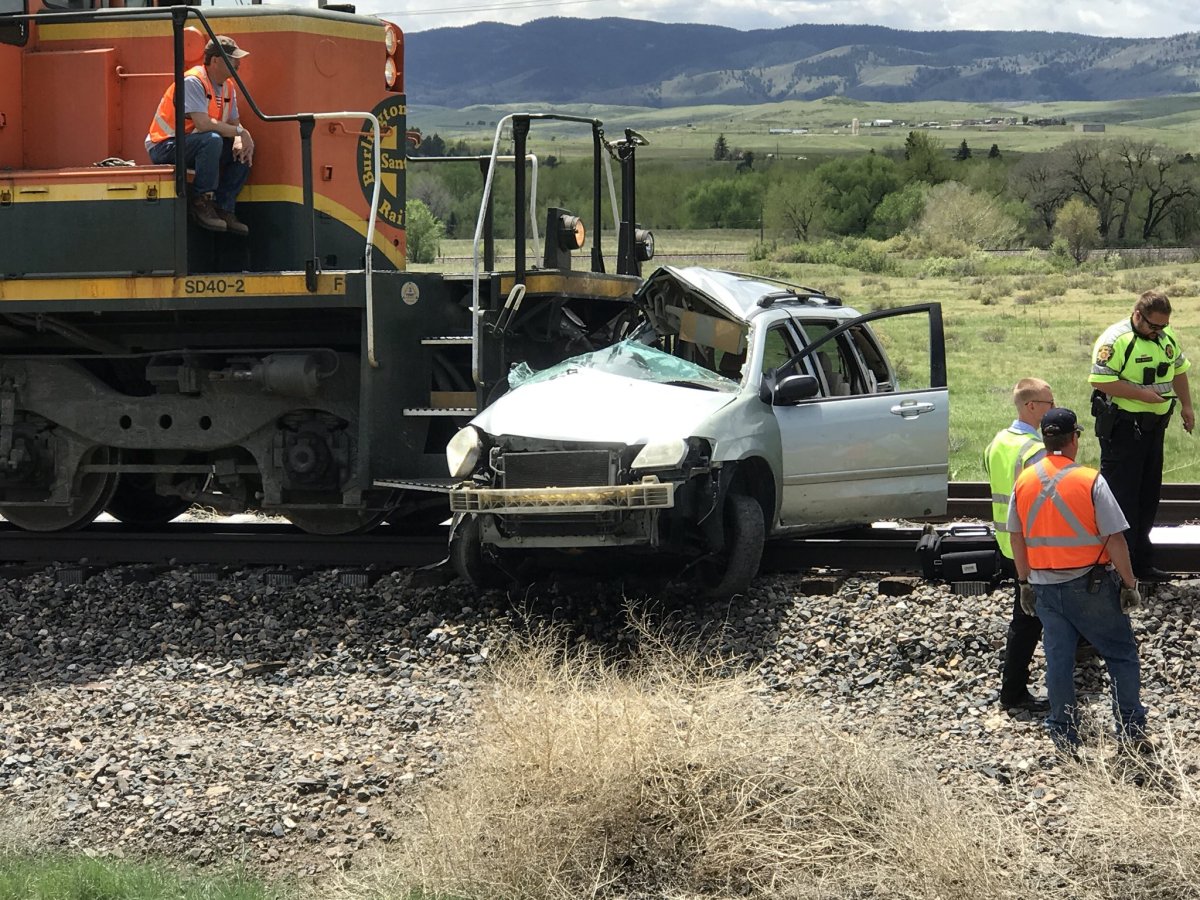
Almost half of America’s engineers have operated a train that killed someone on the tracks. Afterward, many suffer nightmares, anxiety, PTSD.
Her first fatality still haunts.
It’s late afternoon, and Raelynn Dickerson, a SEPTA engineer on the Main Line, is approaching a city station where people often risk dashing across the tracks. She has to be alert. Someone is walking directly in the path of the train.
“I blow the horn,” she recalled. “He doesn’t move.”
Dickerson sets a valve handle to the emergency position and hears a loud rush of air from the brakes. But the train, traveling 60 mph, will not stop before it hits the man. She steps out of the cab to avoid seeing what happens next.
There’s an awful secret shared by America’s train engineers: Almost half have operated a train that killed someone. Locally, it’s estimated to be even worse. Many longtime engineers have experienced more than one death on the tracks.
|
|
Article 3 - EMPLOYMENT
U.S. Class I employment slide continued in October
(Editor's Note: Rail employment dropped an impressive 10% in the last 12 months of PSR. In light of these terrible numbers, railroad workers should understand that we and the Class One rail carriers have nothing in common).
Class Is as of mid-October employed 134,582 people, down 1.67 percent from mid-September's level and down 9.51 percent from October 2018's count, according to
Surface Transportation Board
(STB) data.
All but one of six workforce categories posted month-to-month employment decreases: Executives, officials and staff assistants logged a 0.37 percent increase to 7,653 employees between mid-September to mid-October.
The other categories' month-to-month decreases were: transportation (train and engine), down 3.07 percent to 55,361 employees; maintenance of equipment and stores, down 1.4 percent to 23,780; maintenance of way and structures, down 0.49 percent to 31,330; professional and administrative, down 0.44 percent to 11,001; and transportation (other than train and engine), down 0.31 percent to 5,457.
On a year-over-year basis, all categories logged decreases. They were: maintenance of equipment and stores, down 13.12 percent; transportation (train and engine), down 11.82 percent; executives, officials and staff assistant, down 9.91 percent; professional and administrative, down 6.86 percent; maintenance of way and structures, down 3.77 percent; and transportation (other than train and engine), down 4.38 percent.
By individual railroad, the STB's U.S. Class I workforce data shows that as of mid-October: BNSF Railway Co. employed 41,612 employees; Union Pacific Railroad, 37,599; Norfolk Southern Railway 23,251; CSX, 18,881; CN/Grand Trunk, 7,246; Kansas City Southern, 3,031; and Canadian Pacific Soo Line, 2,962.
|
|
What the sale of almost 400 miles of train track will mean for Maine
(Editor's Note: CP spun this off to a third rate shortline a few decades ago, which by 2013 began to run trains with a single crew member, resulting in one of the biggest train disasters in Canadian history. Now, CP wants it back.)
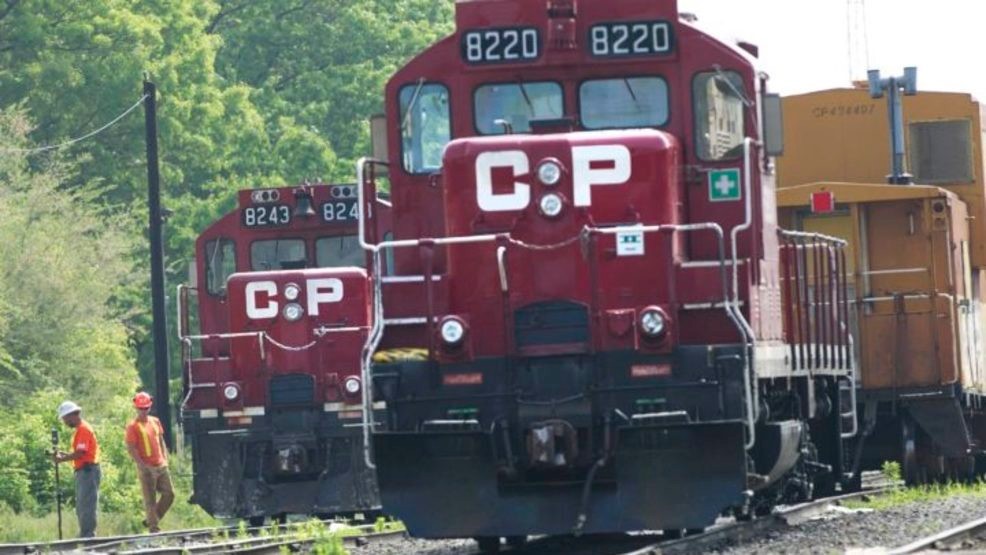
Last week, the news broke that one of the largest rail operators in North America would buy the 481 miles of track in Maine and Quebec run by Bangor-based Central Maine and Quebec Railway. The sale to Calgary, Alberta-based Canadian Pacific Railway is expected to close by the end of the year.
The sale will mark the return of a Class 1 railroad to Maine for the first time since the 1980s, said Nate Moulton, director of freight at the Maine Department of Transportation. Now, a railroad that runs from Jackman in the west to Searsport in the east and Millinocket in the north will be part of a coast-to-coast rail network run by a company focused on running railroads, rather than an investment firm.
That could bring improved infrastructure and better connectivity to Maine, Moulton said.
Canadian Pacific “is not a private equity firm that’s just buying this as some sort of infrastructure investment,” Moulton said. “You hope for better equipment, better condition of the lines, more opportunity to connect with the national system. These are the kinds of things you get with a Class 1.” The last time Maine had a Class 1 railroad was in the 1980s, when Canadian Pacific owned a section of track in the state.
Central Maine and Quebec’s parent company, New York-based Fortress Transportation and Infrastructure Investors LLC, has been telling its investors of its plans to sell the Maine and Quebec railroad for several months, Moulton said.
It bought the railroad out of bankruptcy from Montreal, Maine and Atlantic Railway in early 2014, months after a train carrying crude oil went off the tracks in Lac Megantic, Quebec, exploded into a ball of fire and killed 47 people.
|
|
Article 5 -
LABOR & ENVIRONMENT
Union Members Support a Green New Deal!
If you think union members and other workers don't care about climate change, think again—and read this edition of
Making a Living on a Living Planet
, the newsletter of the
Labor Network for Sustainability
.
In this issue, "Union Members' Overwhelming Support the Green New Deal" reports on a recent poll showing that 62% of union members support the climate-protecting Green New Deal, while only 22% oppose it.
The Maine AFL-CIO just passed a resolution affirming, "The Time Is Now for Labor to Engage with Climate" while in Chicago, activist Bea Lumpkin of the Chicago Teachers Union says "Educators Have a 'Special Responsibility' in the Struggle to Mitigate Climate Change." And in case you thought climate concern was just for youth, Bea is a living legend at 101 years old!
This issue also features powerful possibilities for labor activists to fight for a safe climate. In Bridgeport Connecticut, the Amalgamated Transit Union's local 1316 bus drivers took procurement in their own hands by encouraging their employer to make buses safer for drivers and passengers—and then start buying all-electric buses to protect the drivers, the climate, and the local community from carbon pollution.
|
|
Article 6 - TECHNOLOGY
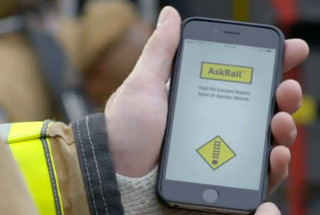
AskRail: The Rail Responder App
The AskRail app, which was released in 2014, provides real-time rail car information and full consist (all rail cars) from all Class I railroads in North America. Additionally, it provides real-time rail car information from the Short Line (smaller railroads), including Amtrak. Presently, AskRail has more than 25,000 first-responder subscribers in all 50 states and eight Canadian provinces. It comes in English and French versions. It’s available for Android and iOS devices as well as computer desktop systems.
What’s so exciting about AskRail is that it has a user-friendly interface that walks the first responder quickly through a simple process to access key information. In a series of clicks, a responder will have the critical information that’s needed to assist in an effective mitigation. Everything within the use of the AskRail app is based on standard hazardous material response/mitigation procedures.
|
|
Article 7 - PASSENGER RAIL
Transportation Leaders Convene in Illinois to Discuss Freight Train Interference’s Effects on Passengers
(Editor's Note: After a decade or more of basic infrastructural improvements and billions spent, the railroads - which are moving far less freight in fewer trains than they did in 2006 - expect us to believe they cannot run a passenger train on-time without massively delaying their freight trains. Precision Scheduled Railroading? We think not).
At a roundtable convened by Congressman Rodney Davis (R-IL), stakeholders met to outline solutions to freight train delays plaguing passengers on Amtrak’s Illini and Saluki lines. And while the roundtable’s scope was targeted at the broken relationship between Amtrak’s Illinois trains and Canadian National (CN) freight trains, the problem affects passengers across the National Network, which has seen a sharp spike in delays over the last five years.
The Illinois-Carbondale line remains, however, a canary in the coalmine: only 6 percent of northbound Illini and 17 percent of southbound Saluki trains arrived on time in Fiscal Year 2018.
For passengers, the answer is clear: host railroads must live up to their legal requirement to grant Amtrak dispatching preference. This agreement was a cornerstone of the agreement made between the Class Is and the U.S. government when Congress bailed-out the freight railroads in the 1970s, leading to the creation of Amtrak.
“We need to be able to work collaboratively with our freight railroad partner, Canadian National, to make sure that they’re dispatching passenger trains with priority, like other railroads do,” said Amtrak’s Derrick James. “We’re hopeful that the pressure that comes from the community, and that comes from your delegation in Washington, helps us come to some agreement on how we can make sure that these trains move over the railroad on time.”
|
|
Arti
cle 8 - UK STRIKE NEWS
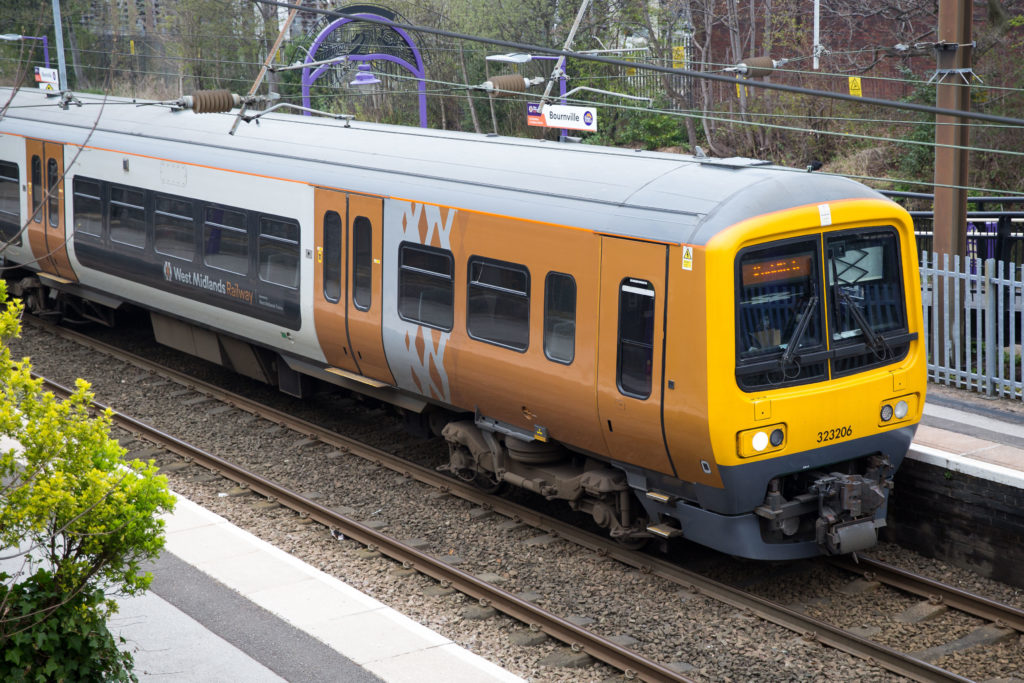
Rail Workers to Stage Second Saturday Strike in Row Over Staffing
Members of the
Rail, Maritime and Transport
union on West Midlands Trains will walk out for 24 hours, disrupting services for passengers including workers, shoppers and sports fans.
The union has accused the company of refusing to pull back from a threat to “bulldoze through” driver only operation, which the train operator denies.
The union has announced a programme of seven Saturday strikes, saying lasaying last weekend’s action halved the number of services to 600.
The union has announced a programme of seven Saturday strikes, saying last weekend’s action halved the number of services to 600.
The RMT said it had discovered that the company can claim compensation for lost revenue from the Government.
|
|
|
|
|
|
|