|
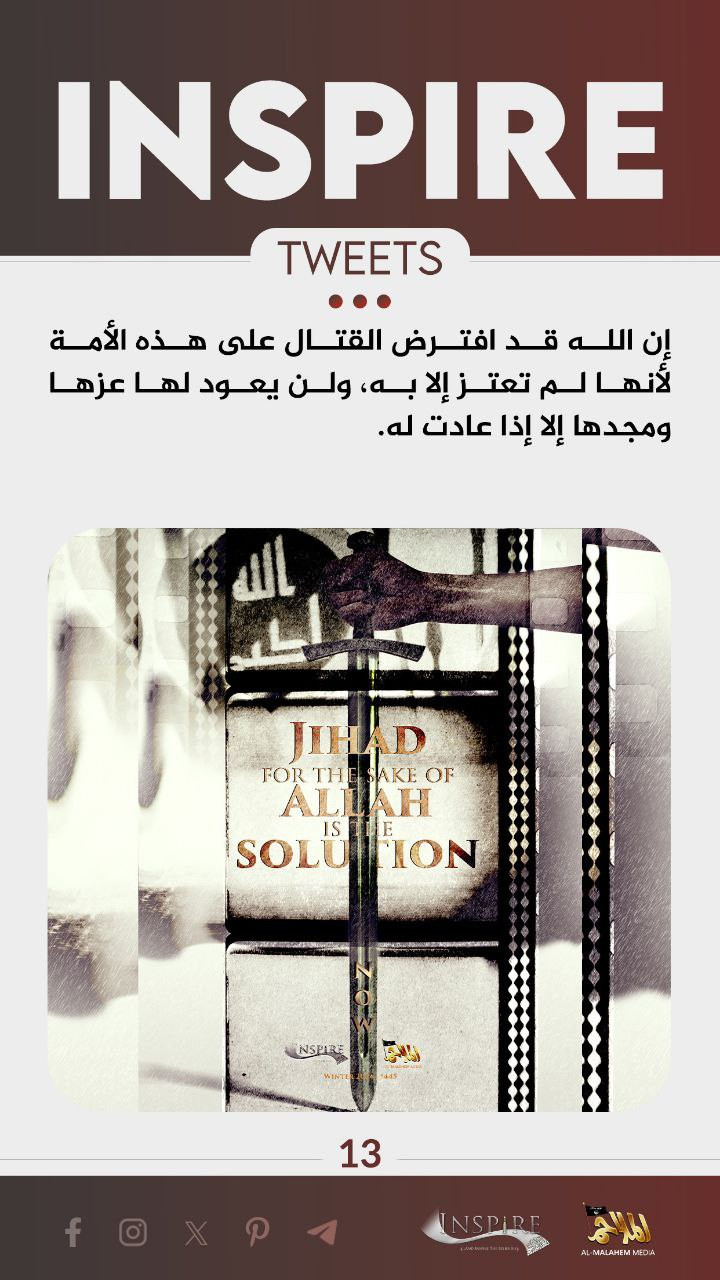
Over the past two weeks, al-Qaeda in the Arabian Peninsula (AQAP) has launched a new online anti-West propaganda campaign under the brand ‘Inspire Tweets.’ This campaign, disseminated by Al-Malahim Media/Inspire, features a series of posters aimed at like-minded, religiously motivated followers. The messages urge them to take action against the 'enemy,' specifically targeting Westerners, and to join the jihad.
Strangely, the new "Inspire Tweets" have all been created in Arabic, atypical of the usual "Inspire" propaganda that is always released in the English language format as well. This could indicate that the new editorial Inspire staff is limited in language abilities -or- that they are targeting a specific Arabic-speaking audience for a reason, namely that they think Arabic speakers will be the most likely to be "inspired" to act on their instructional advice.
The new propaganda emphasizes that jihad is the only solution, aiming to inspire and incite supporters to engage in various types of attacks in retaliation for the killing of Muslims by Western countries. These attacks include bombings, armed assaults on unexpected targets, and strikes on train stations and airports.
Additionally, the campaign encourages al-Qaeda supporters to carry out cyberattacks and target Western economies, aiming to cause their collapse as part of an economic warfare strategy.
While most of the posters are in Arabic, some also include sections in English. This suggests an awareness that English-language propaganda can reach a broader audience, particularly those residing in non-Muslim countries.
Notably, these posters share a uniform format and are numbered, resembling pages in a magazine. This format likely aims to create a collection of guidelines and inspiring advice that users can easily memorize and reference when needed. The numbered format also seeks to arouse the enthusiasm and attention of the reader.
| |
Noteworthy is ‘Inspire Tweets’ poster #8, which incites followers to carry out cyberattacks while promoting an Inspire Magazine ‘Open Source Jihad (OSJ)’ special titled ‘The Hidden Bomb.’ This instructional guide on bomb-making aims to encourage attacks on the Western aviation industry.
‘The Hidden Bomb’ is a 45:51-minute video directed at lone wolves, released around the end of December 2023. It includes guidelines and tips on how to bypass standard security measures in United States airports.
The poster in question features a hooded hacker working on a laptop, ostensibly engaged in a cyberattack. The laptop prominently displays the ‘OSJ’ branding, symbolizing ‘Open Source Jihad.’ This new form of propaganda adopted by Inspire offers practical guidance on manufacturing Improvised Explosive Devices (IEDs) and using weapons.
| | |
TRAC Incident Report: IS/Islamic State Kavkaz (ISK-ISQ) Inmates Hold Hostages in Rostov Pre-Trial Detention Facility, Russia | |
|
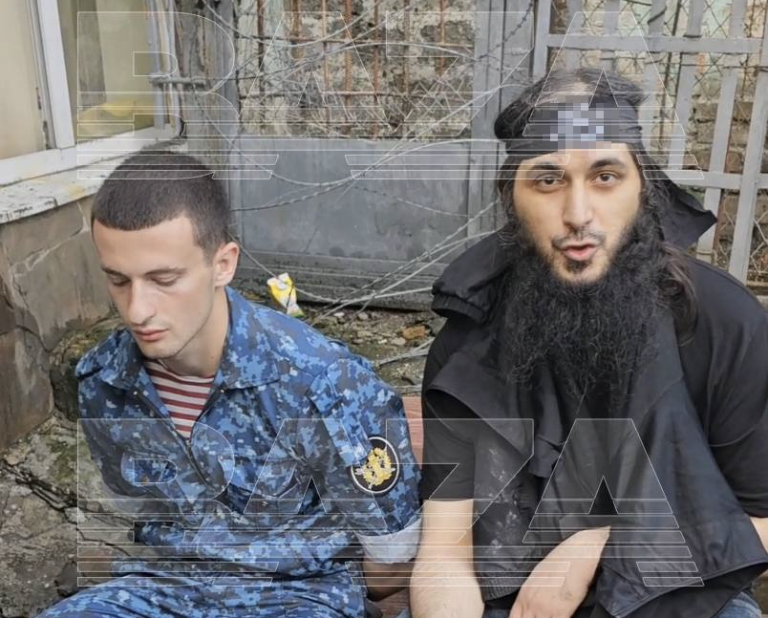
On June 16, 2024, several inmates, including alleged Islamic State members, took control of a pre-trial detention facility in Rostov, Russia, early Sunday morning. While President Putin and Prime Minister Mikhail Mishustin were sending their congratulations to Muslims on Kurban Bayram, Rostov police were attempting to regain control of the facility.
Notably, just six days prior, the Federal Penitentiary Service of Russia for the Rostov region had released a photo report detailing the security measures at this facility.
A group of six or seven inmates, previously convicted on terrorism charges, were reportedly armed with fire axes and rubber batons. During negotiations, they demanded transportation and safe passage out of the penitentiary. According to several media sources, the hostage-taking had been planned for several months, leading to restricted traffic in central Rostov.
During the storming of the detention center, three of the six terrorists were killed immediately, while the remaining three were injured and did not survive until emergency medical services arrived. Two hostages, both prison guards, were released; one sustained knife wounds.
Authorities are now searching the homes of the terrorists' relatives. Law enforcement is active in Ingushetia, as three of the assailants originated from there. Investigators are examining the terrorists’ phones and personal belongings to uncover any external coordination and connections. Photos and videos shared by the perpetrators on social media showed them with knives and Islamic State flags.
The assailants were initially housed in separate cells, yet managed to coordinate their escape together. Videos created by the attackers displayed Islamic State symbols on the walls of the center.
Perpetrators: The identities of five of the assailants have been revealed:
- M. Saypudinov
- A. Tsitskiev
- D. Kamneev
- Tamerlan Gireev
- S. Akiev
The identity of the sixth assailant remains unknown.
Gireev, Tsitskiev, and Akiev were convicted in December 2023 for their involvement with ISIS and for plotting a terrorist attack on the Supreme Court building of the Karachay-Cherkess Republic. Gireev and Akiev were sentenced to 18 years in prison, while Tsitskiev received a sentence of 18 and a half years.
| |
TRAC Incident Report: Al-Shabaab Launches Armed Assault on Ethiopian Forces Airport Base, Seizing Control After Forces Fled, in Baidoa, Bay Region, South West State, Somalia
| |
|
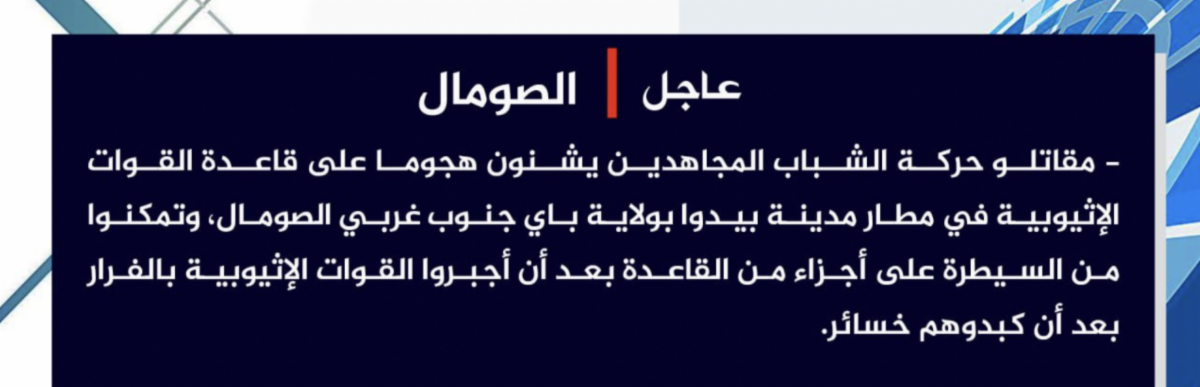
On 13 June 2024, Al-Shabaab launched a significant assault on Ethiopian forces by invading their base at an airport in Baidoa, Bay Region, South West State, Somalia. The militants killed eight and injured several, forcing the Ethiopian forces to flee and allowing Al-Shabaab to seize parts of the base. Among the dead were two western officials.
This attack is particularly noteworthy due to the relative ease with which Al-Shabaab was able to overrun a functioning Ethiopian military airport base. The operation demonstrated Al-Shabaab’s capability to execute well-coordinated and effective assaults on fortified military positions, underscoring their persistent threat in the region.
Al-Shabaab has repeatedly targeted Ethiopian forces in retaliation for their involvement in Somalia. In 2007, it was estimated that approximately 50,000 Ethiopian troops occupied parts of Somalia. In response to Ethiopia's intervention, Al-Shabaab launched an invasion into Ethiopia that same year, though they quickly retreated.
The increasing violence and frequency of Al-Shabaab’s attacks highlight their retaliation against Ethiopia's deployment of troops to Somalia as part of the African Union Transition Mission in Somalia (ATMIS). Despite heightened security measures and ongoing counterterrorism operations by Somali, Ethiopian, and ATMIS forces, Al-Shabaab continues to demonstrate its reach and operational capacity to challenge the military forces opposing their militancy.
| |
TRAC Incident Report: Carteles Unidos Group (CU) Target the Jalisco New Generation Cartel (CJNG) with a Weaponized Drone on the Border of Jalisco and Michoacán, Mexico | |
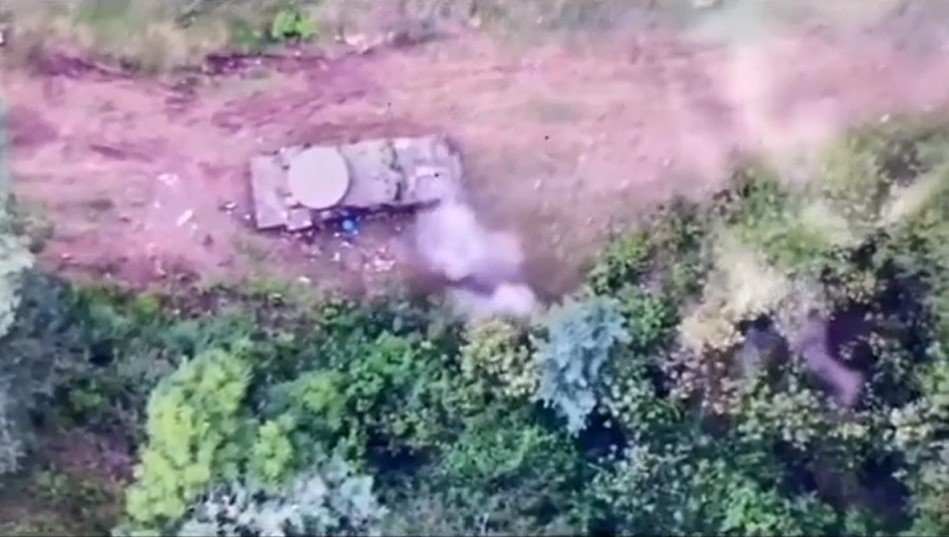 | |
On 10 June 2024, videos surfaced online depicting a weaponized drone attack by Carteles Unidos (CU) against members of the Jalisco New Generation Cartel (CJNG) in a remote area on the border between Jalisco and Michoacán. One video shows an aerial view of a CJNG armored truck, known as a 'blindado' or 'monstruo,' being targeted by improvised explosive devices (IEDs) dropped from drones. Another video, taken from the perspective of a CJNG operative on the ground, captures a second drone strike nearby, causing unknown damage to the camera operator.
The use of drones by Mexican drug cartels has been documented by TRAC since at least 2020, with reports of drone usage by these groups dating back to 2017. Over time, the proliferation of drones among cartels such as CJNG and CU has increased significantly. These groups have developed improvised explosive devices (IEDs) to be used as explosive payloads, aiming to out-militarize their competition.
It is unlikely that drug cartels have access to military-grade weaponized drones. Instead, Mexican cartels typically use commercial quadcopter drones, many of which are manufactured by Chinese companies such as DJI. These drones are modified to drop IEDs, providing cartels with an additional attack vector to target rival groups, government security forces, or even civilian populations. This tactic instills fear and uncertainty among residents in areas most affected by cartel violence.
| |
TRAC Incident Report: Newly Founded Group 'Patriotic Liberation Front (FPL)' Sabotaged and Disabled the Niger-Benin Pipeline in Niger | |
|
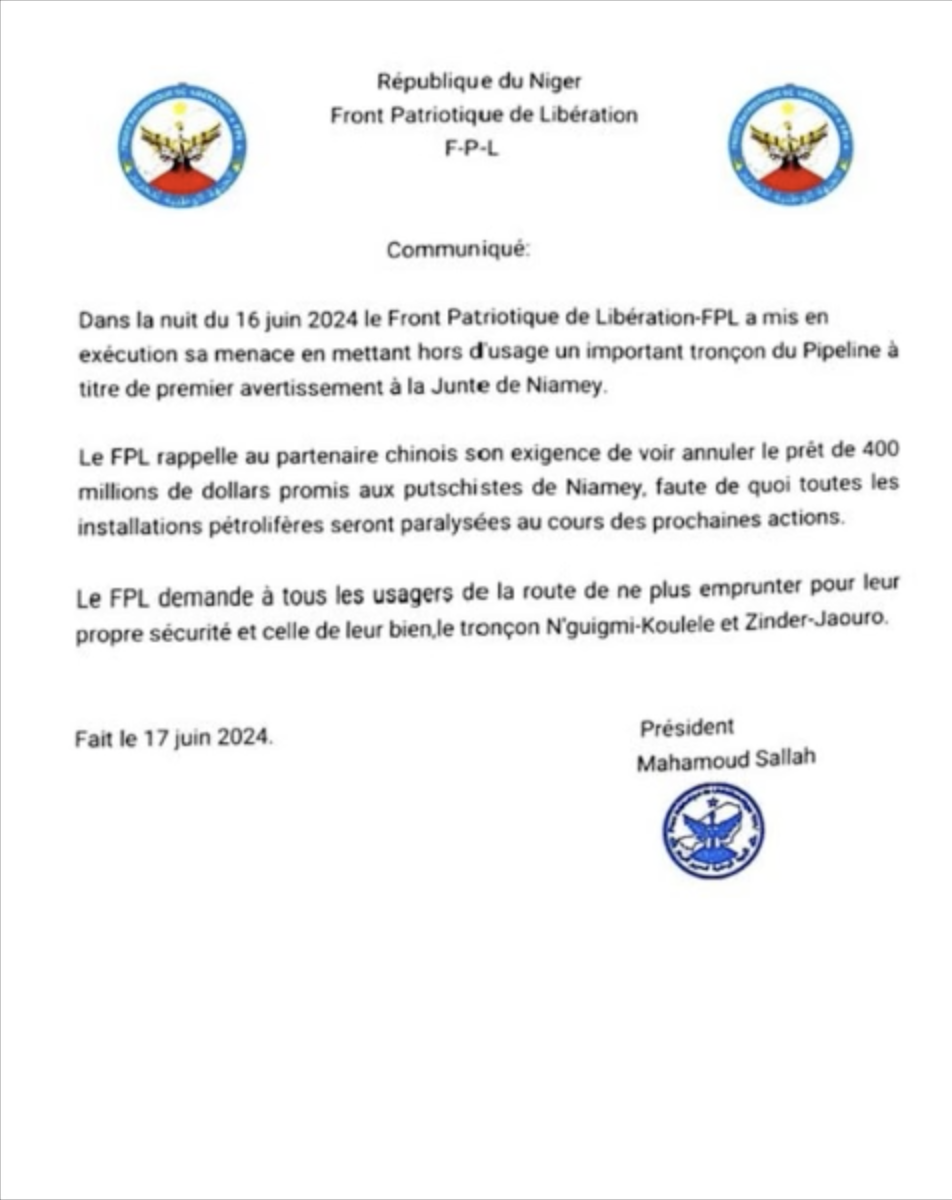
On 17 June 2024, militants from the Patriotic Liberation Front (FPL) sabotaged and disabled a section of the Niger-Benin Pipeline in Niger, causing a considerable leak, as evidenced by a video released by the group. The extent of the damage remains unclear.
The Patriotic Liberation Front (FPL), a newly formed group in Niger since the 2023 coup, shares its name with an unrelated Colombian group. Despite their recent emergence, the FPL should be monitored for any potential connections to stronger regional jihadist groups like ISGS and JNIM. Historically, there have been unclaimed attacks in the eastern Dosso, Tahoua, and Maradi Regions—territories not traditionally held by IS—that IS insiders have reported. This tactic has been used by IS in the past to sway emerging militant groups to expand their influence.
The pipeline, owned by Chinese company PetroChina, pumps over 90,000 barrels a day. The leak caused significant environmental damage. Across Africa and globally, China's infrastructure projects are often criticized by militant groups, who view them as a form of theft and neo-colonialism. Consequently, Chinese assets have become primary targets for militant groups. In Africa, groups like al-Shabaab and ISCA have previously attacked Chinese workers and assets on roadway and mining projects.
The current capacity of the FPL remains uncertain, but their operations have so far been low-intensity, mainly targeting Nigerien security forces. The last recorded attack by the FPL was on 4 May 2024 in Siguidine. Additionally, an intelligence note circulated on 6 June 2024 from the Libyan Murzuq Military Region warned about the risks posed by Mahmoud Sallah, urging authorities to monitor and detain him. The note mentioned an FPL-attributed attack on a military post that resulted in the deaths of two Nigerien soldiers.
| |
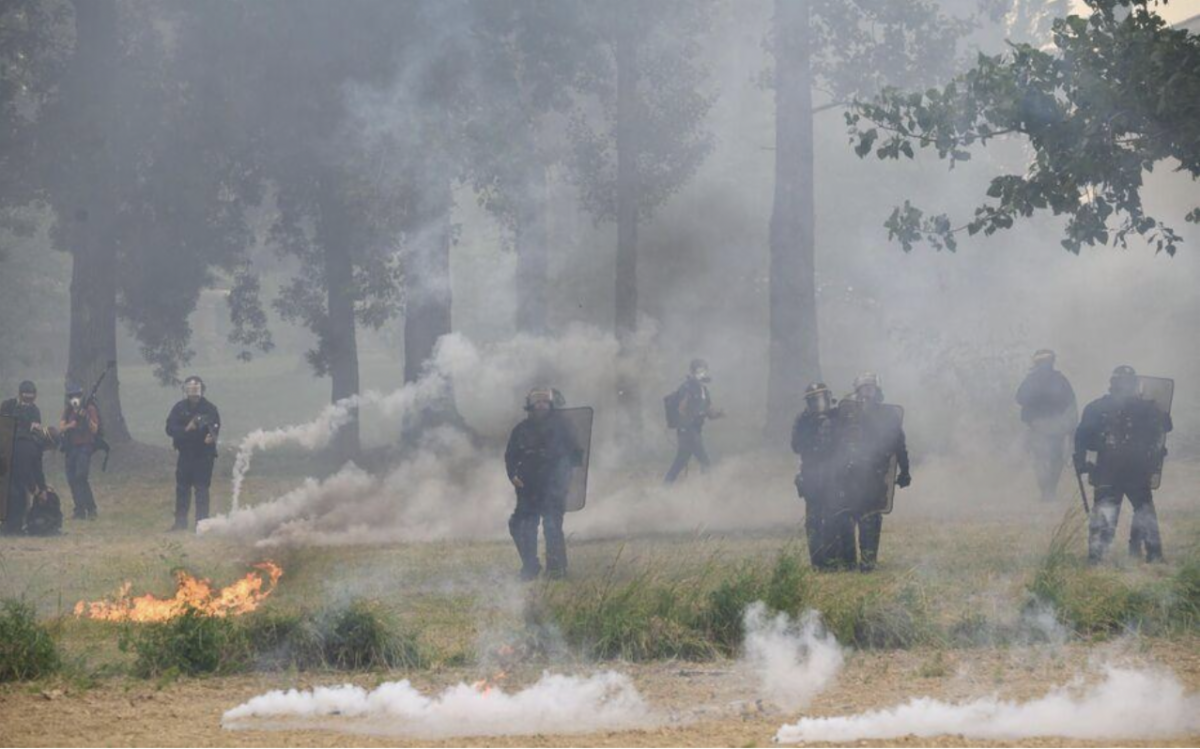
TRAC Incident Report: French Environmental Protestors Clash With Police Over Construction of the A69 Highway, in Tarn, France | |
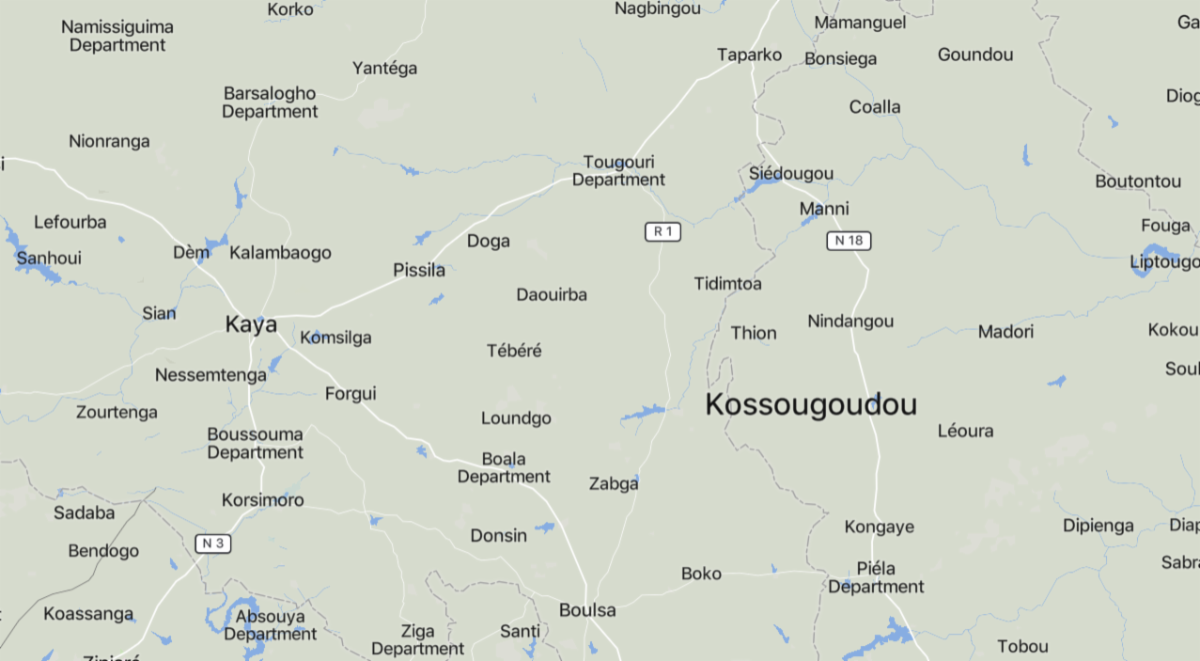
TRAC Incident Report: Suspected Jama’at Nusrat al-Islam wa al-Muslimin (JNIM) Militants Killed at Least 36 Civilians & Four Soldiers in Kossougoudou, South of the Taparko Gold Mine, Gnagna Province, Burkina Faso | |
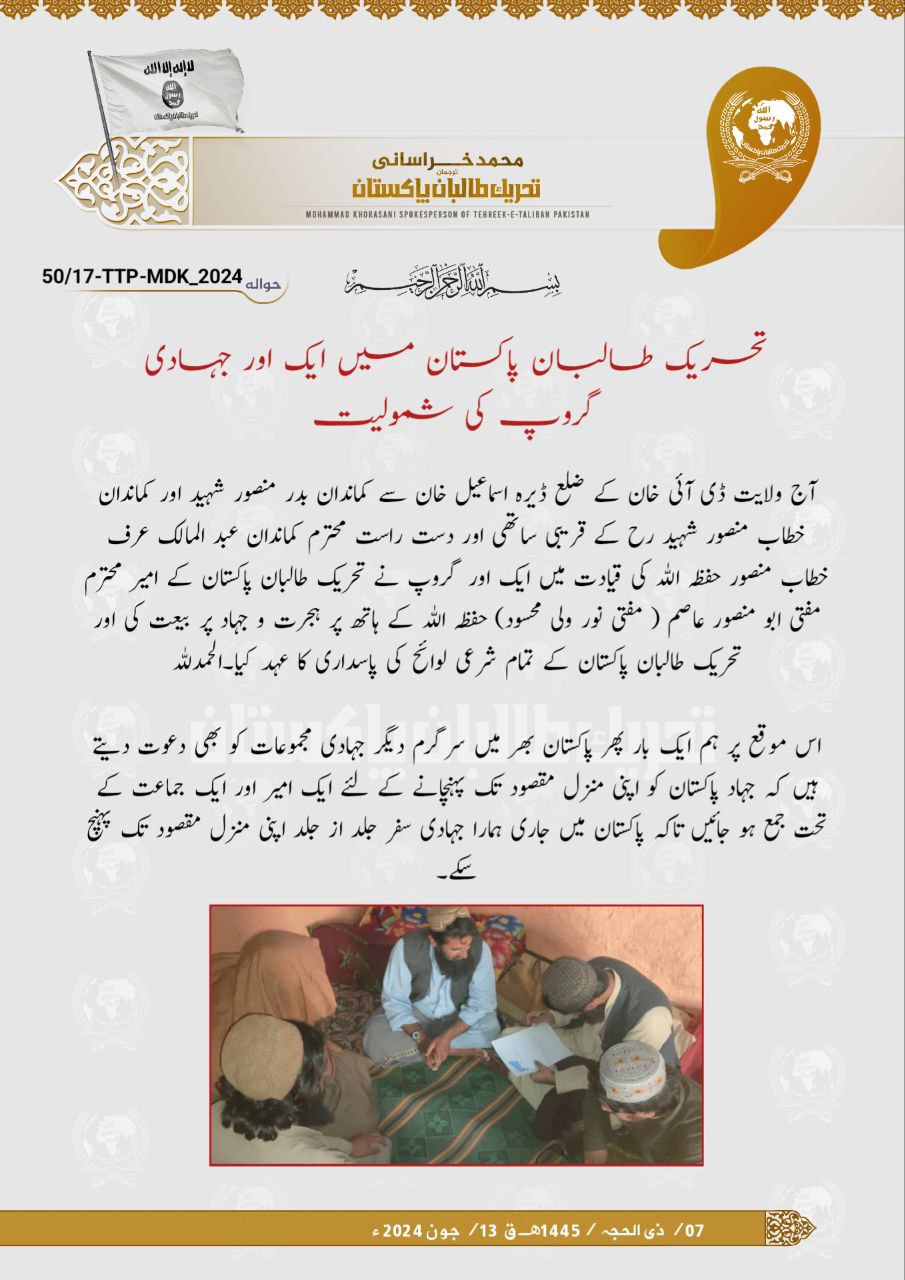
TRAC Incident Report: New Militant Group Pledges Allegiance to Tehreek-e-Taliban Pakistan (TTP), Dera Ismail Khan District, Pakistan | | | | |