Your go-to source for Association and transportation industry news, notes, and need-to-knows | | WTBA sincerely thanks its 2026 Weekly Update sponsors: Brooks Tractor, County Materials Corporation, Fabick Cat, and Roland Machinery Company. Please click on the logos to reach their respective websites. | | |
IN THIS WEEK'S EDITION
MEMBER SPOTLIGHT
- Evers signs $300 million permanent Design-Build program into law
EVENTS & REMINDERS
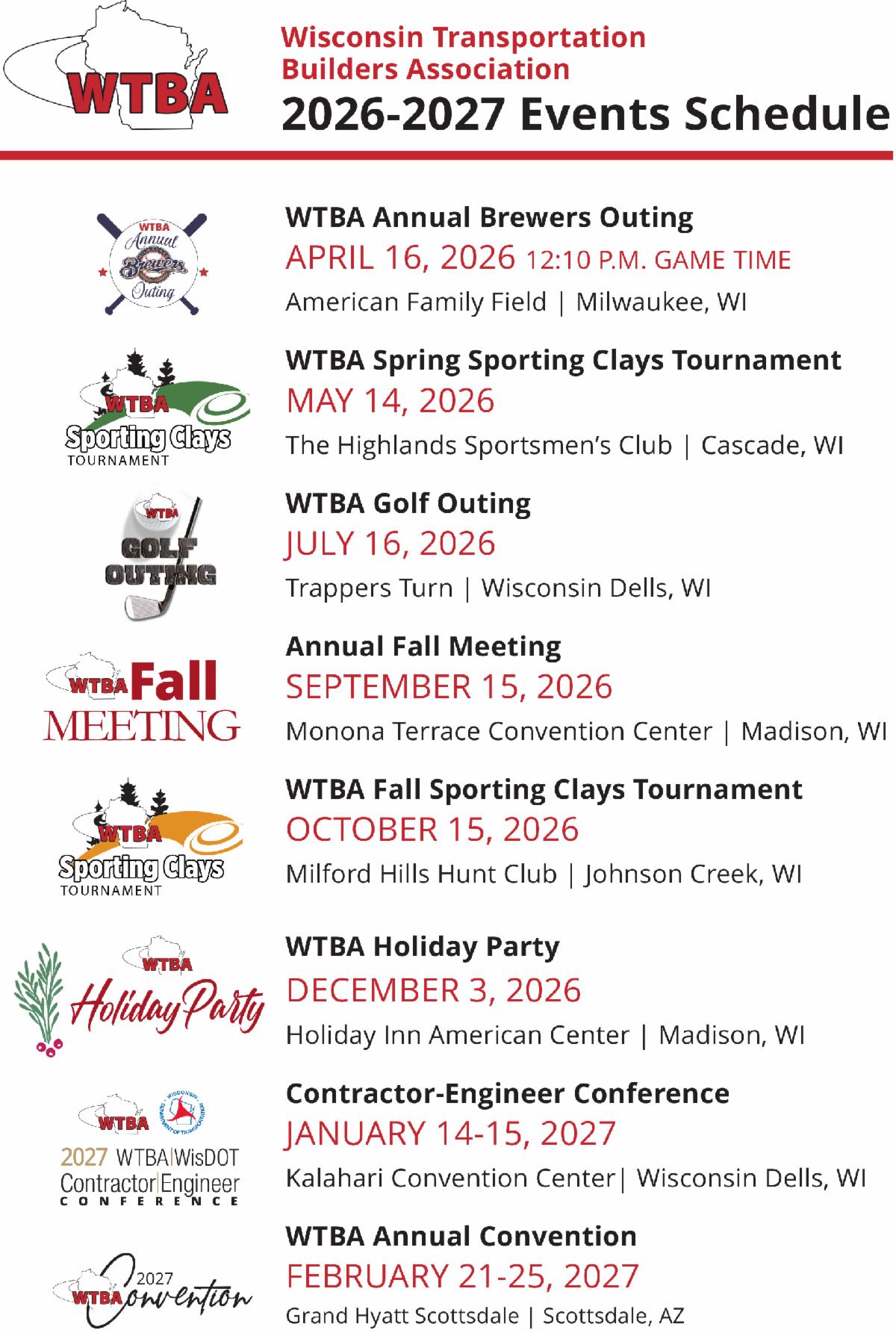
- Check your mailbox! Brewers Outing tickets arriving this week
NEWS & NOTES
- WisDOT prepares for 400+ projects as 2026 season ramps up
- Great Sauk State Trail could see more construction thanks to federal funding
- Consultant Council covers broad agenda during first quarterly meeting
INDUSTRY INSIGHTS
- Free asphalt paving training offered April 7
WHAT WE'RE WATCHING
- Why the Surface Transportation reauthorization is about much more than building roads and bridges
- RFP issued to study animal crossing points on state highway system
| | Evers signs permanent Design-Build program into law, concluding years-long effort | | |
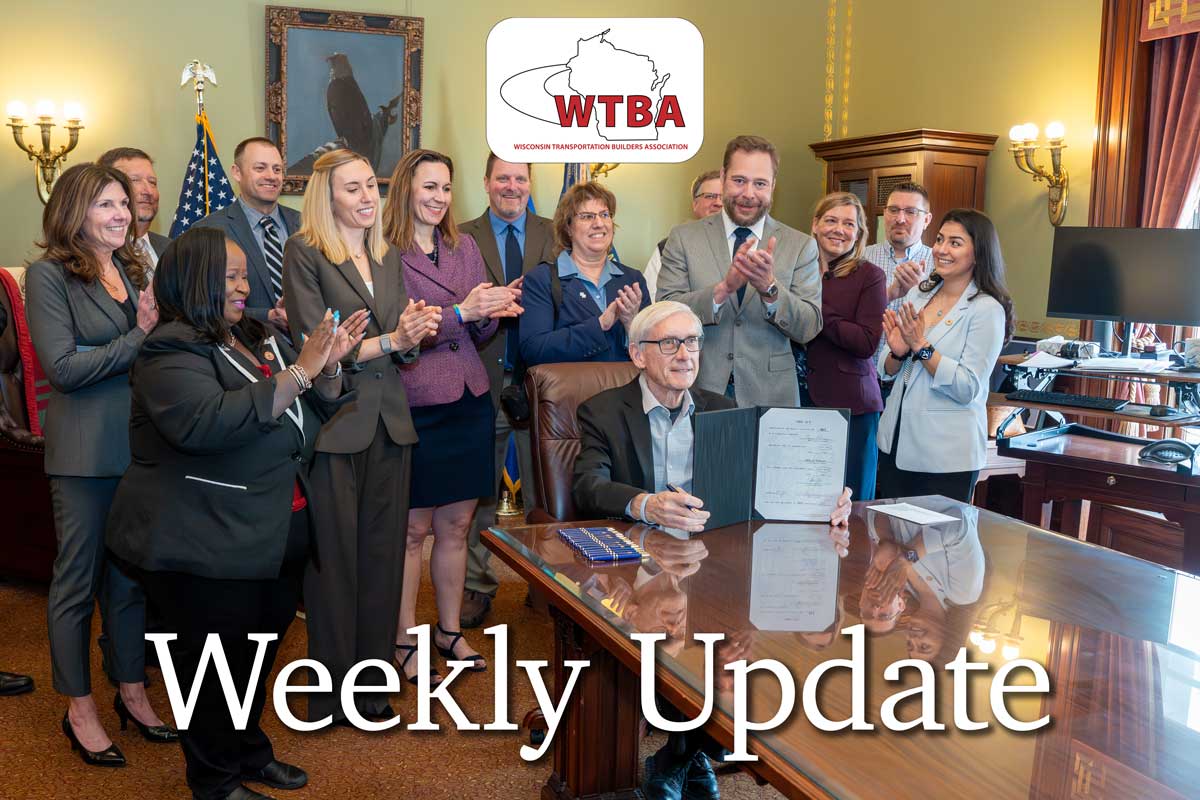
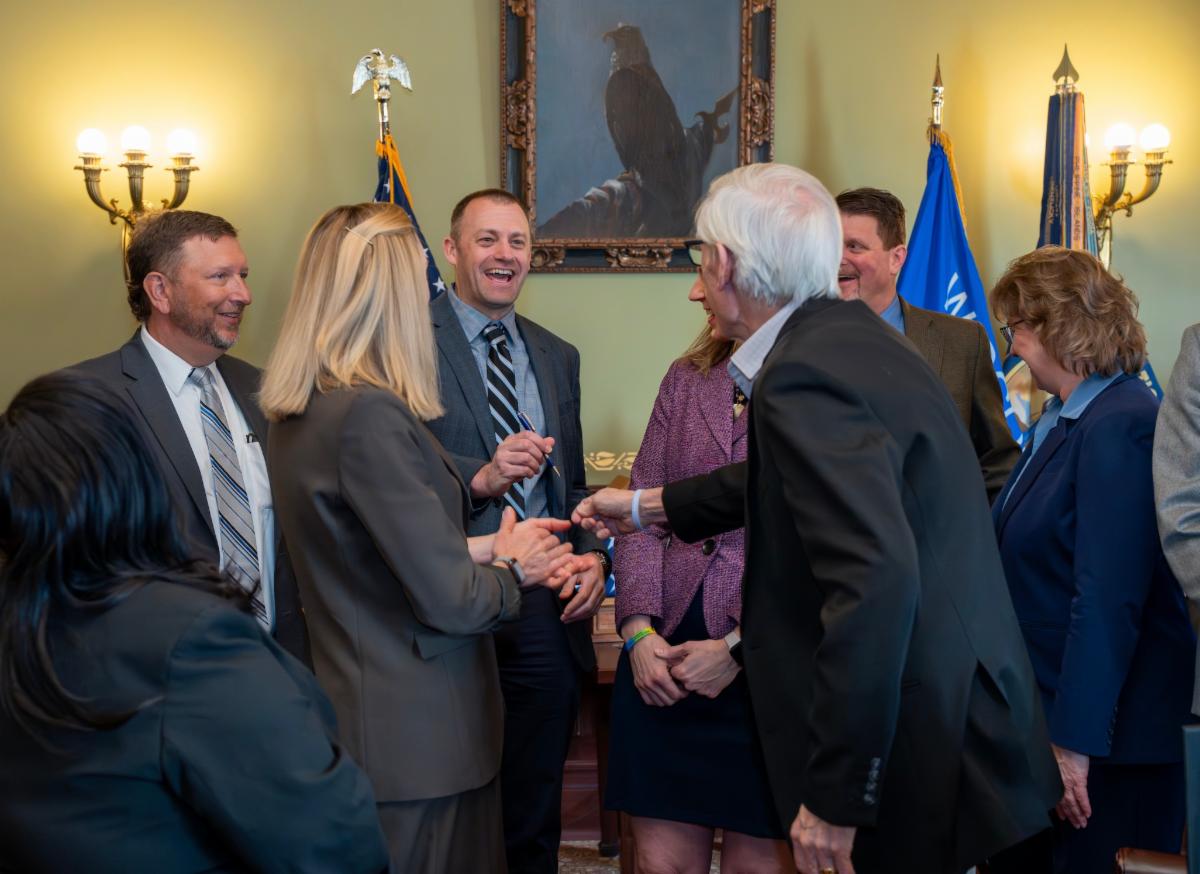
After years of debate, compromise, and having to go back to the drawing board, Mike Hahn didn’t need to wait long to receive a symbolic gift.
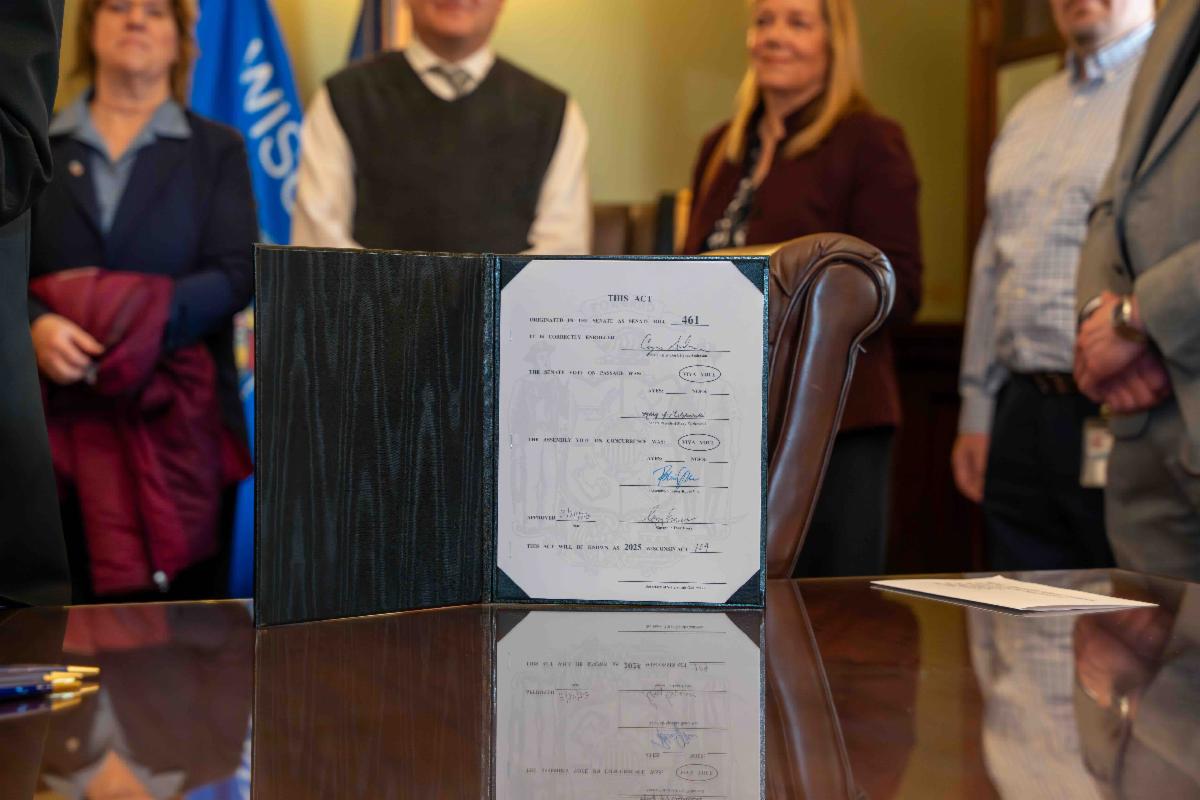
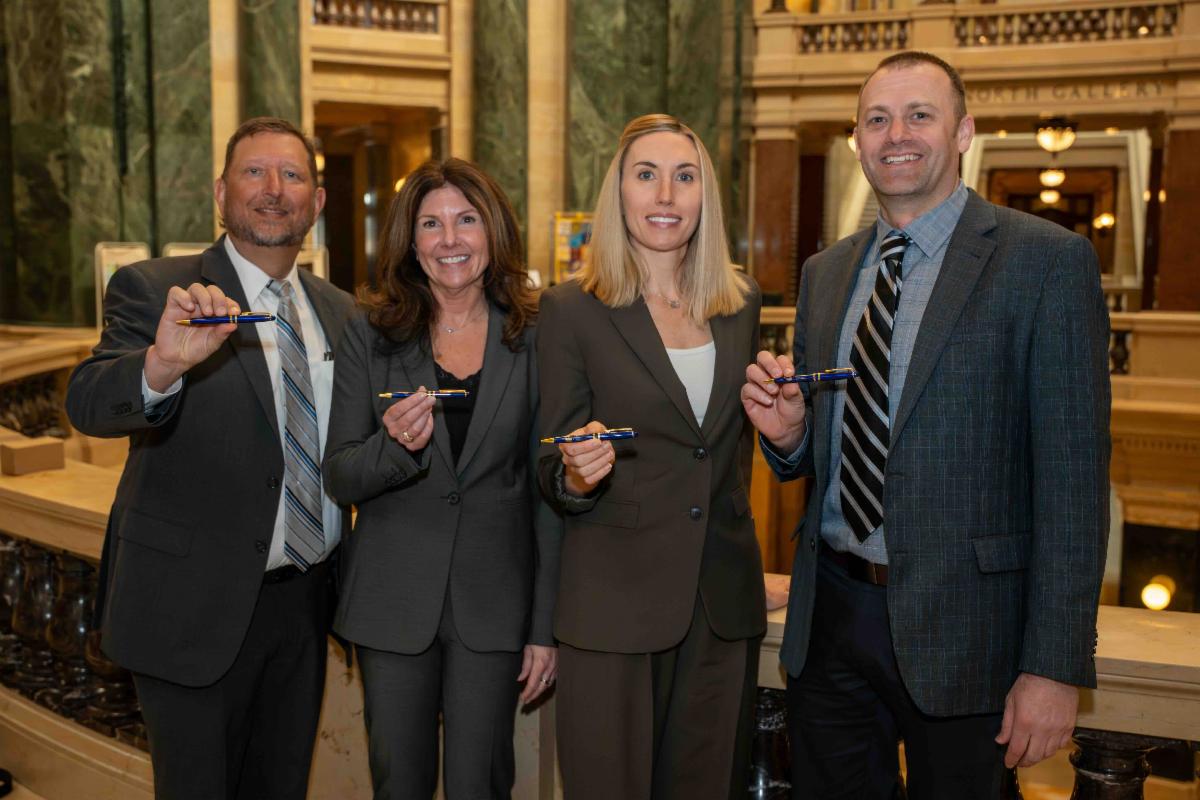
Gov. Tony Evers turned and immediately handed Hahn the first ceremonial pen used to sign Wisconsin’s new permanent Design-Build program into law.
“It was fun,” Hahn said. “Finally got one done that we’ve been working on for a long time.”
| | |
Hahn joined WTBA’s Elise Nelson, Jodi Jensen, Hoffman Construction’s Brad Eberhardt, WisDOT staff, and lawmakers for the bill signing in the governor’s office last Friday morning.
Hahn, who is WTBA’s Board President and Lunda Construction Vice President, served for years on a WTBA subcommittee that worked with the Department and engineering stakeholders to craft a permanent Design-Build program that all sides could agree on.
“(We went through) iteration after iteration where we threw language back and forth,” Hahn explained. “We had conversations about what would work, what we wanted, what they wanted, what the ACEC wanted and we came up with the bill that’s now signed.”
| | |
The new law replaces the existing Design-Build pilot program–which was limited to six total projects–with permanent authority for WisDOT to use alternative delivery methods. It allows WisDOT to use Design-Build for up to $300 million in projects every two years.
The law includes annual cost index adjustments, simplifies rules for project selection and awards, and strengthens overall project oversight. Jensen–WTBA’s General Counsel–released a straightforward white paper explaining in detail how the new program works.
(You can review Jensen’s paper HERE. NOTE: You MUST be logged into your WTBA.org account to access/read.)
“It’s a way to accelerate the construction and come up with innovations,” Eberhardt told WTBA as he walked out of the Capitol.
| | |
Eberhardt pointed to Hoffman’s work on the Cranberry Interchange in Tomah as an example of Design-Build’s potential.
“The lifespan of your normal delivery is such a long process. With Design-Build you can speed that process up and take a 30-percent plan set, which we had at the Cranberry Interchange last June,” Eberhardt said. “Now we’re going to have the job constructed before Memorial Day of 2026."
| | | |
WisDOT will now begin to focus on potential future projects to apply Design-Build to. Don’t anticipate any in the 2026 season, given prep work can take months. Still, waiting until 2027 is fine with Hahn as long as the program is used effectively.
“Compromise is the right word,” Hahn said. “Compromise and patience. It’s great to get this done.”
| | Brewers tickets delivered via email, mail this week | | |
Forget robins bouncing around your yard and hydrangea stems starting to poke up through the dirt; the best sign of spring is appearing in your mailbox this week.
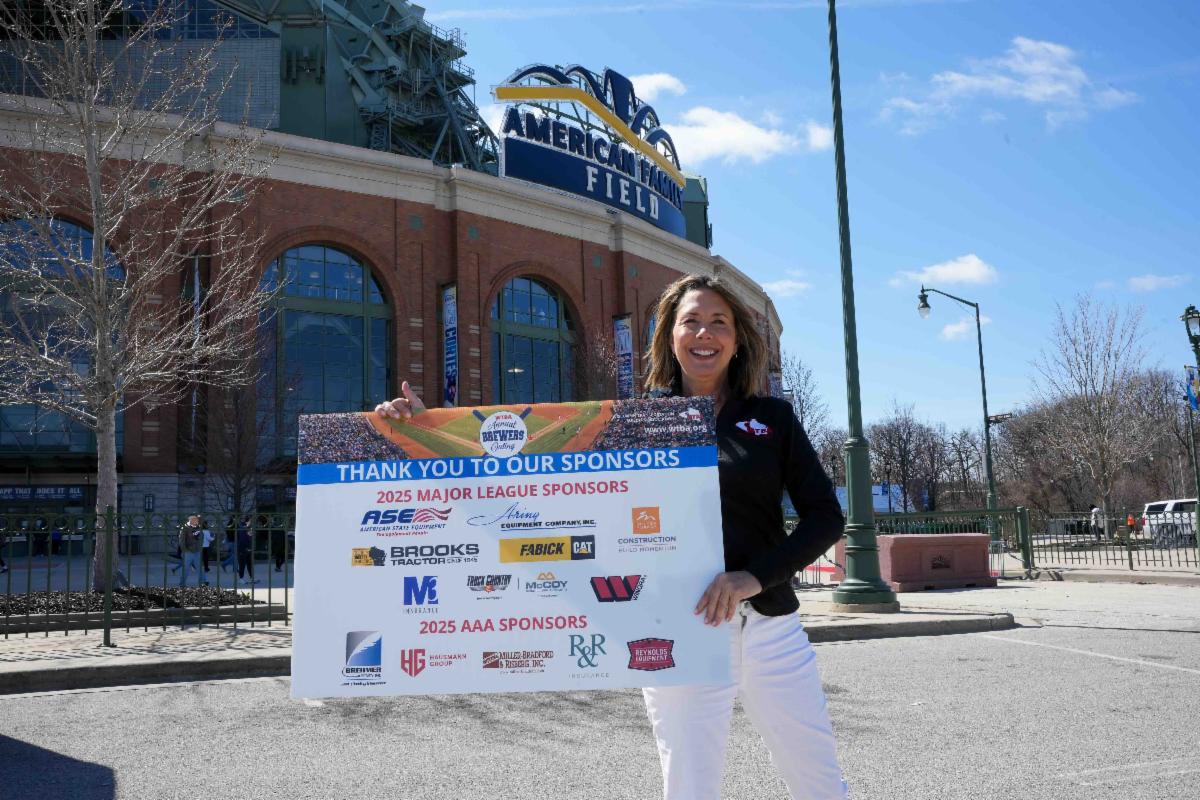
WTBA sent out tickets Monday, March 24 for its annual Brewers Outing.
Electronic tickets should all arrive in the email inbox for the designated MLB Ballpark App recipient listed during registration. That individual should distribute each ticket to their company’s attendees.
Those who selected physical tickets should receive them via USPS by March 29.
| | | | |
If you were the main recipient for your company and have not received your tickets by that date, please reach out to Catherine DeMarco ASAP.
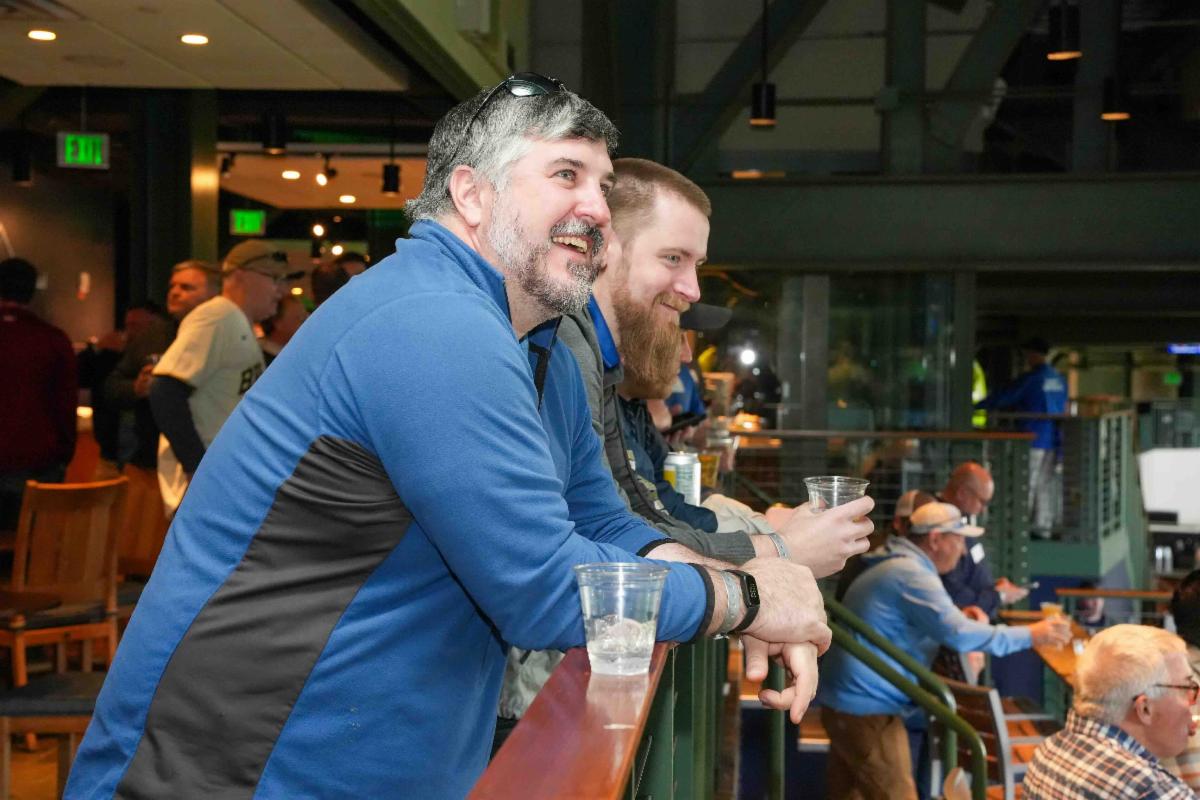
Tickets for the April 16 game against the Toronto Blue Jays at American Family Field sold out in less than two hours. Attendees will enjoy exclusive access to the Northwestern Mutual Legends Club, an all-inclusive buffet, and complementary beverages.
| | |
Parking, however, is not included. Attendees can buy prepaid parking online and/or via the MLB Ballpark App (which includes a $2 fee) for $21 (preferred) or $16 (general). You can also purchase parking day-of by scanning the QR code posted on the nearest light pole and following the on-screen instructions. Day-of parking costs $27 or $17 for preferred and general, respectively.
See you at the ballpark!
| | WisDOT, contractors preparing for 400+ projects during 2026 season | | |
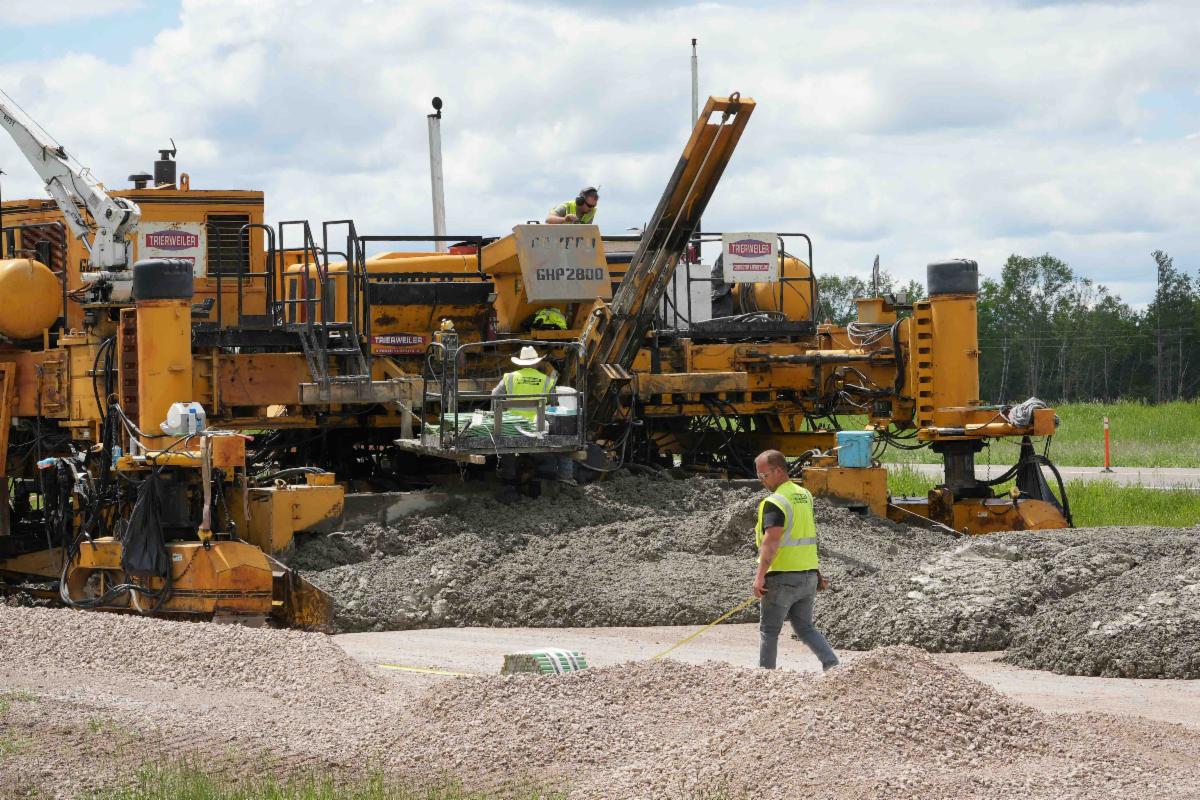
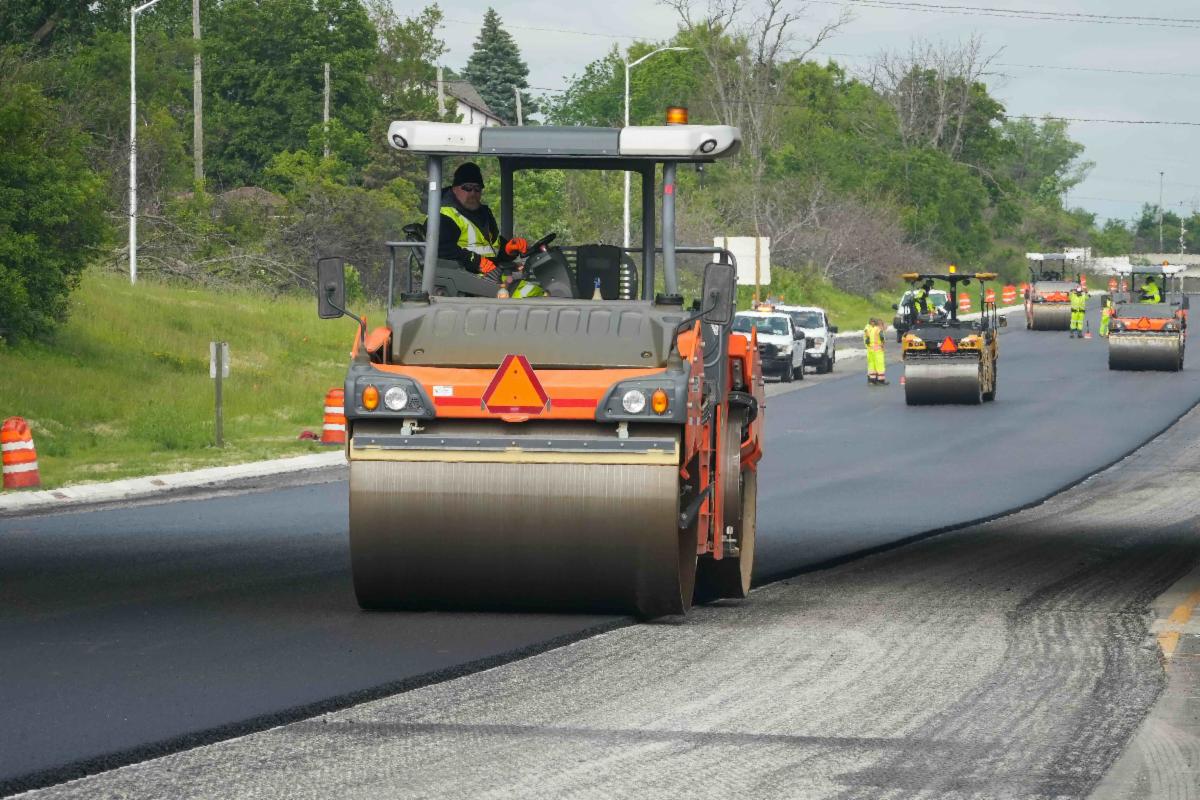
From Major and Mega freeway work continuing in the Fox Valley and Milwaukee to smaller undertakings in places like Rhinelander and Cumberland, you can expect to see state highway projects in every county in Wisconsin this year.
WisDOT has more than 400 projects slated for 2026, the Department said in a news release Wednesday.
The release detailed about a dozen specific projects across the state, giving drivers advance warnings and instructions on what to expect in those work zones.
“With construction projects planned in every county of the state, we urge motorists to plan ahead, know before you go with 511 Wisconsin, and always drive with caution in work zones,” WisDOT Secretary Kristina Boardman said.
This year’s assortment of projects reflects a slight decrease in overall number but an increase in projected let levels.
WisDOT told WTBA it predicts lets to total around $1.6 billion in FY2026, which would mean a more than $200 million jump over 2025.
WisDOT also stressed work zone safety in its news release. WTBA has worked with the Department for four years to expand safety messaging beyond the traditional one week in mid-April to all season long.
Keep an eye out for details on a kickoff event open to WTBA members in the coming weeks. Work Zone Awareness Week is April 20-24.
| | Federal funds could support more work on Great Sauk Trail as bridge nears completion | | |
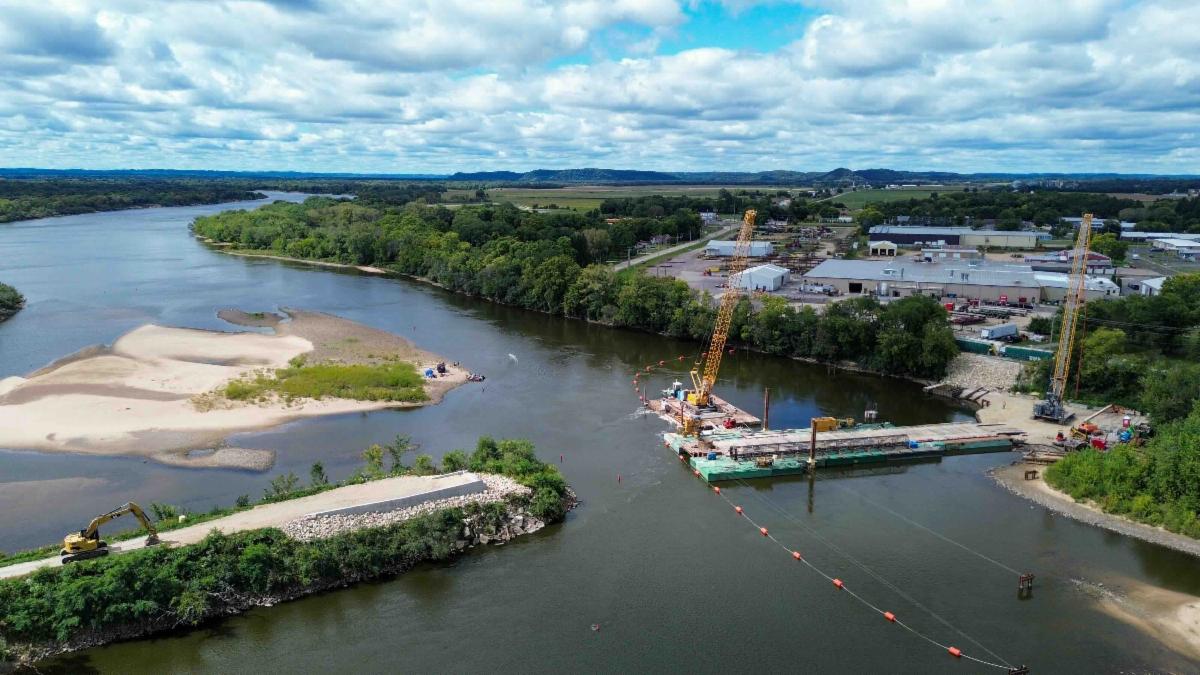
A new pedestrian, biking and snowmobile bridge spanning the Wisconsin River should be finished sometime this summer.
Work on expanding the Great Sauk State Trail–and potential future projects for WTBA members–is far from done, however.
| | |
This week, Rep. Mark Pocan (D-2nd Congressional District) toured the trail with Sauk County and Baraboo city representatives to look at possible spurs and connection points. The overall goal is to link the trail to the 400 State Trail through Devil’s Lake State Park.
Doing so could require an additional bridge over the Baraboo River along with boardwalks and other structures.
| | | |
Pocan represents the part of the state where the trail sits and helped earmark millions in federal funds for the work, including $2 million for the aforementioned Wisconsin River Bridge.
WTBA led a lawmaker tour of the bridge late last summer, highlighting the fact our members’ work expands well beyond traditional roads and bridges for cars and trucks. Zenith Tech (Walbec Group) is the prime contractor on the project.
"To have something like this that starts to connect the communities and gives people more chances to come into different areas of Sauk County, it's always nice to see the money go towards something that is going to have a long life and many people can use,” Pocan told the Wisconsin State Journal.
| | Consultant Council takes up loaded agenda during first quarterly meeting of 2026 | | |
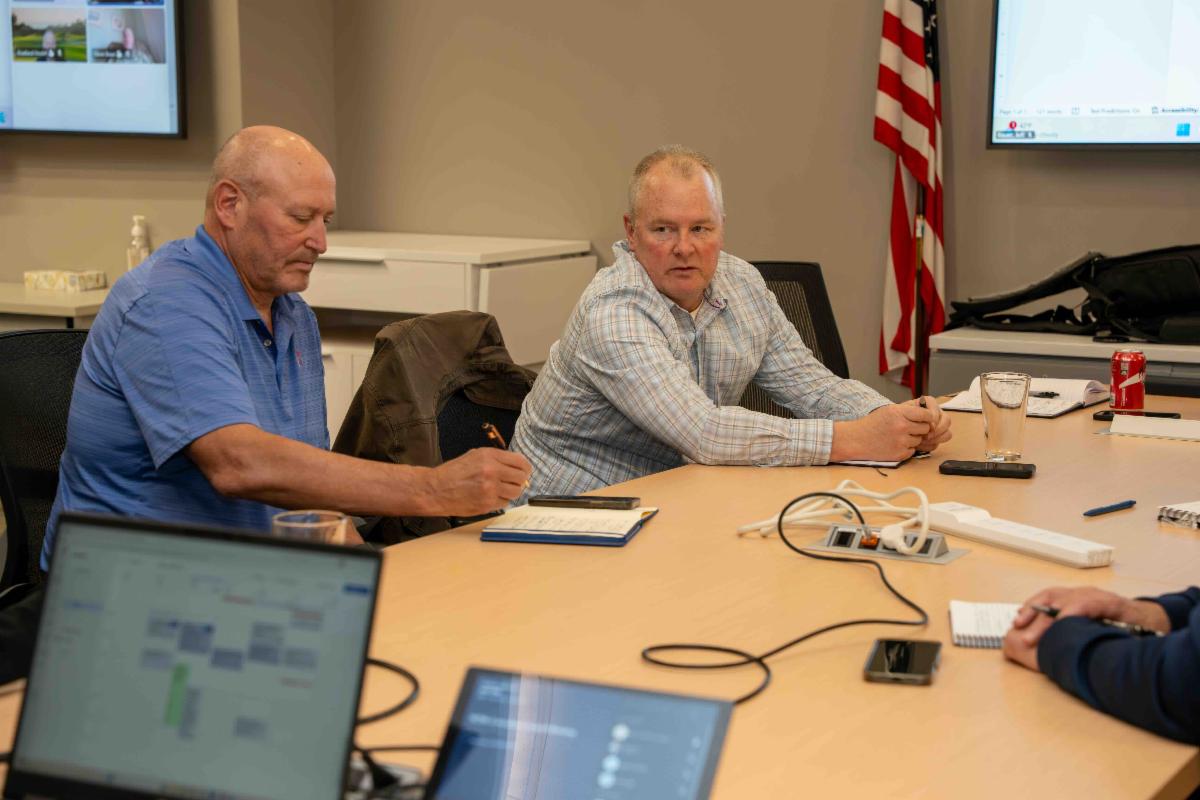
There's never a shortage of topics to discuss, problems to solve, and choices to weigh when the WTBA Consultant Council convenes.
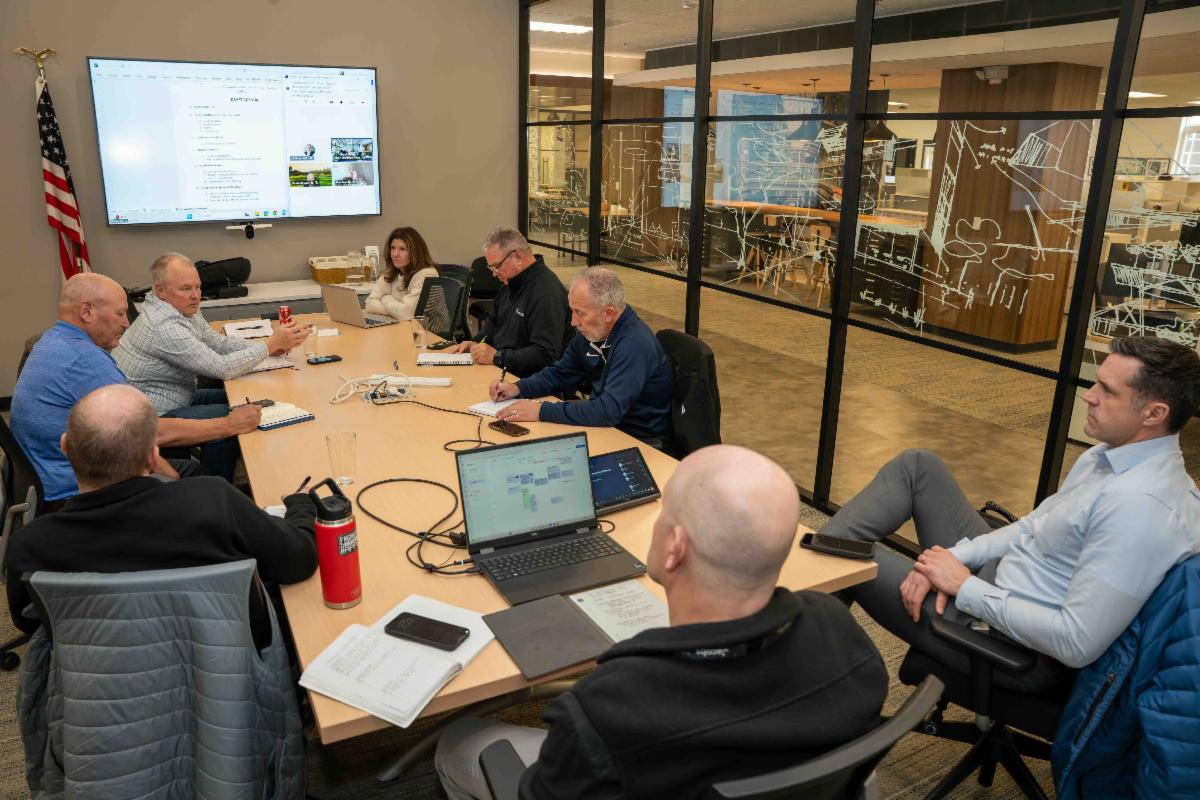
Just take a look at what their agenda covered Tuesday afternoon for the Council’s first quarterly meeting of 2026.
- A look at the political landscape inside a soon-to-be changing state Capitol and what it means for our industry
- An update on coordination between WTBA and like-minded partners
- The latest on the critical I-94 East-West project and the importance of keeping it on schedule
- Claims reform
- Work zone safety and awareness plans for 2026
- Environmental and regulatory guidance
- Design-Build's permanent addition to state law, offering a new tool for better-designed, faster moving projects
- Setting future meetings and adding new members to replace outgoing ones
| | |
All that in a 90-minute meeting. Not too shabby from the Council and new chairman Jeff Bauer, who hosted the group in Jacobs’ Milwaukee offices.
The WTBA Consultant Council is a board of nine members from various engineering firms overseen by Director of Engineering Matt Grove. They meet quarterly, with the Consultant Council chairman serving on the full WTBA Board of Directors.
| | | Roland, OE139 offering free asphalt paving course April 7 | | |
Roland Machinery and the Operating Engineers Local 139 invite anyone interested in learning the best practices and fundamentals of asphalt paving to a free, daylong seminar this spring.
The training runs from 8:30 a.m. to 3:30 p.m. on Tuesday, April 7 at the OE139 Training Center on Highway 21 in Coloma.
The training includes classroom and hands-on sessions and is free to attend. Attendees will also be treated to lunch and a t-shirt. The event is open to anyone, whether they are union or non-union.
Click HERE for details and to fill out the registration form.
This course is purely informational and instructional -- no certifications will be issued.
Have an upcoming event that you want to get word out about? Submit it via our WTBA.org Networking page. Certain entries may receive further publicity in the Weekly Update newsletter based on available space and context.
| | Connecting Communities: Why reauthorizing Surface Transportation Act is also critical for housing industry | | |
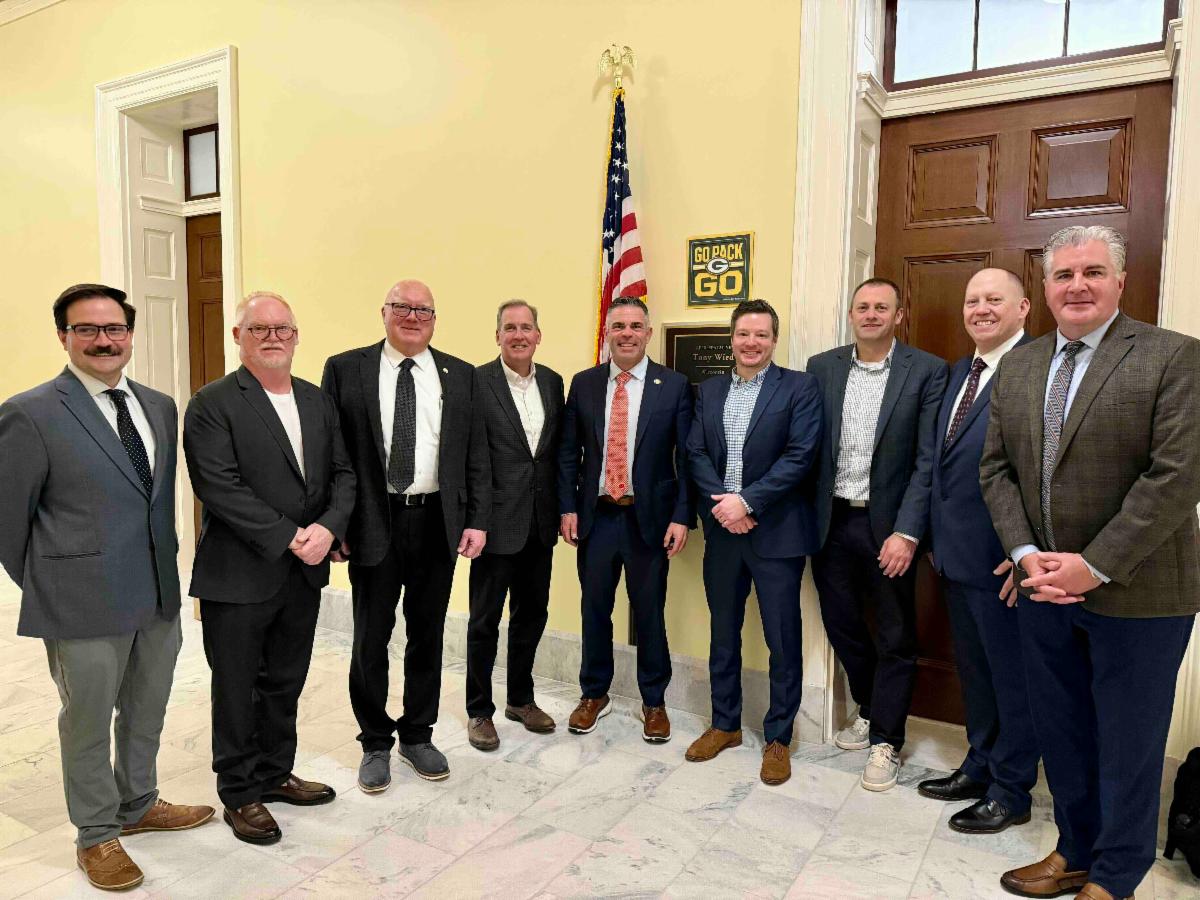
WTBA Executive Director Steve Baas (center, left) joined industry members and partners to meet with Congressman Tony Wied and other federal lawmakers during TDA's annual Fly-In in March.
When WTBA Executive Director Steve Baas says “It all begins and ends with a road” as he does to end each episode of “Road Trippin’ With WTBA,” he’s often talking about home.
Indeed, while roads and bridges drive commerce and the economy, getting safely to and from your home is what matters most. That makes the need to provide long-term, sustainable funding to build those roads a huge priority as Congress looks at reauthorizing the five-year Surface Transportation Act.
Building materials giant CRH president Nathan Creech considers reauthorization a top priority in 2026, allowing for more home construction and making the cost of buying a home more affordable.
“Investment in our country’s core infrastructure — alongside other solutions like zoning reform, workforce development and incentives for first-time buyers — present a powerful opportunity to confront our nation’s housing crisis head-on,” Creech wrote in an op-ed published on the Smart Cities Dive website.
The current version of the Surface Transportation Act, known as the Bipartisan Infrastructure Law, expires in September. The more than $1.2 trillion BIL authorized hundreds of billions in money for states to work on highways, freeways, and bridges.
WTBA has and continues to coordinate with ARTBA and industry partners to urge lawmakers to reauthorize the Surface Transportation Act on time.
“Infrastructure investment also has a multiplier effect — every dollar invested in infrastructure generates broader economic activity,” Creech said.
| | RFP issued to study vehicle-animal collisions, possible mitigation strategies | | |
A certain stretch of highway exists for just about anyone who’s ever driven.
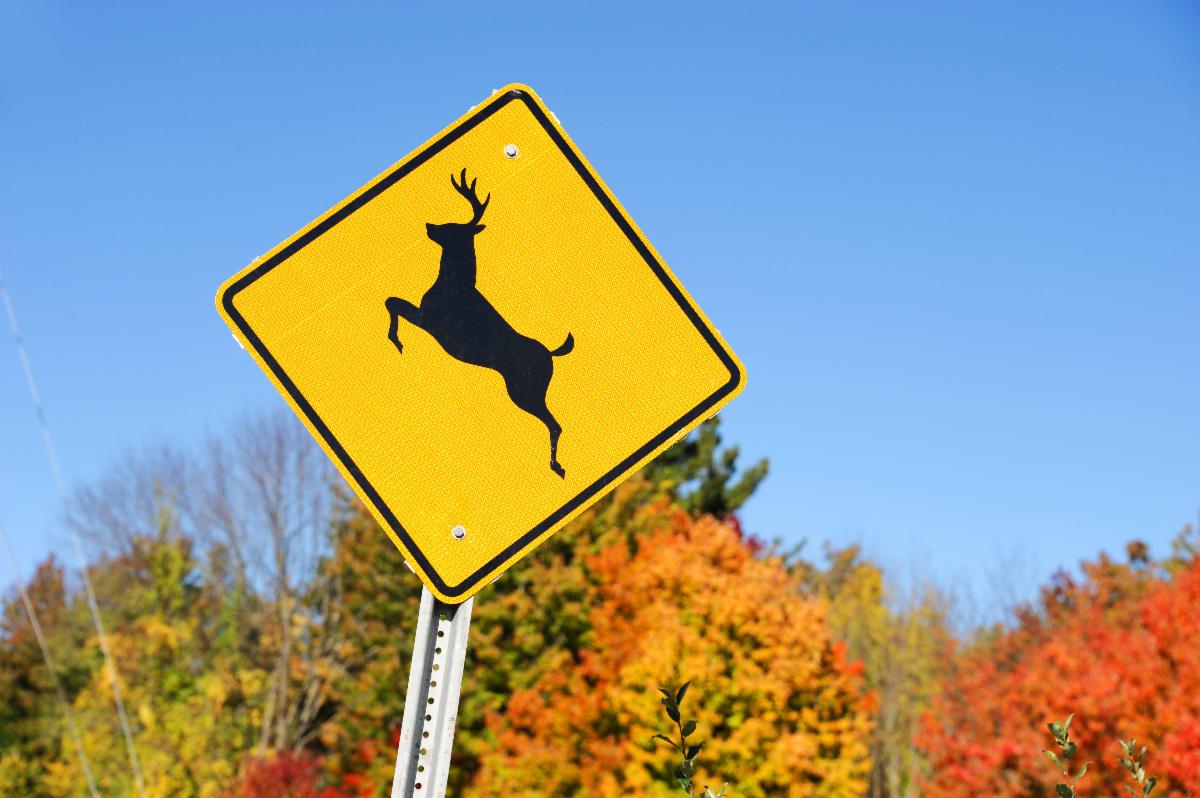
It’s the spot where you always see deer or other animals dart in front of you. Maybe you’ve even hit one yourself.
WisDOT wants to figure out where those areas are most common along its network of state highways and what could be done to make them safer for people and creatures alike.
| | | |
The Department issued a Request for Proposal this week to conduct a Wildlife Crossing Hotspot Analysis. Successful applicants will develop a research plan, project schedule and budget, while also demonstrating the qualifications of their team.
WisDOT aims to use the research and data to map Wildlife Crossing Opportunity Areas and look at possible projects and developments to improve safety, potentially building them into future highway lets.
Nine people died and 707 were injured in more than 17,000 crashes with deer alone in Wisconsin in 2024, WisDOT reported.
RFPs are due May 11, 2026 by 4:30 p.m. Awards will be issued in June.
| | CONNECT WITH US ON SOCIAL | | | | |