|
As July rolls in, the temperatures start climbing, and those hot summer days really remind us how important shade and cool spaces are, especially in our cities, where concrete and pavement soak up and hold heat.
You might have heard the term “urban heat island,” which basically means developed areas get much hotter than surrounding natural spots. It’s why some neighborhoods feel like ovens, while parks and tree-lined streets are noticeably cooler.
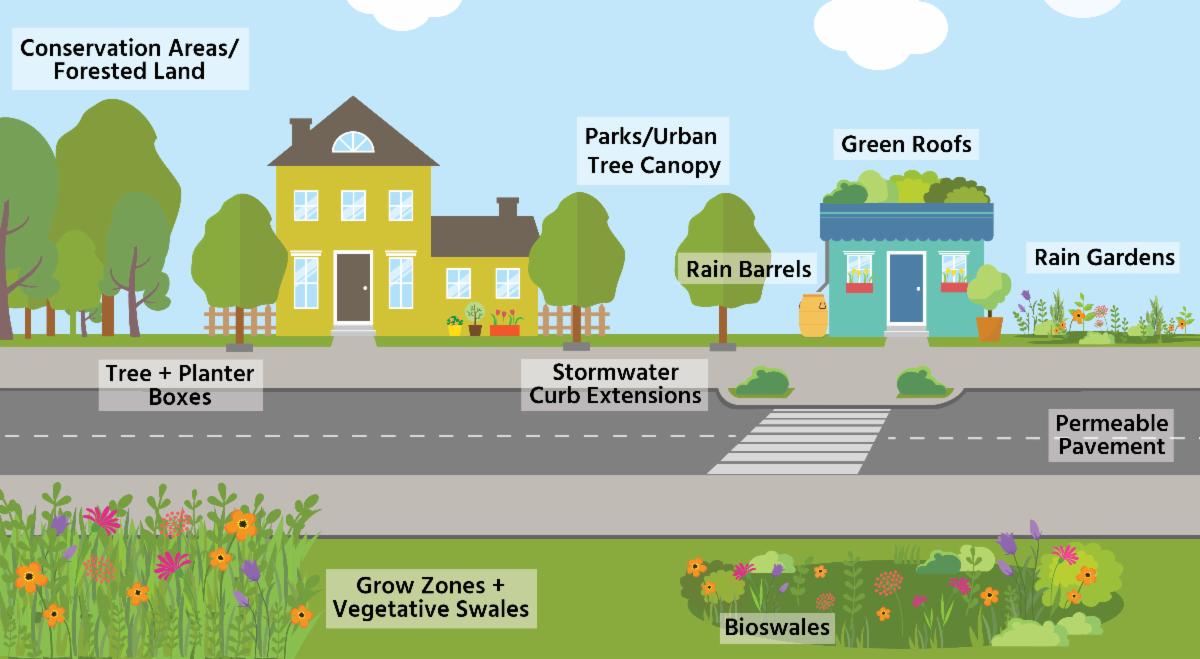
That’s where green infrastructure comes in. Trees, parks, and even things like green roofs aren’t just pretty, they actually help lower temperatures by shading surfaces and releasing moisture into the air. A good tree canopy can make a big difference in how hot it feels outside and even reduce energy bills by cooling buildings naturally.
So next time you’re seeking relief from the heat, look for the shade and think about how planting more trees and protecting our green spaces helps keep our community cooler and healthier for everyone.
Support local green infrastructure through one of these programs:
Historic Kenwood Tree Fundraiser
Temple Terrace Adopt-a-Tree
Hillsborough County Tree Grant
Tree-Mendous Tampa
City of Tampa Plant Your Heart Out
Pinellas County Florida Native Plant Society Grants
| | |
Green vs. Gray in Tampa Bay
Now that you know why green infrastructure matters, what can you do about it? Here’s the exciting part: you can help bring these cool[ing], community-strengthening ideas to life with a Bay Mini-Grant!
These grants (up to $5,000) support community-led projects that protect and restore Tampa Bay. Schools, neighborhood groups, nonprofits, and more are all welcome to apply.
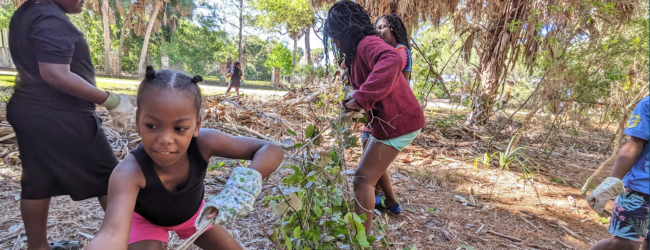
Need inspiration? Just look at Guardians of the Gulf: Green vs. Gray in Tampa Bay, a 2022 Bay Mini-Grant project to introduce local youth to coastal resiliency and the real-world differences between natural (green) and built (gray) infrastructure. Over a four-day camp, participants explored Tampa Bay habitats, installed vertical oyster gardens, painted and set up a rain barrel, identified invasive species at Clam Bayou, and contributed data to a youth-friendly GIS mapping tool. The experience empowered students—many of whom had never visited the coast before—to become informed, engaged coastal stewards while sparking interest in STEM careers. It’s a great example of how a small grant can make a big impact.
What ideas do you have to green-up your community?
Applications are open now through September 13.
Learn more and apply
| | |
Shoring Up the Future
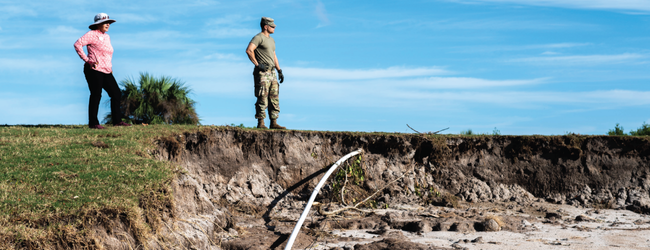
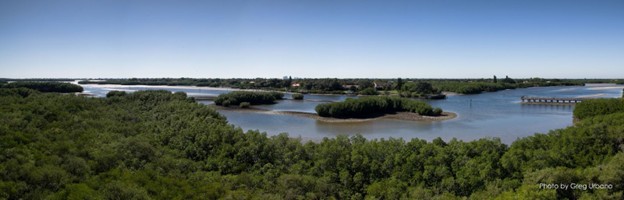
Interested in getting involved with even more nature-based solutions (NBS)? MacDill Air Force Base is tackling shoreline erosion and flooding challenges made worse by high tides and recent hurricanes. With its unique natural setting, the base is an ideal site to implement strategies that work with natural features to enhance resilience and readiness.
The Water Institute is leading a public decision-making process to help select and design the best approach. The first workshop of the process will provide an overview of the project and discuss the NBS alternatives being considered.
This virtual workshop is open to the public and will be held on July 22nd from 3:30 to 5:00 pm EDT via webinar. The webinar will be recorded for those unable to attend, as well as used as a distribution list for future updates, so please register if interested in updates, regardless of your availability to attend at that time.
Register
| | |
Bay Careful
With summer heating up, that means it’s peak boating season in Tampa Bay. While you're out enjoying the water, it’s important to boat responsibly to protect two of our most valuable natural resources: seagrass meadows and manatees.
Seagrass beds are critical habitat for marine life and they help keep our water clean, but they’re also vulnerable to propeller damage. To be seagrass safe, always use navigational aids to avoid shallow areas. Trim up your motor in shallow water, and pole or troll through shallow zones instead of powering through. Prop scars can take years to recover, so every careful decision counts.
Manatees also need your help. These gentle giants feed and rest near the surface in warm, shallow waters, making them especially susceptible to boat strikes. To be manatee safe, obey posted speed limits and no-wake zones, especially in manatee zones. Wear polarized sunglasses to help spot their snouts, backs, or tails in the water. If you see a manatee, give it plenty of space (at least 50 feet) and never chase, feed, or touch them.
By staying alert and following these simple guidelines, you can enjoy all the fun of summer boating while helping to keep Tampa Bay’s waters safe and healthy for wildlife.
Learn more at Explore Tampa Bay
| | |
Shell, Yeah!
It’s officially scallop season in Florida, with harvest dates varying by region. Nearby opportunities include:
- Levy, Citrus, and Hernando counties (including Crystal River and Homosassa): July 1 – September 24
- Pasco County Zone (from the Hernando-Pasco county line to the Anclote River): July 10 – August 18
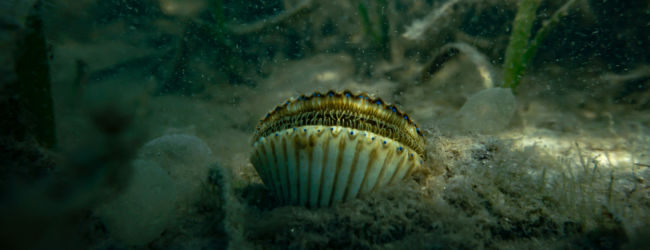
Before you head out, remember: scalloping is not allowed in Tampa Bay. That’s because our local bay scallop populations haven’t yet recovered enough to support recreational harvesting. TBEP is actively researching local scallop habitats, working to better understand their populations and the health of seagrass beds that scallops depend on. This research will help guide future conservation and restoration efforts to bring back healthy scallop communities - a key goal of our Comprehensive Conservation & Management Plan.
Want to get involved? Mark your calendar for The Great Bay Scallop Search on August 2. This fun community event has volunteers help survey local waters to tally scallop populations in the bay!
| | |
Funding the Future
A bipartisan group of lawmakers recently introduced the ESTUARIES Act to reauthorize federal support for the EPA’s National Estuary Program, ensuring critical funding for locally led restoration and protection efforts continues through 2031. The program supports 28 nationally significant estuaries and helps safeguard federal support for water quality, habitat, and community resilience.
This bipartisan legislation highlights the value of science-driven, collaborative approaches that balance environmental health with economic vitality. By renewing the program, Congress is reinforcing the partnerships that have made measurable progress in restoring and sustaining some of our most productive and vulnerable coastal ecosystems.
We'd like to give special thanks to our local Tampa Bay delegate, Congresswoman Kathy Castor, for co-signing the bill!
| | |
Heat Check
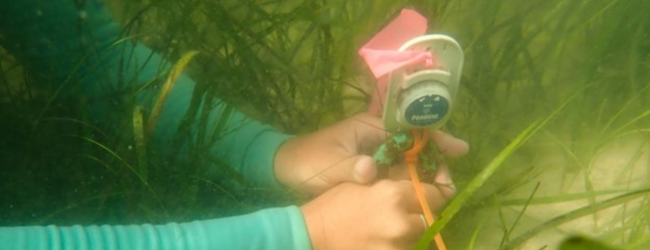
As summer heats up, so does our fieldwork! Right now, we’re out in the bay setting temperature loggers to monitor water temperatures over the long term. These devices help us understand how rising temperatures might affect seagrass growth and overall bay health.
Seagrass is a vital part of Tampa Bay’s ecosystem, and by tracking temperature changes, we can better predict how climate and seasonal shifts impact this important habitat. This ongoing monitoring is a key piece of the puzzle for protecting and restoring our bay.
| | |
Speak Up for Scrublands
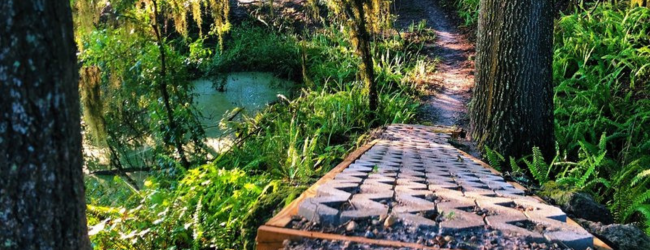
Hillsborough County wants your input on the future of one of its largest and most ecologically important natural areas—the Balm Boyette Scrub Nature Preserve. This nearly 5,000-acre preserve, located southeast of Riverview, is getting an update to its 10-year land management and use plan, and your voice matters.
You can get involved by:
- Attending an in-person open house on Tuesday, June 24 at 6 p.m. at the Riverview Public Library
-
Submitting feedback online by visiting hcfl.gov/events by June 24
The plan will guide how the preserve is maintained, used, and protected over the next decade, including hiking, mountain biking, wildlife viewing, and environmental education.
With its rare habitats and diverse wildlife, Balm Boyette is a vital piece of Central Florida’s natural heritage. Help ensure it stays that way- review the draft plan and share your thoughts today!
Submit your input
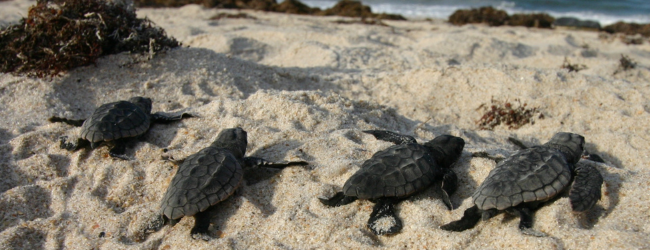
| | Photo by the Florida Fish and Wildlife Research Institute | | |
Turtle Tracks
July is right in the heart of sea turtle nesting season along Florida’s coasts, including Tampa Bay. During this time, female turtles come ashore at night to lay their eggs, and hatchlings emerge about two months later to make their way to the water.
You can make a big difference in helping these vulnerable creatures by:
- Turning off or shielding outdoor lights near the beach—bright lights can confuse nesting turtles and hatchlings.
- Keeping beaches clean and free of trash so hatchlings can find their way safely to the ocean.
- Avoiding disturbing marked nests or wildlife on the beach.
-
Participating in local volunteer programs that monitor nests or help with beach cleanups.
Protecting sea turtles is a community effort. Small actions add up to a safer, healthier environment for these amazing animals.
| | |
Water Wise Awards
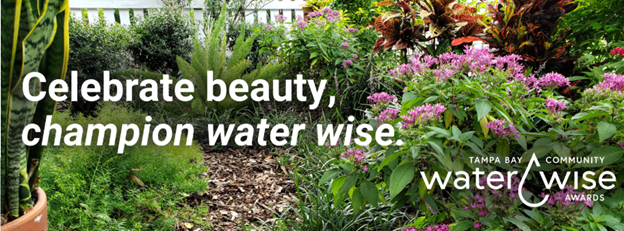
Do you take pride in your beautiful, water-efficient landscape? The Tampa Bay Community Water Wise Awards program recognizes outstanding contributions towards outdoor water conservation, sustainability, and environmental stewardship. If your yard balances attractive design with Florida-Friendly LandscapingTM principles, we want to reward you for your significant impact on our community’s water resources.
Winners will receive a custom mosaic steppingstone crafted by a local artist and be celebrated by local officials. Don't miss this opportunity to gain recognition for your commitment to water conservation and environmental stewardship.
The deadline is July 30, 2025.
Apply today
| |
Staff Media Recommendation
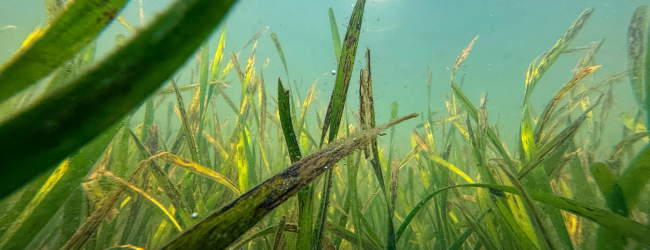
We kicked off summer the best way we know how - wading through Tampa Bay for our annual seagrass transect training. There’s just something about getting in the water that makes you truly appreciate how amazing and important our local seagrass beds are.
It also got us wondering… can you tell the difference between seagrass and seaweed? (Hint: one’s a plant, the other isn’t!)
| | | |
Seagrasses are vascular plants. They have roots, stems, and leaves, and they reproduce with flowers and seeds. Seaweeds, on the other hand, are algae. They don’t have true roots, stems, or leaves, and they reproduce by releasing spores.
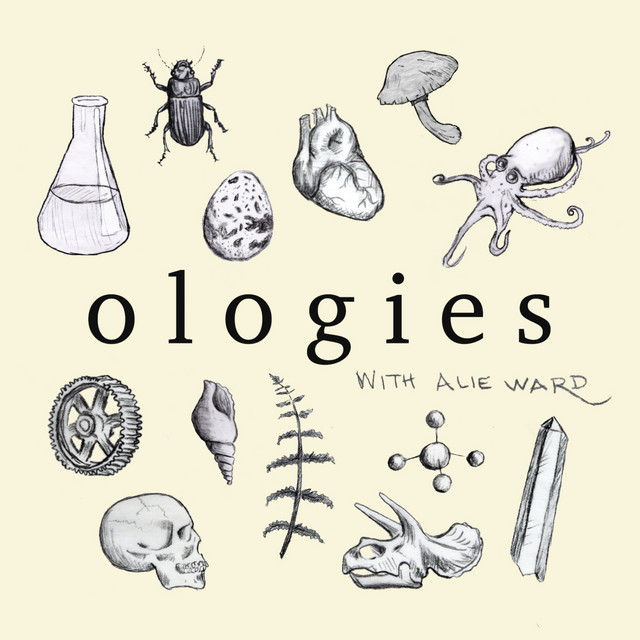
Curious to learn more? We highly recommend this episode of Ologies with Alie Ward. It’s full of fascinating facts about seaweed like what’s inside their cells, which are the tastiest, and how tropical seaweeds differ from their cold-water cousins. Give it a listen!
| | |
Canoe Paddle Tour | July 5
Enjoy an hour and half of easy paddling on the Little Manatee River loop with your guide. Three seater canoe rentals or 1 person kayaks can be rented for $25.
| | |
Toxic Bus Tour VI | July 12
Join Sierra Club for a bus tour and discussion on the impacts of burning fossil fuels and what can be done moving forward.
| | |
Sea Oat Planting | July 12
Hillsborough County needs volunteers to help plant native sea oats along dunes at Apollo Beach Nature Preserve.
| | |
SharkCon | July 12-13
A family-friendly expo featuring expert speakers, celebrity guests, hands-on activities, vendors, and conservation exhibits.
| | |
Tiny Wildlife Walk | July 19
Join naturalist Liz Childress on a walk to look for little creatures at Weedon Island Preserve, like butterflies, bees, and other invertebrates.
| | |
MacDill Nature Based Solutions Workshop | July 22
MacDill Air Force Base is exploring nature-based solutions to reduce shoreline erosion and flooding. A public workshop will introduce the project and gather input on potential design alternatives.
| | |
Great Bay Scallop Search | August 2
Join this annual citizen science event where volunteers snorkel to survey bay scallop populations, helping scientists monitor water quality and habitat health.
| |
The mission of the Tampa Bay Estuary Program is to build partnerships to restore and protect Tampa Bay through implementation of a scientifically sound, community-based management plan.
TBEP is a partnership of Hillsborough, Manatee, Pasco and Pinellas counties; the cities of Tampa, St. Petersburg and Clearwater; the Southwest Florida Water Management District; the U.S. Environmental Protection Agency and the Florida Department of Environmental Protection.
| | | | |