Weekly Digest Number 10 - March 7, 2023 |
|
Welcome to the RWU Rail & Labor News! This news bulletin is produced and emailed out each Tuesday morning. We hope you find each week's news and information useful. If so, please share with co-workers, friends, and colleagues. If you like, you can sign them up to get all the news from RWU HERE. Or forward them the link. Note: If you read over this news bulletin each week, you will be sure to never miss the important news of what is going on in the railroad world from a worker's perspective!
|
|
(Editor's Note: Great to see mainstream media finally catching on. Make sure to watch the clip at the link below. RWU has been beating the drum for years about what a racket the Class Ones are. When the American people fully understand what a scam the rail industry is, maybe things might finally start to change.) |
|
Railroad Execs Got Cash, in Part, for 'Record' Train Length
A Scripps News investigation found Norfolk Southern gave top leaders millions of dollars in awards after they hit a controversial financial target.
|
|
Article by
February 27, 2023
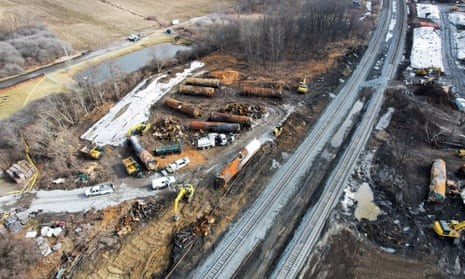
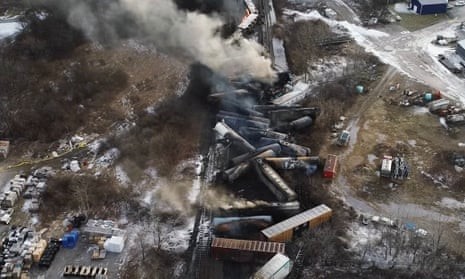
While concerns have been building across the railroad industry for years about the growing length of trains, our Scripps News investigation found that Norfolk Southern’s top executives personally pocketed millions of dollars in incentives and cash rewards after the company hit a controversial financial target and made its trains longer. Critics from within the industry say the specific financial metrics the executives were incentivized to hit can pressure them to cut costs — potentially at the expense of safety. The Norfolk Southern train that derailed just outside the small Ohio town of East Palestine stretched nearly two miles long.
A National Transportation Safety Board (NTSB) preliminary report said trouble with the train began with a suspected wheel bearing that overheated on the 23rd car. When that car came off the rail, it set in motion a disaster that has put a national spotlight on the potential dangers of increasingly long trains. Scripps News has learned the length of the train in East Palestine is being investigated as a potential contributing factor to the crash.
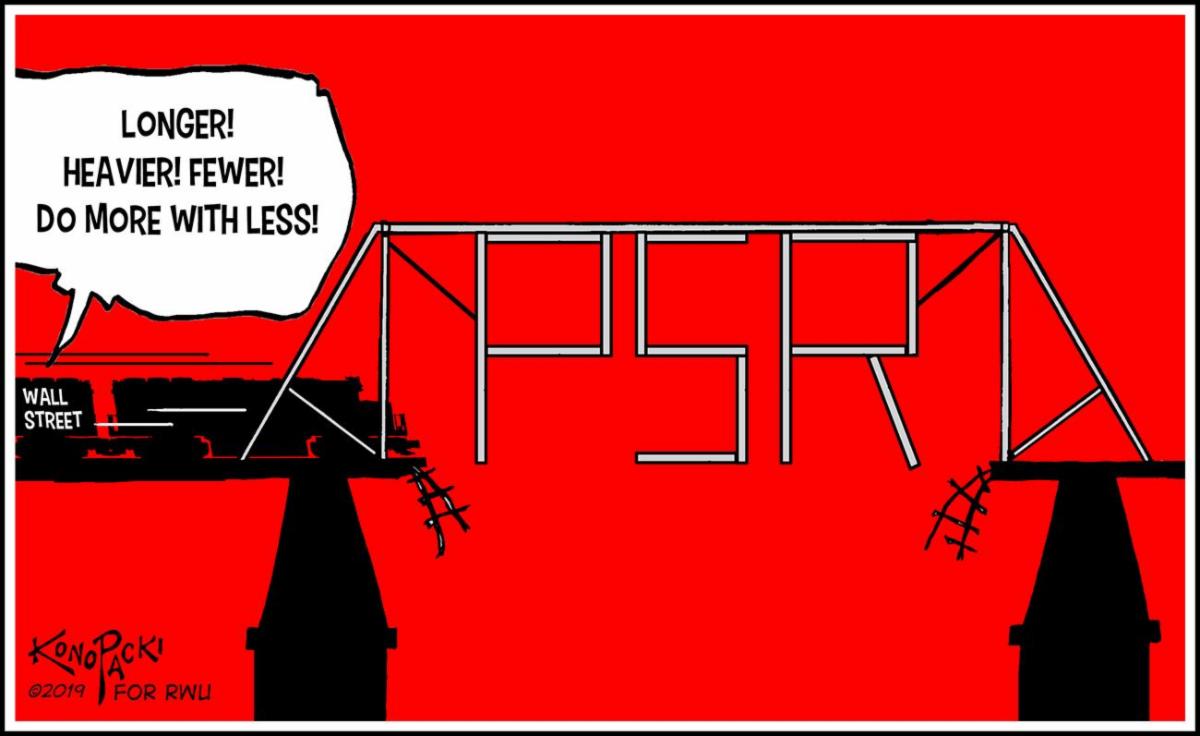
In Norfolk Southern's 2019 annual report, the company told shareholders that it had launched a major overhaul in its operations, saying it had begun "running fewer, heavier trains."
That same year, Securities and Exchange Commission (SEC) documents Scripps News examined show Norfolk Southern began to make big changes in how top executives could qualify for large cash awards, tying more of those payouts to a number known on Wall Street as the operating ratio.
It is calculated by dividing operating costs by operating revenues, and records we discovered show that it has grown in significance at Norfolk Southern in recent years.
"Railroads are seeking to have that number be the smallest, lowest number possible," said Steven Ditmeyer, the former director of research and development at the Federal Railroad Administration. "You want to squeeze the costs and increase the revenues."
|
|
(Editor's Note: This is not surprising and not an isolated incident. Railroad managers who are pushed to meet standards without enough manpower to perform the job regularly cut corners on federal rules and reguations to "get the train out." In their defense, this is all coming down from the Top.) |
|
Leaked Audio Reveals US Rail Workers Were Told to Skip Inspections as Ohio Crash Prompts Scrutiny to Industry
Exclusive: employee says manager told her to stop marking cars for repair, as Ohio derailment brings hard look at industry’s record of blocking safety rules
|
|
In leaked audio heard by the Guardian, a manager for one of the US’s largest rail companies can be heard explaining to a former carman that they should stop tagging railcars for broken bearings. The manager says doing so delays other cargo.
The disclosure comes as federal agencies investigate the derailment in East Palestine, Ohio. A wheel-bearing failure was cited as the cause of the crash in a preliminary report released by the National Transportation Safety Board.
In late 2016, Stephanie Griffin, a former Union Pacific carman, went to her manager with concerns that she was getting pushback for tagging – or reporting for repair – railcars. Her manager told her it was OK to skip inspections.
Griffin asked if the manager could put that in writing. “That’s weird,” said the manager. “We have 56 other people who are not bad-ordering stuff out there. You’re definitely not going to get in trouble for it.”
Griffin said: “He refused to bad-order [mark for repair] cars for bad wheel bearings. My boss took issue with it because it increased our dwell time. When that happened, corporate offices would start berating management to release the cars.”
Dwell time refers to the time a train spends at a scheduled stop without moving. “It’s very obvious that management is not concerned with public safety, and only concerned with making their numbers look good,” Griffin said.
Griffin also claimed she and other workers did not receive any formal training to inspect and repair railcars, and were left to learn from an older worker and figure the rest out from American Association of Railroads and Federal Railroad Administration handbooks. Griffin suggested all major railroad carriers operate similarly.
As part of her job at the railyard, Griffin was to inspect all railcars on inbound journeys for defects and put a tag on them to send the cars to the railroad yard repair shop. On outbound journeys, workers were supposed to check the cars’ air brakes and make a final inspection. But, she said, management, at the behest of corporate, undermined workers’ effectiveness on the job.
She said: “The regulation at the time stated that a wheel bearing was bad when it had ‘visible seepage’. But that was very vague, and the bosses used that vagueness to their advantage. For me, it was whenever oil was visible on the bearing. For my bosses, they wanted actual droplets and proof it would leak on the ground.
“Most railroad workers are fighting against an entire system that only exists as a money-making apparatus to the wealthy. Those trains run through our towns, but they do not run next to rich folks’ homes, nor next to our politicians’ homes. This is a top-down problem.”
A spokesperson for Union Pacific said in an email: “Nothing is more important than the safety of Union Pacific employees and the communities we serve. Union Pacific does not have the alleged recording and cannot comment on its authenticity.”
It added: “Employees are expected and encouraged to report concerns, and have a number of avenues to do so, including a 24/7 anonymous hotline and they are firmly protected from retaliation.”
|
|
(Editor's Note: The rail industry's smoke and mirrors is not working too well these last few months, as first the industry got a black eye for its hardball stance towards its workforce in contract negotiations, refusing to hand over not one day of sick time, and now the East Palestine derailment. Watch for rail industry spending in PR to increase in the coming year as the industry scrambles to reassert the narrative that all is well and thriving ... and safe.) |
|
‘Crafting An illusion’: U.S. Rail Firms’ Multimillion-Dollar PR Push
Norfolk Southern, the company behind the Ohio train crash, and other rail firms spent millions on marketing and lobbying
|
|
Six children, smiling and laughing, sit at a table with lunch boxes open in front of them. “Hey guys! My dad can stop a train with his finger,” one brags. “My mom can see into the future,” another says, holding up her hands as binoculars. “My mom? She speaks train,” a third claims.
Just then, her mom walks into the room. Another child asks if it’s true that she can talk to trains. “You betcha,” she says with a wink, as she stands in front of a sky-blue sign emblazoned with the logo of the Norfolk Southern Corporation.
The kids’ conversation takes place in “Everyday Superheroes”, a 2018 video created for Norfolk Southern, the $12.7bn operator of the train carrying toxic chemicals that derailed earlier this month in East Palestine, Ohio, causing an environmental disaster of still unknown proportions.
The video, part of an ad campaign called “Reimagine Possible”, was produced by RP3, a Maryland-based public relations agency. RP3 said the campaign was designed to reach “policymakers and opinion elites … whose perceptions are vital to Norfolk Southern’s success”. The people targeted by the campaign “tend to support companies whose leadership helps spur innovation and growth”, the agency wrote, explaining in a case study how the campaign was designed to “convince people they’re actually innovative”.
The PR push is a window into a years-long, multimillion-dollar campaign by America’s biggest railroad corporations to win favor among federal regulators and policymakers and push back against calls for tougher regulation – a successful campaign that is coming under closer scrutiny following the Ohio disaster.
Another video, set to its own version of School House Rock’s Conjunction Junction, starts with the lyrics: “Norfolk Southern, what’s your function? Hooking up the country, helping business run. Trains! They haul everything, safely and on time.”
Between 2015 and 2022, the Association of American Railroads (AAR), the trade organization representing large train companies, spent more than $39.4m lobbying the federal government, according to data compiled by the non-profit OpenSecrets. The AAR and its dues-paying members, who include Norfolk Southern, Union Pacific, BNSF and CSX, have also made millions of dollars’ worth of political contributions.
But as Norfolk Southern’s “Reimagine Possible” campaign reflects, the industry also employs more indirect tactics to promote what the AAR calls “balanced regulation”, its euphemism for eliminating mandatory, government-enforced safety standards in favor of voluntary, industry-led oversight.
An analysis by the Guardian found that between 2015 and 2019, the most recent year for which data are available, the AAR paid Subject Matter, a Washington DC-based PR and government affairs firm, more than $23.3m for “paid media consulting + advertising”, according to the AAR’s annual filings with the Internal Revenue Service (IRS). That sum represents nearly as much as the group spent on lobbying during the same period.
|
|
(Editor's Note: RWU is mounting a full court press to reign the carriers in. All rail unions, the Transportation Trades Department, and the entire labor movement has an invaluable opportunity to confront the rail industry and win - if not outright public ownership - then at minimum important safety regulations to do with crew size; train length; detector regulation; fatigue; proper maintenance and inspections of cars, locomotives, track and infrastructure; adequate staffing; modern ECP braking; upgraded tank cars; paid sick leave; adequate time off work for all employees, etc.) |
|
Rail Workers Demand “Immediate Action” From Lawmakers to Rein In Rail Industry
Workers say preventing future crashes like the one in East Palestine could be simple, if lawmakers choose to act.
|
|
Railroad workers are warning that, if policymakers don’t act soon to rein in the rail industry with better regulations and protections for workers, there will be far more crashes like this month’s disaster in East Palestine, Ohio.
In a statement on Friday, rail reform group Railroad Workers United (RWU) pointed out that the government has determined that the Ohio crash was “100 percent preventable.” The National Transportation Safety Board (NTSB) wrote in a report about the crash released last week that “Every single event that we investigate is preventable,” RWU noted.
RWU called for politicians to take immediate action on the rail industry by implementing new regulations and strengthening existing rules. They say that the industry has continually “prioritized profits over safety” by implementing extreme cost-cutting measures in recent decades while brushing off workers’ concerns about safety.
“Every day we go to work, we have serious concerns about preventing accidents like the one that occurred in Ohio,” said RWU general secretary Jason Doering. “As locomotive engineers, conductors, signal maintainers, car inspectors, track workers, dispatchers, machinists, and electricians, we experience the reality that our jobs are becoming increasingly dangerous due to insufficient staffing, inadequate maintenance, and a lack of oversight and inspection.”
“Railroad workers experience firsthand every day the dangers inherent in this style of railroading. It has impacted their safety and health, state of mind, and lives on and off the job,” added RWU co-chair Gabe Christenson.
|
|
(Editor's Note: The author, Ben Jealous, is the new head of the country's largest environmental organization, the Sierra Club. He was formerly the president of the NAACP. Now he is talking about rail safety and railroad operations. He represents a crucial intersection of environment, social justice, and labor. RWU hopes to recruit Dr. Ben as a crucial ally in the struggle for a better, expanded, and safer rail network in the U.S.) |
|
It Shouldn’t Take a Fiery Crash and Toxic Spill to Push Action on Railroad Safety
The EPA and Transportation Department must ensure that Norfolk Southern meets its obligation to make things right.
|
|
People around East Palestine, Ohio, have been warned not to run their vacuum cleaners.
That was the reality two weeks after a train derailment in the village of about 4,700 people near the border with Pennsylvania, which damaged public health and the environment in ways that still aren’t fully known.
Pennsylvania’s health department has told residents that data from its air quality monitoring “do not indicate a potential for long-term health effects,” but if people choose to vacuum after their evacuation they should do so in “small amounts at a time and take frequent breaks by walking outdoors.”
As confusing as those messages may be, Ohioans have gotten even less information from that state’s government.
Five of the derailed cars contained nearly 1 million pounds of vinyl chloride, a toxic flammable liquid; other cars carried butyl acrylate, ethylhexyl acrylate, and isobutylene. The spills from the wreck have left a long chemical plume moving down the Ohio River at about a mile an hour. The result has been at least 3,500 fish killed. The train’s owner, Norfolk Southern, said it is removing contaminated soil at the crash site, which can leach toxic chemicals into the water and air, after the Environmental Protection Agency (EPA) raised questions.
The immediate need is to respond to make sure that harm to people, wildlife, and waters now and in the future are limited, to the extent we are able. As a starting point, residents need clear, understandable answers about risks they face and support to which they are entitled. While federal authorities generally defer to state officials in disasters, the simmering mistrust caused by the strange odors residents say they smell, the soreness of their throats and the aching in their heads seems to cry out for a different response.
The EPA and Transportation Department must ensure that Norfolk Southern meets its obligation to make things right. The Sierra Club’s Ohio Director Ericka Copeland captured it — “East Palestine and the surrounding communities in Ohio and Pennsylvania deserve full transparency from the EPA, Norfolk Southern, and state leadership… Residents deserve to be able to safely return to their homes and access drinking water without the risk of everyday activities like vacuuming exposing them further to these chemicals.”
Moving forward, we need to do more to protect people and places from hazardous materials that move in more than 2 million freight cars each year. To be fair, reports show that freight rail spills happen less often than spills from trucks or planes. But we know those trains don’t run through posh suburbs. They run through places like East Palestine, a working-class white village where median household income is about two-thirds the Ohio average. They are places that historically get overlooked.
|
|
(Editor's Note: The authors both worked for many years on the railroad and are now active Retiree members of RWU.) |
|
Relentless Profit Drive Behind Ohio Rail Disaster
By Geoff Mirelowitz and Marilee Taylor
|
|
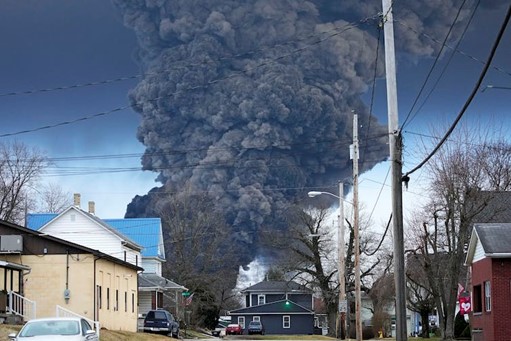
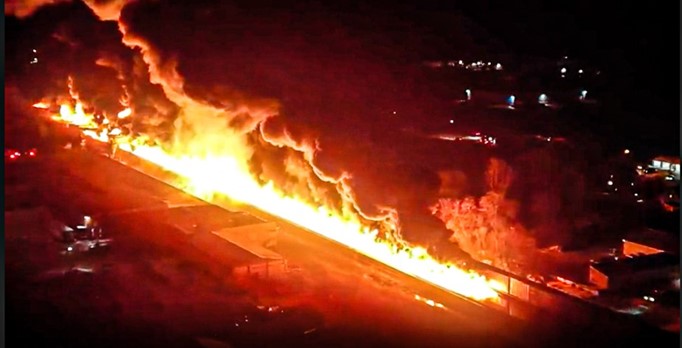
The February 3 derailment of a Norfolk Southern (NS) train carrying hazardous chemicals caused an inferno and the release of enormous plumes of toxic black smoke over East Palestine, Ohio. It has brought into sharp focus the danger the railroads’ relentless drive for profit poses to public safety.
This is the same motive that led the rail barons to refuse paid days off to railroad workers who are sick or too exhausted from long and unpredictable hours of work to operate trains safely. In December, President Joe Biden and the U.S. Congress backed the railroad owners, imposing the new national rail contract they insisted on. (See “Rail Contract Shows Unions Need New Leadership; Workers Need Our Own Party.”)
News coverage of the derailment shined a spotlight on the enormous profits the railroad owners are raking in. A front-page article in the February 18 New York Times reported, “Norfolk Southern, which earned more than $3 billion last year… over the past five years… paid shareholders nearly $18 billion through stock buybacks and dividends — twice as much as the amount it invested in its railways and operations. Other large railways have paid out billions to their shareholders, too, and their shares have done better than the wider stock market over the last decade.”
As the Washington Post reported on February 18, “a pungent odor remains in the air in East Palestine, and some residents have complained of rashes, runny eyes and other symptoms.” The extent of contamination of soil and groundwater is yet unknown.
|
|
The Runaway Train Lobby: Rail Giants Spent Millions to Fight Stricter Rules Before Ohio Disaster
Railroads have spent $285 million on lobbying and close to $50 million on Congressional donations over last decade
|
|
For Teaneck resident and veteran environmental activist Paula Rogovin, it was the catastrophic oil train derailment disaster in Lac-Mégnatic, Quebec in 2013 that prompted her to add promoting rail safety to her full activism portfolio that included environmental and other social justice issues.
Rogovin has six grandchildren and over 47 years' experience working as a New York City elementary school teacher. She has been conditioned over her lifetime to anticipate how things could go wrong and then taking action to head off a calamity when kids were at stake. So, the Quebec disaster got her to thinking about just how vulnerable her own Bergen County rail corridor community would be to a similar accident.
Back in 2013, a little after 1 a.m. on a summer night, Lac-Mégnatic was hit by a run-away driverless freight train heavy with Bakken crude oil that had originated in North Dakota. The derailment and ensuing conflagration incinerated half of the village killing 47 people. A large percentage of the dead were local young people out at a local bar.
|
|
Ohio Rail Union Blasts Norfolk Southern’s ‘Disregard’ for Workers’ Safety |
|
The Ohio contingent of the Brotherhood of Maintenance of Way – Employes Division (BMWED) told Gov. Mike DeWine in a letter this week that Norfolk Southern failed to adequately protect workers on the scene of the Feb. 3 train derailment in East Palestine.
“I am writing to share with you the level of disregard that Norfolk Southern has for the safety of the railroad’s Workers, its track structure, and East Palestine and other American communities where NS operates,” wrote J.B. Long, general chairman of the American Rail System Federation of BMWED, in a Wednesday letter. “I am also imploring you as the Governor of the State of Ohio to use your influence and power to stop NS’s reckless business practices that endanger the public and their Workers.”
Long said he had received reports from workers that NS didn’t provide or offer workers with appropriate protective equipment, such as respirators and clothing, while conducting activities such as deep cleaning the heavy equipment after the derailment. The lack of personal protective equipment may have exposed workers to harmful chemicals, he continued, adding that he has received reports that those workers have been experiencing migraines and nausea weeks after the derailment.
The letter also criticized Norfolk Southern for including discussions about the use of automated track inspection (ATI) in negotiations over sick leave.
As the derailment cleanup was occurring, BMWED was negotiating with NS over sick leave, and the two parties eventually reached an agreement. But one of the initial conditions that NS brought up that was later discarded called for BMWED to withdraw its objections before the Federal Railroad Administration (FRA) over ATI, which uses machines to scan the track structure for track defects.
|
|
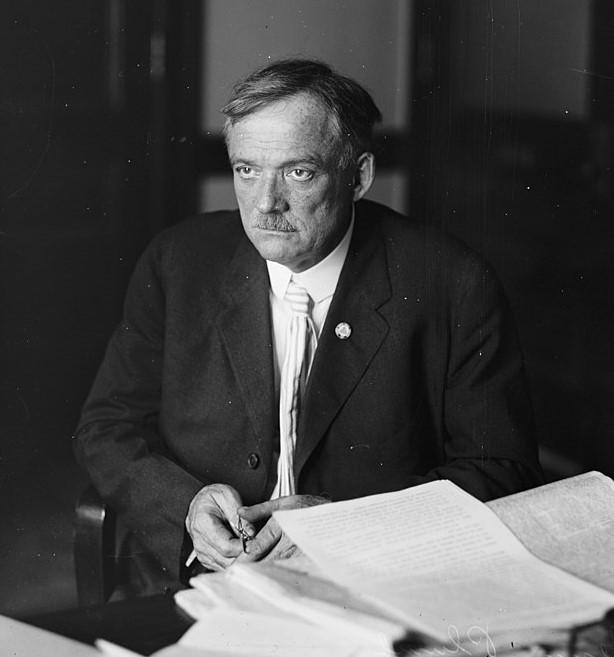
(Editor's Note: More than 100 years ago, the railroads in the U.S. were taken briefly into government ownership during WWI. The rail unions at the time, propelled forward by the membership of each of the myriad craft unions, supported the idea of continued public ownership, with workers assuming 1/3 of the seats on the national Board of Directors. Known as the Plumb Plan, the idea failed to win enough support in Congress and was scuttled. Perhaps it is time to revisit this idea that was so popular with the railroad workers all those years ago. RWU is working to revive the idea of public ownership of the rails. See links below.) |
|
Plumb Plan League Lays Out the Case for Public Ownership of the Railroads |
|
The ABC of the Plumb Plan
What is the Plumb Plan?
It is a plan for the public ownership and the democracy in the control of the railroads.
Who has endorsed it?
The two million railroad employees of America; and the American Federation of Labor, approving the principle of government ownership, has instructed its Executive Committee to cooperate with the officers of the railroad internationals in their effort. It has also been endorsed by several farmers' organizations
How does it propose to buy the roads?
By issuing government bonds with which to pay for the legitimate private interests in the railroad industry.
How does it propose to operate the roads?
By a Board of 15 directors, five named by the President to represent the Public; five elected by the operating officers; and five elected by the classified employees.
|
|
Behind the News with Doug Henwood
Listen to this half-hour segment with WBIA's Doug Henwood in Behind the News. Doug is joined by Kari Lyderson, author of the recent In These Times article about railroad public ownership and Ron Kaminkow, locomotive engineer and Organizer for Railroad Workers United. Segment starts at 22:00 minutes into the broadcast.
|
|
Kari is a Chicago-based reporter, author and journalism instructor specializing in energy, the environment, labor, public health and immigration issues, and the myriad and complicated way such topics intersect. She aims to show the ground-level impacts of policy, technology and economic developments, including a focus on how the most vulnerable communities are impacted and how they respond through community organizing and other efforts. Currently she is a lecturer in the graduate program at the Medill School of Journalism, Media, Integrated Marketing Communications at Northwestern University, where she leads the Social Justice & Investigative Specialization and co-direct the Social Justice News Nexus,, a fellowship program that brings together graduate students and professional reporters.
|
|
Max Alvarez Joins Marianne Williamson |
|
Max Alvarez of the Real News Network discusses the railroad situation with Marianne Williamson. |
|
The Jimmy Dore Show: Rail Workers Push Radical Idea To Save The Railroads |
|
The East Palestine rail disaster has brought into focus the severity of the dangers posed by the United States’ degrading infrastructure, especially when combined with the monopolistic, neoliberal policies that seek to extract the highest possible profits while pushing overextended workers to their limits and beyond. Railway Workers United General Secretary Ron Kaminkow explains that the time may be ripe for a radical new plan for the nation’s railways.
Jimmy and Americans’ Comedian Kurt Metzger talk to Kaminkow about just why the rail transit system in America has become such a shambles and devastating to its workforce.
|
|
(Editor's Note: The author Jordan Barab has been a guest at the RWU Convention in Chicago, and produces an excellent Blog called "Confined Space" with lots of information about workplace health and safety.) |
|
East Palestine: The Causes + Politics and the Road Ahead |
|
The disaster movie screenplay writes itself: An almost two-mile long, 150 car Norfolk Southern train –carrying 20 cars filled with highly toxic vinyl chloride, butyl acrylate, ethylene glycol monobutyl ether and ethylhexyl acrylate — barrels through the dark Ohio night toward the small town of East Palestine, Ohio.
But it’s not that dark. Home security cameras along the tracks the train on fire as a wheel bearing overheats. Twenty miles later, engineers received an alert and attempt to stop the train.
But too late. 38 cars derail,11 of which are carrying hazardous materials, including 5 cars carrying vinyl chloride, a carcinogen. Emergency responders initially have no idea what was in the derailed cars because the warning placards that provide critical information to emergency responders are made of plastic which melts in the fire.
Rail workers, exhausted by staff cuts and lack of sick leave, are not bit surprised by the disaster after experiencing drastic cuts in rail car inspections, antiquated brake technology and dangerously long and heavy trains.
And this It was not the first time it had experienced problems on the route. The train, which originated from Madison, Illinois two days before the derailment, had broken down at least once before derailing in East Palestine.
Happily, most of the railcars are not breached, but two days after the derailment, one of the cars carrying vinyl chloride began to overheat and Norfolk Southern, fearing a catastrophic explosion (or perhaps just wanting to restore the rail line faster), blows holes in the 5 cars containing vinyl chloride, drains the contents into ditches and sets it all on fire.
|
|
(Editor's Note: All railroad contract workers must have the same rights and protections as in-house railroad workers to prevent their super-exploitation. Otherwise there is huge incentive for rail carriers to contract even more jobs.) |
|
FRA to Issue Final Rule Affecting Railroad Contract Workers |
|
But depending on an upcoming decision from the Federal Railroad Administration, the industry could instead be taking a step backward, according to railroad unions.
That decision — which FRA plans to publish in May, according to the latest regulatory agenda issued by the U.S. Department of Transportation — involves a provision included in a rule that went into effect in April 2020 that requires each Class I freight railroad put in place an FRA-approved Risk Reduction Program (RRP). The goal of the rule is to improve safety.
The provision in the rule, part 271.3(c), states that if a railroad “contracts out significant portions of its operations, the contractor and the contractor’s employees performing the railroad’s operations shall be considered directly affected employees” for purposes of the RRP.
The Association of American Railroads filed a petition to reconsider several aspects of the rule days before it went into effect in 2020, including the contractor provision.
“AAR understands that for certain passenger railroads, the entirety of the railroad’s operations may be contracted out,” AAR stated in its petition. “However, this is certainly not true for Class I freight railroads. Including this new requirement in the rule applicable to freight railroads, and doing so without corresponding safety justifications or notice and opportunity to comment, is arbitrary and unreasonable.”
|
|
(Editor's Note: Rob Bartlett worked for many years on the railroad and is now a Retiree member of RWU.) |
|
Railroad Working Conditions, Disasters, and Workers’ Organizing: Reflections of a Former Rail Worker
Robert Bartlett
Posted February 22, 2023
|
|
In the wake of the bipartisan congressional imposition of a rail contract in December, there has been a focus on the inability to at least provide some sick days for rail workers, a “privilege” they have never had. What is lost in centering the dispute on that admittedly absurd denial is the overall deterioration of work conditions in an industry which has always been known for its focus on profits over safety for both workers and the communities through which trains pass.
The train derailment in eastern Ohio has brought the consequences of putting profit over safety into sharp focus for those willing to look beyond the catastrophic predictions of doom should rail workers be allowed to strike. Before going into the detailed analysis of the Ohio disaster provided by the cross-craft group Railroad Workers United (RWU) https://myemail.constantcontact.com/Special-Report–Monster-Train-Wreck-in-Ohio.html?soid=1116509035139&aid=fzMOujXbqBo let me describe some of the trends in how the railroads have traditionally operated from when I first hired out as a brakeman on the Chicago and Northwestern Railroad (now consolidated into the Union Pacific) in 1974. I speak with the most familiarity of what train crews coped with every day.
In 1974 when decent paying industrial jobs were relatively easy to find, the turnover on my railroad was constant. My first week on the job consisted of being in a training class with about 15 other new hires. We spent a week learning some rudiments of the job and the “Rule Book” which detailed all the safety rules that we were supposed to follow. People used to joke that every rule was based upon some accident that either caused an injury or death to a rail worker and there was certainly truth to that. The skill that they focused on was on how to get on and off moving equipment, i.e. engines and rail cars. This is an inherently dangerous thing to do under any circumstance, since if you miss getting your foot into the “stirrup” at the bottom of the ladder on the side of a boxcar you at best might be dragged alongside the car until you extracted yourself or in the worst case you might be run over by the wheels and either dismembered or killed. You were expected to do this at all times of the day or night, in conditions of rain, sleet, or snow.
Once you got on, you were expected to climb to the top of boxcars to tighten or loosen manual brakes -all while the train was moving. Newer boxcars were safer in that the brakes were only about 5 feet off the ground, while older rolling stock had brakes at the top of the car. These antiquated cars should have either been retired or retrofitted with lower brakes, but the practice of railroads was to use the equipment until it wore out. Eventually in the 1990s the rules changed and to get on and off the car or engine, it needed to be standing.
|
|
(Editor's Note: The numbers show that there is high demand for Amtrak "long distance" service with passenger demand high for shorter trips along the route, something long understood by rail advocacy groups in making the case to preserve and expand these trains.) |
|
FRA Look at Amtrak Long-Distance Service Yields Wealth of Data
Ridership information shows strong use for shorter-distances
February 28, 2023
|
|
WASHINGTON — The Federal Railroad Administration has published a surprisingly detailed summary of regional forums held during the past month in which the agency solicited opinions regarding the public’s interest in strengthening Amtrak’s national network.
As part of Amtrak’s reauthorization, 2021’s Infrastructure Investment and Jobs Act tasked the FRA to conduct a study that would evaluate restoring previously discontinued long-distance routes; establishing new service to cities not currently served by Amtrak; and converting the triweekly Cardinal and Sunset Limited to daily operation.
In materials shared with those attending six regional meetings held in Washington, Chicago, Denver, and Jackson, Miss., the agency went a step further by first dissecting ridership of Amtrak’s existing long-distance trains operating in each region. Those PowerPoint presentations, and suggestions offered by attendees, are now available at the FRA’s “Long-distance service study” website.
Using 2019 data, the wealth of information revealed about Amtrak service within each region includes:
— Distribution of trip length by distance for both coach and sleeping-car passengers;
— The top 10 boarding stations by class;
— Top connection stations;
— Larger and smaller markets served at night, by train and direction of travel;
— Customer on-time performance by train;
— The top 10 station pairs involving a region’s stations, by volume of annual trips;
— The top 10 station pairs involving or between small communities.
(Story continues below)
|
|
(Editor's Note: Railroad workers are taking industrial action together with many others sectors across France this week. The level of activity and the determination of the workers is impressive. NOTE: workers and unions in France do not have "no- strike" clauses in their contracts. That is illegal. It should be here too!) |
|
International Trains Will be Canceled Next Week Due to French Strike |
|
People who plan to travel abroad by train next week may be affected by the large national strike in France against the reform of the pension system. This will take place on Tuesday, and includes not only train staff, but also employees in other sectors. As a result, many international trains to and from France, Belgium, Germany, the Netherlands and England will not run on Monday, Tuesday and Wednesday, a spokesperson for NS International said.
The cancellations include thirteen Eurostar trains that will not run on Tuesday because of the strike. The high-speed train service generally runs to and from Amsterdam, Rotterdam, London, Brussels and Paris.
Many Thalys trains between the Netherlands, France, Belgium and Germany will also be scrapped next week due to “social actions in France and Belgium.” From Monday evening to Wednesday, almost all trains are canceled or terminated in Brussels instead of continuing to Paris.
People with a ticket for a train that is not running can rebook or cancel their journey free of charge, according to the NS International website. The spokesperson said that the rail company is using its app and the website’s travel planner to inform passengers on time. It is advising travelers to look for other means of transport.
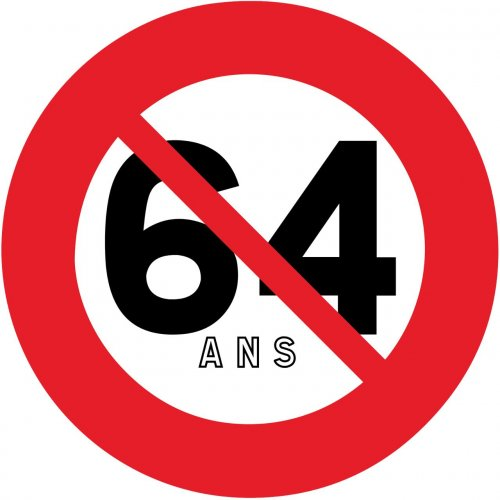
The labor actions are part of a nationwide general strike in France called for March 7. Unions have warned in a joint statement about plans to “shut down all sectors.” The French are striking against the planned increase in the retirement age from 62 to 64. Previous demonstrations have caused delayed and canceled flights from airports in the country, along with other issues.
Additionally, train staff in Germany planned to go on strike on Friday, March 3.
|
|
|
|
|
|
|