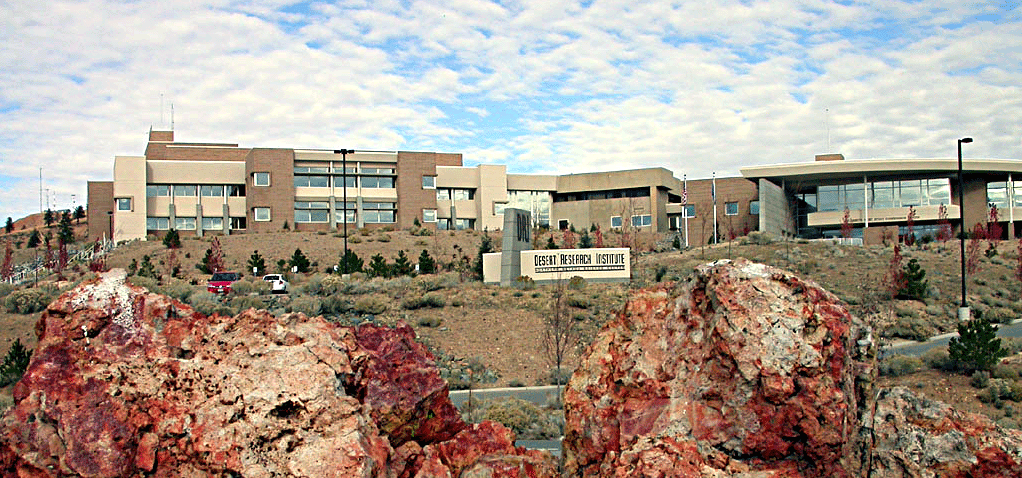
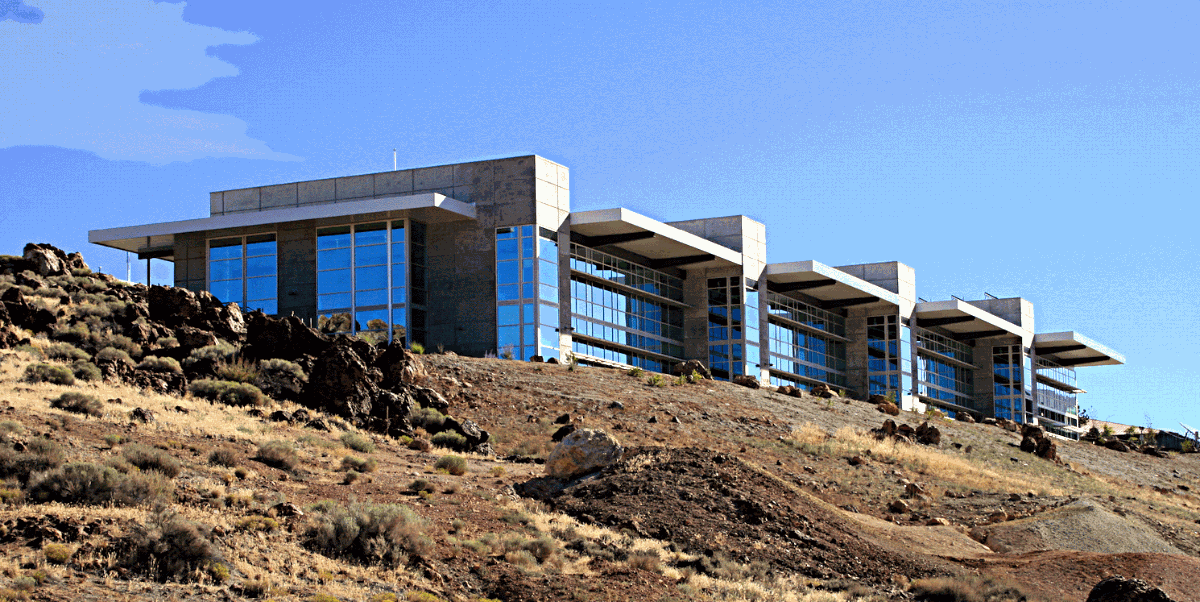
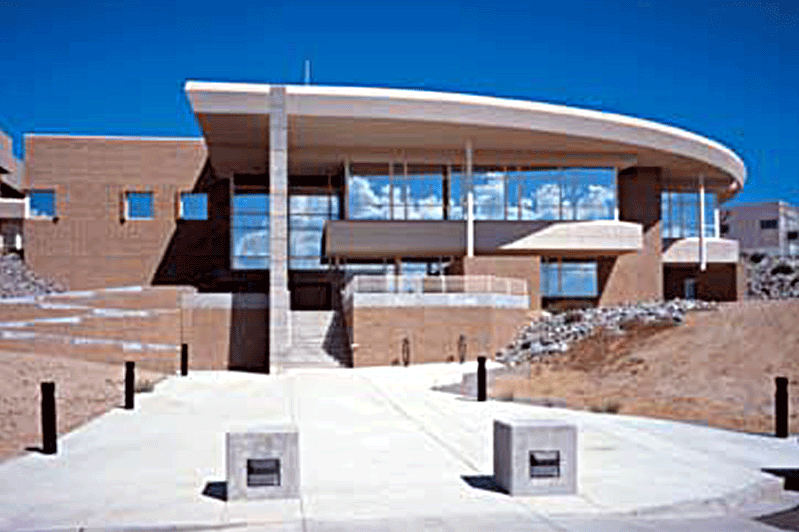
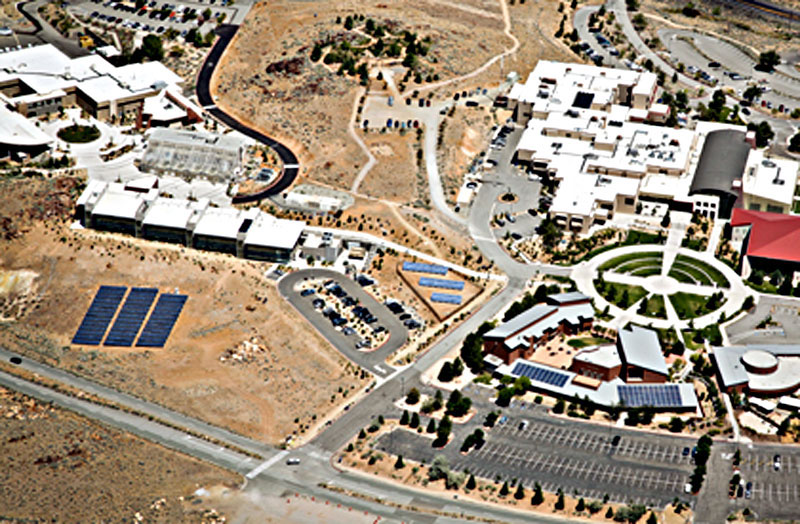
The Desert Research Institute (DRI) in Reno is a research institution focused on advancing environmental research in arid and semi-arid regions. The institute was founded in 1959 as a non-profit research organization and has since grown to become a leading research institution in the United States.
The Desert Research Institute was founded to address the environmental and technological challenges specific to desert regions. Over the decades, DRI has evolved from a regional research center into an internationally recognized institution. Its growth has been driven by a commitment to understanding and mitigating the impacts of human activities on the environment, particularly in arid and semi-arid regions.
The DRI is unique in its interdisciplinary approach to research, with experts in fields such as atmospheric science, ecology, hydrology, and geology working together to address complex environmental issues. The institute's research focuses on four main areas: atmospheric sciences, earth and ecosystem sciences, hydrologic sciences, and energy and environmental sciences.
|
One of the key areas of research at DRI is atmospheric science. Scientists at the institute study a variety of topics related to the Earth's atmosphere, including air pollution, climate change, and weather patterns. DRI operates a number of atmospheric research facilities, including the Atmospheric Radiation Measurement (ARM) program, which is a Department of Energy (DOE) research initiative aimed at improving our understanding of climate change.
Another area of research at DRI is earth and ecosystem sciences. This research focuses on understanding the natural processes that shape the Earth's surface and the ecosystems that inhabit it. Scientists at DRI study a variety of topics, including soil science, plant ecology, and geology. The institute also operates the Nevada System of Higher Education (NSHE) Stable Isotope Laboratory, which provides state-of-the-art analytical services for research in a variety of fields.
|
Hydrologic sciences is another key area of research at DRI. The institute's scientists study the movement, distribution, and quality of water in arid and semi-arid regions. This research is particularly important in the western United States, where water resources are often limited. DRI operates the Center for Watershed Sciences, which conducts research aimed at improving our understanding of how water moves through watersheds and how it can be managed for the benefit of both people and the environment.
Finally, the DRI conducts research in the field of energy and environmental sciences. This research focuses on understanding the environmental impacts of energy production and consumption, and developing more sustainable energy systems. Scientists at DRI study a variety of topics, including renewable energy, carbon capture and storage, and environmental policy.
| In addition to its research programs, the DRI is also committed to education and outreach. The institute offers a variety of educational programs for students of all ages, including K-12 outreach programs, undergraduate and graduate research opportunities, and professional development programs for educators. |
At DRI, approximately 460 research faculty and support staff (including over 100 PhDs) engage research each year.
Desert Research Institute is the nonprofit research campus of the Nevada System of Higher Education (NSHE), the organization that oversees all publicly supported higher education in the U.S. state of Nevada.
While DRI is rooted in Nevada, its impact is global. The institute collaborates with researchers and institutions worldwide, contributing to international efforts to address environmental challenges. Whether it’s studying the impacts of climate change in the Arctic or developing water management strategies in Africa, DRI’s research transcends geographical boundaries.
| |