|
Colorectal cancer is one of the most common cancers worldwide. It mostly affects older adults but it’s important for adults of all ages to know more about the risks and signs because the incidence of diagnosis among young adults is on the rise. Many sources including the American College of Surgeons and the Cancer Research Institute estimate that currently about 1 in every 5 patients diagnosed with colorectal cancer is under the age of 55.
Colorectal cancer is cancer that occurs within either the large intestine, the last part of your digestive system that helps to break down food for the body to use, or the rectum. It typically begins as an abnormally growing group of cells on the lining of the colon or rectum. As they continue to grow, these cells can form clumps called polyps. Polyps can be benign but as they continue to grow more, they can become cancerous over time. According to the Mayo clinic, it usually takes about 10 years for a polyp to form and grow before you start experiencing symptoms. This is why screening is so important.
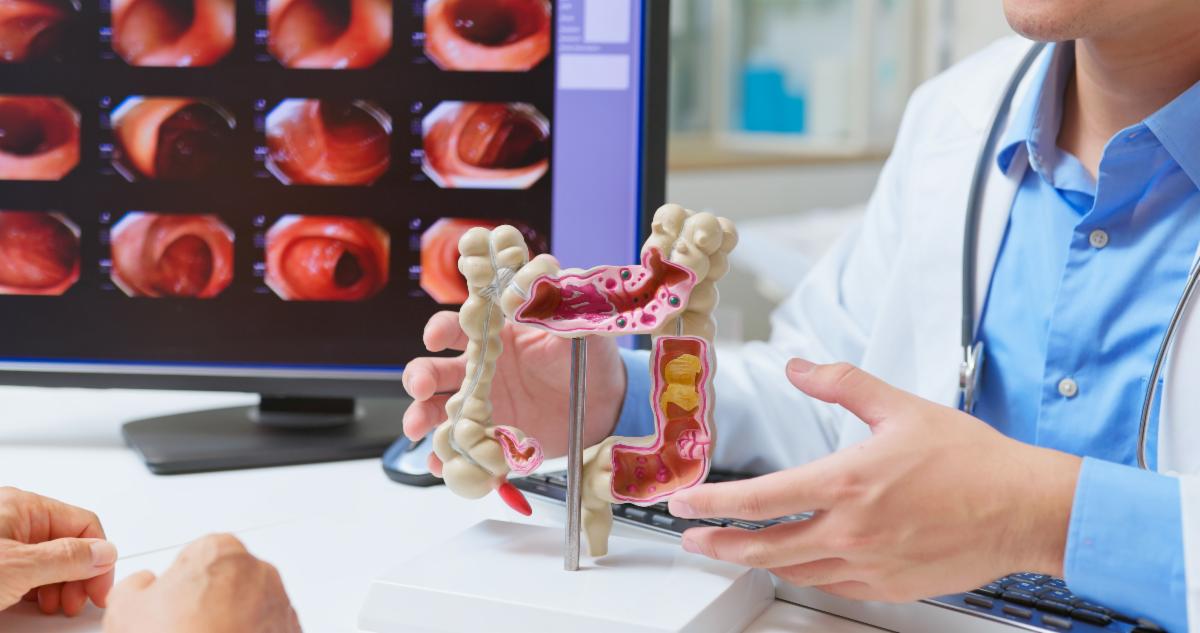
Depending on your estimated risk of developing colorectal cancer, the recommended age to start being screened is age 45. At this age, your doctor should recommend you undergo your first colonoscopy or possibly another screening test. Colonoscopies are considered the “gold standard” of screening tests because your doctor is able to view your colon and find and remove any polyps before they become a problem. Testing can also be done on the removed polyps to determine if they are benign or not. After your first screening text, you should continue screening at regular intervals based on your results, your risk level, and your doctor’s recommendations.
Another less-invasive, but sensitive screening test for those who have a normal risk level is a stool-based test. These types of tests are non-invasive compared to a colonoscopy and are used to detect blood or abnormal DNA in a stool sample. Some stool-based tests can even be done at home like Cologuard. There are additional types of screening tests for colorectal cancer but the one most appropriate for you should be determined by you and your doctor. Determining which test is most appropriate should take into account your estimated risk and past results if you’ve previously had a screening test.
Your risk of developing colorectal cancer can be affected by many things, some of which you can control and others you cannot. General risk factors that are out of control include your age, if you have a family history of colorectal cancer, if you have a genetic syndrome, or if you have a chronic inflammatory condition like Chron’s. General risk factors that are in your control include your diet, activity level, weight, alcohol consumption, and whether you smoke. If you have one or a combination of these risk factors, your doctor may recommend you start screening for colorectal cancer prior to 45 years old and may recommend one screening test over another.
According to the Cancer Research Institute, “experts estimate that more than half of colorectal cancer cases in the U.S. may be linked to modifiable risk factors, including diet, physical inactivity, smoking, and alcohol use.” These modifiable risk factors are also theorized to be the cause of the increase in incidence of diagnosis of early-onset colon cancer which is colon cancer diagnosed in someone under the age of 50. To help lower your risk of developing colorectal cancer at any age, it’s important to focus on these modifiable risk factors and make changes to your habits or lifestyle if necessary. This includes:
- Spending 150 minutes on moderate-intensity physical activity with 2 days of muscle strengthening per week according to the CDC
- Avoiding ultra-process foods and foods high in saturated fat
- Eating plenty of fruits, vegetables, lean meat, whole grains, and fiber-rich foods
- Quitting smoking and use of all tobacco products
- Limiting alcohol consumption
- Maintaining a healthy body weight
Managing the risk factors that you can through your lifestyle can be very effective in lowering your risk for colorectal cancer and is something adults of all ages should work on throughout our lives. And as you get older, it’s important to talk with your doctor about any risk factors you may have to determine when to start screening and what screening test is most appropriate for you. Lowering your risk and early detection through screening can not only improve the success of treatment methods but also remove polyps even before they become cancerous so you can live a healthier, longer life.
|