Friday, February 20, 2026 | | Your go-to source for Association and transportation industry news, notes, and need-to-knows | | WTBA sincerely thanks its 2026 Weekly Update sponsors: Brooks Tractor, County Materials Corporation, Fabick Cat, and Roland Machinery Company. Please click on the logos to reach their respective websites. | | |
IN THIS WEEK'S EDITION
NEWS & NOTES
- "We've delivered": Evers celebrates "fixing the darn roads" during final State of the State speech
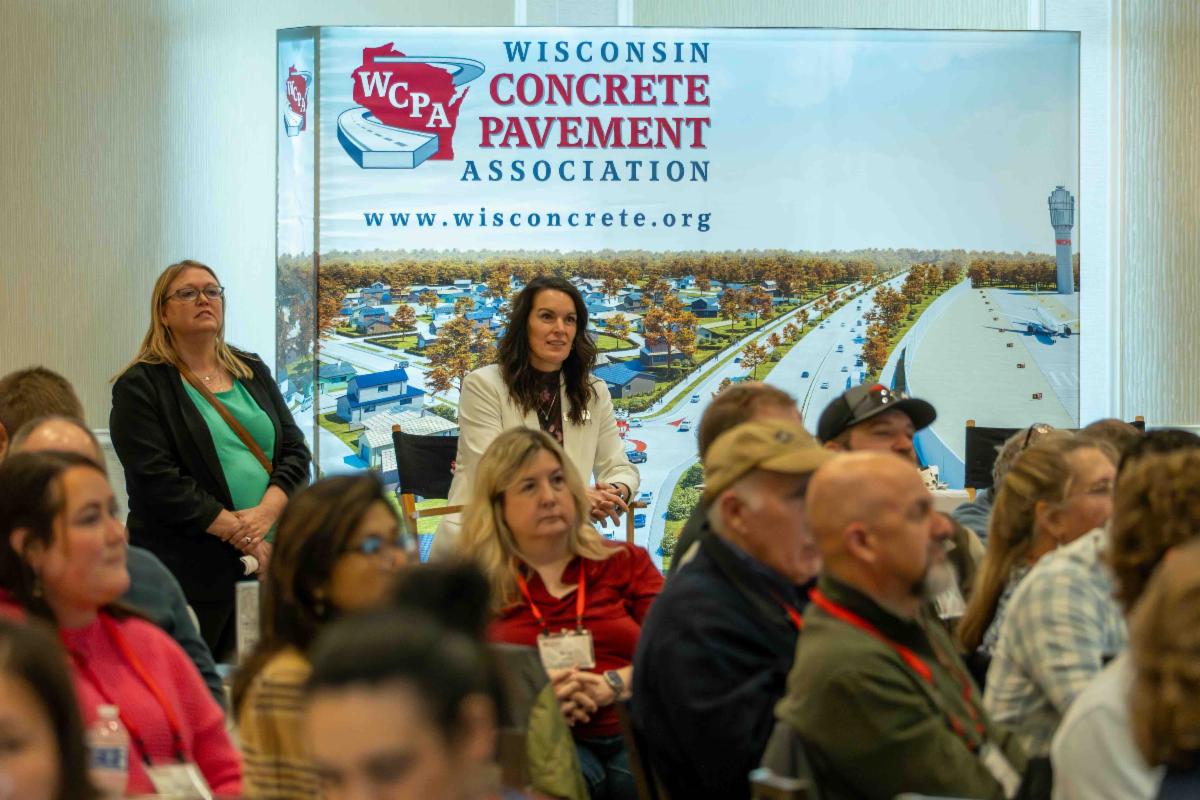
- Baas, Jackson present blueprint for sustained transportation funding at WCPA conference
- Going once... going twice... LAST call for online auction bidding!
WHAT WE'RE WATCHING
- Editorial Board considers Beltline highway expansion critical for "greater good"
INDUSTRY INSIGHTS
- Work zone crashes spike across U.S. over 12-year stretch
- Some progress, but far too many deaths due to drugs, suicide in construction industry
EVENTS & REMINDERS
- Don't forget to pay membership dues; account lockouts start March 1
| | Victory Lap: Evers celebrates road work accomplishments in final State of the State address | | |
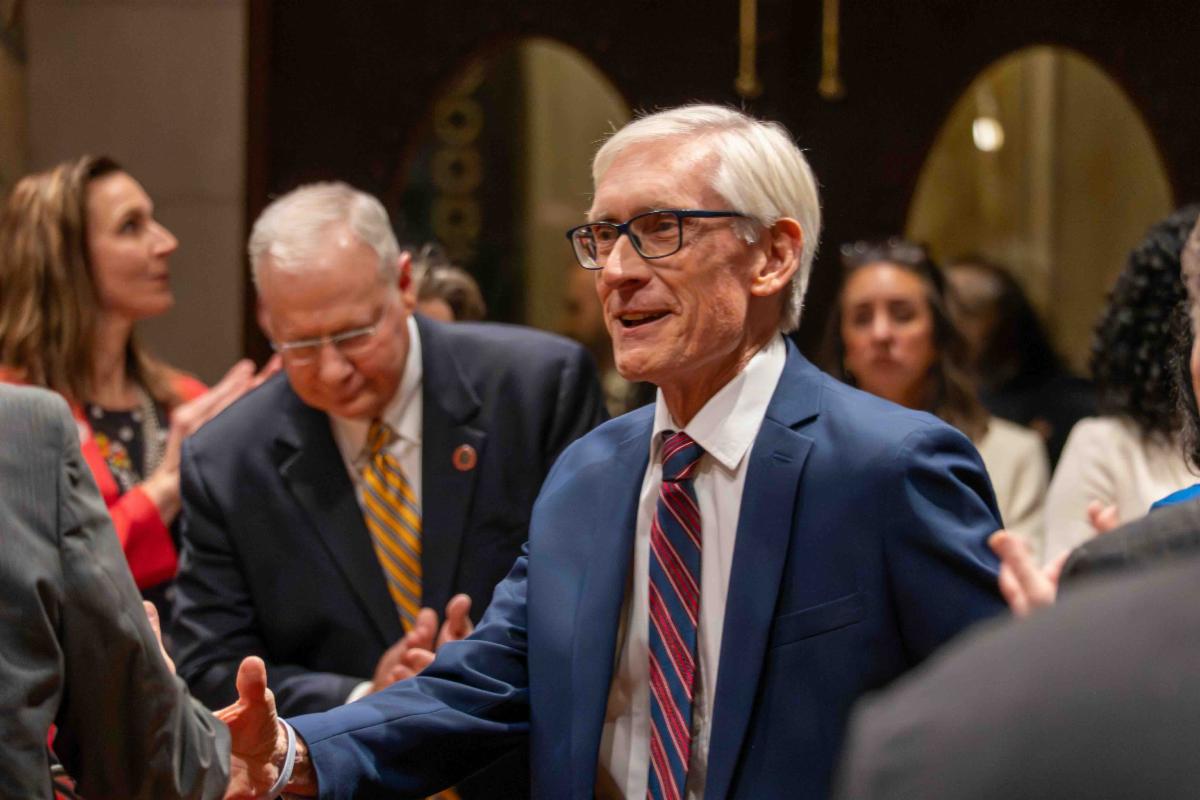
For the latest leg of his farewell tour–an eighth and final State of the State address–Gov. Tony Evers cued up one of his greatest hits Tuesday night.
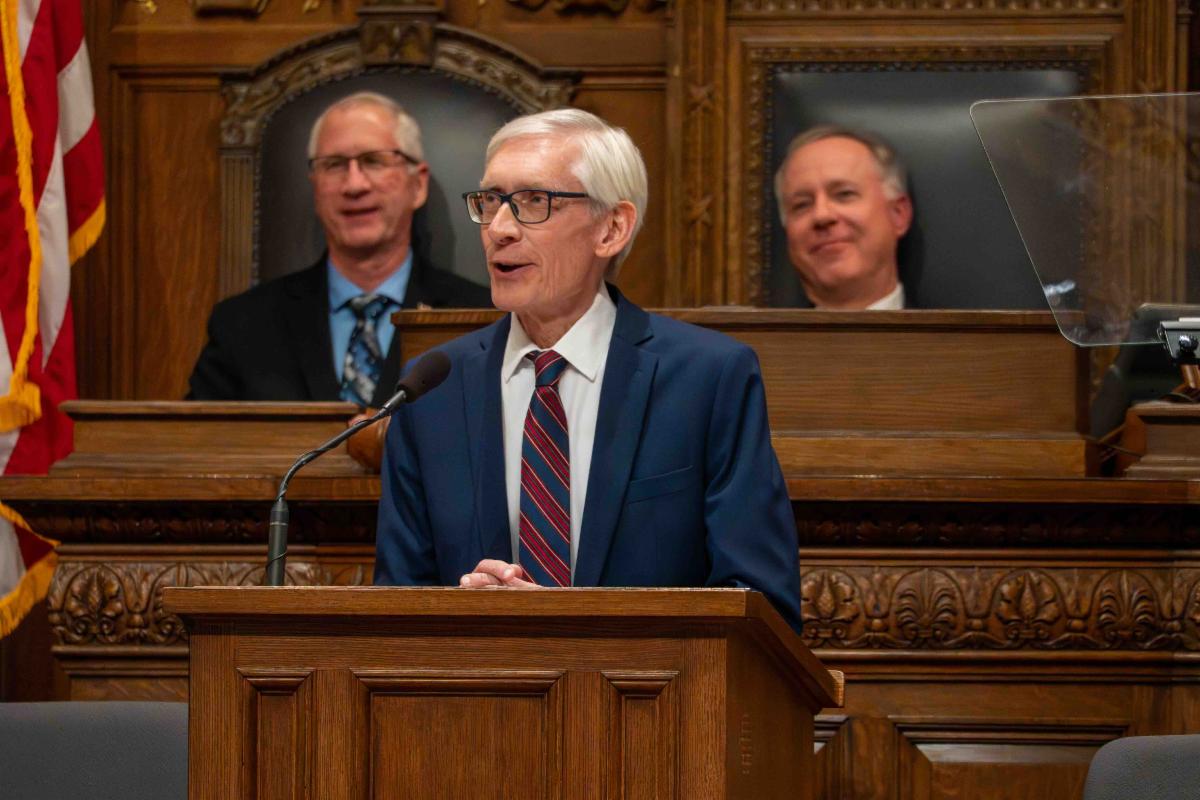
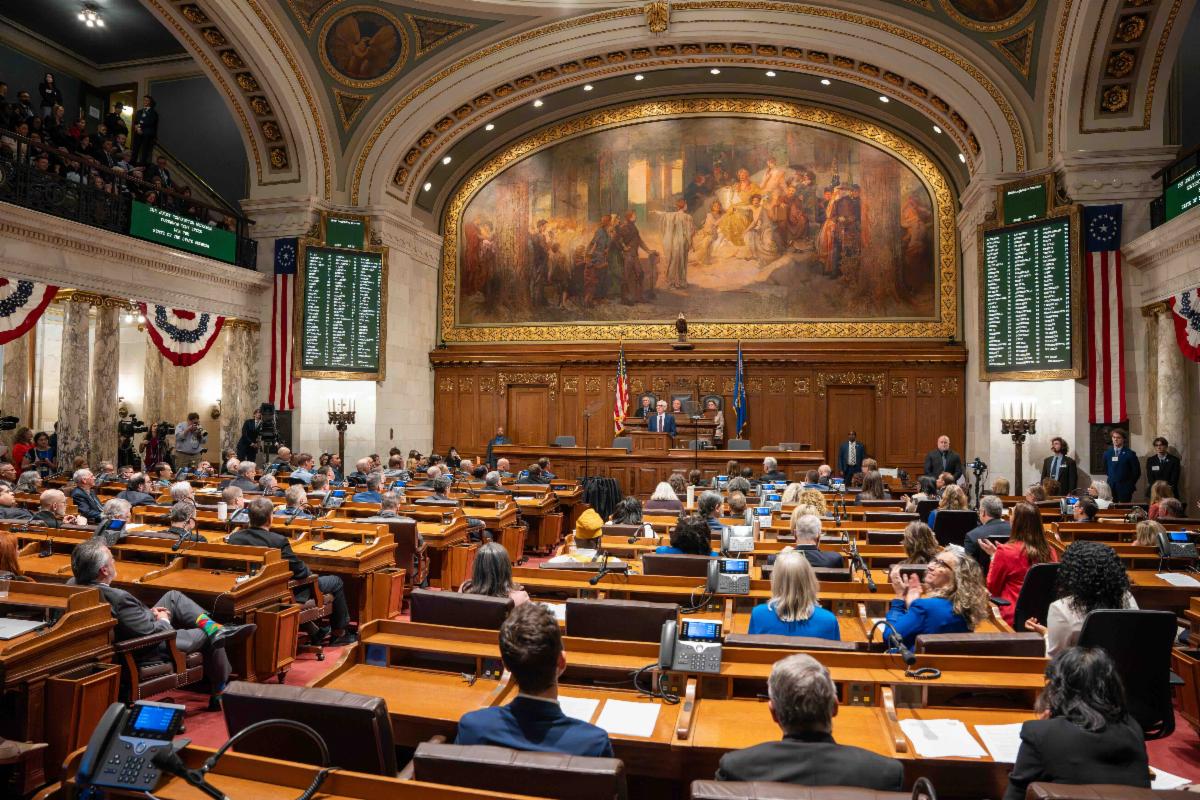
“For years, the state spent money that was meant to improve our infrastructure on other things, leaving our roads and bridges in disrepair. I made a promise to Wisconsinites that I’d work to fix the darn roads,” Evers said inside a crowded Assembly chamber in the state Capitol.
The message is one Evers rattled off dozens of times dating back to even before he was elected governor in 2018. But in a political world where talk is often cheap, Evers indeed put his money where his mouth was on the matter of transportation funding.
| | |
The governor delivered his annual speech to a full house of lawmakers, guests, family, and friends.
While his focus during the 70-minute address was largely about what he considers unfinished business in the world of schools, health care, public safety, and the environment, Evers’ mention of roads and bridges was one of the few moments where both sides of the aisle were able to agree, if not join in applause.
| | | |
The governor mainly focused on smaller-scale transportation investments during this week’s speech, touting bipartisan approval of Local Road Improvement funding increases and the Agricultural Roads Improvement Program’s renewal in the latest state budget.
But it’s worth noting, Evers and Republicans in 2025 also successfully negotiated more than $700 million in new and ongoing funding for State Highway Rehabilitation, Majors, and Southeast Mega freeway projects, such as I-94 East-West, all things WTBA advocated for throughout the months-long budget process.
The finalized budget also led to WisDOT increasing its projected let level to its highest ever, $1.61 billion, in 2026.
| | |
Those increases came, in part, thanks to increased title, registration, and driver’s license fees. Lawmakers also heavily relied on a $565 million General Fund transfer to keep projects on schedule.
“Folks, all of these efforts have played a key role in our work to fix the darn roads across Wisconsin and we’ve delivered,” Evers said. “Thanks to our work together, my administration has been able to improve or repair over 9,600 miles of roads and over 2,400 bridges across our state.”
Evers announced last summer he would not seek reelection to a third term, opening the door to an open governor’s race for the first time since 2010.
| | Half-filled glasses and romcom references: How WTBA's Baas drove home importance of transportation funding at Concrete conference | |
Are you a glass-half-full or glass-half-empty kind of person?
To Steve Baas, they’re not mutually exclusive.
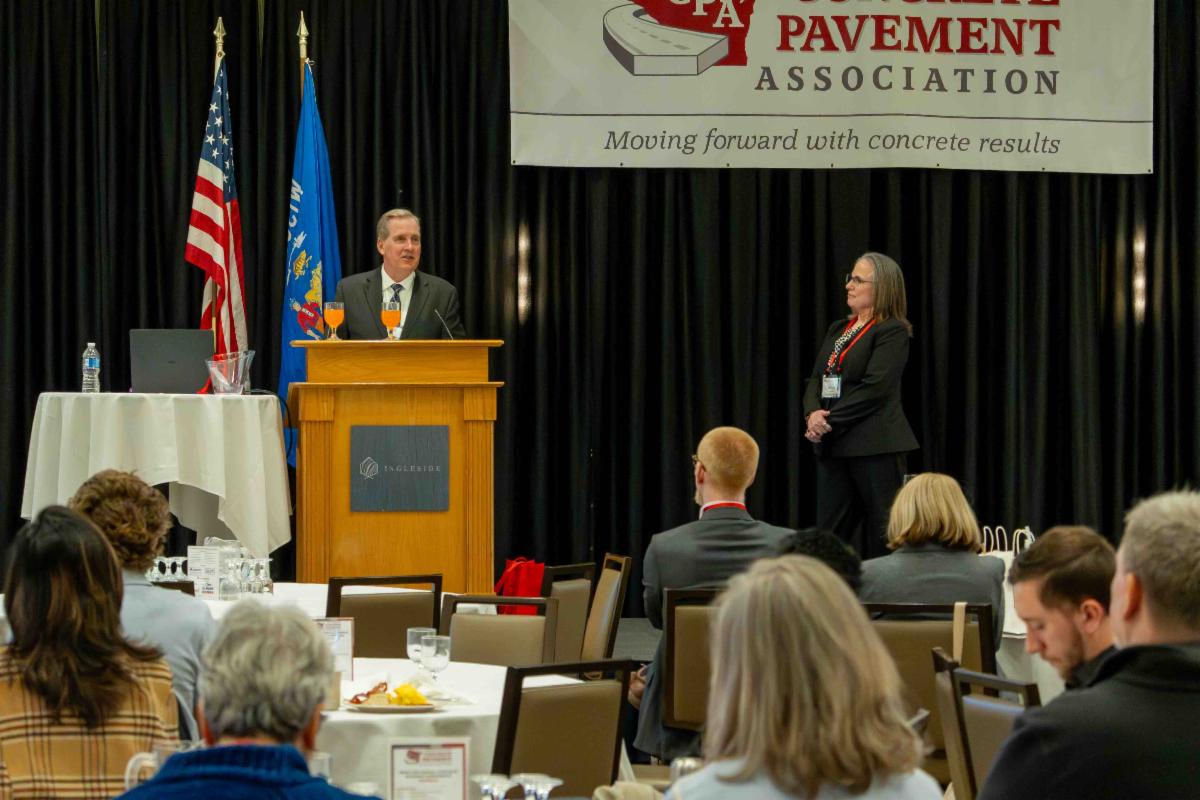
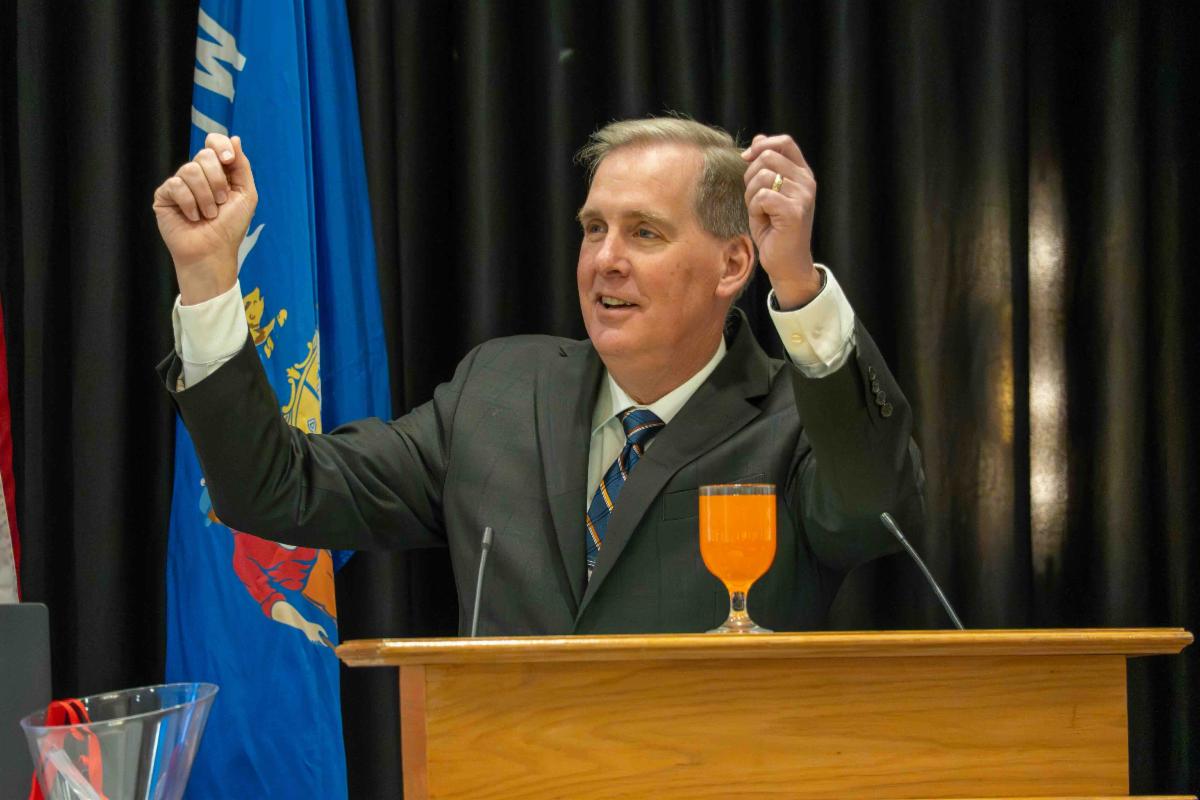
That’s why the WTBA Executive Director brought two glasses filled to the halfway mark with construction cone-colored orange soda as he presented last Friday at the Wisconsin Concrete Pavement Association’s Annual Conference in Pewaukee.
| |
In one glass, Baas explained, the transportation construction industry is in good shape thanks to $1.5 billion in new and ongoing money in the last two state budgets, hundreds of new projects each year, and record-setting let levels.
In the other? A more than $1 billion transportation funding shortfall awaits us in the next budget cycle, with several huge and critical projects like I-94 East-West in Milwaukee and I-39/90/94 from Madison to Wisconsin Dells already underway or on track to begin.
“The challenges we face in the half-empty glass are not going to be solved by one section or one sector of the industry alone. It’s going to take all of us working together,” Baas said, shortly before handing off to his presenting partner Debby Jackson with TDA.
| | | | |
Friday’s presentation gave Baas and Jackson the chance to demonstrate how industry coordination will be the key to solving that significant funding hurdle. The duo laid out the groundwork and gameplan WTBA, TDA, and other partners have already begun, giving the room plenty of optimism.
“We’re going to take that half-empty (glass) and, if we do this right and do it together, we’re going to make that full,” Baas said.
| | |
The goal, Jackson explained, is to make the general public understand this issue impacts everyone–not just transportation builders. It will require a multi-pronged approach, helping people realize funding shortfalls impact their community streets, rural bridges, freeways, and connecting highways that get us to work, school, and vacations.
Baas stepped in again momentarily, this time with his arms raised over his head.
| | |
“I’m going to date myself here for a moment,” Baas admitted. “This is our Diane Court strategy.”
Referencing the 1989 classic romcom “Say Anything,” Baas urged attendees to make the need for transportation investments impossible for lawmakers to ignore as we head into the 2027 budget process.
| | | |
“What does Lloyd do,” Baas asked. “He’s standing out under her bedroom window with the boombox playing ‘In Your Eyes’, right?
"This campaign is Lloyd, with the boombox… until eventually Diane Court realizes that she loves him and it all works out together.”
A series of upcoming public discussions on transportation and the importance of a well-funded system provide an early opportunity to Say Something.
There will be six “Turnout for Transportation” roundtables held May 14-28. Locations include Appleton, Oak Creek, Janesville, Wausau, Eau Claire and La Crosse. Each morning’s discussion will run from 7:30-9 a.m. and will include community leaders, industry partners, lawmakers and candidates for office.
Click HERE for more information and for free registration.
| | New items added as WTBA/TEF silent auction heads into final days before Convention | |
Whether you’re trying to squeeze one more pair of flip-flops into a suitcase before catching a flight to the Annual Convention or just chilling on the couch this weekend, watching the gold medal hockey game, make sure your phone is nearby at all times.
The final countdown for the WTBA/TEF Scholarship Silent Auction is upon us.
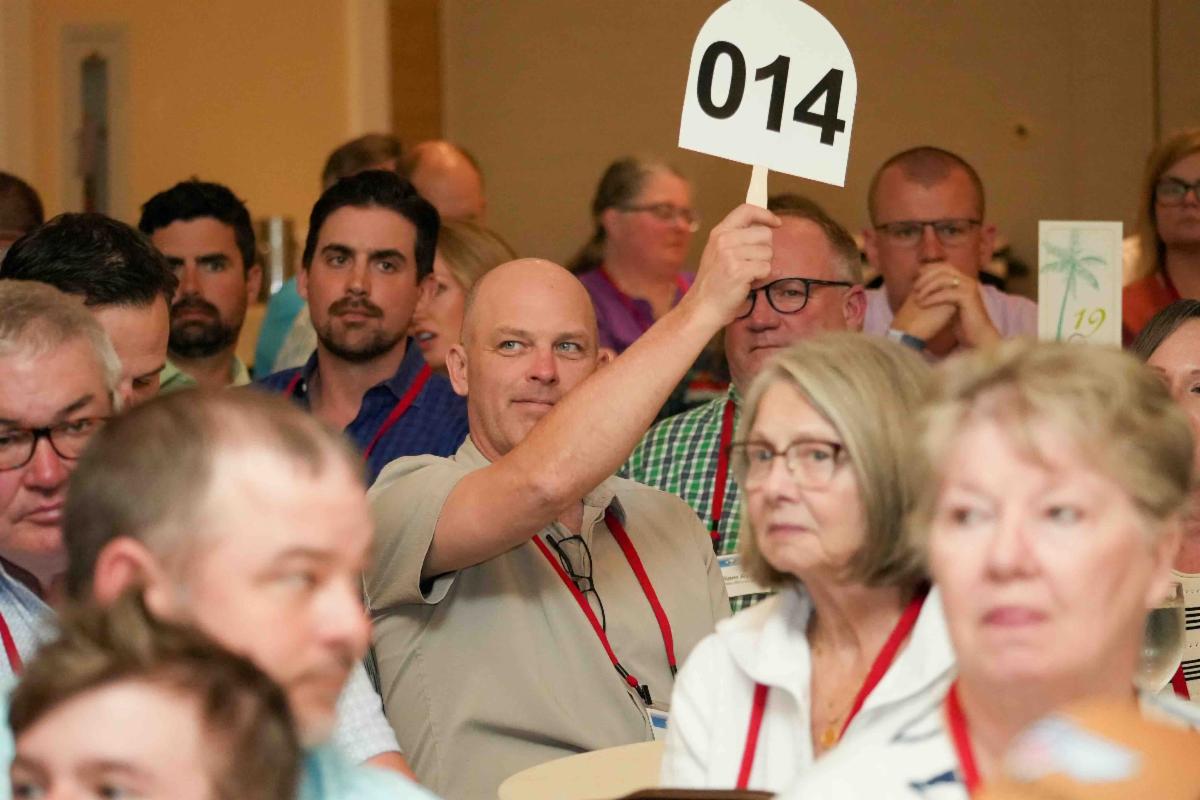
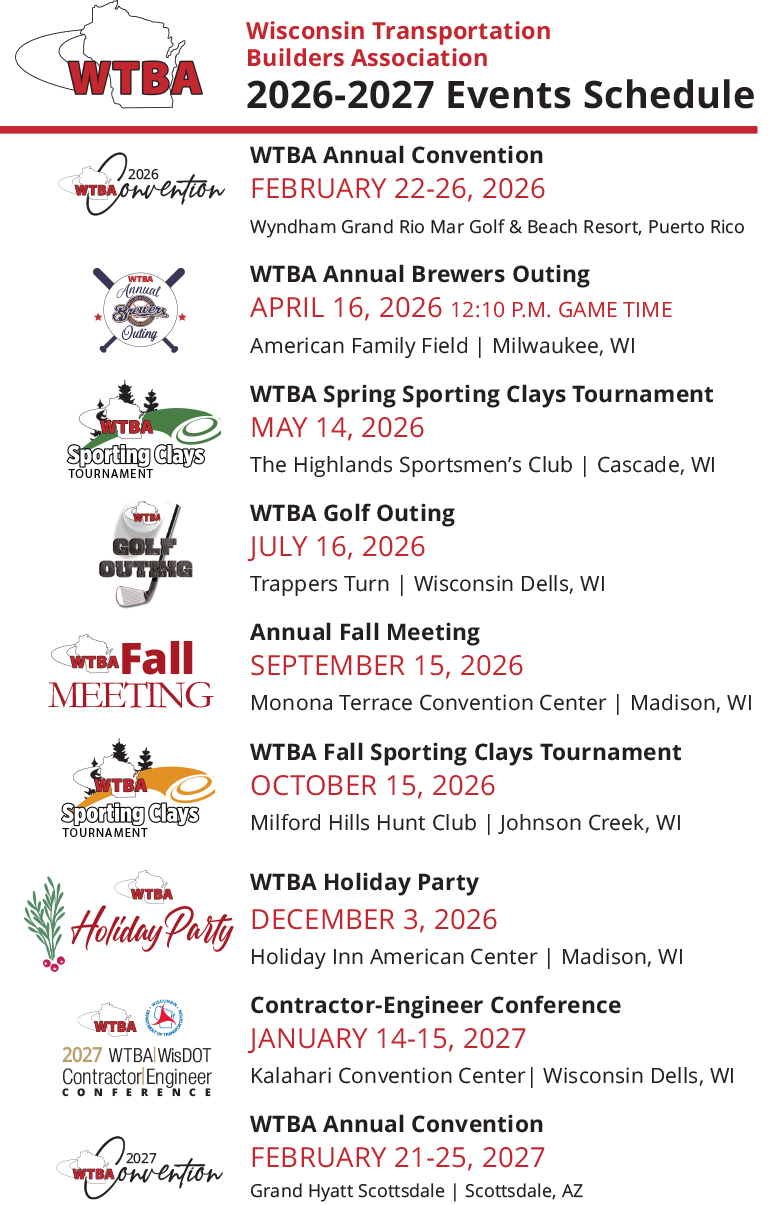
Just three days remain to bid on more than 50 online items. The silent portion closes moments before the live auction begins in Puerto Rico on Monday, Feb. 23 at 5 p.m. CST.
Prizes range from pheasant hunts to Packers, Brewers, and Bucks games, whiskey, fine wines, travel gear, and gift cards. Most items have multiple bidders, but a few remain up for grabs with no bids as of 7 a.m. Friday. Participants receive text alerts when they've been outbid.
A pair of new fine wine packages were added during the week, along with several preview-only live auction items.
Proceeds from the auction benefit the annual WTBA of Tomorrow Scholarship program, the Transportation Education Fund, and year-round efforts to educate people on the importance of a well-funded transportation system.
Head to wtba2026.givesmart.com to get in on the action and good luck!
| | Beltline expansion needed for 'greater good', State Journal Editorial Staff says | | |
A busy, economically critical and–at times–dangerous Beltline needs to grow with its rapidly expanding community, the Wisconsin State Journal Editorial Board wrote this week.
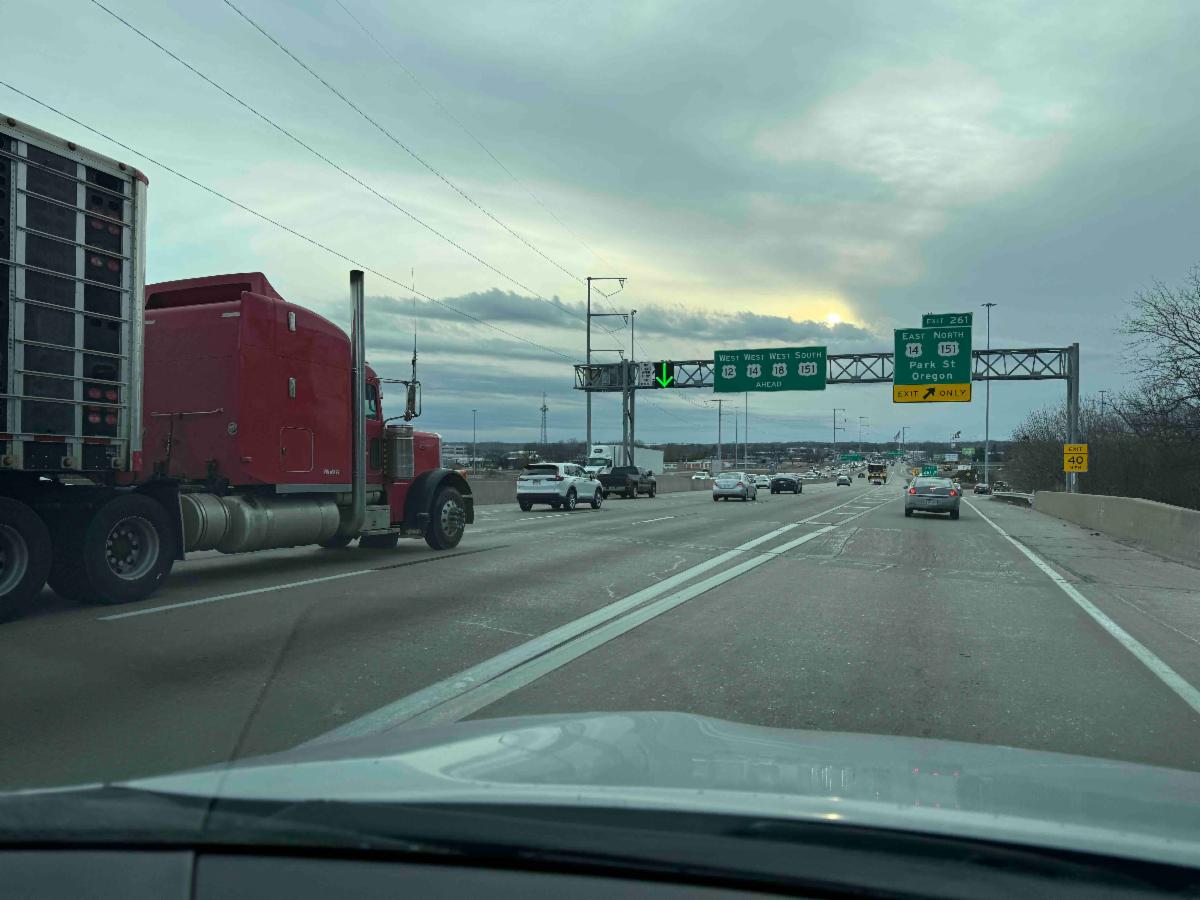
The panel issued a well-researched op-ed in Sunday’s edition supporting WisDOT’s study into possibly expanding portions of the Beltline, which carries Highways 12, 14, 18 and 151 for about 20 miles along Madison’s south side.
| | | |
It was a full-throated rebuke of some Madison city leaders who say they want to avoid adding any lanes for cars and trucks, and instead only focus on multimodal options.
“Pretending that Madison and Dane County can grow by a quarter-million people without accommodating more cars and trucks is naive if not dangerous. Of course Madison needs a better — and in some spots, bigger — Beltline,” the Editorial Board said.
Portions of the Beltline highway around Madison’s south side carry 127,000 vehicles a day and are frequently congested. The state designed and WTBA members installed an innovative Flex Lane along several miles of the Beltline in 2022.
WisDOT took comments on its Planning and Environmental Linkages study this winter. The study suggests retooled interchanges, additional lanes, and expanding the Flex Lane among other upgrades.
“The greater good for our region requires action,” the op-ed states. “The Beltline isn't just the main east-west corridor for the capital city. According to the DOT study, 68% of Beltline traffic at peak hours originates outside the central Madison area.”
| | Work zone crashes, deaths spike over 12-year period, study finds | |
Highway, bridge and road construction work zones remain extremely dangerous places in Wisconsin and nationwide.
A recent paper from the Center for Construction Research and Training reports deadly work zone crashes rose about 30% over a 12-year period. In 2023, there were 563 people killed in such crashes across the country. Nine of them were in Wisconsin that year.
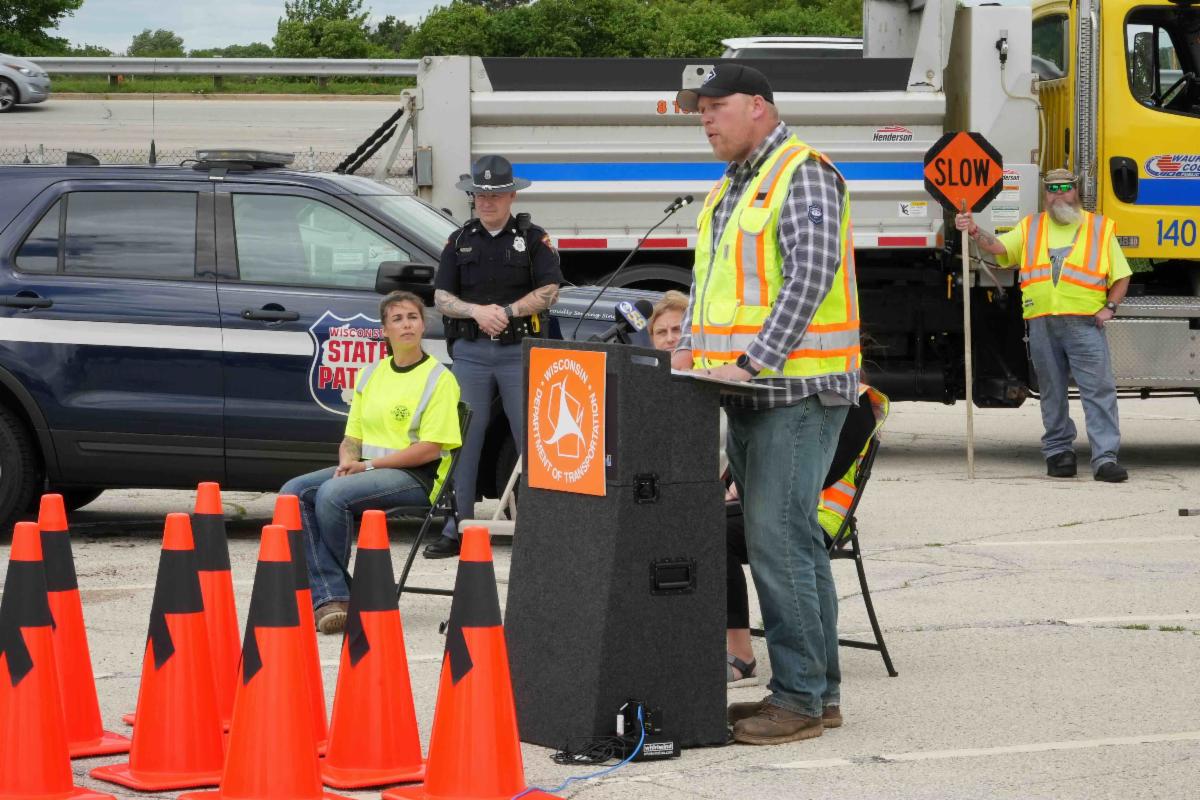
WTBA and WisDOT have partnered since 2023 to increase work zone awareness all season long, expanding beyond the traditional one-week campaign each April. Monthly events in each of the state’s five regions have included contractors, engineers, state employees, and local leaders.
WTBA also launched a billboard campaign along I-41 in the Fox Valley in 2025, with plans to expand to I-94 in southeast Wisconsin this year.
Preliminary data from UW-Madison’s Traffic Operations and Safety Laboratory show seven people were killed in Wisconsin work zone crashes in 2025.
| | Overdoses, suicide rates down but more help needed for construction workers | | |
Fewer construction workers died by suicide or drug overdoses in recent years, but the modest decreases illustrate how prevalent the issues remain for the industry.
Drug-related overdoses fell the most, down nearly 30% from 2023 to 2024, Construction Dive reports. That’s about 4,600 lives saved.
Suicide rates fell only slightly, however, down about 1.7%. The rate of 41.9 deaths by suicide per 100,000 workers is four times the rate of on-the-job deaths in the industry and much higher than most other professions, the website noted.
Heavy highway and vertical construction contractors have pushed to provide more resources and places for open conversations among workers in an effort to remove stigma from talking about mental health and drug addiction.
| | |
In Wisconsin, WTBA member Lunda Construction raised $35,000 for suicide prevention at last year’s annual charity golf outing.
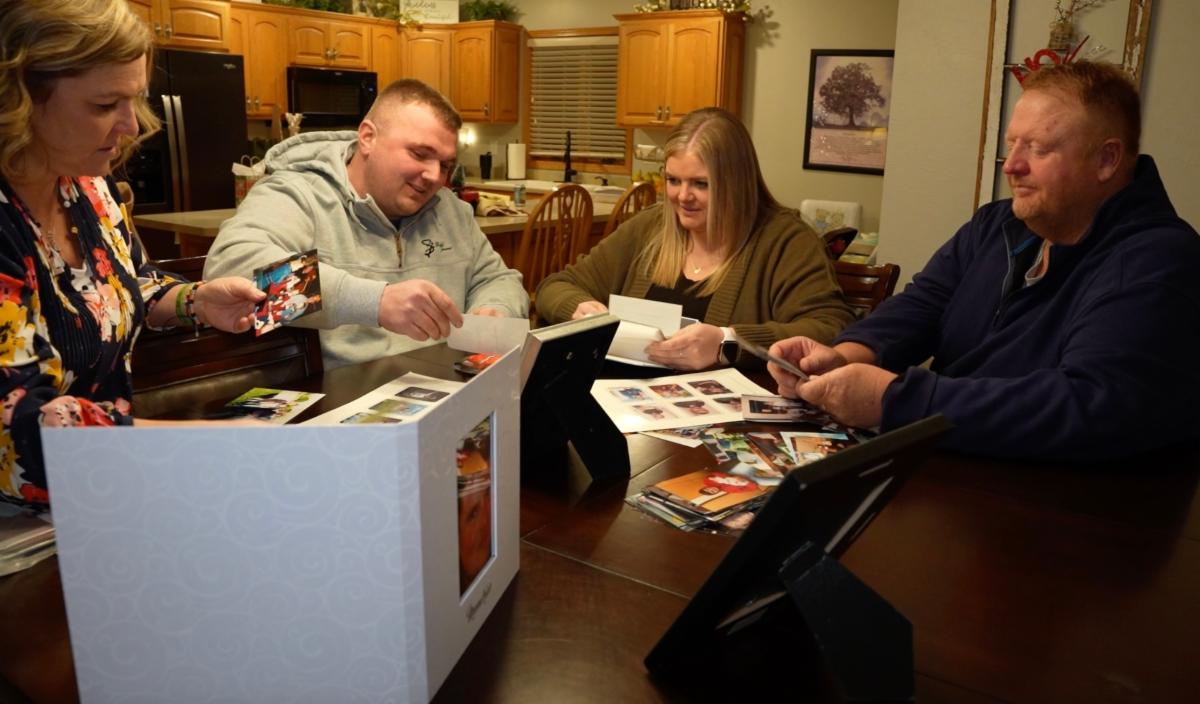
In 2024, WTBA shared a construction industry family’s story about the pain of losing their son to suicide, hoping to prevent others from going through what they experienced.
| | | If you or someone you know is struggling with mental health or related issues, consider contacting the 9-8-8 helpline, which is open to calls, text, and online chat 24/7/365. | |
Unpaid membership dues to trigger account lockouts starting March 1 | |
In the midst of preparing for filing taxes and a busy upcoming construction season, WTBA is reminding members to pay their 2026 Membership Dues.
Dues initially went out to each company’s primary billing contact via USPS the first week of December. Currently, Michelle Klubertanz is sending each company with unpaid dues an email detailing how to pay, including a direct payment URL.
Members may pay online via credit card or ACH, or by mailing a check to the P.O. Box on their dues invoice. Please note: only those with Master Account online credentials can log in and view their company’s dues. Each member has one Master Account login.
After 90 days (starting Sunday, March 1), members with unpaid dues will be unable to login to individual WTBA.org accounts until payment is made. This prevents employees from registering for future WTBA events, accessing the online membership directory, and reading members-only content on the Environmental and Regulatory Tracking page.
If you have any questions or need assistance with dues, please don’t hesitate to reach out to Michelle Klubertanz directly. Thank you for your prompt attention on this matter!
| | CONNECT WITH US ON SOCIAL | | | | |