Addressing human-rights issues for
people with disabilities around the world
Good things are going on all over the world!
|
|
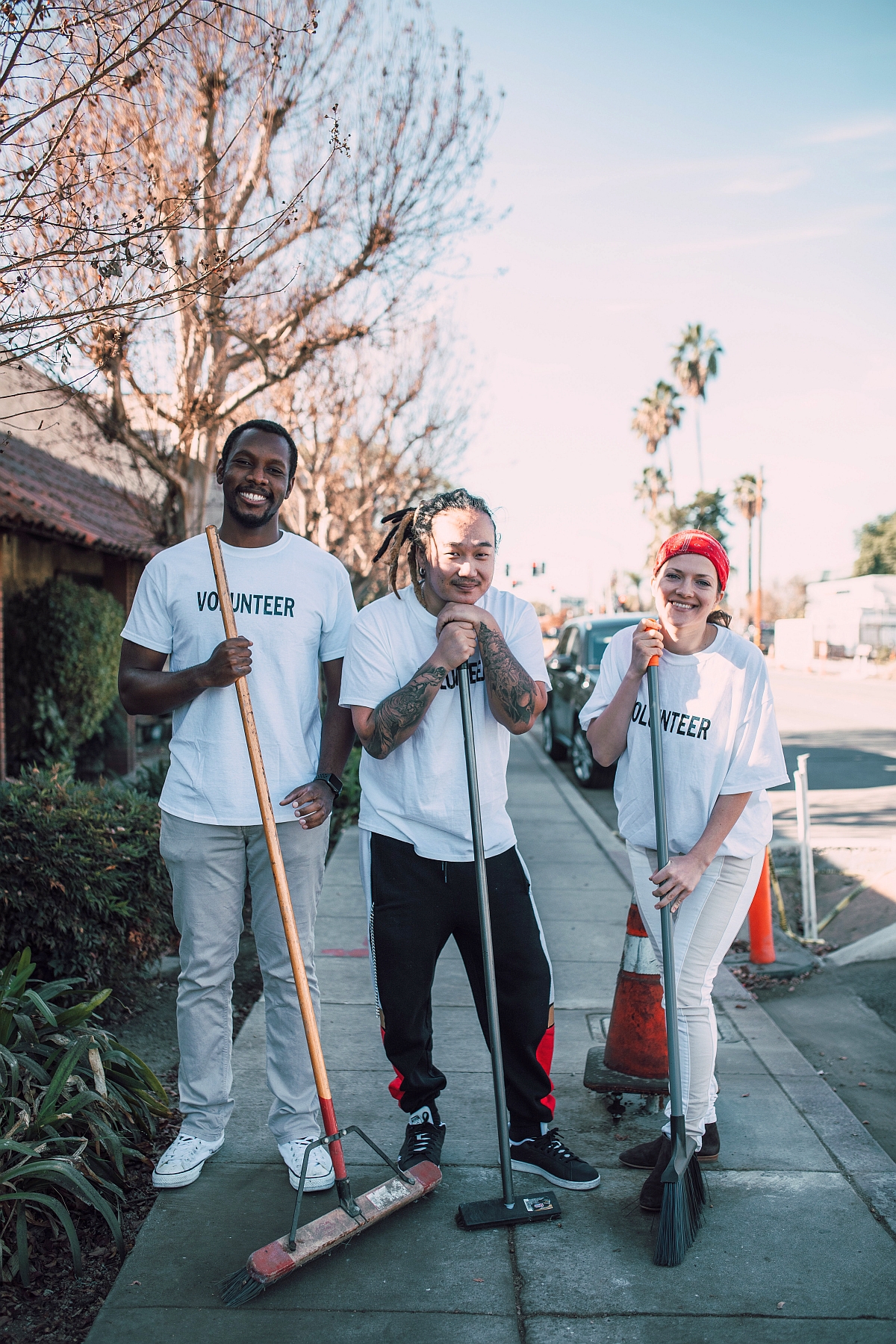
Volunteering has many benefits beyond money |
|
Rotary is a volunteer organization, which means that most of the people who work on projects are doing it for the cause, not monetary benefits. The Rotary Club of World Disability Advocacy is no different.
Then why do we do it? The number-one reason is because we are passionate about improving the human rights for people with disabilities. We are passionate about changing lives so that people will have the dignity, equality, and life that they deserve.
Even though there is no monetary reward in doing this type of effort, there is plenty of self-satisfaction in knowing that you were involved in helping to improve someone’s life. Remember that Rotary’s motto is “Service Above Self.”
However, there are some benefits to volunteering that will help the volunteer. Volunteer activities are some of the top areas that employers look at, when considering hiring someone. Volunteering tells the employer that this person cares about others and the community. Employers believe that because this person is willing to volunteer for the cause, he or she will be more dedicated to the job and the company.
Also, the beauty of volunteering is that it often gives the person more skills and accomplishments to promote on the resume or curriculum vitae (CV). Skills and accomplishment help a person look better than the other people who are applying for the same job. They give the job applicant the competitive edge. They also give the employer an idea of what type of contributions the person will bring to the company.
Volunteering is a vital part of Rotary. Around the world, 1.2 million are volunteering to make the world a better place. My hope is that the people involved in our cause are those who believe they can make the world a better place simply because they believe in doing good.
|
|
Our worldwide movement now has 285 members from 20 countries, of whom 107 are Rotarians and 178 are non-Rotarians.
Please send your news and information to me, Ken Masson, president of our club.
Our newsletter team and I look forward to receiving news and information from around the world about people with disabilities, and efforts to help them achieve autonomy and respect.
In closing, kindly introduce yourself to me, including but not limited to your:
1. Country of residence
2. Role in the society
3. Whether you are a person with a disability, a parent of a child with disability, and/or a diversity- and disability-rights advocate.
|
|
Designing disability-friendly bathrooms in public/private spaces |
|
Neeku Kewlani, of India, an honorary member of the Rotary Club of World Disability Advocates, posted this information on the proper design of a disability-friendly bathrooms. Shared below are crucial points as provided by Anita Iye, of the Ekansh Trust (a non-government organization based in Pune, India) on designing such bathrooms in public/ private spaces.
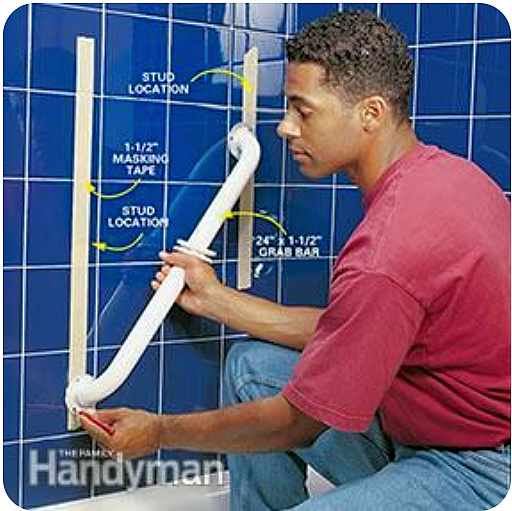
Photo: The House Handyman
If you’re buying a home, building one, or doing one up, and intend to have babies, elderly parents, or other family members staying with you, please invest in the following for your bathrooms:
|
|
- Slip-proof flooring in the bathrooms.
- Grab rails in the bathrooms near washbasins, toilet seats, and shower/bathing area.
- An extra toilet seat with a smaller inner circumference, to prevent small people/kids from losing balance.
- Good lighting.
- Good color-contrasting fittings.
- Rounded edges to washbasin slabs, etc
- Rounded thresholds.
- No small shower cubicles.
- A tallish, steady stool/ chair/ seat to sit on while bathing.
- An alarm.
- Doors either opening outwards or sliding sideways, which can be opened/unlocked from outside during emergencies.
- Have lever-/sensor-operated door handles and faucets.
- Install a full-size mirror.
- For wheelchair users, the heights of all fittings - including switches - need to be checked. Also, doors need to be wider, to allow entry.
-
Wall ladders in washrooms for folks with motor disabilities, to help facilitate dressing and undressing in private. (I have used them in my centre as part of conductive education.)
- An alarm bell in bathroom bedroom and main hall. It needs to be between two and two-and-a-half feet from the floor - not high up.
- Bathroom doors should be wide enough for accomodate a person in a wheelchair.
All of this doesn’t cost much, and it makes things easier. It isn’t funny or frivolous. Do these things before your elders get very old, so they get used to it. If your architect or designer is not recommending these things, sack them.
|
|
INTERNATIONAL SPACE STATION |
|
ISS crew display Tokyo Paralympic 'torch'
Source: Space.com
|
|
On the opening day of the Tokyo Paralympic Games, on August 24, Russian cosmonaut Oleg Novitskiy posted a photo on Twitter.
Shown in it are the current seven occupants of the International Space Station, including himself.
They were posing with a "torch" inside one of the station's modules, under a ceiling decorated with national flags.
The torch, which appears golden in the image is, of course, not burning.
|
|
Enabling people with disabilities to make purchases by phone |
|
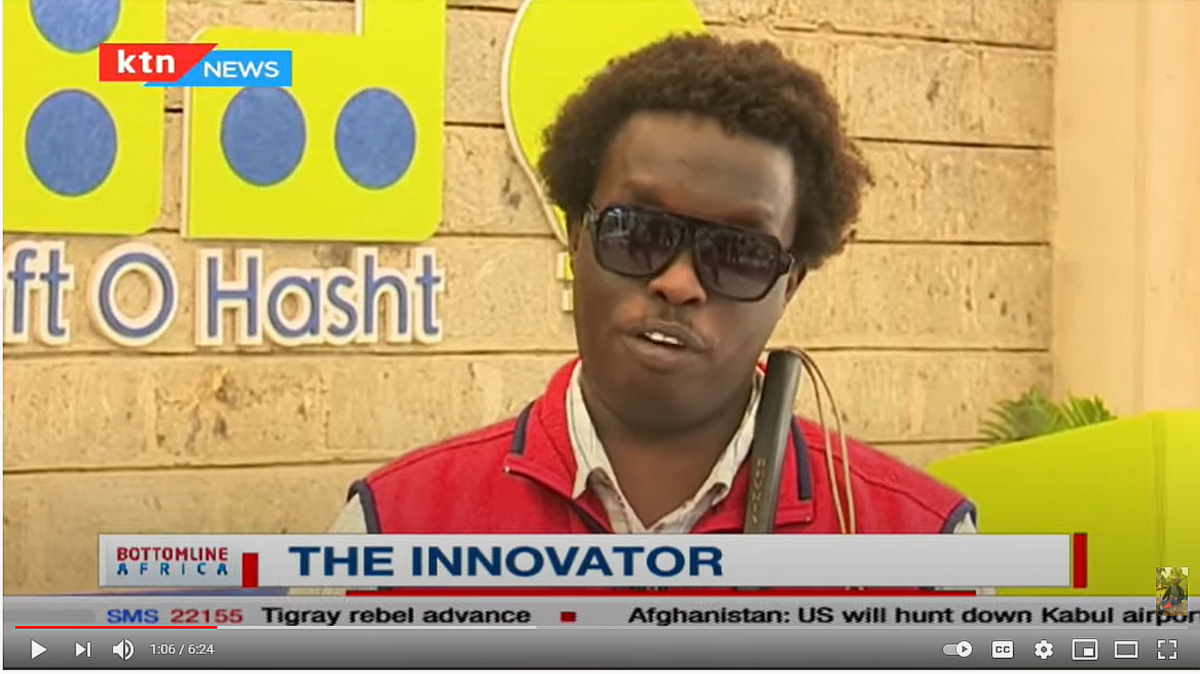
Kenyan Kwa Macho (shown) has developed K-Macho, an assistive-technology application.
K-Macho enables people living with disabilities to make purchases on the phone.
To watch a six-minute report by KTN News Kenya, click here.
|
|
Cash-transfer program to be reinstated |
|
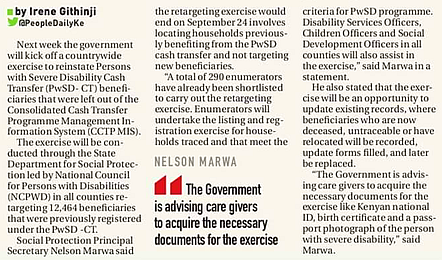
Below is a screenshot of an article by Irene Githinji, of People Daily Ke, titled Government to reinstate disabled person in cash transfer programme.
|
|
Online service launched, to make job searches easier
|
|
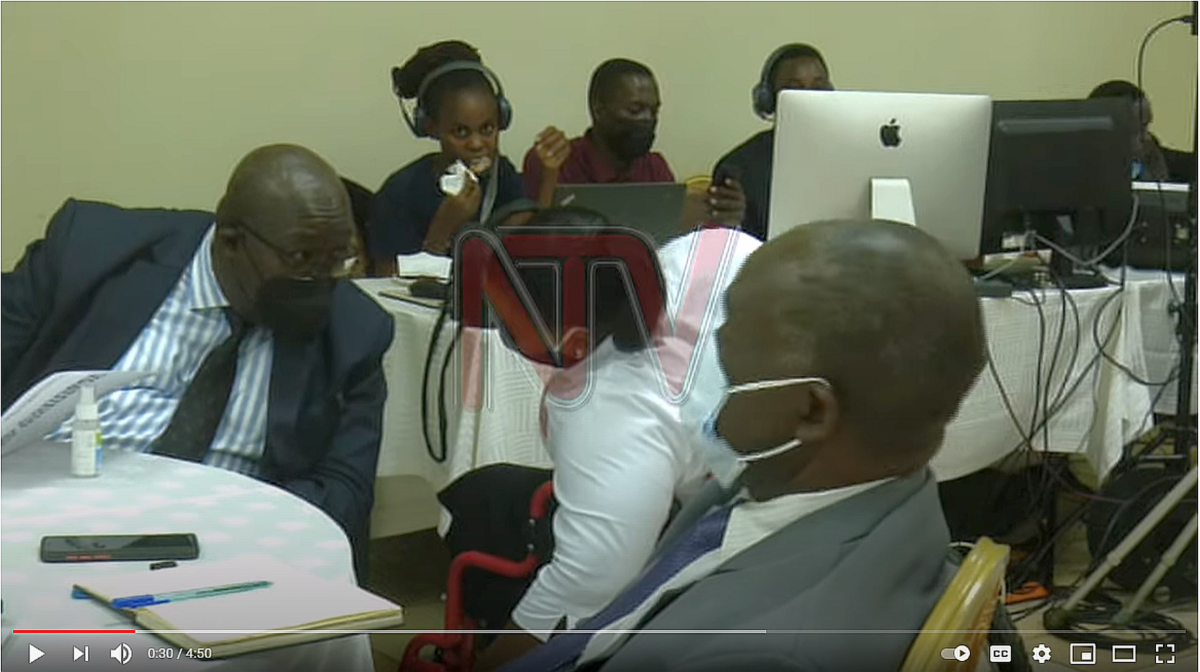
Maureen Kalungi, of Uganda, and an associate our our club, runs an organization that engages people - especially girls - in parasports. She was involved in an event to advocate for employment for people with disabilities. Watch an NTV report on this effort.
For years, people with disabilities have struggled to secure jobs, and the unprecedented situation created by the COVID-19 pandemic has simply worsened the situation.
However, in a bid to increase access to waged-employment opportunities for persons with disabilities, an online portal has been launched for both employers and potential employees to get connected.
|
|
Glad to be a part of this great organization |
|
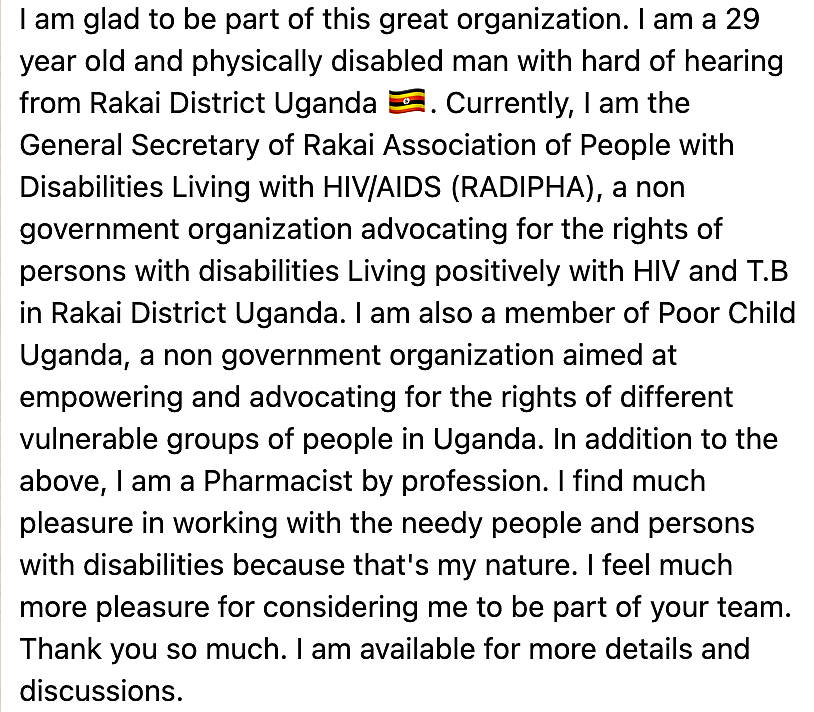
Posted by Ssekamatte Julius, Uganda
|
|
To contact Ssekamatte via WhatsApp at +256 702 471 031.
|
|
An autistic kid with an amazing voice |
|
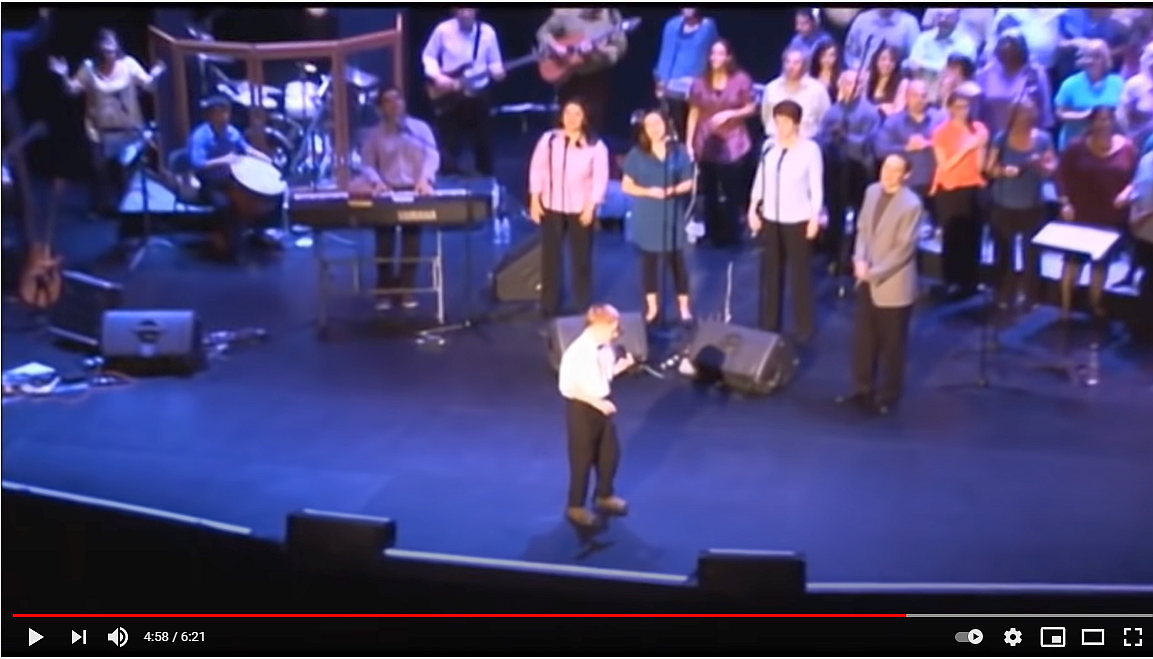
Christopher Duffley is a 10-years-old blind autistic kid with an amazing voice.
He proves that someone who looks different doesn't mean he has anything less.
This boy is a gift for all of us. Keep singing Christopher. To hear and share his angelic voice, click here.
|
|
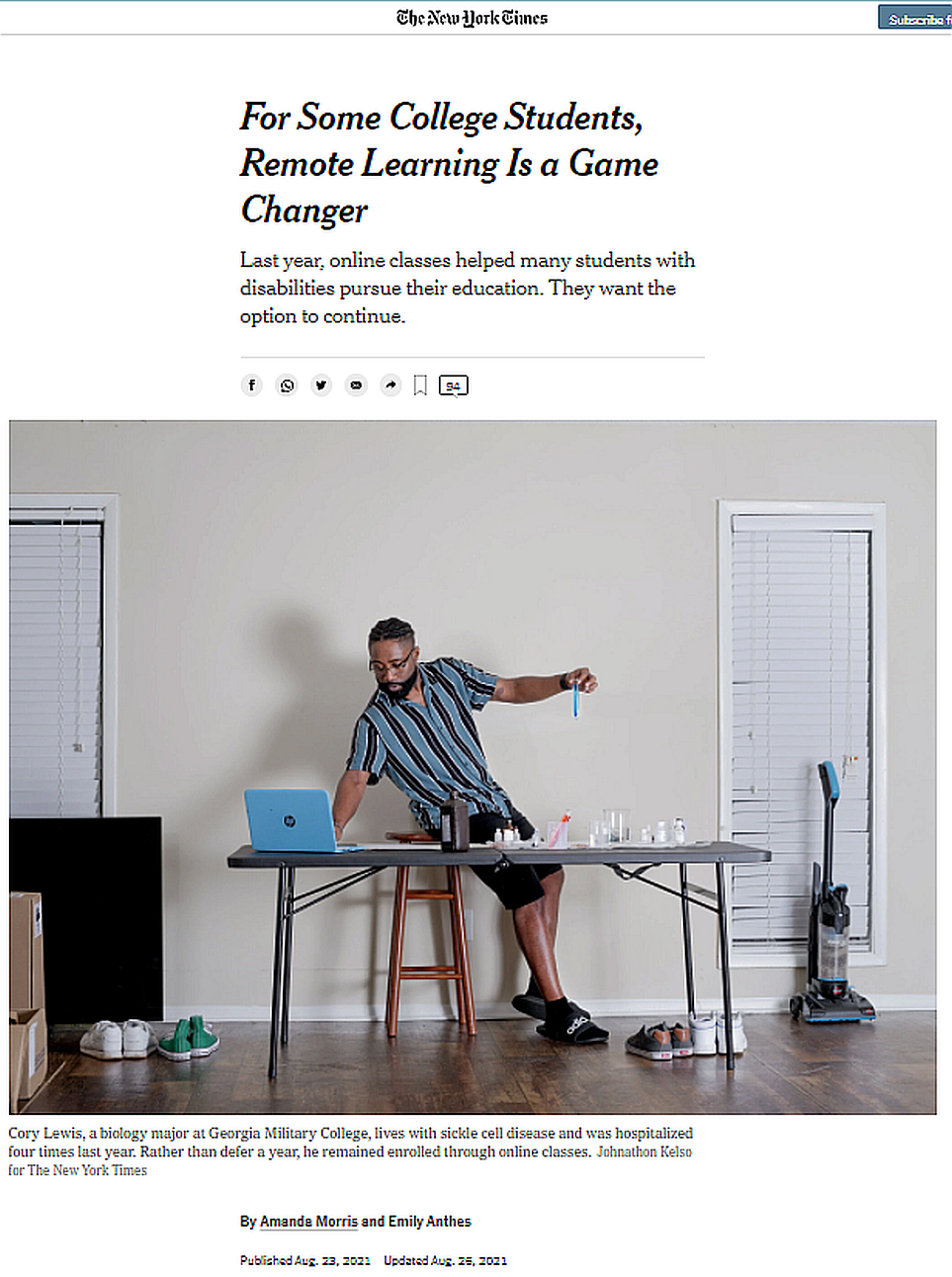
For some college students, remote learning is a game changer
Source: New York Times
|
|
When Daniel Goldberg took his final exams last December, he was attired in little more than a baby-blue hospital gown with an intravenous line snaking out of his arm.
Over the past year, Mr. Goldberg, a 24-year-old law student at Arizona State University, has toggled between attending classes and consulting with his doctors — sometimes from his hospital bed.
Before the pandemic, Mr. Goldberg, who has a painful, chronic inflammatory bowel disease, missed classes whenever he needed medical attention. But over the past academic year, he didn’t miss a single class, and he said he had become a better student as a result.
|
|
Volunteers sought for 'unconference' on disability-led community development
|
|
Allison Lourash is seeking others who are interested in putting together a session on disability-led community development.
The purpose is to discuss international practices that go beyond inclusive development.
The "unconference" is an alternative to the traditional conference. It is a self-organising gathering.
Allison lives in the north woods of Wisconsin, where she supports access to the community for people with disabilities. You may contact her at allison.lourash@waldenu.edu.
|
|
WORLD HEALTH ORGANIZATION |
|
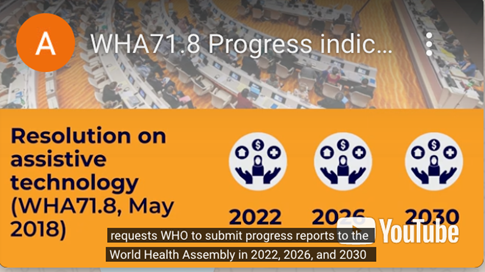
Progress Indicators for access to assistive technology |
|
This 90-second video answers five questions:
|
|
1. Why do we need Progress Indicators for access to assistive technology?
2. What do the Progress Indicators investigate?
3. Who is responsible for compiling the Progress Indicators?
4. When do we collect data on the Progress Indicators for access to assistive technology?
5. How can member states provide data?
Note: A major contributor to this discussion was Rotarian Mark Wafer, of Canada, who is a member of Canada’s Panel on Labour Market Initiatives for Canadians with disabilities. He helped to create Canada's national strategy on disability employment.
To read more on the World Health Organization's work on assistive technology, click here.
|
|
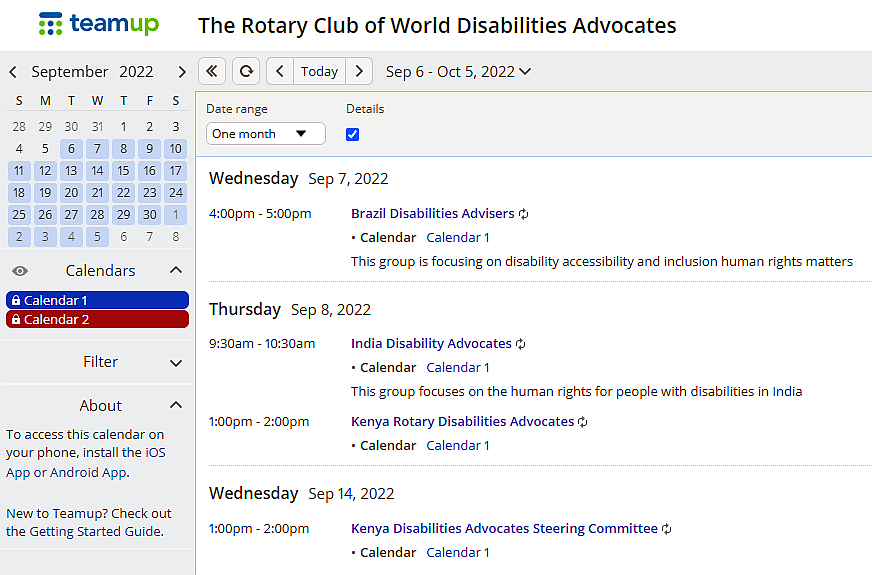
We are also seeking a volunteer to maintain our online TeamUp calendar, where people and groups may post events related to our Club and its mission. To let us know whether you are interested and, if so, when you would be available, contact club President Ken Masson via WhatsApp or at kennethmasson@gmail.com. |
|
We are looking for people who have skills and abilities in the development of web apps. To let us know whether you are interested and, if so, when you would be available, contact club President Ken Masson via WhatsApp or at kennethmasson@gmail.com, |
|
The deadline for stories and photos/images for our September 14 newsletter is on Friday, September 10.
Please submit your stories and related photos/images to Newsletter Editor Ralph Hammond either via WhatsApp or at ralph.hammond@verizon.net.
All stories must be in either e-mail, PDF, WhatsApp, or Word format.
All photos/images must be in either GIF, JPG, or PNG format.
|
|
JOIN OUR UPCOMING MEETINGS |
|
With scores of international members, the Rotary Club of World Disability Advocacy focuses on coordinating human-rights needs for people with disabilities in countries around the world. Our club has set up international committees in many countries to, identify needs.
We have created an online calendar showing the schedule for all the meetings being held by our club, group, committees, and subcommittees.
While it does not yet include Zoom links, it will eventually.
|
|
Our monthly Club meeting - for members, only - is the third Monday at 12:00 p.m. (Eastern time). And our monthly Group Meeting - for members and non-members - is the first Monday at 9:00 a.m. (Eastern time).
To convert Eastern time to your own time, click here.
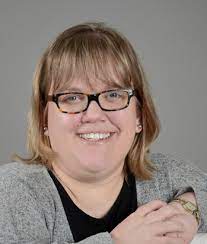
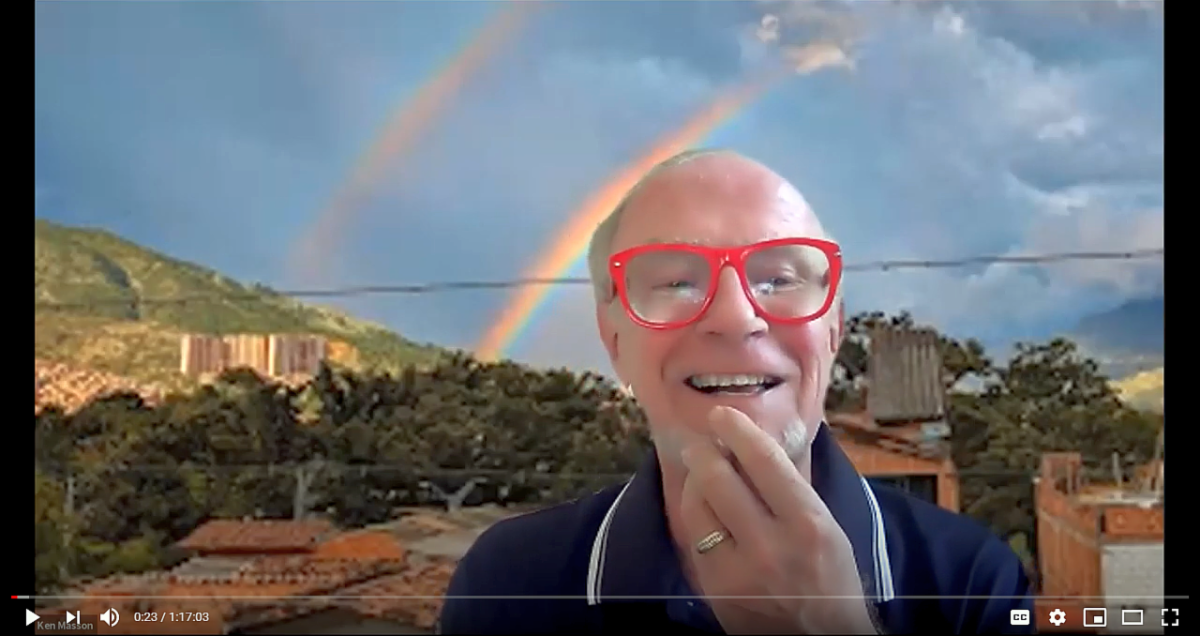
To obtain the Zoom login for our meetings, contact Ken Masson (shown), our Club's president for Rotary year 2021-2022, via either WhatsApp or at kennethmasson@gmail.com.
|
|
MISSED OUR LATEST MEETINGS? |
|
To watch the video of our Group Meeting on August 9, click here. |
|
To watch the video of our Club Meeting on August 23, click here.
|
|
To download the Zoom transcript of the Club Meeting on August 23, in PDF format, click here.
|
|
Our club is dedicated to the human rights of people with disabilities.
|
|
WE FOLLOW ROTARY'S FOUR-WAY TEST |
|
Our Rotary Club follows Rotary International's Four-Way Test, a non-partisan and non-sectarian ethical guide for Rotarians to use for their personal and professional relationships. The Test has been translated into more than 100 languages, and Rotarians recite it at Club meetings:
Of the things we think, say, or do
-
Is it the truth?
-
Is it fair to all concerned?
-
Will it build goodwill and better friendships?
-
Will it be beneficial to all concerned?
To learn more on Rotary's Guiding Principles, click here.
|
|
|
|
|
|
|