 | |
NACD is excited to offer Planning & Capacity Grants under its Climate-Smart Commodities grant program. The maximum Planning & Capacity Grant is $15,000 (10% match). NACD anticipates award of up to 50 grants. Proposals are due by May 15, 2024. The RFP and several key resources are available on our website.
Planning & Capacity (P&C) grants are intended to support early-stage development of a climate-smart commodities project. P&C grants may focus on community needs assessments, partnership development, and building preliminary capacity to begin programming in the following areas:
- Outreach and technical assistance with the goals of scaling the adoption of climate-smart practices
- Developing the capabilities and partnerships necessary for implementing measurement, monitoring, reporting, and verification (MMRV) plans
- Assessing and understanding market dynamics (e.g., understanding local demand for climate-smart commodities, analyzing barriers to producers’ participation in such markets). Assessments may be conducted with the goals of:
- Developing plans to mitigate barriers to participation and
- Developing partnerships to develop or expand local or regional climate-smart markets
Competitive proposals will focus on developing projects and partnerships across all three of the main components. Proposals focusing only on advancing one component (e.g., outreach, education, and technical assistance; research/demonstrations or advancing MMRV; assessing or expanding markets) will not meet the goals of a P&C grant.
This Thursday, March 7, 2024 at 4:00 p.m. ET NACD will host an informational webinar on the RFP and answer applicants’ questions. Please don’t hesitate to reach out to climate@nacdnet.org with any questions between now and the webinar.
| |
ADVOCATE FOR CONSERVATION AT
NACD SPRING FLY-IN
| |
This year's annual NACD Spring Fly-In is on Wednesday, March 20, 2024! View the agenda to see all scheduled events for the day and learn more here.
Please note that the room has changed for the evening reception. The reception will now be held in the Dirksen Senate Office Building, Room G50, located at 50 Constitution Ave NE, Washington, D.C. We look forward to seeing you there!
RSVP here to share with us the in-person events you plan to attend and information about your scheduled meetings with legislators.
| |
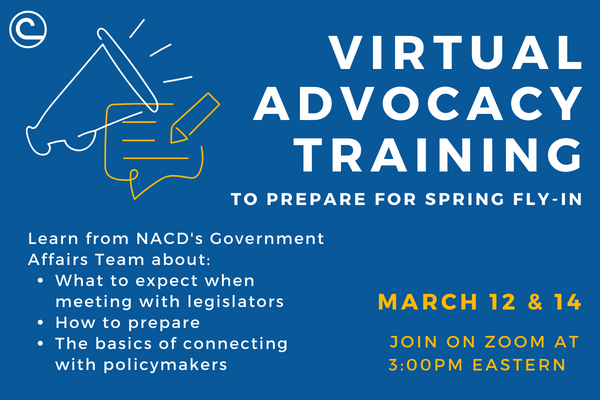
NACD invites all Spring Fly-In participants to join virtual advocacy trainings on Tuesday, March 12 or Thursday, March 14 from 3:00 - 4:30 p.m. ET. The two sessions will offer the same content and will also be posted to NACD's website after for anyone who cannot attend live.
At these trainings, the NACD Government Affairs Team will provide tips on how to effectively engage with congressional representatives and support policy priorities to prepare for the 2024 Spring Fly-In meetings on March 20. Issue papers will be provided prior to the trainings.
Registration is required for these trainings.
-
Tuesday, March 12 | 3:00 - 4:30 p.m. ET | REGISTER
-
Thursday, March 14 | 3:00 - 4:30 p.m. ET | REGISTER
If you have any questions, please reach out to Chris Young, NACD Director of Government Affairs, at chris-young@nacdnet.org.
| DEADLINE EXTENDED FOR WORKING LANDS CLIMATE CORPS PROPOSALS | 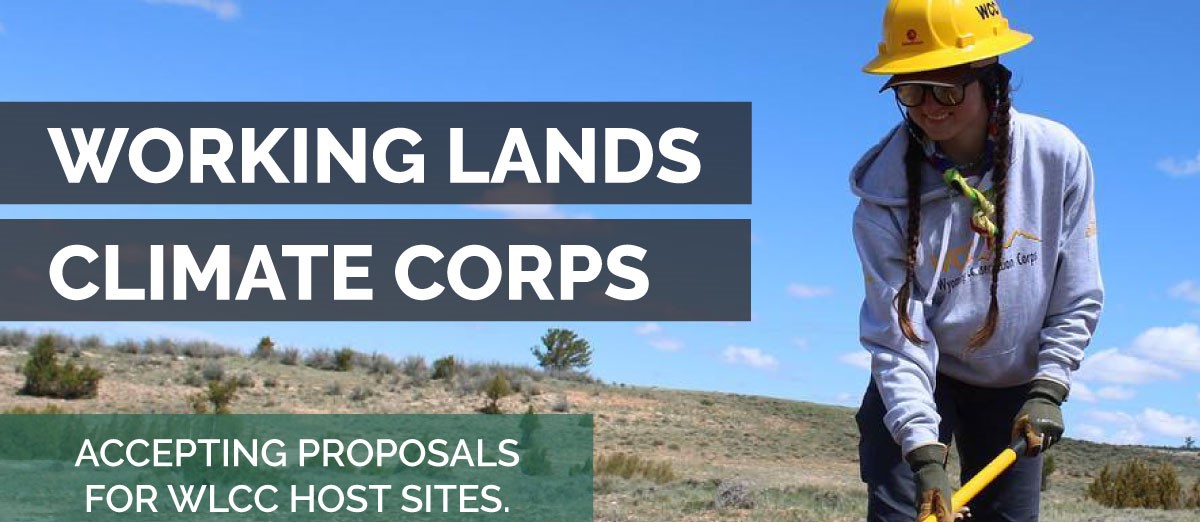 | |
NACD is working alongside the USDA, AmeriCorps, and The Corps Network to implement the Working Lands Climate Corps (WLCC). A program of the American Climate Corps, the WLCC will engage at least 100 young adults in technical skills and climate work across the country.
The Corps Network is providing subgrants to organizations to host WLCC members across the country. Conservation districts have the opportunity to apply to host one or several WLCC members!
These WLCC members can provide outreach and education around climate-smart agriculture assistance to farmers, ranchers, and communities. WLCC host organizations will work with state and county-level NRCS staff to facilitate conservation and climate resilience projects, track WLCC member activities, and train members for careers in Climate-Smart Agriculture and Forestry. Learn more and see the RFP here.
The deadline to submit a proposal has been extended! Submissions are now being accepted until 5:00 p.m. ET on Friday, March 22, 2024.
NACD hopes that conservation districts, state and territory associations, or partners will be able to take advantage of this historic opportunity to engage young adults in implementing climate-smart agriculture and forestry.
To learn more, visit the WLCC webpage, read the FAQs, or watch the recording of a recent informational webinar held on the opportunity.
| |
WHAT'S UP IN WASHINGTON:
GOVERNMENT AFFAIRS UPDATE
| Five months into the Fiscal Year, Congress released, and is expected to pass, six final Fiscal Year 2024 appropriations bills, including bills to fund the U.S. Department of Agriculture, Department of the Interior, and Environmental Protection Agency. The legislation would decrease funding for many NACD appropriations priorities, including NRCS Conservation Operations. Despite the tight budget environment and recent enactment of legislation that provided additional funding for NACD priorities, it is critical for Congress to increase funding for these critical programs in Fiscal Year 2025. President Biden is expected to release his Fiscal Year 2025 budget proposal on March 11. | CONSERVATION DISTRICTS LEAD CHARGE AGAINST FERAL SWINE IN GEORGIA | |
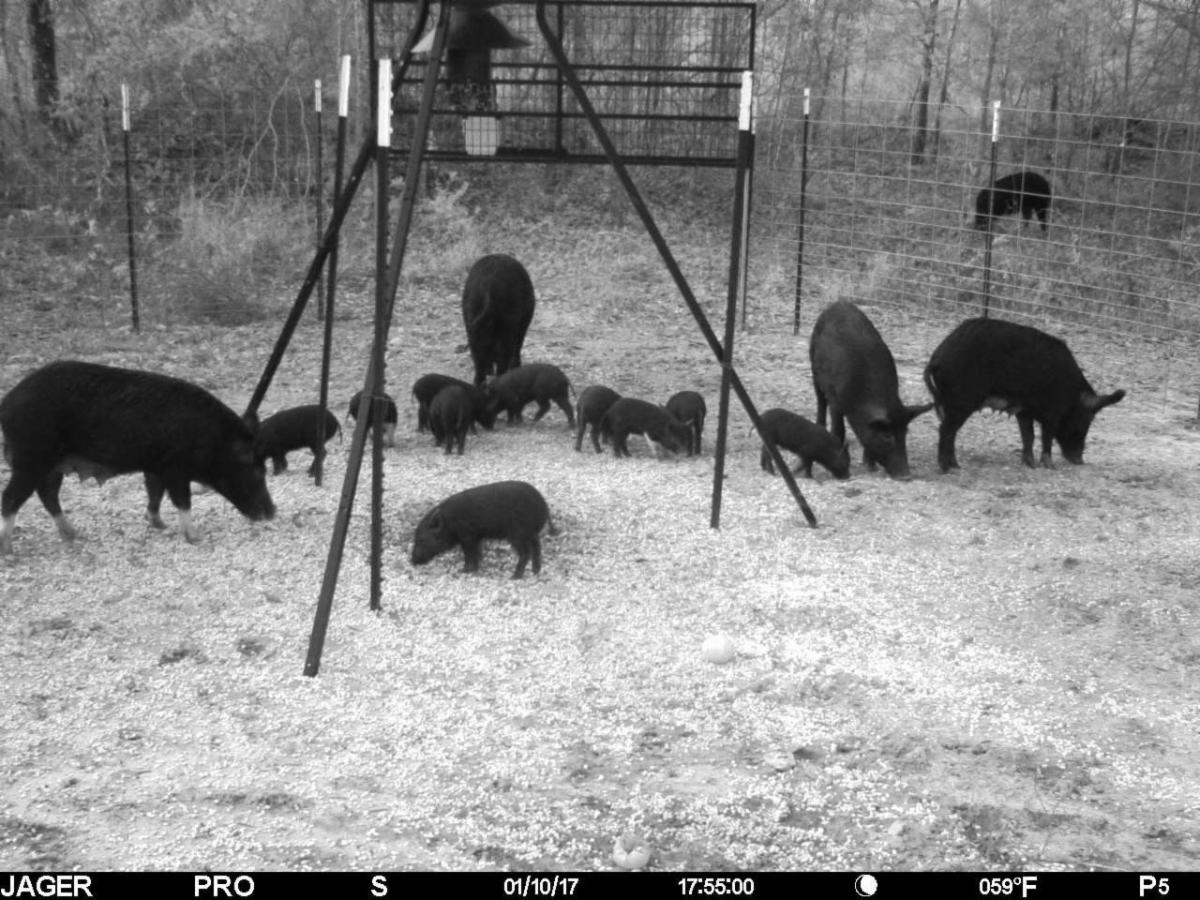
In the lush landscapes of Georgia, a relentless battle wages against the invasive, highly damaging feral swine. These descendants of domestic pigs, now wide-spread and invasive, pose a significant threat to agriculture, natural habitats, and local economies. Amid the challenges posed by these destructive creatures, a coalition of conservation districts, governmental bodies, and research institutions is rising to the occasion, employing innovative strategies to manage and mitigate the impact of feral swine across the state.
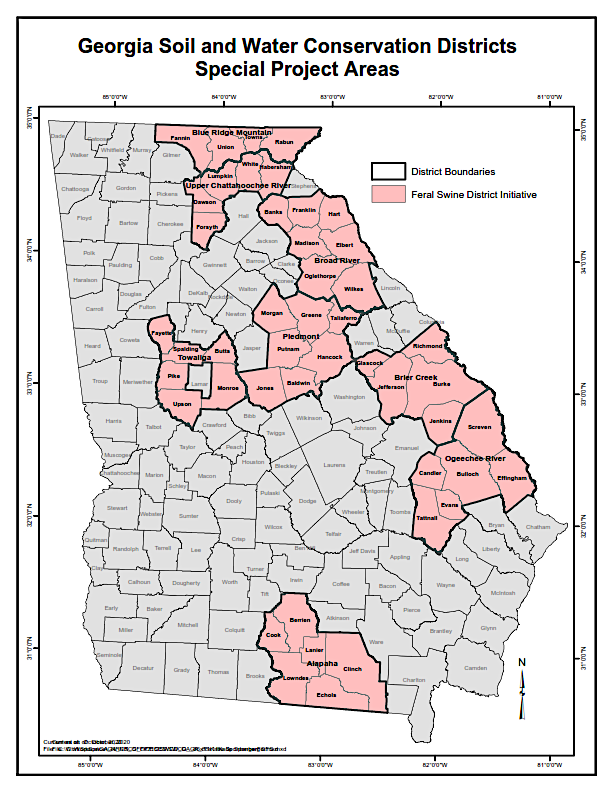
Georgia's conservation districts began this work in earnest in 2017 when the Brier Creek Conservation District, under the leadership of Chair Tom Mims, initiated a program to address the escalating feral swine population within its jurisdiction. By equipping local Hog Control Custodians (HCC) with trapping equipment and offering targeted eradication services, the district aimed to assist distressed landowners and producers. The success of this program inspired a statewide effort, spearheaded by Mims, who now serves as the Chair of the Georgia Association of Conservation Districts (GACD) Feral Swine Committee.
Presently, over 20 districts across the state are implementing similar control services, resulting in an estimated $5.5 million in property damage savings for affected landowners.
|  | |
Within these strides in feral swine management, a critical link emerges between their presence and the preservation of Georgia’s iconic longleaf pine forests. Longleaf pine ecosystems, once sprawling across more than 90 million acres of the North American landscape, now occupy a mere three percent of their former range. Within these dwindling remnants lie some of the world’s most biologically diverse ecosystems, providing vital habitat for countless plant and animal species, including 29 threatened and endangered species.
The destructive rooting behavior of feral swine disrupts the delicate balance of longleaf pine habitats, impeding efforts towards their restoration and conservation. This nexus between feral swine and longleaf pine restoration underscores a critical need for deeper exploration, particularly from an economic standpoint. While the immediate costs of feral swine damage are evident, the long-term implications for timber industries and ecosystem services remain less understood.
As Georgia navigates the intricate web of ecological challenges posed by feral swine, one thing remains clear: the stakes are high, but so is the resolve to confront them.
Read the full story on NACD's blog. For more forestry articles like this, check out our monthly Forestry Notes newsletter!
| |
|
Economics of Soil Health Systems
Farmer Focus:
Tim Cornie
| |
NACD, the Soil Health Institute, and NRCS recently released economic findings from 30 farmers who adopted soil health management systems. Each week, we will be highlighting one farm from this study.
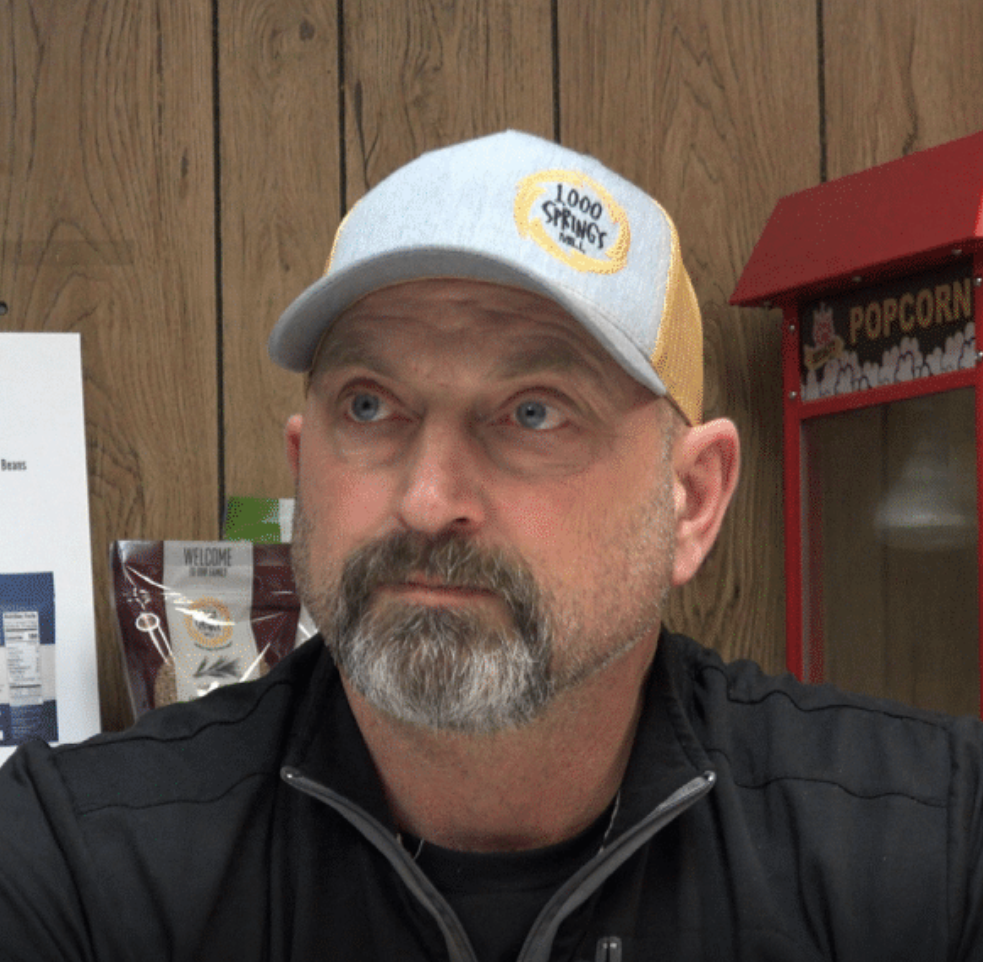
The Tim Cornie farm in the Upper Snake-Rock Watershed of Idaho increased profitability by $15.91/acre through revenue derived from grazing cattle with a SHMS of planting cover crops. Additional benefits included improved soil biology and structure, increased water infiltration, decreased erosion, and reduced pest pressure.
Check out a video, producer narrative, and fact sheet about this farm, and all other farms in the study, here.
| NCPP Survey on Conservation Planning Needs, Barriers, and Opportunities | |
The National Conservation Planning Partnership (NCPP) is asking for your feedback! All partners are invited to share their opinions by completing a survey on conservation planning certification, advancement, and the overall conservation planning process.
Your feedback will help the partnership evaluate new and ongoing challenges and set priority tactics moving forward.
The survey should only take 8-10 minutes to complete. The final day to submit feedback is Friday, March 22.
| Field to Market Hosts Webinar on Sand County Foundation's Land Ethics Mentorship Program | |
A vibrant, secure, and environmentally sound food and agricultural system requires diversity: diversity of crops, diversity of scale, and diversity of people. Since underserved farmers and ranchers tend to farm and ranch on land that is more environmentally sensitive and closer to impaired bodies of water, it is imperative that they have access to conservation practices and resources to enhance soil health, prevent erosion, and minimize nutrient runoff.
Funded by a grant from the NRCS, the Sand County Foundation's Land Ethic Mentorship Program connects historically underserved producers with Leopold Conservation Award-winning farmers and ranchers, who have been recognized for their conservation achievements.
Field to Market invites you to join a webinar exploring the importance of mentorship to on-farm conservation on Tuesday, March 12 at 1:00 p.m. ET. The featured mentor-mentee pairs will share their experiences learning together and how a shared land ethic can bridge diverse scales, cultures, and production systems.
| EPA Launches New Office to Strengthen Rural Engagement | |
On March 1, 2024, the U.S. Environmental Protection Agency (EPA) announced that it is establishing a new office to expand engagement opportunities with agricultural and rural communities. The creation of the first-ever EPA Office of Agriculture and Rural Affairs represents the Biden-Harris Administration’s ongoing commitment to improving environmental stewardship and economic opportunity for America’s farmers and ranchers, as well as strengthening the vitality of small towns and rural communities.
The new Office of Agriculture and Rural Affairs will be led by Rod Snyder, who has served as Administrator Regan’s Senior Advisor for Agriculture since October 2021. The new office will expand on the work of the Agriculture Advisor and increase coordination with a network of existing agriculture policy advisors located in all ten EPA regional offices across the country.
Read EPA's full announcement here.
| Do You Have Your Supplies for Stewardship Week? | |
NACD's annual Stewardship Week kicks off next month on April 28! This year, our education efforts focus on forestry under the theme "May the Forest Be With You, Always." In today’s context, marked by environmental challenges, resilient forests are indispensable in fostering a sustainable world.
Throughout Stewardship Week, conservation districts play a central role in outreach and education. To aid these efforts, NACD has released an array of free education guides, worksheets and activities, and more for district professionals and educators to take to the classroom. New this year, we are offering low-cost printed, ready-to-go materials. Check out the NACD Marketplace, your one stop shop to get everything you need for Stewardship Week!
| Promote your conservation district or state association's tree sale, annual meeting, webinar, field day, or other events on NACD's Calendar of Events! | |