Rail & Labor News from RWU
| | Weekly Digest Number 21 - May 26, 2026 | | Welcome to the RWU Rail & Labor News! This news bulletin is produced and emailed out each Tuesday morning. We hope you find each week's news and information useful. If so, please share with co-workers, friends, and colleagues. If you like, you can sign them up to get all the news from RWU HERE. Or forward them the link. Got a hot tip? Please forward the article and a link to raillabornews@gmail.com. Note: If you read over this news bulletin each week, you'll never miss the important news of what's going on in the railroad world from a worker's perspective! | | THIS WEEK'S RAIL AND LABOR NEWS | | Editor’s Note: The ink on this tentative agreement is barely dry, and the bosses at the MTA are already eager to declare peace and get their trains rolling again. But the Long Island Rail Road workers did not walk off the job for three days because they were comfortable.. they struck because the alternative was surrender, and rail labor has surrendered enough. Five unions standing together on those picket lines is exactly the solidarity that capital fears and workers too often forget. Whatever this contract delivers, let us be clear about what delivered it: not goodwill from management, not the patience of commuters, and certainly not the benevolence of any authority.. but the unified refusal of working people to move until their demands were heard. Read the language carefully before you ratify, brothers and sisters, because agreements made in haste under pressure to restore service have a long history of serving the railroad first. | |
| |
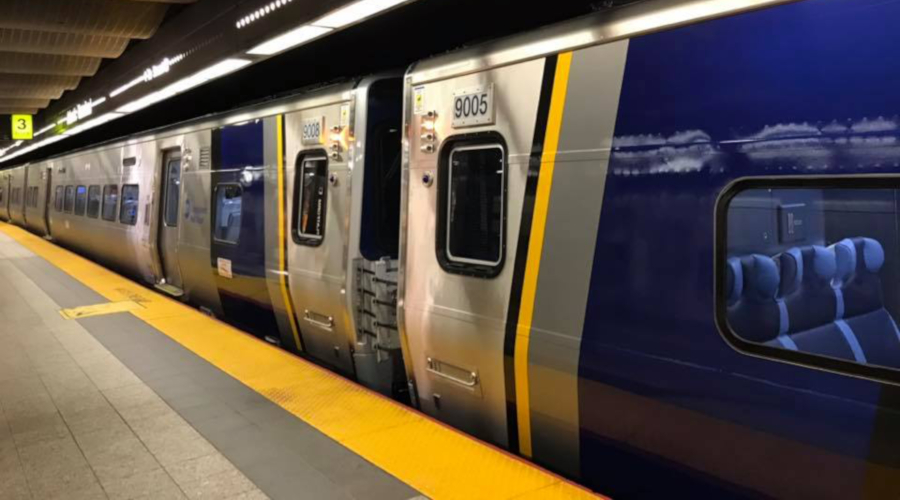
A coalition of five labor unions have ended a three-day strike at the MTA Long Island Rail Road after reaching a tentative contract agreement with the Metropolitan Transportation Authority on general wage increases.
Passenger-rail service on the commuter railroad will resume this afternoon. Contract language will be released once union members have the chance to review and vote on ratification of the proposed agreement, officials from the Brotherhood of Locomotive Engineers and Trainmen (BLET), one of the striking unions, said in a press release.
| |
| Editor's Note: A bill that doubles Amtrak’s operating budget sounds like a victory until you ask who controls the throttle once the money arrives. Federal investment in passenger rail is long overdue, but appropriations without accountability to the workers who actually run these trains is just a subsidy dressed up as policy. The labor question is nowhere in this legislation, and that silence is always intentional. | |
| |
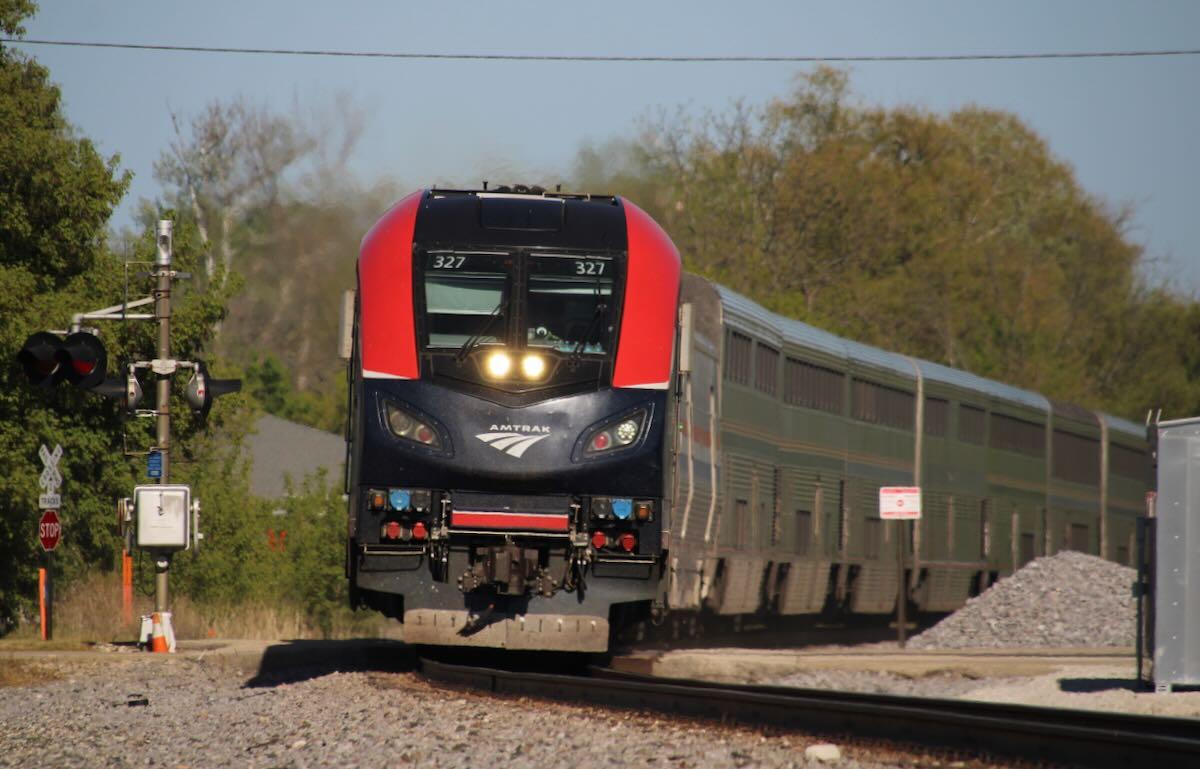
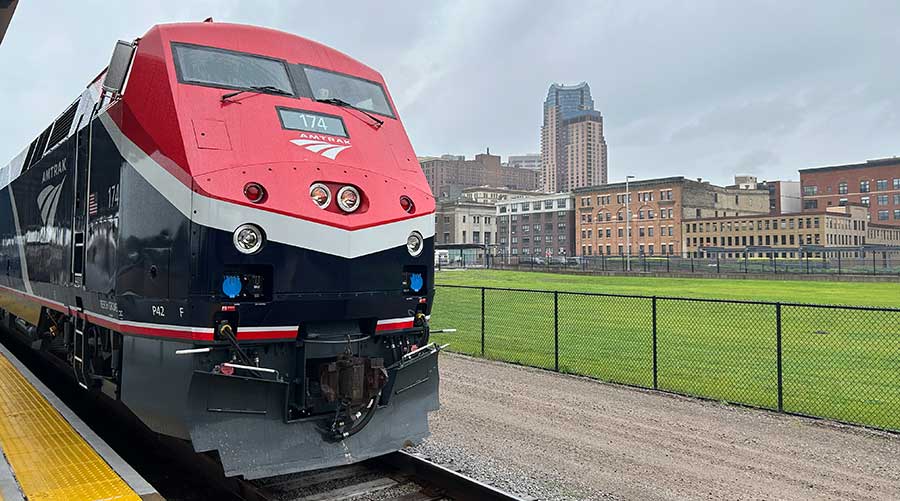
WASHINGTON — Amtrak would more than double its operating funding in fiscal 2027 under the five-year surface transportation reauthorization bill released today by the House Transportation and Infrastructure Committee.
Funding aspects of the bill also call for the Consolidated Rail Infrastructure and Safety Improvement grant program — a significant program for short lines and passenger operations — to remain roughly the same as in 2026. It will also create a National Intercity Passenger Railroad Partnership Program by combining three existing grant programs.
| |
| Editor's Note: Two of the largest railroads in this country are fighting over switching rates while the farmers, the shippers, and the workers caught between them have no seat at the table. BNSF canceling reciprocal agreements to squeeze Union Pacific customers is not a market correction.. it is a demonstration of what consolidated monopoly power looks like in practice. Deregulation promised competition and delivered consolidation, and every rate dispute like this one is the harvest of that broken promise. The regulators at the STB now have a complaint on their desk, but working people have been filing complaints about railroad consolidation for generations without satisfying resolution. | |
|
Freight Waves / May 18th
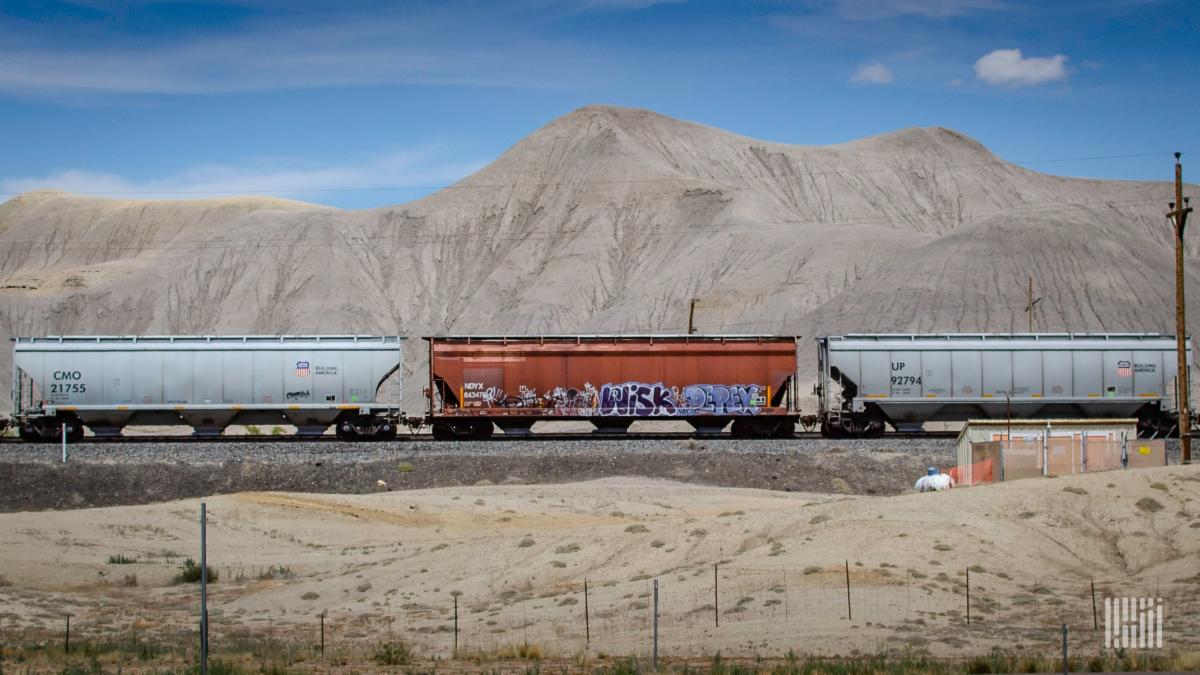
BNSF Railway has canceled longstanding reciprocal switching rates for some unit grain train shipments, which has forced Union Pacific customers to pay a higher per-car merchandise train rate, UP said in a complaint filed with federal regulators on Friday.
“This action almost tripled the switching rate for unit train grain shipments bound for Union Pacific,” UP’s complaint states. “Indeed, BNSF (NYSE: BRK-B) informed multiple customers and Union Pacific (NYSE: UNP) that it would refuse to perform reciprocal switching for unit trains of grain shipping to or from customer facilities via Union Pacific.”
| |
| Editor's Note: Rail workers and the people of East Palestine have been waiting two years for this legislation while Congress treated their suffering as a talking point. If it takes a Truth Social post to finally move the Railway Safety Act, then so be it.. but let no one mistake a presidential nudge for genuine accountability. The railroad lobby that buried this bill for two years did not suddenly lose its influence; it simply miscalculated whose attention it could afford to draw. | |
|
Trains Magazine / May 19th
WASHINGTON — President Donald J. Trump today urged Republicans to back the Railway Safety Act, which has been stalled in Congress since it was introduced in the aftermath of the disastrous 2023 Norfolk Southern derailment and hazardous materials release in East Palestine, Ohio.
The president, writing in a post on Truth Social, urged Congress to include the safety bill in the Surface Transportation Reauthorization Bill.
| |
|
Progressive Railroading / May 19th
Ridership of Amtrak’s Borealis line has once again exceeded expectations; more than 416,000 passengers have used the service since it was launched in 2024. A 2015 feasibility study originally predicted annual ridership would be about 155,000; the service passed 212,000 in its first year.
“The Borealis line is a testament to what happens when we prioritize the American traveler,” said Federal Railroad Administrator David Fink in a press release.
| |
| Editor's Note: When the railroads are fighting each other before the STB, working people should watch their wallets and their contracts. BNSF and CPKC are not raising data integrity concerns out of altruism.. they are protecting their own market position, and labor is simply not part of that calculation. A Union Pacific and Norfolk Southern merger would place an extraordinary concentration of freight rail power in the hands of a single carrier, and hundreds of documented problems with the application should alarm regulators far more than they apparently do. The workers whose jobs, schedules, and safety rules hang in the balance of this proceeding deserve more than a footnote in a letter about spreadsheet discrepancies. | |
|
Trains Magazine via Yahoo Finance/ May 18th
WASHINGTON - BNSF Railway and CPKC have both complained to the Surface Transportation Board that problems with data related to the revised Union Pacific-Norfolk Southern merger application are interfering with their ability to assess claims in that application.
BNSF, in a letter to the board on May 14, says "BNSF and other stakeholders have noted hundreds of documented problems with the amended application," and argues that "UP and NS are compromising the integrity of the board's proceedings. … There is no reason or basis to withhold this data and information. All should have been provided - in final and complete form - on April 30. By the time UP and NS sort this all out, weeks will have already run on the assessments of both the completion of the amended application and its merits."
| |
| Editor's Note: Sixty-five percent voting no with seventy-one percent turnout is not a close call.. it is a declaration, and CPKC would be wise to read it as one. The engineers in former Kansas City Southern territory did exactly what union democracy is supposed to do: they studied the proposal, turned out in force, and rejected terms they found unworthy of their labor. Let no one in a boardroom or a government office mistake the patience of railroad workers for acceptance of whatever management slides across the table. An agreement that cannot survive the scrutiny of the people who must live under it was never really an agreement at all.. it was surrender on an installment plan, and these workers refused to sign. The rank and file have spoken with one voice, and that voice is the only legitimate authority in any labor contract. | |
|
Railway Supply / May 22nd
The CPKC tentative agreement rejection was confirmed by the Brotherhood of Locomotive Engineers and Trainmen. This is reported by the railway transport news portal Railway Supply.
The union said members voted down a proposed labor deal for engineers working in the former Kansas City Southern territory in the U.S.
The BLET, which represents CPKC engineers in the United States, said the proposal failed to win membership ratification.
“The proposed agreement was rejected by the membership with 71% turnout and over 65% voting against ratification,” the union said in a statement. “The strong participation and vote results reflected the concerns many members voiced regarding the proposed hourly wage structure and demonstrated the membership’s desire to have their voices heard throughout the ratification process.”
| |
|
The Canadian Press via Yahoo Finance / May 20th
A proposed rail merger in the United States would set off a wave of acquisitions that reduces competition, raises consumer costs and generates freight logjams, says Keith Creel, who heads Canadian Pacific Kansas City Ltd.
The US$85-billion deal would marry Union Pacific’s vast rail network in the Western U.S. with Norfolk Southern's rails in the east, creating America's first transcontinental railway and accounting for more than 40 per cent of its freight traffic.
| |
|
Rail Passengers Association / May 20th
This is Part 2 of RPA's analysis of the Building Unrivaled Infrastructure and Long-term Development for America’s 250th (BUILD America 250) Act. This post looks at the "Amtrak reform" and "Passenger Rail Policy" subtitles of the bill.
| |
|
J. Vann Cunningham writing on LinkedIn / May 13th
On May 12, 2026, Union Pacific and Norfolk Southern filed their reply to public comments on the completeness of their Amended Application in Docket No. FD 36873. The brief runs 45 pages. It responds, section by section, to every formal completeness challenge filed by CPKC, CN, BNSF, CSX, NGFA, New Jersey Transit, the New York State Department of Transportation, and New York City's Department of Sanitation.
It does not respond to mine.
That silence is not a procedural oversight. It is a strategic choice, and understanding why Applicants made it tells you more about the merger's evidentiary vulnerabilities than anything in the 45 pages they did file.
| |
VPRI / Event is Friday, June 5 at 11 a.m.
The Virginia Rail Policy Institute hosts its 2026 annual meeting with a hybrid business meeting, lunch, and hybrid special presentation: Upgrading Publicly-Owned Rail Lines to Obtain High-Performance Public Benefits featuring presenters: Jason Orthner, Rail Division Director, NCDOT; Nick Little, Retired Director, Center for Railway Research & Education, Michigan State university; and D.J. Stadtler, Executive Director, Virginia Passenger Rail Authority.
We are asking in-person attendees to donate $20 with registration to help cover meeting-related expenses like lunch. In-person seats are limited to 25 and should be registered by June 3rd at 12 p.m. to accommodate meal preferences.
| |
High Speed Rail Alliance
Federal funding for passenger rail is under threat.
The House Committee on Transportation & Infrastructure released a draft of its surface transportation bill earlier this week, called the Building Unrivaled Infrastructure and Long-term Development for America’s 250th (BUILD America 250) Act. The bill determines funding levels for roads, bridges, transit, rail transportation and highway programs for the next five years.
The most important thing to know is that the BUILD Act doesn’t provide guaranteed funding for passenger rail. Instead, rail programs would have to fight for funding through the budget process every year. This is a dramatic shift from the IIJA (the last surface transportation bill), which provided about $66 Billion in dedicated funding for rail over five years.
Please ask your senators and representative to provide guaranteed funding for rail in the BUILD Act.
| | NEWS FROM AROUND THE LABOR MOVEMENT | | Each week, RWU includes a few articles about advances and developments in the larger labor movement that are of interest to railroad workers. Got an artcile to submit for possible inclusion next week? Email it along to raillabornews@gmail.com. Thank you! | |
From our friends at Labor Notes
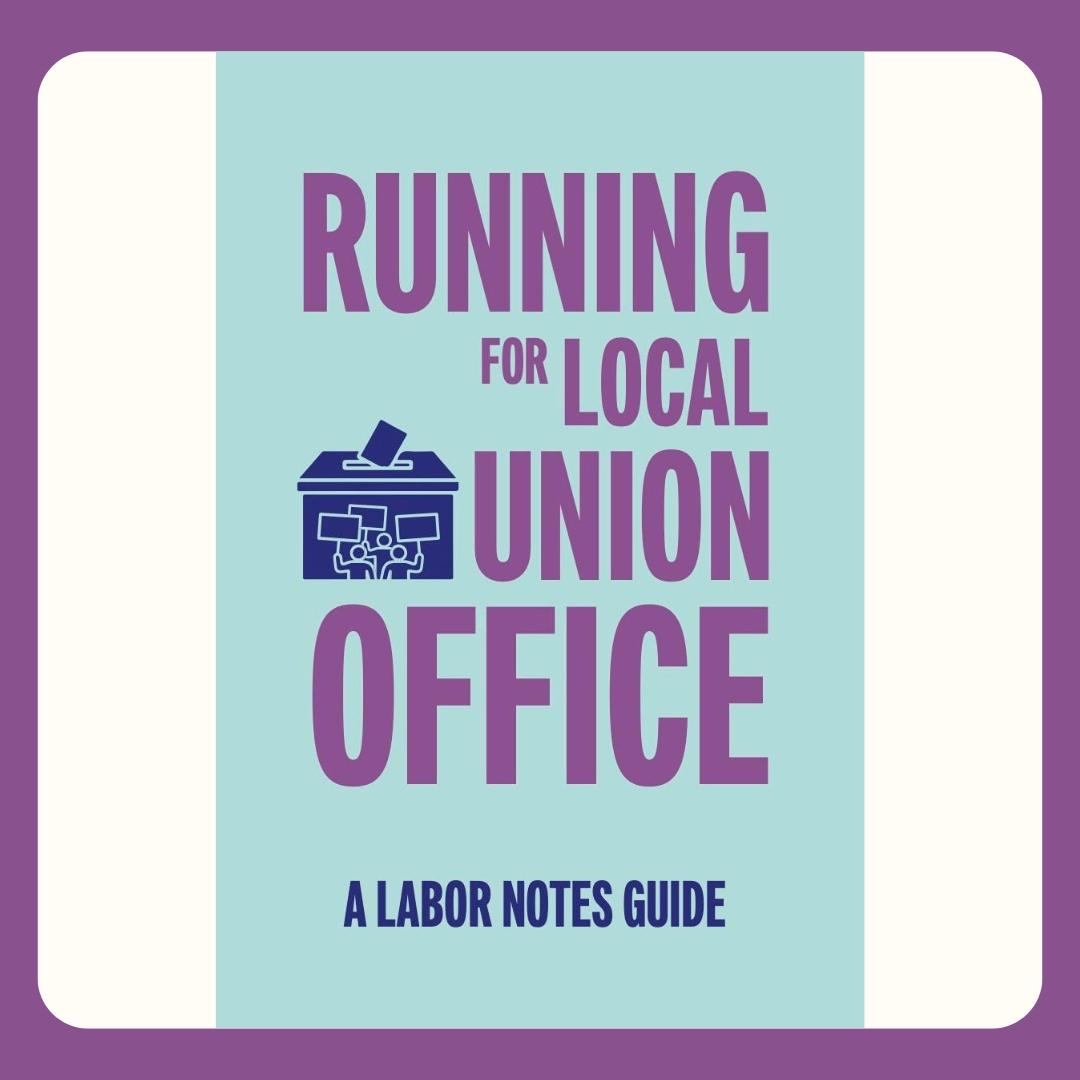
Do you think your union needs new leadership and a new direction? Are you ready to roll up your sleeves and get to work?
If you’ve laid the groundwork by earning the respect of co-workers and building power on the shop floor, then running for local union office can be an important next step in transforming your union. And the new Labor Notes book, Running for Local Union Office, is a handy how-to guide to building a serious campaign. Pick one up from the Labor Notes store or at our upcoming conference.
| |
Labor Notes / May 22nd
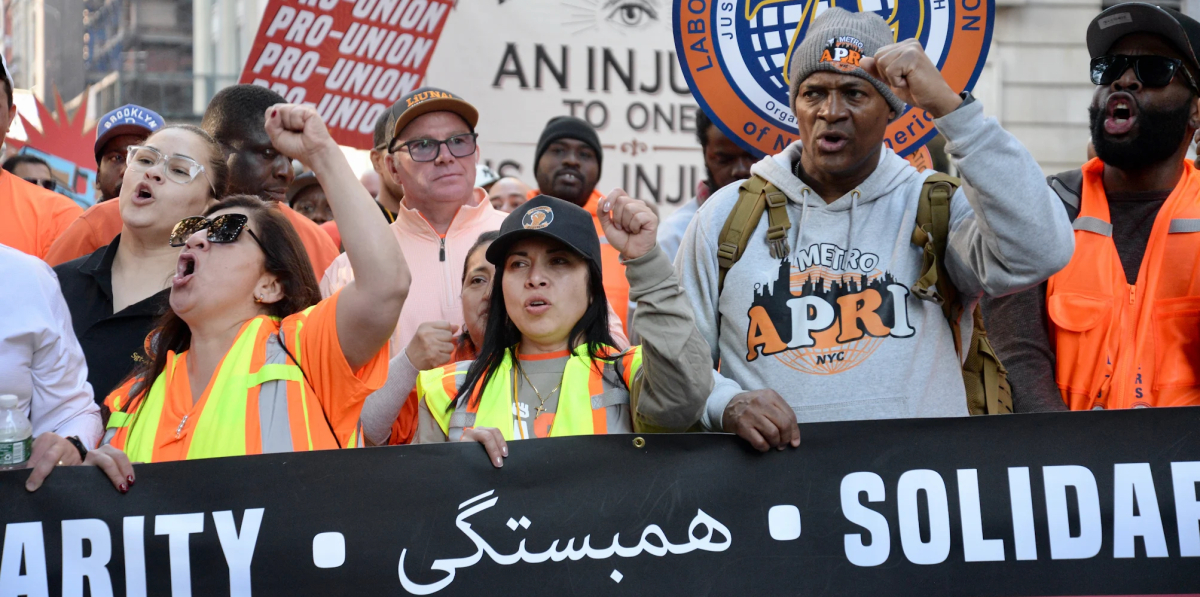
On May First—International Workers’ Day—people across the U.S. and the world joined rallies and other actions calling for “Workers over Billionaires.”
In the U.S., workers organized over 4,000 May Day actions in big cities and small towns. They focused on three demands: tax the wealthy, no to ICE, and expand democracy, not corporate power.
The protests came in the wake of a recent Supreme Court decision further gutting the Voting Rights Act and amid ongoing wars in Iran and Lebanon, as well as a continuing ICE assault on immigrant communities. Our current administration is upholding the same anti-worker, anti-immigrant, and anti-democratic laws that May Day martyrs fought against back in the 1880s.
| | | | |