Rail & Labor News from RWU
| |
Weekly Digest Number 38 - September 17th, 2024 | |
Welcome to the RWU Rail & Labor News! This news bulletin is produced and emailed out each Tuesday morning. We hope you find each week's news and information useful. If so, please share with co-workers, friends, and colleagues. If you like, you can sign them up to get all the news from RWU HERE. Or forward them the link. Got a hot tip? Please forward the article and a link to raillabornews@gmail.com. Note: If you read over this news bulletin each week, you will be sure to never miss the important news of what is going on in the railroad world from a worker's perspective! | |
THIS WEEK'S RAIL AND LABOR NEWS | |
Editor's Note: While this article does not comment on what CEO Shaw's removal may mean for the future direction of NS, one thing readily apparent is that this is a "gift" to NS, a "valid reason" to get rid of the face and the voice of the "old NS", and the accompanying "bad PR" of recent years including the East Palestine wreck, chronic Amtrak delays, the recent war for control of the Board, PSR (and its cousin whatever this means, "PSR light"), and allows NS to take on the look of having made a "fresh start" (out with the old, in with the new!). Will this convenient change at the top result in more cuts, more consolidations, even worse customer service, and "True" PSR. Most likely. | |
New York Times / September 11
Norfolk Southern said on Wednesday that it had fired its chief executive, Alan H. Shaw, for having an affair with the company’s chief legal officer. In a news release, Norfolk Southern said Mr. Shaw, who became chief executive in May 2022, had a consensual relationship with its top lawyer, Nabanita C. Nag, who was also fired. Mark R. George, the company’s chief financial officer, was named president and chief executive officer, Norfolk Southern said. “This change in leadership comes in connection with preliminary findings from an ongoing investigation that determined Shaw violated company policies” by engaging in a relationship with Ms. Nag, the company said. “Shaw’s departure is unrelated to the company’s performance, financial reporting, and results of operations.” Mr. Shaw’s departure ends a troubled tenure at the top of Norfolk Southern. After one of its trains derailed in an Ohio town last year, spilling hazardous materials, Norfolk Southern faced lawsuits, government investigations, and scrutiny from Congress. This year, an activist investment firm tried to take control of Norfolk Southern, and though it failed to dethrone Mr. Shaw, shareholders voted to place three of the firm’s directors on the company’s board.
| |
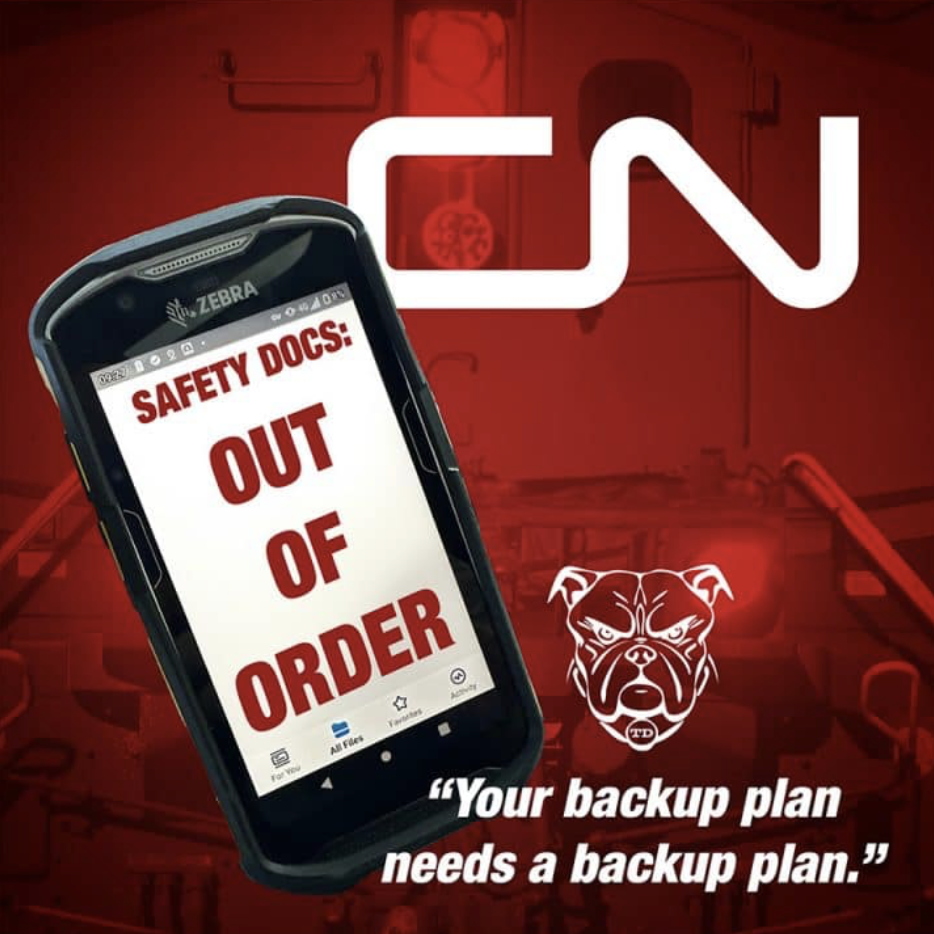
Editor's Note: The ultimate rule violation - systemwide - with every single operating employee operating with NO access to the basic operating rules, special instructions, timetables, etc. What a nightmare. Hard to conceive that there is NO backup plan in case of this sort of systemic online failure. But who is there to discipline the rail corporations? | |
SMART-TD / September 12
CN Rail sent crews rolling through communities without access to essential safety documents, ranging from operating rulebooks to Emergency Response Guides (ERGs). The railroad’s electronic document system recently failed without a meaningful backup, placing everyone on or near their trains at risk. This situation raises serious safety concerns, especially as CN’s freight trains travel extensively across the U.S. and Canada. CN railroader and Michigan’s Alternate State Safety and Legislative Director Eric Stanger told SMART News, “The idea that there is not an adequate contingency plan in place for this is mind-blowing.” Brother Stanger went on to say, “In any other circumstance, CN would be handing out discipline for not having these documents, but because it’s on them, they are insisting the workforce violate their own operating rules.”
| |
Editor's Note: The threat of a strike - and an actual strike (albeit only for a few hours until ordered back to work by the Canadian government) - has the potential to inflict financial hardship upon a railroad corporation. Rail workers need to understand that while we might be hamstrung by draconian labor laws, we still must exercise the power that we DO have by threatening - and carrying out - strike action. Or our rights will be even further eroded. | |
Progressive Railroading / September 11
CN yesterday announced its operations have recovered following several months of labor uncertainty as well as a complete shutdown of its Canadian network, and that it is adjusting its 2024 guidance and long-term financial outlook. CN remains focused on the disciplined execution of its scheduled operating plan, growing volumes more than the economy as its company-specific growth opportunities come online, pricing above rail inflation, and improving efficiency, CN officials said in a press release. They attributed the swift network recovery to its scheduled operating plan and steps taken to have an orderly and safe shutdown following the labor stoppage. The labor uncertainty and work stoppage, the impact of wildfires in Alberta, weaker-than-expected demand in forest products, and the delayed recovery of overseas intermodal due to ongoing port labor uncertainty have all led the company to update its financial guidance and long-term outlook.
|
|
Editor's Note: Once again, North Carolina is paving the way forward by taking rail lines into public ownership. A number of states have historically owned right-of-ways (both branch and mainlines), and modern-day purchases are becoming more common. | |
Progressive Railroading / September 11
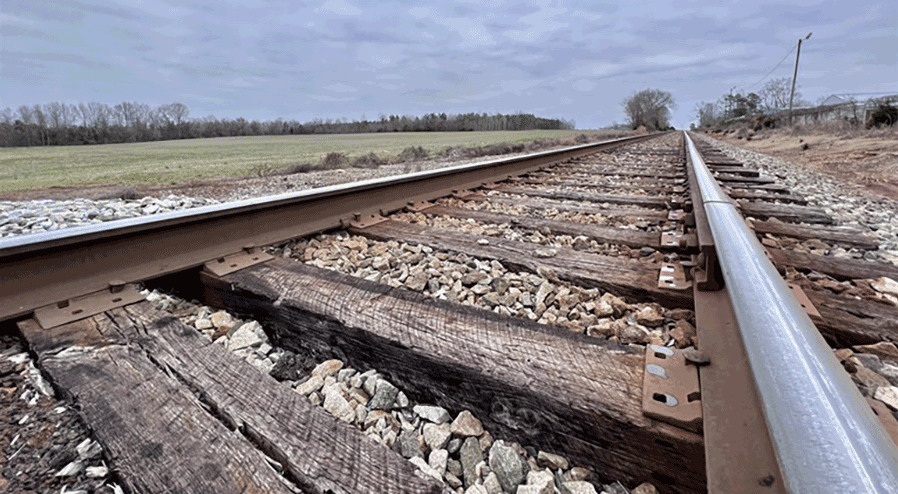
The City Council in Charlotte, North Carolina, yesterday finalized the purchase of the O-Line railroad from Norfolk Southern Railway. The purchase culminates city leaders’ discussions with NS and plans that have been in the making for several months for the Charlotte Area Transit System (CATS) Red Line commuter-rail project, city officials said in a press release. Last week, the council voted 10-1 to approve the purchase of 22 miles of the O-Line Railroad right-of-way, track improvements, and property rights for $74 million. The council also approved the purchase of 1.6 acres and associated property rights located near the Charlotte Gateway Station for $17 million. “Council’s vote marks a historic milestone as we secure the O-Line for future commuter rail,” said Mayor Vi Lyles. “This is a pivotal moment for our city, reflecting our commitment to creating a robust and efficient transportation network for all of our region." The proposed Red Line is a 25-mile commuter rail line that would provide a regional connection between Uptown Charlotte and the downtowns of Huntersville, Cornelius, and Davidson, extending into Mt. Mourne in Mooresville.
| |
Editor's Note: Great to see a new plant open in the U.S. that is dedicated to building passenger rail cars for domestic use. Once a burgeoning industry in this country, it has been difficult for passenger train operators - notably Amtrak - to order and take delivery from passenger rail car builders. Let's hope this plant can produce other rail cars types as well as the Brightline trains, as Amtrak is desperate for new rail cars. | |
Siemens to Build Brightline West's High-Speed trains in New York | |
|
Progressive Railroading / September 10
Siemens Mobility will produce high-speed trains at a new manufacturing plant in Horseheads, New York, for the future Brightline West high-speed rail line, the companies and U.S. Sen. Majority Leader Chuck Schumer (D-N.Y.) announced yesterday.
The Horsehead location will become home to a first-of-its-kind facility that will produce the "American Pioneer 220," which will operate on the Brightline West line linking Las Vegas and Southern California, Siemens officials said in a press release. Production is slated to begin in 2026.
| |
Editor's Note: RWU did a deep dive into the numbers and found that the freight rail industry has been moving fewer and fewer carloads despite making record profits. We have been beating that drum ever since finding that the C;ass Ones moved 21% less in 2022 than in 2006, and 24% less than in 2006. The STB has decided to act. The American people deserve to know just why in the hell - despite a much expanded economy and a vast increase in trucks on our highways, that the Class Ones are moving - and in fact want to move - less freight. | |
At STB, Rail Shippers Reveal Preference for Trucks | |
|
Freight Waves / September 09
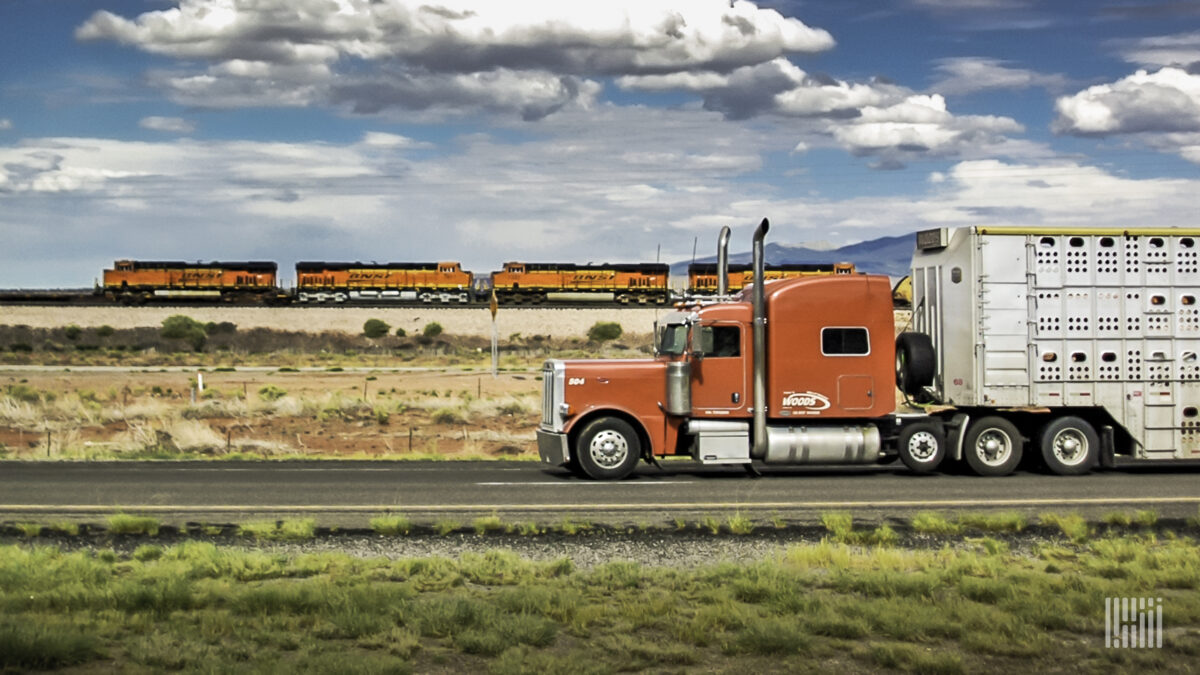
More regulatory oversight is needed to keep rail volumes from shifting to trucks and limiting the railroads’ growth potential, rail customers have told the Surface Transportation Board. Their testimony, along with that of railroads, unions, industry consultants and others has been filed with STB ahead of a two-day hearing at the agency next week over concerns about the railroads’ ability to continue to grow their business. “The deteriorating rail service members have experienced for decades makes it exceedingly difficult for shippers to do business with railroads as they are at risk of losing customers if they cannot provide them with reliable shipments,” said Richard Erstad, VP and general counsel for chemical manufacturer Hawkins Inc., in comments filed on behalf of the Alliance for Chemical Distribution. “This is even more impactful for small rail customers who can have their entire operation disrupted if just one car is severely delayed.”
| |
Editor's Note: This is an example of what rail workers and trackside communities can win by working together. Who knows what may come next? But to see trackside community members walking a rail workers picket line will hopefully become reality soon. | |
Rail Crew Drivers and Environmental Justice Organizations Win Passage of Clean Air Rule | |
|
Labor Today / September 14
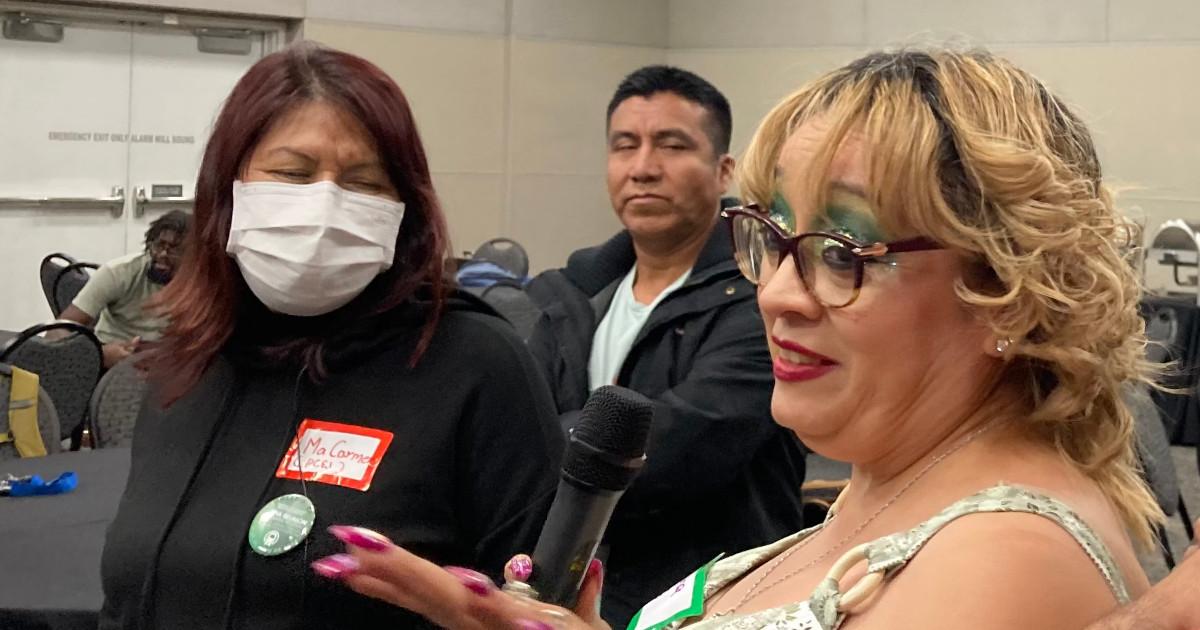
Rail crew drivers from UE Local 1077 joined environmental justice organizations in persuading the South Coast Air Quality Management District (SCAQMD) board to pass a life-saving regulation for rail yards in the Inland Empire, Los Angeles County, and Orange County. In response to overwhelming public support, including a letter signed by the UE local and its allies, the rule passed unanimously at the board’s meeting in August. Rule 2306 will limit toxic emissions from the 25 rail yards in operation and any new rail yards built in the region. According to SCAQMD, “The rule is expected to reduce Nitrogen Oxides (NOx) emissions associated with freight rail yards by about 10.5 tons per day between 2027 to 2050.”
| |
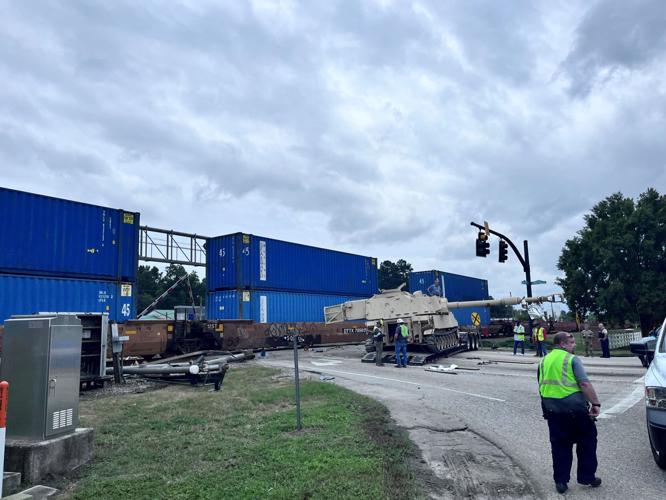
Editor's Note: One can only hope that such a high profile collision with a multi-million dollar piece of government military equipment will help focus attention on rail crossing safety. | |
CSX Train and Semitruck Carrying Artillery Vehicle Collide in Goose Creek | |
|
Post and Courier / September 12
Hardee's workers watched as an 18-wheeler carrying a self-propelled artillery vehicle attempted to cross railroad tracks parallel to North Goose Creek Boulevard. But while the cab cleared, the trailer snagged on the tracks. Then a CSX train barreled into it. A loud bang echoed through the fast-food establishment that sits at the intersection of North Goose Creek and Thomason boulevards and had a direct view of the collision. The barrel, which got snagged on the train, caused the piece of military equipment to spin as the train eventually came to a stop, the workers said.
| |
Editor's Note: Only in North America would it be thinkable to shut down an existing passenger rail operation. Union and citizens need to come together to stop this reactionary idea from becoming reality. | |
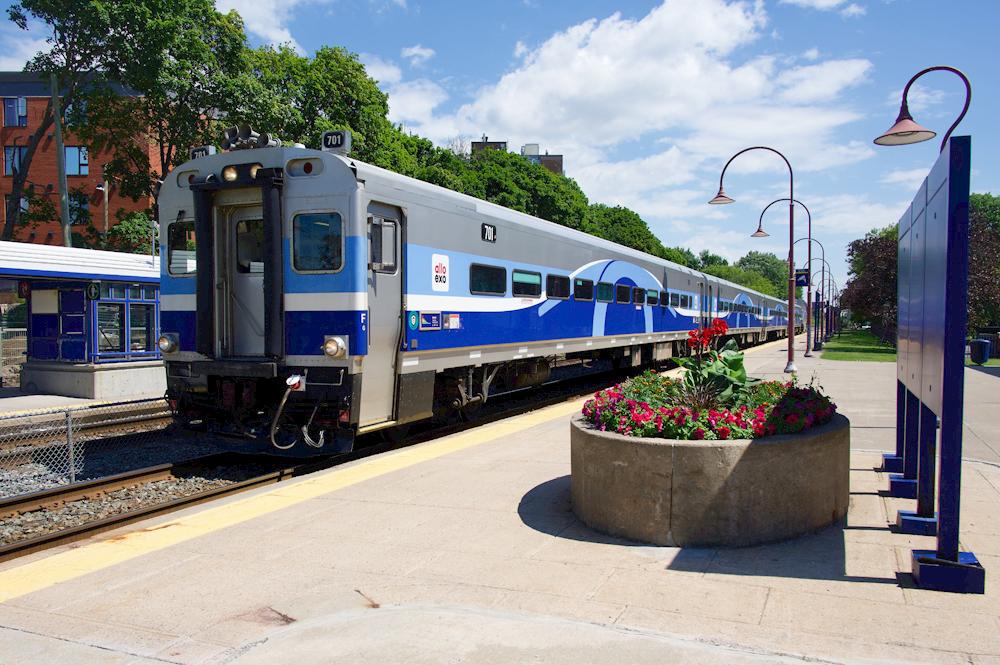
Montreal Commuter Rail Lines Threatened | |
|
Trains.com / September 13
There are Montreal commuter rail lines threatened with closure. A report by Autorité Régionale de Transport Métropolitain suggests that closing three commuter rail lines could save up to C$21 million annually, CBC News reports. Commuters would be served by bus connection to adjacent rail lines instead. They are the three least-traveled EXO commuter rail lines, serving Candiac in the south, Mascouche in the north, and Mont-Saint-Hilaire in the east. The report is dated Aug. 29. “There are very few cities in the world that are closing train lines. On the contrary, they’re trying to multiply them,” says Mont-Saint-Hilaire Mayor Marc-André Guertin. “Right now, there aren’t reserved lanes everywhere so more buses in traffic is nonsense.”
| |
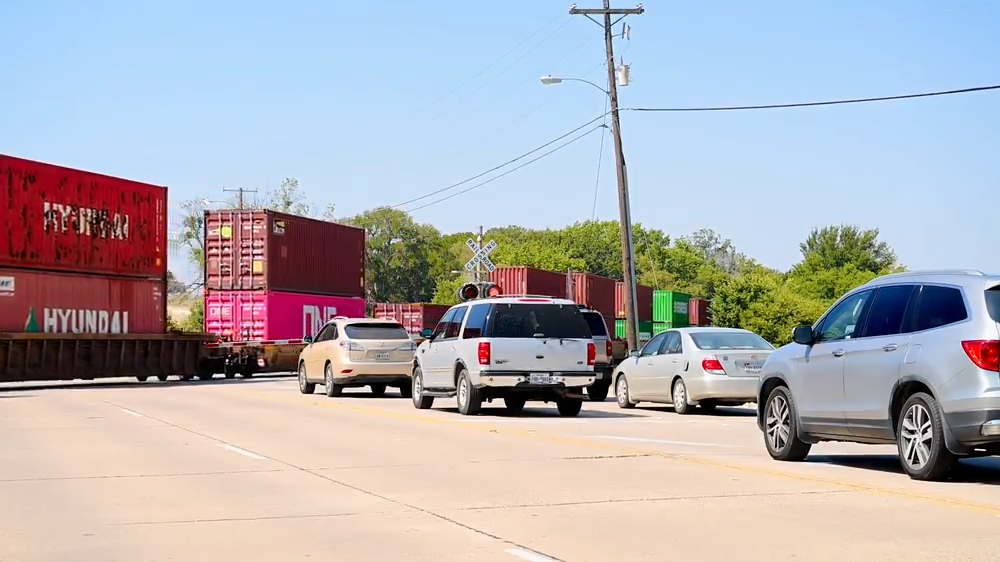
Editor's Note: People everywhere are getting fed up with PSR and its penchant for running super long freight trains that block crossings, impeded emergency services, and tie up towns. It turns out that Texas leads the nation in reported roadway crossings occupied (blocked) by a train. | |
|
The Wall Street Journal / September 15
Freight trains are getting longer—some of them 3 miles or more—and that is making life unpleasant in places like Pleasantville, Texas. The Houston neighborhood sits in the shadow of sprawling rail yards run by Union Pacific, where employees assemble trains that can pull hundreds of railcars that regularly cut off local roads for residents Railroaders call them monster trains. Union Pacific and its rivals are making trains longer because they generate higher profits, allowing the companies to haul goods with fewer locomotives and fewer crew. Long trains are typically slower, so drivers must wait longer for them to pass. When these trains stop moving, things get worse. School buses, ambulances and firetrucks are delayed. Pedestrians and cyclists clamber under or between train cars to get across—and the results can be deadly.
| |
Editor's Note: RWU did a deep dive into the numbers and found that the freight rail industry has been moving fewer and fewer carloads despite making record profits. We have been beating that drum ever since finding that the Class Ones moved 21% less in 2022 than in 2006, and worse, 24% less than in 2006. The STB has decided to act. The American people deserve to know just why in the hell is it - despite a much expanded economy and a vast increase in trucks on our highways, that the Class Ones are moving - and in fact want to move - less freight. | |
|
WASHINGTON — The Surface Transportation Board today (Sept. 5) announced the schedule for those who will testify in its upcoming hearing on growth in the freight rail industry, and adjusted the starting time for each day of Sept. 16-17 hearing to 9 a.m. ET — a half-hour earlier than the original schedule. The hearing will be held at board headquarters at 395 E Street S.W. in Washington. It will be carried live on the Board’s YouTube channel. Twelve groups, or panels, of speakers are set to participate — six each day. The list of railroads and other organizations taking part had been announced last month.
| |
NEWS FROM AROUND THE LABOR MOVEMENT | |
Each week, RWU includes a few articles about advances and developments in the larger labor movement that are of interest to railroad workers. Got an artcile to submit for possible inclusion next week? Email it along to raillabornews@gmail.com. Thank you! | |
Editor's Note: This well-written and easy-to-understand piece lay out clearly why working people are generally not happy with the economic state of affairs, and why the answer to our woes is not electing this or that candidate and supporting this or that of the two parties. Rather, structural change is needed to redistribute the wealth and power in society. And - we think - this can only be accomplished through working class organizing and UNIONS! | |
|
here is an ideological tendency among some liberal economists today that wants us to believe that Bidenomics has been the best thing since President Franklin D. Roosevelt’s New Deal. A key advocate of this belief is economist and New York Times columnist Paul Krugman. On September 7th, 2023, Krugman published an article titled “I’m OK, But Things Are Terrible” in which he claimed there is a disconnect between actual economic conditions and perceptions about the economy: “[t]he strange thing is that these bad ratings are persisting even as the economy, by any normal measure, has been doing extremely well.” Krugman and others who are fans of Bidenomics find it odd that when workers are asked about “the economy” their views are generally negative. This issue is especially relevant now that Harris and Walz are at the top of the ticket for the Democratic Party, as their economic policy proposals so far appear to be a watered-down Bidenomics 2.0.
| |
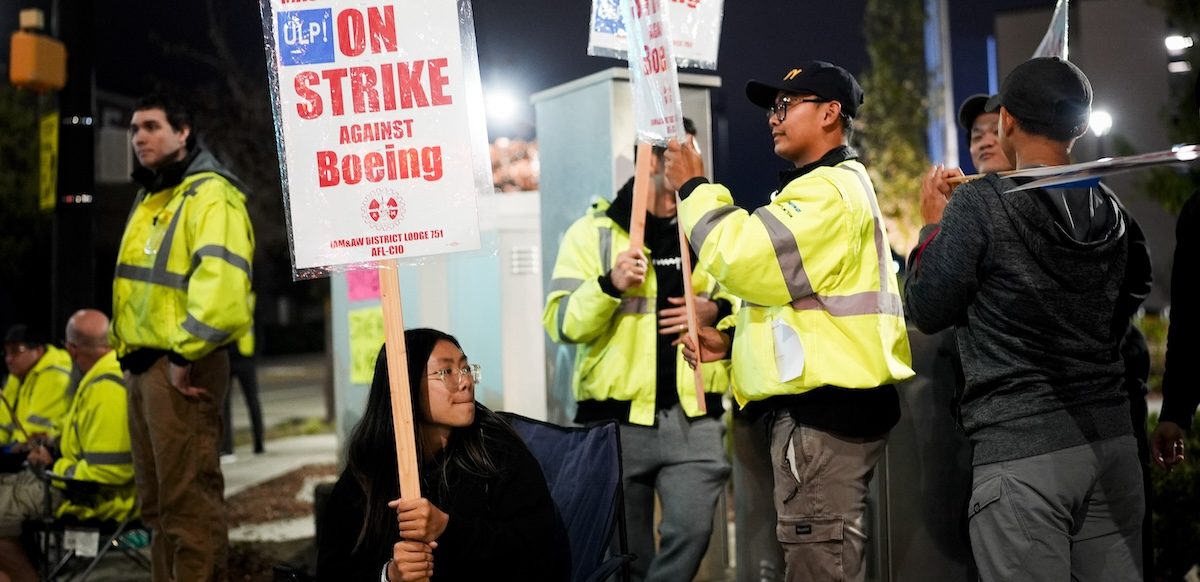
Editor's Note: Being is similar to the Class One railroads in that in effect it holds a monopoly. As a result, it has engaged in some pretty irresponsible behavior of late (see the news). And similarly to the rail industry, the Machinists (IAM) at Boeing - like their counterparts in IAM District 19 on the railroads - voted down the Tentative Agreement that was recommended to them by the union officials. Unlike the rail situation however, these Machinists are now on strike. They deserve the support of every working rail worker in North America! | |
|
Third-shift workers walked out of Boeing’s giant factories at Renton and Everett, Washington, as their contract expired early Friday morning, blasting music and airhorns, shooting off fireworks, and waving hand-made signs. They immediately formed picket lines and began setting up homemade burn barrels with “IAM” carved in the side. “People are really excited to strike,” said Ky Carlson, a third-shift assembler who walked out at midnight and was picketing the Everett plant at 3 am. She said they were aiming for what the union demanded at the beginning of negotiations, 40 percent raises and restoration of the pension. The union’s negotiating committee recommended a tentative agreement to members on Sunday, to almost universal condemnation. That same day, workers marched through the Everett factory on their lunch break, then out the door, chanting “Strike, Strike!”
| |
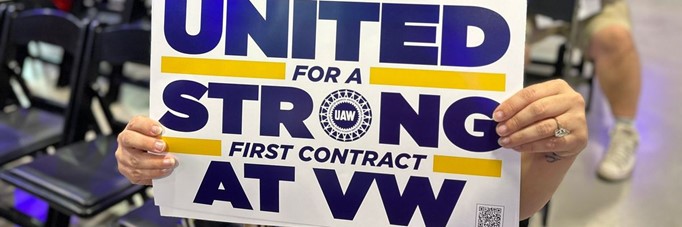
Editor's Note: The auto workers here - like the workers at Boeing in the article above - understand the need to fight back with everything they got. If you want a union, you want a contract, you want better wages, benefits and working conditions, this is what you do! | |
Following their historic vote to join the United Auto Workers in April, workers at a Volkswagen plant in Chattanooga, Tennessee held a rally on Sunday as they prepare to head into their first round of negotiations with the company next week. With their vote, the Chattanooga workers became the first Southern automakers not affiliated with one of the Big Three auto companies to win a union. "Just a few months ago, you voted 3-1 to join the UAW," the union's president Shawn Fain told the assembled workers, adding, "You had faith, and you moved mountains, you overcame opposition, and you won your union." | |
WEEKLY DERAILMENT DEPARTMENT | |
Each Tuesday in this news bulletin, RWU does our best to present a picture of what has been happening over the course of the previous week in terms of derailments in North America, and investigation determinations of previous accidents. NOTE: This list is by no means comprehensive. Smaller and less consequential mishaps are generally not reported here. If the wreck results in injury or fatality, or is especially damaging/extreme, a full article will appear as a feature in the dozen or so rail articles above. Know of a train wreck? Please feel free to forward a link to raillabornews@gmail.com for possible inclusion next week. Thanks! |
| | | |