Emergency Paid Sick Leave Act
The FFCRA also contains a separate and new requirement entitled the
Emergency Paid Sick Leave Act
. This provision requires employers with fewer than 500 employees and government employers to provide employees two weeks of paid sick leave, paid at the employee’s full regular rate to:
- quarantine because the employee is diagnosed with COVID-19;
- obtain a medical diagnosis or care if the employee is experiencing signs or symptoms of COVID-19; or
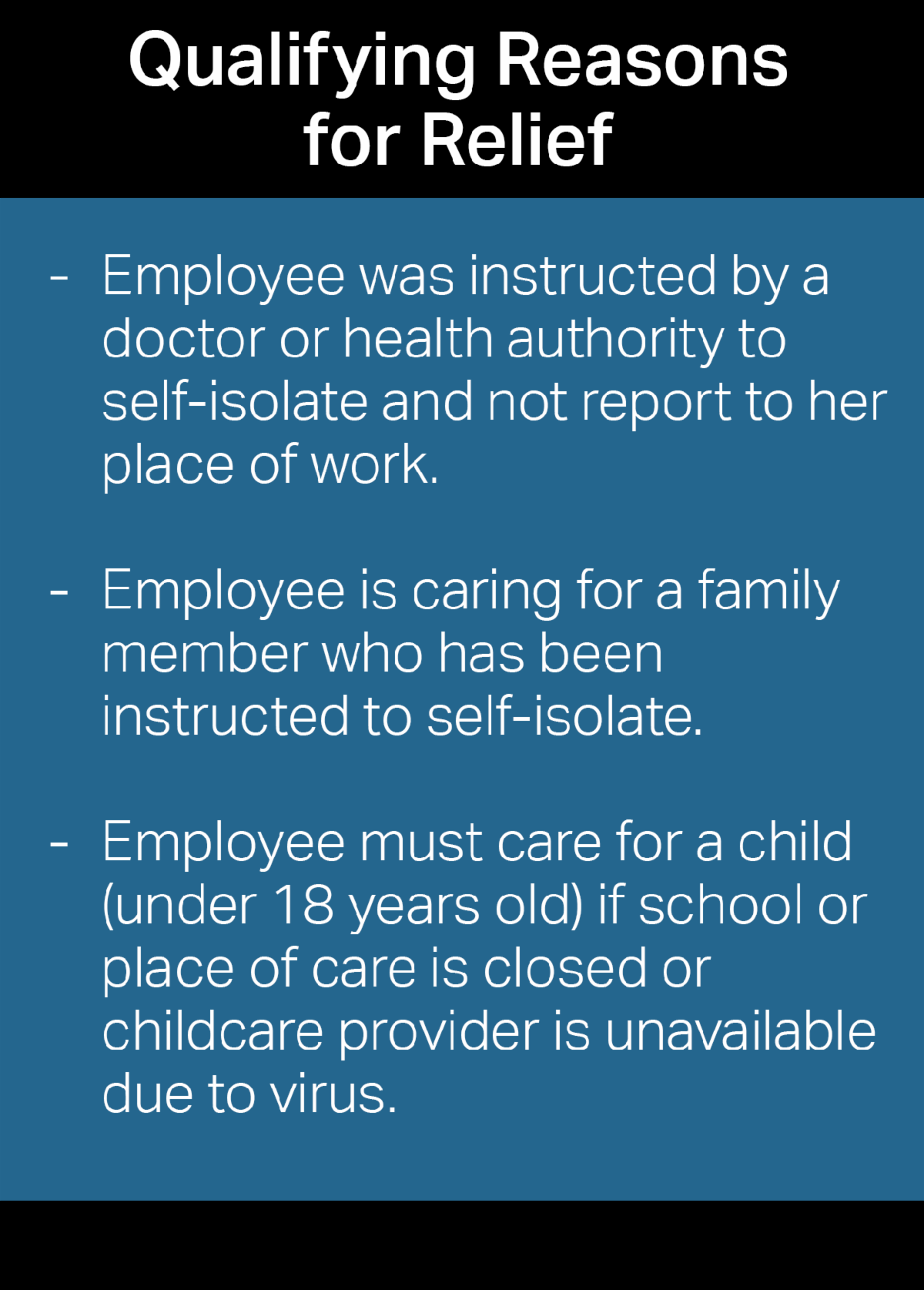
- comply with the recommendation or order of a public official with jurisdiction or a healthcare provider on the basis that the employee’s physical presence on the job would jeopardize the health of others either because the employee has been exposed to COVID-19 or is exhibiting symptoms of the virus.
Employees may also obtain leave, paid at two-thirds their regular rate, to:
- care for a family member who is self-isolating because he or she has been diagnosed with COVID-19 or is experiencing symptoms of COVID-19 and needs to obtain medical diagnosis and treatment; or
- to care for their child if their child’s school or place of care has been closed or is unavailable due to coronavirus.
- The total cap on paid sick leave is two weeks regardless of which of the above reasons the employee seeks leave.
- Employers are required to provide all employees with two weeks of paid sick leave immediately regardless of the employee’s tenure with the company.
- Employers must provide this type of leave in addition to existing types of paid leave, and the employer may not change their leave policy after the enactment of the law to avoid being subject to this requirement.
- Full-time employees are entitled to two weeks (80 hours), and part-time employees are entitled to the typical number of hours that they work in a typical two-week period. For example, a part-time employee who typically works 20 hours per week would be entitled to 40 hours of leave.
- Employers CANNOT require employees to use any other forms of paid sick leave before using the two weeks of Paid Sick Leave under the FFCRA.
- Employers also CANNOT require certification or other documentation during a public health emergency.
- The Department of Labor will promulgate a notice which covered employers must post.
- Employers may be eligible for payroll tax relief or other tax credits associated with providing this leave. Employers should consult with their accountants and payroll staff.
The bill does not appear to cover or require leave when employees are unable to work solely due to business decisions or closures. Instead, employees must fall within the categories outlined above to qualify for Paid Sick Leave or expanded Family and Medical Leave. If an employer prohibits an employee from reporting to work for reasons related to coronavirus, the employee is unable to work remotely, and the employee does not fall within one of the outlined reasons for leave, such an employee would not be entitled to or eligible for benefits under the FFCRA.
The FFCRA as currently drafted does not apply to employers with 500 employees or more. These employers must still comply with their obligations under existing law, and should assess whether their current leave policies adequately support employee needs and encourage sick or at-risk employees to stay home and away from the jobsite.
These provisions are set to take effect 15 days after the enactment of the law, which has not happened as of this writing. It is set to expire on December 31, 2020.