Get Involved With VEG
Home | Subscribe To Our Newsletter
 
 
NEWSLETTER 243
 
VIRTUAL EVENTS GROUP


Feeling a bit Kimmelish as I’ve taken the summer off of newslettering. Back to work. 


SEPTEMBER 17, 2026 | 3:00PM | ZOOM
 
The AI Way of Letting Things Go
 
Our next VEG meeting will be something a bit different, but you’ll love it! It’s about stuff. The possessions we accumulate and how we deal with them in times of transition. This is an emotional issue whether you’re a graduating student, a homeowner, a divorcee, or facing the death of a loved one. Connie Connors, technologist, professor and one of the most talented people I know, has developed an ecosystem of applications for dealing with the things we carry and try to shed. At the heart is GoShed. Snap a photo of your belongings and instantly know it’s worth and what options you should pursue for ridding yourself of it. This is a not-to-be-missed session by an amazing talent. Bring your stuff and we’ll shed together.
 
RSVP NOW
 
 
The Data Center Gold Rush
 

Our son (normally not the rallying kind) attended one the other night in Denver where locals were protesting the building of a data center in their neighborhood. Denver has since declared a moratorium on the building of new data centers until effective guardrails can be created. This one slipped through the cracks. 

On the flip side, at the G20 meeting, the titans of tech, both government and private sector, were gathered in Chapel Hill, North Carolina, espousing a “light regulatory touch” on data centers (and AI) so that we can win the innovation race.

The data center debate has been front and center all summer long. If you’re like me, you’re feeling a bit guilty every time you ask ChatGPT what recipe to make with your leftover tofu. (BTW my query consumes about as much electricity as turning on an LED lightbulb for a few minutes.) Longer, more complex queries require more energy. 

We have plenty of data centers now, but AI data centers are different because AI chips consume way more power. Server racks will require 10 times more kilowatts of power. And because of that power, they’ll need to be super cooled. Even the new liquid cooling systems require power. Data centers are massive… think of stretching out across multiple football fields. And they’re unattractive additions to any neighborhood. 

The real rub? Once they’re constructed, which will require labor and create jobs, they’re not going to create meaningful local long-term jobs. Meta has already talked about using robots to staff their data centers and data centers need very little staffing. Some argue that data centers will require so many builders that economic infrastructures will spring up around them. Think restaurants, schools, housing and small businesses. But I suspect that once the 5-7 year building phase is complete, these boom towns will become bust.

Still, there’s no denying data centers have become the next go-to for investors, for the big companies, developers, and billionaires looking for the next gold rush.

We will need datacenters. And it’s probably a good idea to have them in the US, not abroad, or in outer space (as some have suggested). But datacenters need a couple of things. They need a solid plan for repaying the communities that will house them. Whether that’s a new tax base, a park, a school, or subsidized power. They’ll need redundancy plans for emergencies like power outages. And the developers will need to be transparent—working side by side with the communities where they’ll live (think the opposite strategy of the White House Ballroom). Until AI data center developers can articulate tangible benefits, expect a strong “not-in-my-backyard” backlash. 


Facebook Paid a Penalty for Its Kids Policies
 

Now it wants everyone else to pay. too.


What took so long? For years, (from about 1997-2002) I spent a lot of energy fighting for kid’s internet safety. With a nascent Internet, I began a magazine (FamilyPC ) to teach the first generation of parents of digital kids how to cope. I lobbied Congress, served on a National Academy of Sciences committee to look into harmful content, and testified to numerous commissions about the importance of regulatory mandates. Congress made a paltry attempt at legislation with COPPA, and then went limp for the next 25 years. 


Now, when every kid has the power of the Internet in their pocket at all times, everyone is waking up to the consequences of an Internet, and in particular social media, that does not protect kids from digital dangers. Across this country kids are increasingly being told to leave social media in their lockers during school hours. 31 to 39 states (plus Washington, D.C.) have passed laws, executive orders, or state guidelines requiring or encouraging school districts to restrict or ban cell phones. And a timely Pew Reseach Study finds that folks of all ages are copping to the idea that this is a good thing.

This time round it’s the courts, not Congress, who are attempting to tame the beast. A recent settlement brought by a coalition of 47 state attorneys general and the District of Columbia claimed that Meta’s products—namely Facebook and Instagram—were harmful to children. Meta paid a 17 billion dollar penalty. (A trifling amount compared to the staggering $10 billion they paid in legal expenses in the 3rd quarter.) Meta promised to make a number of fundamental changes to the way it conducts itself with younger audiences.

Facebook will begin instituting limits including a night mode, a school mode, age assurance, limited hours of use, algorithmic feed control and more. Overall, the changes have been well received as a good step forward by kids safety advocates. In particular, the algorithmic changes that will stop kids from being bombarded with social posts on a topic they may have explored, like body image or drugs.

But Meta put its spin on the story, and fast. No sooner had the ink dried, Meta seized the opportunity to shame other platforms into following its lead, spinning its punishment into a Trumpian triumph. Zuckerberg issued a public plea for TikTok and Google-owned YouTube to “join us and state attorneys general in adopting this new standard, to ensure teens use social media in a healthy and responsible way.” As a matter of fact they offered to pay an additional $5 billion in damages, but only if other platforms would play in the sandbox.

The settlement money will be doled out to states’ Internet Safety and teen mental health initiatives over the next ten years. It’s a drop in the bucket for Meta, who’s annual revenue is $201 billion. But it’s a clarion call for companies to take take kids’ mental health seriously as they design products tailored to keep us all clicking longer, and clicking where they’d like us to go. Meta’s punitive damages, its finger-pointing at other social platforms, and the growing public distaste with what social media has wrought may finally wake a true commitment from all stakeholders. 


Robots on the Runway


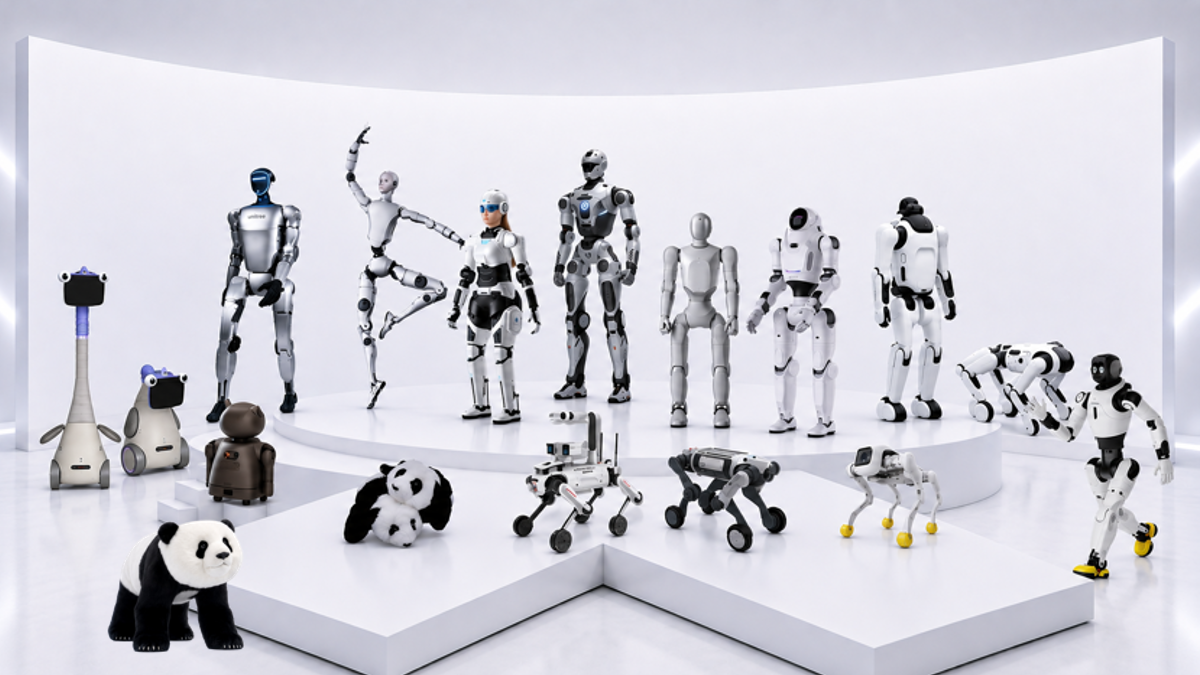
We're on our way back from IFA Berlin where we created Robots on the Runway. 14 robots from 12 different companies showcased the best of innovation as they backflipped, twerked, and transformed, and several were adorable. Thanks to The Spoon and MadTechTalk for these videos.


FULL VIDEO
 
SHORT VIDEO
 
 
Scuttlebutt


Studying Creators
Kudos to friend of VEG Ryan Schram for taking the helm at Syracuse University's Center for the Creator Economy. The University lends credibility to pursuing a creator career with this multidisciplinary program.

Learn to tell a Story from the Master
No one spins a better yarn than Prof. Scott Galloway. In an age when building your narrative, whether it’s corporate or personal, is the key to success, Galloway’s exquisite essay gives you the pointers for crafting your story. Check out The Prof G Storytelling Playbook.


Where You’ll Find Us Next
 
 
  • September 28, we’ll join Deborah Weinswig and her wonderful team at Coresight Research in Nashville for a a look at How AI is "Redefining the Possible" at Retail. 
  • October 13 finds us at IMEX moderating a session on how working with creators helps you create a better event. Robin Raskin moderates a panel with Irina Graf, David Adler and Juliana Broste.
  • On Octobert 19th we’re at the lovely Civic Center in NYC co-producing the Enterprise Video Summit. We’ll be looking at how every enterprise is now a media company, and what that means for how they staff for the present and think to the future. We’ll be revealing some new research findings that will help how leaders envision their companies for years to come. 

For a complete list of events and programming visit us at the Virtual Event Group website. We’d love to help your organization take the art of gathering and meeting to the next level. 


Sign up to get us in your inbox.
 
Get the
Most Recent News
 
SUBSCRIBE
 
 
LINKS
 
Home
Platforms
Tools
Productions
Events


Contact Us
 

Robin Raskin |  robin@virtualeventsgroup.org

Gigi Raskin | gigi@virtualeventsgroup.org

Tyler Priest Heck | tyler@virtualeventsgroup.org