|
As some of you may know, Washington State Authority Health Care Authority has been considering coverage for spinal cord stimulation. Other states will be doing the same. ASIPP has been working on this for quite some time, along with multiple other organizations. Dr. Amol Soin and Dr. Chris Gharibo were intimately involved. Dr. Gharibo testified on our behalf in front of the Commission. Dr. Soin wrote the public comments. Overall, Washington State Authority Health Care Authority changed its policy, and the draft policy shows they are going to cover spinal cord stimulation for post lumbar laminectomy syndrome, non-surgical low back pain, and painful diabetic peripheral neuropathy, but not for complex regional pain syndrome.
Overall, this is very good, but we will have to overcome multiple limitations included in this, such as each patient undergoing the completion of a comprehensive cognitive behavioral therapy, chiropractic, or acupuncture, which seems to be impractical or extremely difficult to achieve. We are working on these issues, as well as with other organizations.
ASIPP congratulates all those involved in this great cause, which is largely moving in a positive manner. This is a big step forward considering that it was not covered at all.
Click here to view the Spinal Cord Stimulation DRAFT findings and decision.
| |
|
A pair of pain management physicians in Dallas each pleaded guilty to a healthcare billing scheme that defrauded major insurers of at least $45 million.
Desi Barroga, MD, and Deno Barroga, MD, both 51, submitted fraudulent claims for corticosteroid injections that were never administered, according to a May 21 news release from the Justice Department. They also required patients to come in for monthly office visits in order to continue the fraudulent billing, submitting fraudulent claims worth at least $45 million to payers including Blue Cross Blue Shield, Cigna and United Healthcare for injections that were never administered, as many as 80 injections per patient per visit. They also created and submitted false medical records and told patients to include false statements to validate their claims, each earning at least $9 million.
Read More
| |
|
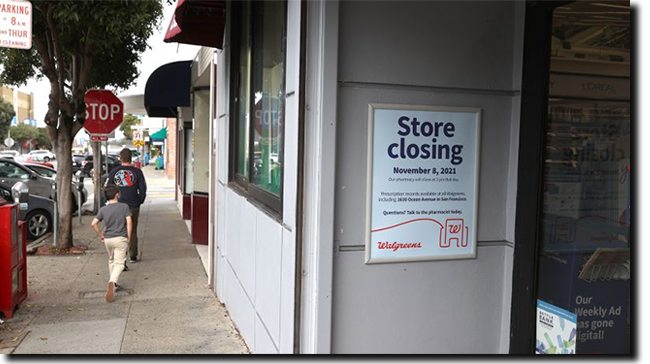
Optum, Rite Aid, Walgreens and Walmart have all announced plans to close more than 630 combined facilities in the last year.
Here's what physicians need to know:
Optum
Optum announced plans to close a Change Healthcare facility in Toledo, Ohio, laying off 129 employees. The layoffs, consisting of employees in Ohio or working remotely, will occur in three waves from July 15 to Sept. 6.
Rite Aid
Rite Aid has shuttered more than 520 locations since it filed for Chapter 11 bankruptcy in October.
Read More
| |
ASIPP State Society Meetings | |
|
Connected systems would benefit patients and clinicians alike
Thirty minutes. That's about how long it took me to find the record of a patient's kidney biopsy, completed at another hospital, in their electronic health record (EHR).
How did I find it? Short answer: I used [Ctrl] + F.
Long answer: I clicked through dozens of healthcare notes, searching through the "notes" and "diagnostics" tabs to no avail. I almost gave up, but I decided to give it one last try by once again searching "biopsy" across the whole EHR. Finally, I found the relevant hospital admission note, where "biopsy" was mentioned 100 times; the 90th result gave me my answer. I also saw a lot of the same, expensive workup for this patient, which had been redone at this current hospital for the present admission.
Read More
| |
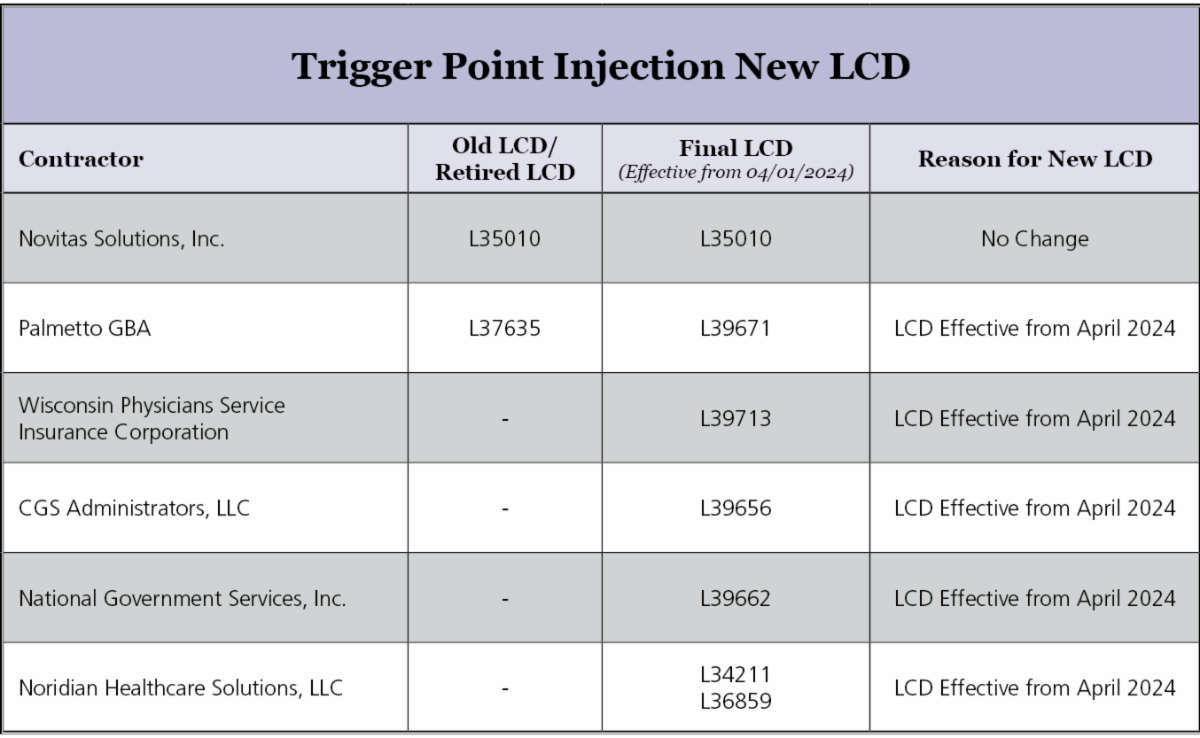
Effective from April 1st, the Majority
of MAC Will Follow Updated Guidelines
for Trigger Point Injections
| |
|
California may be headed to an earlier-than-normal start to the summer COVID-19 season, with coronavirus concentrations in sewage rising in some areas along with the statewide positive-test rate.
The trend comes as the latest family of coronavirus subvariants, collectively nicknamed FLiRT, have made significant gains nationally.
The FLiRT subvariants — officially known as KP.2, KP.3 and KP.1.1 — have overtaken the dominant winter strain, JN.1. For the two-week period that ended Saturday, they were estimated to account for a combined 50.4% of the nation’s coronavirus infections, up from 20% a month earlier.
Read More
| |
|
Virtual
June 8, & August 31
Click here for the complete list of upcoming exams.
ABIPP Part I; ABIPP Path - Combined DCCPM/CSM virtual exam;
ABIPP Competency Exam in IPM; ABIPP Competency Exam in Regenerative Medicine;
CSM Competency Exam; DCCPM Competency Exam
In Person
October 18, 2024
ABIPP Part II - Practical Examination
Lab Venue: MERI, 44 S. Cleveland Street, Memphis, TN 38104
| |
|
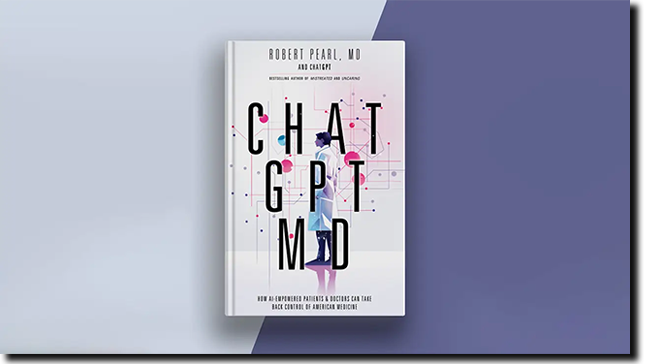
An adapted excerpt from the new book, ChatGPT, MD
Imagine a ship at sea, its engine idle. The boat drifts dangerously close to the shoals, a mere hundred yards from land. The captain, fearing the worst, radios for help. The lighthouse watchman responds, sending an experienced mechanic named Charlie to the rescue. With a single precise hit of his hammer, Charlie gets the engine roaring back to life.
Thrilled, the captain asks Charlie to send his invoice. A week later, shocked by the $10,000 charge, the captain demands an itemized bill. Charlie complies, sending a new invoice that reads: "Hitting the engine with a hammer: $1; Knowing where to hit: $9,999."
The philosopher and statesman Sir Francis Bacon is credited with saying, "Knowledge is power." Indeed, for most of history, knowledge has proven itself to be an isolated resource, held closely by the few who, like Charlie, spent a lifetime acquiring it.
Read More
| |
Registration is open for
ASIPP's 2025 Annual Meeting
We would love it if you would register and join us in Orlando!
| |
|
Approximately 350 recently exposed farm workers are being monitored
The CDC is preparing for the possibility of H5N1 posing an increased risk to human health, even though that current risk remains low, the agency said on Friday.
"It is possible that influenza A(H5N1) viruses could change in ways that allow them to easily infect people and to efficiently spread between people, potentially causing a pandemic," the agency stated in an email to media.
As of May 22, about 350 farm workers are being monitored for illness after exposure to infected cows or infected raw cow's milk, according to researchers led by Shikha Garg, MD, of the CDC's National Center for Immunization and Respiratory Diseases, writing in the Morbidity and Mortality Weekly Report.
Read More
| |
Some Families With Private Health Insurance Still Need Financial Help, Study Says
Lower-income families spend one-fourth of their post-subsistence income on healthcare needs
The financial medical burden for low-income families with private health insurance has continued to increase over the past two decades, suggesting that these families could use more help to pay for their healthcare needs, researchers found.
Among low-income families in the U.S. with private insurance, the financial medical burden grew from 23.5% of their post-subsistence income in 2007 to 26.4% in 2019 (P<0.001), according to Rishi Wadhera, MD, of Beth Israel Deaconess Medical Center and Harvard Medical School in Boston, and colleagues.
While that burden -- a measure of income minus food costs -- increased for higher-income families with private insurance as well, it represented a much smaller fraction of their resources, 5.4% in 2007 and 6.5% in 2019 (P<0.001), Wadhera and co-authors detailed in a JAMA Internal Medicine research letter.
Read More
| |
- ASIPP Members Only Site Information - | |
-
To log in for the first time you will need to click “forgot password” at the bottom of the login window.
- Check your email and then log in as directed.
-
If you have problems logging into your account, click here.
| |
Pain Medicine Case Reports (PMCR) and Editor-in-Chief Alaa Abd-Elsayed, MD, PhD would like to invite you to submit case reports and case series to the PMCR journal. Your article will be published free of charge.
Open access journals are freely available online for immediate worldwide open access to the full text of published articles. There is no subscription fee for open access journals. Open access journals are no different from traditional subscription-based journals: they undergo the same peer-review and quality control as any other scholarly journal.
Interested in becoming a member of the PMCR Editorial Board?
Editorial board members are asked to review 2-6 manuscripts per year. Please submit your most up-to-date CV to sgold@asipp.org for consideration.
For more information or to submit your articles, click here.
| |
Erector Spinae Plane Blocks with Dexmedetomidine and Dexamethasone for the Treatment of Pain Associated with Rib Fractures: Case Report
Sagar Patel, BA, Courtney Tran, BA, Sarah Stevens, BA, Carly Liquori, BA, and Jonathan Eskander, MD
Abstract
BACKGROUND: The erector spinae plane block (ESPB) is an ultrasound-guided approach for acute pain management in patients with single or multiple rib fractures. The addition of a dexmedetomidine and dexamethasone (Dex-Dex) solution to an ESPB injection has been shown to provide longer-lasting pain control in rib-fracture patients. Adding a Dex-Dex adjunct to an ESPB injection diminishes the need for more invasive techniques used in longer-lasting pain management, such as ESPB catheter placements.
CASE REPORT: We present 2 cases of rib fractures, one in a 79-year-old woman and the other in an 82-year-old-man. Both patients received a single ESPB injection with Dex-Dex to provide longer-lasting pain control. After the procedure, both patients reported a significant reduction in pain and no complications to the intervention.
CONCLUSION: The successful analgesic management of both patients’ conditions suggests that a single ESPB injection with Dex-Dex can be used as an alternative to traditional management techniques such as catheter placements.
KEY WORDS: Erector spinae plane block, dexmedetomidine and dexamethasone, rib fractures, respiratory distress
Read More
| |
|
YanSen Tian, MD, Yang Hu, BS, TongYao Hu, BS, TangFen Liu, MS, GuangZhou An, MS, Jing Li, PhD, HaiQiang Wang, MD, PhD, and JunLing Xing, PhD
Abstract
BACKGROUND: Sympathetic ganglion block (SGB) technique is becoming increasingly prevalent in the treatment of complex regional pain syndromes (CRPS). Given the varied reported effectiveness of these techniques and the heterogeneity of treatment regimens, there is an urgent need for consistent and high-quality evidence on the efficacy and safety of such procedures.
OBJECTIVES: This study aimed to compare the efficacy of SGB therapy for CRPS-related pain.
STUDY DESIGN: A meta-analysis of randomized controlled trials (RCTs).
METHODS: PubMed, EMBASE, Web of Science, CINAHL, US National Institutes of Health Clinical Trials Registry, Google Scholar, and Cochrane Library Databases were systematically searched between January 1967 and April 2023. A meta-analysis of the included RCTs on SGB was conducted to evaluate the effectiveness and risk of bias (ROBs) of SGB.
RESULTS: After screening 8523 records, 12 RCTs were included in this meta-analysis. Compared with controls, the visual analog pain score decreased by a weighted mean difference (WMD) of -6.24 mm (95% CI, -11.45, -1.03; P = 0.019) in the random-effects model, and the numerical scale score was reduced by a WMD of -1.17 mm (95% CI, -2.42, 0.08; P = 0.067) in the fixed-effects model, indicating a pain relief. The methodological quality of the included RCTs was high, with an average PEDro score of 7.0 (range: 5-9).
LIMITATIONS: The number of included trials was limited.
CONCLUSIONS: SGB therapy can reduce pain intensity in patients with CRPS with few adverse events. However, owing to the relatively high heterogeneity of the included RCTs, a larger sample of high-quality RCTs is needed to further confirm this conclusion.
KEY WORDS: Complex regional pain syndrome, stellate ganglion block, lumbar sympathetic nerve block, pain management, efficacy
Read More
| |
|
Natalie Pankrath, MS, Svenja Nilsson, BS, and Nikolaus Ballenberger, PhD
Abstract
BACKGROUND: Cervical manipulations are widely used by physiotherapists, chiropractors, osteopaths, and medical doctors for musculoskeletal dysfunctions like neck pain and cervicogenic headache. The use of cervical manipulation remains controversial, since it is often considered to pose a risk for not only benign adverse events (AEs), such as aggravation of pain or muscle soreness, but also severe AEs such as strokes in the vertebrobasilar or carotid artery following dissections. Studies finding an association between cervical manipulation and serious AEs such as artery dissections are mainly case control studies or case reports. These study designs are not appropriate for investigating incidences and therefore do not imply causal relationships. Randomized controlled trials (RCTs) are considered the gold standard study designs for assessing the unconfounded effects of benefits and harms, such as AEs, associated with therapies.
OBJECTIVE: Due to the unclear risk level of AEs associated with high-velocity, low-amplitude (HVLA) cervical manipulation, the aim of this study was to extract available information from RCTs and thereby synthesize the comparative risk of AEs following cervical manipulation to that of various control interventions.
STUDY DESIGN: Systematic review and meta-analysis.
METHODS: A systematic literature search was conducted in the PubMed and Cochrane databases. This search included RCTs in which cervical HVLA manipulations were applied and AEs were reported. Two independent reviewers performed the study selection, the methodological quality assessment, and the GRADE approach. Incidence rate ratios (IRR) were calculated. The study quality was assessed by using the risk of bias 2 (RoB-2) tool, and the certainty of evidence was determined by using the GRADE approach.
RESULTS: Fourteen articles were included in the systematic review and meta-analysis. The pooled IRR indicates no statistically significant differences between the manipulation and control groups. All the reported AEs were classified as mild, and none of the AEs reported were serious or moderate.
LIMITATIONS: The search strategy was limited to literature in English or German. Furthermore, selection bias may have occurred, since only PubMed and Cochrane were used as databases, and searching was done by hand. RCTs had to be excluded if the results did not indicate the group in which the AEs occurred. A mandatory criterion for inclusion in the meta-analysis was a quantitative reproduction of the frequencies of AEs that could be attributed to specific interventions.
CONCLUSION: In summary, HVLA manipulation does not impose an increased risk of mild or moderate AEs compared to various control interventions. However, these results must be interpreted with caution, since RCTs are not appropriate for detecting the rare serious AEs. In addition, future RCTs should follow a standardized protocol for reporting AEs in clinical trials.
KEY WORDS: Cervical manipulation, adverse events, randomized controlled trial, systematic review, meta-analysis
Read More
| |
|
ASIPP is now in collaboration with Curi Medical Liability Program
| |
|
Since this malpractice insurance program officially launched in November 2018, ASIPP has signed up hundreds of providers with an average savings of 30%. This is professional liability insurance tailored to our specialty and will stand up for us and defend our practices.
Curi is a full-service advisory firm that serves physicians and their practices. Their valued advice is grounded in your priorities and elevated in your outcomes. They are driven by a deep understanding of your specific circumstances in medicine, business, and life. To read a few important points to keep in mind about the program, including discounts, administrative defense, cyber coverage, aggressive claims handling, and complimentary risk management CME activities, visit our website.
| | |
|
Group Purchasing Organization Offer Better Pricing and Creates Added Value
ASIPP has formed a partnership with Henry Schein and PedsPal, a national GPO that has a successful history of negotiating better prices on medical supplies and creating value-added services for independent physicians. Working with MedAssets, PedsPal provides excellent pricing on products like contrast media that alleviate some of the financial pressures you experience today.
Learn More
| |  |
|
ASIPP, Fedora Billing,
and Revenue Cycle Management Partnership
ASIPP is now offering our members the benefit of a unique revenue cycle management/ billing service.
We have received a tremendous amount of interest in the ASIPP® billing and coding program.
Click here to learn more about the negotiated rate for practices and more!
| |
|
Like and follow ASIPP® on Facebook, X, and LinkedIn for the most
up-to-date news related to you, your practice, and your patients!
| | | | |