| |
|
| |
Sifu Yik’s substack compiles a list of tools Google doesn’t want you to know about. Some are an affront to hardworking humans, such as how to get around a paywall, but others, such as Radio Garden, a list of worldwide radio stations, are treasures. |
|
|
| |
|
|
| |
| How Are Those Human Skills Comin’ Along? |
|
| |
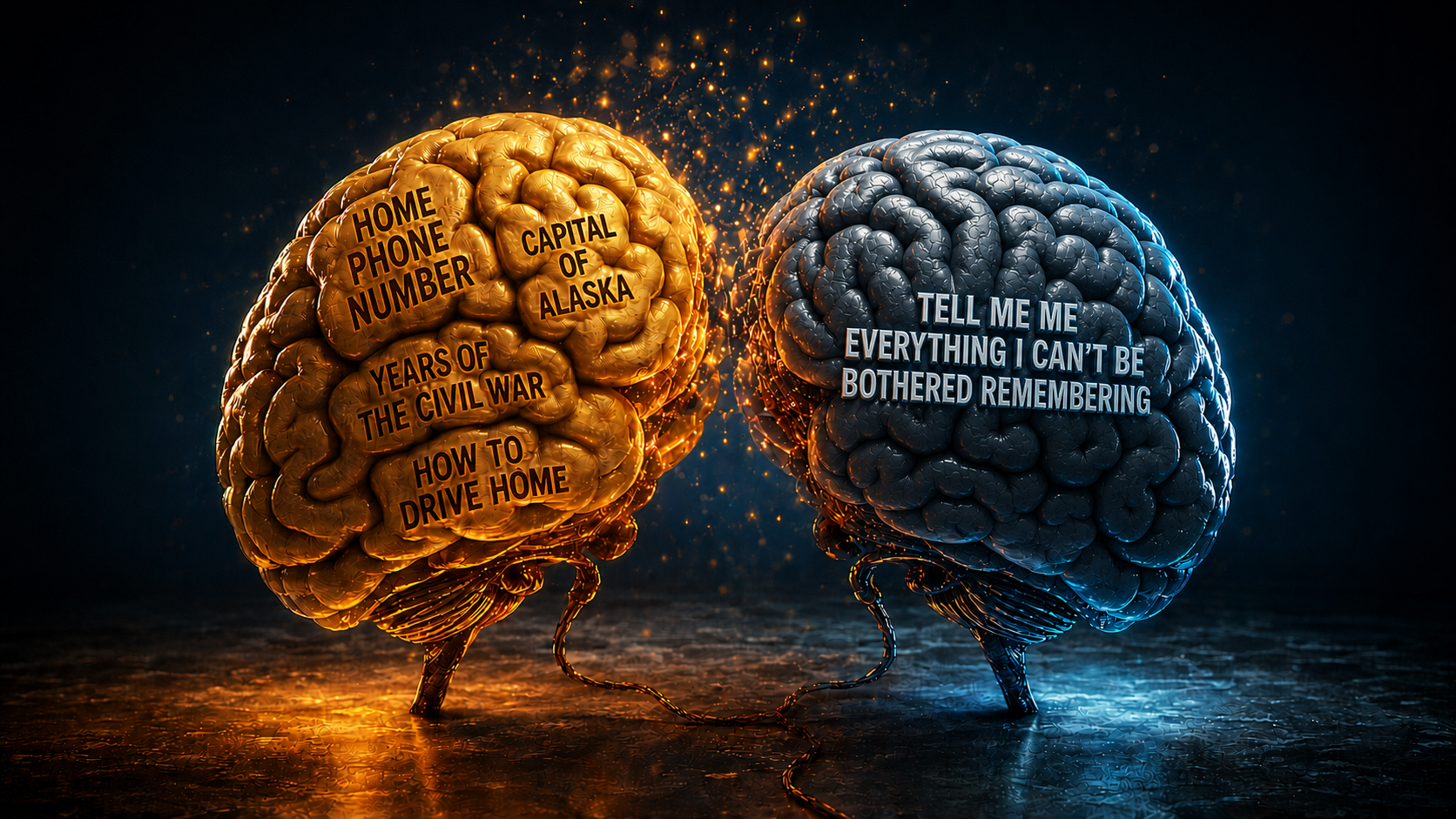
OR8-3804. That was my childhood phone number. Today I can’t even remember my husband’s or kid’s phone number. As for my GPS, I’ve lost any sense of direction. I could navigate to Madison, Virginia or Wisconsin, without thinking, just because I entered Madison into the map. Voice dictation is getting so good that I barely type. Never mind that my
physical writing has fallen by the wayside. (And I was once a prolific letter writer.) Returning to reading paper books instead of listening on Audible reminds me I’m slower and less attentive than I used to be.
So it appears to be true. With each new introduction of a new technology, an old skill rusts. Like our appendix, some useful skills we’ve cultivated are becoming vestigial. And common sense is atrophying.
AI is going to put a magnifying glass on every skill we ever mastered in the BAI (before AI) days, from critical thinking to using our judgment to discern truth. It’s going to make the fact that we can no longer read a book pale to the fact that we don’t need to think very much about writing, navigating, or just about anything else. And how we search for and
weigh answers will be changed forever.
What are you doing to keep your old skill set from atrophying? Do you chalk it up to natural evolution? Or maybe a Faustian bargain? |
| |
|
|
| |
|
| |
|
|
| |
Feeling like you’re caught in a deluge of AI apps begging you for a chance to lessen your workload, make life sunnier, and be your sidekick? You’re not alone.
In this and future newsletters, we’re going to showcase a few apps you can use to tackle common tasks in the events business. We’ll start with the basics this week and get more esoteric as we go on. And you can back-reference them on our site. |
| |
|
|
| |
|
| |
Creative Feedback, Ideation, and Panel Picking: ChatGPT
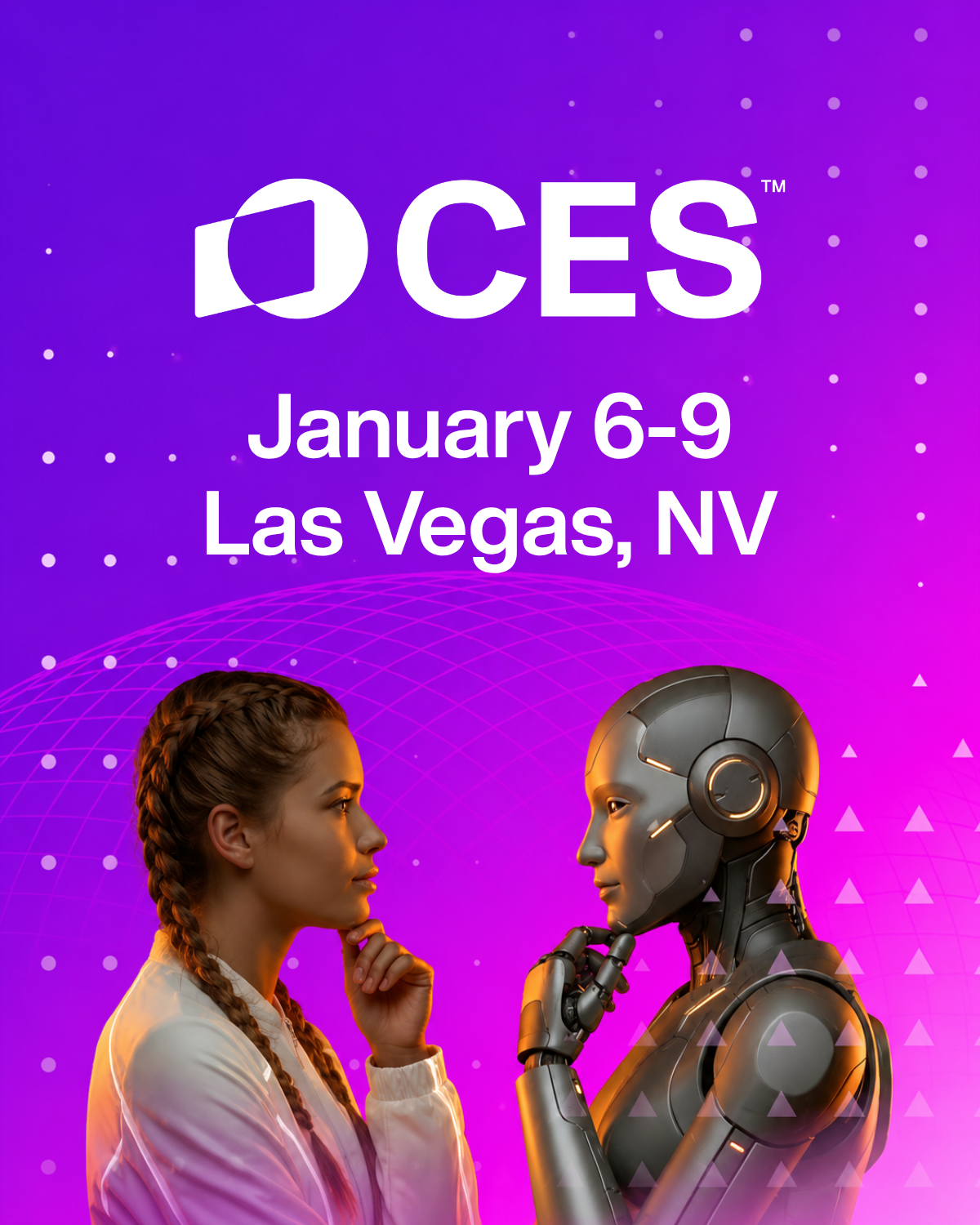
Every year we dream up hundreds of titles for panels, workshops and keynotes. We’re good, but ChatGPT makes us better—sometimes. We use ChatGPT to both dream up new ideas and also double-check that we’re getting beyond the same old mediocre crap. For example, after looking at what others
have done, and suggestions about talking about investments at various stages, we came up with “StartUp Therapy: What Investors Expect at Every Stage,” for one of this year’s CES panels. Succinct and never done before (we think). ChatGPT should be your go-to tool for generating conference slugs, panel or event themes, track titles, session descriptions, speaker
questions, moderator guides, agendas, and research summaries. Just make sure you’re not regurgitating a lukewarm, already been done idea. |
| |
|
| |
Registration: CventIQ
CventIQ is a set of AI-powered tools focused on events. Their registration tool is a feature-rich, but somewhat pricey, approach for larger events. If you've got a smaller event you might prefer Eventbrite, which is not all that user-friendly in terms of your attendees accessing their tickets, Whova, or Partiful (which is more fun). For big events Cvent makes handsome registration pages, recommends sessions, automates attendee communications, and answers questions with AI assistants. It’ll also auto-generate supporting content such as event descriptions and speaker biographies. Pricing for the registration portion of CventIQ is available for each of its various modules, but the registration module is one of its more powerful. |
| |
|
| |
Build Out the Graphics Side of Your Event: Canva Magic Studio
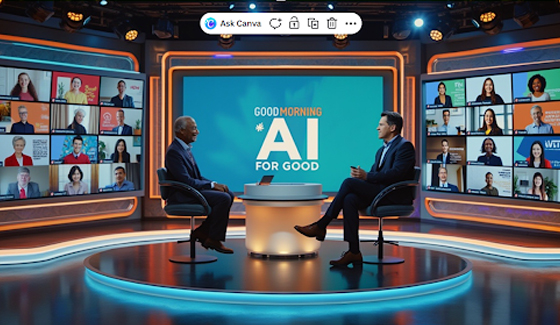
Canva Magic Studio can give your entire event a coherent identity starting with your logo and branding elements, save the dates, speakers agenda, and social media elements. Its AI features let you generate headlines, remove parts of images you don't want,
expand and reformat photos, create icons, and generate illustrations from text. Magic Studio is the name for the entire AI toolbox in Canva. It will generate layouts (Magic Design), write text (Magic Write), edit images (Magic Eraser/Magic Edit), convert formats (Magic Switch), and animate elements. |
| |
 |
| |
| For a project proposal, colleague Felix Zeltner created an entire look and feel for a live-streaming set, using Canva Magic Studio. |
| |
|
| |
Exhibit Area Booth Creation: Canva AI and Dream Lab
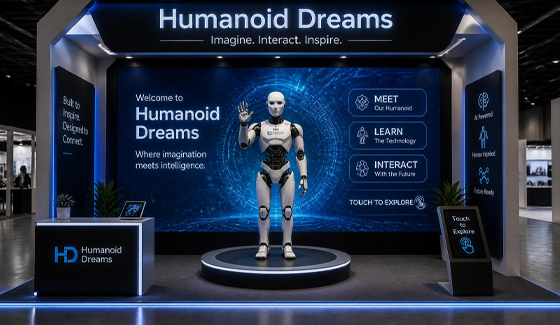
Dream Lab, an offshoot of Canva, is the specialized engine inside the Canva toolbox that you use when you need to generate high-quality images from scratch, using text prompts or reference pictures. It might be the best way to conceptualize a booth area design for an event. Give it a prompt like “Design a 10x10 exhibit area featuring a humanoid robot with an LED screen behind it, projecting interactive displays," and it will do your bidding. Dream Lab’s built-in Style Match lets you adjust the aesthetics, colors, and fonts of a booth, banner, or signage design to match your brand. It’s best for rapid concept
development and sponsor proposals. |
| |
 |
| |
| We used Canva Dream Lab to create a mock-up of an exhibit booth using a single-sentence prompt. |
| |
|
| |
| David Pogue’s Keynote at Silicon Valley Video Summer Camp |
|
| |
| |
 |
| |
|
| |
I schlepped David Pogue’s book, Apple: The First Fifty Years, across the country to have him autograph my copy. In his keynote speech at Silicon Valley Video Summer Camp, David romped through Apple’s history, from two Steve’s doing
all-nighters to impress the Homebrew Computing Club, to a multi-million dollar empire that was a Mr. Toad’s Wild Ride of luck, skill, perseverance, and yes, a touch of psychedelic karma. What makes Apple great, says Pogue, comes less from inventing every new technology and more from searching out technologies in need of productization. Take the iPod as an example,
which came to fruition after seeing Toshiba’s round hard disk (that they didn’t know what to do with).
Pogue listed several Apple strengths, such as its commitment to beautiful design, a commitment to storytelling that crafts a narrative about its products, and a commitment to testing ad nauseum before a product launches. Yes, he even told the story of the rigorous testing on identical twins before releasing facial recognition. Then there’s the closed ecosystem—only rigorously
vetted companies are allowed to build Apple accessories or products. And an insane dedication to simplicity in design.
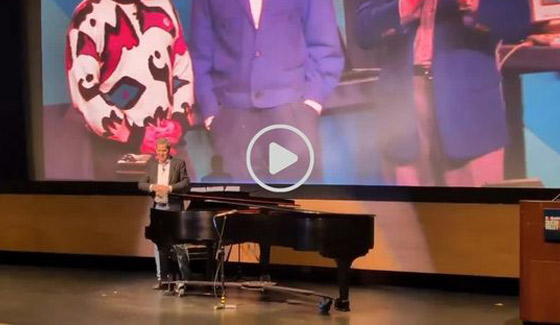
To kick off his keynote, Pogue, a musician by training, put some of the book's sentiments into song. And here, for your listening pleasure, is a poorly recorded version of David Pogue’s “Don’t Cry for me Cupertino,”
ironically delivered at DeAnza College, Cupertino, California, where Woz is a big donor and Apple headquarters are just down the road. |
| |
|
| |
Tyler Priest-Heck reports on BizBash’s June 17th webinar, “Put Your Audience in the Driver's Seat: A Framework for Experiential Events,” featuring Elena Coates and Tim Thomson, Creative Directors at Staging Solutions. They share a framework for better understanding experiential events and their role in modern marketing strategy.
For events, “experiential” is a term with a wide range of interpretations and ambiguities. It’s not simply interactive programming. It does not necessarily mean sensory or transportive, either. Elena and Tim offer a more precise definition: experiential is the opposite of presentational. (Worth noting that presentational approaches have their place.)
A truly experiential program generates a unique and personal story for each participant, every time they engage with it. Experiential, say the study’s authors, is not defined by a venue or destination, it's a methodology for delivering a meaningful, participant-driven engagement throughout an event. And that’s easier said than done.
So why should organizations invest in experiential over other strategies? Elena and Tim offer three distinct advantages. First is active learning, which you won’t get from one-sided communication. Second, when experiential events combine with effective data handling and social media, they become very effective internally to the organization. Experiential allows
audiences to become more active in sharing themselves, so they are more likely to give you more information about themselves because they feel comfortable. Lastly, experiential marketing provides much more engagement at a social level. It's a powerful tool for building loyalty and turning attendees into enthusiastic brand advocates. |
| |
|
| |
Magic the Gathering or The Gathering: Magic
When I need a dose of adrenaline before planning our next event, I turn to David Adler, my events muse. Adler reads the room and understands how to get folks into their “gathering state.” Bottom line, is crafting a curated, dopamine-creating experience, with an added dose of serendipity. Here’s David being interviewed by Al Mercuro, a brilliant events practitioner himself, in this freewheeling talk about the Magic of Gathering.
Dogs, Babies, Robots and Showbiz
A word to the wise when making pets, kids, babies, or even robots part of your show. Check the venue’s insurance policies 3x over. At one of our recent events, Toby, Unitree’s G1 robot, was supposed to co-emcee with me on stage. Alas, at the 11th hour, the venue gave Toby the boot for not being properly insured. Triple check your venues, folks. Maybe it was all for the best, because he was actually a little wobbly on his feet. Watch the video. |
| |
|
| |
|
|
|
| |
| We have some astounding programming lined up over the next few months. Let us know how you'd like to be involved. |
| |
|
| |
 |
| |
| Sign up to get us in your inbox. |
| |
|
|
|
| |
|
|
| |
|
|
|
|
|