|
Welcome to the twenty-second edition of the statewide UC Master Food Preserver monthly newsletter. Our mission is to extend culturally appropriate, research-based practices for preserving food in the home.
Each month, you’ll receive recipes, how-tos, and inspiration straight to your inbox. Thank you for subscribing and feel free to contact our helpline with any food preservation questions.
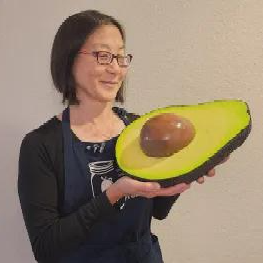
| | Marina with a wooden avocado sculpture made by her son, Harrison Shaw. Photo by Henry Shaw, used with permission. | |
Spotlight: Marina Hsieh, Contra Costa County, 2024 MFP Volunteer
The UC Master Food Preserver (MFP) program is a perfect combination of my passion for teaching and for food (playing with it and eating it)! I had never heard of Master Food Preservers until my husband discovered the inaugural Online Delivery Program training and suggested we both apply. That 2024 training was to conclude just as I retired from decades of teaching law, so the timing was auspicious.
Read more about Marina's experience as an MFP
| |
Monthly Food Preservation Trivia
(Scroll to the bottom of the email for the answer!)
Which of the following terms can no longer be used on food packaging in California as of July 1, 2026?
A) BEST if used by
B) BEST if used or frozen by
C) SELL by
D) USE by
E) USE or freeze by
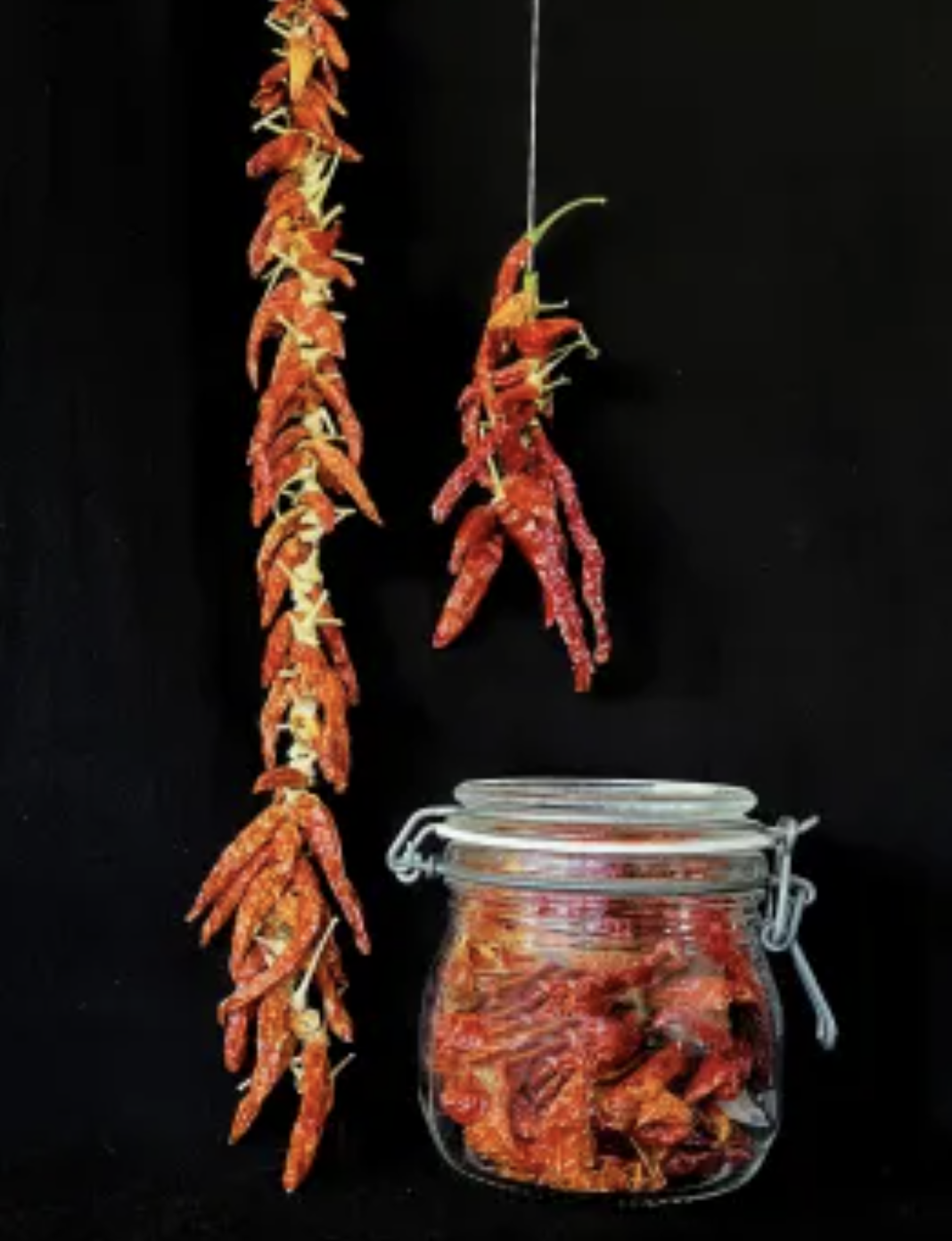
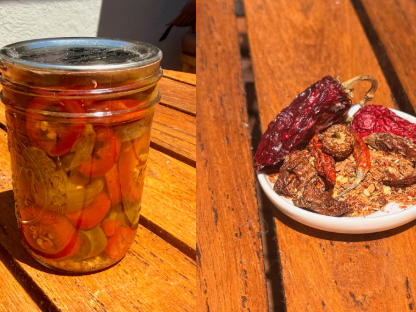
| | Dried chiles - 2 strings and a jar (photo by M. Hsieh, used with permission). | |
From Poblano to Ancho: Why Dried Chili Peppers Have a Name of Their Own
By Katie Yamashita
UC Master Food Preserver
Online Delivery Program Volunteer
For thousands of years, chili peppers were cultivated only in the Americas. Then, beginning in the late fifteenth century, Spanish and Portuguese traders carried them around the world as part of the Columbian Exchange. Within a century, they were being cultivated across Europe, Africa, and Asia. As chili peppers became part of cuisines around the world, one idea emerged again and again: a dried chili wasn't simply a preserved version of the fresh pepper. It was something different.
Learn the why and how behind dried chili peppers
| |
Bad Fruit Does Not Make Good Jam
By Maureen Ladley
UC Master Food Preserver
Solano/Yolo County Volunteer
Over the years, more than one of my acquaintances has assumed that if fruit isn’t very good fresh, turning it into jam is the right solution. After all, you’ll be adding sugar and cooking it, right? Unfortunately, jam is not a magic trick. If the fruit isn’t something you’d want to eat fresh, there’s a good chance turning it into jam won’t improve it.
Read to learn how to select quality fruit for jam
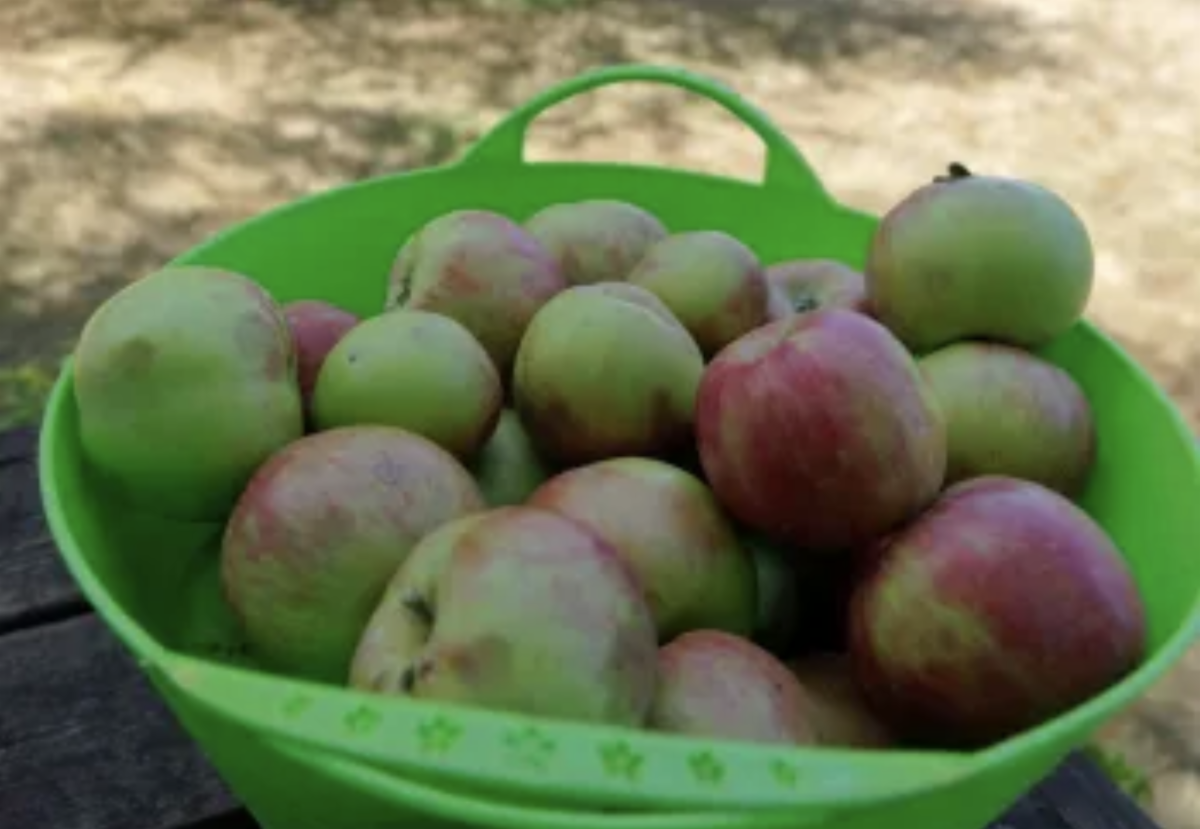
| | A basket of windfall apples. Photo by Henry Shaw, used with permission. | | Monthly Food Preservation Q & A | |
Pregunte a un Maestro Conservador de Alimentos de la Universidad de California (En línea)
Únase en línea a los Maestros Conservadores de Alimentos de la Universidad de California para una sesión gratuita de preguntas y respuestas en español sobre métodos seguros y basados en la investigación para la conservación de alimentos. Un panel de voluntarios especializados en congelación, deshidratación, enlatado y seguridad alimentaria estará disponible para responder sus preguntas, compartir consejos y animarle a conservar alimentos de forma segura en casa.
August 26, 1:00 pm PT
| | |
Preserving Peppers at Home: From Fresh Chilis to Pantry Staples
You're invited to join UC Master Food Preserver Online Delivery volunteers to explore safe, research-based ways to turn fresh chilis into pantry and freezer staples.
We’ll look at different types of peppers, what the Scoville scale tells you about their heat, and how to handle hot peppers safely. Then we’ll explore several preservation methods, from freezing and dehydrating to pickling and canning, including what makes each method work and when to use a tested recipe.
September 1, 7:00 pm PT
| |
Ask a Master Food Preserver LIVE
Ask questions, swap stories, and troubleshoot home food preservation with UC Master Food Preservers using safe, research-based guidance.
Join UC Master Food Preservers for a free, interactive session focused on safe, research-based methods for preserving food at home, including fruits, vegetables, herbs, and more. Bring your questions about freezing, dehydrating, pickling, fermenting, canning, and more.
September 9, 7:00 pm PT
| |
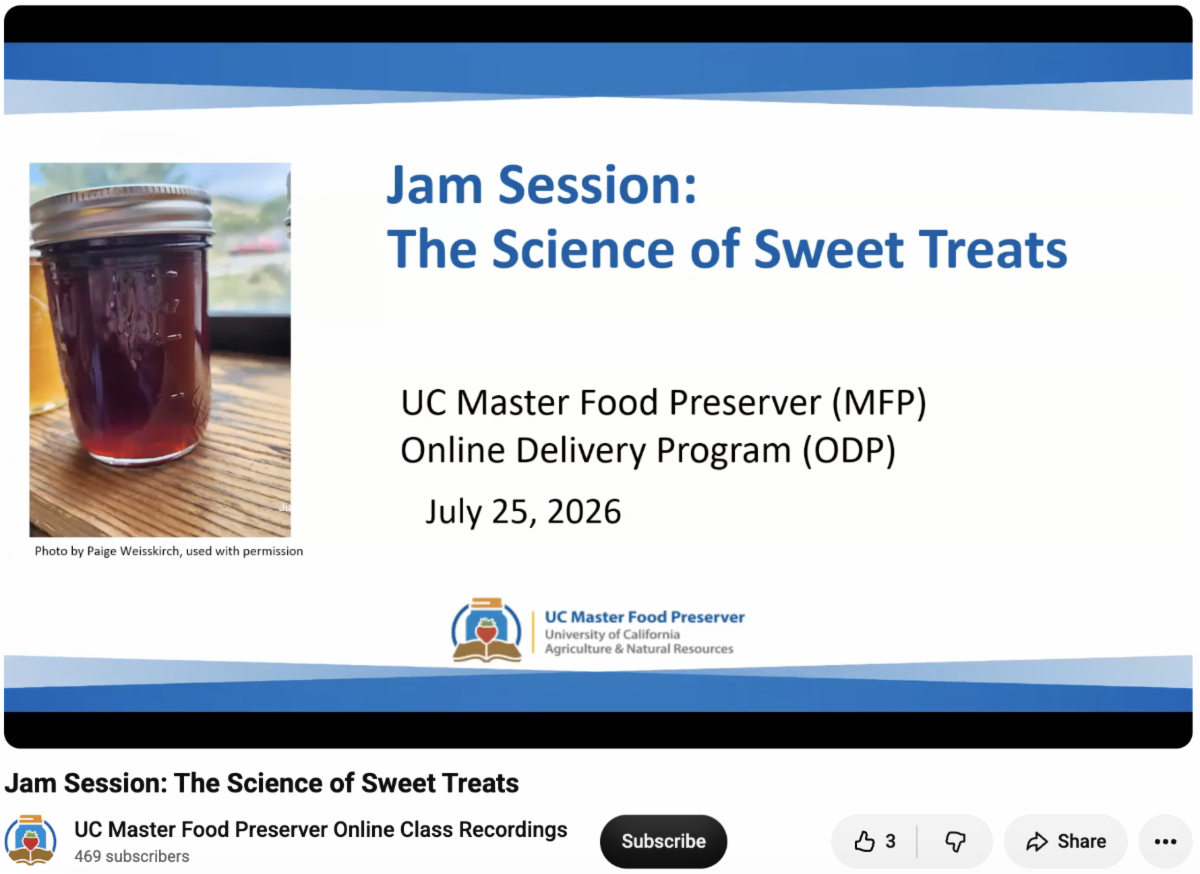
Cucumber Pickles and Jam Classes Now On Demand
Click the thumbnails below for two recent recordings. Visit our Recorded Events page for even more.
| | If you have any questions, suggestions, or comments regarding Save the Season, please email UC Master Food Preserver Community Education Supervisor Kelsie Matteucci kmatteucci@ucanr.edu. | | Was this email forwarded to you from a friend? Click below to subscribe to the UC Master Food Preserver newsletter so you don't miss out on next month's edition! | | Feel free to pass along Save the Season to a friend using the button below! | |
|
Monthly Food Preservation Trivia Answer
Which of the following terms can no longer be used on food packaging in California as of July 1, 2026?
C) SELL by
After July 1, 2026, food manufacturers will no longer be able to label packages with "SELL by" dates in order to eliminate a source of consumer confusion that results in more food waste. "BEST if used by" or "BEST if used or frozen by" may be used to indicate peak freshness or quality of a food item. "USE by" or "USE or freeze by" may be used to indicate when a food item is no longer safe to eat.
| | Did you get the trivia correct? (Click on the Thumbs up for Yes and Thumbs down for No) | | | | |
The University of California working in cooperation with County Government and the United States Department of Agriculture.
Should you need assistance or require special accommodations for any of our educational programs, or for receiving the content of this newsletter, please contact the hosting program.
It is the policy of the University of California (UC) and the UC Division of Agriculture & Natural Resources not to engage in discrimination against or harassment of any person in any of its programs or activities (Complete nondiscrimination policy statement can be found at https://ucanr.edu/sites/anrstaff/files/390107.pdf). Inquiries regarding ANR's nondiscrimination policies may be directed to UCANR, Affirmative Action Compliance & Title IX Officer, University of California, Agriculture and Natural Resources, 2801 Second Street, Davis, CA 95618, (530) 750-1397.
| | | | |