News and information that journalists need to serve the public and stay safe.
|
|
White House administers COVID-19 tests to all journalists before today's briefing
|
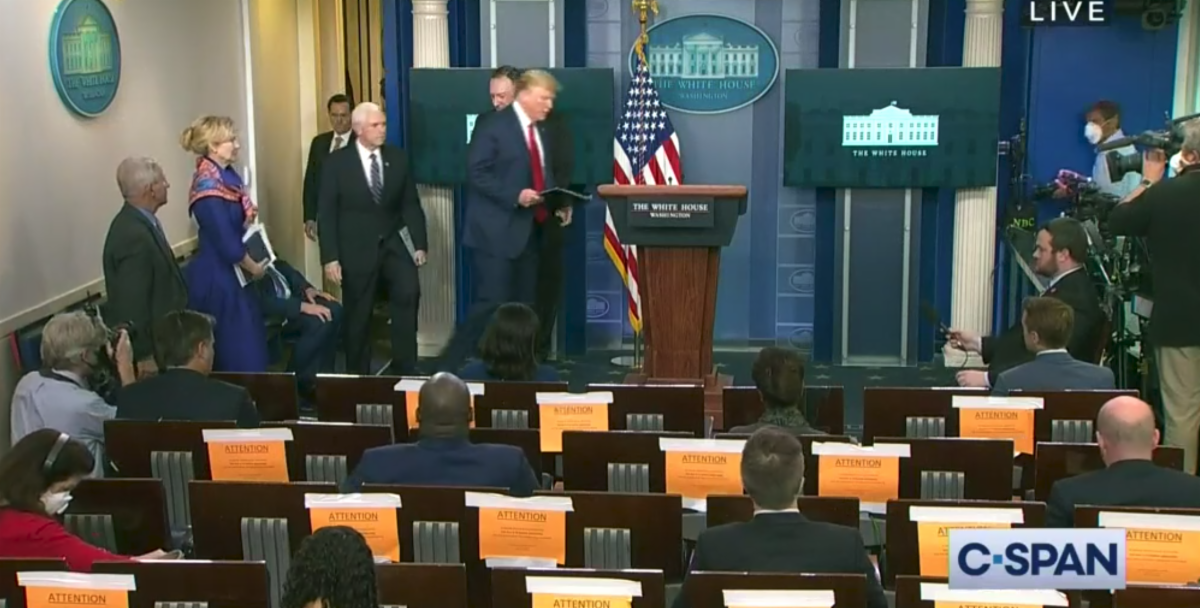
Reporters planning to attend today’s White House press briefing had to undergo coronavirus testing this afternoon. The extraordinary step came after a member of the White House press corps who had been at Tuesday’s briefing experienced symptoms of the disease.
In a memo to reporters, the White House press office said the White House Medical Unit was conducting the tests “out of an abundance of caution.” The tests were to be administered to all reporters, photographers and technicians who planned to attend today’s briefing.
The journalists were asked to appear at the briefing room at 3:30 p.m. to undergo testing in order to get results before the scheduled 5 p.m. start of the briefing. It was unclear whether the testing process would delay the start of the briefing. The White House set aside a vacant office behind the briefing room to conduct the tests in private.
The reporter with symptoms has not been identified. White House Correspondent Association President and ABC correspondent Jonathan Karl said he hoped that individual’s test results would be available later today.
Since last month, the White House has been routinely
taking the temperature
of reporters as they enter the briefing room.
|
|
Earlier this week, The New York Times featured a new byline: Annie Berman. Her name appeared over a 680-word story about the virus-inflicted dread a
California ski town
felt about once-welcome outsiders.
Berman’s debut was the start of a new collaboration between The New York Times and the University of California, Berkeley Graduate School of Journalism to expand coronavirus coverage in the state.
Berman, a second-year student at the graduate school, is one of more than 80 students and 20 journalism instructors reporting, photographing and collecting data about the pandemic’s effect in each of the state’s 58 counties. Assembled into teams, their work appears in
California Today
, the Time’s weekday newsletter in the Golden State, or in the print and online editions of The Times.
Leading the project are two Berkeley professors who are former Times reporters and Pulitzer Prize winners –
David Barstow
and
Geeta Anand
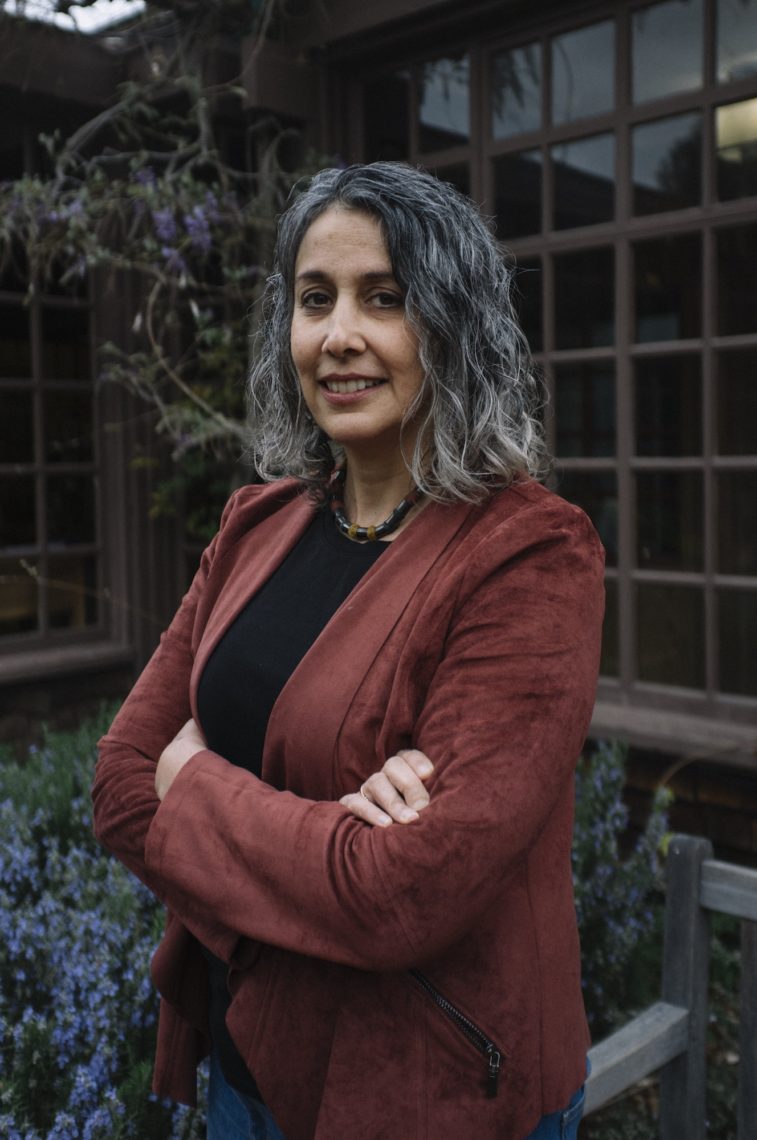
(pictured)
. We reached out to Anand to learn more about how the project began and how it’s operating.
What was the genesis of this collaboration with the New York Times?
Anand
: David Barstow, chair of the Investigative Reporting Program at the journalism school, reached out to editors at The Times and proposed this collaboration. He had worked at The Times for 20 years and won four Pulitzers for the paper before he came to the journalism school last year, so he has very close ties and is deeply trusted by the editors there.
What were the main issues that had to be addressed, resolved before you were able to proceed?
Anand
: There were so many issues that had to be resolved. Would we allow students to go out to report stories during this pandemic? If so, under what conditions? How would we enable students to have the time to work on these stories given their regular course load? Would the dean and faculty support replacing our regular courses with this project to give students the time and space to participate? The faculty, after lots of discussion, supported offering the opportunity to students to work on this project instead of normal classes but also to still keep teaching the regular course-load for those who wanted to stick with their regular classes.
Read on
to learn how the process works and what challenges they’re facing.
|
|
Round 1 voting for 2020 Book Brackets closes Monday
|
Voting has begun
in the first round of the 2020 Book Brackets, hosted by the National Press Club Journalism Institute. Your selections will determine which of 64 journalism books will move forward in this single-elimination, vote-driven contest.
Cast your Round 1 votes by midnight Monday, April 13 to decide which titles advance. Anyone can vote in any round, whether or not you made a prediction or voted before.
The winning title — and the runners up — will be featured at the National Press Club's Eric Friedheim National Journalism Library as the Institute curates titles for the collection later this year.
And, the person who most closely predicts the winners in each round will receive special recognition and a surprise once the 2020 Book Bracket champion title is announced.
Make it even more interesting: Share this with your friends to get them involved. Everyone loves a little competition.
|
|
Olga Khazan
, award-winning health and science writer for The Atlantic, is publishing her first book in the middle of a pandemic. As a Russian-Jewish immigrant who grew up in West Texas, she is no stranger to dramatic life adjustments. Or as she might put it, embracing the “weird.”
How has your experience as a health reporter prepared you for something of this nature?
Khazan
:
I covered
the Zika and Ebola epidemics for The Atlantic. That helped me get up to speed in the world of epidemiology and disease control and modeling. Still, this virus is just so different. It's much more contagious than Ebola, and it affects a greater swath of the country and the population than Zika did.
So while I learned a lot from those two outbreaks, I think there's still a lot that all of us—journalists and MDs alike—are learning about coronavirus every day.
What advice do you have for journalists to stay safe while reporting right now? How has your reporting process changed?
Khazan
:
I'm doing a lot more phone reporting. I would probably still door-knock or meet in person if the story was important enough, but honestly, it's hard to maintain 6 feet of distance while doing in-person reporting. And there's not enough PPE to go around, so that makes it extra risky.
Still, there are some stories you can only get in person. I really admire journalists who are reporting from inside hospitals these days.
Read on
to learn about Khazan’s experience launching her book during the pandemic.
|
|
Bill Plante Chair in Leadership & Media Integrity, Loyola University Chicago
Freedom Forum Fellow in Women’s Leadership
A few columns ago,
writing about resilience
, I advised managers “In addition to asking ‘What are you doing?’, ask “How are you doing?”
When I write things like that, I sometimes question myself. Isn’t this just stating the obvious? Who wouldn’t know this?
At the same time, I’ve learned never to assume that managers are automatically equipped with ample supplies of empathy. Or that their organizations necessarily value those who are.
It featured the leaders of 11 of the country’s top associations for journalists, all talking about taking care of journalists and journalism - with tips and insights.
Irving Washington
, executive director and CEO of the
Online News Association
helped me put the program together. When it was his turn to share, he talked about sending an email to ONA members a few weeks ago. It had one simple question:
“Are you OK?”
One reply was a jaw-dropper:
“You are the first person to ask me that question, including my employer.”
I believe it’s not an aberration.
Read on
to see what to do after you ask “Are you OK?”
|
|
|
Self-Care:
It’s OK to not talk about the pandemic
|
The pandemic is dominating parts of our lives we thought impenetrable: how we work, how we eat, how we live — and how we talk to each other.
It’s OK (and healthy) to talk about something other than coronavirus. Studies show that people connect through
shared experiences
. But the
research also shows
that consistently focusing on and talking about negative experiences can make you more stressed.
Here are some things to help:
- Ask about hobbies, family and interests (avoid work, if you can). Relationships grow stronger as you discover layered common interests.
- Be observant during video calls. Ask about an interesting painting, the unexpected pet sighting, or the unfinished puzzle on the counter.
- Spread heavy conversations out: Keep updates short and focus on the good stuff.
- Connect friend groups that normally don’t interact on group chats.
- Play games remotely. Pictionary, trivia and word games can spark creativity (and conversations).
- Find a list of conversation-starter questions (there are many). Things to ask about:
- New recipes they have tried
- What creative projects they are working on
- Life skills they are sharing with their kids
- What they are binge-watching
Remember, it’s OK to say you need a break from coronavirus conversation.
|
|
This newsletter is written & edited by the National Press Club Journalism Institute staff: Beth Francesco, Holly Butcher Grant, Jim Kuhnhenn, and Julie Moos.
Send us your questions and suggestions
for topics to cover.
|
|
The National Press Club Journalism Institute promotes an engaged global citizenry through an independent and free press, and equips journalists with skills and standards to inform the public in ways that inspire civic engagement. Support our important work with a tax-deductible contribution today.
|
|
|
|
|
|
|