Making Waves is the Great Lakes and St. Lawrence Cities Initiative’s monthly newsletter. Read on to learn about our events and activities, along with important announcements and updates from our policy and program teams! | |
|
Dear Members,
Our Mid-Year Meeting is just around the corner! On December 7, we’ll hear from a great lineup of U.S. and Canadian elected leaders, including U.S. Senator Debbie Stabenow (Michigan), Canadian Parliamentary Secretary to the Prime Minister and Special Advisor for Water, Terry Duguid (Winnipeg South, MB) and two co-chairs of the Canadian Great Lakes-St. Lawrence Interparliamentary Taskforce – Philip Lawrence (Northumberland-Peterborough South) and Brian Masse (Windsor West). We’ll also hear from legal and technical experts on PFAS to share some options your city may have to manage these forever chemicals. Please register now to join us on December 7.
November has been a very busy month for us at the Cities Initiative. We’re proud to once again had a strong showing at the biggest conference held on water in the U.S., the One Water Summit. The U.S. Water Alliance’s signature event unites water stakeholders from across the country, including water utility leaders and federal officials from the EPA.
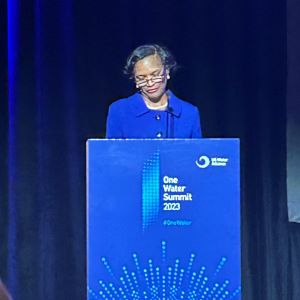
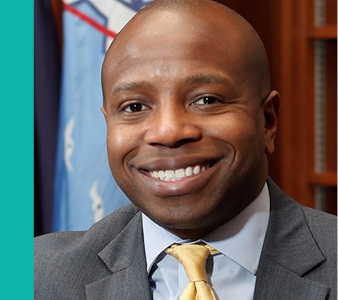
Mayor Muhammad of Benton Harbor, MI and Mayor Patterson-Howard of Mount Vernon, NY joined me as representatives of the Cities Initiative at the One Water Summit.
Mayor Muhammad was a key panel member and discussed how to unlock the potential of water and public health partnerships. He stressed the importance of infrastructure and water issues on our current public health crisis. He also addressed the water crisis Benton Harbor has an example of the need for greater partnerships to prevent future crises. View video.
Mayor Patterson-Howard participated in a panel focusing on water’s role in democracy, civil cohesion and justice. Her response regarding the State of Mississippi’s refusal to engage the city of Jackson on their water crisis succinctly addressed the power of civic engagement to make progress on a community’s critical needs in the face of inaction. View video.
As our annual renewal season is underway, I want to once again thank our members for your ongoing support. Through your engagement, the Cities Initiative is setting the ground for transformational change in our basin – and beyond. You can review our 2023 report card for a comprehensive list of our accomplishments this year.
Thank you for your continued support and partnership.
Jonathan M. Altenberg
President/CEO
| |
|
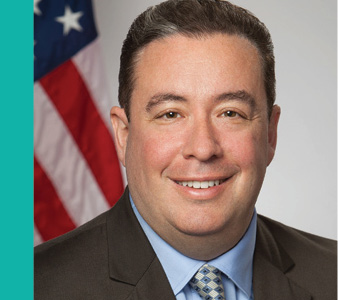
Brenda Mallory
Chair
Council of Environmental Quality
White House
| |
|
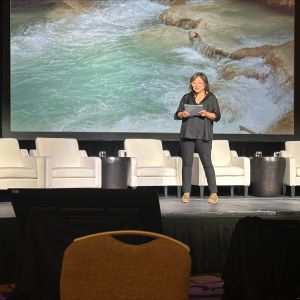
Mami Hara
CEO
US Water Alliance
| |
|
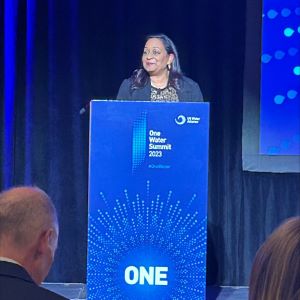
Radhika Fox
Assistant Administrator
U.S. Environmental Protection Agency
Office of Water
| |
|
Basin Bulletin
Happening in the Basin
-
The International Joint Commission recently released its third Triennial Assessment of Progress Report on Great Lakes Water Quality, a three-year review of federal government progress under the Canada-US Great Lakes Water Quality Agreement (WQA). This report finds that despite progress made, there are persistent water quality issues in the Great Lakes, notably through legacy and emerging contaminants, nutrient issues and the effects of climate change. The Cities Initiative was pleased to host a roundtable with our members in December 2022 in support of this report.
-
The St. Lawrence Seaway announced its latest ever closing date – January 5!
-
The Ontario Marine Council recently released a study on the Economic Impacts of Maritime Shipping in the Province of Ontario. The study revealed that maritime commerce supported over 67,000 jobs and created CA$9.6 billion in economic activity in 2022.
| |
|
Program Updates
-
Governor Evers of Wisconsin and the Wisconsin Department of Natural Resources recently announced that the City of Milwaukee will receive $30 million for lead service line replacement. [Read this month’s Member Spotlight by Mayor Cavalier Johnson of Milwaukee below to learn more about the $30 million and Milwaukee’s ongoing efforts to ameliorate the risk of lead exposure via drinking water.]
-
We still have spots available for members interested in our Lead Service Line Replacement Consulting services, offered through a partnership with the Environmental Policy Innovation Center (EPIC)! Learn more and email Bridget Brown if you are interested in securing your spot (U.S. members only).
-
Mayor Bill Bazzi of Dearborn Heights, Michigan joined Cities Initiative staff on October 31 to kick-off the Resilient Coastal Projects Initiative (RCPI) in northeast Michigan, along Lake Huron. Communities participating include St. Ignace, Rogers City, Alpena, Bay City, Au Gres, Oscoda Township, and East Tawas.
-
The Ohio RCPI convened an energized group of regional experts and advisors on November 2 to help identify potential local projects to support. If your community is interested in participating, please reach out to Zoë Goodrow.
-
The Initiative for Resilient Great Lakes Coasts is expanding to U.S. communities along Lake Huron, Lake Superior, Lake St. Clair, and their connecting channels. Learn more and see Events below for registration information.
-
We invite members to provide feedback on a new climate adaptation guide being developed by the International Joint Commission to support small- and medium-sized Great Lakes communities in accessing tools and resources to support their climate adaptation efforts. See Events below for registration information.
-
The U.S. Environmental Protection Agency recently announced that the City of Chicago will receive a $336 million Water Infrastructure Finance and Innovation Act loan to remove 30,000 lead service lines and create an estimated 2,700 jobs in the local water workforce.
| |
|
Policy Updates
-
The Cities Initiative sent a delegation to the National Climate Adaptation Summit in Ottawa on November 2, organized by the Climate Proof Canada coalition. The event featured discussions with five ministers, opposition leaders and other federal officials and stakeholders regarding Canada’s National Adaptation Strategy. The Cities Initiative joined other climate groups in calling on the government to invest at least $5.3 billion in the strategy over the next six years. Mayor Gino Moretti of Saint-Anicet, QC, the Cities Initiative’s Chair, Mayor Andrea Matrosovs, Town of The Blue Mountains, ON and Reeve Bert Liverance, Township of The Archipelago, ON, participated in our delegation.
-
Governor Gretchen Whitmer of Michigan will succeed Governor Tony Evers of Wisconsin as Chair of the Great Lakes St. Lawrence Governors and Premiers, beginning in 2024.
-
The U.S. Environmental Protection Agency recently announced the Get the Lead Out Initiative, a new effort with the U.S. Department of Labor that will provide vital technical assistance to 200 underserved communities seeking to expedite lead service line replacement. “The Cities Initiative’s Mayors Commission on Water Equity applauds the Biden Administration for once again demonstrating strong federal leadership to get any potential lead exposure out of our drinking water,” said Mayor Cavalier Johnson of Milwaukee, Wisconsin, a Commission Co-Chair, in a statement.
-
Governor Whitmer and the Michigan State Legislature passed a clean-energy legislative package to lower energy costs and create jobs in the renewables sector while protecting the local environment and public health. A recent report estimates that this suite of bills will attract $7.8 billion in federal investments, create nearly 160,000 jobs and save the average Michigan household $145 per year on home energy bills.
-
The Government of Québec released its Economic Update, which commits CA$4.3 billion in new investments over five years, including $961 million for municipalities that will support sustainability measures, climate adaptation, social programs and public transit.
-
The Government of Ontario released its Fall Economic Statement, which provides CA$3 billion to create the Ontario Infrastructure Bank to attract institutional investment for key project. The Ford government is also investing $200 million over three years to help municipalities repair, rehabilitate and expand critical drinking water, wastewater and stormwater infrastructure in response to our members’ advocacy for enhanced funding in response to Bill 23.
| |
|
Upcoming Events
-
December 7, 2023: Cities Initiative Mid-Year Meeting – Virtual. Register
-
December 13, 2023: IJC Climate Adaptation Guide Virtual Dialogue – Virtual. Register
-
January 17, 2024: Virtual Kickoff of the Initiative for Resilient Great Lakes Coasts led by NOAA and the Cities Initiative (U.S. members only). Virtual. Register
-
January 25, 2024: Webinar – Cities as Key Partners in the Water Innovation Pipeline, with AquaAction. Registrations will open soon
-
February 22, 2024: Webinar – All Eyes on Lead: How to Create an Equitable and Efficient Lead Service Line Replacement Program. Register
-
March 28, 2024: Ontario Regional Meeting – Town of the Blue Mountains, ON. Registrations will open soon.
-
May 15-17, 2024: Cities Initiative Annual Conference 2024 – Economic Transformation: Tapping into Water for Sustainable Prosperity. Montreal, QC. Registration will open soon.
| |
|
Member Spotlight
In this new section, we will share stories from our members and the positive news and activities happening in their communities that make our region and the Great Lakes and St. Lawrence River Basin stronger.
If you have a story you would like to share, please contact our Senior Director for Membership, Phil Murphy-Rhéaume.
| |
CENTERING EQUITY IN LEAD SERVICE LINE REPLACEMENT
Mayor Cavalier Johnson – Milwaukee, WI
Milwaukee is expanding our lead service line replacement program with a focus on equity. Our Equity Prioritization Plan puts neighborhoods with the greatest need first. We balance socioeconomic data that demonstrate a need for public investment, elevated blood lead levels in children and the density of lead service lines when determining which pipes are replaced first. The plan allows us to scale up and meet my goal of replacing all lead service lines within 20 years while prioritizing neighborhoods that have historically been underserved.
Our city has nearly 40 percent of Wisconsin’s lead service lines. With about 66,000 active residential lead service lines remaining, we have a lot of work to do. President Biden's Infrastructure Investment and Jobs Act will provide Milwaukee with the support we need to tackle one of the most urgent public health issues of our time. Thanks to this historic investment in our water infrastructure, Milwaukee will put $30 million into replacing lead pipes this year and next. We expect to request and receive even more funding in future years.
Replacing lead service lines efficiently and equitably is a huge logistical challenge. Partnering with community groups that understand these challenges is key to success. In Milwaukee, community groups are at the table and have been essential to developing our plan. We are proposing changes to local ordinance that will bring new efficiencies to our work and ensure that we are using every dollar of federal support as effectively as possible. Working with our partners in the federal government, local contractors and community organizations, Milwaukee will be a national model for equitably replacing lead pipes and creating a brighter future for our kids.
| |
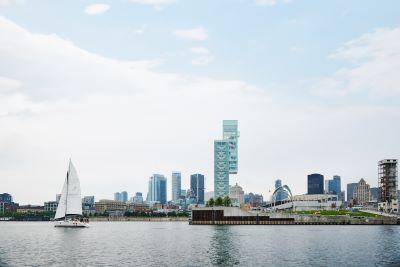
Photo credit: Stéphan Poulin - Tourisme Montréal | |
|
The Road to Montreal
Registrations for the annual conference will open soon!
We are gearing up for our earliest registration period yet for an annual conference - Stay tuned for an email inviting you to register.
While you are waiting for our registration to open, you can book your room today! Cities Initiative has secured a discounted rate of CA$319 per night plus all applicable taxes at the Marriott Château Champlain | 1050 de la Gauchetiere West, Montreal, Quebec. Book online - reservations must be received on or before April 22, 2024.
| | |
|
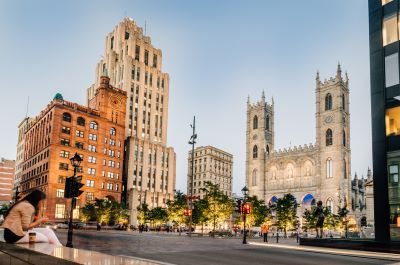
Photo credit: Daph & Nico
Tourisme Montréal
| |
|
Photo credit: Stéphan Poulin
Tourisme Montréal
| |
|
Photo credit: Laurène Tinel
Tourisme Montréal
| |
|
Mayors Commission Updates
The Mayors Commission on Water Equity (MCWE) will launch in Canada in January 2024. Similar to its U.S. counterpart, the Canadian arm of the Commission will promote equitable access to clean, safe and affordable water for all residents of the Great Lakes and St. Lawrence River Basin. A key activity will be to advocate for stable and predictable funding for water infrastructure and guide the development of the Cities Initiative’s water security policy priorities. If you are interested in serving on the Mayors Commission on Water Equity in Canada and regularly engaging with Canadian federal and provincial officials on water issues, please get in touch with Eamonn Horan-Lunney, Senior Canada Policy Director.
| |
|
Parliament Hill
-
In its Fall Economic Statement (FES), the federal government announced legislation to create a stand-alone Canada Water Agency, which the Cities Initiative supports as part of our Action Plan 2020-2030 recommendations. The FES also included $1 billion in funding to accelerate the building of new housing stock, along with measures to help municipalities speed up construction decisions and crack down on short-term rentals. Despite clearly mentioning natural disasters as a threat to the economy, no further announcements were made regarding their National Adaptation Strategy, despite calls for more funding from the Climate Proof Canada, of which the Cities Initiative is a member.
Capitol Hill
-
The U.S. House of Representatives approved the Appropriations Act for Energy and Water Development, and Related Agencies for Fiscal Year (FY) 2024. The House measure would provide $5 million for the Great Lakes Authority (GLA). The Senate version of this legislation recommends $2.5 million for the GLA, so the final number will ultimately be resolved in conference negotiations between the House and U.S. Senate.
-
The House approved the Appropriations Act for Interior, Environment, and Related Agencies for FY24, which funds the U.S. Environmental Protection Agency. The House measure proposes $368 million for the Great Lakes Restoration Initiative (GLRI), which is equal to the FY23 enacted level for GLRI. This measure would also provide $460.61 million in base appropriations for the Drinking Water State Revolving Fund, a dramatic 60 percent reduction compared to the FY23 enacted level before factoring in congressional earmarks.
- The U.S. Congress has passed a two-tiered Continuing Resolution (CR) to avert a shutdown of the federal government this year. The two-tiered CR would maintain FY23 funding levels for the U.S. Army Corps of Engineers through January 19 whereas funding for the U.S. Environmental Protection Agency would continue through February 2. The White House has indicated that President Biden will sign the legislation into law.
| | | | |