News from Mission Communications for Water and Wastewater Professionals |
|
Mission Communications Roadshow Begins |
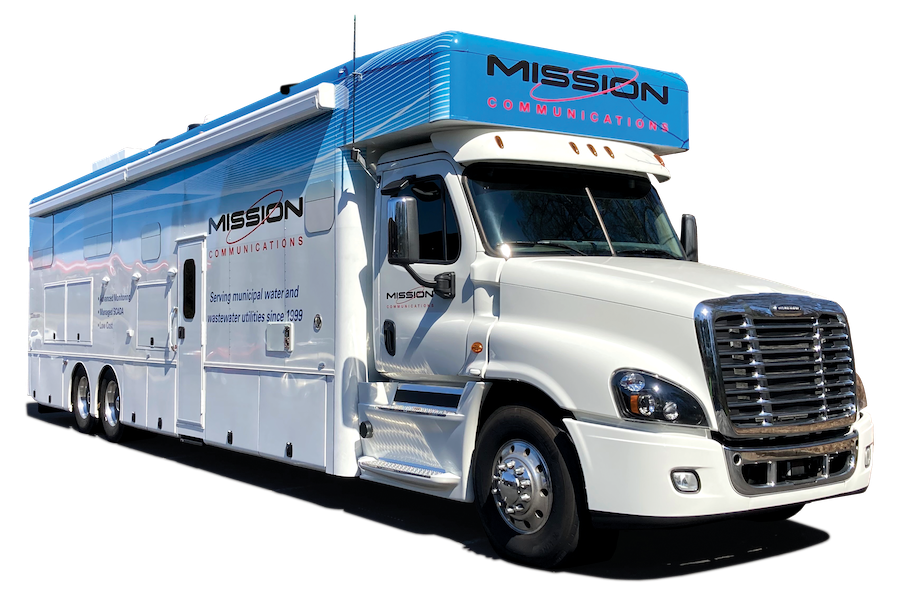
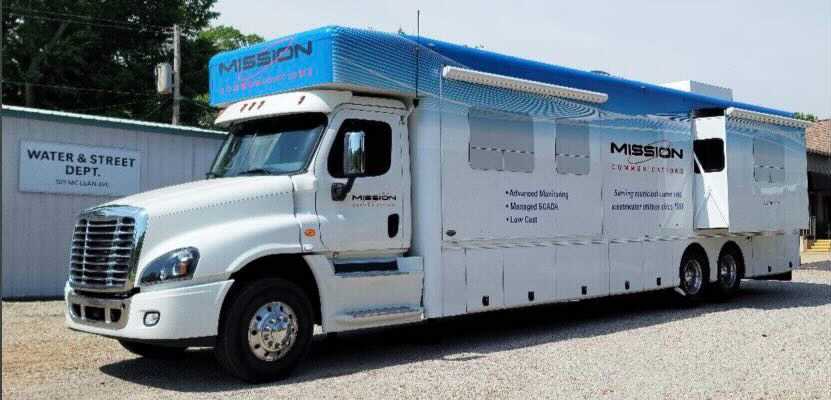
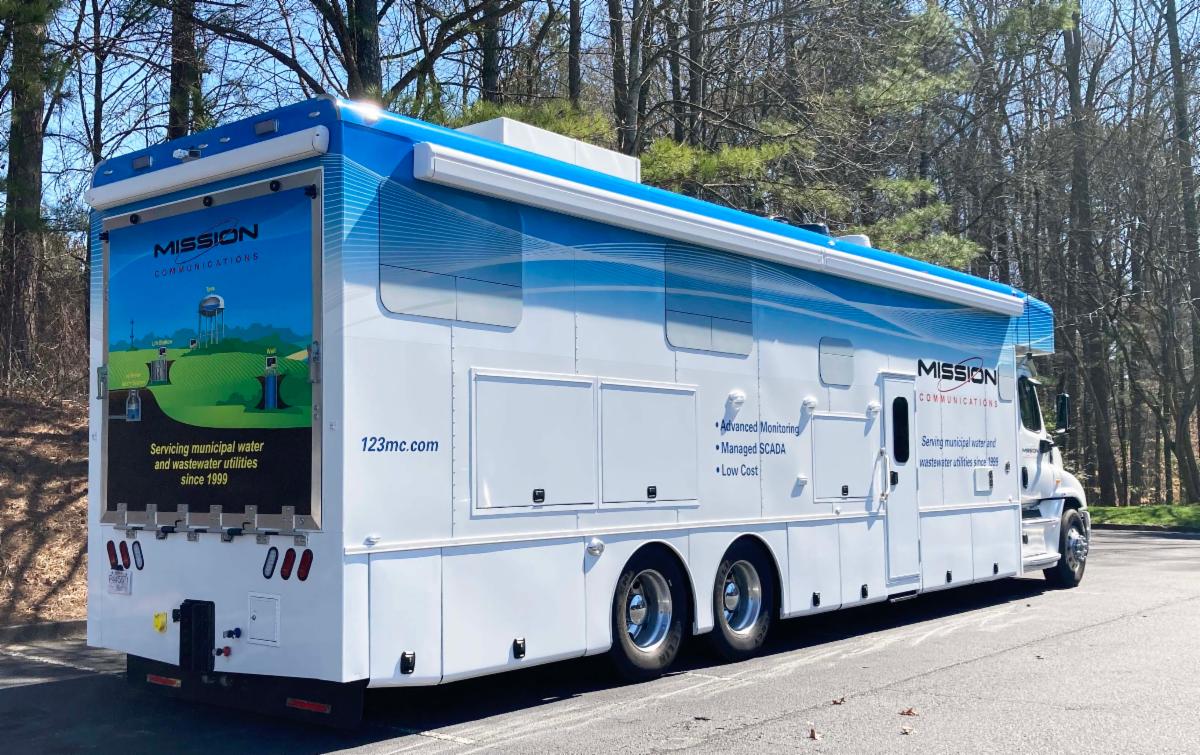
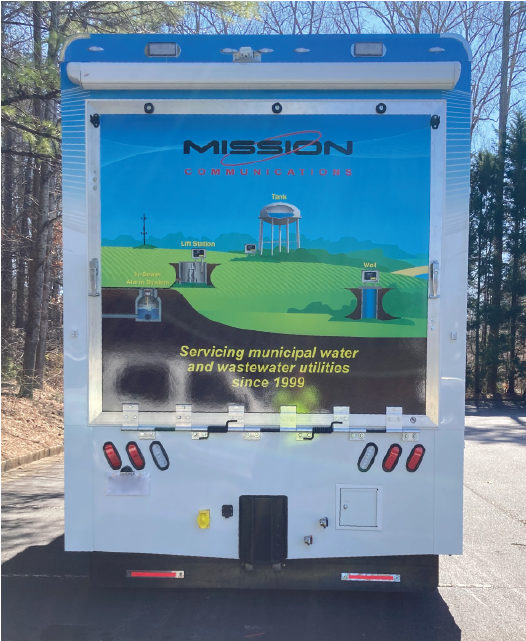
The Mission Communications RV is gassed up and hitting the road. The first stops were in Alabama and our friends had some nice things to say about us.
“That was the nicest unit at the show this year, that was a head turner. There was always somebody coming by or just staring at it, y’know?”
–Eric Hill
General Manager
Water & Sewer Board
Russelville, AL
|
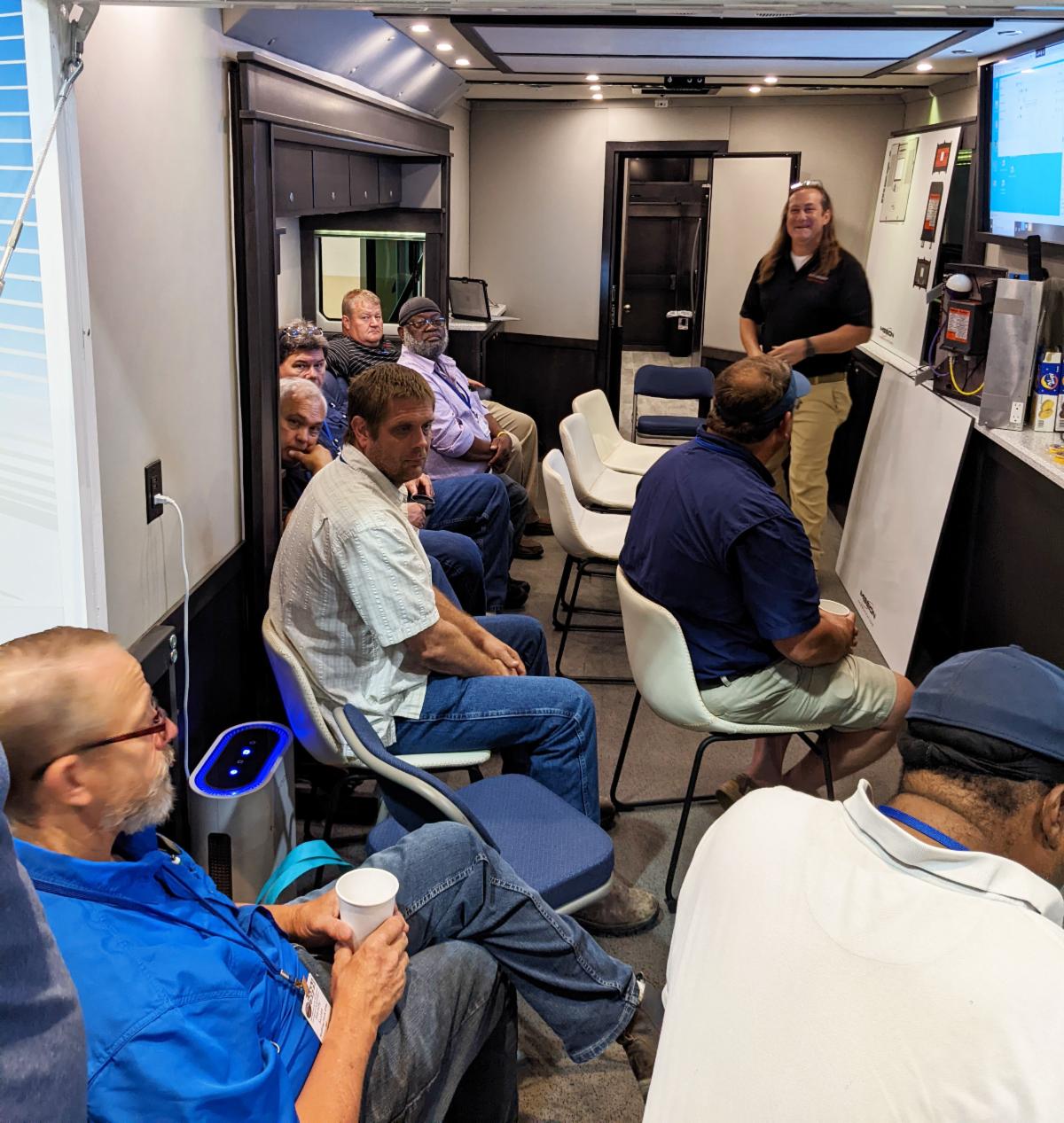
“I think it would be good for continuing education, especially if you cater to smaller groups. When you go to these trade shows, you're almost getting the same old sales pitch every time. But when you have a mobile classroom like the RV, you can cater training to a specific subject or specific item and make it more user friendly rather than sitting in a room with 100 people listening to somebody talk about a product.”
–Drew Thrasher
Superintendent,
Water and Sewer Board
Haleyville, AL
“It’s more convenient that’s for sure because it comes to you, and you can get more people there because it’s at your facility.”
–Jonathan Larkin
Asst. Director, Public Works
Prattville, AL
|
“It’s great for continuing education. It costs a lot of money to send these employees to these classes and to have a mobile classroom would be really great.”
–Eric Hill
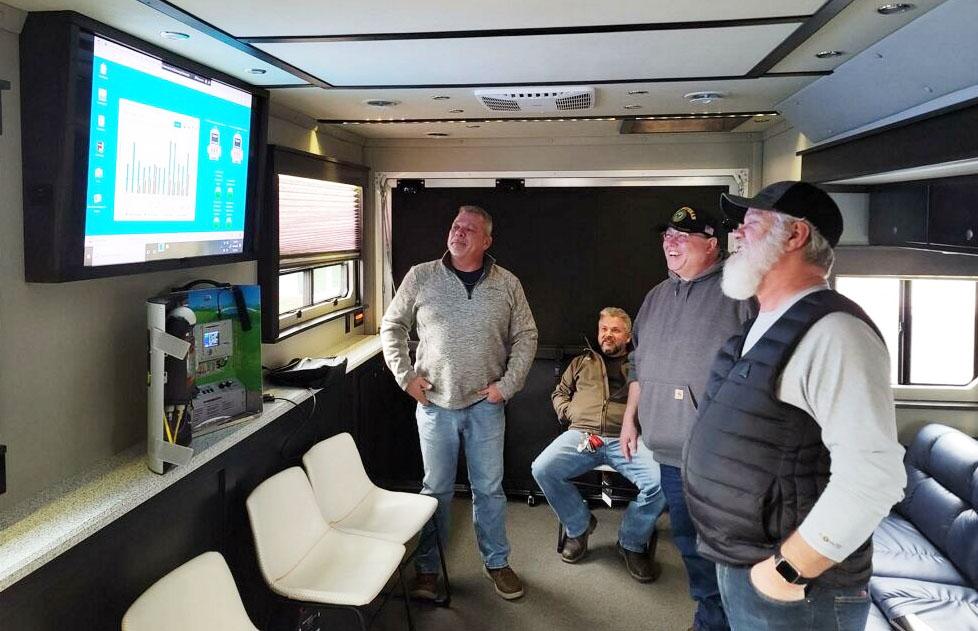
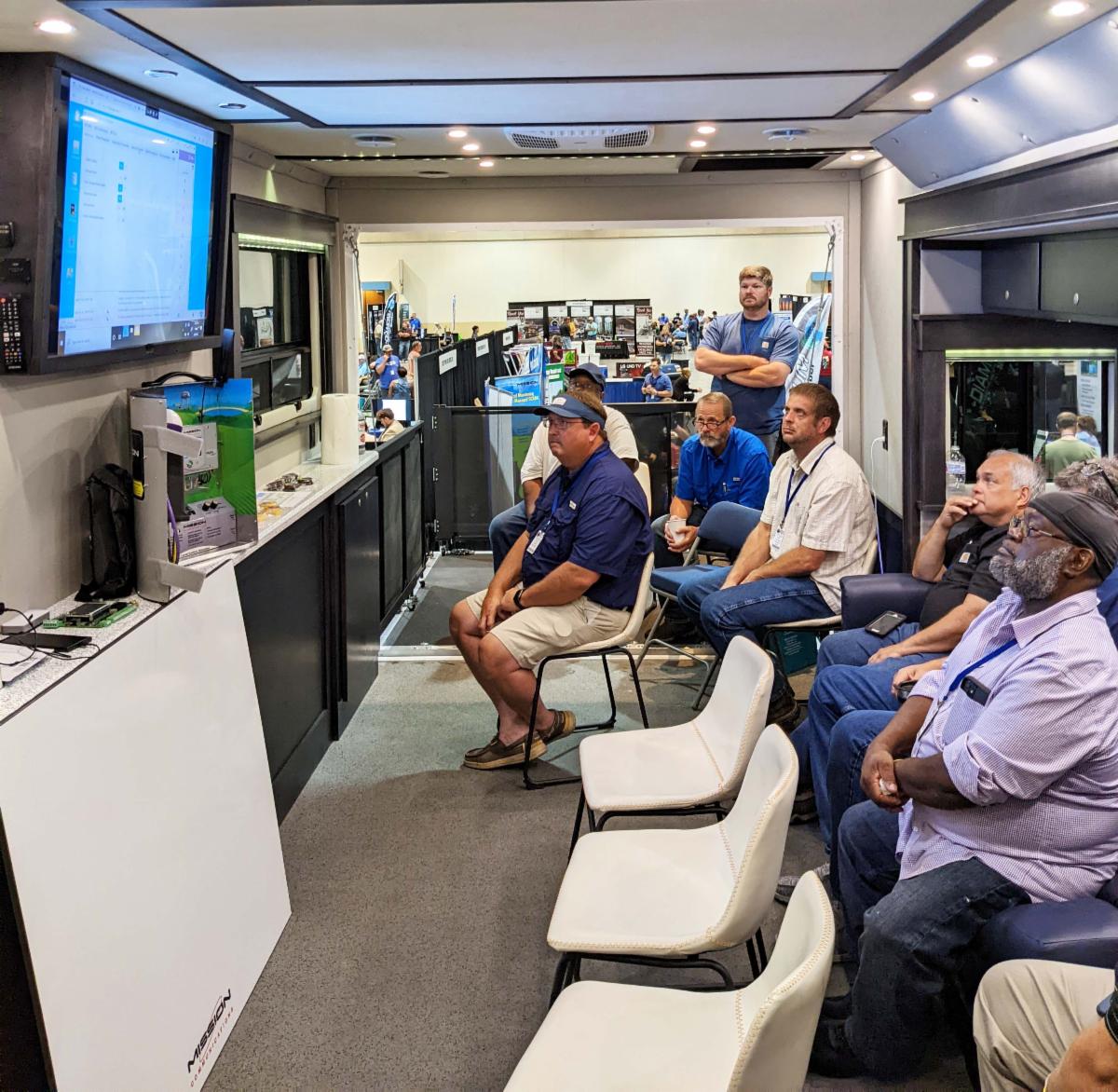
“He actually took one of our actual stations, went through the setup process (with all the screen options), and showed what you could do. He walked us through it step by step on how to do it right there.”
–Drew Thrasher
|
“I learned more here than with the online stuff because you could interact easier because it was here.”
–Jonathan Larkin
“We went into the classroom, we were kind of mesmerized.”
–Eric Hill
|
“Overall, that RV is fantastic!”
–Jonathan Larkin
“They parked it right here at our wastewater treatment plant.”
–Drew Thrasher
|
“It beats being part of a 100-person audience at a show. You get a little more hands-on training.”
–Eric Hill
“I learned more here than the online stuff. You could interact easier because it was right here. Overall that RV is fantastic.”
–Jonathan Larkin
|
“He pulled it all up on the big screen tv, pulled it up, showed us how to set it up, and it’s very interesting. For ya’’l the RV is gonna be a huge tool to be able to go out into the field and show what your product can do.”
–Drew Thrasher
“It’s a great product. That product system sells itself. I’ve been in this business for 30 years so when people demo things to me I think ‘yeah, that’s okay' but I’ve actually sat down and looked at this and I’m in awe of it, and amazed at how well it’s been thought through.”
–Eric Hill
|
Join our weekly webinar for appearances of the RV and roadshow updates. If you would like to participate, contact us at rv@123mc.com. |
Lake Charles, LA
July 18 — 21
Las Vegas, NV
August 8 – 11
August 30 — September 1
September 12 — 13
All trade show information is subject to change. Please confirm dates and schedules with the individual trade shows.
|
Hardware and Instrumentation
Survey of Features
Hardware and Instrumentation
Web Portal I—Unit Setup Options, Notification Setup Options, Alarm Groups, Website Tools
Survey of Features
Hardware and Instrumentation
Web Portal I—Unit Setup Options, Notification Setup Options, Alarm Groups, Website Tools
Web Portal II—Advanced Features, Reporting, Supergraph, Volumetric Flow
Special Topics—Digital Interconnect, Tank and Well, OPC, and More
Survey of Features
Hardware and Instrumentation
Certificates are available for any webinar attended,
by request.
|
|
How Savannah Reduces Sewage Overflows with the Manhole Monitor Plus |
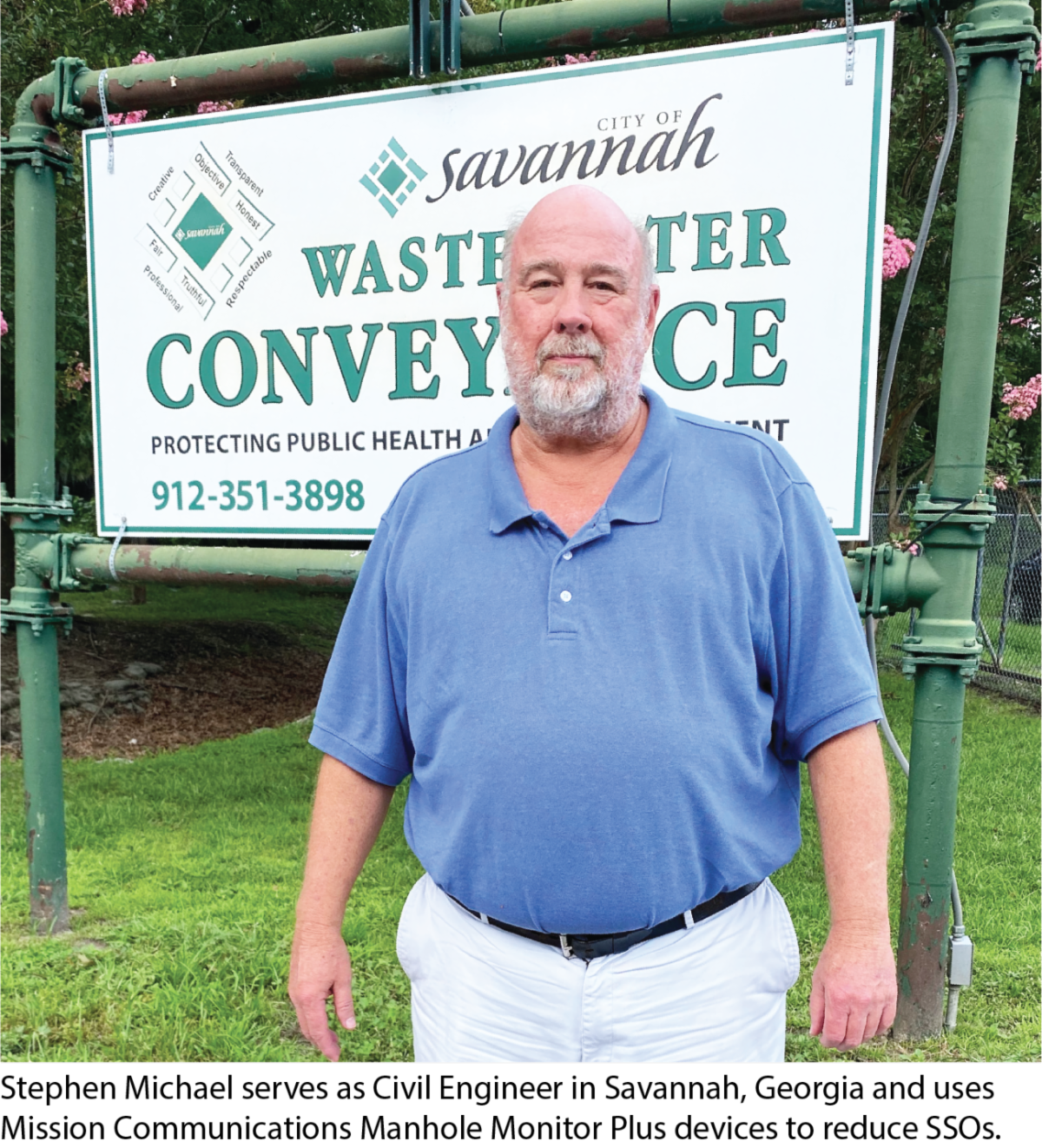
It was 2008 and Savannah lacked an early warning system to catch sewer main blockages before they turned into sanitary sewage overflows (SSOs). According to city sources, there were new technologies coming online to catch manholes surcharging before they overflowed but Savannah had some specific needs. They needed a system that was easy to deploy, one that was cellular based (rather than proprietary communications based), one that could be accessed from any computer rather than dedicated terminals, and one that could send out warnings using more than one type of technology. “We needed all of this to fulfill one of our primary goals—to keep sewage in the pipes and out of the streets and waterways,” said Stephen Michael, City Engineer for the Savannah Wastewater Conveyance department. |
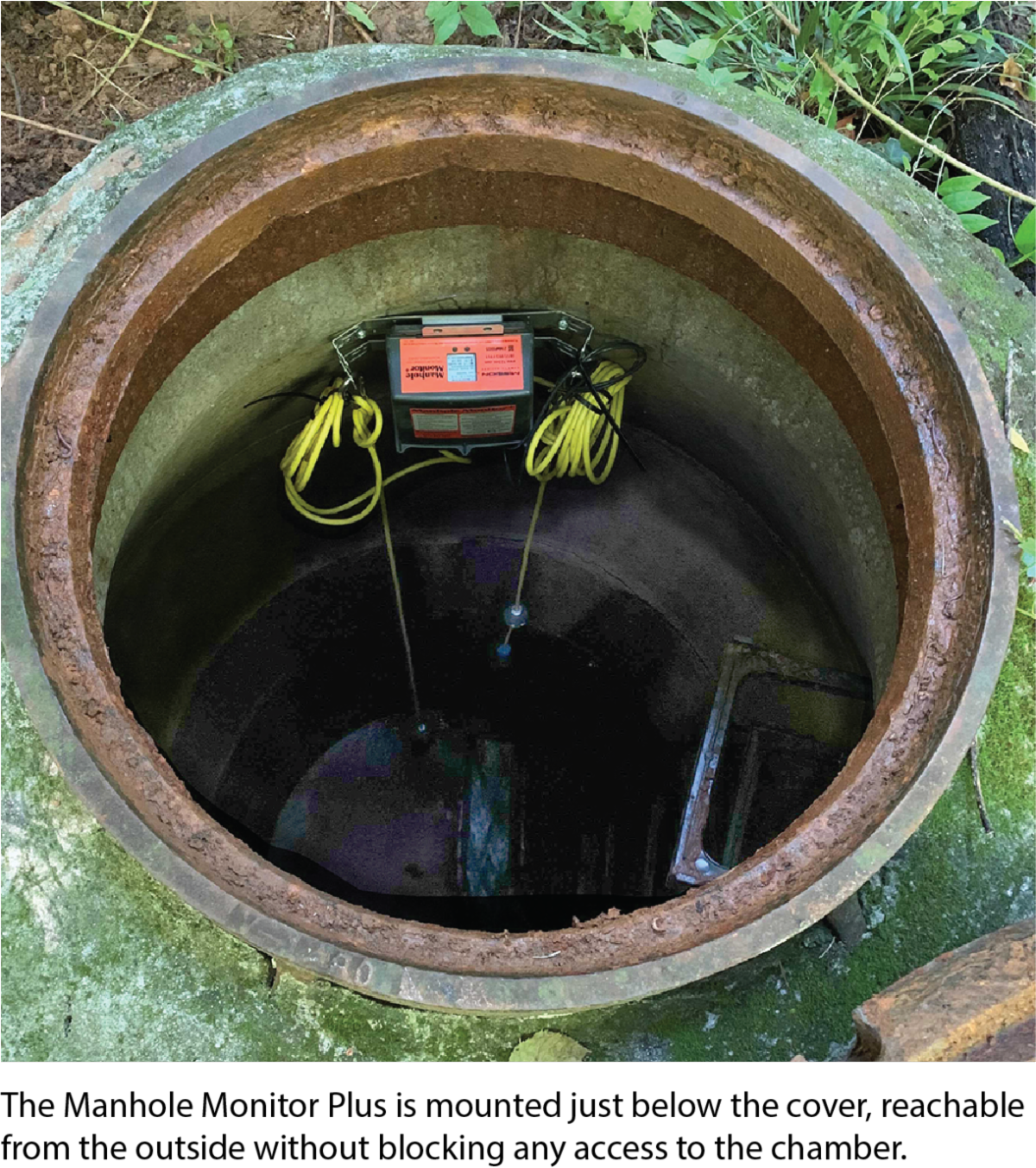
“The technology embodied within the Manhole Monitors from Mission Communications was the best match for our requirements,” Stephen continued. The Manhole Monitor is a device installed just below the manhole top with up to two cable and float indicators that sends alarms if the sewage level gets too high. Mission recently released the latest model, the Manhole Monitor Plus. This low-energy, battery-powered device, ruggedized to operate in the sewage environment, is perfect for sewage hot areas, locations at high risk of overflows.
Stephen is currently in charge of strategically placing these Mission devices in those areas of town that have a history of sewer main blockages that could result in SSOs. According to him, the devices have served the city well. “They’re helping us all the time because when one of them goes off, we automatically get the alarm, and we’ll deploy a truck to that location." Stephen continues, “When these monitors detect high levels in a manhole, the downstream gravity main most likely has a blockage in it, causing the surcharge. This technology gives us plenty of warning and we can jet the line out and get rid of the blockage before there’s an overflow.”
Securing and managing wastewater in a city like Savannah, Georgia is challenging. Like New Orleans or Charleston, part of what makes it a great port, thriving business community, and tourist destination leaves it vulnerable to SSOs. The Port of Savannah, which uses both sides of the Savannah River, operates right next to the riverfront downtown area, where tourists dine. Water is everywhere in Savannah.
Officially, the elevation of Savannah is 49 feet above sea level, but parts of Savannah actually fall below sea level. Savannah Electronic Control Technician Dale Branch talks about some of the challenges Savannah sees, “A heavy rain event can lead to Infiltration & Intrusion issues affecting our gravity mains and sewer manholes.”
Stephen points out another culprit that could lead to an SSO. “In 80% of the blockages that could lead to an SSO, it’s grease getting in where it’s not supposed to get in.” That’s right, even though Savannah has all these natural challenges, it’s human error that causes the most issues.
|
Dale talks about installing the Mission Manhole Monitor Plus devices. “I’ve personally installed around 50 Mission devices, overall, and just started on the new model about a month ago. I like the new ones. The cable is wired inside the enclosure, and it makes the float cable less likely to fall off. I like the new lantern battery.” Mission purposefully designed these units to let customers perform simple maintenance like changing the battery.
Stephen also appreciates the battery. “I like that you can power it with the high-ampacity lantern batteries now. We can get more capacity out of them.” The previous version used a lithium-ion battery with a third of the capacity of the new units. Also, the new units use so little power that the battery can last five years or more. Even the new screen uses e-ink technology to display information using less power.
But there are more upgrades, according to Dale. “The older model you could easily twist it or knock the float off. But with the new model the float cable is wired into the unit. It makes it more secure, and the whole thing is lighter. I think the upgrade will be more efficient for us.” This is one of the improvements to make the device more durable in the sewage setting.
Stephen continues explaining how challenging Savannah is for conveying wastewater. “We have over 800 miles of gravity mains and 213 lift stations serving a population of 146,000 residents. Los Angeles services 100 times as many people but only has half the number of lift stations.” This is because Savannah is flat and requires the sewage system to have more lift stations since they can’t rely on the terrain. “If you have hills, you can use gravity to move your wastewater, sometimes for miles, without lifting (pumping) it.”
So, what’s the ongoing plan? According to Stephen, it’s installing the Manhole Monitor Plus wherever they’re needed. “If our maintenance data points to a problem area, we put a Mission Manhole Monitor Plus device in the next manhole upstream from the problem section of pipe.” Savannah Wastewater Conveyance department proves that a skilled team can proactively reduce SSOs with a good plan and good tools, like the Manhole Monitor Plus, avoiding cleanup efforts and saving money and other resources.
|
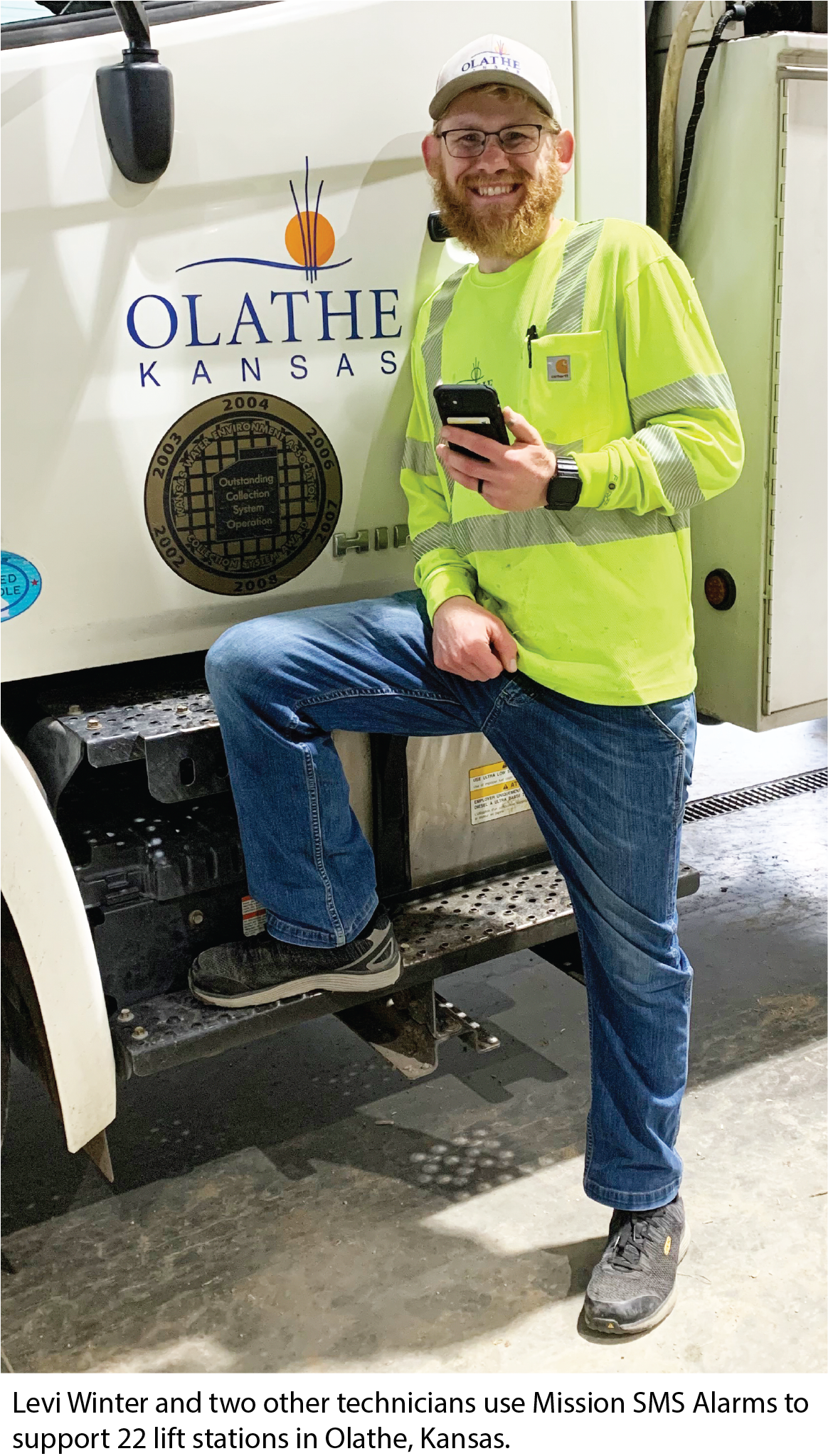
“I was in a weekly Webinar, un–muted my microphone, and asked when Mission was going to improve the text messaging?” Levi Winter is a Plant Maintenance Technician in Olathe, KS and he asked the right question at the right time. Mission had just unveiled their new short message system (SMS) alarm upgrades. Winter clarifies how he used the old SMS system. “Typically a text alarm would give me an idea of what the problem was and I could go into the 123SCADA portal and address it. It was helpful but limited.”
He remembers one particularly bad situation when the alarms kept coming at a rate that was hard to keep up with. “We had a major storm that was triggering our high alarm over and over and I got hundreds of individual text messages, and they all came like they were from different callers.” That was an issue with the old system, a remnant of the old phone carrier networks. Even though it was all coming from Mission, the phones would see them as separate senders. It was useful in small doses, but could get overwhelming in situations like that.
Stories like this is one of the reasons Mission completely rethought and revamped its SMS alarms. Steven Adams, one of the Mission Software Engineers who designed the new features explained the technical need for the overhaul. “We used to have to deliver text messages like an email address, which would be different for each carrier. It’s all evolved since then.”
|
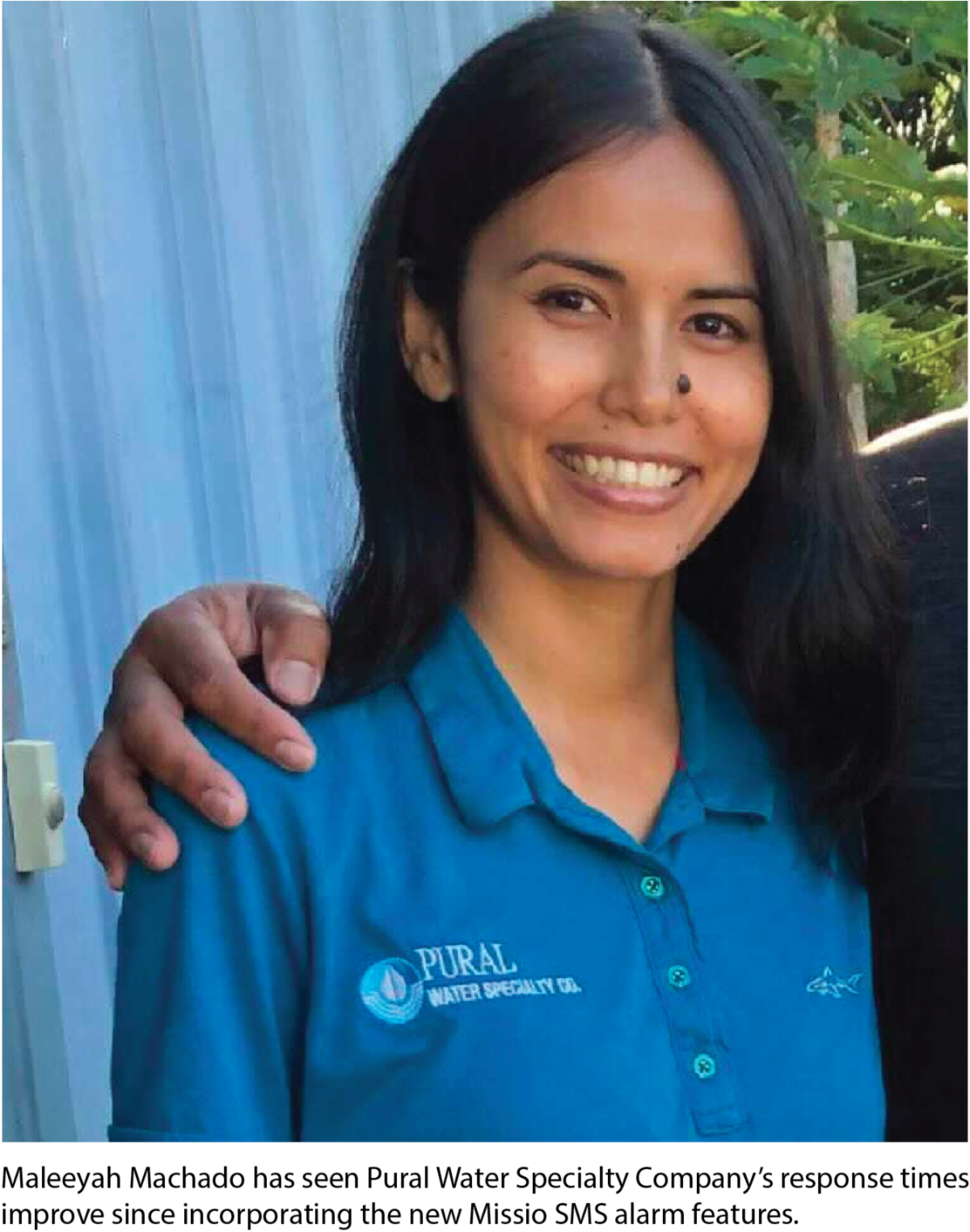
Maleeyah Machado, an Engineer for Pural Water Systems in Hawaii, leads a team that supports several customers’ water and wastewater systems. She remembers learning about the new SMS system. “I opened a Tech Support ticket on 123SCADA asking if I can make my alarms better and they told me all about the new system. They walked me through each feature. The carrier-specific email addresses that we sometimes had alarm delays with were gone.” Mission Tech Support helped her set up all of the alarms for one of her clients.
“We haven’t had any delays in alarms since then,” Machado continues. “The text messages are good. They have all the relevant information. They have the system name and the alarm, which is important because we support so many different customers. Each alarm needs to be clear and it is. Our technicians know which customer it’s for, the site, and what the alarm is.”
The SMS system helps Pural stay in compliance with environmental standards. “We support surface water systems,” Machado explains. “It follows strict surface water Environmental Protection Agency (EPA) and Department of Health rules which require rigorous monitoring. If something is out of range, we have to respond quickly because not responding within allowable timeframes, leads to violations and fines. We haven’t had any fines since we started using the Mission systems.”
Another emerging issue was disassociating alarms with spambots, junk messages, and problematic phishing hoaxes. Adams, from Mission Engineering, explains that carriers are also becoming more aware of messages sent in volume with similar content and they’re blocking them. So even though the SMS is more powerful, it can also be tricky. “The carrier will block repetitive messages so now if there are more than one alarm events within three minutes we send the first alarm and then as the alarms accumulate on 123SCADA, we send the most recent one, with the total number they have waiting for them. And they all come in one text thread now.”
|
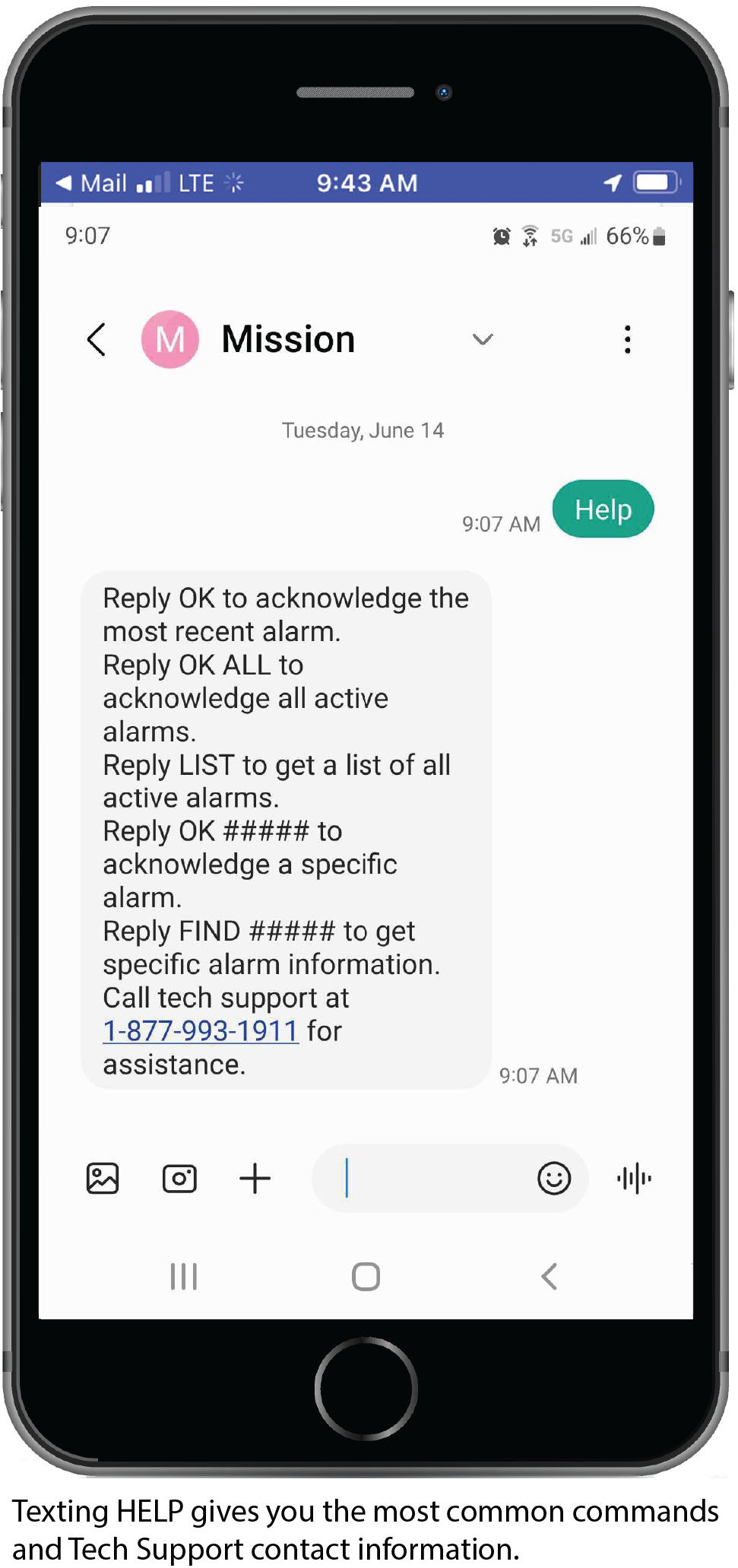
And the commands have been upgraded too. Customers can reply with a simple OK to acknowledge an alarm or OK ALL to acknowledge all open alarms. There are actually a lot of commands you can send to 123SCDA as text messages. You can list all of your open alarms (LIST), recall a specific alarm number (FIND #####), and even disable notifications for an RTU or a specific input for an hour (DISABLE RTU and DISABLE INPUT). The interactive features have come a long way. You can get the full list of commands from the 123SCADA portal under Documents, Alarm Notifications via SMS (Text Messages), or write HELP in the alarm thread for the most common commands.
Over the last 23 years, the SMS message has grown to be used in most commercial and industrial fields. Mission led the way in the water and wastewater markets. Any time a customer’s high level threshold was breached they prioritized the customer learning about it immediately. But as the market matured, text messaging became even more prevalent on phones than voice calls, and then finding the best way to provide the most useful information started to change. Ask anybody who has signed up to a company’s contact list, found themselves in an overactive group text, or simply filled out an online form and they’ll tell you that their message inbox is a little too crowded. More messages wasn’t necessarily better. That’s why Mission sought to provide better, not necessarily more, messages.
Back in Olathe, Kansas, Winter noticed improvements before he even got his first alarm. “Setting up who gets the messages and when they should get it is a lot easier. Before, you had to sort of research the carrier and have the weird email address figured out. But now you just treat it like it’s a phone number.”
Winter continued “It also comes in on a singular conversation so I just have Mission set up as a contact in my phone and all my messages show up there. I can scroll back as far as I want and see what’s happened before. We have it set up to call us on voice if we don’t respond to the text. But even after that I can still just check the SMS and acknowledge it from there. I just like being able to do all of that from a text message.”
Adams previewed that other alarm destinations will follow the logic set by the new SMS alarms in the future. “We’re going to use these SMS alarm delivery features in other destinations too.” So look for other improvements in alarms and messaging. If you have questions about Mission SMS alarms and their benefits, contact us at sales@123mc.com or join our weekly webinars for live demos.
|
Vertical Farming: An Ancient Idea Gets New Consideration |
Water, wastewater, and agriculture industries all feature efforts on husbanding the resource of water. The USDA reports that agriculture consumes up to 90% of our water supplies. Finding techniques and methods that use less of it for farming, while meeting increasing needs of agriculture, is a key to sustaining municipalities and food supplies. Indoor vertical farming just might be one of these methods.
If you google “vertical farming” you’ll find quite an array of online destinations. Some blogs will talk about off-grid living enthusiasts trying to maximize their own resources and others feature people trying to find ways to grow their own pesticide-free food. Then there are the big-idea, large-scale technology pioneers with stories and stories of indoor growing racks and robotics.
|
But the conceptual origin of vertical farming goes back to the legends of Ancient Egypt, specifically during the reign of King Nebuchadnezzar II. Egyptian priests wrote about the structure, and that it had had “very high walls, supported by stone pillars." The legend tells that Queen Amyitis, who married the king as an alliance between Babylon and the Median king Cyaxares, longed for the vegetation of her home.
The king’s engineers created what would be known as the hanging gardens of Babylon to recreate her surroundings. It was a multi–leveled garden of trees and plants. They routed water from the Euphrates river and pumped it with either a chain pump or an archimedes screw all the way up to the top tier, where it would feed the trees and plants. All run-off water was reclaimed at the base and it would start all over again. It was a revolutionary model of resource management and is cited as one of the seven wonders of the ancient world. Now modern farmers are taking a lesson from ancient Babylon.
|
In modern times, vertical farming is the practice of growing produce in trays stacked vertically, as opposed to traditional farming on sprawling horizontal pieces of land. Ever since Columbia University professor Dickson Despommier’s 1993 book The Vertical Farm, it has been regarded as both a promising concept of the future of agriculture, and a dismissed and impractical pipe dream. But with recent strains on the supply chain, advances in robotics, and whispers of food shortages, its benefits are being revisited. And while recent headlines on cloning fruits and vegetables, creating plant-based meats, and genetically modifying food became the stars of the agri–tech world, indoor vertical farming has slowly evolved to a more viable solution.
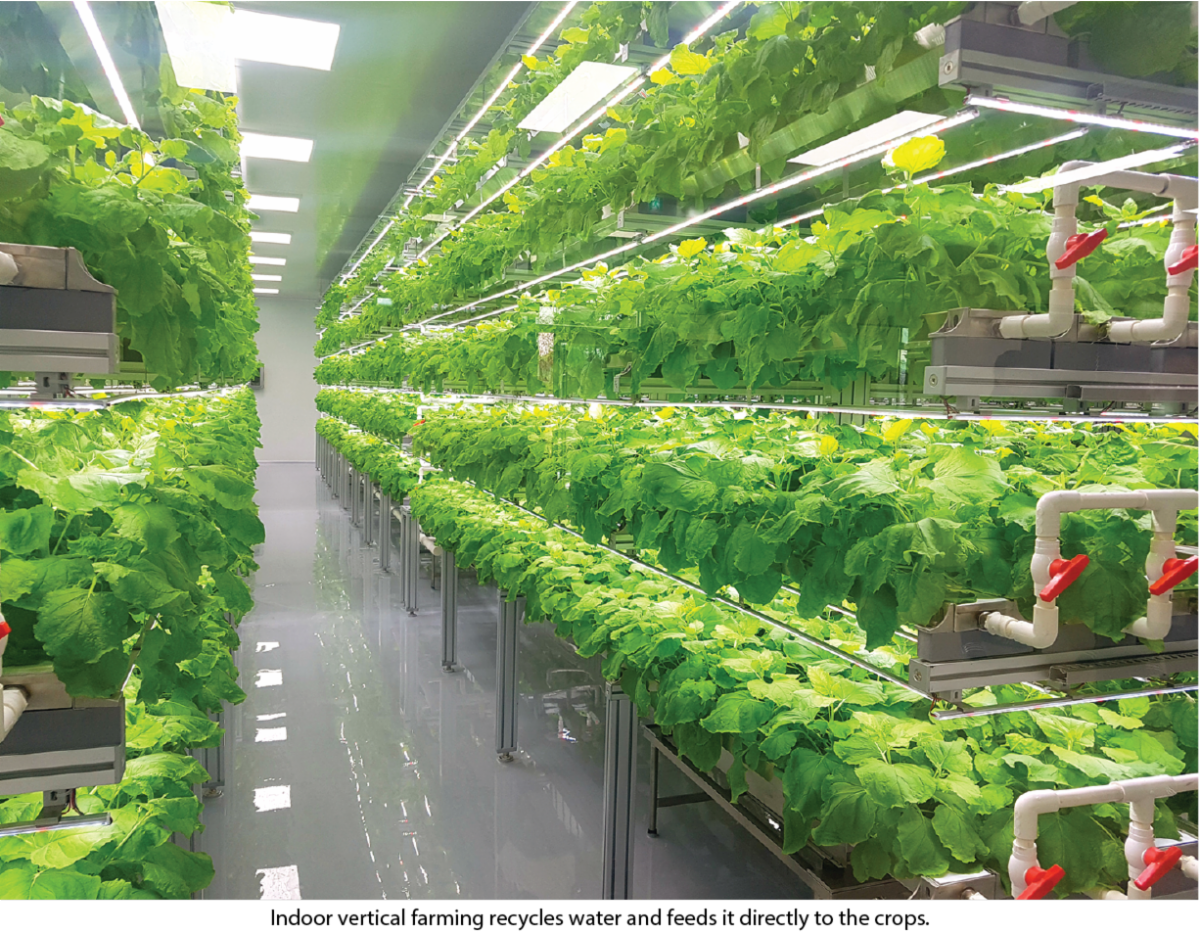
In its purest form, the concept of vertical farming can yield crops all year long, in any region, using up to 90% less water. The crops are planted, grown, and harvested in stacked horizontal trays. The optimum amount of water is used, the LED lights provide the proper “sunlight,” and the enclosed structure allows for fine-tuning the appropriate climate.
Water not used by the plants is collected at the bottom of every tray and reused—one of the chief benefits of vertical farming. The indoor environment minimizes water evaporation since what evaporates can even be reclaimed from the air with dehumidifying technology and then reused. There are even soil alternatives that more efficiently feed water to roots and let unused water drain for reclamation.
|
Controlling the climate and providing cost-effective lighting have been the biggest financial hurdles that have kept this model from really taking off. But that’s starting to change now. LED lights are getting less expensive and more efficient. The air conditioning industry has seen efficiency improvements too. And even though many early adopters of vertical farming failed to produce the kind of profits they were targeting, the agriculture technology world is starting to swing back to the idea.
Since an average of 60% of every meal is not produced locally, and often imported internationally, it’s easy to see that if you could produce more food locally that was typically grown in other countries and areas, it could ease supply chain risks, and dramatically cut transportation costs. It could also keep out-of-season costs down, since the “season” can be simulated year-round.
During the early 20th century, American geologist Gilbert Ellis Bailey was the first to actually coin the term “Vertical Farming,” but his idea was to use explosives and dig further into the ground and farm in a subterranean environment. He believed that digging was the solution to developing more farming areas. But Dr. Despommier’s concept of stackable trays seems to be the idea that the agri–tech industry is latching onto.
Some produce items are easier to grow in a vertical environment than others. Leafy vegetables have been the easiest, but root vegetables are also good. Tree fruits and wheat provide challenges, due to the size of the environment and volumes needed to yield a useful crop. Traditional farming methods will not be replaced entirely by vertical farming; however, it does show a promising means to supplement the food supply, increase seasonal availability, and reduce transportation and importing costs. What was once a futuristic idea is now becoming a reality.
|
|
The small wisdom is like water in a glass: clear, transparent, pure. The great wisdom is like the water in the sea: dark, mysterious, impenetrable.
Rabindranath Tagore
|
|
3170 Reps Miller Rd NW,
Suite 190, Norcross, GA 30071
1-877-993-1911
|
|
|
|
|
|
|
|