Visit our Website

WOW!


Cynthia Barnett, author of Sound of the Sea: Seashells and the Fate of the Oceans, writes, "Seashells are the most-collected naturalia along with rocks: easier to amass than butterflies and more affordable than gemstones. They are collected by children and by kings."


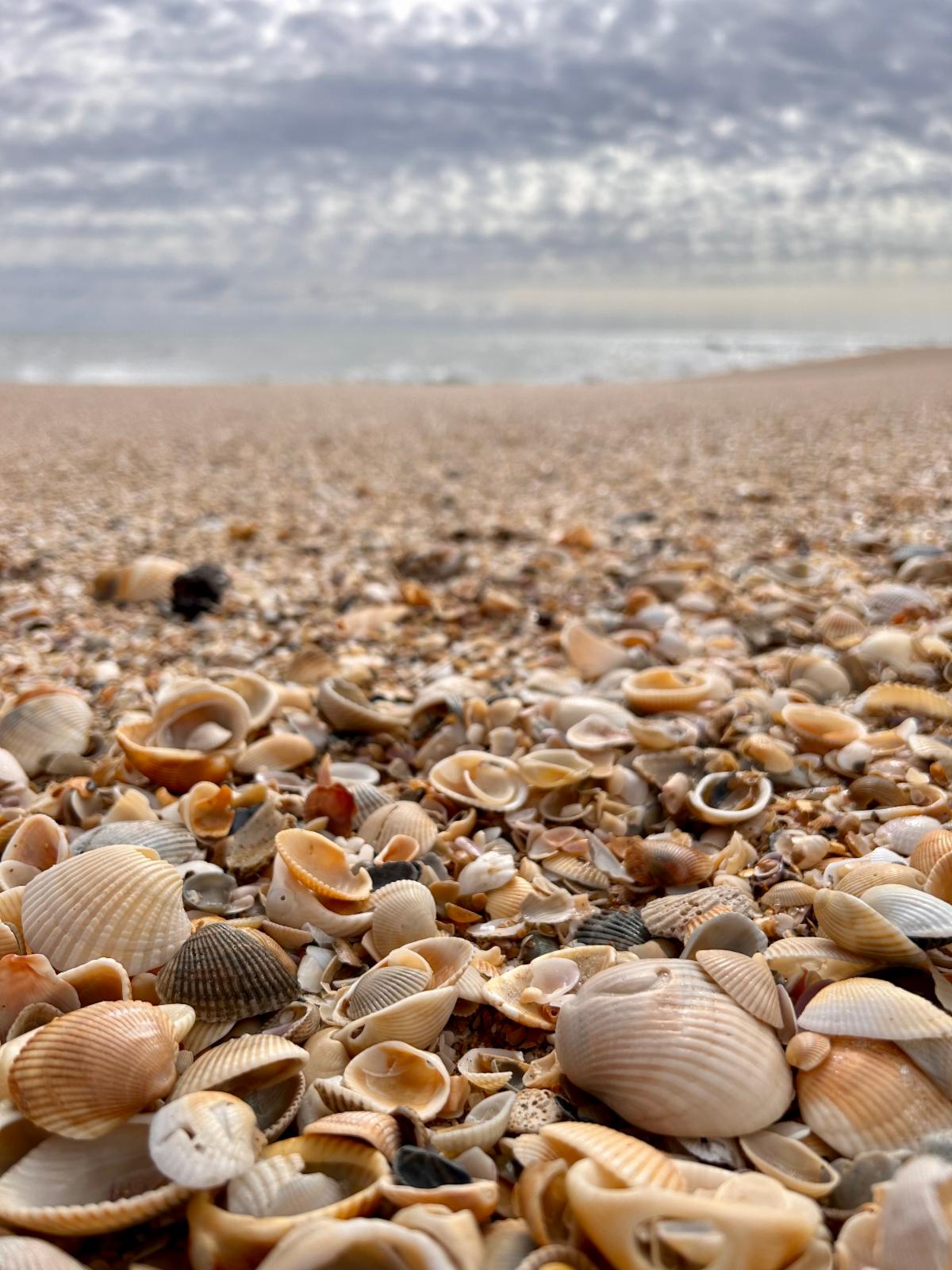
Shoreline treasures like conch, abalone, and scallop shells may tug at us like a retreating tide bringing forth our questions about the world around and within us, prompting us to ponder, "What if the seashells we encounter hold the untold stories of our lives, both the beautiful and the broken?"


Which shells would you pick up, hold in your hand, and give attention to? Which might you fling back into the sea or arrange in a summer tablescape? Maybe you'd place one on your vanity, a vessel for a pair of pearl earrings. Or would you carry a shell in your pocket, its grooves a soothing guide for your fingers during moments of unease? After all, the ridges of a seashell tell a story of its growth and resilience.


Mary Lynn Rauter took this month's photograph. Revisiting it, Mary mentioned the calm and naturalistic awe she experienced at the beach and how the beauty of the earth, oceans, and sky can be captured in a single photograph. It is a reminder that sometimes we don't need to pick up the shells or questions but rather gaze at the glory of nature, finding peace in the simple act of observation.

MAKE A HUMAN-HABITAT CONNECTION


Seashells were money before coin, jewelry before gems, art before canvas. - CYNTHIA BARNETT


Consider the above quote by the environmental journalist who authored Sound of the Sea: Seashells and the Fate of the Oceans which was named a top science book by NPR's Science Fridays. Then consider one or more of the following prompts:


  • Recall a priceless memory that brings you peace and calm in trying times.


  • Which of your life's stories can be worn like jewelry to remind you of your inherent worth?


  • Ponder a complex memory as you would a piece of art, taking note of how light appears among the painting's shadows to give it depth and meaning.

TURTLE MOUND. Our featured photograph was taken a few miles from Florida's Turtle Mound, part of the Canaveral National Seashore Park. At 50 feet high and containing 33,000 cubic yards of oyster shells, the hillock holds the unwritten story of the Timucuan people who lived along the coast. Although many such mounds were excavated, by protecting Turtle Mound, more insight will be gained into the Timucuan people's way of life.

Summer Shores. Whether or not your summer schedule or bucket list includes visiting a beach in the United States or abroad, take a two-minute deep dive with the Nature Conservancy on the importance of our world's blue carbon here.


Sizzling Summer. Enjoy the cooler side of Southern Nevada this summer with outdoor events such as Spring Mountain Ranch's Super Summer Theatre. Or check out the hiking, educational, and volunteer opportunities scheduled at Mt. Charleston.


Viva La Art! Beat the heat this summer by heading indoors to visit County and City galleries or exhibits at The Cosmopolitan and Wynn Las Vegas. Also, stay tuned for an invite to "Who are the Species in Your Neighborhood?," an art project tied to The Compass mission, dedicated to Nevada wildlife, and supported by the Nevada Arts Council and National Endowment of the Arts.

THE COMPASS


The Compass is an emerging geographic, archetypal community asset supporting the mutual thriving of humans, habitats, and economies. It envisions places for grounding in and with nature. These places — Compass Points — are fashioned of flat rocks etched with the invitation to Be Still and core value words like hope, courage, compassion, and peace that provide opportunities for rest, reflection, and renewal while also nurturing an appreciation of and attentiveness to the well-being of the natural world.


Every seashell has a story. JACK BAUER

X Share This Email
LinkedIn Share This Email

Join us on social media by following the links below.

Facebook  Instagram