Weekly Digest Number 35 - August 31, 2021 |
|
(Editor's Note: This article is reprinted from the RWU newsletter, The Highball, Summer 2021 issue) |
|
Citizens’ Groups Join with Labor to Form Nevada Rail Coalition |
|
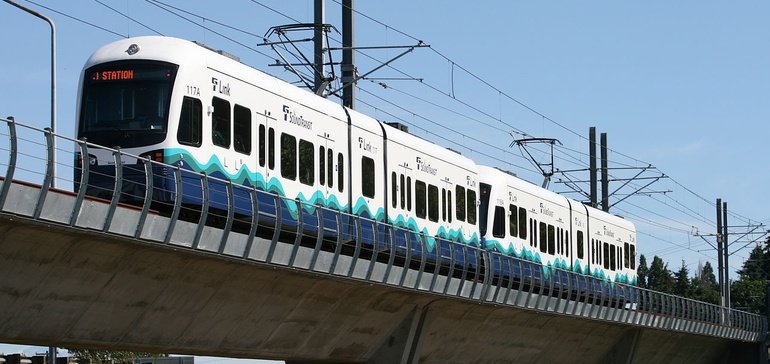
On June 21st, Railroad Workers United (RWU) participated in the Founding of the Nevada Rail Coalition. Two dozen participants representing a dozen organizations were present to discuss how to move rail – both passenger and freight – forward in the Silver State.
Given global, national and state developments in recent years, the organizers felt that the current moment is an opportune one for citizens to push for rail expansion all across the U.S., particularly in Nevada. Like elsewhere, Nevadans are increasingly subject to crowded and crumbling highways, increasing motorist fatalities, traffic jams and delays, skyrocketing gas and insurance prices, poor air quality and a lack of transportation options. Young people here, as elsewhere, are less interested in automobiles than were previous generations, and are increasingly looking to bicycles, busses, trollies and trains in order to connect.
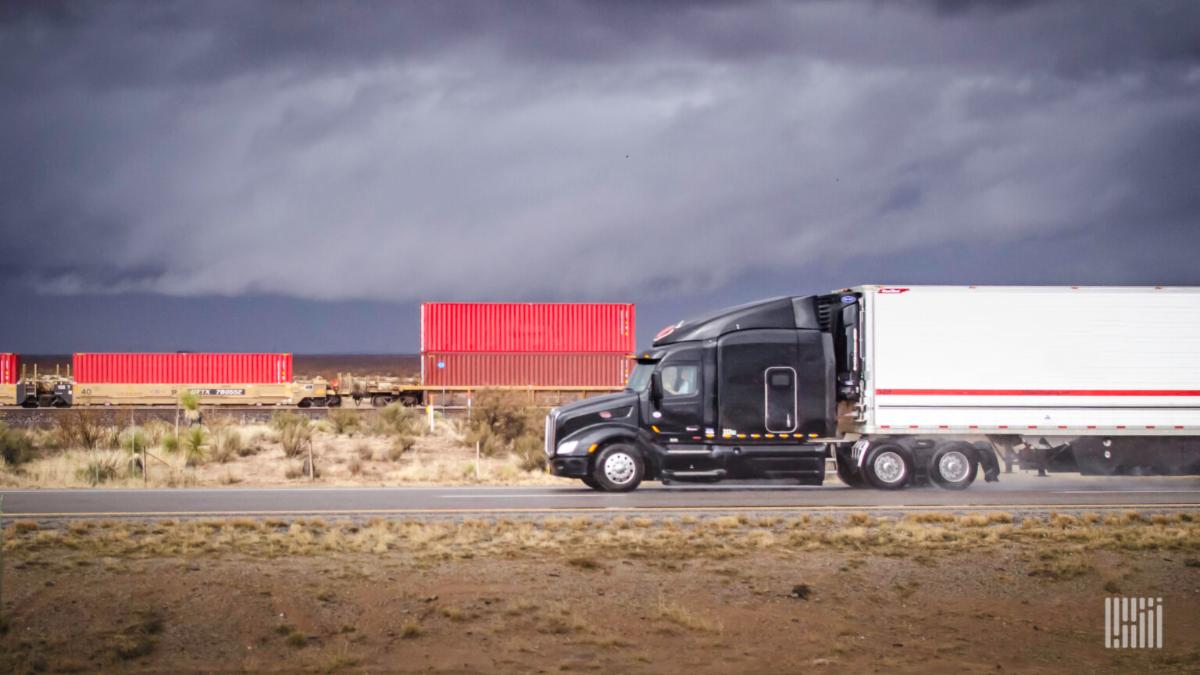
In addition, given its geographic location adjacent to the world’s 8th biggest economy – California – a vast amount of freight traverses the state going to and coming from the Golden State, the vast majority of which simply crosses the state in transit. Much of this through freight goes by truck, and there is reason to believe that a chunk of that could be routed via rail. In addition, very few carloads that originate/arrive in Nevada now go by rail, but currently travel in trucks, polluting the air, crowding both highways and city streets, and pummeling the state’s infrastructure. Add to this the concerns of climate change amidst massive wildfires, heatwaves, and ongoing drought, and the state is ready for a change in transportation policy. Enter the Nevada State Rail Plan.
|
|
(Editor's Note: Considering what a horrendous job the Class One carriers have done the last few months with the post pandemic demand, one can only imagine what is coming for "Peak Season", just around the corner.) |
|
Peak Season: Let the Chaos Commence
Multiple railroads had more than 20 miles of trains stuck near Chicago recently
|
|
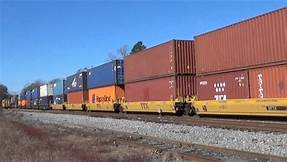
Freight markets have entered their second year of extreme dislocation, brought on by record consumer spending and a transportation network that doesn’t have the labor or equipment to fill the need.
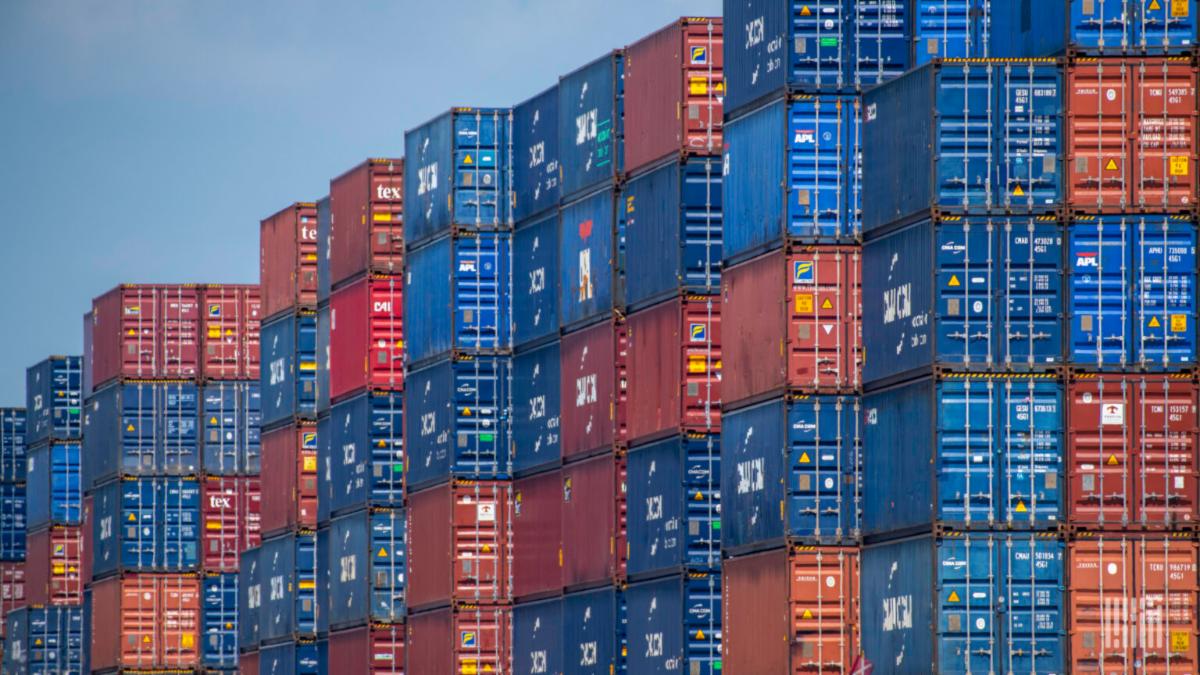
A lack of openings on ocean sailing schedules, ships waiting longer to berth at the ports and delays unloading the freight once it has landed are some of the front-end issues facing the transportation industry. Once freight is routed inland, a chicken-and-egg scenario is playing out between container/chassis scarcity and slow rail service, with each causing further detriment to the other. Add in labor headwinds throughout all phases of the supply chain, notably difficulties finding truck drivers and warehouse workers, and the storm for freight delivery is near perfect.
The National Retail Federation said earlier this month inbound twenty-foot equivalent units would again break a recently established monthly record. The group is calling for August TEUs to increase 12.6% year-over-year at the nation’s largest retail container ports to 2.37 million, which would surpass the record just set in May. “August is the beginning of the ‘peak season,’ when retailers stock up on holiday merchandise each year,” the report stated. “Many retailers are moving up their shipments this year as part of their risk-mitigation strategies to ensure that sufficient inventory will be available during the holidays.”
|
|
'Nobody Seems to be Giving any Answers': Questions Linger for Family of CN Rail Employee Who Died 1 year Ago |
|
Karamjit Singh struggles daily with the loss of his son, and the lack of information he’s been given as to how and why he died. “It’s tough,” he told CTV News Vancouver. “Nobody seems to be giving any answers.” Singh was in Cambodia when his ex-wife called to tell him his son, Jasvinder Riar, died while at work for CN Rail. It happened on June 1, 2020. But what exactly lead to his death is still a mystery to the family. “It’s been over a year now,” said Singh. “When I call the coroners, they say, 'Oh we are still waiting for CN report.' When I call CN, CN say, 'Oh we are still waiting for coroners.'"
All he’s been told by the BC Coroners' Service is that Riar suffered a blunt force injury to the chest. Riar worked as a conductor and was also a new father at the time of his death. He had a son of his own, just nine-months-old. “To lose the only son, it’s tough. I just need answers what happened to him, what happened to him on that day," Singh said. ... “There’s few other accidents that have happened at CN rail, and I think CN rail should be upfront with what happened to not only my son, but there’s a lot of kids who is gone. And I think every family member needs to know what happened,” said Singh. “CN just cannot leave things hanging as another statistic. No it’s not, that’s my son.”
|
|
DOJ Picks Apart CSX-Pan Am Transaction |
|
In Aug. 26 comments filed with the Surface Transportation Board, the United States Department of Justice took issue with many aspects of the proposed CSX-Pan Am Railways merger, citing President Biden’s July 9 Executive Order, “Promoting Competition in the American Economy.”
An excerpt: “Through its investigation and enforcement activities against mergers that may violate the Clayton Antitrust Act, the Department [of Justice] has extensive experience crafting remedies to competitive concerns in a multitude of industries and contexts. In the Department’s view, the proposed remedies do not accord with best practices, and are less likely to succeed than the kinds of robust relief that the Department has sought in prior cases, and will not fully address the competitive concerns posed by the CSX-Pan Am transaction. The Department recommends that the [STB] instead consider imposing a structural remedy, such as a carefully crafted divestiture. Unlike the complicated contractual arrangements proposed by the parties, structural remedies tend to be cleaner, more efficient, more durable, and easier to enforce, and they reduce the likelihood of ongoing entanglements that can further harm competition.”
“Reading the whole document provides clues as to the general atmosphere surrounding transactions such as the CSX Massena Line sale to CN and the entire KCS transaction, not to mention future divestitures and changes of ownership,” notes Railway Age Contributing Editor Roy Blanchard. “The filing cites places where competition would be diminished rather than enhanced, and names conflicts of interest involving CSX, Genesee & Wyoming and Norfolk Southern. DOJ suggests that CSX divest itself of any interest in Pan Am Southern (PAS, the joint venture of Pan Am and NS). Similarly, DOJ says that somebody other than Genesee & Wyoming operate the White River Jct. to New Haven PAS segment, given Genesee & Wyoming’s ownership of the New England Central and Connecticut Southern.”
|
|
Editor's Note: In case you have not noticed, there is a groundswell of support for rail in this country - urban and rural, multiracial, cross-generational, and bipartisan. Whether or not this translates into more trains is a political question. Rail workers and our unions have a lot riding on the success of this movement. We encourage all rails and rail unions to get involved in this struggle!) |
|
Should the US Invest in More Train Routes? |
|
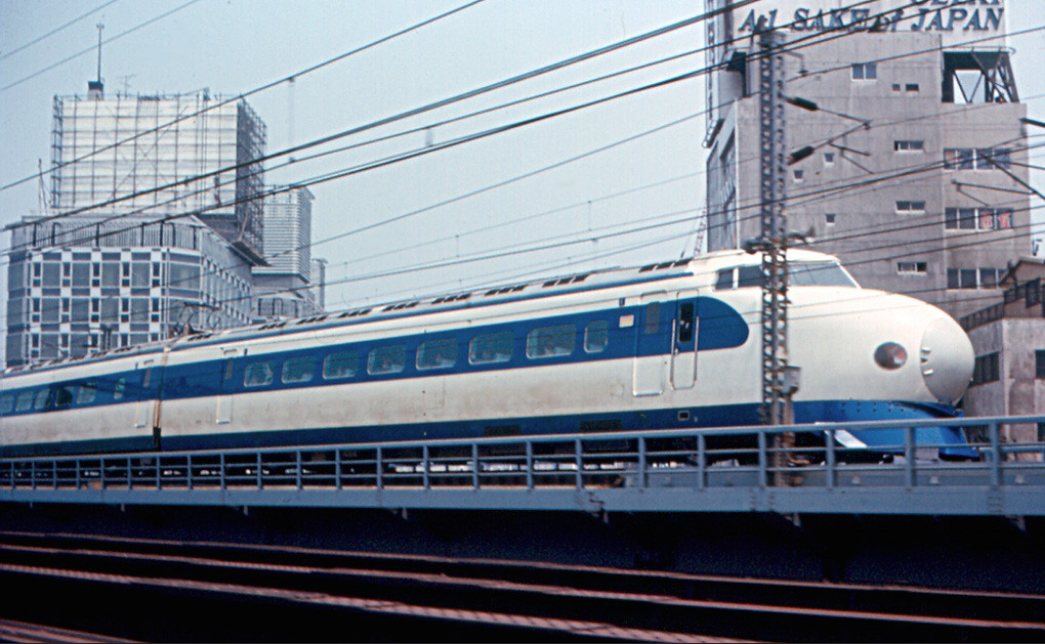
It’s no secret that the U.S. lags behind many parts of the world in regard to train travel. Compare a map of passenger rail lines in the U.S. to Europe and many regions in Asia, and it’s clear our passenger rail infrastructure is lacking.
But why is this the case, and should the U.S. be doing more to catch up to the rest of the world when it comes to train travel?
‘Car culture’ in the US
A common answer to the first question is that the U.S. has a “car culture.”
As someone who only recently gave up my car when I moved to New York City, I agree with that. Even in heavily populated metro areas across the country, people often still drive. I lived in Charlotte — which is far from a small town — for three years, and most people drove.
However, there’s a reason we have a car culture in America — simply put, we paid for it. “We spent decades, many decades, subsidizing other modes of transportation and not subsidizing rail,” Jim Mathews, president and CEO of the Rail Passengers Association, told TPG. “And any first-year freshmen student in economics will tell you that if you have something that’s subsidized competing with something that’s not subsidized, the subsidized thing is going to win.”
|
|
(Editor's Note: While it is great to see both Republicans and Democrats jumping aboard this train, we hope to see these folks jumping on board efforts to remake the existing rail network as well into one that better serves shippers and passengers and the nation. See the recent RWU Editorial on this question HERE)
|
|
Finish the Bullet Train, Say Past Transportation Secretaries |
|
Former Republican and Democratic transportation leaders agree: California and the rest of the U.S. needs high-speed rail
Past transportation secretaries Ray LaHood, Anthony Foxx, and Norman Mineta, who served under both Republican and Democratic presidential administrations, have underscored the need for the United States to build, and for California to finish, high-speed rail systems between major cities. From “High-speed rail is a win-win for America,” an editorial co-authored by the three and published Monday in the Chicago Tribune: "…we believe that high-speed rail is the single most effective way to move America’s transportation system into the 21st century. A robust network of high-speed rail corridors with high-performance connections is the most powerful strategy to dramatically reduce climate pollution while reducing traffic congestion and improving intercity travel."
They specifically called out their support for California’s project, now under construction, pointing out that when completed it will have the capacity of six highway lanes, 91 airport gates, and two new runways.
|
|
(Editor's Note: Here is one of many reasons why making better use of the largely underutilized existing rail network we already have (nearly 150,000 miles) probably makes more sense economically and politically than building new infrastructure from scratch. See the RWU endorsed idea HERE and our Resolution on Rail Improvement and Development HERE.)
|
|
US Rail Projects Take Longer, Cost More Than Those in Other Countries |
|
High labor costs, change orders and other factors add millions of dollars to budgets and slow down timelines on U.S. projects, according to a new report
U.S. rail projects take longer to complete and are more expensive than similar projects built in other countries, a new report has found.
American rail projects with minimal tunneling take about six months longer to complete than similar non-U.S. projects, while all-underground construction can take nearly a year and a half longer to build than abroad, according to an analysis by the Eno Center for Transportation.
In addition, domestic rail-transit projects cost about 50% more on average on a per-mile basis than in Europe and Canada, a number that rises to roughly 250% when New York City's disproportionately expensive projects are included.
Tunneled projects are not only less expensive abroad, but also more common, the report said. Just under 12% of U.S. rail transit projects were constructed primarily below ground, compared to 37% of non-U.S. projects.
Many international projects constructed below grade have similar costs to those that are at-grade in the United States. For example, a 9.3-mile-long Metro Line in Toulouse, France, was built entirely underground at a cost of about $176 million per mile while Houston Metro's 3.2-mile-long Green Line is all at-grade and cost $223 million per mile.
|
|
(Editor's Note: With consumer demand for goods at an all-time high, and the trucking industry booming, one cannot help but wonder, what the hell is wrong with the U.S. rail industry? Could it possibly have anything to do with how these railroads are being managed?) |
|
U.S. Rail Traffic Total Slipped in Week 33 |
|
U.S. railroads hauled 501,273 carloads and intermodal units during the week ending Aug. 21, a 2.6% decrease compared with the same week last year, according to Association of American Railroads (AAR) data. Total carloads ticked up 0.4% to 230,754 units, while intermodal volume dipped 5.1% to 270,519 containers and trailers. Five of the 10 carload commodity groups tracked by the AAR posted increases during the week compared with the same week in 2020. They included metallic ores and metals, up 4,551 carloads to 23,522; nonmetallic minerals, up 2,802 carloads to 33,109; and miscellaneous carloads, up 1,042 carloads to 10,653.
Commodity groups that posted decreases included grain, down 4,483 carloads to 18,098; motor vehicles and parts, down 2,513 carloads to 13,974; and farm products excl. grain, and food, down 1,042 carloads to 14,906.
Meanwhile, Canadian railroads reported 74,355 carloads for the week, up 3.1%, and 73,855 intermodal units, up 7.4%. Mexican railroads logged 19,849 carloads, down 6.1%, and 15,339 intermodal units, down 15.2%.
|
|
(Editor's Note: These forward thinking projects have paid off for generations. This is the type of mindset we need today in order to move forward into a new rail future in North America.) |
|
Railroad Historian Says Nation’s Infrastructure Rests on the Legacy of 19th-Century Engineers |
|
After looking at railroad tunnels under the Hudson River between New York and Jersey recently, Transportation Secretary Pete Buttigieg emerged to tell the news media that what he had seen was state-of-the-art engineering.
“Of 1910,” he said. “It was the best construction that you could possibly get 110 years ago.”
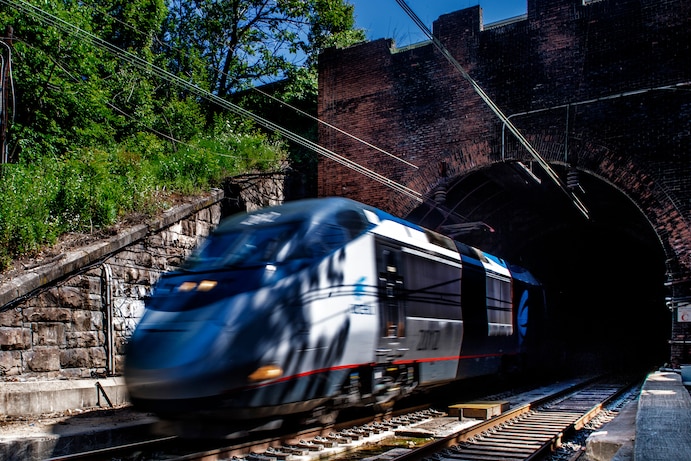
Up and down what now forms Amtrak’s Northeast Corridor between Washington and Boston, passengers are living off the engineering feats and investments of railroads in the early 20th century — and even earlier in some cases. Those aging tunnels and stations have come to symbolize how far the nation has fallen on infrastructure spending, but a bipartisan deal that moved through the Senate would see the federal government step in with its biggest rail investment in decades.
Historian Dan Cupper, editor of the journal Railroad History and a former railroad engineer, talked to The Washington Post about how those earlier builders saw the world, what they might have thought about their projects still being used today and how the federal government’s growing role in funding transportation eventually undercut their achievements.
The Post: There was this campaign in the late 19th, early 20th century to do these upgrades. Take us up from Washington toward New York and walk us through the big things that had to be built to improve that corridor. And for the railroads that were undertaking these investments, what was it that they were trying to achieve?
Dan Cupper: The primary railroad was the Pennsylvania Railroad, which was from Washington to New York. The builders of the 19th and early 20th century were looking to stay ahead of growing demand for their passenger rail services. And in fact, demand outstripped the capacity in many places. The station in Washington was on the Mall at one point, if you can believe that, and they needed a better way to get trains out of the streets. So they built Washington Union Station in 1908 — millions and millions of dollars to clean up the city and get the trains in a proper place.
They were thinking in terms of “go big or go home.” And so when they built these items of infrastructure going up the corridor, that’s what they had in mind.
|
|
(Editor's Note: This is just one of possibly hundreds of local and regional projects that need to be completed at rail chokepoints around the nation. But one cannot help but ask, why do so many of them fall to the taxpayers to implement? It is not like the rail carriers are not making record profits and have done so for 20 years or more. Where is the money for capital improvement projects? Oh yeah, it goes for stock buy-backs, shareholder dividends, CEO pay increases, etc.) |
|
Illinois DOT Announces Project to Untangle Rail Network Near St. Louis |
|
The project involves reconfiguring an outdated network of rail tracks and signals and replacing a 97-year-old trackside control tower in Mitchell, Illinois.
"Metro East is one of the country's critical freight and travel hubs. These improvements will improve quality of life and make the area an even more attractive location for business activity for years to come," said Illinois Transportation Secretary Omer Osman in a press release.
The project will streamline rail operations by untangling a complex system of tracks, signals and switches where four lines intersect at one of the most congested areas in the state, near Mitchell, starting this week. The Lenox Tower, a two-story facility that used antiquated switching machinery to control train traffic, was taken down in May, with operations transferred to a UP dispatching center.
When completed this fall, the improvements will increase the speed of freight train operations and decrease traffic congestion on local roads, resulting in fewer blocked crossings and reducing passenger service travel times, IDOT officials said.
Up to 35 trains pass through the location daily.
|
|
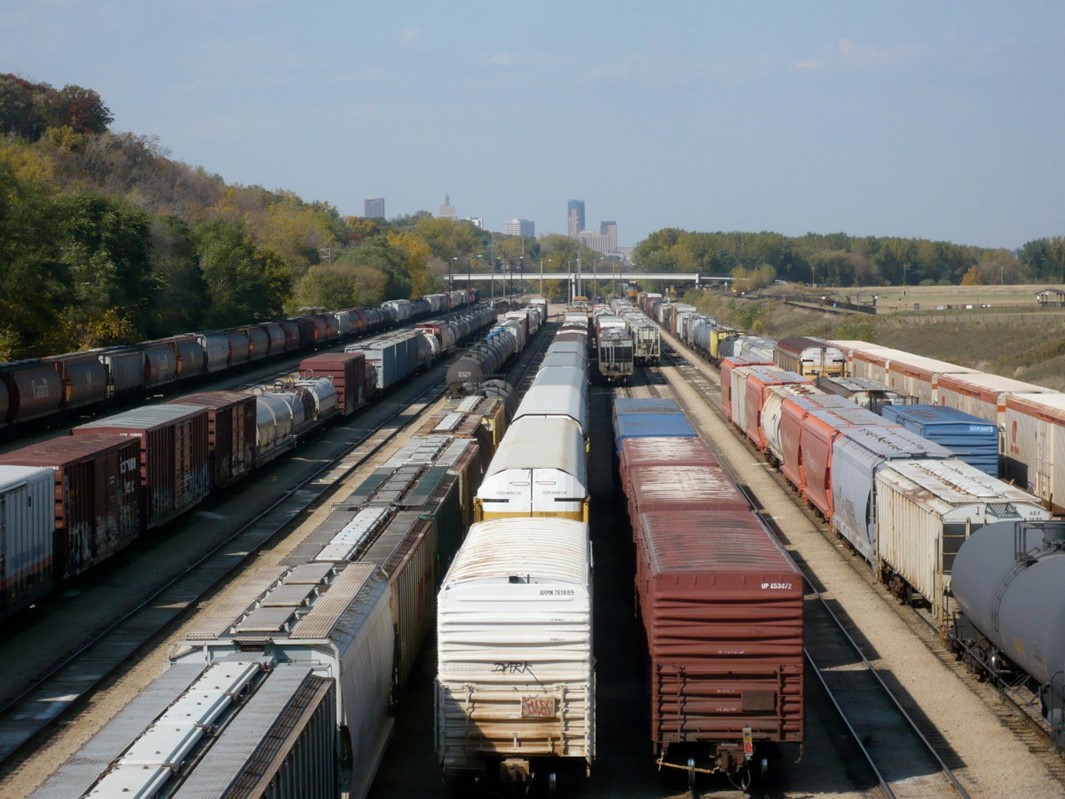
Three-train Crash Spilled Estimated 1,200 Gallons of Diesel Fuel Near Mississippi River in St. Paul |
|
A three-train crash by the freight yards near Warner and Childs Road in St. Paul on Wednesday spilled approximately 1,200 gallons of diesel fuel, leading Canadian Pacific Railway workers to dig protective trenches and deploy containment booms on the Mississippi River.
The booms were placed as a precaution, and crews did not observe any fuel on the waterway, said Canadian Pacific spokesman Andy Cummings in an email.
The fuel spilled from the lead Canadian Pacific locomotive involved in the crash, which took place around 5 p.m. Wednesday. Workers remain on site recovering spilled fuel.
St. Paul City Council Member Jane Prince said Friday she had been in touch with officials at the Wakan Tipi/Lower Phalen Creek Project, who saw crews digging trenches to stop the diesel flowing west from the crash site toward the river.
|
|
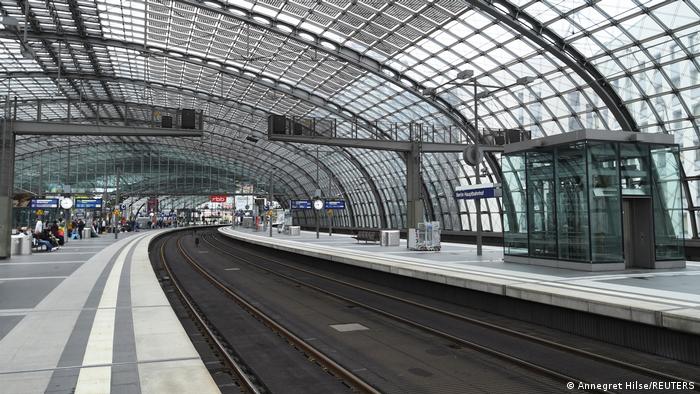
German Rail Strike: Union Extends Action to Passenger Trains |
|
This is the second time the union's workers have walked out this year in a bitter dispute with Deutsche Bahn over wages, pensions and working conditions. The strike began at 2 a.m. local time (00:00 UTC/GMT) after the union rejected an offer by the state-owned rail operator to expand the scope of negotiations.
In addition to drivers, other railway workers have also been called on to walk out. The action will last 48 hours until 2 a.m. Wednesday. "In regional and suburban rail traffic, DB is aiming for about 40% of train traffic," Deutsche Bahn said in a statement. "However, the number of trains will vary greatly depending on the region." "A precise assessment of the effects is only possible after the start of operations in the morning," it said. The GDL has been on strike since Saturday which until Monday only affected freight services. A two-day strike earlier this month disrupted both long-distance travel as well as many major cities' commuter rail lines.
|
|
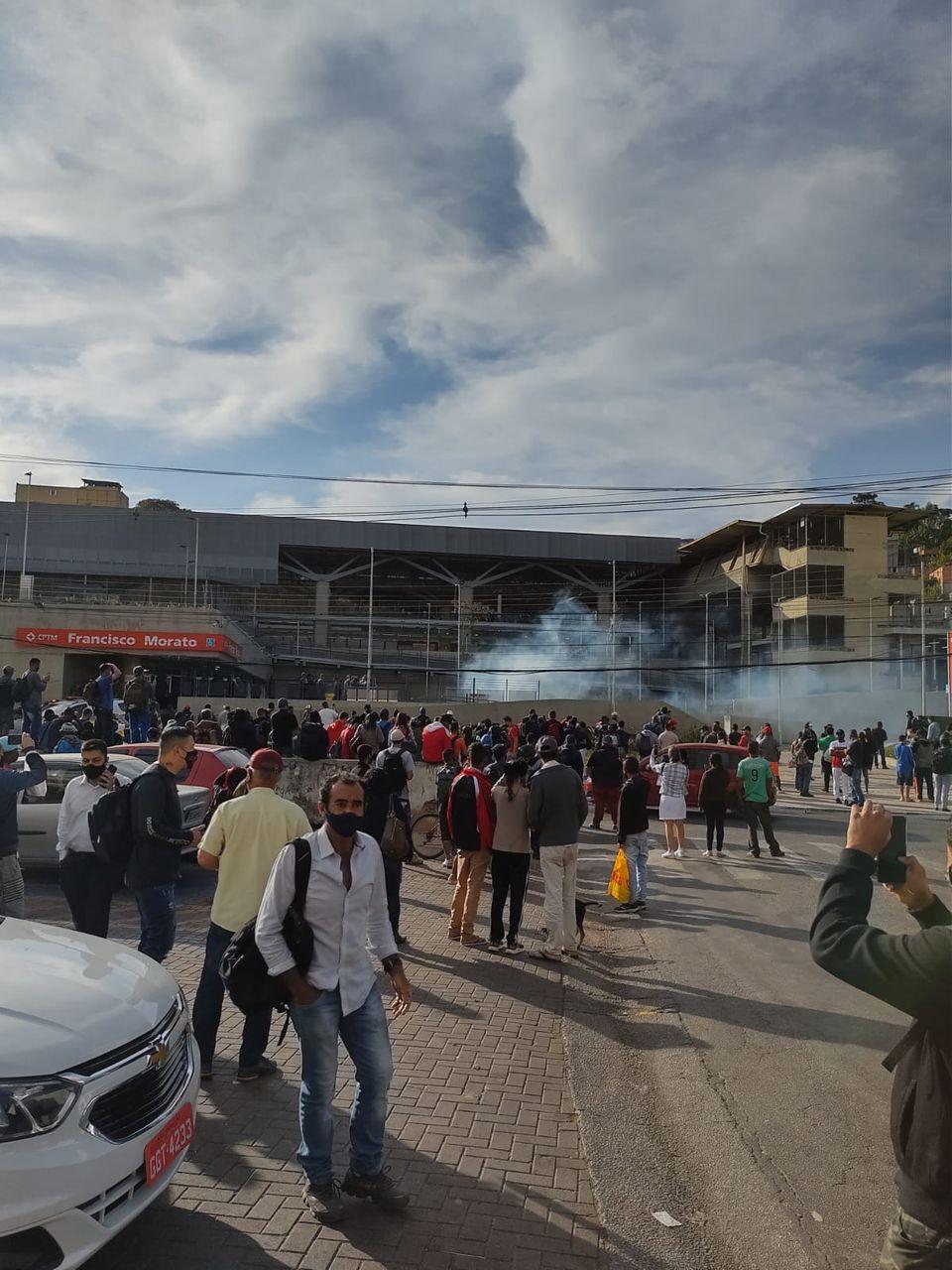
Brazil’s São Paulo Railway Workers are on Strike |
|
The member organisations of the International Labor Network Solidarity and Struggle and the Rail Without Borders Network support the striking railway workers in Sao Paulo
CPTM’s (Metropolitan Trains Company of São Paulo) railway workers of lines 11 - Coral, 12 - Safira and 13 - Jade decided in an assembly to go on strike on Tuesday, August 24. São Paulo Railway workers are demanding salary reinstatement for 2020/2021 and 2021/2022 fiscal years.
The strike was voted at a meeting held on Monday, August 23. The Workers Union of Railway Companies in the Central Zone of Brazil represents approximately 2,500 employees.
Railway workers are entering their third year without a readjustment of their salaries, accumulating a wage deflation of more than 10 percent, which was the official inflation rate for this period. In addition, the company, which is managed by the São Paulo state government, has not paid workers what they are owed from a profit sharing plan.
The wage readjustment requested and authorized by São Paulo’s TRT-2 (Regional Labor Court 2nd Region) is 4% for 2020/2021 and 6.36 for 2021/2022. The strike is to force the company - CPTM, and the government of São Paulo to pay the wages correction.
|
|
|
|
|
|
|