 |
|
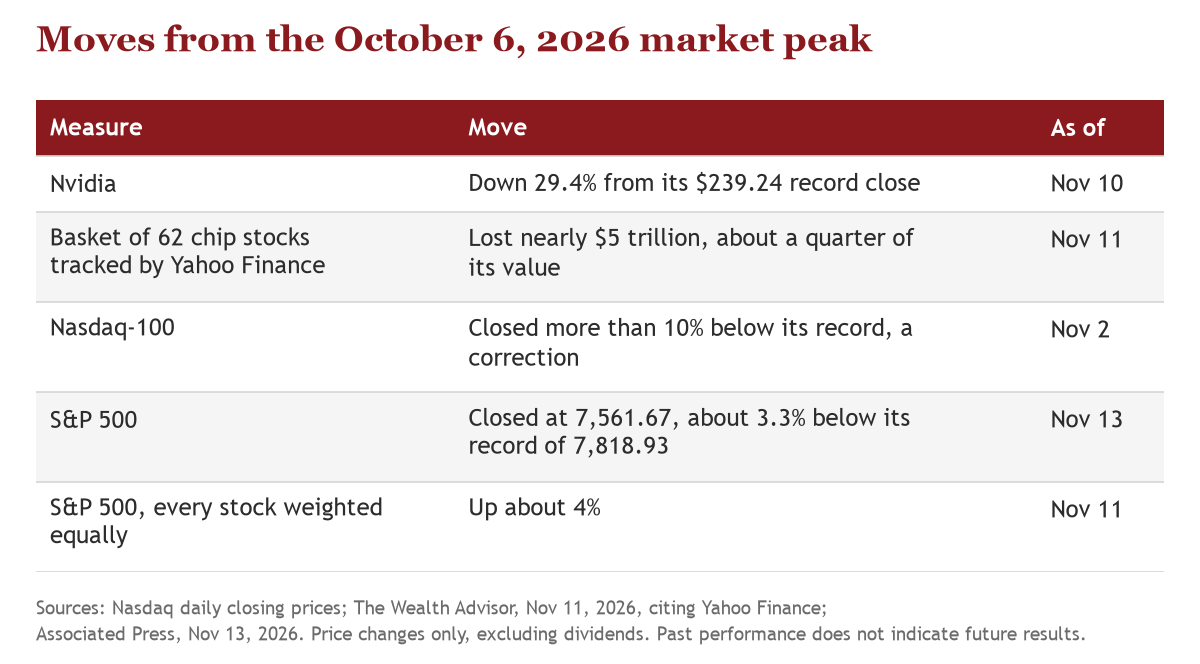
A memo from Jim Kilgore, November 15, 2026 The AI Trade After Nvidia’s DeclineWhat the last six weeks changed, and whose money is paying for the buildout. References are listed at the end. Why I am writing about this againOn September 3, I published a memo about Nvidia. I told my readers then that I have watched NVDA every day since I read an Investor's Business Daily article years ago about its chips going into self-driving cars, and I am still watching. Near the end of that memo, I listed things I would not treat as a warning sign. One of them was a 25% drop in the stock on general nervousness about artificial intelligence. That drop showed up. Nvidia closed at a record $239.24 on October 6, and by November 10 it was down a little more than 29%. I still would not call that, by itself, a warning sign. What was not on my list was the founder leaving due to scandal. On November 12, Nvidia announced that Jensen Huang, who started the company and ran it for 33 years, had resigned as chief executive and left the board. It followed news reports about his relationship with a businesswoman whom U.S. intelligence officials suspect of passing information to Beijing. Colette Kress, the finance chief, is running the company for now. In September, I wrote about what Nvidia owed and what it had guaranteed. Many people have asked me some version of the same thing over the past few weeks. Is this the moment the whole AI story comes apart, or is it a sale? My educated answer is that I don't think either one is right, at least not yet. What I can do is walk through what has actually changed, not what the prices did, and tell you what I think the real question is now. Here is the shortest version I can give while including the facts. For two years, everyone argued about whether the demand for artificial intelligence was real. That argument is mostly over now, and the demand looks stronger than ever. The new question is harder to see from the outside: whose money is paying for the AI buildout, and what happens to that money if the payoff takes longer than promised? Where the selling landedThe headlines and media say the market fell. If you look closer, most of the damage centered on one group of companies.
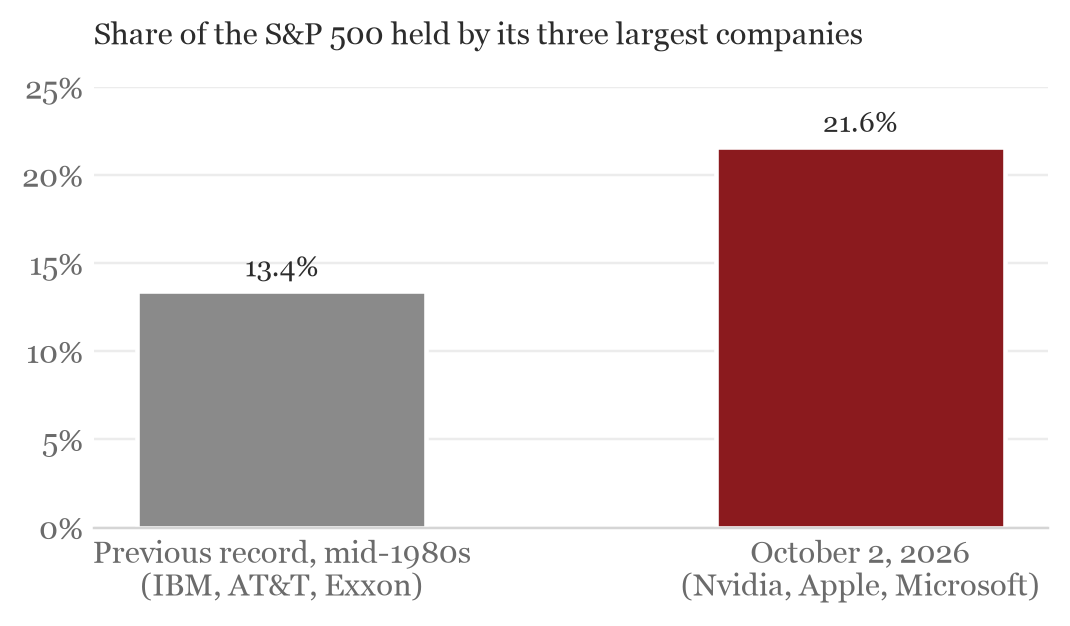
Compare the last two rows of that table for a minute. The S&P 500 you hear quoted on the news is weighted by company size, so a handful of the biggest technology companies move it more than the other 490 put together. In October, the three largest companies made up more than 21% of the index. The previous record was about 13%, back in the mid-1980s. Give every company an equal weight, and the picture flips: the average stock went up while the giants went down.
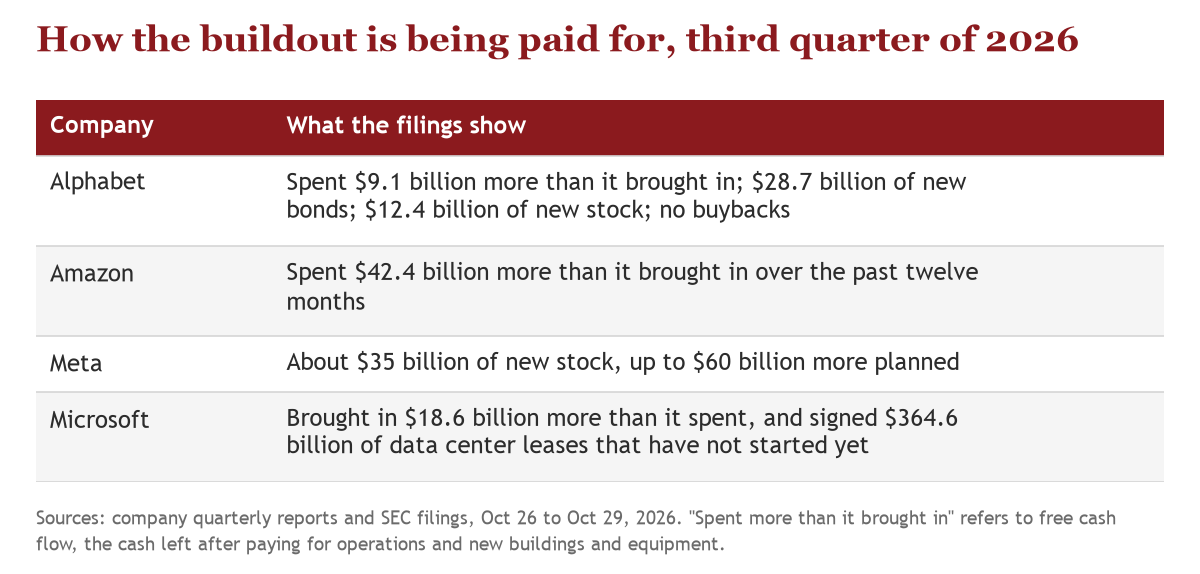
What this tells me as an investment professional is what kind of an event this is. A recession or a credit crisis takes everything down together. What we have had is a sharp markdown in the companies most tied to building artificial intelligence, while banks, health care and industrial companies kept going. That is less scary than the “Sky is falling” headlines make it sound. It is also a reminder of how much of an ordinary index fund now sits in that one group. What happened in October and NovemberA falling stock price is not news taken in isolation. Sometimes buyers just get tired. This time, though, four things happened close together that I think moved the price. Alphabet's quarter. On October 28, Google's parent company reported that its cloud business more than doubled, to $30.7 billion in revenue. That is about as good a sign of real demand as you will find, but it also spent $51.4 billion on buildings and equipment in three months, which left it $9.1 billion short after paying for everything; the second quarter in a row it came up short. To cover the gap, it borrowed $28.7 billion, sold about $12.4 billion of new stock and halted stock buybacks. Then its finance chief said spending will go up sharply again in 2027, and the stock fell about 10% after hours. Meta's stock sale. Two days earlier, Meta announced roughly $35 billion of new stock, with plans to sell up to $60 billion more next year. Reuters called it the largest stock sale in Meta's history, and it comes from a company that expects to spend $135 to $145 billion this year. A company sells new stock when it needs the money, which is worth noticing when the company doing the selling is one of the most profitable businesses in the world. The price of borrowed money. The 10-year Treasury rate, which is what the government pays to borrow for ten years and the starting point for most long-term loans, ended last week at 5.15%. The Federal Reserve raised short-term rates in September, held them steady on October 28, with two officials voting for another increase, and will meet again on December 9. Consumer prices rose 0.4% in October. Higher rates hurt these stocks twice. Most of what you pay for in an AI company is profit expected years from now, and higher rates make those future dollars worth less today. Higher rates also raise the cost of the borrowing that is now paying for the buildout. Nvidia's leadership. Nvidia had no announced succession plan for a founder who, by every account, made most of the big decisions himself. The stock lost more than $600 billion in value in the week he resigned, its sixth weekly decline in a row. None of the four things says people have stopped wanting artificial intelligence. Three of them are about money: how much is being spent, where it comes from, and what it costs to borrow. Who is paying for the buildoutThis is the change I think matters most, and it happened quietly over the last year or so. When the boom started, the biggest technology companies paid for it out of their own pockets. These are some of the most profitable businesses ever built, and a few hundred billion dollars of data centers came out of cash they already had. If that bet goes wrong, their shareholders take the hit, and nobody else gets hurt. That is no longer the whole story. The four largest cloud companies spent about $202 billion on buildings and equipment in the third quarter alone, up from about $165 billion three months earlier. By my calculations, their plans for this year add up to roughly $720 to $740 billion, and several analysts say next year will be higher. Spending at that pace has gotten ahead of what even these companies earn, so more of the money is now coming from outside: bonds, new stock and long-term leases.
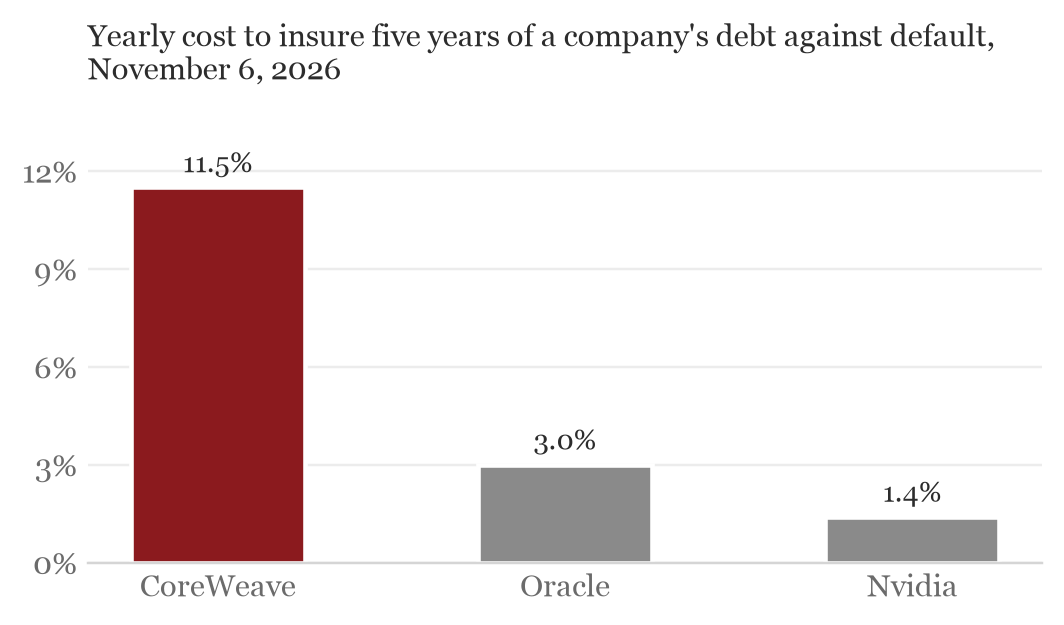
I would read Microsoft's row twice. A lease that has been signed but hasn't started yet doesn't show up as debt on the balance sheet, but it is still a promise to pay for twenty-odd years. Moody's estimates the biggest AI spenders, including Oracle and CoreWeave, had about $1.2 trillion of these lease commitments by the middle of this year. Often the data center sits inside a separate company, and the tech giant's lease lets that company borrow from insurers and pension funds at a strong credit rating. Meta's Hyperion data center was paid for partly this way, with $27.3 billion of bonds. The Bank for International Settlements, the central bank for central banks, published a paper on this on October 27, 2026. To be fair, its conclusion is measured: so far this borrowing has barely moved the bond market. The concern is what happens if the pace keeps up. In a bad outcome, the losses would land on insurers, funds and banks, not just on technology shareholders. Lenders have started to charge for that risk, and they are drawing a clear line. On November 6, it cost about 11.5% a year to insure CoreWeave's debt against default for five years, according to CNBC. CoreWeave rents out computing power and has borrowed heavily to do it. The same insurance cost about 3% a year for Oracle and about 1.4% for Nvidia. Lenders see a big difference between companies paying for this boom with their own profits and companies paying for it with other people's money. I think the lenders have correctly assessed the risk.
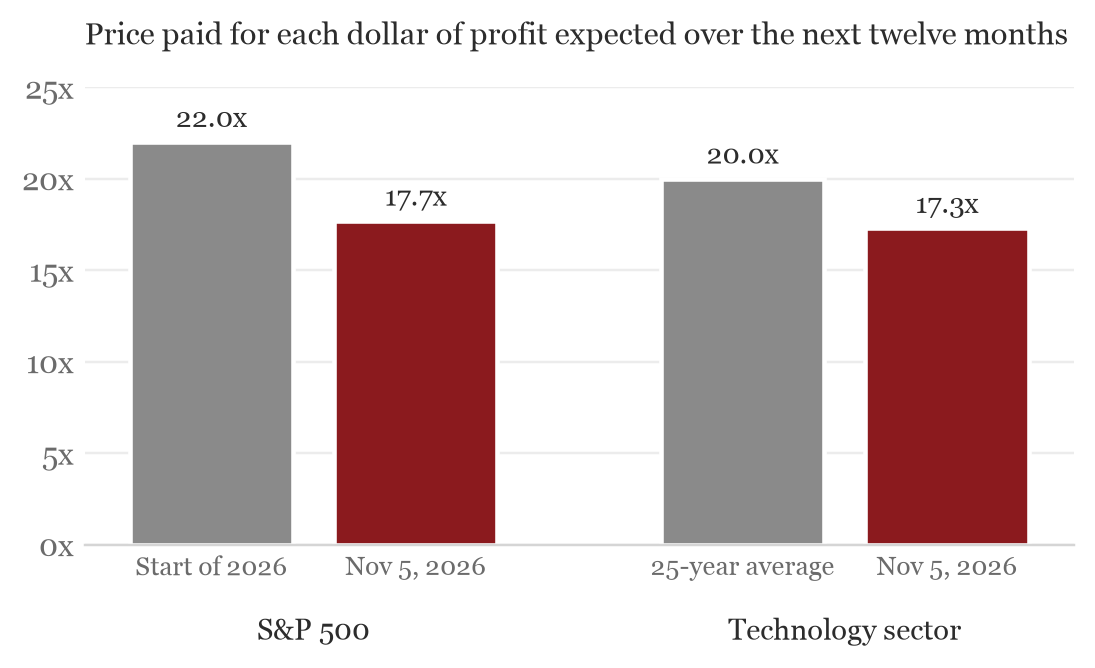
What the demand looks likeThe other side of this deserves its full argument, and as far as the demand, it is strong. The cloud businesses are growing faster than they were a year ago, not slower. Google Cloud grew 103% and Amazon's cloud business grew 39%, its fastest pace in nearly five years, while Microsoft reported $677 billion of signed future business, up 73%. Those are customers signing contracts and paying bills. The companies selling artificial intelligence to everyone else are growing faster than anything most people have seen in a business that size. Anthropic, which plans to begin trading on the Nasdaq this coming week, reported $17.0 billion of revenue for the quarter ended September 30, up from $1.4 billion a year earlier. It also lost $567 million on its operations that quarter, because the cost of the computing power behind its products grew even faster. That loss is the heart of the problem: demand is growing at an astonishing rate, and so is the cost of meeting it. The AI sellers spend most of what they take in on computing power, which is the cloud companies' revenue. The cloud companies spend it on chips, which is Nvidia's revenue. That works as long as more money keeps coming in at the top, from businesses and households paying for the finished product, than goes out at the bottom. Investors are also getting a bit more careful about the price they pay. OpenAI went into the fall looking for about $30 billion at a value near $1.4 trillion. Its first round on November 6 raised about $11 billion at $1.25 trillion. Anthropic's offering price range implies a value of roughly $1.2 trillion, well below the numbers floating around in September. People are still writing enormous checks, just at lower prices than two months ago. In a healthy stock market, that is how it is supposed to work. What the market is paying for earningsThis next data point surprised me. At the start of the year, the S&P 500 traded at 22.0 times the profits Wall Street expected over the next twelve months (P/E Ratio). On November 5, it traded at 17.7 times, the lowest in three years. The technology sector traded at 17.3 times, below its own 25-year average of 20.0.
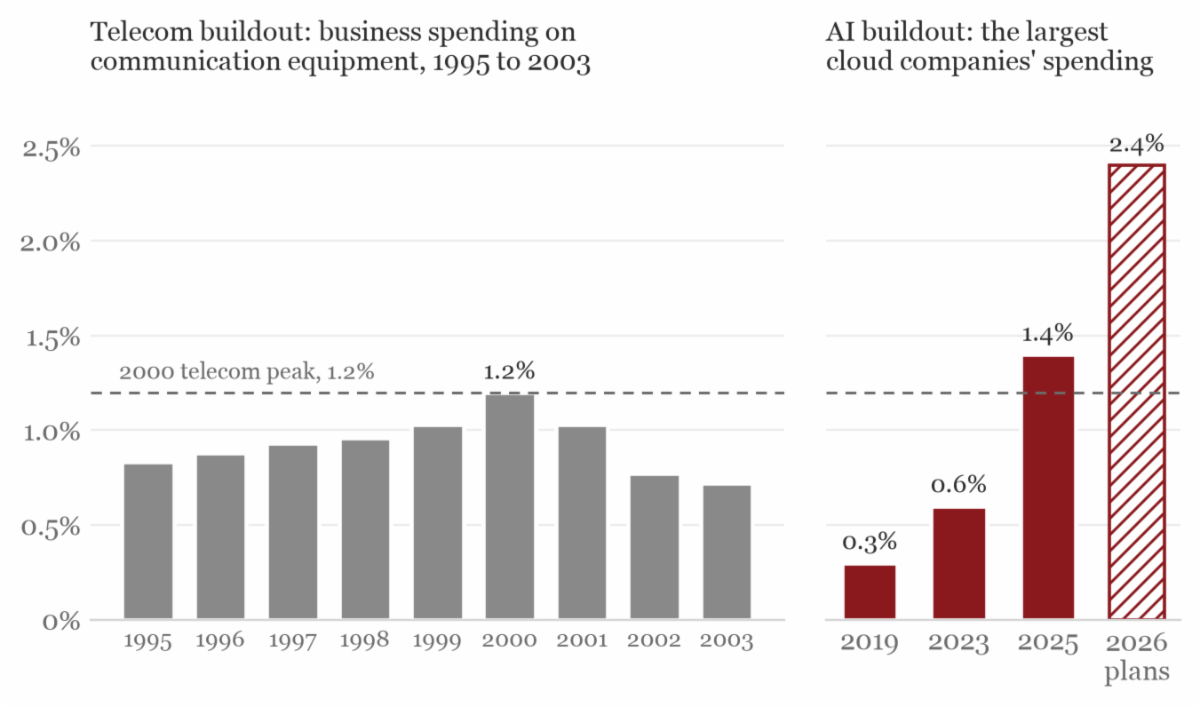
Prices did not collapse to get us there; the index was actually up 7.4% for the year on November 5, while expected profits rose 33.6%. It is the same thing I described with Nvidia in the September memo: profits grew so much faster than the price that the stock got cheaper even while it went up. Now Nvidia has gotten cheaper twice, once from rising profits and again from a falling price. So is the AI trade cheap? That depends on one assumption, because every one of those numbers is built on a forecast, and a stock at 17 times next year's profit is only cheap if next year's profit actually shows up. If a big piece of that profit depends on these same companies continuing to spend at this pace, the low number isn't a margin of safety. It may be market participants telling us they don't fully believe the forecast. What today's prices assumeFew people doubt that these are excellent businesses, but John Templeton, in his 1993 “16 Rules for Investment Success,” warned that “Even if the corporation is truly excellent, prices of its shares may be too high.” Rather than guess which way this goes, I find it more useful to ask what today's prices already have baked in. For the leaders in this group of AI standouts to be worth what they cost today, roughly these four things have to hold: 1. The largest cloud companies keep spending at or above this year's pace through 2027, as most of them have said they will. 2. The money to pay for it, whether from profits, bonds, stock sales, or long leases, stays available at a cost these companies can carry with the 10-year Treasury around 5%. 3. The equipment lasts long enough to pay for itself. A data center building can last decades, but the chips inside are usually replaced within a few years, and today's reported profits depend on how quickly their cost gets written off. 4. The businesses and people paying for finished AI products keep spending more, fast enough to cover everyone's costs underneath them. The first two are questions about the next twelve to eighteen months, and we will get real answers. The spending plans the big cloud companies give in late January and early February will tell us a lot. The fourth one nobody can answer yet, and it is the one everything else rests on. The telecom buildout of the 1990sThe comparison everyone reaches for is the telecom buildout of 1996 to 2001. I reached for it in September too, so the details are worth putting together now. After the Telecommunications Act of 1996, telecom companies took on enormous amounts of debt to lay fiber optic cable and buy the gear to run it. The demand forecasts were wildly optimistic. Four years after the bust, by the estimates Fortune cited last year, 85% to 95% of the fiber laid in the 1990s still sat unused. Much of the gear had been bought with money lent by the companies selling it: Lucent, Nortel, Motorola, Alcatel and Cisco all financed their own customers, and when those customers failed, the equipment makers lost twice. By the summer of 2002, 23 telecom companies had gone bankrupt and about $2 trillion of telecom stock market value was wiped out. The internet turned out to be every bit as important as promised, and the people who paid for the first round of it lost most of their money. The chart below puts the two buildouts on the same scale, as a share of the U.S. economy. Business spending on communication equipment peaked at 1.2% of GDP in 2000 and fell by about 40% over the next three years. The largest cloud companies surpassed that peak in 2025, and their plans for 2026 are roughly twice it. The comparison is not exact; it can’t be. The telecom figure counts only equipment bought by U.S. businesses, while the cloud figure counts everything these companies spend worldwide, including buildings, so treat the gap as a rough measure of scale rather than a precise one.
The uneasy view today lines up with that closely enough to make me cautious. Spending is running ahead of the revenue that has to pay for it, and the borrowing is moving into financial structures that are hard to see. Suppliers are financing customers: in September, I described Nvidia guaranteeing its customers' data center leases, and last month Nvidia put $3 billion into Meta's stock sale while Meta agreed to install more Nvidia systems. And three companies make up more of the index than any three have in the modern record. The hopeful view has real substance, though. The fiber of 1999 sat dark because nobody needed it yet, whereas today the companies building computing power say they are short of capacity, not customers. Microsoft actually lowered its spending estimate this year because outside builders couldn't finish data centers fast enough. The biggest buyers in 2001 were deeply indebted startups and long-distance carriers. The biggest buyers today are Microsoft, Alphabet, Amazon, and Meta, which still earn enormous profits even after all this spending. And chips wear out in a few years, not decades, so if too much gets built, the excess works itself off much faster than buried cable did. Templeton made another point in that same list that belongs here: “The investor who says, ‘This time is different,’ when in fact it’s virtually a repeat of an earlier situation, has uttered among the four most costly words in the annals of investing.” I find both views very persuasive. Where I land is that the technology question and the investment question are separate, and the investment question has gotten narrower. The big companies paying for this out of their own profits can afford to be wrong. The companies paying for it with borrowed money, and the lenders behind them, are where a disappointment would turn into a permanent loss instead of a bad year. What I don't knowI don't know whether the businesses and households at the top of this chain will pay enough, soon enough, to cover what is being spent underneath them. Anthropic's revenue says demand is exploding. Its quarterly loss says the cost of meeting that demand is exploding too. Which one wins over the next three years is the most important open question in the stock market, and I don't think anyone knows the answer yet, including the companies doing the spending. There is a smaller one I can't answer either: what does Nvidia look like without its founder? The engineers are still there, and their products are still in demand, but the man who decided which bets to make is gone. Companies have lost founders before and some have done better afterward, though nobody knows yet which kind this will be, and that includes Nvidia's board. What this means for youMost of you own this group of companies whether you picked it or not. If you have an S&P 500 or total market index fund in a 401(k), three of these companies make up about a fifth of it. Owning the index means owning a concentrated bet on them, which is worth knowing on a quiet weekend rather than in the middle of a bad week. If you draw income from your accounts, keep in mind that most of the companies in this memo pay little or nothing in dividends. You may hold some of them through diversified funds, but a drop in their price matters much less to your monthly income than to the value on your statement. For the accounts we manage for growth, we follow written rules based on price trends rather than my opinions about the news. That is on purpose, because it keeps me from doing exactly what a month like this tempts people to do. We have been reducing exposure to these areas in recent weeks and moving to areas where prices have been holding up better than the rest of the market. I'm not going to tell you in a memo written for everyone whether to buy, sell, or hold any of this. That conversation belongs in a meeting with your accounts in front of us, and if this has you uneasy, I'm glad to have it sooner rather than later. What I'm watchingIn September I gave you a list, and I want to keep that habit. Here is what I'm watching next, roughly in the order it will arrive: 1. Nvidia reports results on Tuesday, November 17, its first report without its founder. Wall Street expects about $108.8 billion in revenue. I care more about what the company says about next quarter, and whether any customer has pushed back an order. 2. How Anthropic's stock is received when it begins trading this coming week. A rough start would tell us investors have gotten pickier about paying today for profits that are years away. 3. The Federal Reserve's decision on December 9, and where the 10-year Treasury rate settles. A move well above 5% would raise the cost of every borrowed dollar in this buildout. 4. Spending plans for 2027 from the largest cloud companies in late January and early February. A cut of more than 20% from this year's pace would change my view more than anything else on this list. 5. The price of default insurance on the most heavily borrowed companies in this group. If it keeps climbing while their stocks recover, I will trust the lenders over the stock market. What I would not treat as a warning on its own: another 20% drop in Nvidia's stock, a weak first day for a new stock, or a month of ugly headlines. Prices can fall a long way while the businesses underneath keep earning large profits, but that does not mean we need to take the ride. What would worry me is the money: a big customer that can't make its lease payments, a borrower that can't refinance, or a guarantee that gets called. That is where things stand as of this Sunday. Nvidia reports on Tuesday, and I expect I'll have more to say after that. If any of this has you uneasy, or you want to talk through how it applies to you, I would be glad to. Jim Kilgore, CFP®, CEPA® |
Buckeye Wealth Partners, LLC | Fee-Only Fiduciary | 937-434-1790 | buckeyewealthpartners.com Buckeye Wealth Partners, LLC is a registered investment adviser with the Ohio Division of Securities. Registration does not imply a certain level of skill or training. This material is for informational purposes only and does not constitute legal, tax, or investment advice specific to your situation. This content is for educational purposes only and does not constitute personalized investment advice. Consult a qualified financial professional before making investment decisions. References to specific companies are for illustration and education only and are not a recommendation to buy or sell any security. Index and price changes shown are historical and exclude dividends and fees. Indexes are unmanaged and cannot be invested in directly. Past performance does not indicate future results. Investing involves risk, including possible loss of principal. Some client accounts managed by Buckeye Wealth Partners hold shares of Nvidia, Microsoft, Amazon and Alphabet directly and hold indirect exposure through diversified funds. Jim Kilgore and William DeShurko hold personal positions in Nvidia, Microsoft, Amazon, Alphabet, Meta, Oracle and CoreWeave. References
Figures describing company results, spending, borrowing and guidance come from the companies' own reports and filings with the Securities and Exchange Commission. Links to outside sources are provided for reference; Buckeye Wealth Partners does not endorse and is not responsible for third-party content. |