July 9, 2026 | Volume 33, No. 28 | Published Weekly Since 1994

We Keep Asking Young People to Trust Us.

But How Much Do We Really Trust Them?

A recent article in Youth Today written by YSA's Vice President of Education, Scott Ganske, asks a question essential to expanding real opportunities for youth voice, leadership, and decision-making.


In recent years, there has been growing attention to questions of youth trust, often framed around how institutions can rebuild relationships with young people. That shift is important. It also raises a deeper question about how trust flows in the other direction. We often ask:


How can we get young people to trust us?


It is a reasonable place to start. But it is also incomplete, because it allows us to avoid a more difficult question:


To what extent do we trust young people?


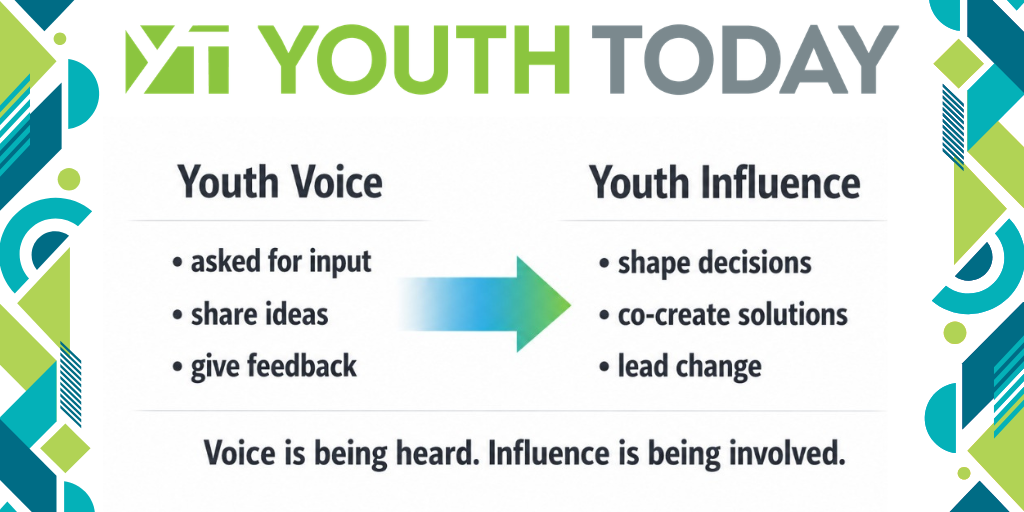
Across education, philanthropy and youth development, there has been real progress in elevating youth voice. Students are asked for feedback, included in advisory groups and invited to share their perspectives on issues that affect them. But in many settings, decision-making has not shifted at the same pace.


Young people are asked to contribute but are not consistently trusted to shape outcomes. They are included in conversations but less often in the choices that follow. Participation has expanded. Influence has not.

...

The Alliance for Youth Thriving has helped reframe how the field understands learning and development, emphasizing the importance of connected ecosystems across people, places, possibilities and systems. That framing highlights the importance of relationships and access. It also brings something else into focus: Ecosystems are shaped by how decisions are made, and trust plays a central role in those decisions.


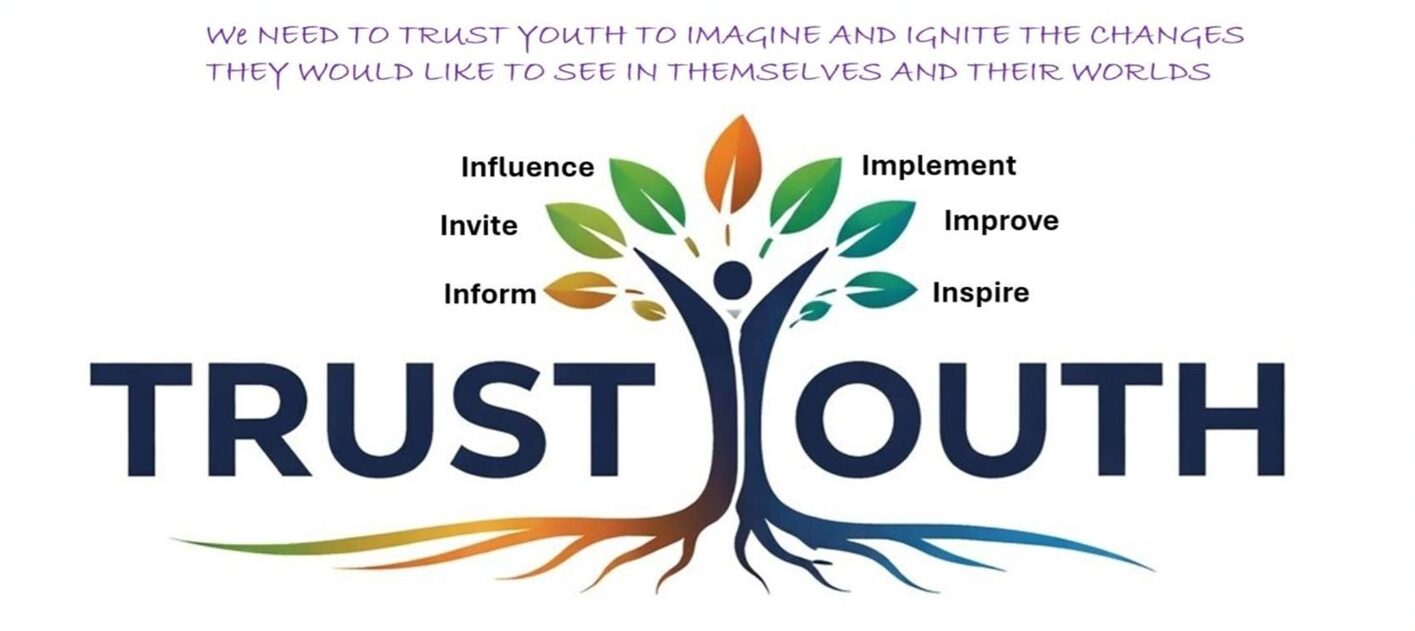
Trust determines whether young people are positioned as participants or contributors.


It influences who has access to meaningful opportunities and whose perspectives carry weight. It shapes whether systems are experienced as responsive or predetermined. If we take that seriously, then trust is not a secondary value. It is part of the operating system.


In early work with schools and youth networks, even simple efforts to surface how trust is experienced have revealed consistent patterns. Adults often point to the presence of opportunities. Young people focus on whether those opportunities lead to change. That gap is not a failure. It is a starting point.


The question is what we do with it.

X Share This Email
LinkedIn Share This Email

NEWS FROM THE FIELD

Exploring the Trust Gap: An Open Invitation | Youth Today

A new initiative invites young people and adults to identify the trust gap and start closing it, together. "Young people aren’t asking for more opportunities to participate. They want to be recognized for their abilities and trusted with meaningful responsibility.

Adults, on the other hand, are conflicted. They generally agree with the idea that preparing our future leaders requires relinquishing responsibility today. But many genuinely struggle with when, where and how to do this given that, in the end, they are often held accountable for youth’s actions. And they operate within systems and cultures that underestimate adolescents’ potential to do good. ... How can adults and youth do more to demonstrate the power of inclusion from idea to implementation and improvement? How do we make the invisible rules of trust — how, when, where, for whom and with whom — more visible, inclusive and effective?"

The Missing Dimension of Positive Youth Development: What It Requires of Adults | Youth Today

The positive youth development field spent three decades rethinking the role of young people in the work. It has barely begun to rethink the role of adults. "Positive youth development (PYD) has come a long way since the 1990s, when scholars like Peter Benson and colleagues at the Search Institute shifted the field from seeing young people as problems to recognizing them as assets. Ginwright and Cammarota argued that youth should be agents of change. Zeldin, Christens and Powers established reciprocity and shared power as foundational. Freire named the deeper problem: when one party holds all the knowledge, and the other is expected to receive it, the relationship becomes a transaction dressed as development."

GRANTS & AWARDS

Community Service Awards | O'Connor Institute - Deadline: October 16

High school students can earn a $500 award by logging summer service hours and sharing their story as an O'Connor Institute Ambassador.

1Artboard+3+copy image

The Smart Family Fund - Deadline: August 31

The Smart Family Fund awards grants of $25,000 - $100,000 to emerging nonprofit organizations working in education, youth development, community development, social innovation, and human services with bold and scalable ideas that may still be in the early stages of proving their effectiveness.

RESOURCES & TRAININGS

Listening to Lead: Students as Partners in Improvement

Bristol Public Schools’ work integrating student voice into continuous improvement illustrates five commitments for school districts seeking to integrate student voice into improvement efforts.

  • Make student voice routine, not episodic.
  • Build adult capacity for reflective listening.
  • Share power early and often.
  • Weave student voice into existing systems.
  • Honor student experience as legitimate data.

Together, these commitments position student voice as a driver of improvement.

To Save Our Schools, Trust Young People

"Young people have done more than enough to earn our trust. Policy makers not so much. ... We put too much faith in adults and the systems they assert will solve our nation’s education challenges and too little faith in students, what they tell us they want, and what they believe will prepare them for the future."

Behind the Research: Designing With and For Youth

Discover how Search Institute's collaborative approach with youth transforms research into meaningful impact, fostering environments where young people can thrive and lead. Features their Student Voice Toolkit, a resource for educators.

The Power of Trust Across Your Lifespan

Trusting in other people and institutions improves well-being across the lifespan, pointing to the importance of building trust at any age.

STORIES OF SERVICE

Everyday Young Hero: Srihith Chennareddy

Srihith Chennareddy (16 | Bellevue, Washington) is addressing two critical community needs: improving access to early disease detection and expanding opportunities for young people to learn and apply artificial intelligence for social good. Inspired by his grandfather’s struggles with Alzheimer’s disease, Srihith became passionate about developing accessible AI-based solutions for early cognitive health screening. Neurological diseases affect millions of families, yet many face barriers to timely diagnosis and specialized healthcare resources. Srihith’s research uses AI and health indicators to help make early disease detection more affordable and accessible.


Srihith also recognizes that many students lack opportunities to explore advanced technology and research. Through STEM outreach, AI Club, and peer mentorship, he creates awareness and teaches students to use AI responsibly and creatively. Srihith is helping build a community where technology can improve lives and inspire future problem solvers. As a leader in his school’s AI Club, he teaches students programming, machine learning, and responsible AI practices while encouraging them to apply technology to real-world problems. Through peer collaboration and community education, Srihith empowers other young people to use technology for social impact.

The Everyday Young Hero Award is sponsored by

Why Adults and Youth Need Each Other

"Youth-led initiatives have energy and boldness, but sometimes, we lack the keys to the rooms where decisions are actually made. That’s where adults come in. And no, I’m not just talking about adults who give awkward “advice” and then walk away, I mean adults who actually listen, who open doors, and who use their experience to amplify voices rather than drown them out. ... The adults I trust are the ones who actually follow through, who don’t assume they know everything just because they’ve been around longer, and who make space for young people to fail, learn, and lead. The ones I avoid are the ones who turn every idea into a “let me fix this for you” lecture."

From Isolation to Belonging: Building Connection Across Divides

The more we connect with others across differences, the more we want to keep connecting. “We know connection across lines of difference is how you strengthen trust and warmth between different groups in society, and we know feelings of trust, both trust in institutions and also social trust — trust in people — is at record lows right now,” observes Calista Small, Research Manager at More in Common U.S. “So, to address this issue of low trust, we need to start thinking about social connection, and specifically connection across lines of difference.”

SERVICE SONGS OF THE WEEK

Week #36 / 64 of the Service Songs Bracket First Round

"If You Want To Sing Out, Sing Out" - Cat Stevens

Listen on Spotify

"Believe in Yourself" - Arthur Theme Song

Listen on Spotify

Which song is your favorite?

Last Week's Winner Is...

"American Anthem" by Denyce Graves - U.S. Navy Band

CONNECT WITH YSA

Facebook  X  Instagram  Linkedin  Youtube  

Michael Minks, Editor-in-Chief, #909