Welcome to the HFS Stakeholder Newsletter |
|
Dear Partner,
To start, a dual introduction: I’ll introduce myself, as the new Director of HFS, as well as the Department’s new stakeholder newsletter.
I couldn’t be more honored to take this role and lead a state agency that serves millions of Illinoisans through Medical Programs and Child Support Services. As you may know, I come to this position after serving as First Assistant Deputy Governor for Health and Human Services for almost five years. During my time with the Governor’s Office, I worked closely with HFS, and witnessed dedicated staff take on numerous initiatives that are improving the well-being of so many people across the state.
I am a public servant at heart. I started my career as a special assistant to the Chicago Public Schools chief of staff, under then-CEO Arne Duncan. That’s where I first learned about the power of government to make positive change in the lives of those who rely on government for critical services – and fell in love with that work. My first stint in state government was in Governor Pat Quinn’s administration, where I worked as an Associate General Counsel in the Governor’s Office and then as Deputy Director for Personnel at the Department of Central Management Services.
|
|
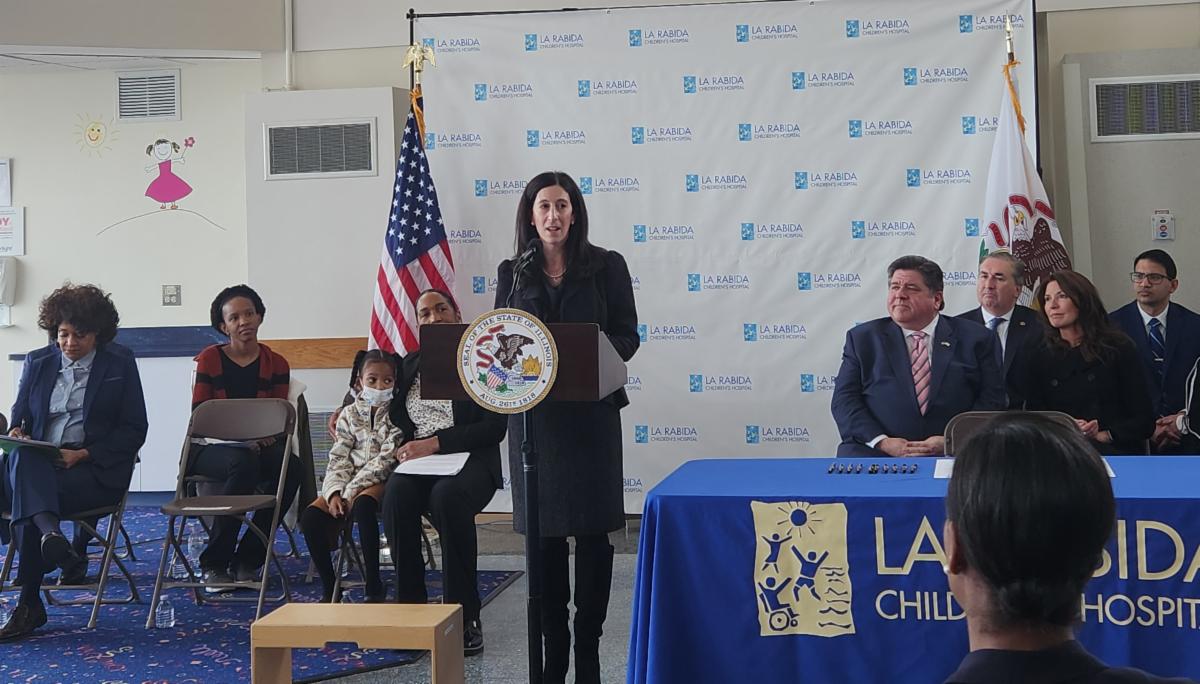
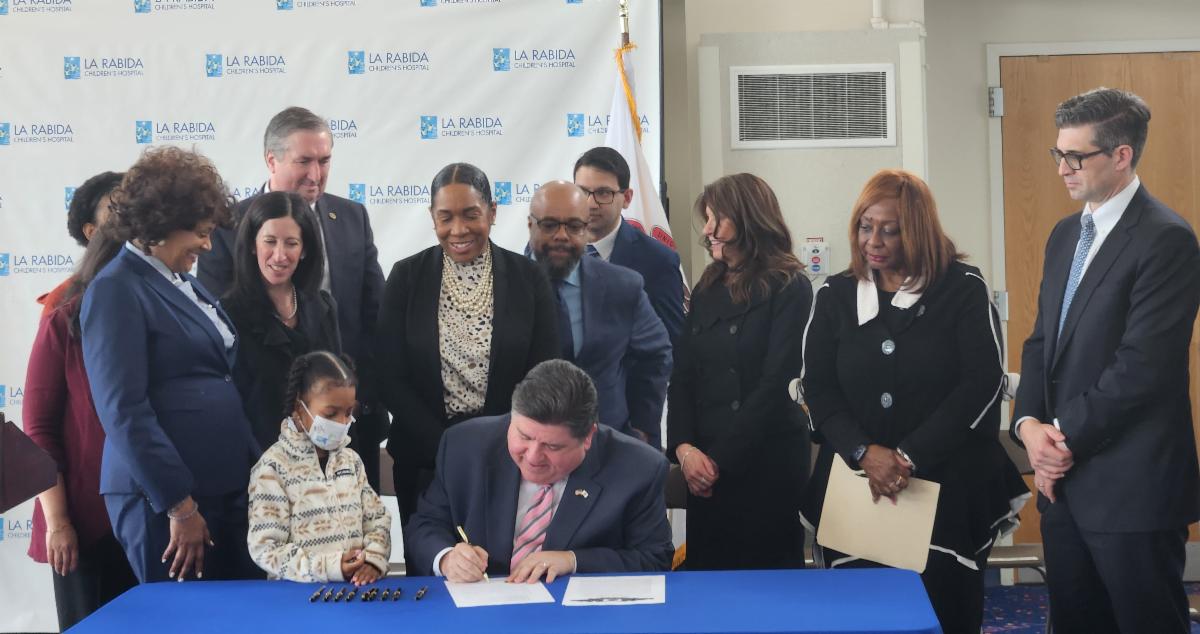
HFS Director Elizabeth Whitehorn speaks at a news conference on March 18
at La Rabida Children’s Hospital in Chicago, where Gov. JB Pritzker signed an
executive order directing HFS to lead a state effort to explore financing options for
treatments for Sickle Cell Disease and other emerging cell and gene therapies and treatments.
|
|
My interest and work in healthcare policy developed during Governor Pritzker’s first campaign, where, as a policy advisor, I focused on Medicaid and the Governor’s healthcare platform. The power of state Medicaid programs is that they can creatively and effectively implement policies that increase access to healthcare and broaden our understanding of what healthcare encompasses, including things like housing, food and nutrition, and other social determinants of health.
In announcing his Fiscal Year 2025 proposal last month, Governor Pritzker set forth a range of goals including better access, health equity and innovations to deliver quality care to all. We at HFS are committed to these efforts to address longstanding, systemic inequities in healthcare that have resulted in underserved communities, communities of color and low-income people experiencing disproportionately more barriers to accessing the healthcare services they need.
You, our partners, play critical roles in these efforts, and I look forward to continuing to work with you to find new ways to create better outcomes and improve lives across Illinois.
HFS needs to be a transparent, responsive and collaborative agency. To me, that means listening to and learning from our customers about the issues they face and putting them at the center of our work. It also means being transparent and collaborative with you, our partners.
I know we share a passion for improving outcomes for people, and hearing your informed and diverse perspectives is key to continuing to expand access to our programs and implement solutions that actually work for our customers. Moving forward, you can look to this newsletter for program spotlights and the impact of our ongoing work, highlights on initiatives we are launching, and more. There is much more work to be done, and I look forward to working to serve our customers together.
In good health,
Director Elizabeth M. Whitehorn
|
|
Governor’s budget plan advances goals of
equity and focused support
|
|
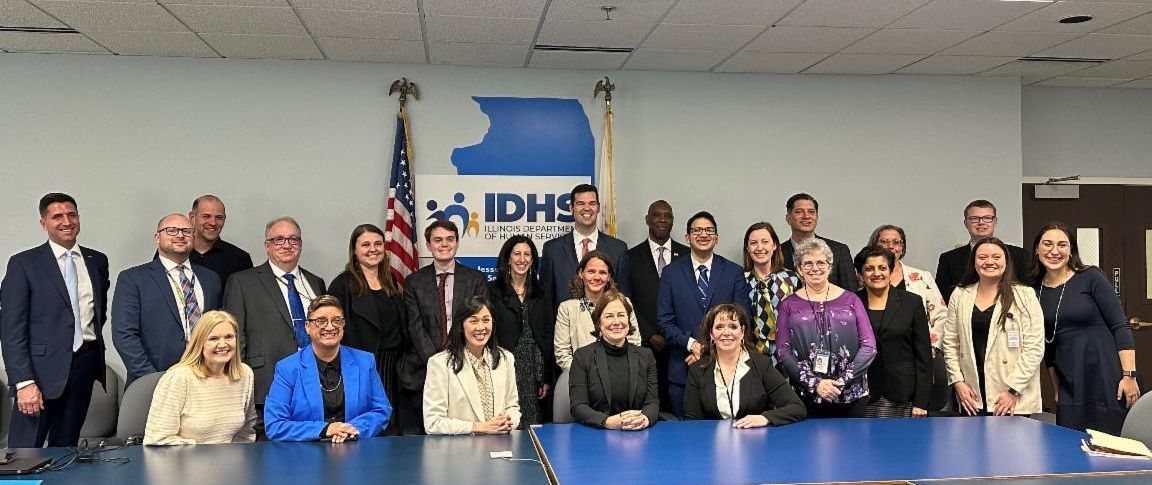
Deputy Gov. Grace B. Hou, HFS Director Elizabeth Whitehorn, HFS Chief of Staff Dana Kelly, and other leaders from the Governor’s Office, HFS and other state health and human services agencies, are pictured in Springfield following the Health and Human Services budget briefing on Feb. 21. |
|
Announcing the FY2025 Illinois budget proposal, Governor Pritzker in February outlined a range of goals and initiatives leveraging state funding to drive equity throughout the state and offer support focused on the needs of vulnerable populations.
The Governor unveiled several new programs and investments to advance these goals, including:
-
A Medical Debt Buy-Back Program to erase nearly $1 billion in medical debt for at least 300,000 eligible low-income Illinois residents.
-
Increased Federal Medicaid Dollars to Local School Districts to allow all Medicaid services provided in the school setting to receive reimbursement of federal matching funds on an actual cost basis.
-
State-Based Marketplace Transition for additional positions and Navigator grants.
-
Tiered Safety-Net Add-On bringing $50 million to safety net hospitals, including federal match, by linking the amount of the add-on to Medicaid Inpatient Utilization Rates.
-
Practitioner Rate Increases, annualizing comprehensive physician rate increases currently under consideration with federal Centers for Medicare and Medicaid Services (CMS).
The budget will:
- Ensure all Illinoisans have access to the health care services they are eligible for by focusing on consumer retention through the re-determination process and growing program areas like family planning.
- Continue to hold MCOs accountable for high quality care.
- Prepare for the implementation of the Illinois State Based Health Insurance Marketplace in coordination with the Department of Insurance.
- Implement innovations in the Williams and Colbert consent decrees service delivery model.
- Focus on priority areas including maternal and child health, behavioral health, reproductive health, health equity, and health-related social needs.
- Ensure child support payments are passed through in full to families entitled to funds.
|
|
Gov. Pritzker Signs Executive Order to Promote Equity in Gene and Cell Therapy Treatment Access and Affordability |
|
|
|
|
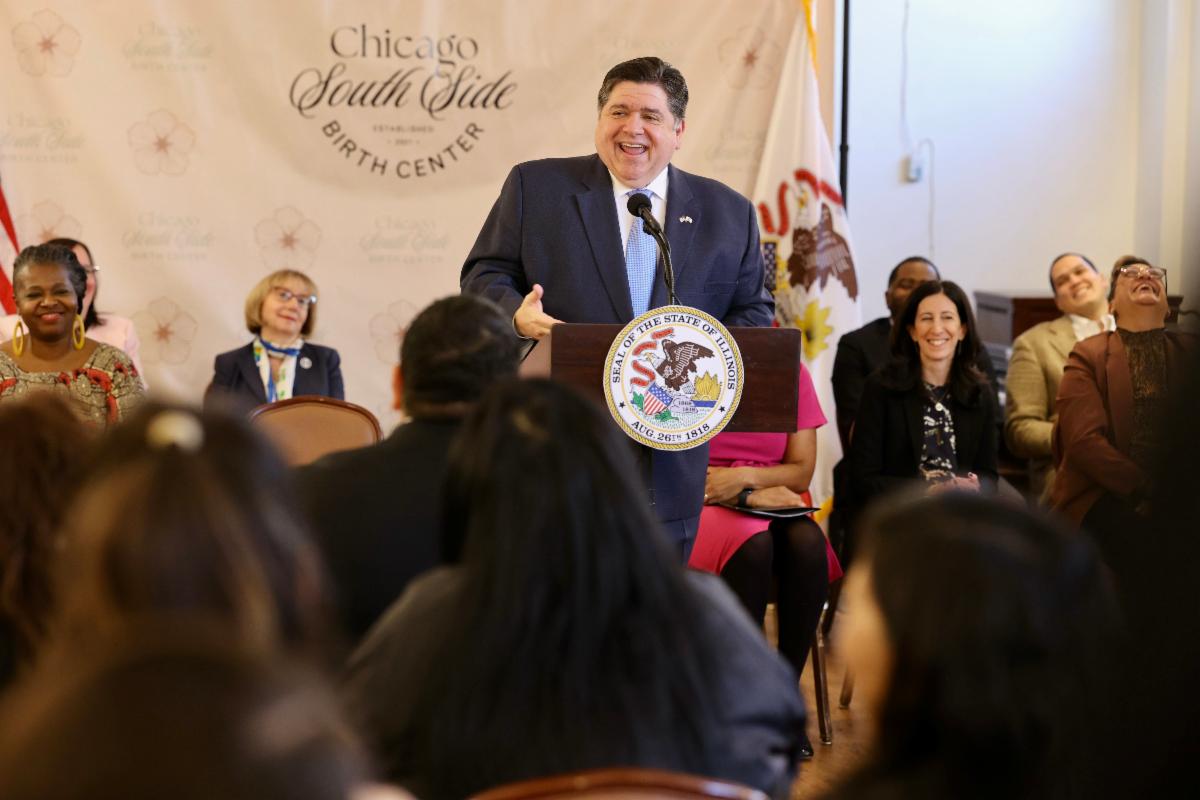
Gov. Pritzker Announces New Maternal Health
and Birth Equity Initiatives
|
|
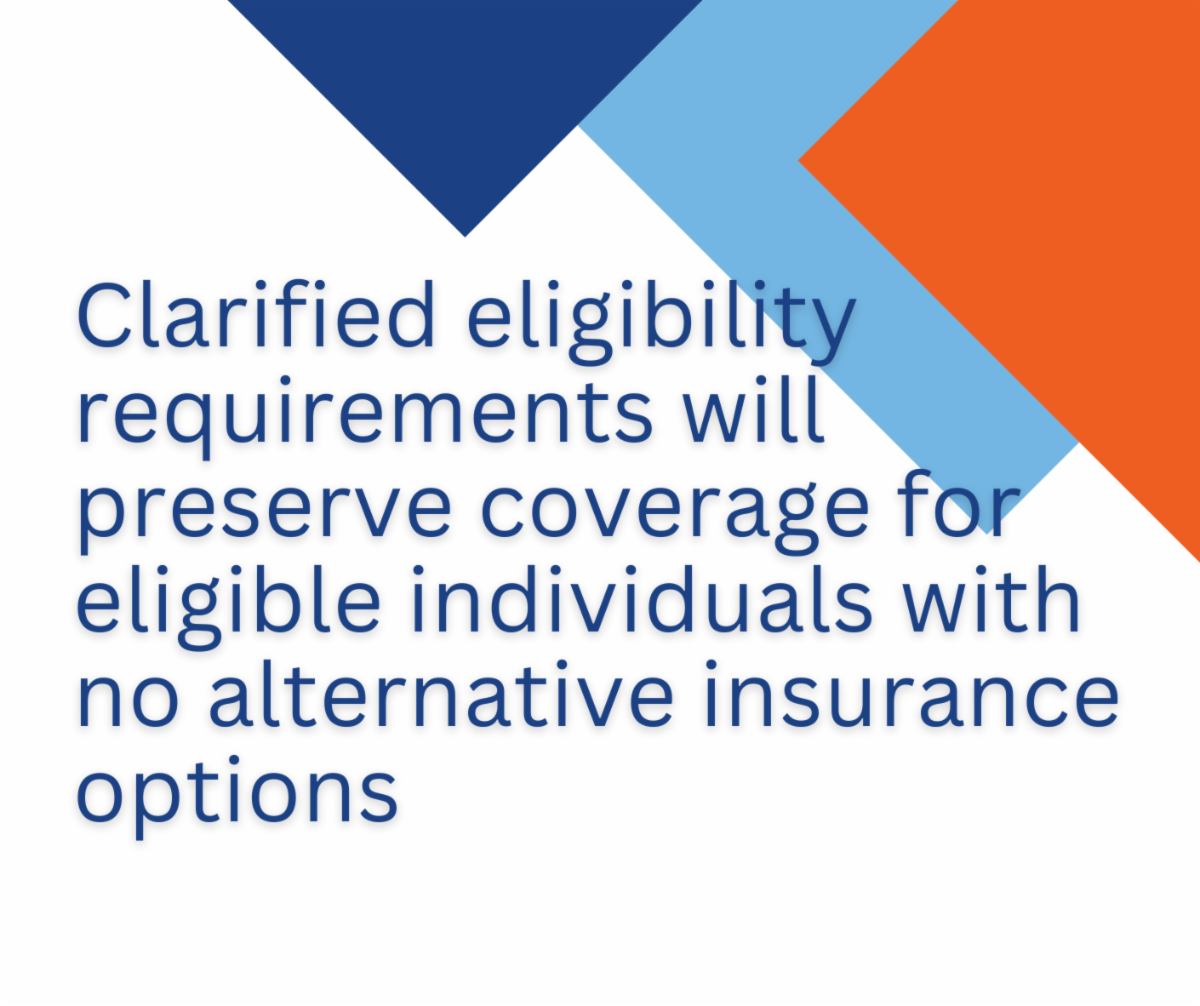
HFS to Proceed With Health Benefits for Immigrant Adults and Seniors Redetermination Process |
|
|
April is Medicaid Awareness Month, a great time to highlight your customer success stories and the hard work and dedication of our Medicaid partners and stakeholders.
As part of this month, the Illinois Department of Healthcare and Family Services would like to collect and share "success stories" of customers who have benefited from Medicaid services. These stories help demonstrate the value of our efforts and can be an important way to encourage others to utilize our services. These stories will be featured in our social media postings, website, informational materials and presentations, newsletters, and media relations.
Please share your customer stories by filling out this Customer Success Stories Form and thank you in advance for helping us spread our Vision to Improve Lives. We will keep customer names anonymous or just use first names.
|
|
Medicaid Redetermination Update |
|
As we continue to unwind from the COVID-19 Continuous Medicaid Coverage requirement and return to the standard practice of performing annual eligibility checks for all customers, Illinois is outperforming most other states in keeping eligible Medicaid customers enrolled. This has been a major undertaking, and our primary aim has been to do everything we can to ensure eligible Medicaid customers stay covered, and those who are no longer eligible are successfully connected to alternative insurance options.
According the Kaiser Family Foundation’s tracker, which compiles federal redetermination data from states, Illinois continues to have one of the highest Medicaid renewal rates and one of the lowest rates of procedural Medicaid disenrollment among states.
To provide the public with the latest statewide data, we’ve launched an online dashboard with Medicaid renewal data. To date, 73% of individuals who have completed their redetermination since continuous coverage ended have retained their coverage.
The dashboard will be updated regularly as new data becomes available. It provides the public with a breakdown of redetermination status by renewal month, customer demographic, language and geographic data.
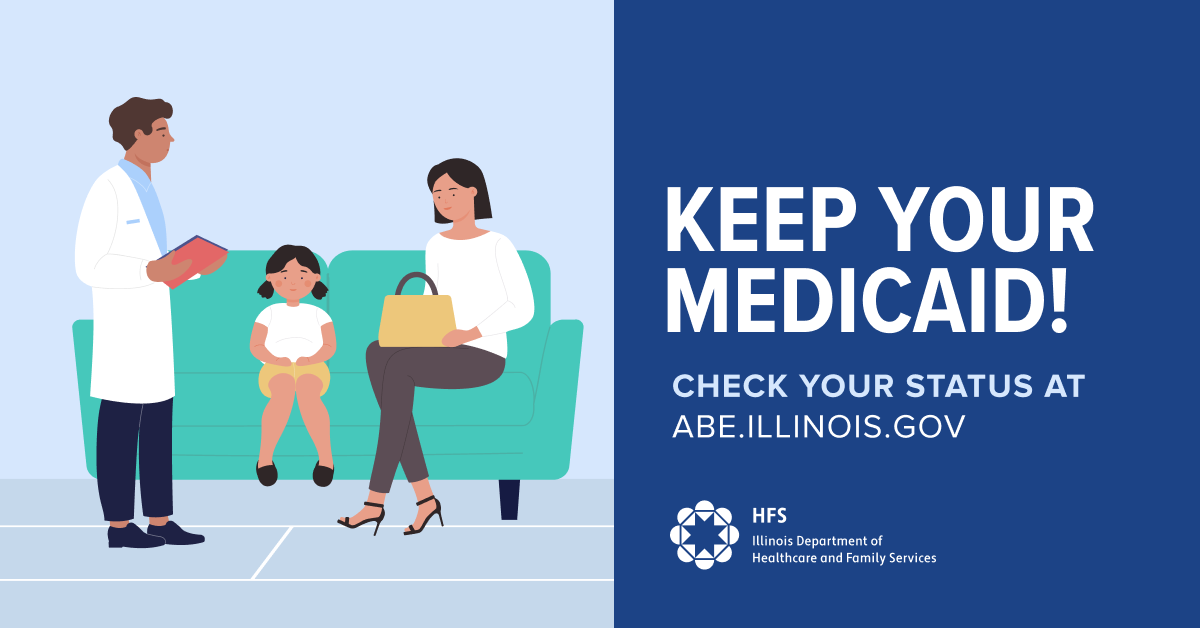
HFS also recently launched a new ‘Are You Covered’ messaging toolkit in multiple languages, which includes guidance tailored for healthcare providers, nonprofits and advocates, and materials specifically for schools to share with families.
You can help us ensure eligible customers stay enrolled by using the messaging in the toolkit when you’re interacting with Medicaid customers.
Customers should:
- Visit abe.illinois.gov and click on "Manage My Case" to set up an online account. From there, they can update their address or check their due date, which is also called a redetermination date.
- Ensure their contact information on file with the Illinois Medicaid program is always up-to-date, to be sure they receive their time-sensitive, mailed redetermination materials when they come due.
- Complete and submit their redetermination materials to HFS before their due date.
- Know that if they’ve lost coverage because they didn’t respond to paperwork and they are still eligible, they can reinstate their Medicaid if HFS receives the required information within 90 days.
- Be aware of the alternative coverage options available to them. Not having Medicaid doesn’t mean someone will be uninsured, it means that they will have to find and enroll in other coverage: through their employer or find a plan through the ACA marketplace.
|
|
Child Support Services launches
Family Resource Connections
|
|
Child Support Services (CSS) has recently launched Family Resource Connections (FRC), a groundbreaking initiative designed to support parents and foster positive change. With this program, CSS is re-imagining child support by applying innovative approaches, personalized solutions, and a commitment to better outcomes.
|
|
As part of this new program, FRC launched a pilot program that focuses on connecting parents who participate in the child support program with upcoming career workshops as part of a partnership with the Illinois Department of Employment Security (IDES) and Central Management Services (CMS). The workshops connect parents with employment professionals where they will receive comprehensive instruction and access to resources that will significantly enhance their chances of finding a successful career, creating a resume, and career counseling. The pilot areas include Aurora, Champaign, and Peoria with these upcoming April workshops:
Peoria Illinois WorkNet Center (Virtual)
April 17, 2024, at 10am
Champaign Illinois WorkNet Center
April 23, 2024, at 10am
Aurora Illinois WorkNet Center
April 29, 2024, at 9am
|
|
Apply to create a Medicaid Preventive Care and
Education Organization
HFS is accepting applications for providers to operate a Medicaid Preventive Care and Education Organization (MPCEO).
The goal of an MPCEO is to increase ownership of Medicaid customers in their health and well-being through greater healthcare knowledge, increased preventive care and more engagement with their Primary Care Providers (PCPs), other health care providers, and health plans.
Timelines, submission requirements and other details are available in the MPCEO Request for Application. Applications will be accepted through 5pm CDT, May 31, 2024.
|
|
Springfield Main Office
201 South Grand Avenue East
Springfield, IL 62763
|
|
Chicago Main Office
401 South Clinton
Chicago, IL 60607
|
|
|
|
|
|
|