March 16, 2023

Top stories

■ The FBI and DOJ are investigating ByteDance’s use of TikTok to spy on journalists (Forbes) / U.S. threatens ban if TikTok’s Chinese owners don’t sell stakes (Wall Street Journal) 


■ Former editor of Jewish newspaper charged for Jan. 6 actions (POLITICO) / FBI: Newspaper editor interfered with police at Capitol riot (Associated Press) 


■ Fox News-Dominion lawsuit: Viewers now trust network less (Variety) / 2 in 5 Republicans want Fox held accountable for false 2020 claims (Washington Post) / At center of Fox News lawsuit, Sidney Powell and a 'wackadoodle' email (Washington Post) / Fox News sets senior editorial leadership team as top execs acknowledge media attention (Hollywood Reporter)   


■ Fla. reporter fired after calling news release on DeSantis event 'propaganda' (Washington Post) / ‘ "Reporters are trying to do their jobs and get information from people who are weaponizing every misstep against those they target," fired Axios reporter tells Oliver Darcy.’ (Reliable Sources)


■ Amazon is shutting down Kindle Newsstand, getting out of the news and information business (Fortune)


■ Zaslav storms CNN to offer full-throated defense of CEO Chris Licht — despite admission they've 'gotten a lot wrong' (Mediaite) / Whispers already spreading around CNN that Chris Licht is on his way out (Page Six) / The Zaz in CNN (Puck)  


■ The new prime time for TV news: Afternoons (New York Times) 


■ Jen Psaki will now ask the questions on MSNBC (Los Angeles Times) / MSNBC hosts DC event for debut of ‘Inside with Jen Psaki’ (The Hill)


■ MSNBC's Symone Sanders, CNN's Kaitlan Collins jump to WME (Variety) 


■ How 'Face the Nation' host Margaret Brennan became the star of Sunday mornings: 'I didn't ever imagine it' (People)


■ Former N&O editor named to lead all news operations for parent company McClatchy (News & Observer) 


■ New MAGA chair of Colorado’s GOP declares war on Denver Post after scathing editorial on his election (Mediaite)


■ Victor Pickard on the layoffs at NPR, and how to better support public and local media (Columbia Journalism Review) 


Press freedom 


■ Belarus rights group says scores detained in new clampdown (Associated Press)


■ Cuban journalist: ‘Without freedom we can’t create anything’ (Havana Times) 


■ Two Togo journalists in hiding sentenced for 'insults' (​​Agence France-Presse via VOA)


■ Spain court dismisses Morocco case against journalist (Agence France-Presse Barron's)

CRAFT
Sunshine Week: A celebration of access to public information

Sunshine Week: 5 public records to ask for when reporting on crime

It is Sunshine Week, an annual celebration of access to public information launched by the News Leaders Association in 2005. To commemorate the occasion, we’ve asked journalists across different beats to share their tips for requesting open records and responding when facing roadblocks to access.  


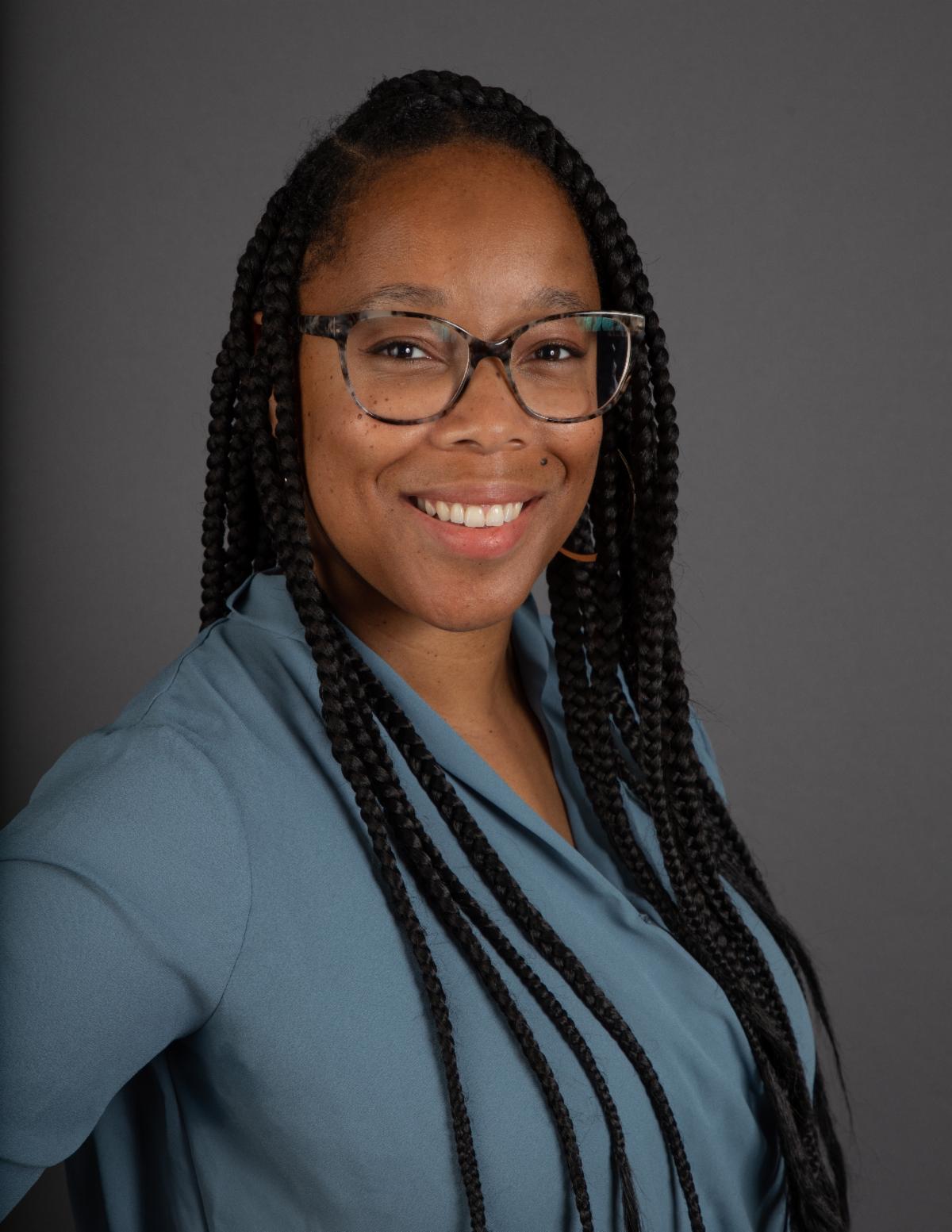
Today, we hear from Lakeidra Chavis, staff writer at The Marshall Project. Chavis has written on topics including the rise in Black suicides during the pandemic, the changing structure of gangs, the opioid crisis, and victim compensation.

Lakeidra Chavis

What are five public records that reporters should ask for on the crime beat? 


Chavis: Five public records that reporters should ask for on the crime beat are your city’s latest homicide and property crime data going back five to 10 years, your police department’s records retention schedule, copies of their policy directives, and incarceration data. 


These records are essential on the crime beat. Historical crime data will allow you to dive deeper into stories when you have a short deadline or need to test a hypothesis. A records retention schedule will give you insight into how long the department maintains certain information — like body camera footage, for instance — in addition to all of the different types of records the department keeps on file. Policy directives outline the rules and steps officers are supposed to follow in any given scenario and often reference other databases or systems that might be insightful for you. 


Lastly, request the current prison population data for the county or state that you are covering. While arrest data is insightful, it is just the very beginning of a long legal process. Prison data will give you insight into not only existing racial and geographic disparities in enforcement, but can also provide context for which crimes actually lead to a conviction. 


What specific key words or phrases do you look for when reviewing documents on law enforcement officers?


Chavis: Since most of my investigative work has focused on race and class, I tend to search specifically for findings or policies related to these two demographics. For FOIA responses that are unwieldy, such as several different documents, email threads, or reports, I like to use Ctrl+F and do a baseline search for different racial ethnicities, gender identities, and geographic identifiers. I don’t specifically search for words like “poor” or “poverty,” because knowing the location of where enforcement is taking place is a much more useful context when looking into a particular issue. 


After this, I search for words like “disparity,” “increase,” and “complaint.” I’ve found city officials, and by extension police officials, tend to be laser-focused on whether crime is going up or down, and that is usually tied to some enforcement technique they are trying. 


How do you get an unresponsive agency to respond to your request? 


Chavis: Whenever I am not receiving a response to a public record request I filed, I always call the agency I’m trying to get information from and get someone on the phone. 


However, most of the time, the biggest issue I face is receiving records that are incomplete without any written explanation as to why. I often struggle to get the remaining records or data from the agency when this is the case. The number one strategy I use to combat this is to simply file the request again with the agency, and reference the original request ID and state clearly that the records I received were incomplete and in what way. Because of this, the new request I’m filing is not a duplicate — since the records were not provided in the first attempt. I’ve used this strategy several times in the past year with lots of success, likely because filing a new request starts over the legal “clock” so-to-speak, so the agency is required to respond.

The Latest readers: Help the National Press Club Journalism Institute power journalism in the public interest with a donation today. The Institute helps strengthen journalism through its training — including this free newsletter — and press freedom initiatives. A donation in any amount today will support this important work during Sunshine Week and beyond. 

GIVE NOW

Votebeat reporters offer tips for accessing national and local election records

Jessica Huseman

Jessica Huseman is the editorial director at Votebeat

Natalia Contreras

Natalia Contreras is a reporter at Votebeat Texas

What are examples of public records pertaining to local government that journalists might not think to request?


Contreras: I cover election administration, and recently there has been a lot of focus on Election Day problems — which happen everywhere and in every election — such as long lines, ballot-paper stock shortages, late openings, etc. 


Election officials in each county keep track (or should be doing so) of those issues. Those are public record and can help us identify which technical or administrative problems are recurring in every election. We can ask why that's happening and how that can be resolved. If there are technical issues, maybe the county needs to upgrade their equipment; if it's an administrative or staffing issue, maybe more funding is needed for more personnel and training. 


What public records should reporters ask for when covering national elections?


Huseman:


  • Spending on voter education in your county and in your state. 
  • The calendars of your state's secretary of state: Which lobbyists are they meeting with? Advocacy groups?
  • The contracts and RFPs for the voting machines, paper goods, and service contracts necessary for carrying out an election.
  • Emails between your secretary of state’s staff and members of extremist voting advocacy groups.


What are the biggest access issues you have faced when seeking records on elections and how did you overcome these obstacles? 


Contreras: Litigation between counties and losing candidates right now is one of the biggest obstacles to obtaining documents relating to a specific election. However, in Texas at least, officials could choose to release the documents even if litigation is pending. So, as we all know, sourcing is definitely key to get access to some of that information. 


What is your response or process when a public records request is denied?


Huseman: I call and see what I can negotiate. Sometimes, if you make a kind and convincing case that they were incorrect to deny you the record, the agency will reopen the request without requiring you to file an appeal. This can save precious weeks of your time. Alternatively, if your state's attorney general office has an open records hotline, call it.


What is an example of a story idea that you found from a public document you requested? 


Contreras: Last year, when county officials would not comment, we were able to tell an entire story based on email communications we requested between Gillespie County officials and the elections administrator there. 


Those records allowed us to tell the story behind the exodus of the entire elections staff in that county. The story that made the rounds at the national level focused on the threats that stem from the Big Lie. But we found that it began way before that: the type of threats they'd received; how often they'd asked for help; how the county responded (not well); and how much lack of funding, staff, and lack of other resources from the county also contributed.


Share your FOIA and open records successes — or how you've worked around roadblocks — with The Latest subscribers. We'd love to feature your advice in this newsletter.


See additional open records advice on:


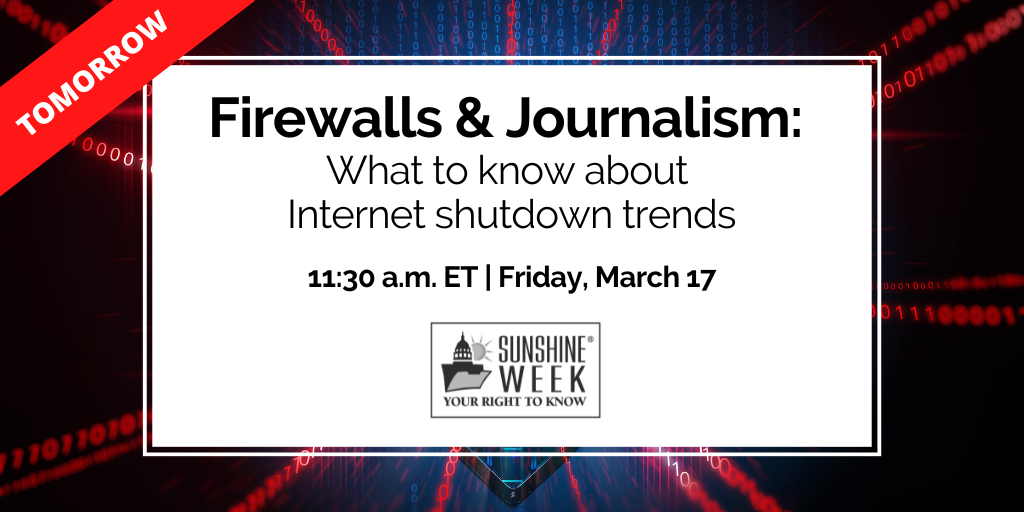
Tomorrow — Firewalls & Journalism: What to know about Internet shutdown trends

An open and free Internet is widely seen as essential to journalists to both conduct their reporting and to disseminate their work. But a worsening trend of authoritarian and illiberal governments moving to erect digital firewalls and cut off Internet access, particularly during times of natural disaster or political crisis, is imperiling the ability of large swaths of the global population to stay informed and for journalists to track critical news developments.


More countries than ever in 2022 saw Internet shutdowns, with at least 187 incidents documented across 35 countries, according to the digital rights group Access Now. 


Join us at 11:30 a.m. ET tomorrow, March 17, for a virtual panel discussion that will delve deep into the worrying spread of Internet kill switches and what it specifically means for a free press. The program is being produced by the National Press Club’s Press Freedom Committee and nonprofit affiliate Journalism Institute in honor of Sunshine Week.

REGISTER NOW
Resources

This newsletter is written & edited by the National Press Club Journalism Institute staff: Beth Francesco and Holly Butcher Grant. Send us your questions and suggestions for topics to cover.


Get this from a friend? Subscribe, and view the archives.


If you value this newsletter, consider supporting The Latest with a tax-deductible, recurring gift to the Institute: Even $5 a month will help fund the technology and time it takes to provide this important service.  

Facebook  Twitter  Linkedin  Youtube  

The National Press Club Journalism Institute promotes an engaged global citizenry through an independent and free press, and equips journalists with skills and standards to inform the public in ways that inspire a more representative democracy. As the non-profit affiliate of the National Press Club, the Institute powers journalism in the public interest.