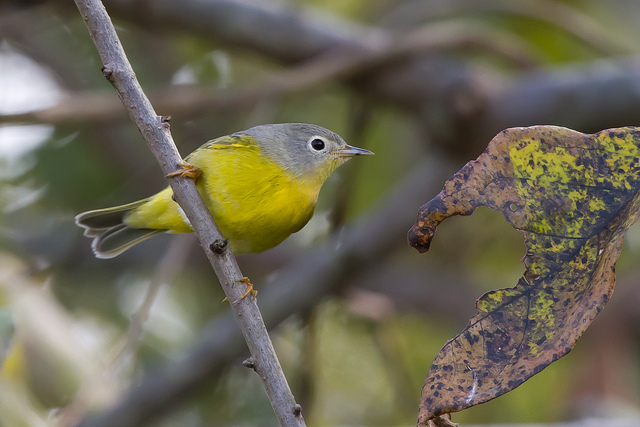
Photo of a Nashville Warbler courtesy of Frode Jacobsen. | | Discover the biodiversity all around you | | |
August went by in a blur, but we hope you're finding time to enjoy the changing seasons and the start of fall migration. If you're not following the Turkey Point and Dans Rock bird counts, we encourage you to do so. There are live tallies available via the count pages and on Trektellen. They're also sharing excellent weekly reports via the MBP blog, providing us with useful notes about highlights, trends, and noteworthy counts. These posts are also very helpful when they begin drafting their season summary reports, which we submit to the peer-reviewed journal Maryland Birdlife for publication. Kudos to all the counters, who are doing an excellent job.
You may have noted our more deliberate emphasis on Science, Conservation, and Education. While the main deliverable of the Maryland Biodiversity Project is the website and the carefully curated database, we also want to ensure that the website and data are put to use. We aim to maximize the benefits to science, conservation, and education. And you're a key part of it all. Every day our amazing community is collecting valuable data, engaged in local and regional conservation, and constantly learning and sharing.
-- Bill
| | | |
Migration is really kicking into high gear at our two morning flight counts at Turkey Point and Dans Rock. Many of our early-season migrants have already moved on, while boreal breeders are beginning to filter through on their southbound journeys. According to Lucas, our lead counter at Turkey Point, “As September approached, the numbers of swallows, Eastern Kingbirds, and Orchard Orioles began to decrease, while the first larger flights of warblers began to take their place.” The Turkey Point team has counted more than 1,600 Blue-gray Gnatcatchers, along with nearly 1,000 Chimney Swifts!
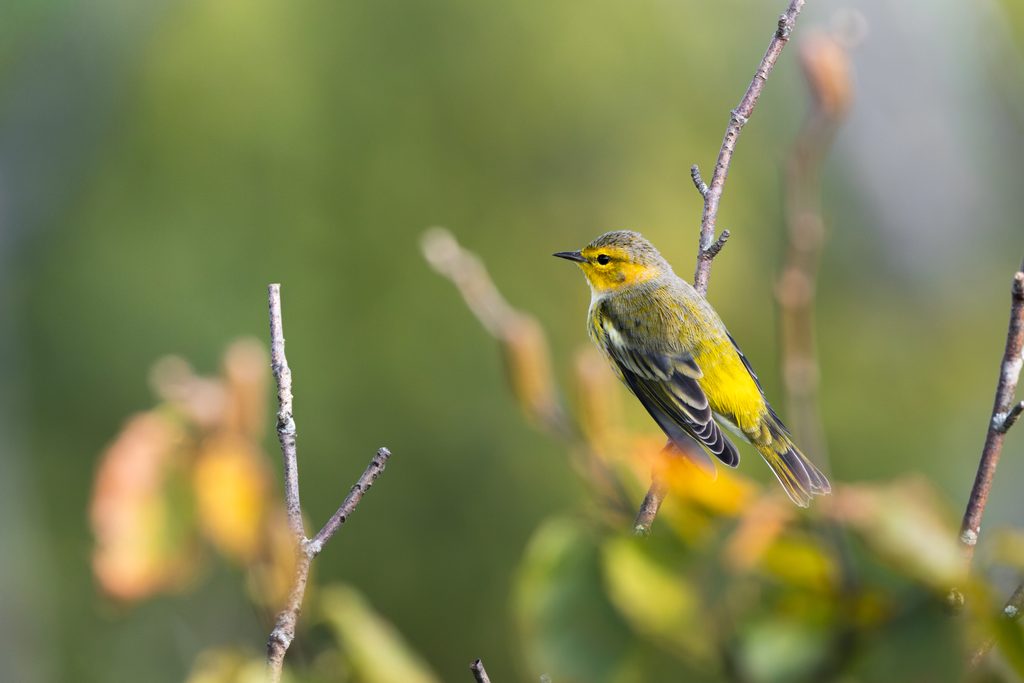
Out at Dans Rock, large flocks of migrating passerines are being counted. Ben McGrew, our lead counter at Dans Rock, has tallied more than 4,320 Cedar Waxwings so far this year. This is the highest total ever recorded for this species at the Rock! Ben has also counted more than 1,200 Cape May Warblers and over 220 Ruby-throated Hummingbirds.
Experiencing morning flight can be incredibly exciting, and we encourage anyone interested in birding to visit Dans Rock or Turkey Point and spend some time with Ben and Lucas. They’re always happy to talk about migration as long as there aren’t too many birds flying over to distract them! Here are the links Turkey Point (Cecil County) at the top of the Chesapeake Bay and at Dans Rock (Allegany County) in western Maryland.
We provide all data in near real time via Trektellen and daily via eBird. Counters share regular updates to the MBP blog. Season reports are published in the peer-reviewed journal Maryland Birdlife. The data collected is valuable to our understanding of eastern U.S. bird migration, especially when gathered consistently and year over year.
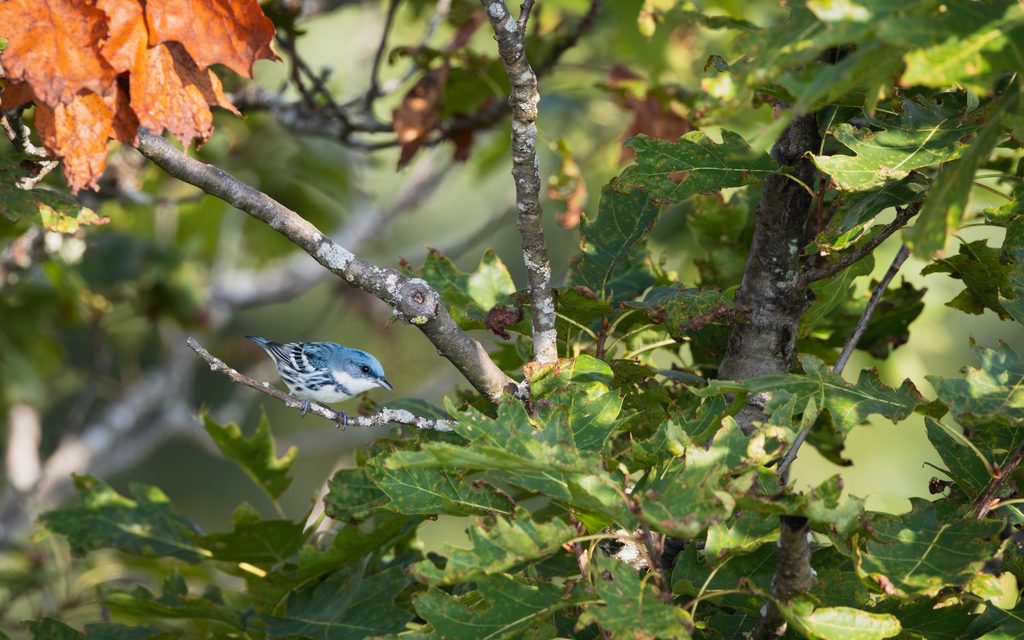
| | Thanks to Ben McGrew for sharing these photos. Left Cape May Warbler. Right Cerulean Warbler | |
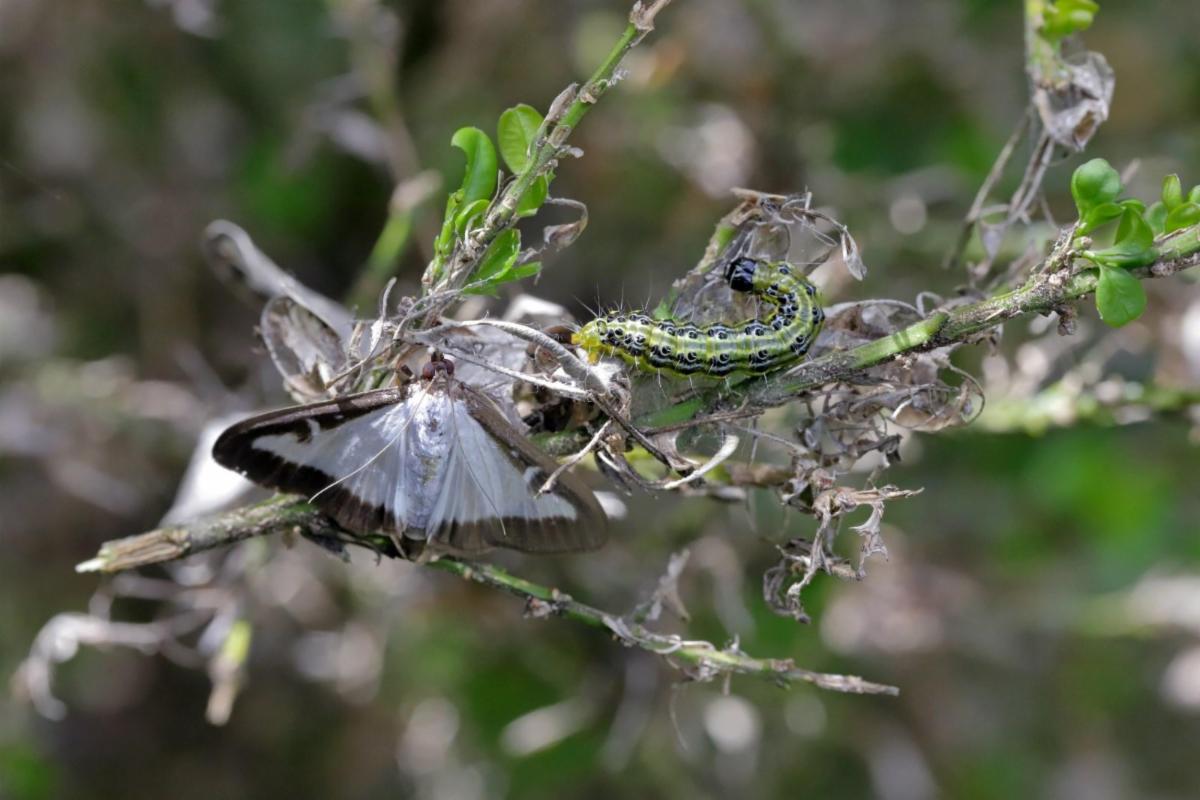
Have you seen the Box Tree Moth? | | |
Box Tree Moth have been confirmed for Washington County (July 2025) and Caroline, Cecil, and Queen Anne's Counties (August 2026).
As of Aug. 24, 2026, a press release from MDA and APHIS was released expanding the box tree moth quarantine to include Caroline, Cecil, Kent, and Queen Anne's Counties in addition to Washington, Garrett, Allegany, and Frederick Counties that were already under a quarantine since March 2026 (8 counties total now). Any businesses moving regulated items into or from a quarantine zone need a certificate of inspection and compliance agreement in place with MDA. Questions can be sent to btm.inbox@maryland.gov.
Folks should be monitoring their boxwoods (particularly through October), since this pest tends to go unnoticed until the boxwood is severely damaged.
Reported sightings can be sent through your local Extension office, our UME Ask Extension form or via the MDA's box tree moth reporting form (requires a date of sighting, county, map location, photo, and type of sighting- box tree moth life stage and/or damage).
| | Looking for Allegany Woodrats | | |
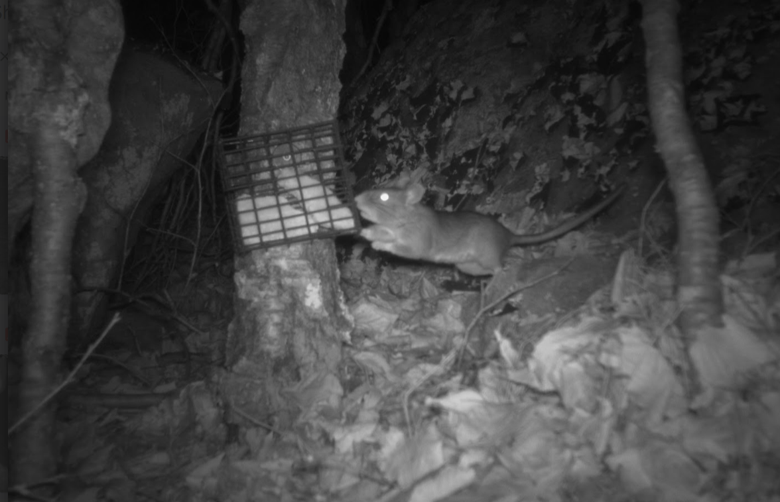
Our friends at DNR have asked for our help. They are in the middle of a multi-year statewide reassessment of Allegheny woodrats, a state endangered small mammal in Maryland. Using camera traps to document which populations are still extant as well as document the local mammal community, particularly the presence of potential predators or disease vectors. DNR now has over half a million images that need to be reviewed and are still collecting data. As you can imagine, this is quite a daunting challenge!
The images are hosted on Animl, a cloud-based platform created by The Nature Conservancy to facilitate crowd-sourcing review of camera imagery. The program identifies objects it believes are a species, but they need human reviewers to confirm the identifications. While it speeds up review considerably, the identifications are sometimes amusingly off-base.
Interested in helping to review images? If so, please contact Sandy at info@marylandbiodiversity.org.
| |
|
Each month we will be highlighting some tips that everyone can use to become a conservationist. It's actually really easy and they benefits are far-reaching.
This month we are featuring Homegrown National Park. Homegrown National Park is based on decades of ecological research led by Dr. Doug Tallamy, showing that native plants are essential to sustaining biodiversity.
| |
Thanks to the University of Maryland Extension, office who shares monthly gardening tips that support our ecosystems and biodiversity. Check out the tips for this month. September Backyard Habitat Tips.
Got ideas of your own you'd like to share? Send them to info@marylandbiodiversity.org
| | | |
| |
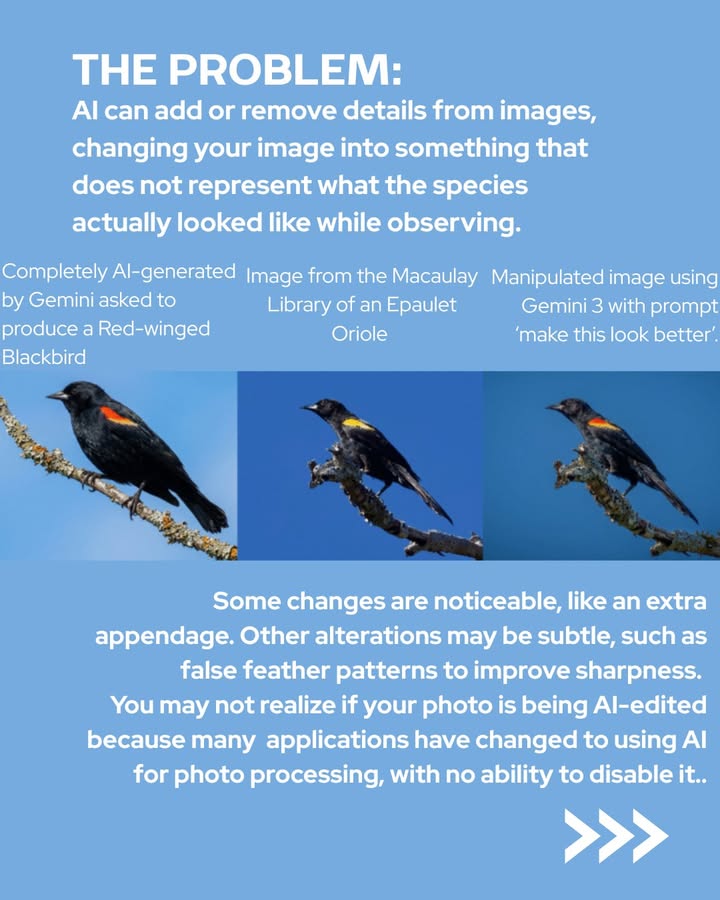
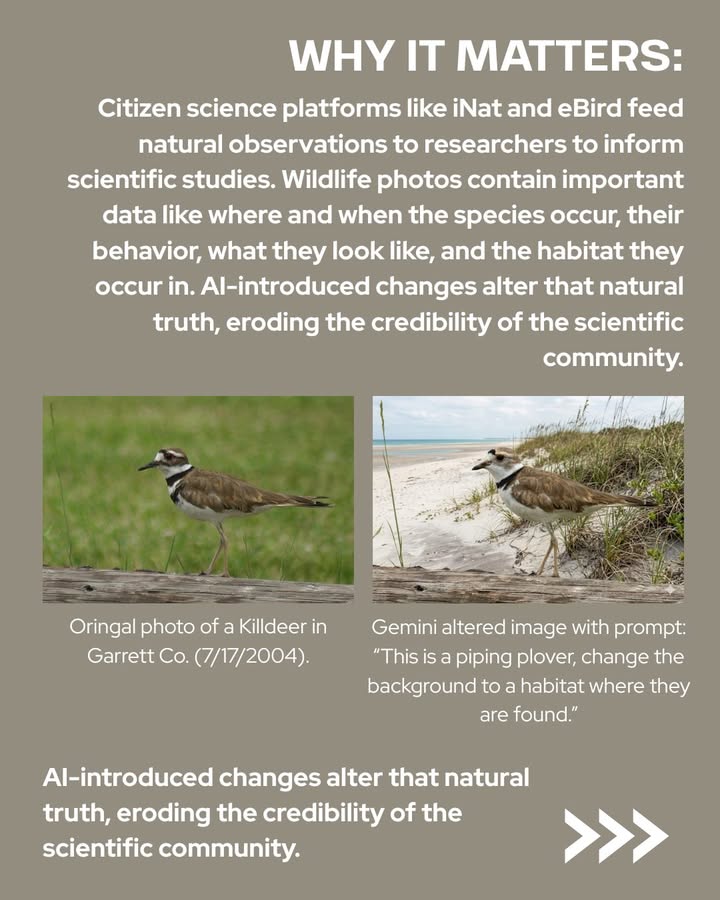
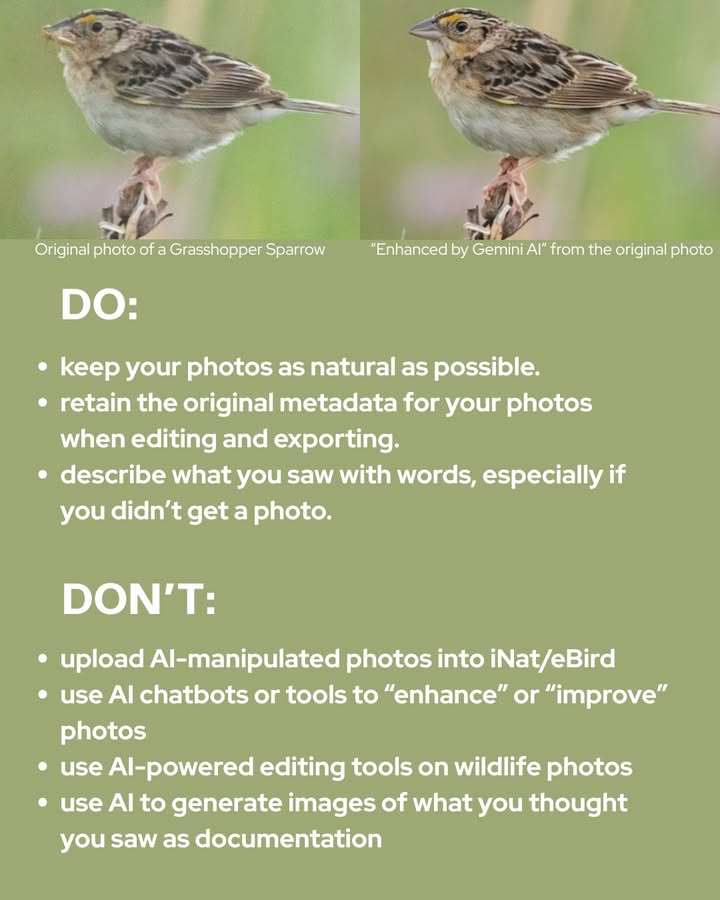
Did you see this post about AI?
With the increase in AI influence in our day to day, its reach has started to affect the validity of citizen science. Using AI-powered photo editing to enhance your wildlife photography may be improving the sharpness of your photo, but decreasing the credibility of your sighting. AI tools can add detail that is not actually present, like altering feather patterns or sometimes adding a whole leg! We advise, along with eBird and other similar platforms, to avoid using AI enhancement in any photos you plan to upload to iNaturalist or eBird. Read more here.
| | | | |
Looking for cool new MBP Swag?
Check out our new Store and show your biodiversity pride!
| |
We hope you are enjoying this newsletter and the format. We also hope you will share it with your networks. Have suggestions?
Send them over to Sandy Brown.
| | |
Maryland Biodiversity Project | PO Box 1316 | Easton, MD 21601 | |
What is Maryland Biodiversity Project?
Maryland Biodiversity Project (MBP) is a 501(c)(3) nonprofit dedicated to cataloging the living things of Maryland. Together, our community maintains a living atlas of the state’s flora and fauna and makes this carefully curated biodiversity archive available for science, conservation, and education.
| | | | |