Survey Says Fertilizer Struggles Continue | |
Over 300 Alabama farmers responded to a national survey analyzing American producers’ access to fertilizer, with the overwhelming majority noting they cannot afford all fertilizer needed throughout the growing season.
Conducted by the American Farm Bureau Federation (AFBF) April 3-11, more than 5,700 farmers representing every state, Puerto Rico and diverse commodities completed the survey.
Analysis shows 70% of overall respondents say fertilizer is so expensive they will not be able to buy all the fertilizer they need. In Alabama and the Southern region, that number reaches nearly 80%.
“Spring planting decisions depend heavily on access to fertilizer and diesel fuel, both of which have been impacted by geopolitical risks that have disrupted global markets,” AFBF reported in a Market Intel. “Since the escalation of tensions in the Middle East, nitrogen fertilizer prices have risen more than 30%, while combined fuel and fertilizer costs have increased roughly 20% to 40%. Urea prices have increased by 47% since the end of February, marking the largest month-to-month percentage increase in the price of urea. These increases are occurring when many producers were already facing tight margins for many consecutive years.”
Alabama Farmers Federation President Jimmy Parnell thanked members for their candor and quick responses.
“Leaders in Washington need to know the real difficulties farmers are having in regard to fertilizer access and continued price increases,” said Parnell, who farms in Chilton County. “These numbers will help us achieve that.”
| |
Lowndes County Family Wins Farm of Distinction | | |
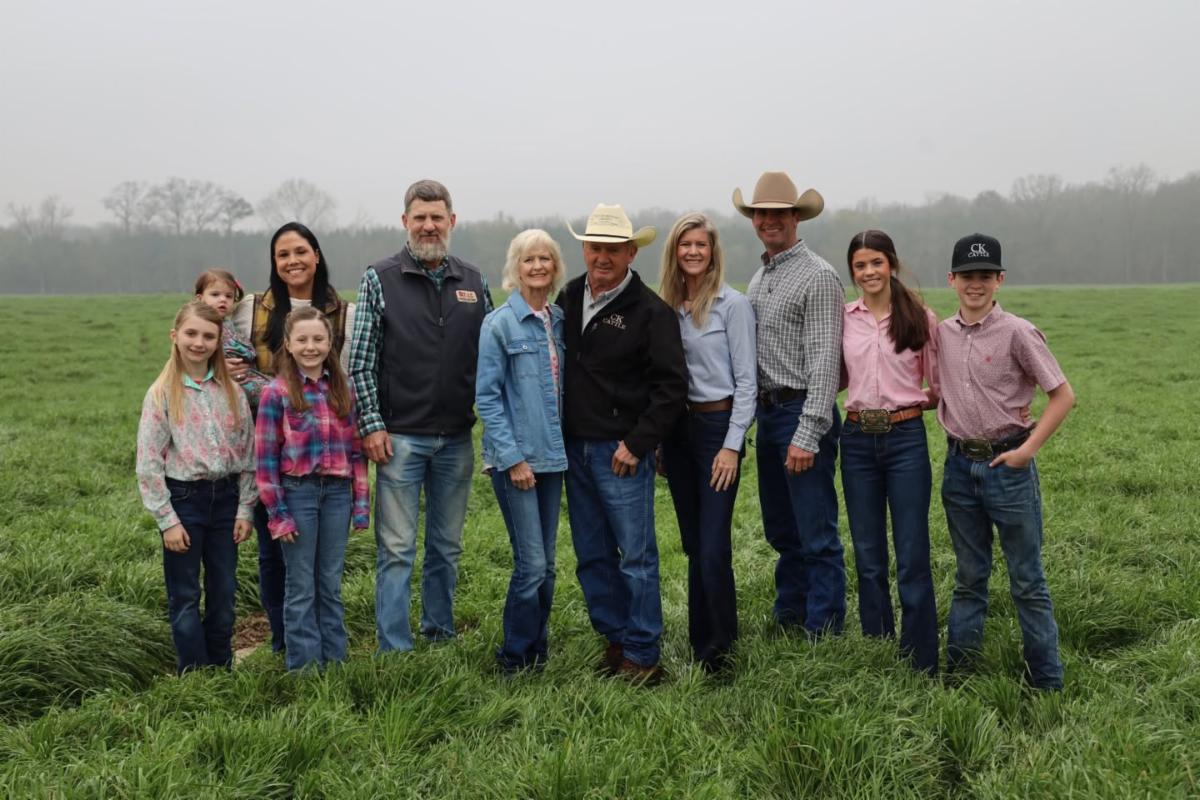
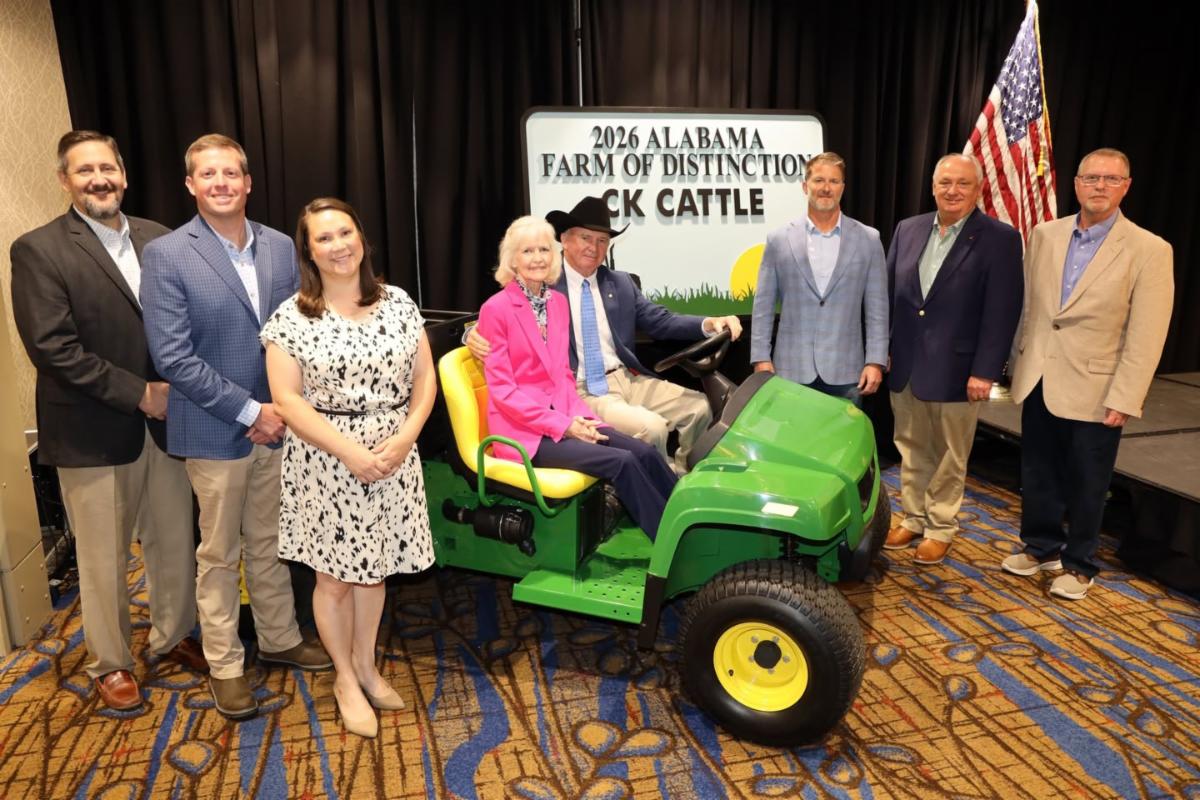
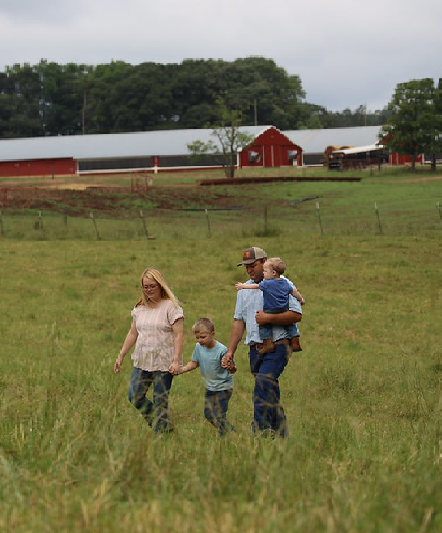
CK Cattle of Lowndes County was named the 2026 Farm of Distinction for its commitment to stewardship, support of young farmers and community impact during the Farm-City Awards Program April 9 in Auburn.
Chuck and Katie Madaris manage the three-generation cattle operation in Hope Hull alongside family. CK Cattle produces Angus, Chiangus and SimAngus seedstock cattle and commercial cattle.
As Farm of Distinction winners, the Madaris family received an engraved farm sign from Alfa Insurance and the Alabama Farmers Federation; a zero-turn Grasshopper mower from Alfa Farmers Member Perks; a John Deere Gator from John Deere, SunSouth and TriGreen; $1,000 from First South Farm Credit; and a $1,000 gift card from AFC.
Additionally, Chuck will represent Alabama during the Sunbelt Ag Expo Southeastern Farmer of the Year contest this fall.
| | Farm-City Grows Alabama Through Service, Student Success | |
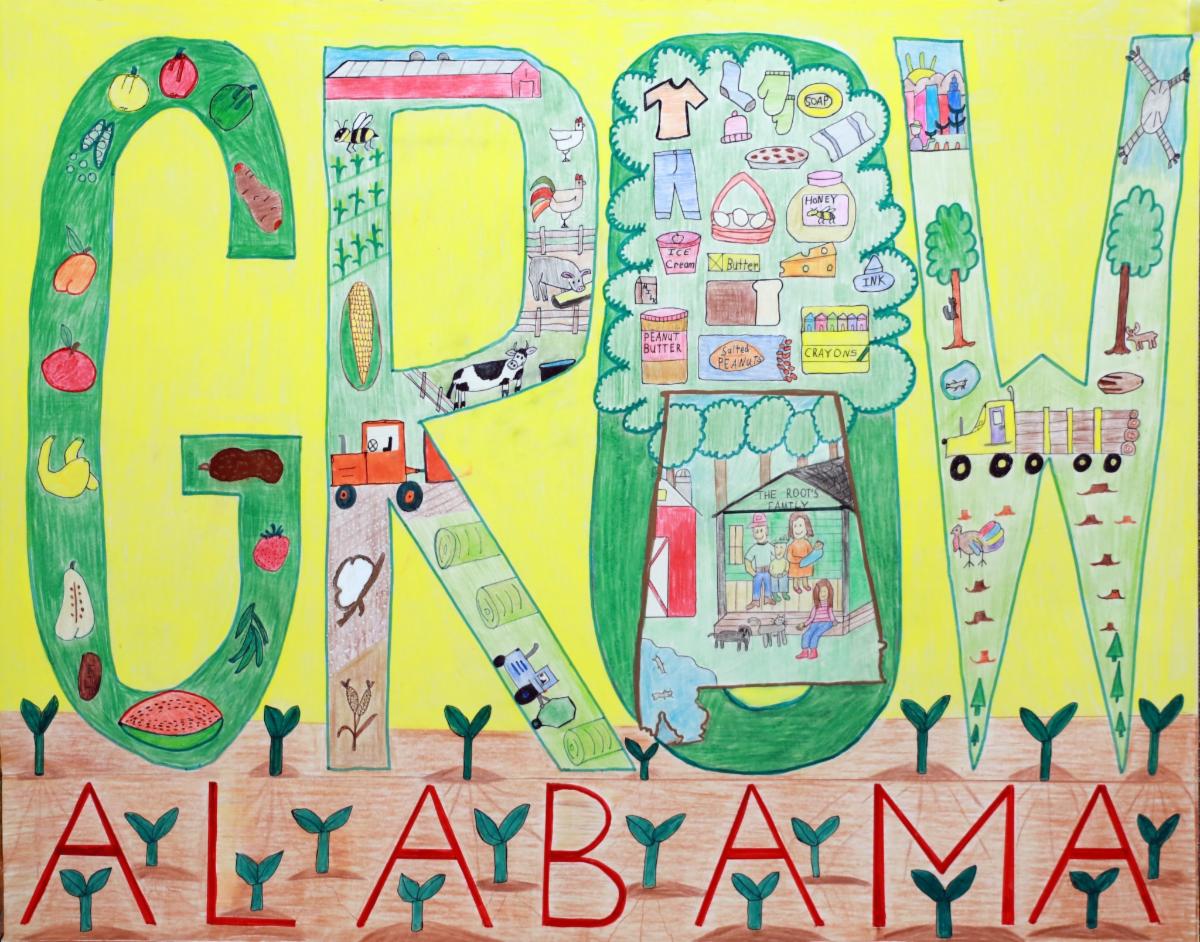
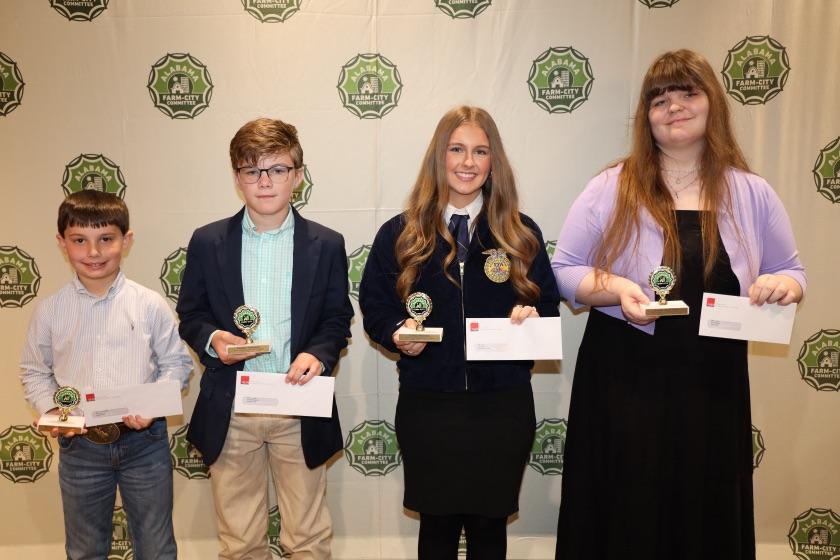
Service and community involvement took center stage as farmers, leaders and students came together for the Farm-City Awards Program April 9 in Auburn, recognizing achievements and embracing this year’s theme, “Grow Alabama.”
The theme was a callback to “Agriculture & Forestry Grow Alabama: An Economic Contribution Study” released last year by Alabama Agribusiness Council, Auburn University and Alabama Extension.
Alabama Farm-City Committee Chairman Jeff Helms said the committee hoped “Grow Alabama” would help students and volunteers understand the importance of agriculture while learning what kinds of farmers and forest landowners are in their local areas.
| |
Winners Include:
-
Maxston Blankenship: Dale County - Poster Contest, Kindergarten-Third Grade
-
Frasier Johnson: Etowah County - Poster Contest, Fourth-Sixth Grade
-
Timber Cunningham: Lamar County - Essay Contest, Seventh-Ninth Grade
-
Emma Rambo: Franklin County - Essay Contest, 10th-12th Grade
-
Emily McDaniel: Jefferson County - Video Contest, Ninth-12th Grade
-
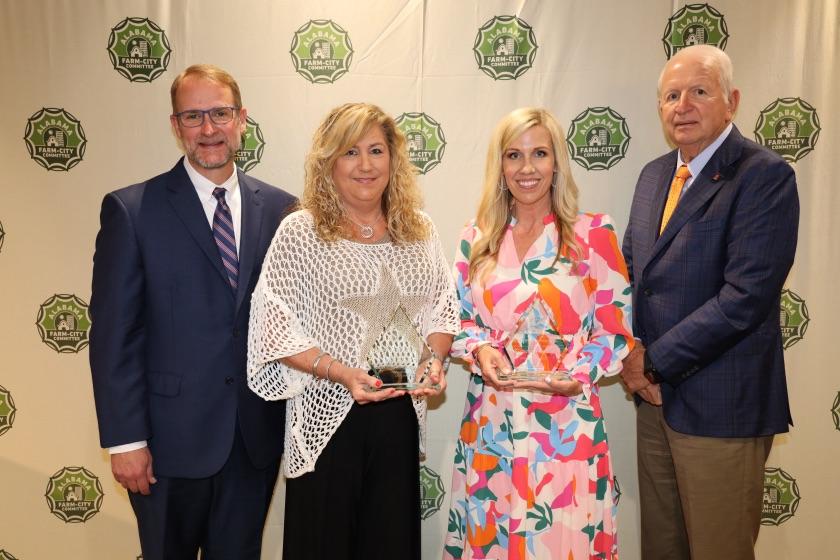
Lee County: Best Farm-City Committee Division I
-
Geneva County: Best Farm-City Committee Division II
-
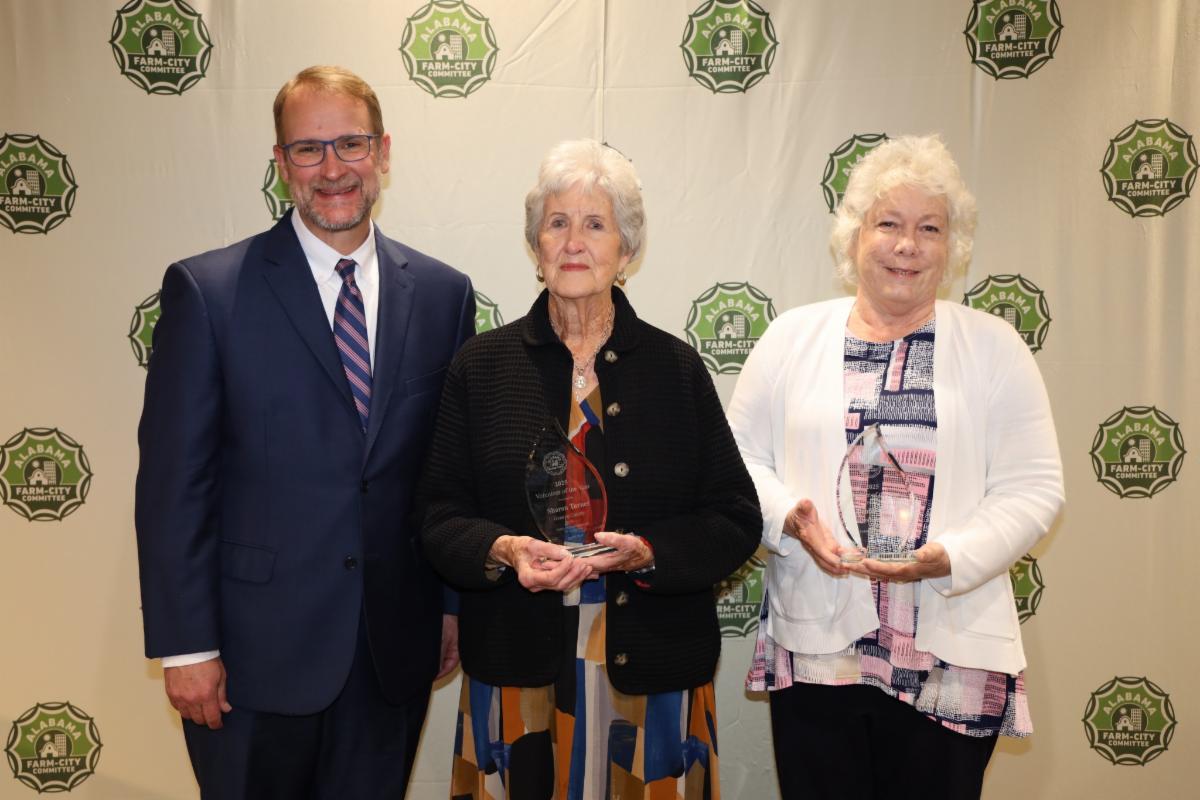
Debbie Dunn and Sharon Turner: Volunteers of the Year, Geneva County
-
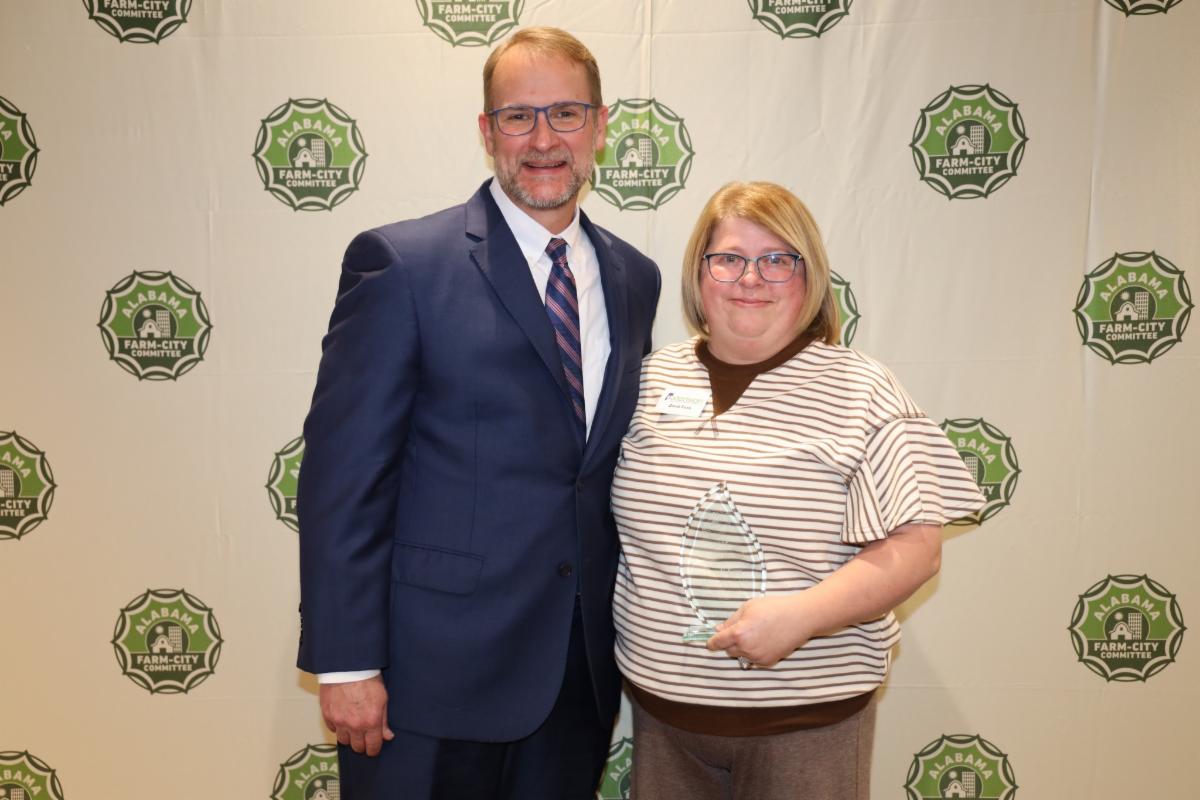
Zandi Foss: Service Award, Cherokee County
| |
Conference Celebrates Female Farmers’ Influence, Impact | |
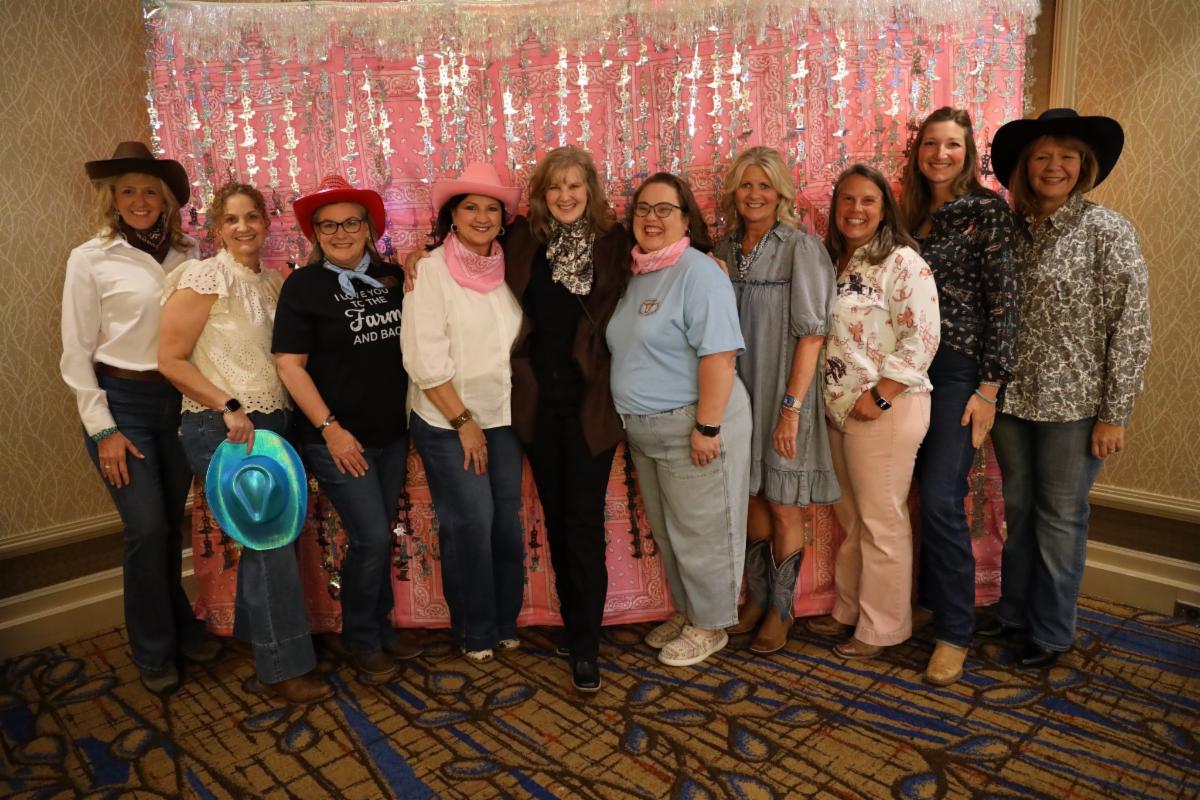
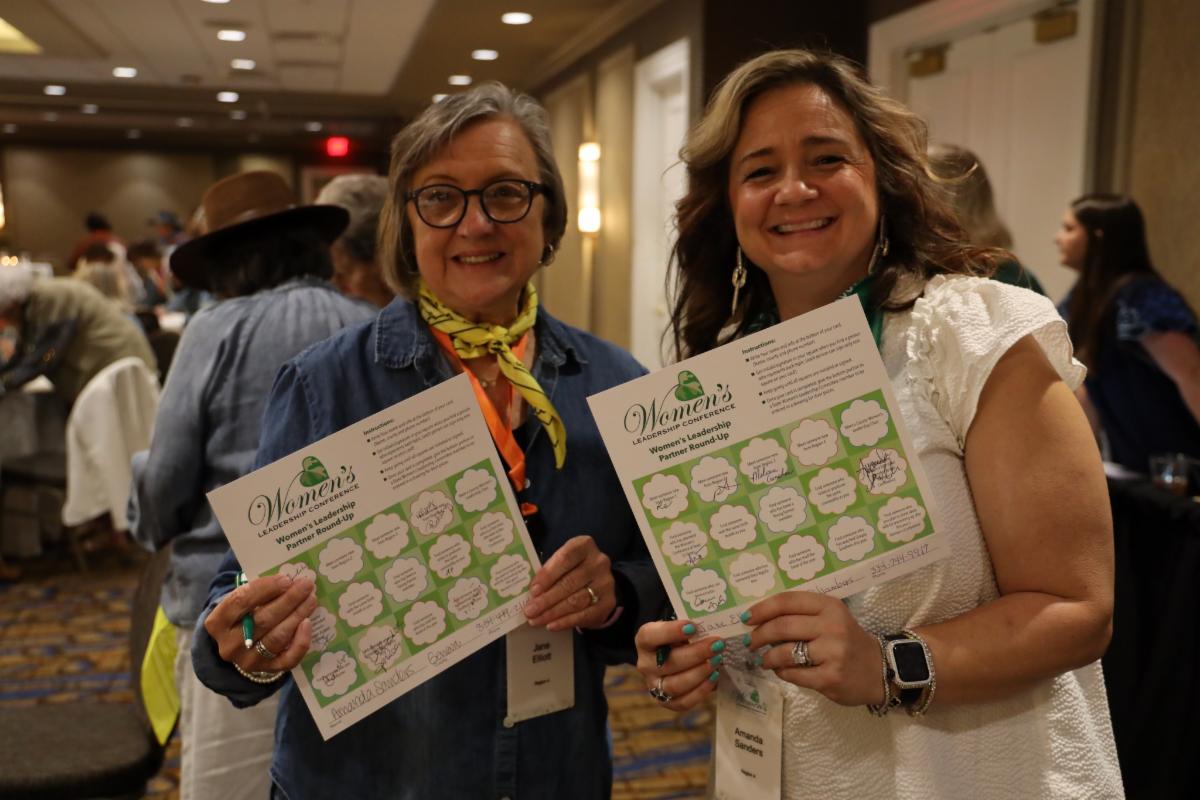
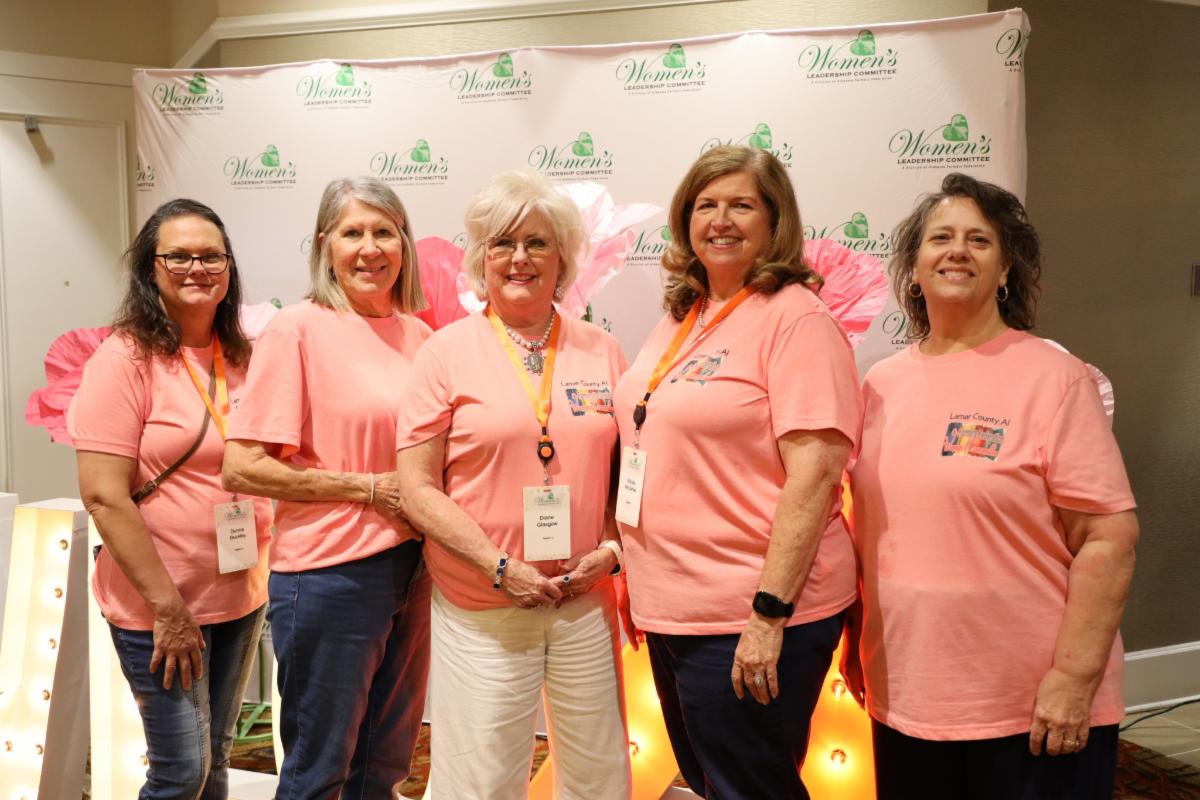
Smiles stretched ear to ear across the faces of nearly 200 ladies who attended the Alabama Farmers Federation Women’s Leadership Conference April 8-10 in Auburn.
Held during the International Year of the Woman Farmer, the event celebrated the impact of Alabama farmers, farm wives and industry leaders.
Women from across the state learned through inspiring presentations on:
-
combatting stress and prioritizing physical health with Michigan Farm Bureau Young Farmers and Ranchers Chair Sarah Zastrow
- avoiding fraud and identity theft with Farm Bureau Bank
- creating a gracious home with Melissa Lester of Southern Lady and Victoria magazines
- celebrating women in agriculture with Alabama's Farm Service Agency Director Monica Carroll
During Day 1, the ladies sported their favorite farm T-shirts during registration, which included a floral photo station, flower bar, vendors and complimentary massages. Attendees also shared suggestions on ag promotions, events and advocacy efforts with each other during regional meetings.
During Day 2, the conference joined with the Alabama Farm-City Awards Program to recognize successful agricultural advocacy efforts. That night, a themed Western Partner Roundup roped attendees into networking with new friends from different counties.
| |
Utility Tax Exemption Approved | | |
The Alabama House of Representatives passed legislation on the final session day April 9 to exempt certain ag operations from utility taxes.
SB 159 by Sen. Jack Williams, R-Wilmer, passed unanimously. This bill, and a companion carried by Rep. Danny Crawford, R-Athens, amends Alabama's utility gross receipts tax and utility service tax statutes to exclude natural gas and electricity consumed as fuel or energy in commercial greenhouses, pivot irrigation systems and poultry houses. An amendment also extends the exemption to catfish production. The legislation will sunset Aug. 31, 2029.
Alabama Farmers Federation External Affairs Department Director Brian Hardin said the legislation was a crucial victory for farmers.
“With increased input costs and consistent attacks on affordability, this is a win for farmers and will help save money in uncertain markets,” Hardin said. “We appreciate the leadership by Ag & Forestry Committee Chairman Crawford, Sen. Williams and members of both chambers who saw this through. We also thank the members who reached out to legislators, shared their stories and issues, and encouraged them to pass this bill."
SB 159 awaits Gov. Kay Ivey’s signature.
Click here for final updates on the 2026 legislative session.
| | Can’t-Miss Webinars During Extension Week | | |
Alabama Extension Week kicked off April 12 and continues through April 18. To celebrate, agents and specialists are offering educational opportunities through the Alabama Extension Week Webinar Series.
While all webinars are free, registration is required to receive the participation link. A complete list of webinars and registration links can be found at aces.edu/go/ExtensionWeekWebinars.
The remaining topics include:
- Forestry and Natural Resources
- Forest Health in Alabama: Challenges and Management at 2 p.m. Thursday, April 16
- Home and Garden
- Growing More and Giving More in 2026 at 6 p.m. Thursday, April 16
- Health and Family
- Caregiving for Loved Ones With Memory Loss at 2 p.m. Friday, April 17
| | Agriculture Feeds U.S. Economy | | |
Food and agriculture impact nearly 20% of the U.S. economy, according to an annual farm-to-fork report that analyzes the entire agricultural supply chain.
Now in its tenth year, Feeding the Economy spells good news for an essential industry that’s still feeling the pinch of economic pressures, said Alabama Farmers Federation President Jimmy Parnell.
“Farming and farm products provide security for so many American families, not just in the food they eat but in the jobs they’re able to keep,” said Parnell, a Chilton County farmer whose family runs a timber and cattle operation. “We need to remember that and support the folks who keep this country going.”
Nationwide, the 2026 report confirms that food and agriculture generate $10.42 trillion in economic value. This marks an increase of nearly $894 billion year-over-year, reflecting growth across the agricultural value chain amid ongoing inflation pressures, a challenging farm economy and an uncertain global trade environment.
In Alabama, food and agriculture directly provide:
- 351,999 jobs
- $13.26 billion in wages
- $57.85 billion in economic impact
When accounting for food, agriculture and associated businesses, the impact doubles. Those industries contribute:
- 666,481 jobs
- $35.31 billion in wages
- $134.82 billion in economic impact
| | Corn Acres to Skyrocket, Cotton Stays Steady | | |
Alabama farmers could buck a national trend this year, according to the U.S. Department of Agriculture’s (USDA) Prospective Planting Report released March 31.
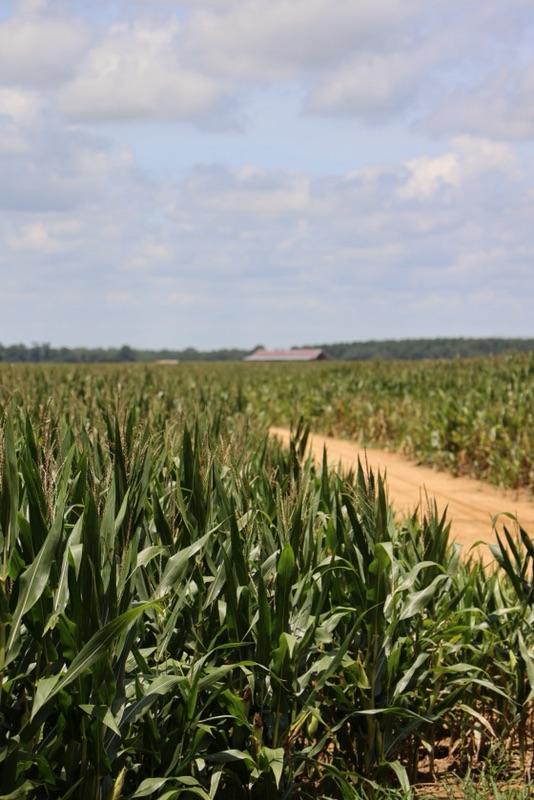
Corn acres in the Yellowhammer State are expected to skyrocket 17% from 2025, reaching 410,000 acres. This contrasts a projected 3% dip in corn acres nationwide.
Alabama Farmers Federation’s Carla Hornady cautioned farmers and industry leaders to read the report with a grain of salt. USDA conducted the annual survey before recent global conflicts pressured energy prices, fertilizer supply and trade agreements, she added.
“Even without global conflicts, there’s always a chance farmers change their intentions on what to plant,” said Hornady, who works with row crop farmers as a commodity director. “On the other hand, many farmers in Alabama stick to a strong rotation or to the plan they penciled out months ago.”
Cotton acres are expected to flatline at 290,000 acres, while peanuts could tick up slightly by 3% to 200,000 acres. Soybeans could trend downward by 2% to 290,000 acres. Winter wheat, planted last fall, is down around 9% to just 100,000 acres.
| |
Counties Designated as Natural Disaster Areas | |
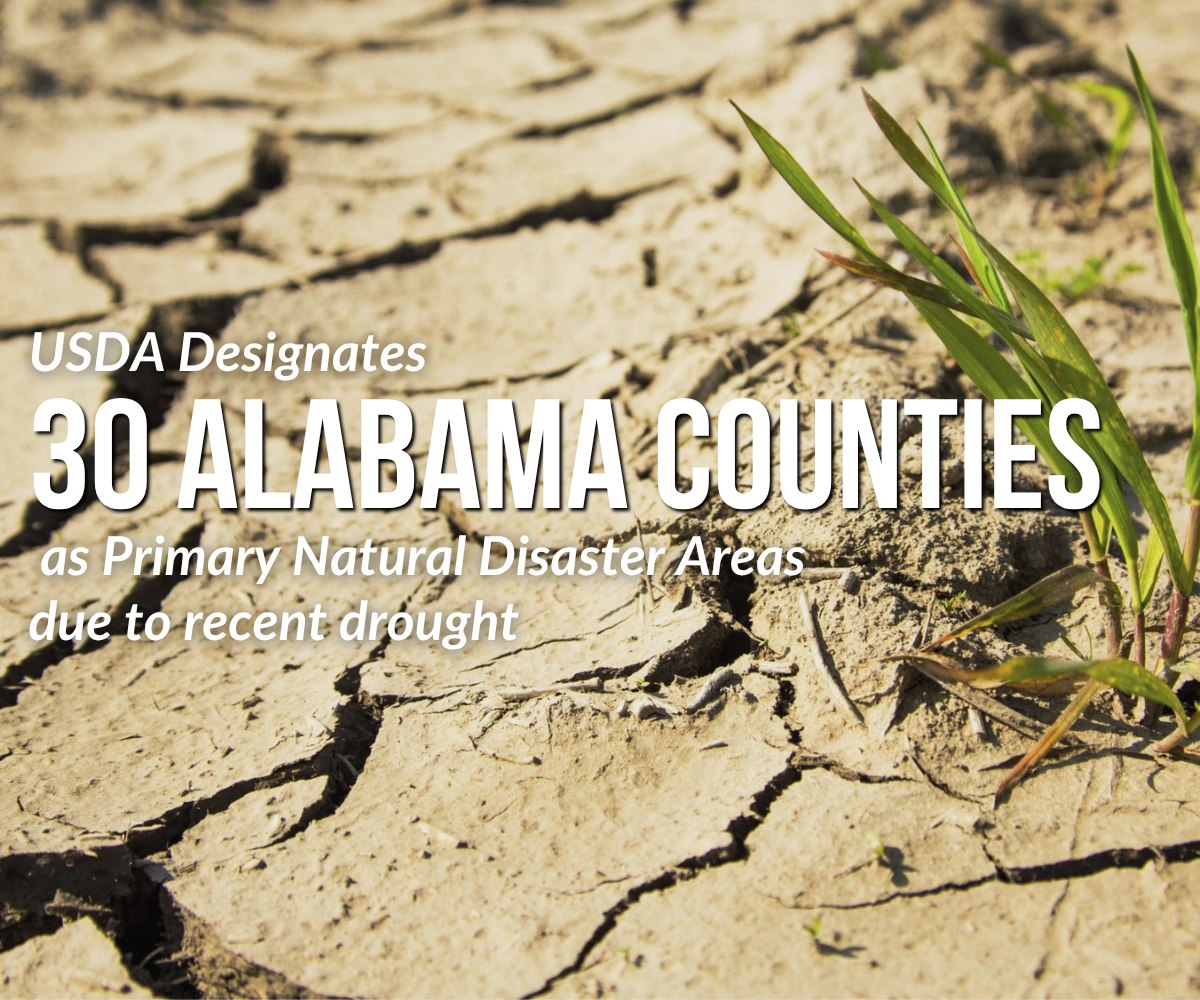
Thirty Alabama counties were recently designated as primary natural disaster areas due to recent drought. Twelve additional counties were listed as contiguous disaster counties.
The primary Alabama counties included are Barbour, Bullock, Butler, Chambers, Choctaw, Clarke, Coffee, Conecuh, Covington, Crenshaw, Dale, Elmore, Escambia, Geneva, Greene, Hale, Henry, Houston, Lee, Lowndes, Macon, Marengo, Monroe, Montgomery, Pike, Russell, Sumter, Tallapoosa, Washington and Wilcox.
The 12 contiguous counties are Autauga, Baldwin, Bibb, Chilton, Clay, Coosa, Dallas, Mobile, Perry, Pickens, Randolph and Tuscaloosa.
| | |
Dairy
-
The U.S. dairy industry expects a strong export market in 2026, with nearly 20% of milk production sold internationally and demand growing across key markets. Export volumes are reaching record levels, especially for cheese and butterfat. However, higher exports are not fully translating into better returns for farmers due to pricing and policy factors. Read more.
-
Dairy markets are showing signs of recovery in early 2026 as prices rebound despite continued growth in milk production. Strong demand for products like cheese, butter and yogurt, along with tighter inventories, is helping support and stabilize the market. While milk output is rising because of herd expansion, slower growth in components and balanced supplies are preventing oversupply pressure. Learn more.
- Beef-on-dairy calves hold higher prices than pure dairy calves, driven by increase in beef demand and strained cattle supply. This price difference has increased use of beef semen in dairy herds, reducing the number of conventional dairy calves produced. Crossbred calves have become an important source of revenue for dairy operations. Current pricing reflects a shift favoring beef on dairy calves due to their alignment with prevailing beef market conditions. However, this could cost producers long-term income by reducing milk protein performance. Read more.
| |
Poultry
-
As rural energy costs continue to climb, the U.S. Department of Agriculture halted grant applications for the Renewable Energy for America Program (REAP) while the department rewrites program rules to comply with an executive order by President Donald Trump last year aimed at cutting subsidies for renewable energy projects. REAP provides grants and loans to farmers and small businesses in rural communities to improve energy efficiency and reduce long-term energy costs. Read more.
| |
Pork
-
The latest U.S. Department of Agriculture Quarterly Hogs and Pigs report shows limited growth in the U.S. hog herd, with a relatively tight supply outlook for the rest of 2026. Total inventory increased to about 74.3 million head, but the breeding herd decreased by 1.5%, pointing toward producers not expanding. While short-term supplies are stable, lower farrowing estimates and a smaller breeding herd point to tighter hog availability later in the year. Read more.
| | | Nominate Experts for Annual Awards | | |
Alabama farmers are encouraged to nominate research and Extension personnel whose work tangibly impacted their farms for two awards from the Alabama Farmers Federation. Nominations are due June 5.
The Rittenour Award for Production Agriculture & Forestry Research will recognize Auburn University faculty for creative and original research. The winner receives up to $10,000 in program support, which can fund graduate students or research operations.
The Duncan Award for Excellence in Production Agriculture & Forestry Extension will honor Alabama Extension staff for developing or implementing solutions for stakeholder-identified problems. The winner receives up to $5,000 for programming costs.
Winners will be recognized in August during the Federation’s Farm & Land Conference in Mobile.
| | Register for Poultry Educational Workshop | | |
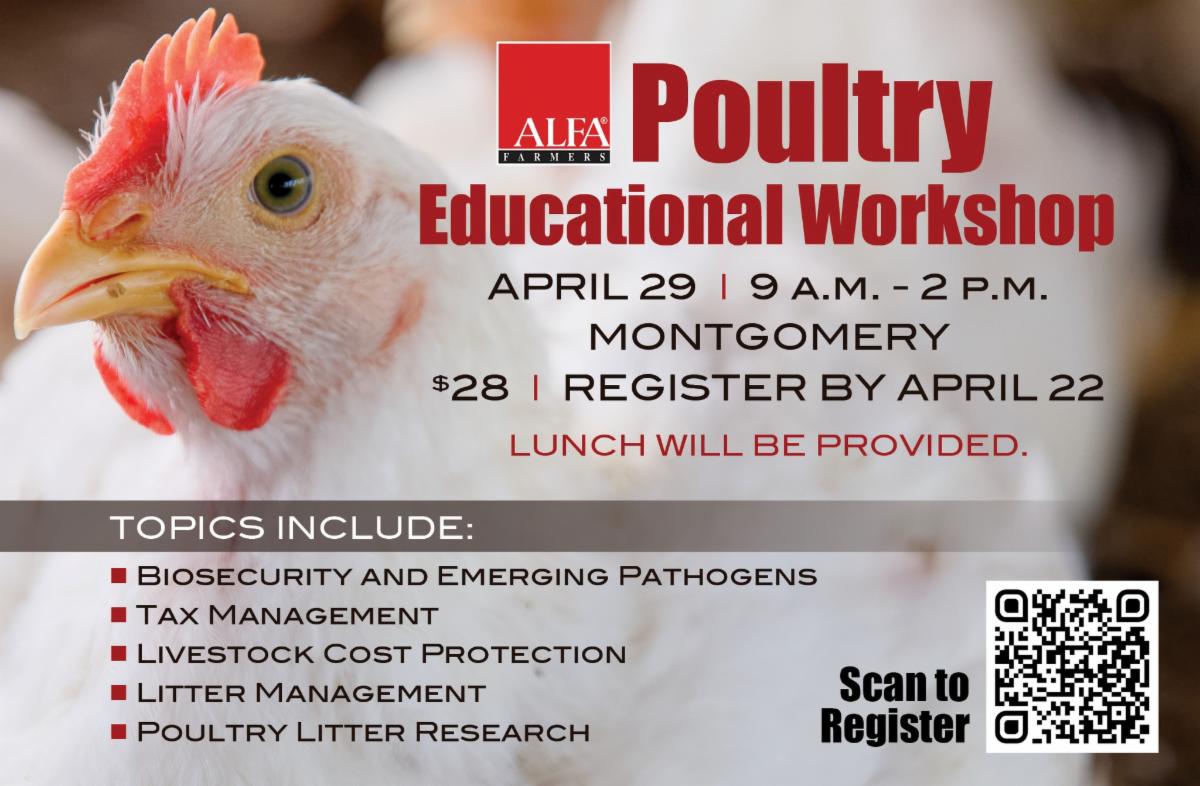
Join the Alabama Farmers Federation State Poultry Committee for a Poultry Educational Workshop April 29 in Montgomery at the Federation home office.
Cost is $28 per person, and lunch will be provided. Payments will be accepted via check or card on the day of the event. Register by April 22.
Agenda includes:
- Tax Management with Adam Kantrovich
- Livestock Cost Protection with Dennis Brothers
- Litter Management with Dennis Brothers
- Biosecurity and Emerging Pathogens with Verick Burchfield of Mountain Valley Silver
- Litter Research Update with Rishi Prasad
| |
-
Alabama farmers are encouraged to report drought conditions due to the current dry weather. Reports will become part of the permanent record, appearing immediately on an interactive map visible to the public, including authors of the U.S. Drought Monitor and the media. Report here.
-
Farmers can apply for the American Farm Bureau Federation Ag Innovation Challenge until June 5. In its 13th year, this national business competition showcases U.S. startup companies developing innovative solutions to challenges faced by America’s farmers, ranchers and rural communities. The overall winner will receive $100,000 in startup funds, the runner-up will be awarded $25,000, and two additional business owners who advance to the Final 4 will receive $10,000. Learn more.
| | | | |