A Message from the Executive Director |
It’s been over a year that we in Indian Country endured a massive pandemic that engulfed our country, our lands and our people. It tried us and made us wonder if we would ever see the light at the end of the tunnel. We see it now; we can feel it and we openly wonder what that “new world” is going to look like. Above all, we made it and we are still here.
We have lost many to this pandemic and we now know what is important – our people. We learned that our histories, our cultures, our traditions and our languages are priceless and that we need to protect and preserve them for future generations. And where does this knowledge, wisdom and experience reside? Our elders. They are our walking, breathing encyclopedias. To the many tribal leaders, community leaders and program staff, our gratitude goes out to you for the many hours you spent in taking care of our elders.
We, at the National Indian Council on Aging (NICOA), are not satisfied with going back to “normal” (whatever that may look like). We want to make sure that life for our elders is better than it was before the pandemic. Many tribes went to extraordinary lengths to ensure our elders were protected by prioritizing them as community members; programs were revised, and tribal infrastructures were modified to be more responsive to the needs of elders.
We encourage tribes to seriously consider maintaining these modifications and not return to pre-pandemic processes and systems. We found that the changes worked and that by prioritizing our elders’ needs and safety, we made a better “mouse trap.” We encourage and support tribal leaders as they help to ensure that these programmatic changes are made permanent at the federal level by advocating that we not return to pre-pandemic rules, regulations and policies.
We need to ensure that our elders take advantage of the vaccines that have been developed and administered. According to the scientific literature and studies, it is safe and protects those who are vaccinated. By taking the vaccines, elders can once again venture out of their homes and communities and participate in the world around them. They can attend ceremonies, visit friends, see their families and attend events and gatherings.
NICOA will be holding our biennial American Indian Elders Conference on August 1-6, 2021 in Reno, Nevada – an event which many of our elders attend and have made friends from around the country. They can learn new things by attending the workshops and get an opportunity to put the pandemic behind them for six days.
The conference provides hope, enjoyment and renewal of spirit. We hope that tribes and tribal leadership are supportive and sensitive to the needs of our elders who, once again, must renew and re-energize themselves to face the new world we will be entering. We hope to see old friends and make new friends and colleagues in Reno, Nevada this year. Resilience together; we made it and together we will move forward. Thank you for your continuing support and our prayers go out for those we lost in the past year.
Sincerely,
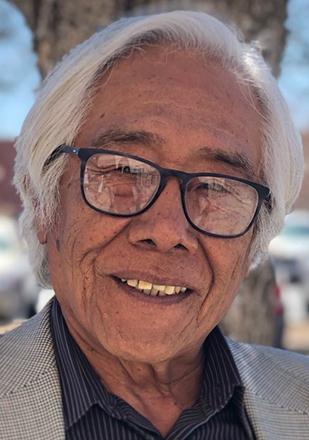
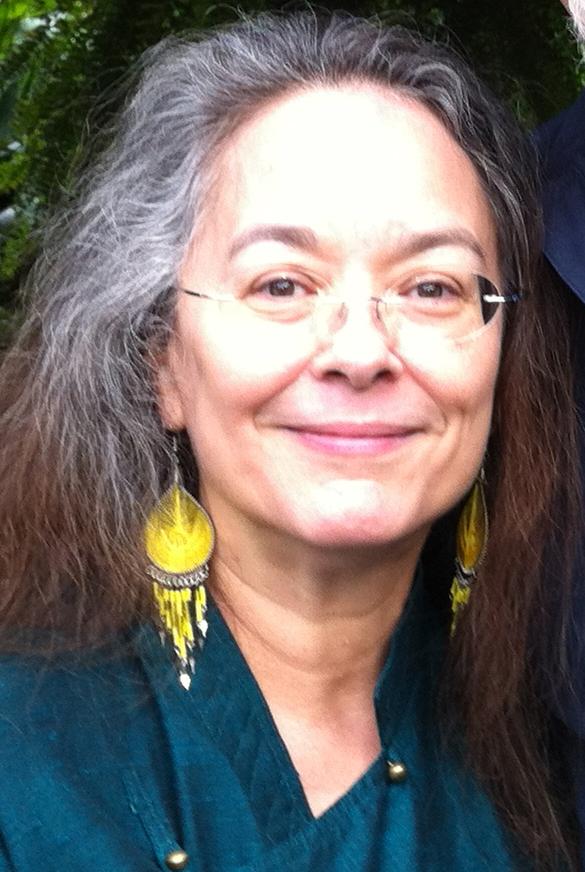
Larry Curley
Executive Director
|
|
|
|
Native Communities of Strength |
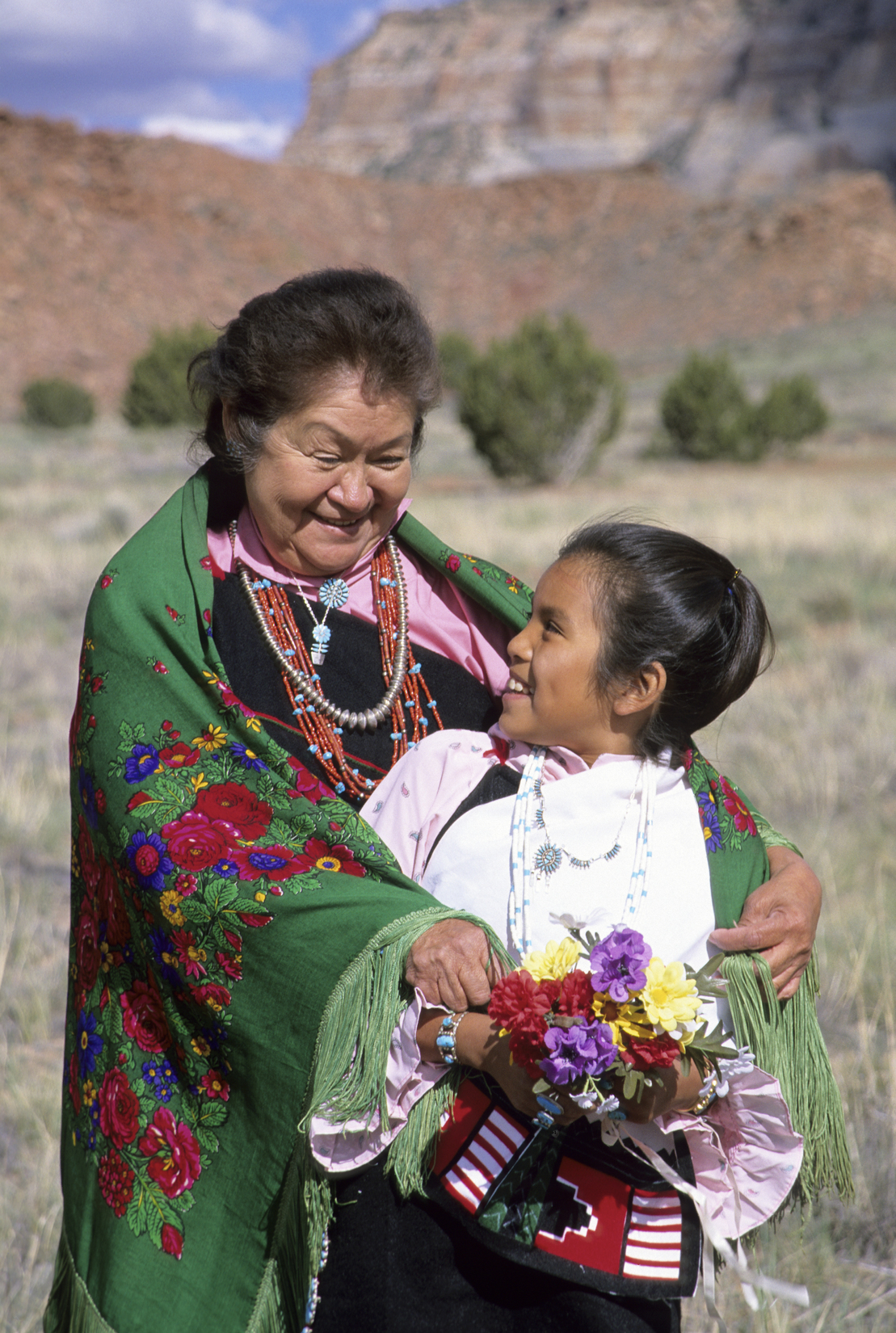
“Communities of Strength” is the theme for 2021’s Older Americans Month. The elders of the American Indian and Alaska Native communities exemplify strength both individually and as a nation. It is because of this strength that the National Indian Council on Aging (NICOA) exists and strives to honor them by supporting them throughout the United States.
Our elders have built their strength over their lives through celebrations and sorrows. In all cases, they have led or leaned on a corps of individuals. These supporters not only benefitted from the elders’ strength and leadership but strengthen the elders themselves through a variety of ways.
NICOA needs such support as well. We are asking you to stand with us and support us in 2021 by donating $21 a month for the rest of 2021. Over the next eight months, your contributions will support and strengthen NICOA as we strive to provide services to those that our nation has looked up to and followed for decades.
Please join us in this $21 for 21 campaign by setting up a monthly reoccurring contribution of $21 per month for the rest of 2021. You can set-up this payment by going to GoFundMe.com.
As we all honor our elders, the Older Americans of our Nations, we thank you for supporting us so we can support and strengthen them.
Sincerely,
Larry Curley
Executive Director
|
|
|
|
NICOA Presents at Aging 2021 Conference |
NICOA both attended and presented at the annual conference of the American Society on Aging from April 6-15.
NICOA Project Coordinator Rebecca Owl Morgan presented “Stronger Together—Serving Diverse Elders”. When working with diverse elder communities it is essential to realize that outside forces can add to the lifetime of discrimination that some members face. The more intersecting identities a person holds, the more likely the elder lived and continues to live with daily obstacles and has to navigate oppression. The virtual session included a panel discussion on best practices, resources and technical assistance for serving diverse elders documented in the new guide, “ Serving Diverse Elders: Strategies for Meaningful Inclusion in Service Planning and Delivery.”
NICOA Executive Director Larry Curley was among the panelists for the following presentations: “Language Access and Older Adults: One Tip of the Cultural Competency Iceberg” and “Response to COVID-19: Best Practices from Minority Organizations on Mitigation and Preparation for the Next Normal”. The global pandemic has caused tremendous threats and disruptions at all levels. Providers of programs and services for elders and people with disabilities have to face the unexpected reality to mitigate the impact of COVID-19. The “Response COVID-19” session showcased how minority organizations protect their most valuable assets (staff, volunteers, and individual seeking services), provide essential services and prepare for the next normal.
|
|
|
|
Spring has sprung! As spring settles in across the country, allergies are abundant. Sniffling, sneezing, coughing are things nobody wants to hear post COVID-19.
Across the country, many individuals sat at home for almost a year, and some longer. As the country begins to open up, many people are returning to offices, but many are still fearful of going out into the community.
It’s important to acknowledge that many people understandably have some level of fear about returning to a shared physical space to work. While most people are eager to return to some semblance of normalcy, employers will need to help their employees feel secure about coming back to the office. Here are three ways you can do that, according to Barbara Mitchell, HR consultant and author of The Big Book of HR.
Overcommunicate in advance. For nearly a year, people have been bombarded by bad news about the pandemic. As you prepare the office for employees’ return, share with staff specific information about how you are making the workplace safe. Reach out early and often. Remember that in the absence of information, people assume the worst, so share what you know. If you don’t have all the answers, acknowledge this and explain how you are getting those questions answered.
It’s also a great idea to share how you as a leader are feeling. It can be comforting to your staff to hear that you feel stressed and have fears of your own. Reach out in multiple ways, and if you can, talk to people personally. A phone call from the CEO or another leader goes a long way toward making people feel safe.
Listen to employee concerns. Managers should gauge how the people who report to them are feeling and invite them to share any specific concerns about returning to the office. Collect these concerns in one place so that the leadership team can consider how to address as many as possible. Some employees may be concerned about difficult family situations, for example, while others may have underlying health conditions that make them more vulnerable to the virus. How will you handle these issues?
Fight fear with information and inspiration. This is where an empathetic leader can make a big difference. Let your team know how you are dealing with your own fears. Share stories about positive things that are happening to you and others during this crisis. Your employees need thoughtful and inspirational leadership that allows them to see beyond their fears.
NICOA SCSEP is now enrolling individuals into the Senior Community Service Employment Program. If you or someone you know could benefit from learning new work skills and get assistance finding a job, are 55+ and low income, visit our website, call 505-292-2001 or send an email. If you’re interested in participating in the program, fill out the pre-application form.
Sue Chapman
SCSEP Director
|
|
|
|
Older Adults Equity Collaborative |
|
A Message from the Older Adults Equity Collaborative |
Yesterday we had a gentle rain in New Mexico. As the weatherman reminded us, those rains do more good than the torrential ones that come during monsoon season. When it rains slowly the water has time to infiltrate the ground and add to the water table in a state that has endured years of drought.
Like the rain, NICOA is working regularly, incrementally, to create shifts in thinking and make the road wider and more inclusive for Native elders.
One project we are excited about is a curriculum about how to work effectively with tribes. We are exploring ways to educate the aging network about how to form relationships with tribes in order to work together, stepping around the barriers that tend to isolate each of us in silos.
The other audience we want to connect with are tribal organizations. We think classes in storytelling and helpful tools to support and advocate with our elders are good starting points to celebrate Native traditions and remind everyone of the resilience of our elders.
|
|
|
|
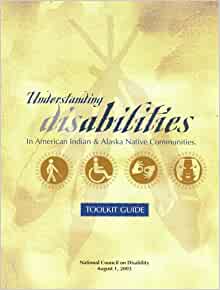
In 2003 the National Council on Disability (NCD) published a book titled: Understanding Disabilities in American Indian and Alaska Native Communities: Toolkit Guide. This toolkit covered a range of topics and included photos and stories about Native persons with disabilities. It was a refreshing, authentic perspective on a neglected group. We have partnered with NCD to update the toolkit and enlisted the help of new and old technical experts in the areas of vocational rehabilitation, employment, housing education, and advocacy and other subjects. If you are interested in either of these projects, please contact me, we welcome your voice!
We are continuing to provide trainings using the Diverse Elders Coalition (DEC) caregiver curriculum and steadily working on the Tribal National Resource Center for Long Term Services and Supports (TNRCLTSS) project.
If you are seeking a nice break from your work, check out Robbinsville, North Carolina native Ronnie Milsap’s song “Smokey Mountain Rain”. It will make you homesick for the Smokies even if you didn’t grow up there! Be safe, please get your vaccinations and plan to come to our NICOA conference in Reno August 1-6!
Rebecca Owl Morgan
Eastern Band of Cherokee Indians
Older Adults Equity Collaborative Project Coordinator
|
|
|
|
2020-2021 Membership Available Online |
|
Membership with NICOA offers many valuable benefits. As a paid member you will receive NICOA’s online bimonthly newsletter, legislative updates on important issues and resolutions affecting elders, voting privileges for qualified members and discounted registration fees for qualified members to attend our biennial conferences.
Be an important part of a national membership network and become a NICOA member by applying online or by mail. |
|
|
|
American Indians Face the Highest Odds for Stroke |
U.S. News reports that while strokes strike many Americans, a new study shows the risk is particularly high among American Indians. Researchers already knew that American Indians had the highest risk of atrial fibrillation, which is an irregular heartbeat ("arrhythmia") that can increase the risk of blood clots and stroke.
The new study found that American Indians had a 47 percent higher risk of having a non-bleeding stroke compared to people from all other racial and ethnic groups in the United States.
NICOA Executive Director Larry Curley was quoted agreeing that more research is needed, including in other regions where there might be differences in risk.
"I know that the California tribes are different than, let's say, the Midwest tribes in Wisconsin or Minnesota [or] on the Plains, like North Dakota, South Dakota," Curley said. "So that would, to me, be a very illuminating study."
|
|
|
|
30 Minute Full Body Kettlebell Workout on the Navajo Nation |
|
Exercise Scientist/Environmental Scientist Sean Etsitty is trying to spread health and wellness on the Navajo Nation. |
|
Check out these complete, full-body workouts for people with access to limited gym equipment on the Navajo Nation. All you need is a kettlebell and 50 feet of space. |
|
|
An American Indian Reflection on COVID-19:
NICOA Executive Director Larry Curley shares his views on loss, resiliency and relearning the ways of tribal elders
|
Twenty-eight years ago, when I was the director of the Navajo Nation's Head Start program, I traveled extensively to meet with the field staff on the reservation, which was about the size of West Virginia. I would take headquarters staff with me; the trip often lasted eight to nine hours. I particularly enjoyed traveling with a staff person who was a traditional medicine man and would tell traditional stories during these occasions.
One of these stories was about the history of the Navajo people, their experiences with different diseases and how they were mitigated. Long ago, he said, Navajo people were dying by the thousands from the diseases that beset the People. Finally, a group of powerful medicine men and women gathered and asked the Holy Ones how these diseases could be eradicated.
|
|
|
|
How to Book a COVID-19 Vaccine Appointment Without a Computer |
Most states have now approved vaccinations for elders aged 65 and older, prompting a scramble for appointments. But that typically has to be done online, and many elders are not connected. According to a 2019 study by the Pew Research Center, 27 percent of adults age 65 and older do not use the internet.
The divide is also evident in Indian Country. NICOA Executive Director Larry Curley was recently quoted by AARP: "They don't have access to the internet. Broadband isn't out there,” Curley says. “When you say, ‘Go to our website,’ it's just worthless.” And American Indians and Alaska Natives have their own history of unethical medical treatment by a federal agency.
Yet American Indian and Alaska Native nations are bridging that gap, with close to 575,000 doses of the vaccine administered by the federal Indian Health Service as of March 1, a rate higher than many states.
|
|
|
|
|
|
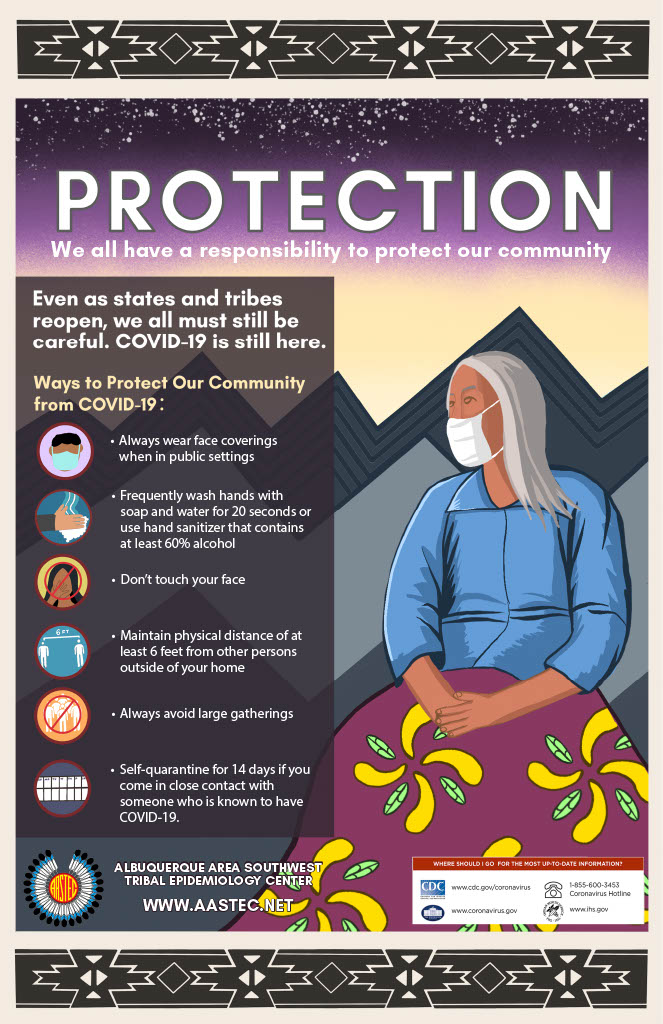
Posters from Albuquerque Area Southwest Tribal Epidemiology Center |
Albuquerque Area Southwest Tribal Epidemiology Center is dedicated to providing tribal communities with assistance. If your tribal community is in need, click the button below to request Tribal Technical Support for COVID-19 or COVID-19 Educational Materials. |
|
|
|
FCC Offers Internet Discount to Tribal Lands |
Applications have just opened for a $3.2 billion federal initiative to subsidize high-speed internet for low-income households. The Federal Communications Commission (FCC) program offers eligible households discounts of up to $50 a month for broadband service, and up to $75 a month if the household is on tribal lands.
The program, which launched in early May, also provides a one-time discount of up to $100 on a computer or tablet for eligible households. The program is the biggest one yet to help households nationwide afford broadband service, the FCC said in February, after unanimously voting to formally adopt the Emergency Broadband Benefit program.
|
|
|
|
Native Households Make 8 Cents for Every Dollar a White Household Has |
American Indian and Alaska Native households only have 8 cents of wealth for every dollar that the average white American household has, according to a study from 2000 — the last year Native wealth was measured systematically. This wealth gap has only increased in the past two decades. Native wealth data is not available from the U.S. government, so they are excluded from most research on racial wealth gaps.
American Indians and Alaska Natives have been disproportionately harmed by race-based policies, beginning with policies that supported slavery and taking land. Broken treaties and other government actions that forced Native people off their tribal land were devastating for Native culture and wealth. This includes policies like the General Allotment Act of 1887, which set in motion a 65 percent decrease in land held by tribes over the next 50 years. The impact of that one policy represents 90 million acres of lost community wealth. |
|
|
|
How to Ensure Pay Equity for People of Color |
In addition to overcoming the pressure most employees feel about mastering their jobs and fitting into the organization’s culture, many people of color are also trying to prove their worth — while tolerating constant slights by insensitive white colleagues. These spoken and unspoken insults are frustrating and weaken efforts to promote issues of diversity, equity and inclusion.
Executive Director Larry Curley was quoted by the Society for Human Resource Management, saying his business relationships improved when he began wearing a suit and tie and cut his traditional hair bun. “They started listening because now I looked like them,” says Curley. |
|
|
|
Native Households Have Highest Unbanked Percentage |
American Indian and Alaska Native communities in the U.S remain widely underrepresented in financial services. According to the Federal Deposit Insurance Corporation’s (FDIC) 2019 survey of household use of banking and financial services, Native communities had the highest rates of unbanked households at 16.3 percent.
The word unbanked is an umbrella term used to describe individuals who do not use banks or credit unions for their financial transactions. They have neither a checking nor savings account.
Historically high poverty rates, coupled with unemployment and systemic racism against American Indian and Alaska Native populations, have barricaded access to financial capital and credit. Long distances between reservations to ATMs and banks or limited access to the internet can also hinder in person and online banking experiences for Native people.
According to a 2017 report from Native Nations Institute, the average distance from the center of a reservation to the nearest bank is 12.2 miles with an average distance of 6.9 miles to the nearest ATM. The national average to a bank is under 4 miles. Although physical accessibility to banks and ATMs has improved for many communities since 2001, broadband connectivity to high speed internet still remains low for tribal land residents. |
|
|
|
Resource Guide for Native Women Entrepreneurs in the United States |
In their online ONAC survey responses, Native women entrepreneurs shared their challenges and desire for more resources in three key areas including: business education, financial services and products, and mentorship.
Native businesswomen are interested in online and in-person training workshops, one-on-one entrepreneurship technical assistance, and entrepreneurship-related degree programs. They also expressed a need for increased access to capital for small business start-up and expansion.
Business mentorship is one more request from Native businesswomen. Mentoring support could come from participation in Native chambers of commerce events, coalition conferences, and other Native-led mentoring networks.
|
|
|
|
5 Recent Tribal Newsletters |
|
|
|
Strengthening Vaccine Efforts in Indian Country: Results from a UIHI National COVID-19 Vaccination Survey |
The Urban Indian Health Institute (UIHI) administered an online survey to better understand COVID-19 vaccine attitudes, knowledge, and perceptions among American Indians and Alaska Natives nationwide. The analyses and recommendations presented in this report can be used to inform the development and delivery of culturally attuned COVID-19 vaccination campaigns, education materials, and programs for American Indian and Alaska Native communities.
The story told with this data shows what is motivating the communities to receive or deny the vaccine.
Key findings:
- The primary motivation for participants who indicated willingness to get vaccinated was a strong sense of responsibility to protect the Native community and preserve cultural ways.
- 75 percent of participants were willing to receive a COVID-19 vaccine.
- 74 percent of participants believed getting vaccinated is their responsibility to their community.
- 72 percent of participants wanted evidence that the vaccine is safe right now and in the long term.
|
|
|
|
American Indian Veterans Have Highest Record of Military Service |
Memorial Day is an American holiday, observed on the last Monday of May, honoring those who died while serving in the U.S. military. We use this day to acknowledge the many American Indians and Alaska Natives who have served in the U.S. Armed Forces, as well as the federal, state, local and tribal law enforcement who sacrifice their safety for the security of all.
American Indians and Alaska Natives serve in the Armed Forces at five times the national average and have served with distinction in every major conflict for over 200 years. Considering the population of the U.S. is approximately 1.4 percent Native and the military is 1.7 percent Native (not including those that did not disclose their identity), Native people have the highest per-capita involvement of any population to serve in the U.S. military.
They also have a higher concentration of women servicemembers than all other groups. Nearly 20 percent of American Indians and Alaska Natives servicemembers were women, while 15.6 percent of all other servicemembers were women. |
|
|
|
Sinixt Nation Has Right to Lands in Canada |
An American Indian community in Washington state have long argued that they are descendants of the Sinixt, an Indigenous people whose territory once spanned Canada and the United States. In 1955, after the Sinixt were pushed down into Washington state, the Canadian government declared them extinct.
Last month, Canada’s highest court agreed, ruling that the 4,000 members of the Colville Confederated Tribes in Washington state were successors to the Sinixt – and as a result, that they enjoy constitutionally protected Indigenous rights to hunt their traditional lands in Canada.
This court decision settled longstanding questions over the status of the Sinixt, but it also has the potential to affirm hunting rights in Canada for tens of thousands of American Indians and Alaska Natives living in the U.S. dispossessed of traditional territories by an international border drawn hundreds of years ago. |
|
|
|
Lawsuit: Montana’s New Voting Laws Violate Native Americans’ Rights |
Montana legislators enacted the laws — H.B. 176, which eliminated same-day voter registration, and H.B. 530, which restricted ballot collection — this spring, amid a national Republican push to tighten voting regulations in connection with President Donald J. Trump’s false claims of election fraud.
The lawsuit argues that the measures in Montana, where an estimated 6.5 percent of the population is Native and district courts struck down another ballot collection restriction last year, are “part of a broader scheme” to disenfranchise Native voters. It argues that the laws violate the right to vote, freedom of speech and equal protection under the Montana Constitution. |
|
|
|
Michigan’s Enbridge Line 5 Pipeline Battle |
When Enbridge Line 5 was built in 1953, the notion of tribal consultation was often overlooked by states and corporations. In those days, pipeline construction was simple: The company paid the state of Michigan $2,450 for an easement for a portion of its pipeline on the lake bottom of the Straits of Mackinac.
Treaties — long-ignored and often drawn out in extended court fights — may be key to the dispute. After winning reaffirmation of treaty rights in federal court during the 1970s and 1980s, Michigan tribes have been actively exerting and protecting their rights to hunt and fish in unpolluted ceded territory as guaranteed by the Treaty of 1836.
Now a showdown is looming over Enbridge’s continued operation of Line 5 as well as its plans to build a tunnel under the Straits of Mackinac to house a segment of the pipeline.
The company has ignored orders by Michigan Gov. Gretchen Whitmer to stop the flow of oil through the pipeline, claiming only the federal courts can enact such an order. The state of Michigan wants the matter sent to a state court.
Enbridge and the state of Michigan are engaged in court-ordered mediation talks, but no deadline has been set for the talks.
|
|
|
|
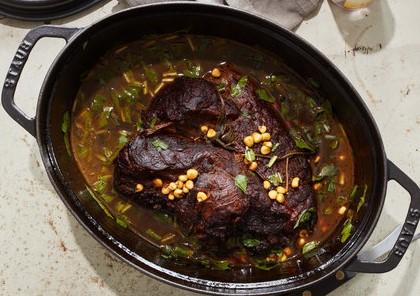
Bison Pot Roast With Hominy
-
1 cup dried hominy
-
1 (3- to 4-pound) bison chuck roast
- Coarse sea salt
-
3 tablespoons sunflower oil
-
3 to 4 cups bison or vegetable stock
-
2 fresh sage sprigs, plus more sage leaves reserved for garnish
-
1 (4-inch) branch wild white cedar, or 2 teaspoons dried juniper berries
-
¼ cup light agave nectar
-
1 packed cup sliced dandelion greens (or other dark greens, such as spinach or kale)
Add the hominy to a large bowl and cover with 3 inches of water. Let soak overnight at room temperature. Drain, discarding the soaking liquid.
Heat the oven to 250 degrees. Season the bison generously on all sides with 2 tablespoons salt. Heat the oil in a large Dutch oven or heavy pot over medium-high. Add the bison and sear it until browned on all sides, rotating the meat when it releases easily from the pot, about 15 minutes total. Transfer the meat to a plate, then add the drained hominy, stock, sage sprigs, cedar or juniper, and agave to the pot.
Bring to a simmer over high heat, scraping the bottom of the pot. Return the meat to the pot, cover, transfer to the oven and bake until the meat is very tender, 3 to 3 1/2 hours, turning over the bison about halfway through. Remove and discard the sage sprigs and cedar, if using. Stir in the greens until wilted. Season the liquid with more salt to taste.
Slice the meat into 1-inch-thick slabs and divide among shallow bowls. Spoon some of the sauce, hominy and greens over the slices, and garnish with whole or torn sage leaves.
|
|
Wild Rice Sauté With Sweet Potato
- 2 tablespoons olive oil
- 1 medium yellow onion, diced
- 8 cloves garlic, peeled
- 2 cups white mushrooms, cleaned and sliced (about 10 ounces)
- 2 cups brown cremini mushrooms, cleaned and sliced
- 1/2 cup dried tart cherries or dried cranberries
- 1/2 cup fresh or frozen corn kernels
- 2 cups cooked wild rice (from about 3/4 cups dried)
- salt and pepper, to taste
- 4 tablespoons fresh green scallions, finely sliced (about 3 to 4 scallions)
- Roasted sweet potatoes, to serve (optional)
Cook the wild rice according to the package directions. This will take about an hour.
While the rice cooks, heat a small skillet over medium-high heat until hot. Add the garlic cloves and cook until they start to blacken. Toss and lightly blacken on all sides. remove from heat and place into a small bowl to cool. Once the garlic cloves are cooled, finely chop them.
Heat a medium- to large-sized pan. Add the olive oil and add the onions and sauté, stirring for 4 minutes to prevent burning. Add the blackened garlic and sauté for 2 more minutes, stirring constantly to prevent burning.
Add the mushrooms and cook, stirring, for 4 to 6 minutes. Add the dried cherries or cranberries and stir. Cook for another few minutes and then add the corn kernels. Stir and cook for an additional 1 to 2 minutes. Add the cooked rice, salt, and pepper. Stir for two minutes more, until completely hot.
Remove from heat, garnish with fresh sliced scallions, and serve immediately.
|
|
|
|
The National Indian Council on Aging, Inc. (NICOA) is a not-for-profit 501 (c)(3) charitable organization. Please consider adding NICOA to the charities you support.
NICOA needs your financial support as the advocacy and political work we do for our elders is not free. Grants that have helped fund NICOA are under threat in Washington, D.C., but you can help.
Your financial support will go directly to support our mission to improve health, social services and economic wellbeing for all American Indian and Alaska Native elders. Donations are tax deductible.
|
|
|
|
|
|
|
|