Quality Patient Healthcare Through Medical Leadership and Education
 

July 2026 Issue Part II

Today's Insights, Tomorrow's Better Care

Today’s WAVE offers what the WAVE does best - it connects you to the knowledge that helps improve care for our residents and patients. We start with “Upcoding and the Use of AI in Medicare’s Patient-Driven Payment Model” by Mary Ellen Dellefield, PhD, RN, FAAN. Next we have Karl Steinberg, MD, CMD, HMDC, HEC-C’s “California’s Emergency Hospice Regulations: Strengthening Oversight While Protecting Access.” Of course, we also feature news of interest, information on upcoming webinars, courses and meetings. Thank you for joining the WAVE. 


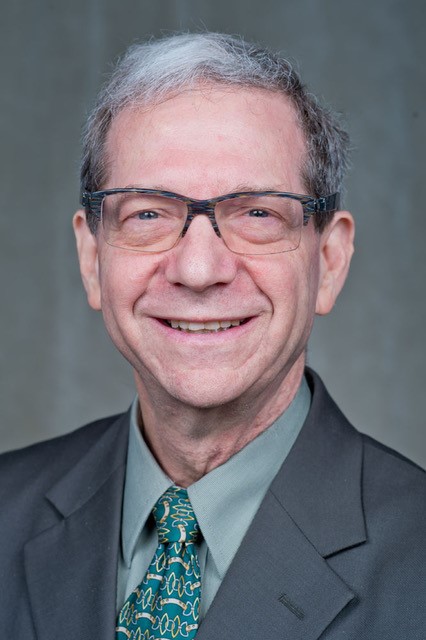
Jay Luxenberg, MD

CALTCM Wave Editor In Chief

Featured Articles

Upcoding and the Use of AI in Medicare’s Patient-Driven Payment Model

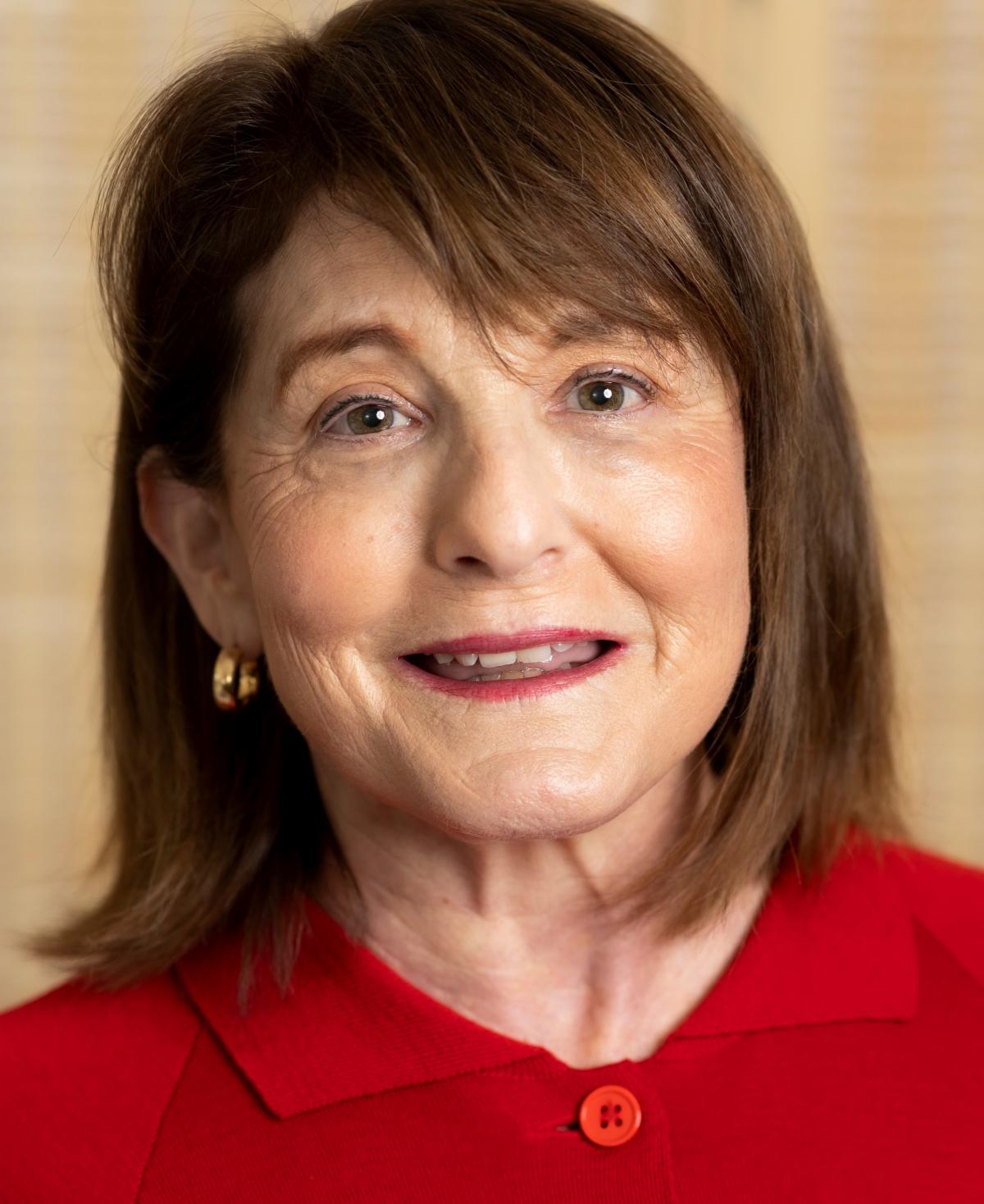
Mary Ellen Dellefield Photo

by Mary Ellen Dellefield, PhD, RN, FAAN

As most of our readers and members know, on October 1, 2019, the Patient-Driven Payment Model (PDPM) replaced the Resource Utilization Groups Version IV (RUG-IV) reimbursement system in skilled nursing facilities (SNFs). The intention was to implement a budget-neutral system that promoted patient-centered care. The Minimum Data Set (MDS) 3.0 and Resident Assessment Instrument User’s Manual v 2.201, and its prior iterations, constitute the document and guidelines used for determining reimbursement.


The change to PDPM was implemented in an organizational context that contained two obstacles to achieving the promise of PDPM. The first concerns common practices associated with the MDS/RAI. It is a dynamic and complex clinical assessment and documentation process. Yet, it does not require any additional education or certification for clinical staff to complete. 

California’s Emergency Hospice Regulations: Strengthening Oversight While Protecting Access

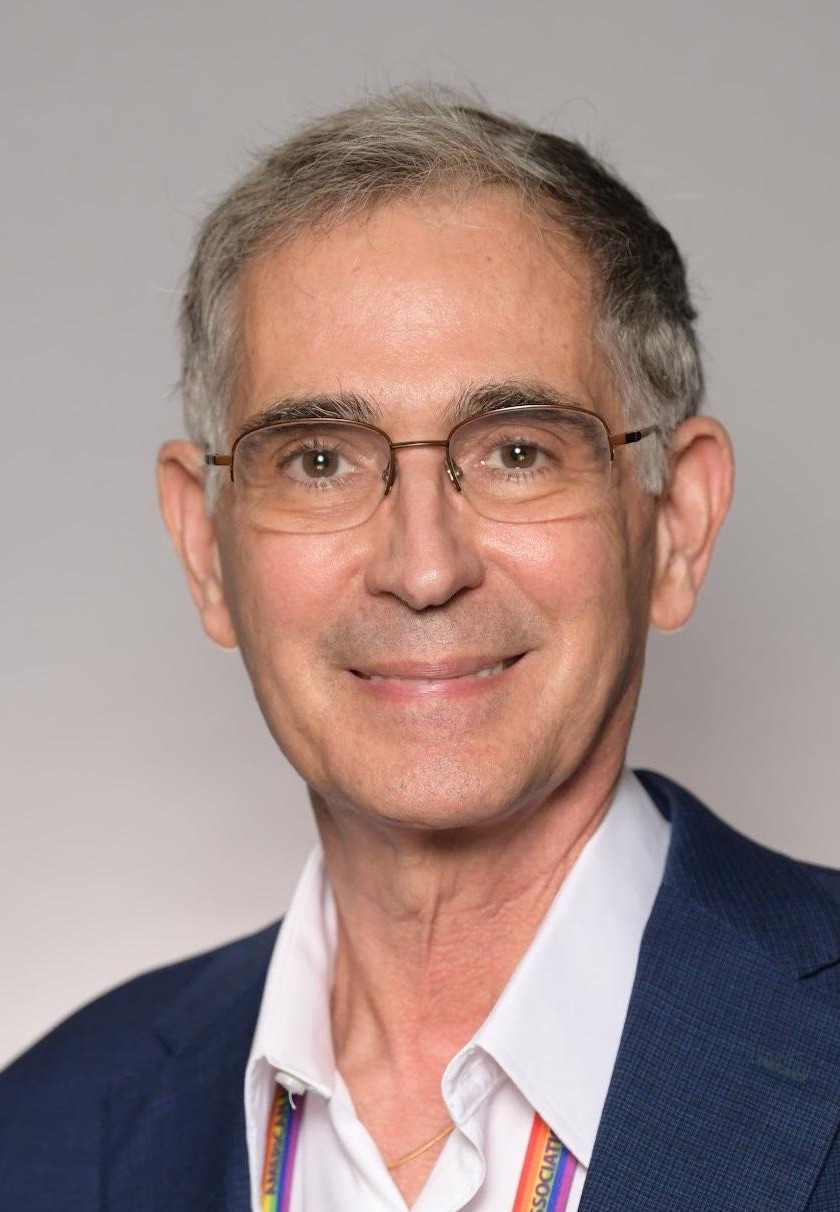
by Karl Steinberg, MD, CMD, HMDC, HEC-C

California’s emergency hospice regulations, which became effective July 1, 2026 and will be in place for six months before reassessment, represent one of the most significant state-level regulatory efforts in recent years. They are meant to strengthen hospice oversight, improve accountability, and respond to serious concerns about hospice quality, ownership, billing practices, and patient care. For post-acute and long-term care (PALTC) providers, these regulations matter not only because many residents receive hospice services in nursing homes, assisted living, and residential care settings, but because hospice access and quality directly affect resident comfort, family satisfaction, facility operations, and end-of-life outcomes.


At their core, the emergency regulations establish a more detailed licensing and compliance structure for hospice agencies. They create new definitions, clarify ownership and management responsibilities, expand application requirements, and give the California Department of Public Health (CDPH) broader authority to inspect hospices, review documents, interview personnel, and observe care with patient consent. 


FREE - Upcoming Events


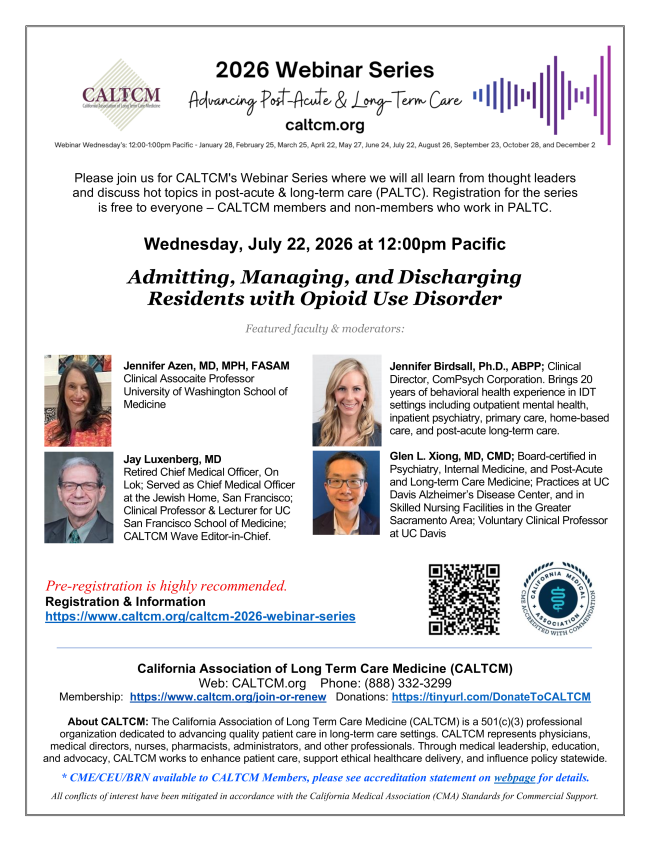
CALTCM 2026 Webinar Series


Topic: Admitting, Managing, and Discharging Residents with Opioid Use Disorder


Date & Time: July 22

Time: 12:00 - 1:00pm (Pacific)


Click here or image for downloadable flyer.

CME, CEU, BRN available to CALTCM members.


Register Now


Annual Meeting & On-Demand


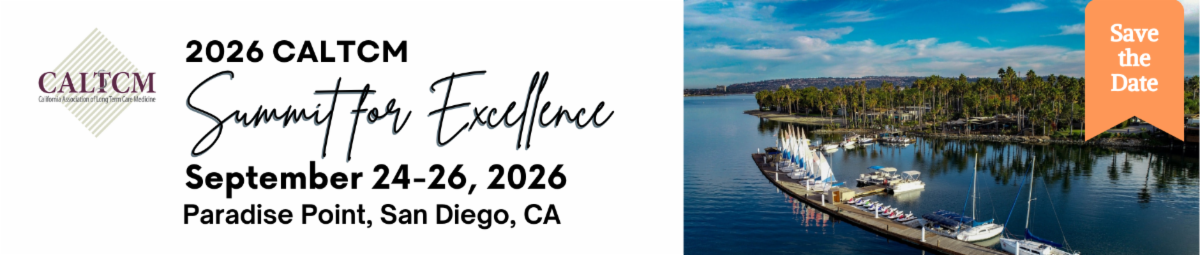
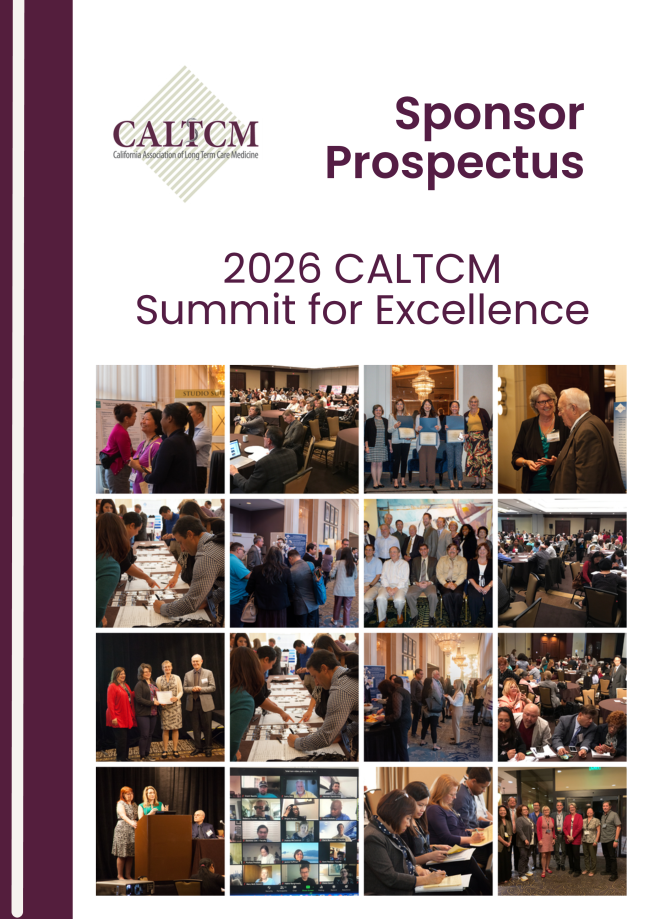
CALTCM Summit for Excellence

September 24-26 | Paradise Point, San Diego

Registration now for the best rates!

Building on the momentum of another outstanding Leadership and Management in Geriatrics (LMG) course, we are excited to look ahead to CALTCM's next educational gathering. Registration is now open for the 2026 CALTCM Summit for Excellence, September 24–26, 2026, at Paradise Point Resort & Spa in San Diego, where California's PALTC community will come together for education, collaboration, and innovation. Register today for the best rates! https://www.caltcm.org/annual-meeting


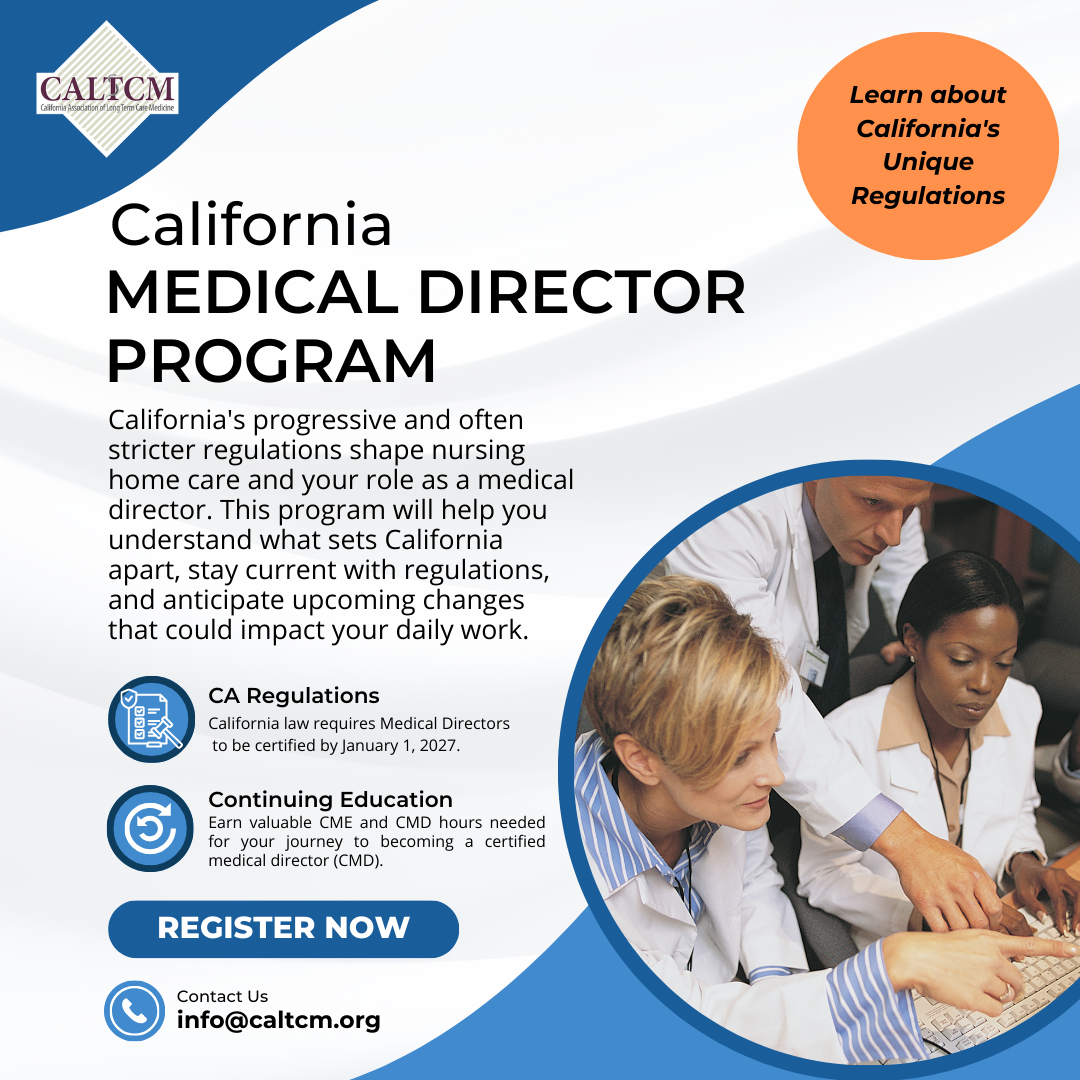
CALTCM Medical Director Program for California Medical Directors

On-Demand Education - Medical Directors will learn both the regulations and the practical art of Medical Director practice in California. Learners will proceed at their own pace, engage with case studies, and test their knowledge along the way. Earn up to 16.0 AMA PRA Category 1 Credit(s)™ and CMD management hours!


In The News


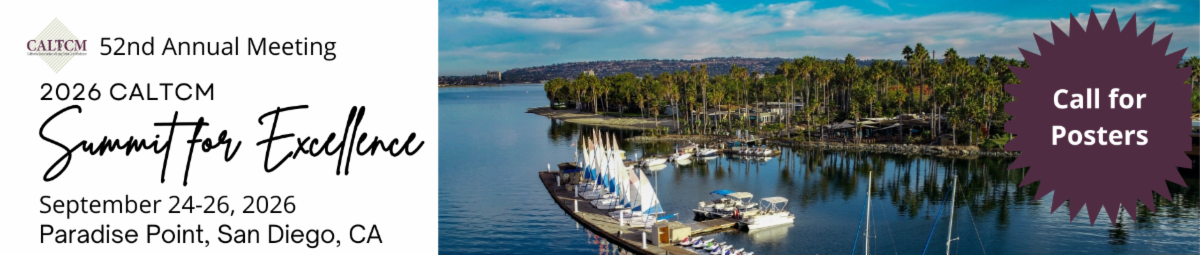
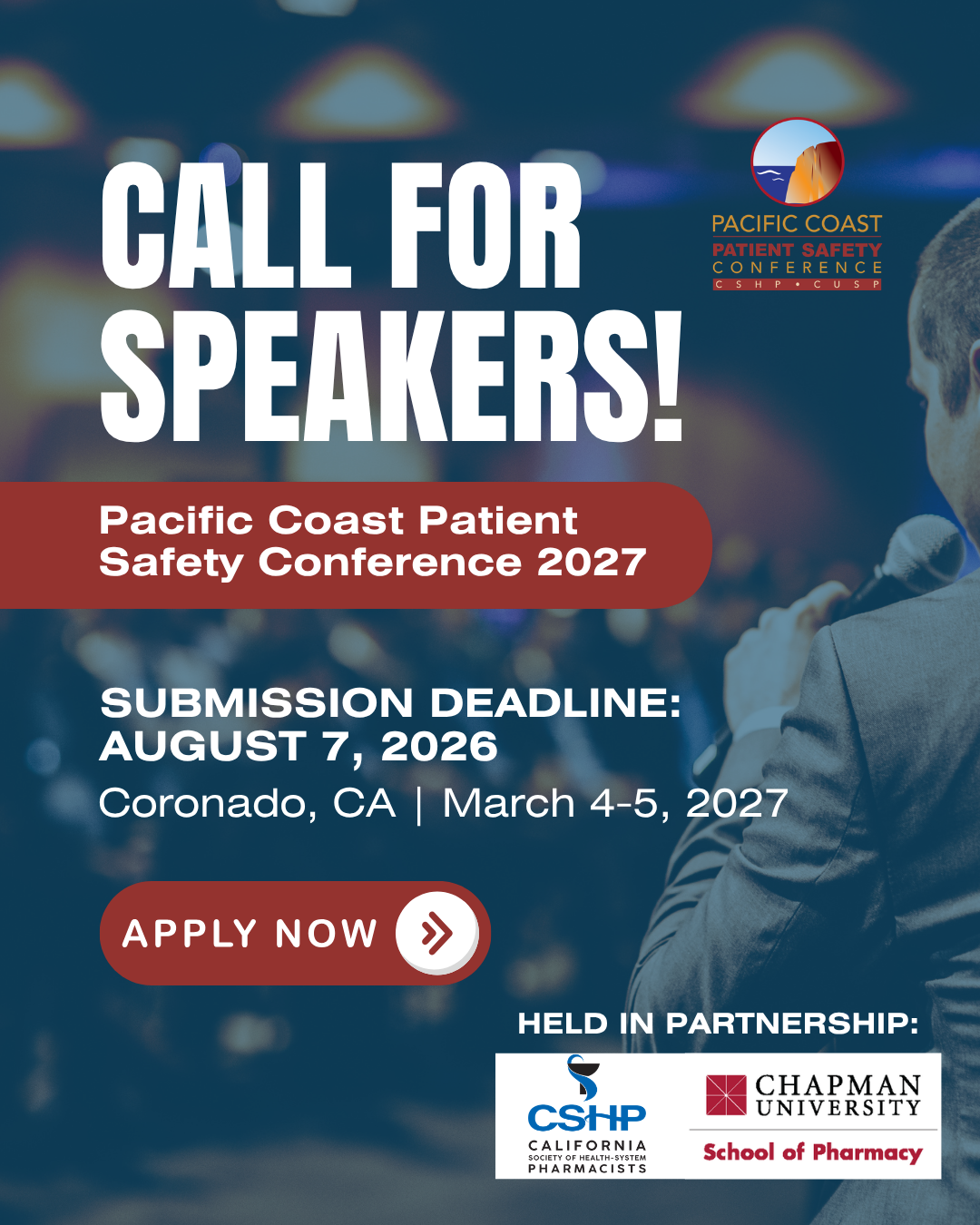
Call for Posters & Nominations

Deadline extended to July 23

Have You Started Your Journey?

Deadline is January 1, 2027!

As required by California Legislation HSC §1261.4 all nursing home medical directors in California must be certified medical directors. CALTCM's educational programs help you fulfill your CME/CMD requirements right here in CA! Get Your Journey Started

 
sepia_stacked_hands.jpg

Call for Volunteers

Help shape the future of PALTC care by joining a CALTCM committee. Your expertise and leadership can make a lasting impact. Interested members should email info@caltcm.org.


Committee's looking for volunteers:

  • Behavioral Health
  • Clinical Practice
  • Education
  • Marketing & Membership
  • Policy & Professional Services
  • Wave (Newsletter)
 
X Share This Email
LinkedIn Share This Email
 
CALTCM Executive Office
P.O. Box 800371
Santa Clarita, CA 91380
(888) 332-3299
Facebook  Instagram  Linkedin