|
GARDENING RULES AND TOOLS FOR MAY
These are two articles from the archives (2005 and 2006), written by the same Master Gardener, but still relevant today.
Editors note -- A few sentences have been omitted to avoid confusion about events that are not current and web links that are no longer functional.
Ground rules and tools for May:
Now is the time to prepare gardens for summertime heat
May 5, 2005
By Gail Dentler, Victoria County Master Gardener Intern
It seems to me that the Victoria area has really become fascinated with gardening. Everywhere you go there are gorgeous gardens bursting with colorful blooms.
There is so much still to do in our gardens as we approach summer. May is the month that we tend to all the withering blooms and prepare the garden for the summer heat - as well as vacation time. When surveying the garden of the spring growth, you need to see what has yellowed, bloomed or become brown terminal growth. Let the foliage of spring-flowering bulbs mature and yellow before removing. If you are collecting seeds from irises, this is the time to leave the pods in their place until they turn yellow-green in July or August. Pinch back any terminal growth or old blooms on newly planted annual and perennial plants. This will result in shorter, more compact and well-branched plants with more flowers.
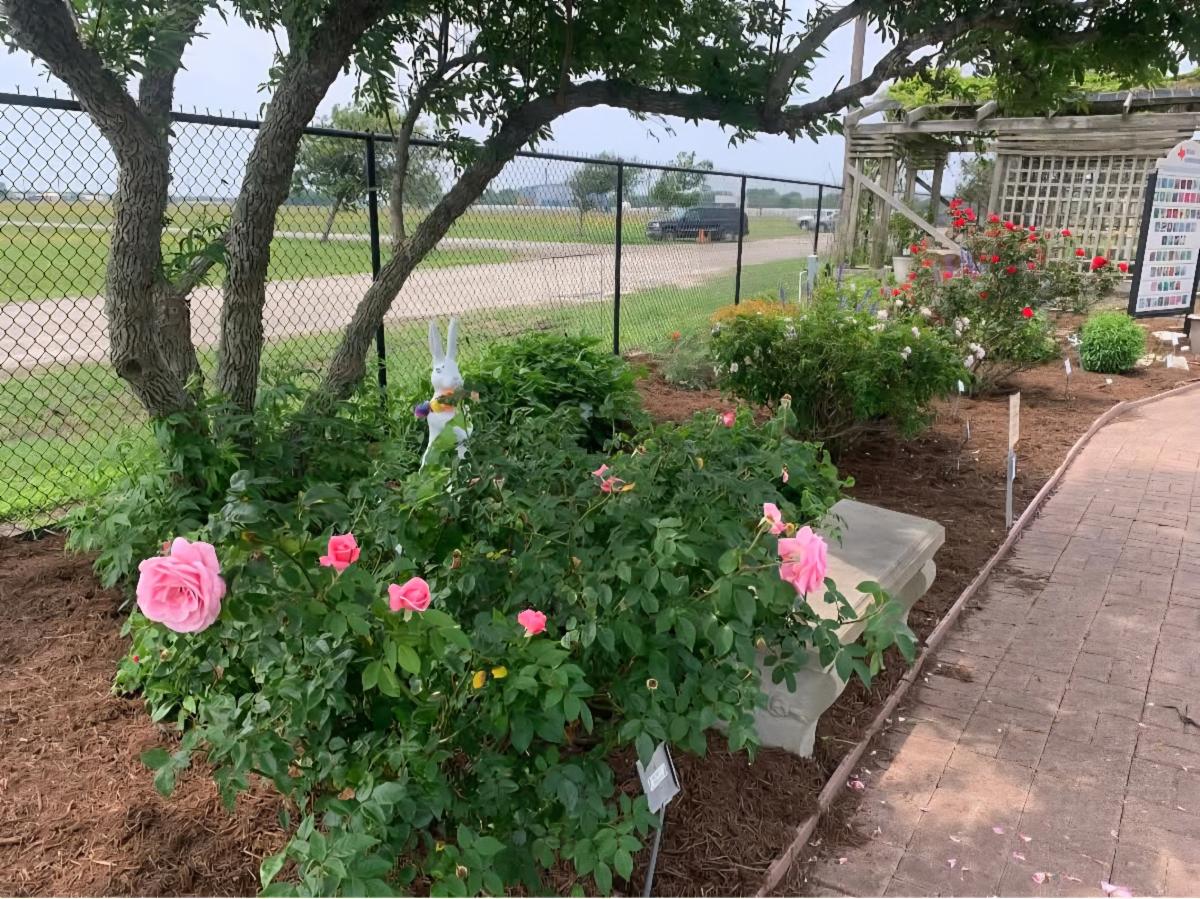
Other flowering plants that might have terminal growth are roses. Now is the time to prune old blooms off, and remove any dead or weak wood on the plant. Also, if you have climbers this is a great time to tie up any new growth onto the arbor or trellis. This helps to train the climbing rose and actually helps with the growth of the plant. Fertilization of the roses needs to be done every four to six weeks with small amounts of a balanced fertilizer. This will help add nutrients to the growth of the rose.
Lantana is another plant that is native to our Victoria gardens and will need a trimming. Look for any dead wood or old blooms. Pruning it helps maintain a neat appearance and helps in the life of the flowers for many months.
Our vegetable gardens or fruit gardens also need some care. Pick all ripe or nearly ripe fruit and vegetables. If going on vacation, arrange for a friend to pull and use produce. Vegetables left unpicked will cease to bear.
For those of us who like to dig in the dirt, we can still plant some seeds and plants. In shady areas we can plant caladium tubers, impatiens, coleus, begonias and pentas. You can also sow directly in the garden sunflower seeds, zinnias, morning glories, cosmos, periwinkles and gourds. Summer flowering bulbs can be planted in May. Cannas, dahlias and achimenes are just a few suggestions.
May is also a time that we start thinking about our vacations, so what does this mean for our gardens? The first thing is to check for insects and diseases. Destroy badly infested plants. Select a chemical, organic control or use insecticidal soap on those spider mites. Remember to use chemicals as a last resort - and read all labels thoroughly, following all instructions for best results. During the summer, soil moisture becomes extremely important and essential for good plant production.
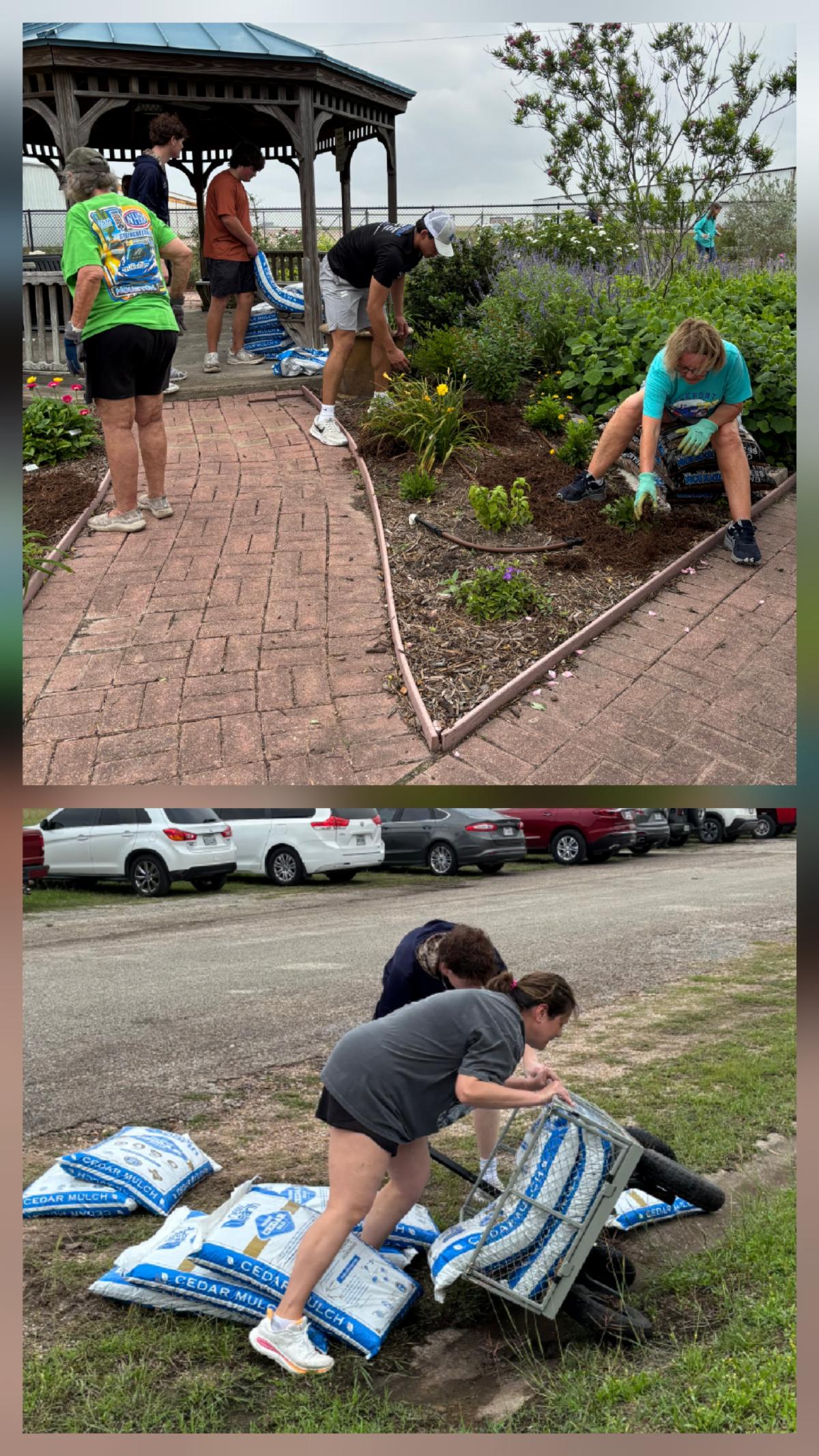
One way to help insure soil moisture is through mulching. A good mulch will retain valuable moisture needed for plant growth, and improve overall gardening success. Mulches are usually applied 2 to 6 inches deep, depending on the material used. Keep in mind a courser material will have a deeper mulch. For example, a 2-inch layer of cottonseed hulls will have about the same mulching effect as 6 inches of oat straw or 4 inches of coastal Bermuda hay.
Our lawns are starting to be mowed, and if leaving on vacation make sure that chinch bugs aren't attacking your St. Augustine lawn. Chinch bugs are usually a hot, dry weather pest, so if it doesn't rain for a while, expect to see some. Chinch bugs are also very small, just slightly smaller than a grain of rice, with black bodies and white wings that have a triangular black area on them. Immature chinch bugs are striped orange and white. Chinch bugs are hard to see as they scamper very fast in the grass. They can best be seen by opening the grass area to observe them near the soil line or placing a can, cut on both sides, tightly against the soil and filling it with water to bring chinch bugs into view. Control treatments are necessary if chinch bug levels reach about 20 per square foot. You certainly do not want them to have a party in your lawn while you are gone.
If you haven't fertilized your grass this year yet, it's not too late. In fact, it is better late than too early. It is best to follow a soil test of which information can be obtained at the Texas Cooperative Extension office. Otherwise, the best advice is to use a slow release fertilizer such as 21-7-14 at no more than 5 pounds per 1000 square feet.
As summer begins, there are so many "miracle products" advertised on the market. Be aware that if it sounds too good to be true, it probably is. That is an opportunity for you to save money. Spend your hard earned money on proven practices.
Many homeowners like to top-dress their yards with topsoil this time of the year. Unless you are filling low spots or holes in your yard, topdressing with topsoil is not a recommended practice. Topdressing with a thin layer of compost, however, is a good practice that can be used to add nutrients.
Maintenance of your equipment is also a must for May. Sharpen the blades on the lawn mowers. Make sure all tools and equipment have been cleaned and in good working order after maintaining the garden.
Good equipment is a life saver on the bodies. The harder and better they work, the less we have to.
So make note of these gardening tips insuring that after recent April showers, your flowers will bloom in May.
Enjoy time in your garden this month with pleasant temperatures before the inevitable oncoming summer heat. To address summer conditions, look for future articles in this column on shade gardening, sun-loving plants, and planning and caring for a weekend landscape with low maintenance.
After all, to those who love gardening, it is a pleasure - and should not be made a chore.
Ground rules and tools for May:
For better gardening results, plant flowers that can withstand the ever-present South Texas heat
May 4, 2006
Gail Dentler, Victoria County Master Gardener
As a gardener in South Texas, I am conscious of the drought that keeps hovering over us. This has caused me to wonder what I can plant in my garden to maintain and have a beautiful landscape. Specifically, I want to have flowering plants that will tolerate the anticipated lengthy dry season. Hopefully this will also help me to keep a normal and affordable water bill. So I turned to a list of plants that are labeled "drought tolerant." I wanted to use these as borders, splashes of colors in front of the shrubs or as ground cover. I was so excited with what I found. There is a variety of blooming plants out there with characteristics compatible with our drought.
The zinnia linearis, also known as narrow-leaf zinnia, is a great choice. It has small and narrow-leaf green foliage with daisy-like flowers, grows to a maximum height of 12 inches and spreads to 2 feet wide. This plant provides colors of red, orange, white or gold. It likes full sun, and blooms small, single flowers about quarter size in late spring, all through the summer, and into fall. It can be propagated from seed, and you can sow indoors before the last frost or outside after the last frost. Once the plant has bloomed, the seed heads will dry on the plant and you can remove and collect them for next year.
Moss rose is another heat- and drought-tolerant bedding plant. It blooms from late spring until fall. The flowers open in the morning until early afternoon. They come in mixed colors. This is a plant that can be propagated by rooting from stem cuttings. Its maximum height is 6 inches.
Dahlberg daisy adds a yellow color to your borders. The plant has a daisy-like flower. Its foliage is light airy green, and has a maximum height of 8 inches with a 15- to 18-inch spread. These will flower all through the summer heat in full sun. This is a great flower to use as a border.
Another daisy-like plant is gazania. This has colors of yellow, bronze, orange, pink, white, red and many combinations. The plant's foliage is dark green with white fuzzy undersides. Plants can reach 12 inches in height. The flowers bloom in the morning and close at night. These can be used as a border in full sun.
Still another flowering plant to use is cosmos. These plants vary in size, color and height. You can start them from seed to reduce landscaping expenses. They need very little water. They come in orange, pink and mixed (like pink and white). These are considered great color if you have a big area to fill; however, keep in mind, once you plant these flowers they keep coming back for years to come. Pay careful attention to size of these because some can be miniature and others about 4 feet high.
Periwinkles are in this drought-tolerant category. They have glossy, dark green foliage and pink, salmon, lavender or white flowers. The flowers have contrasting centers and are great for borders. Their plant height is 12 inches and a spread mirroring that. Periwinkles reseed prolifically and can be thinned out for best results.
Marigolds also are on this list. These can be found in a wide variety of color and form. Propagation of this plant is from seeds produced once the bloom has dried out. They may be picked and stored for next year. They peak in late spring or early summer and can be used for fall color as well.
Two taller plants for use are the bachelor buttons and the spider flower. Bachelor buttons have globe-like flowers that come in pink, white, lavender, yellow and red. It can be used as a cut flower and a dried flower. This plant reaches a height of 24 inches and a spread of 12 inches. The flowers will retain their color for long periods of time.
The last of the taller plants is the spider flower. It has flowers of pink, lavender or white varieties. It has extended stamens giving it a spider like appearance. It reaches a height of 2-4 feet, and it will re-seed as well.
It is now time to go through our garden checklist of what to take care of. Cut off old blossoms on spring flowering annuals. Pinch back the terminal growth on newly planted annual and perennial plants. Continue to fertilize roses every four to six weeks with small amounts of a balanced fertilizer. Allow foliage of spring flowering bulbs to mature and yellow before removing. One can still sow directly into the ground seeds like zinnia, morning glory, cosmos, marigold, periwinkles, cannas and other summer flowering plants and bulbs. Plant caladium tubers, petunias, impatiens, begonias and torenias in well-prepared shady areas. And always replace or replenish mulch in flowerbeds and shrub borders to conserve moisture during this drought.
|