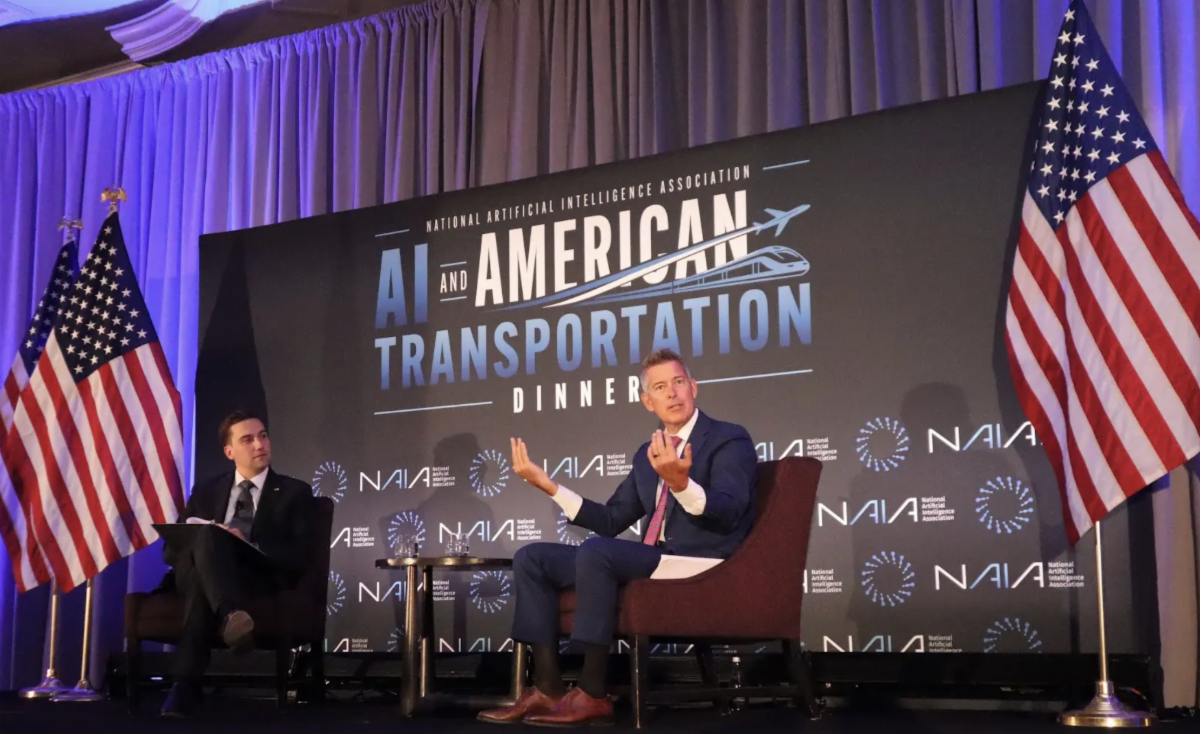
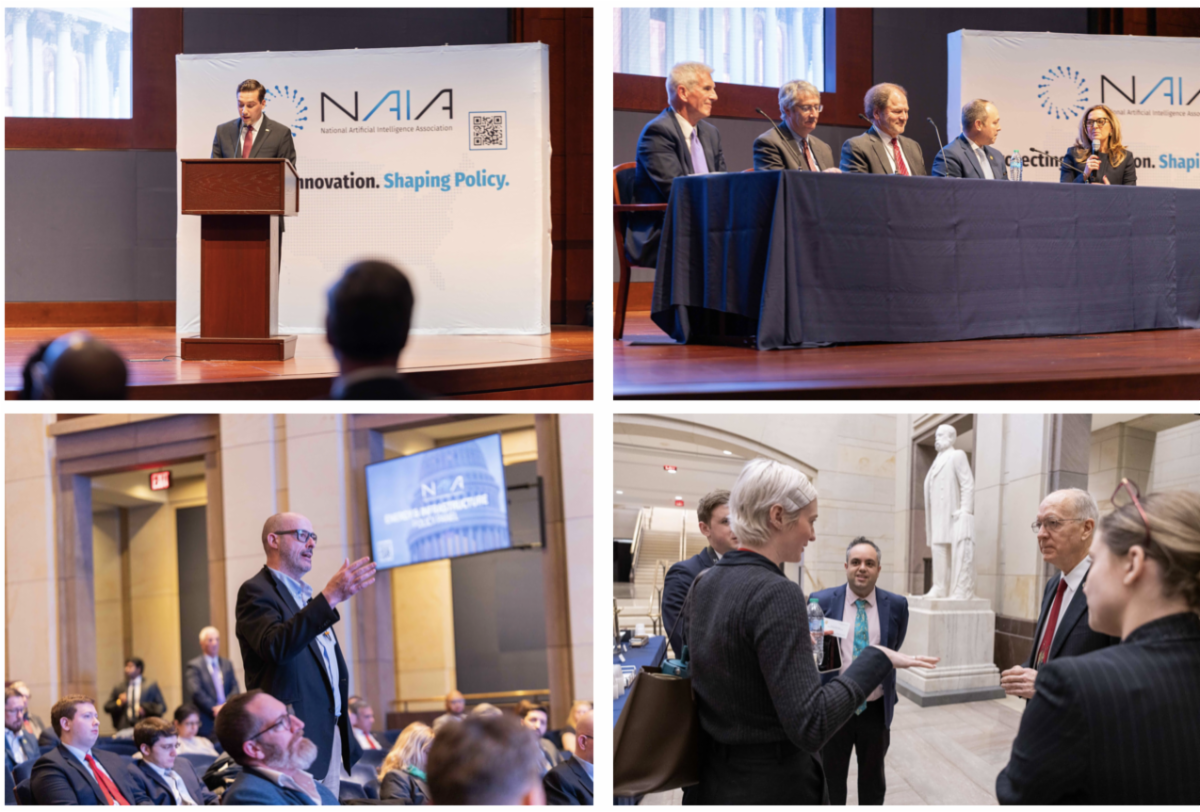
AI IN THE "LAME DUCK" SESSION | | The National Artificial Intelligence Association looks at what to expect in the next six weeks on Capitol Hill (Below). | |
|
- The NAIA 2027 Policy Agenda Survey Results
- President Trump Doubles Down on Super Intelligence
-
NAIA Government Affairs Briefing on the Lame Duck Session
- The Bipartisan American Affordability and Jobs Act Moves Forward
- NAIA Bi-Weekly AI Policy Call THIS FRIDAY on Lame Duck Session
- State Report: Where Does the Push for Data Center Moratorium Stand?
- Utah Pilot Program: "A Great Leap for AI in Medicine"
- NAIA Max and Parrish to Kickoff IBM Z Day on November 18th
-
NAIA CEO Caleb Max on India's Business Today and Speaking in Thailand on the American AI Stack
- Congratulations to NAIA Senior Advisor Peter Guerra in his new position at OpenAI
- NAIA Senior Advisor Ron Wright's Op-Ed on whether the US is repeating Britain's historical mistake on AI Trade Policy?
- NAIA Announces and Welcomes Two New Team Members
- Become a NAIA Member Today! America's Fastest Growing AI Association
- Coming Soon: The Second AI On Capitol Hill Summit. Sponsorship Opportunities
- Sign up and follow NAIA's social media for daily AI news
| | |
Questions? Contact us HERE
Missed the Last Issue of AI in Washington? Go HERE.
| | |
NAIA 2027 POLICY AGENDA
SURVEY RESULTS
| | |
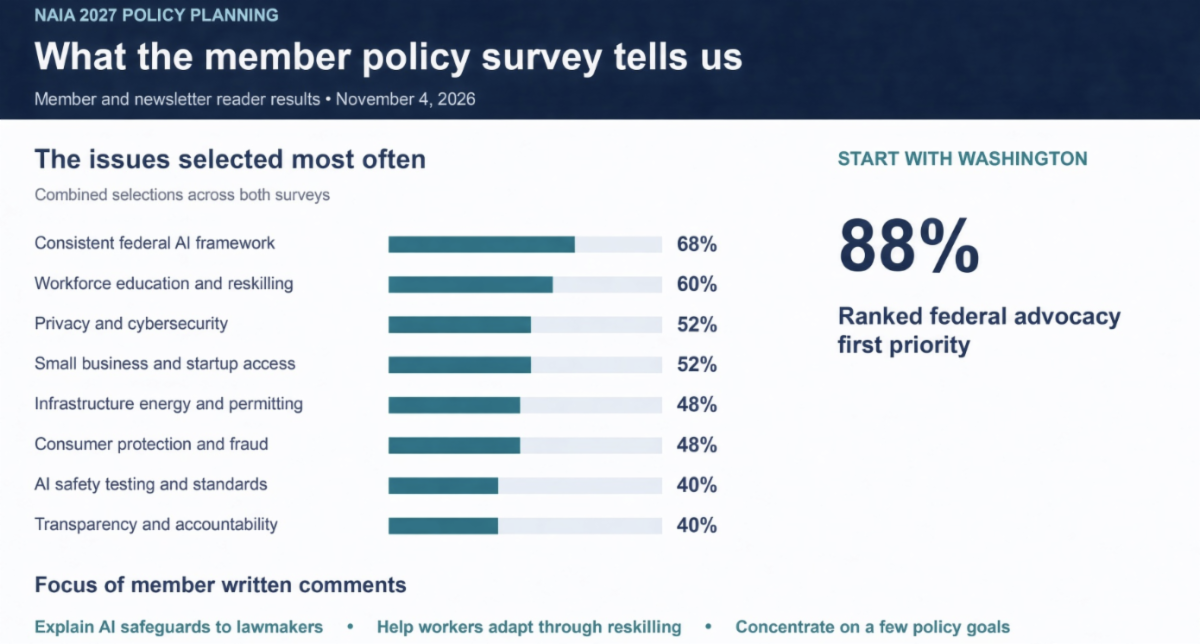
For the last couple of weeks, we have reached out to NAIA members and our newsletter readers for their input on their priority issues for 2027.
The results demonstrate strong support for establishing a clear and consistent federal AI policy framework, identified by 68% of respondents as a priority. Other leading concerns include workforce development and re-skilling (60%), data privacy and cybersecurity (52%), small-business and startup access to AI technology (52%), AI infrastructure (48%), and consumer protection against AI-enabled fraud (48%).
Respondents overwhelmingly favor concentrating NAIA's advocacy resources at the federal level, with 88% of those completing the ranking question placing federal legislative and regulatory advocacy first. Members also place considerable value on legislative alerts, policy briefings, educating policymakers, and coalition-building.
The survey identified significant opportunities to expand member participation. Eighty-four percent expressed interest in attending Washington advocacy meetings in person, while 76% indicated willingness to serve on NAIA policy committees or issue-specific working groups.
Thank you for participating in this important survey and for your input in structuring our program and panels for NAIA's Second Annual AI Policy Summit on Capitol Hill coming next February (more details on the Summit soon!)
Should you have any questions on the survey or NAIA's policies, please feel free to reach out to our Vice President for Government Affairs, Mr. Jason Riederer at Jason@theNAIA.org
| |
|
PRESIDENT TRUMP DOUBLES DOWN ON SUPER INTELLIGENCE
TRUTH SOCIAL TWEET AND AT NASA EVENT
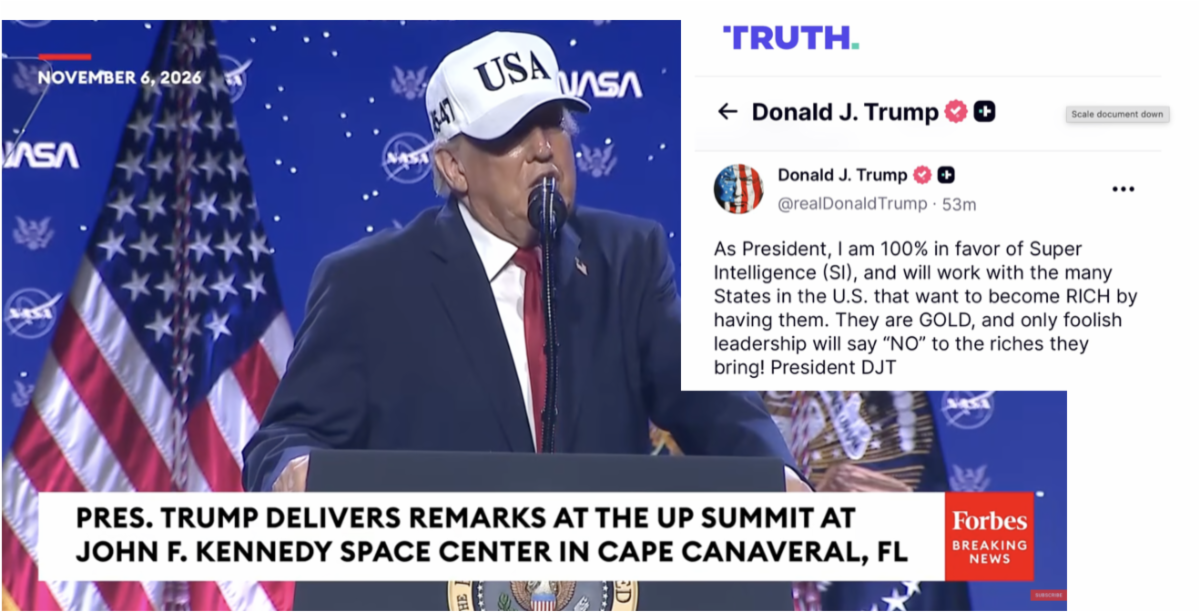
Last Friday, President Donald Trump expressed strong support for super intelligence (SI), portraying it as a major opportunity for American innovation, economic growth, and national leadership. In a Truth Social post coinciding with his appearance at the UP Summit at NASA’s Kennedy Space Center in Cape Canaveral, Florida, President Trump declared that he was “100% in favor of Super Intelligence” and pledged to work with states seeking to benefit from the technology. He described super intelligence as a potential source of tremendous wealth and criticized leaders who would reject the economic opportunities it could bring.
The President stated "Whoever wins SI wins" and emphasized that the United States must maintain its technological advantage over China, claiming that America currently leads by approximately a year or more.
Watch his remarks on Super Intelligence HERE.
| |
NAIA GOVERNMENT AFFAIRS UPDATE:
LAME DUCK SESSION
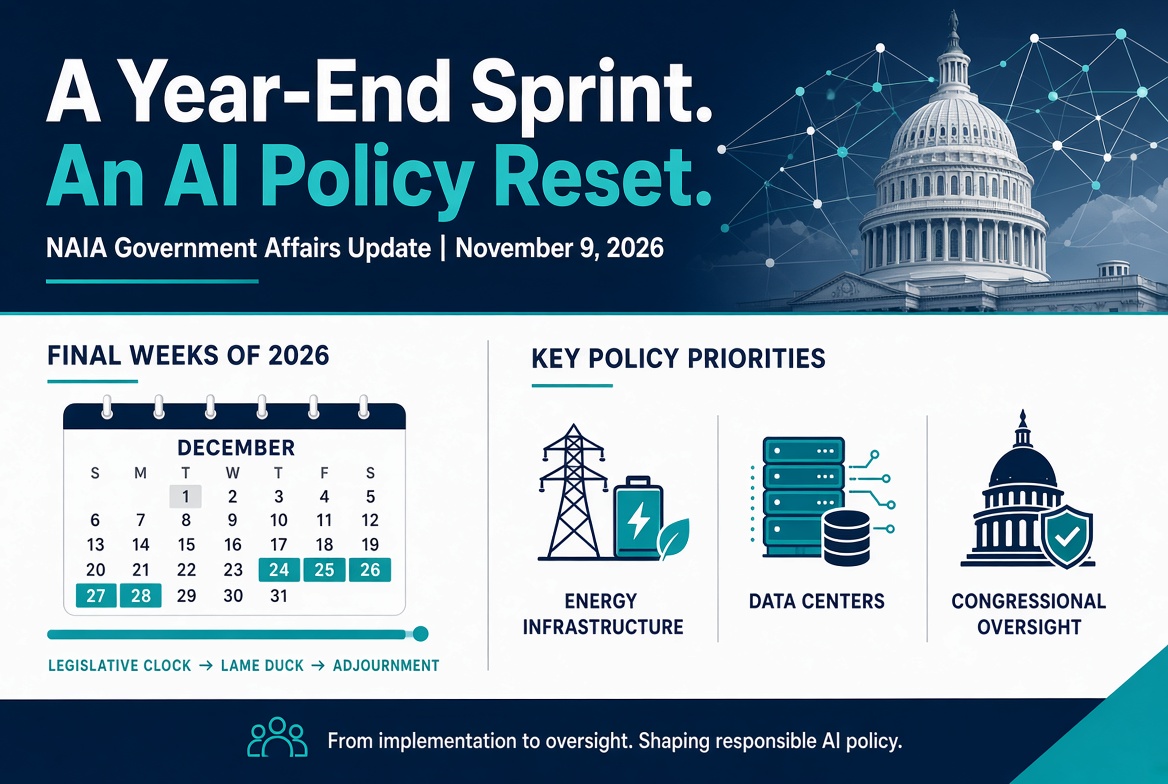
Congress returns this week from a six-week campaign recess with a crowded agenda and little time. Roughly five legislative weeks remain to address government funding, defense policy, and other unfinished business before Democrats take control of both chambers in January. For AI companies, the year-end negotiations and next year’s policy agenda deserve attention now.
The immediate agenda
Permitting reform gets an early test after the Senate procedural vote moved forward with strong support last night (see below). The negotiations could affect how quickly energy infrastructure and data centers progress—and how policymakers address concerns about electricity costs.
The next major deadline is December 11, when government funding expires. Lawmakers must approve spending legislation or another temporary extension to prevent a shutdown. The annual National Defense Authorization Act, Section 702 surveillance reauthorization, and the overdue Farm Bill also compete for limited floor time. For NAIA members, the details of year-end spending and defense bills will matter. These measures could shape federal AI research funding, government purchasing opportunities, and policies governing military use of AI.
The midterm reset
Democrats secured both congressional majorities, flipping at least seven Republican Senate seats and winning well beyond the 218 House seats needed for control. The incoming Senate Democratic caucus has secured at least 54 seats, including two aligned independents, with Alaska and Mississippi unresolved. Final House margins also remain unsettled.
Beginning January 3, Democrats will control floor and committee agendas in both chambers, giving them the power to prioritize legislation, convene hearings, and lead oversight investigations. Leadership elections and committee chair selections expected today (Tuesday, Nov. 10) will help clarify who will shape the AI agenda. Republicans also face a transition, with Speaker Mike Johnson declining to seek the party’s top House leadership post and Representatives Steve Scalise and Jim Jordan competing to succeed him as Republican leader. Democrats’ Senate majority will remain below the usual 60-vote threshold to overcome a legislative filibuster, making bipartisan support essential for most major legislation.
What this means for AI
Democrats are preparing proposals on independent testing of advanced AI models, liability for AI-related harms, and protection against data center costs being shifted to electricity customers. Our outlook is more scrutiny of AI companies and administration policy, alongside opportunities to shape workable federal standards. Agreement on a national framework—particularly its relationship to state laws—will remain difficult.
NAIA’s focus is clear: advance policies that support American AI leadership while addressing the concerns shaping congressional debate. Members can help inform that advocacy now by sharing regulatory obstacles, infrastructure challenges, and concrete examples of AI’s economic benefits.
| |
BIPARTISAN LEGISLATION TO SPEED UP ENERGY AND INFRASTRUCTURE PERMITTING HEADING TOWARDS PASSAGE
Note: The Senate voted 73-25 last night (Monday evening) to invoke cloture on the Bipartisan American Affordability and Jobs Act, which limits debate and sends the nearly 500-page bill toward a final vote.
The legislation in present form is expected to move on to the House and has received the endorsement of the President. Details from The Washington Times HERE.
| |
NAIA BI-WEEKLY AI POLICY CALL
AN UPDATE ON THE LAME DUCK SESSION
THIS FRIDAY (NOVEMBER 13TH) AT 9:00 AM EST
Topic: NAIA Biweekly Member Policy Call
Time: 9:00 AM ET
Join Zoom Meeting
https://us06web.zoom.us/j/7466177954?pwd=a4sAaQceblZmT0z6746Ht6hhmG1FKt.1&omn=84724294359
Meeting chat link
https://us06web.zoom.us/launch/jc/84724294359
Meeting ID: 746 617 7954
Passcode: f70fk9
One tap mobile
+16465588656,,7466177954#,,,,*647576# US (New York)
+16469313860,,7466177954#,,,,*647576# US
Join by SIP
• 7466177954@zoomcrc.com
Join instructions
https://us06web.zoom.us/meetings/84724294359/invitations?signature=BFE8BQaZdKVhtHLiA7d20aqwqdPKcDQGylbJMYP3NaA
If you know someone who would like to attend, or if you have questions about NAIA , please email HERE. (Note: if you forward this message to a contact, make sure they do not click the unsubscribe button or it will remove you from our database.)
| |
WHERE DOES THE DATA CENTER MORATORIUM PUSH STAND?
In our last newsletter (HERE) on legislation in the States, we outlined which ones are gearing up for legislation around artificial intelligence.
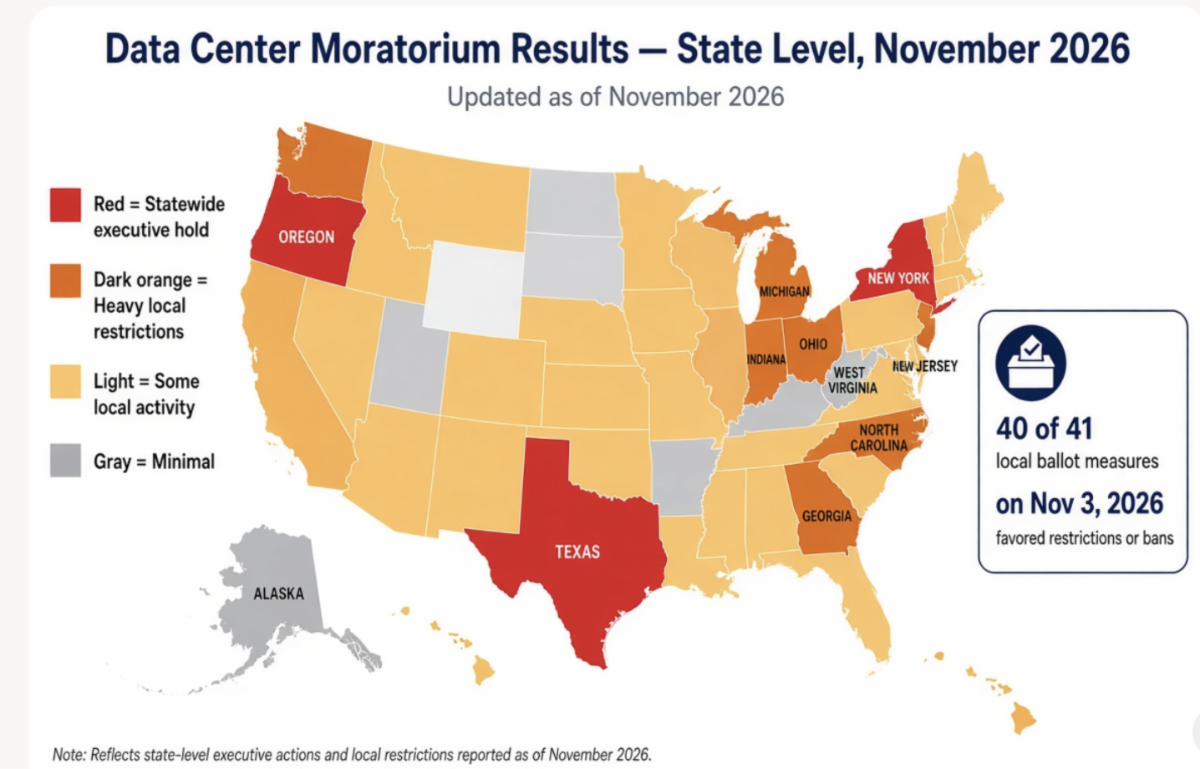
This time, we are taking a quick look at the efforts to slow down or stop data center buildout which would have a significant impact on compute costs. In 2026, no state legislature enacted a full statutory statewide moratorium. Nearly all state bills stalled, died, or (in Maine’s case) passed and were vetoed. Bills were introduced in over 15 states with all of them either failing or carrying over into next year's sessions.
The real statewide effects have come from executive actions. You can see via the map above that Oregon, Texas and New York (in red) instituted holds or pauses on further development. However, there have been numerous local bans with the majority taking place in Michigan, Ohio, Georgia, North Carolina, and New Jersey.
On last Tuesday's elections, there were 41 local efforts to limit or stop data center growth in ten states. Ohio with the most, with 21 local ballot efforts. All but one passed in Harwood, North Dakota. Read CNBC's coverage of the data center ballot issues HERE.
| |
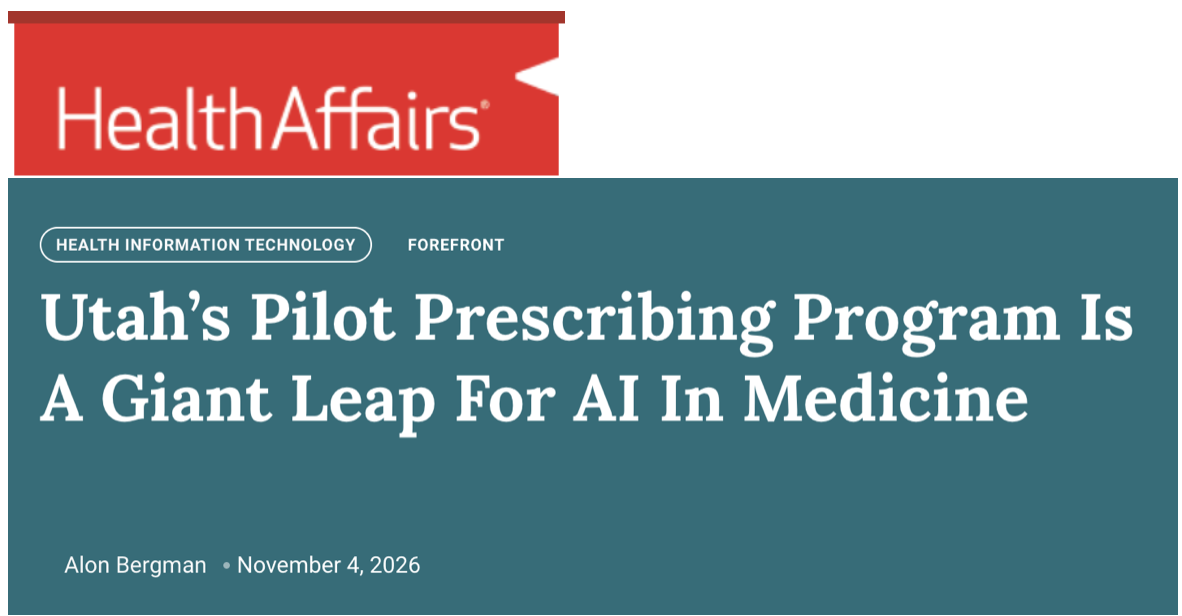
"A GIANT LEAP FOR AI IN MEDICINE"
Utah has launched a groundbreaking pilot program that could significantly expand the role of artificial intelligence in American healthcare. Working with Nolla Health, the state is allowing AI technology to independently evaluate patients, diagnose adult acne, and prescribe medications without requiring a physician to approve every decision once initial safety benchmarks are met. Unlike earlier Utah programs that permitted AI only to renew existing prescriptions, this initiative allows AI to initiate treatment.
Utah's experiment demonstrates both the enormous potential of AI to improve healthcare accessibility and efficiency and the urgent need for a consistent national regulatory framework. The program includes important safeguards, such as liability insurance, adverse-event reporting, independent audits, and ongoing monitoring. However, the article warns that allowing individual states to negotiate separate agreements with AI companies could produce inconsistent safety standards and fragmented oversight. The article calls on Congress to establish a federal licensing framework for autonomous clinical AI, including independent competency testing and nationwide standards.
Read the complete article HERE. (h/t to Paul T. Kelly, President of Capitol Advocacy & Government Affairs, LLC for alerting us)
| NAIA NEWS: AWARDS, ARTICLES, AND ANNOUNCEMENTS | |
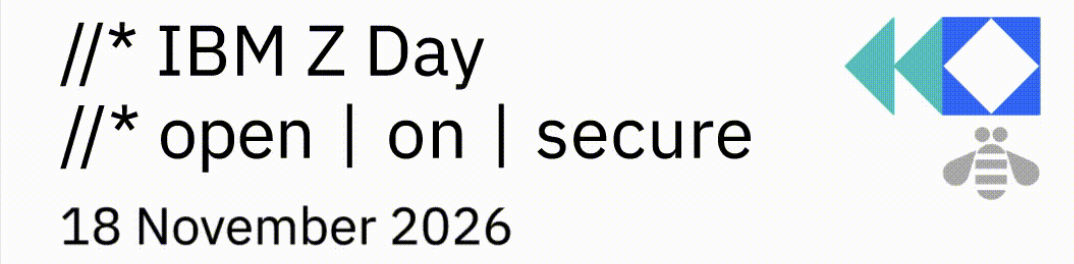
NAIA will be kicking off IBM Z Day sessions on Wednesday, November 18th. IBM hosts a one-day free virtual enterprise computing event connecting students, developers, startups, partners, and seasoned mainframe professionals to explore the latest technology trends
NAIA is participating in the first session at 9:00am ET and is titled "From AI Governance Frameworks to Enterprise Scale: Trustworthy AI on IBM Z and LinuxONE".
NAIA Startup Gold Member, Dr. Ryan Young, Founder and CEO of Opollo Technologies will moderate a panel with NAIA CEO Caleb Max, NAIA Chief Growth Officer Tim Parrish, and IBM Labs AI Product Manager Jasmeen Kaur about policymakers' behind-the-scenes discussions on AI and how IBM Z and LinuxONE support promising modernization approaches such as neurosymbolic AI. Register to attend HERE.
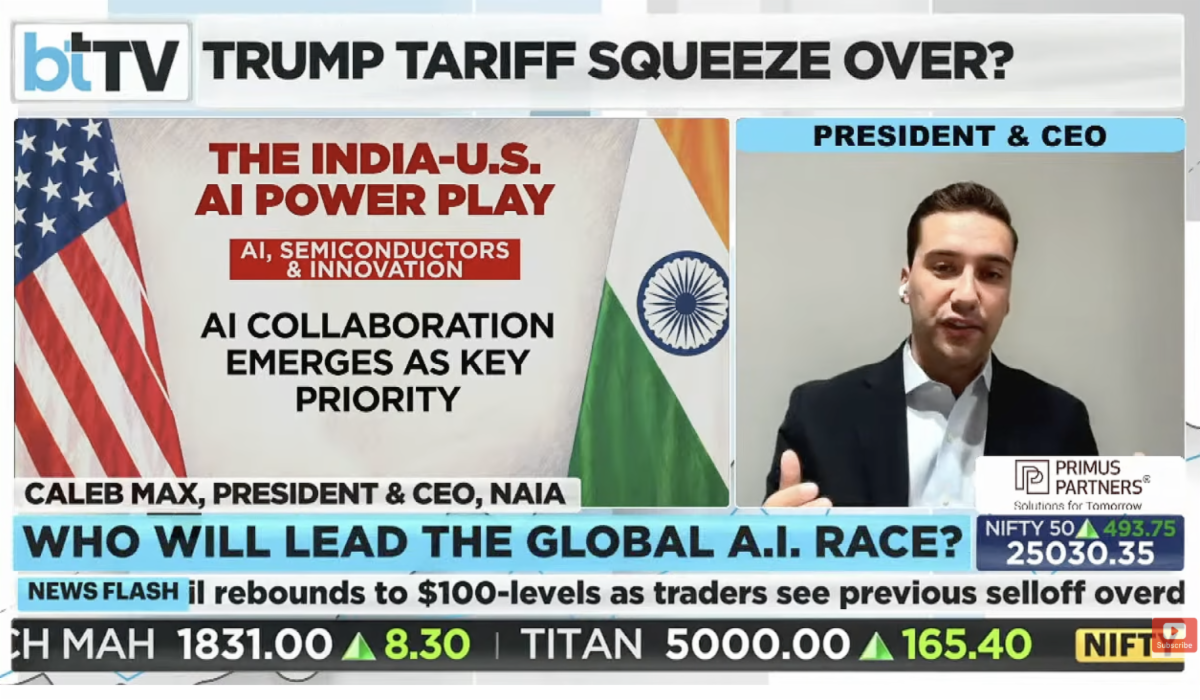
| Promoting the American AI Stack: NAIA President and CEO Caleb Max continues to be an outstanding spokesperson for the growth of American technology on the world stage. This past week Caleb spoke with Business Today (HERE) regarding India - US AI relationship, the impact of the elections and building a stronger bond between the two nations. On Monday and Tuesday of this week, Caleb attended and spoke at the East-West Conference in Bangkok, Thailand. He had the opportunity to meet with the Prime Minister of Thailand and other leading officials about AI governance in the United States. | Congratulations to NAIA Senior Advisor Peter Guerra. Peter recently was appointed as OpenAI's new Head of Tech Success. He will be leading technology success for OpenAI for Government, helping government customers translate frontier AI capabilities into measurable mission outcomes for citizens. Peter formerly served as NAIA Gold Enterprise Member Oracle’s Group Vice President for Data and AI for government, defense and intelligence. | NAIA Senior Advisor Ron Wright recently wrote in the DC Journal an opinion article on whether it is time for the President's Super Intelligence Force to review America's export controls on AI technology. He refers to how the historical example of Britain's efforts to prevent the U.S.'s growth in the textile industry during the Industrial Revolution failed and actually enhanced America's dominance in that field. Are we looking at a repeat of history with our present day AI trade policy? Read the article HERE. | |
NAIA WELCOMES TWO NEW TEAM MEMBERS
OUR GROWTH TEAM EXPANDS
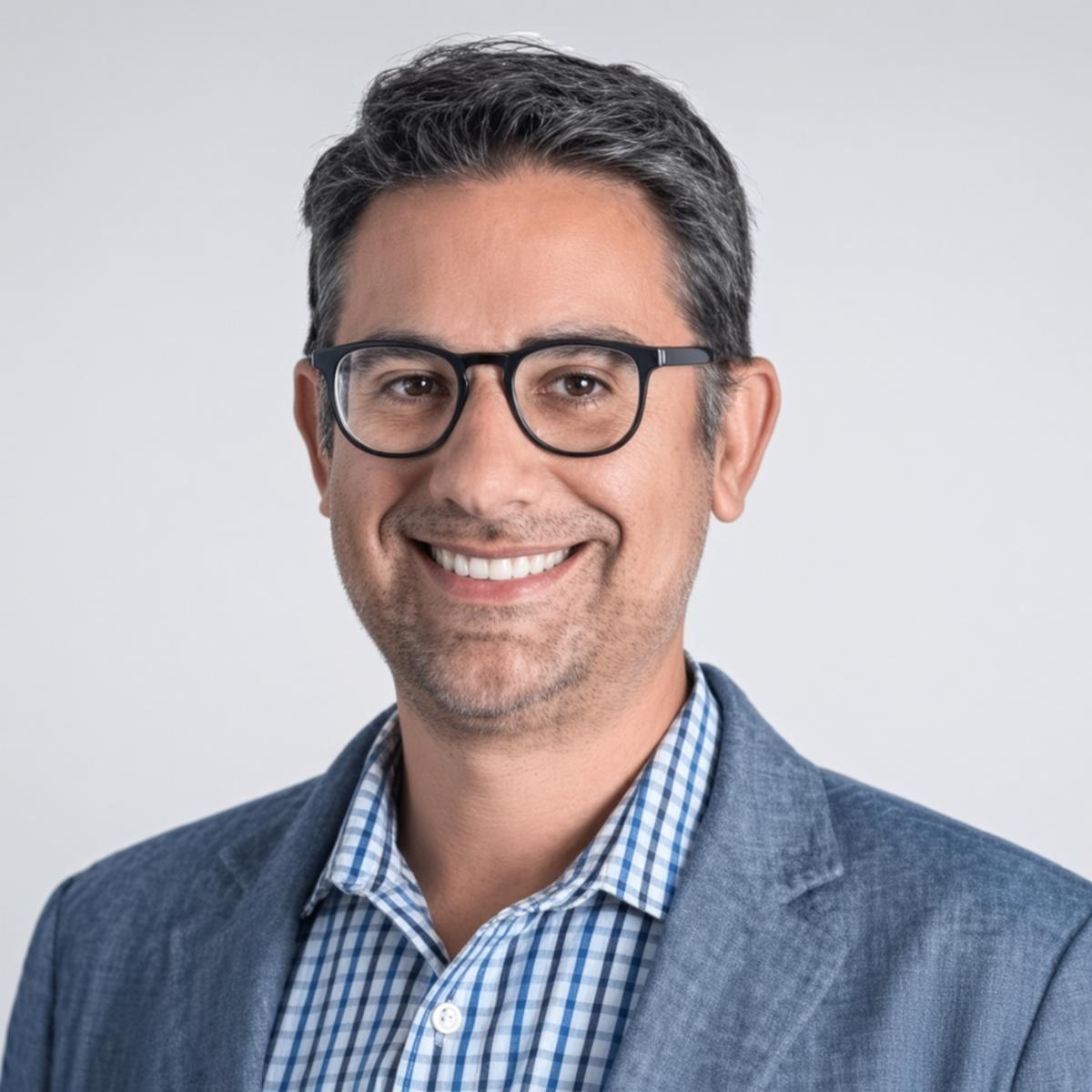
NAIA's President and CEO Caleb Max and NAIA's Chief Growth Officer Tim Parrish announced this week the further expansion of the National Artificial Intelligence Association Team.
John Wilson joins NAIA as Senior Growth Associate and is a graduate from the Virginia Military Institute (VMI). He continues his artificial intelligence studies at Vanderbilt University. John relayed "What excites me most about my work at NAIA is the opportunity to bring together organizations that are developing, implementing, and advancing AI across different industries. I believe some of the most valuable opportunities come from connecting the right people, ideas, and organizations."
Niranjan "Nange" Daryanani also joins NAIA as a Senior Growth Associate. Nange is a graduate of George Mason University and previously served as Grassroots Engagement Director at the Americans for Prosperity. He stated that "My career has been built on fostering meaningful relationships and providing solutions to complex challenges. I look forward to assisting our NAIA Members."
Welcome John at John@theNAIA.org and Nange at Nange@theNAIA.org. Feel free to reach out on any questions about becoming a NAIA Member.
| | |
BECOME A NAIA MEMBER
AND MAKE AN IMPACT ON AI POLICY
| | |
America's fastest growing organization supporting the AI industry
NAIA is America’s largest business coalition, representing companies and their allies, building in AI - from Fortune 500 enterprises to innovative startups, across every sector where AI drives transformation.
Annual memberships are available for individuals and startups to enterprise level companies in the AI industry. Membership for government employees is free. Email for more information: tim@theNAIA.org
| | |
COMING SOON - INFORMATION ON
THE SECOND AI ON CAPITOL HILL SUMMIT
| |
NAIA's Inaugural "AI ON CAPITOL HILL SUMMIT" in February of 2026 was an outstanding success with over 400 attending the event held at the U.S. Capitol. Attendees heard from and interacted with Congressional leaders and AI industry and policy institute representatives on the most important policy questions surrounding the growth of artificial intelligence.
The NAIA Team is now in the planning stages for the Second AI On Capitol Hill Summit and we plan to include an additional day for attendees to visit Congressional offices on the issues that are most important to you. Explaining all the benefits to society that artificial intelligence is providing. The first "Lobby Day" for the AI Industry.
Information will soon be released and your ability to sign up to attend. If you or your organization would be interested in sponsorship opportunities for the NAIA AI Summit, please contact Tim Parrish, NAIA's Chief Growth Officer at Tim@theNAIA.org to join the list for sponsorship details. Thank you!
| Follow NAIA and AI News on Our Social Media Platforms | | |
Membership dues paid to the National Artificial Intelligence
Association (NAIA - EIN 33-1713769) are 95% tax deductible as an
ordinary and necessary business expense in accordance with
the lobbying provision of the federal 1993 Budget Reconciliation
Act. Contributions to 501(c)(6) organizations are not deductible as charitable contributions on the donor's federal income tax return.The organization must be an association of persons having some common business interest and its purpose must be to promote this common business interest.
| | | | |