|
In this edition:
- A message from the Director of Education
- Senior Leaders' Briefing
- Inspection Updates
- Keeping Children Safe in Education 2025
- Relationships, Sex and Health Education: New Guidance
- Chair of Governors' Network
- New Writing Framework
- Early Years
- Admissions
- Governor Briefing: Climate Action
- Governor Briefing: Diversity
- Artificial Intelligence
- Academy Trust Handbook
- Staffing Matters
- School Leaders' Conference 25
- Additional Updates
| | |
A message from Simone Bennett,
Diocesan Director of Education
Dear Governor Colleagues,
As the new academic year begins, we find ourselves once again in a season of change. Across our schools, children have stepped into new classrooms, staff into new roles, and leaders into fresh challenges. And you, as governors, continue to offer your time, wisdom and care — helping to shape the direction and distinctiveness of your school community.
This year already brings with it a sense of anticipation. With changes to SEND expectations, curriculum reviews and updates to the Ofsted framework. Who knows what else this year may bring?
In times like these, we are reminded of God’s promise in Isaiah 43:
“Behold, I will do a new thing! Don’t you know it? I will even make a way in the wilderness and rivers in the desert.”
Even in the familiar rhythms of school life, God is doing something new. As governors, you help create the space for that newness to take root — through your questions, your support, and your commitment to the flourishing of every child and adult in your school.
Thank you for all you bring. Whether you are returning or just beginning your journey as a governor, you are part of a wider diocesan family — and we are here to walk alongside you. Your role is not always easy, but it is deeply valued.
As this year unfolds, may you have eyes to see the new things God is doing in your school, and the courage to step into them with hope and purpose.
I look forward to seeing many of you at our Senior Leaders’ Briefing on Thursday 18th September, 5–6pm.
With every blessing,
Simone
| |
| |
Senior Leaders' Briefing
Thursday 18th September 5 pm - 6 pm
FREE to schools in the ESP
A termly meeting for senior leaders, including governors, to update them on national, local and diocesan matters. An excellent opportunity to keep up to date and network with colleagues from across the diocese.
Please note, that you will need to enrol even if you booked last time.
| | | | |
Inspection Updates
SIAMS
Summary of Inspections across the Diocese 24/25
We've analysed all the inspection reports from across the diocese for the past academic year. This summary highlights the most common strengths identified, as well as areas for development. As a result, we've suggested some key questions to help governors support and challenge school leaders effectively.
Shared Strengths Identified Across Schools
- Vision and Leadership: A biblically rooted vision actively shapes school culture and decision-making. Pupils and staff understand and live out this vision.
- Curriculum: The curriculum reflects Christian values and promotes holistic development. High-quality teaching supports flourishing for all, including pupils with SEND.
- Character Development and Community: Pupils demonstrate responsibility, respect, and compassion. Relationships are inclusive and nurturing, valuing each individual.
- Collective Worship: Worship is central to the school day, inclusive and reflective. Strong partnerships with local churches enrich the worship experience.
- Religious Education (RE): RE is well-led and valued equally alongside other core subjects. Pupils engage with Christianity and increasingly diverse worldviews.
Shared Development Points
- Spirituality: Schools are beginning to develop a shared language around spirituality. The next step is helping all members of the community recognise and express spiritual growth.
- RE Diversity: There is a need to broaden exposure to world faiths and worldviews, including diversity within them. First-hand learning experiences should be increased.
- Understanding Justice: Schools are encouraged to deepen theological understanding behind social action, fostering reflective and informed pupil responses.
- Evaluating Impact: Monitoring and evaluation of the school’s Christian vision and worship need strengthening. Pupil voice should be gathered more systematically to track their impact.
Some possible questions for governors to ask:
- How well can our pupils and staff talk about what spirituality means to them? Are we confident that our curriculum nurtures spiritual growth across subjects?
- Does our RE curriculum give pupils meaningful opportunities to explore diversity within worldviews and faiths beyond Christianity? How do we know this is making an impact?
- How are we helping pupils link our Christian vision to real-world injustice? Are pupils empowered to take meaningful and informed action?
- How well do we, as a board, monitor and evaluate the Christian distinctiveness of our school? What difference does this make?
Support for schools with SIAMS and Self Evaluation
Following the success of the course over the last two years, we are delighted to be repeating our programme for whole staff teams, which could include governors. Called SIAMS: Inspection Questions Unpicked, this course is threaded throughout the year and designed to slot into a schedule of staff meetings. This is so that whole staff teams can learn about the new framework whilst also exploring and self-evaluating the distinctiveness of their school.Find out more here.
If your governing board would like help to prepare for your SIAMS inspection, please don't hesitate to contact your named adviser. Remember many of our team are serving SIAMS inspectors. You might also want to attend the course below:
| |
| |
New to the SIAMS Framework
Monday 22nd September 1 - 3.30 pm
Church House, Leeds
£90 for schools in the ESP
Join us for this half-day exploration of what this means to schools. This session is for all those new to the SIAMS framework and is suitable for all school leaders and governors.
| | | | |
OFSTED
Ofsted Inspection Reform: New Report Cards and Phased Rollout
Ofsted has confirmed that from November 2025, schools will begin receiving new-style report cards following inspection, replacing the current single-word judgments. These report cards will use a five-point scale: Urgent Improvement, Needs Attention, Expected Standard, Strong Standard, and Exceptional, alongside narrative summaries to give parents clearer insights into school performance.
Inspections will now focus on five key areas, as well as commenting on whether safeguarding requirements are met:
- Inclusion
- Curriculum and teaching
- Achievement
- Attendance and behaviour
- Personal development and well-being
Ofsted hopes these changes will make inspections more transparent, constructive, and focused on what matters most to pupils and families.
From November, inspections will prioritise volunteer schools wishing to trial the new framework. Routine inspections will begin from December 1st, with no inspections scheduled for the week before Christmas to minimise disruption.
You can find out more here.
Ofsted's Own report Highlights Wellbeing Concerns for School Leaders
An independent wellbeing impact review, published on the same day as the new framework details, has raised concerns about the potential stress and anxiety it may cause for school leaders. The review, commissioned by Ofsted and led by Education Support CEO Sinéad McBrearty, warns that the shift to a more granular and unfamiliar framework could increase pressure, particularly for roles like the SENCo, and may lead to new forms of bureaucracy and data collection.
Ofsted hopes the changes will improve transparency and fairness, but acknowledges the need to reduce isolation and individual accountability for inspection outcomes. The introduction of an optional “nominee” role to provide a single point of contact is one step aimed at easing the inspection process, though the full impact of the reforms remains to be seen.
You can read the full review here.
Support for Schools
To help schools navigate these changes, Ofsted has launched a national engagement programme, including:
The Diocese will continue to monitor developments and offer guidance as the new model is rolled out. We will be holding an online Ofsted Update session on Thursday 4th December which will explore the new Ofsted framework from a church school perspective. Ofsted Update: A Church School Perspective -book here.
| | |
Keeping Children Safe in Education 2025
The Department for Education has published the latest version of Keeping Children Safe in Education (KCSIE), which came into force on 1 September 2025. Governors should read the full document to understand their safeguarding responsibilities thoroughly to ensure they are aware of the statutory requirements and are able to oversee and monitor safeguarding procedures within the school effectively.
This year’s update is largely technical, with no major policy changes, but governors should be aware of several key developments:
Online Risks and Harms
The guidance now explicitly includes:
- Misinformation, disinformation, and conspiracy theories as safeguarding concerns.
-
A link to the DfE’s Generative AI guidance, which outlines both opportunities and risks of AI use in schools.
-
Reference to the Cyber Security Standards for Schools, encouraging schools to assess and strengthen their digital resilience.
Alternative Provision
KCSIE now incorporates safeguarding guidance from the DfE’s Arranging Alternative Provision document (Feb 2025). This includes expectations around oversight, suitability and safeguarding arrangements for pupils educated off-site.
Harmful Sexual Behaviour
In addition to the longstanding reference to the Lucy Faithfull Foundation’s toolkit, KCSIE now links to Shore Space — a confidential online resource for young people concerned about their own or others’ sexual thoughts or behaviours.
Looking Ahead
- The revised guidance on Relationships, Sex and Health Education will come into force in September 2026 (see below).
- Further updates on gender-questioning children are anticipated later this year.
| |
Relationships, Sex and Health Education: New Guidance
In June, the Department for Education published updated statutory guidance on Relationships, Sex and Health Education (RSHE), aimed at helping schools address:
- Misogyny and incel culture
- Violence against women and girls
- Online influences on sexual ethics and behaviour
While the guidance becomes statutory from September 2026, schools may begin teaching the new content from September 2025.
For the first time, secondary pupils will explore:
- The impact of online content on sexual behaviour and ethics
- Staying safe in public spaces
- Positive and respectful concepts of femininity and masculinity
If you want a more detailed summary of the changes, the PSHE Association’s video summary is helpful.
| | |
Conference Connection - Friday 14th November
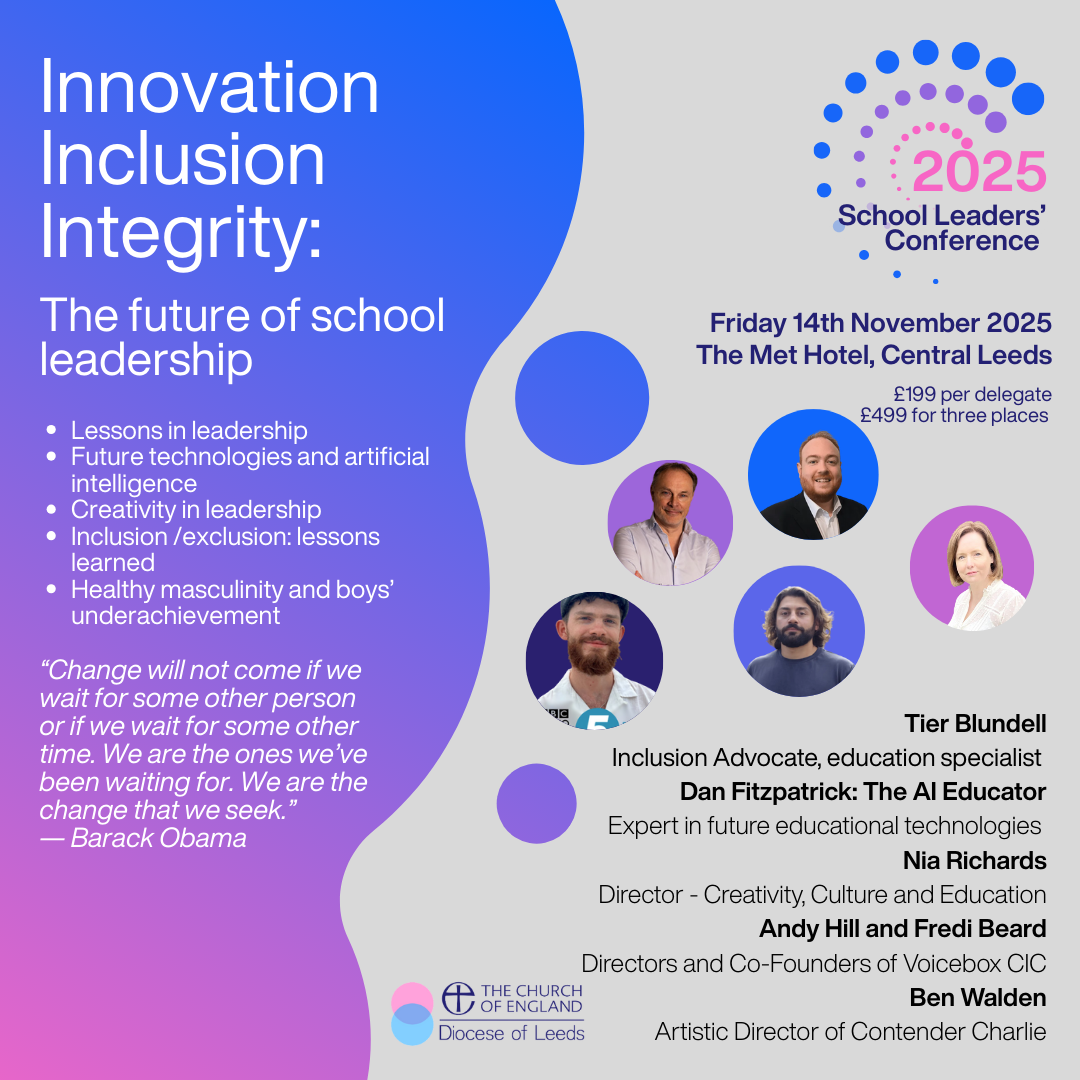
These themes will be explored at our Annual School Leaders’ Conference, where keynote speakers Fredi Beard and Andy Hill, Co-Founders of Voicebox CIC, will share their experience of working with young people to challenge harmful gender stereotypes and promote healthy masculinity.
Voicebox CIC has delivered workshops to thousands of participants since 2018, helping schools:
- Tackle misogyny and unhealthy behaviours
- Promote mental, physical and social well-being
- Foster gender equality through inclusive education
You may have heard Andy speak as he was recently featured on BBC Radio 5 Live.
Find out more about the conference and book your place here.
| |
| | |
Chair of Governors' Network
Thursday 23rd October 6 pm - 7 pm
FREE to schools in the ESP
A termly opportunity for those in the role of Chair of Governors to share ideas and resources and discuss matters relating to the leadership of the board. You may wish to invite your vice-chair of governors as part of your succession planning process.
| | | |
New Writing Framework (which may change again)
In July, the Department for Education published a new Writing Framework as part of its wider literacy strategy. The full Curriculum and Assessment Review is still to be published and the government have said they will amend this framework accordingly once the full review is published. Whilst our advice would be not to rush into significant curriculum changes at this point, there are some key questions governors can ask as part of their monitoring and evaluating role:
- Is the headteacher building a motivating and positive writing culture, with a well-sequenced curriculum and high expectations for all?
- Are writing leads confident in both the physical and cognitive development of writing, especially in Reception?
- If writing and reading are led separately, are those leaders working closely and effectively together?
- Is every teacher involved in ongoing professional development for writing?
- Is the SENDCo actively involved in leading writing provision for all pupils?
You can read the DFE Writing Framework Summary here,
| | |
Early Years
Early Years Framework Updates
The Department for Education has introduced several updates to the Early Years Foundation Stage (EYFS) Framework with implications for safeguarding, staffing and provision. Here are some of the Key Changes for Governors to Note:
Safeguarding and Welfare
- Strengthened recruitment checks, including mandatory references and clearer safeguarding policy expectations.
- New procedures for child absence and emergency contact details.
- Updated guidance on whistleblowing and privacy during personal care.
- Safeguarding policies must now include details of training delivery and support for staff.
Experience-Based Route for Staff
- Practitioners who have completed the experience-based route and hold a paediatric first aid (PFA) certificate can now be counted in staff:child ratios at level 3.
- This route allows experienced staff without formal qualifications to be recognised, following supervised practice and assessment.
Nutrition Guidance
- Providers must now follow the updated EYFS nutrition guidance, ensuring meals, snacks and drinks are healthy, balanced and nutritious, unless there is a good reason not to.
Governors may wish to ask:
- How is the school ensuring compliance with the new safeguarding and staffing requirements?
- Are leaders aware of the experience-based route and its implications for workforce planning?
- Is the school’s food provision aligned with the new nutrition guidance?
Early Years Foundation Stage Nutrition Guidance
Expansion of funded childcare
You may be aware from the heavy news coverage that working parents can now access 30 hours of government-funded childcare per week, with over 500,000 children expected to benefit from the full roll-out. This is part of the government’s wider early years support package, which also includes the Best Start in Life website — a central hub for guidance and resources for families.
Questions for Governing Boards to Consider:
- How is our school engaging with local nurseries and childminders to support families?
- Are we promoting awareness of the Best Start in Life website and other early years resources?
- What are the staffing and capacity implications for our early years provision?
| | |
Admissions
For those schools that are responsible for their own admissions.
Just a reminder that we advise schools to revise their admissions policies on an annual basis. The result of this review will be that you either wish to amend your policy for 2027-28 or keep it the same.
If you are keeping it the same you merely need to ensure it is up to date (amending dates, checking links etc.). If so, it still needs to be officially adopted at a full governing body meeting before February 28th 2026.
If you are making changes to your policy then you need to go through a consultation process. The draft policy needs to be sent to the Diocese in advance of the consultation. Please send it to info.ed@leeds.anglican.org. Consultation must take place for six weeks between October 1st and January 31st. For schools wishing to make changes to their policy, Diocesan guidance is to use the Church of England Admissions Builder tool. This is an online tool where governors simply upload a logo, answer questions and select oversubscription criteria and it produces a PDF of a compliant admissions policy.
Click here to access Admissions Builder online.
Diocesan Guidance and Admissions Information
| |
| |
Governor Briefing: Climate Action
Tuesday 23rd September 6 - 7 pm
FREE to schools in the ESP
As school governors, you play a vital role in shaping the future of your school—and the planet. Join us for a free one-hour briefing on climate change to understand the urgent challenges we face, the practical actions schools can take, and how you, as a governor, can lead and support meaningful change. This session will equip you with the knowledge and confidence to help your school reduce its carbon footprint and build a more sustainable future for students and the wider community.
| | | |
| |
Governor Briefing: Governance and Diversity
Wednesday 19th November 6 - 7 pm
FREE to schools in the ESP
Diversity in school governance ensures a range of perspectives, leading to more inclusive decisions that reflect the needs of all students. It fosters equity, strengthens community trust, and promotes a richer educational environment where every voice matters. This session will be led by Elizabeth Olulari, National Education Lead for Racial Justice at the Church of England Education Office.
| | | | |
Artificial Intelligence (AI)
Hardly a week goes by that Artificial Intelligence isn't in the news or part of conversations in staff rooms. AI is rapidly reshaping the educational landscape, and most schools are carefully navigating both its potential and its pitfalls. Recent headlines include:
- Ofsted has confirmed it will inspect how schools use AI, focusing on whether it enhances learning, supports staff, and aligns with safeguarding and curriculum standards. Schools may be asked to justify their use of AI and demonstrate its impact.
- A poll of 10,000 teachers by Teacher Tapp found 62 per cent of respondents reported they used AI in the last month. The number of teachers who said they had never used it has more than halved in a year, from 41 per cent to 16 per cent.
- A recent survey found that two in five teachers feel they’re “cheating” when using AI tools like ChatGPT, raising questions about professional boundaries, confidence levels, workload and trust in technology.
- A report by the Sutton Trust has identified that a growing gap is emerging between private and state schools in AI adoption. Some independent schools, schools in affluent areas and well-established 'outstanding' schools are forging ahead with AI integration, running the risk of creating a new disadvantaged gap.
Governors are encouraged to ask:
- How is our school approaching AI use?
- How has the school engaged with the DfE guidance?
- Are staff supported in using AI ethically and effectively?
- Is there a strategy to ensure equitable access and digital literacy?
| | |
Conference Connection- Friday 14th November
AI is here to stay — and schools must be ready to lead with wisdom, clarity and care. So this theme will be explored at our Annual School Leaders’ Conference, where keynote speaker Dan Fitzpatrick, known as The AI Educator, will offer insight into the future of AI in education and emerging technologies.
Dan is the author of The AI Classroom: The Ultimate Guide to Artificial Intelligence in Education, and writes a weekly column for Forbes. He works internationally with schools and universities to support ethical, effective AI integration. His recent media appearances include BBC Breakfast, Sky News, CNN, and Time Magazine.
Find out more about the conference and book your place here.
| | |
The DFE updated Academy Trust Handbook (ATH), came into force on 1 September 2025. While most changes are minor, governors should be aware of several important updates:
Financial Oversight and Support
- The DfE has clarified how it will work with trusts facing financial concerns, including the role of its Regions Group in offering support and, where necessary, intervention.
- New guidance outlines how and when the department may recover funds in cases of irregularity or fraud.
Governance and Compliance
- Educational performance is no longer grounds for issuing a Notice to Improve.
- Trusts must ensure due diligence in procurement and are now explicitly prohibited from paying cyber ransom demands.
Digital Standards
- Trusts are expected to begin working towards meeting the six core digital and technology standards by 2030, with support available via the DfE’s “Plan Technology for Your School” service.
Governors may wish to ask:
- How is our trust preparing for compliance with the updated ATH?
- Are financial oversight and procurement processes robust and transparent?
- Is the trust engaging with digital standards and cybersecurity expectations?
| | |
From September 2025, government-approved pay increases will kick in.
- Teachers will receive a 4% pay rise, in line with recommendations from the School Teachers’ Review Body.
-
Support staff will receive a 3.2% increase, following national negotiations.
Education Secretary Bridget Phillipson has asked the School Teachers’ Review Body (STRB) to make multi-year pay recommendations for 2026–2028, aiming to give schools greater budget certainty. The STRB will also review salary safeguarding rules, the potential for bonuses in maintained schools, and the current cap on directed time. While reforms are being considered to improve recruitment and retention, schools will be expected to fund any future pay awards within existing budgets.
From September 2025, the Department for Education (DfE) will introduce a new initiative called the Early Career Teacher Entitlement (ECTE). This will revise and enhance how the current Early Career Framework (ECF) is delivered, while continuing to be grounded in evidence-based practice. The aim is to ensure the highest standards of professional development for new teachers. Training for early career teachers will be based on a new framework called the Initial Teacher Training and Early Career Framework (ITTECF). This updated framework brings together the existing content from the Initial Teacher Training (ITT) Core Content Framework and the Early Career Framework (ECF).
As with current arrangements, schools will have two options for delivering this training:
- Use a DfE-funded training provider, who will supply and deliver the programme.
- Design and deliver their own training, although this is now less common.
Most schools now choose the provider-led route. Programmes written by organisations such as Ambition Institute or Education Development Trust (EDT) are commonly used, and these are typically delivered through local Teaching School Hubs.
| | Other items of news which may be of interest... |
-
A new Child Poverty Action Group (CPAG) survey shows that secondary pupils from low-income families are being excluded from subjects and learning opportunities due to hidden costs like trips, equipment, and homework resources. The findings highlight growing educational inequality and call for urgent government action to support family incomes and reduce school-related expenses.
-
The Association of School and College Leaders (ASCL) has published a roadmap calling for schools to focus on core educational responsibilities, with services like food banks and health checks falling outside their remit. It proposes greater flexibility in staffing, including job-sharing leadership roles, to improve retention and sustainability. ASCL also urges Ofsted to inspect only core functions and recommends a system for schools to flag when other agencies fail to meet their responsibilities. You can read it here.
-
Nearly 100,000 pupils have experienced school lockdowns due to incidents ranging from armed intruders to nearby shootings and even aggressive seagulls, according to findings published in Schools Week. School leaders say managing communication during such events is challenging, especially when parents react strongly. The NASUWT union is now calling for the government to introduce mandatory, comprehensive lockdown guidance for schools.
| | |
© Anglican Diocese of Leeds, 2025
Diocesan Education team
Church House, 17-19 York Place, Leeds, LS1 2EX
0113 200 0540
info.ed@leeds.anglican.org
www.leeds.anglican.org/education/home
Why am I receiving this email?
This email from the Diocesan Education Team is sent to those who have asked to receive it by 'subscribing' or who receive it because they have a relationship with the diocese, holding an office or position in a church in the diocese, a church school or access our services through the Enhanced Service Plan. However, if you do not wish to continue to receive these emails, simply use the 'Unsubscribe' button below.
Under no circumstances are email addresses shared with third parties.
| | | | |