India's hospitals and medical facilities across the country
are beyond capacity, having run out of oxygen and intensive
care beds. Hundreds of patients must await lifesaving care outside facilities in crowded city centers. Please join ASIPP Relief Fund
in bringing aid to the COVID outbreak in India by clicking here.
|
|
|
|
If you are registered to attend ASIPP's Annual Meeting, please send your questions in advance by clicking here.
Topics will include COVID-19, economics, burnout, social media, metabolic health, regulatory issues, scientific advances in IPM, and much more!
|
|
Major U.S. payers reported historically high profits in 2020 as medical utilization flatlined during the early months of the coronavirus pandemic. Though utilization began to slowly recover in the back half of the year, health spending overall was lower than in 2019, making 2020 the first time in recorded history that U.S. health spending has actually dropped.
Some analysts expect rising demand for pent-up care could lead to lower profits in 2021, as COVID-19 cases wane in the U.S. and vaccinations accelerate.
But that's not yet evident in first quarter financial results from major insurers.
|
|
Almost 18,000 physicians in more than 29 specialties told Medscape about their income, hours worked, greatest challenges, and the unexpected impact of COVID-19 on their compensation.
|
|
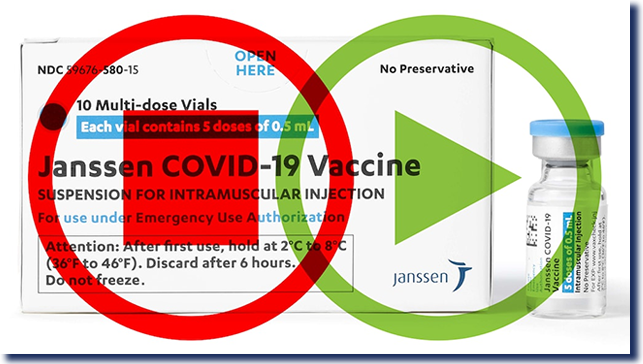
The J&J pause illustrates deep issues with science communication
In mid-April, vaccine scientists and regulators were alerted to six serious adverse events after administration of the Johnson & Johnson COVID-19 vaccine. These events occurred in women ages 18 to 48 who had received the vaccine under emergency use authorization (EUA), and were similar to reports from Europe regarding the other adenoviral-based vaccine made by AstraZeneca.
The syndrome is best described as vaccine-induced thrombocytopenia and thrombosis (VITT). These events are devastating. They involve cerebral venous thrombosis (CVT) or thrombosis of the mesenteric vessels, and are thought to occur in the setting of runaway platelet activation due to auto-antibody formation -- a pathophysiology most similar to heparin-induced thrombocytopenia and thrombosis. VITT can result in death, but also, serious and irreversible neurological impairment in an otherwise young healthy individual.
|
|
Telehealth's role will depend on reimbursement
Last year, medical practices were forced to overcome numerous challenges to cope with plunging patient volumes and increased costs while trying to stay solvent amid the COVID-19 pandemic. MGMA members reported, from an operations standpoint, that certain administrative positions such as billing, information technology, and compliance were successfully performed by employees via remote work, but it isn't clear how long this will continue.
Some practices are considering offering telework options to stay competitive in the job market, but only 15% of medical groups responding to an April 13 MGMA Stat poll indicate they plan to increase their remote workforce this year. Medical groups are subject to countless privacy and security regulations, so a remote workforce is easier said than done in terms of cost and compliance considerations.
|
|
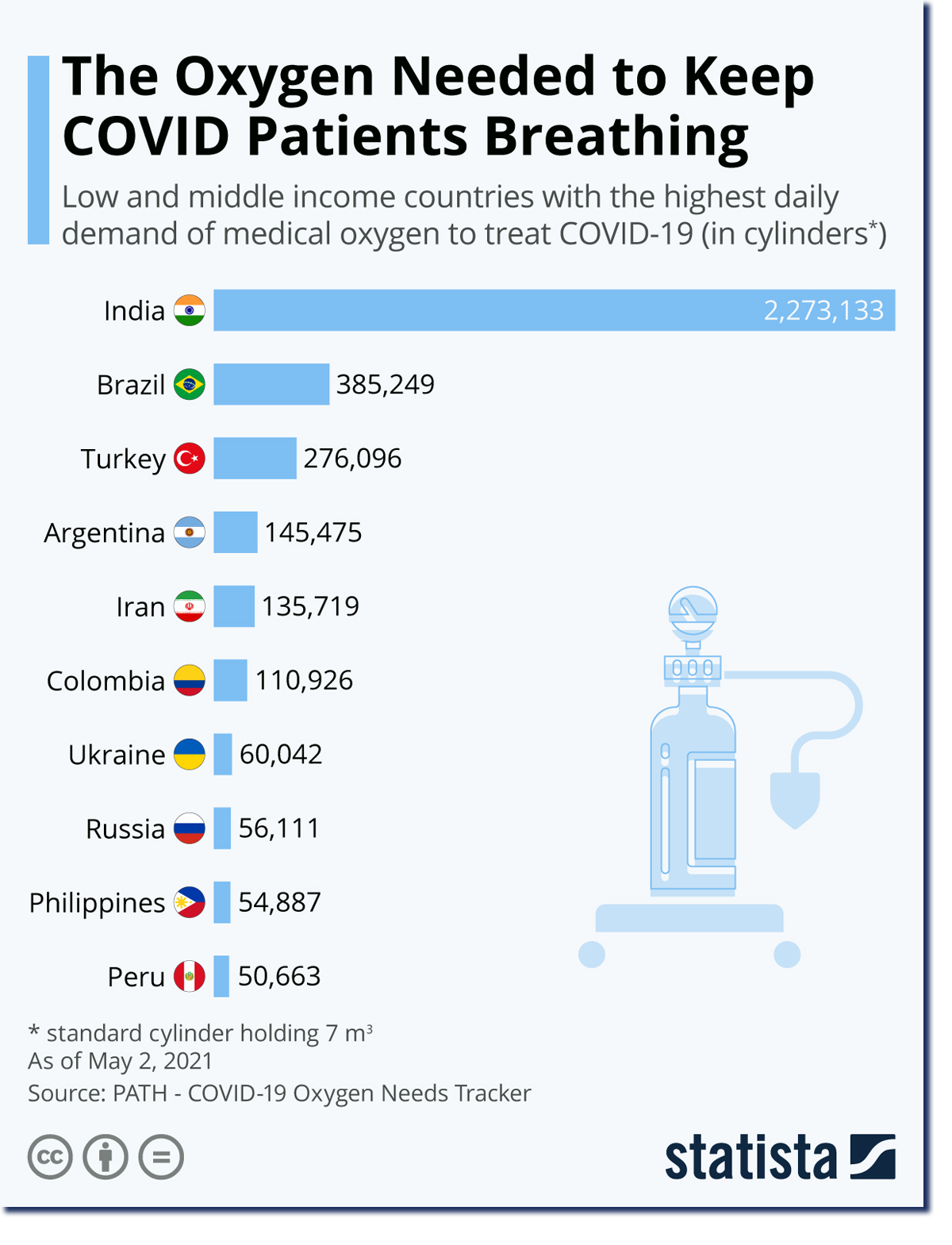
The second wave of COVID-19 in India has brought the country’s healthcare system to its knees. The second most populous country in the world has seen the number of coronavirus patients skyrocket, causing a lack of hospital beds, medicine and – most of all – medical oxygen. As a result, heartbreaking posts of relatives trying to get a hold of the scarce goods for their sick loved ones have become an ubiquitous occurrence on Indian social media. Black market prices have predictably soared.
The medical oxygen demand in India already reached almost 2.3 million standard 7 mᶾ cylinders per day, according to data from the NGO PATH (as of May 2, 2021.) This amount is almost six times as high as that of Brazil, which required around 385,000 cylinders per day. Since the country cannot stem the demand itself, donations related to oxygen generation as well as other medical supplies have started to pour into India.
|
|
If you have a question, please email Savannah Gold at sgold@asipp.org or call 270.554.9412, ext 4219.
|
- Selected manuscripts will be presented in an Electronic Poster Presentation
- Top 25 will be published in the Pain Physician journal.
- Top 10 will be selected for the Abstract Presentation at the Annual Meeting
|
|
Just as millennials of certain socioeconomic status are exiting the workforce or shaking up their professional pursuits due to pandemic fatigue, 2.7 million Americans age 55 or older are embracing another labor market change — early retirement, reports Bloomberg.
Financial advisers report a fresh "life-is-short" sentiment among clients considering hanging up their hats early, who are more likely to be white and have large retirement accounts, according to federal surveys and Bloomberg's interviews.
|
|
Amazon posted more than $8 billion in profit for the first quarter of 2021 as it rapidly diversifies into other industries like healthcare.
|
|
A St. Louis-based pain management physician is suing to keep the federal government from collecting millions in refunds after it allegedly overpaid his practice $14,418.93.
Gurpreet Padda, MD, filed a lawsuit April 27 to block the federal government from collecting a multimillion dollar payment after CoventBridge Group found CMS overpaid his practice.
"The difference in clinical opinion serves as the basis for the defendants' overpayment demand, which relies on a flawed and invalid statistical methodology to inflate $14,418.93 in alleged overpayments to an extrapolated alleged overpayment of more than $5,964,295, a 39,934% increase," the lawsuit states.
|
|
Pain Medicine Case Reports (PMCR) and Editor-in-Chief Alaa Abd-Elsayed, MD, PhD would like to invite you to submit case reports and case series to the PMCR journal. Your article will be published free of charge.
Open access journals are freely available online for immediate worldwide open access to the full text of published articles. There is no subscription fee for open access journals. Open access journals are no different from traditional subscription-based journals: they undergo the same peer-review and quality control as any other scholarly journal.
Interested in becoming a member of the PMCR Editorial Board?
Editorial board members are asked to review 2-6 manuscripts per year. Please submit your most up-to-date CV to sgold@asipp.org for consideration.
For more information or to submit your articles, click here.
|
|
Benjamin S. Chaney, MD, Kevin J. Tiwari, MD,
Muhammad S. Hefzy, MD, and Nitin Goyal, MD
Abstract
BACKGROUND: The mechanistic underpinnings of nerve stimulation technology is an area of active debate in interventional pain literature. Whether the technology is transcutaneous, subcutaneous, or directly on the spinal cord/dorsal root ganglion, there are ample theories without substantive evidence. Although, these technologies have been proven to be invaluable for pain relief. Direct spinal cord stimulation is purported to be effective for peripheral pain through centrally mediated stimulation. However, in select cases, there is evidence for superior analgesia from a peripherally directed device, such as a subcutaneously placed peripheral field nerve stimulator (PFNS), when compared to spinal cord stimulators (SCS).
CASE REPORT: An 81-year-old man was referred for left upper thoracic pain exacerbated by lipoma excision with diagnostic imaging unsupportive of musculoskeletal etiology. The patient was found to have soft tissue tenderness to palpation worsened by activity. He failed numerous conservative treatments and procedures. An epidural SCS was trialed, with appropriate paresthesia mapping, but was unsuccessful in providing significant relief. Ultimately, a PFNS was trialed and found to provide adequate relief. A PFNS was later implanted, resulting in successful pain relief.
|
|
| PROSPECTIVE STUDY |
Barbara Kleinmann, MD, Birgit Abberger, PhD,
Kristin Kieselbach, MD, and Tilman Wolter, MD
Abstract
BACKGROUND: Worldwide, the COVID-19 pandemic has a significant impact on daily life. First studies describe a negative impact of pandemic stressors even on individuals without previous mental illnesses. The home lockdown and the shutdown of pain clinics make it difficult for all patients to get the healthcare they need.
Objectives: The aim of this study was to investigate to what extent patients with chronic pain felt affected by the pandemic and its consequences on pain treatments, focussing on the beginning of the outbreak.
|
|
| RETROSPECTIVE STUDY |
Denis Dupoiron, MD, Sanjeet Narang, MD, Valerie Seegers, MD, Nathalie Lebrec, MD, François Boré, MD, Virginie Jaoul, MD,
Marie Pechard, MD, Sabrina Jubier Hamon, MD,
Thierry Delorme, MD, and Thomas Douillard, MD
Abstract
BACKGROUND: Cerebrospinal fluid (CSF) leakage resulting in post dural puncture headache (PDPH) is a frequent adverse effect observed after intrathecal drug delivery system (IDDS) implantation. CSF leakage symptoms negatively affect patient quality of life and can result in additional complications. Fibrin glue was used to treat CSF leakage syndrome. We developed a procedure to reduce the incidence of PDPH by preventing CSF leakage with the use of fibrin glue during surgery.
OBJECTIVES: The main outcome criterion for this study was the incidence of PDPH syndrome after IDDS implantation with or without preventive fibrin glue application during the procedure.
|
|
Since this malpractice insurance program officially launched in November 2018, ASIPP has signed up hundreds of providers with an average savings of 30%. This is professional liability insurance tailored to our specialty and will stand up for us and defend our practices.
Norcal Mutual is 'A' Rated by AM best and is license in all 50 states. To read a few important points to keep in mind about the program, including discounts, administrative defense, cyber coverage, aggressive claims handling, and complimentary award-winning risk management CME activities, click here.
|
|
ASIPP® is now offering our members the benefit of a unique revenue cycle management/ billing service. We have received a tremendous amount of interest in the ASIPP® billing and coding program.
Click here to learn more about the negotiated rate for practices and more!
|
ASIPP® has formed a partnership with Henry Schein and PedsPal, a national GPO that has a successful history of negotiating better prices on medical supplies and creating value-added services for the independent physician. Working with MedAssets, PedsPal provides excellent pricing on products like contrast media that alleviate some of the financial pressures you experience today.
|
|
up-to-date news related to you, your practice, and your patients!
|
|
|
|
|
|
|