|
Dear Brothers & Sisters in Christ,
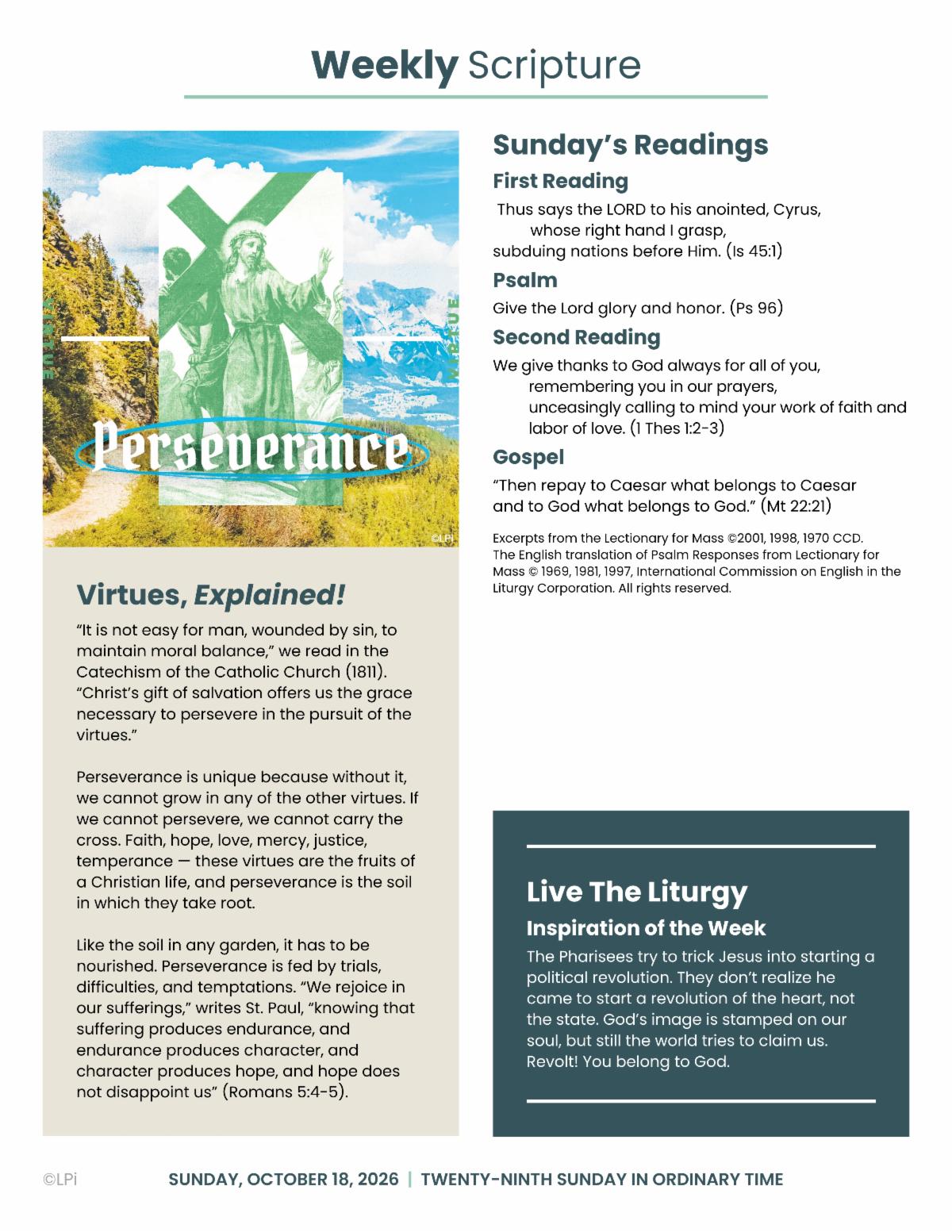
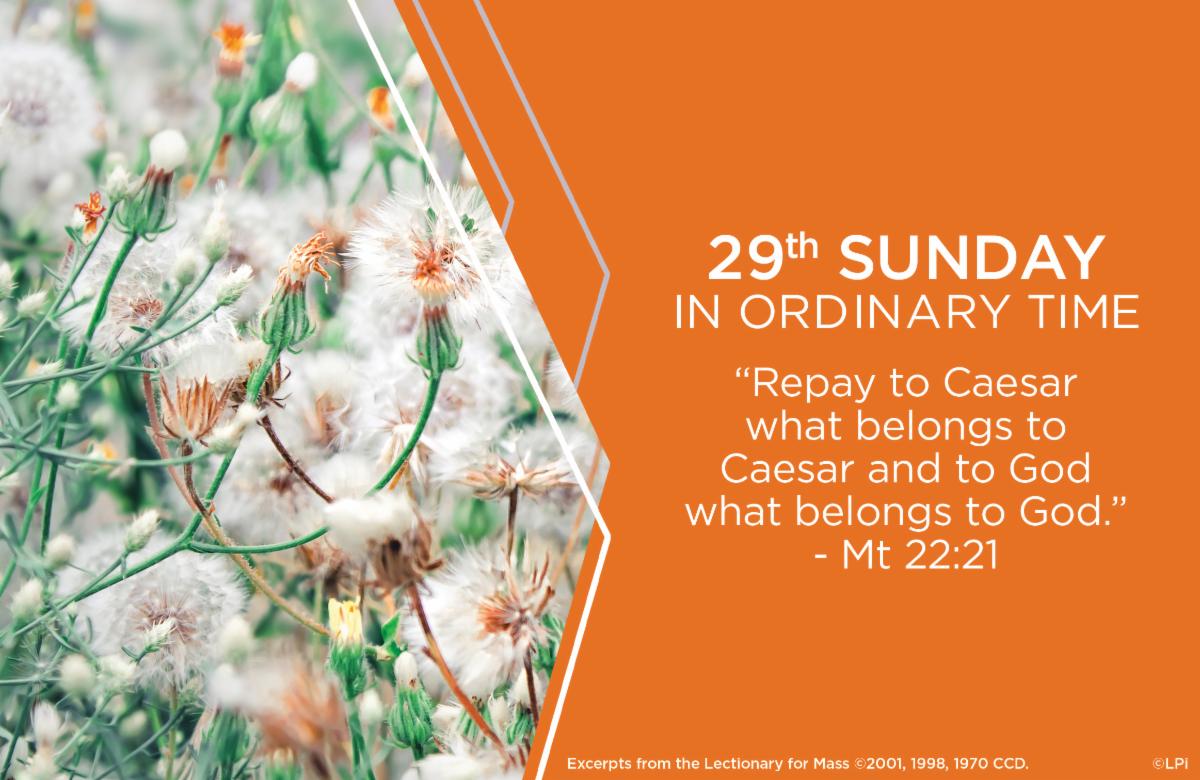
“Render to Caesar the things that are Caesar’s, and to God the things that are God’s” is the well known reply of Jesus recorded in the Synoptic Gospels (Matthew 22:21, Mark 12:17, Luke 20:25). It was given in response to a hostile question about whether it was lawful to pay the Roman poll tax to Caesar.
Jewish leaders (Pharisees and Herodians) tried to trap Jesus:
- If he said “yes, pay the tax,” he could be accused of collaborating with the occupying power and losing popular support.
- If he said “no,” he could be denounced to the Romans as a rebel.
Jesus asked for a denarius, pointed to the image and inscription of the emperor on it, and delivered the line. The coin itself belonged to Caesar’s economic and political system; therefore, the tax that used that currency was owed to that system. At the same time, He insisted that what belongs to God (human beings made in God’s image, ultimate loyalty, worship, moral obedience) is not Caesar’s to claim.
The statement affirms two distinct spheres of obligation that are not identical:
-
Civil authority has legitimate claims within its proper domain (taxes, public order, coinage, governance).
-
God has ultimate claim over the person, conscience, and worship. When the two conflict, God’s claim is higher.
It is neither a call to theocratic revolution nor a blank check for any government. Later Christian reflection (from Paul in Romans 13 to Augustine, Aquinas, the Reformation, and modern political theology) has used it as a foundational text for thinking about the limited legitimacy of the state and the primacy of conscience.
The Catholic Church has a long, developed tradition of reflecting on exactly this distinction.
It accepts the principle that civil authority has a legitimate sphere while insisting that the state’s authority is limited, derivative, and ultimately accountable to God and natural law. The result is neither strict American-style separation nor medieval theocracy, but a nuanced dualism.
Official teaching in outline:
-
Two distinct societies. The Church is a spiritual society with its own mission, hierarchy, and law. The state is a temporal society charged with the common good of this world. Each has its proper competence (see Gaudium et Spes 76, Catechism of the Catholic Church 2244–2246).
-
The state is not absolute. Political authority comes from God through the natural order and is bound by the moral law. When civil law commands something contrary to the divine or natural law, “one must obey God rather than men” (Acts 5:29; CCC 2242).
-
Religious freedom. Vatican II’s Dignitatis Humanae teaches that the state must respect the freedom of persons and communities in religious matters, while still affirming that the true religion has a claim on society that goes beyond mere private preference.
-
Cooperation, not fusion. The Church and state should cooperate for the common good, especially in areas such as education, family, and social justice, without the state dictating doctrine or the Church seizing the sword.
Basilica Cathedral of Arequipa, Peru
The Catholic Church continues to teach that Caesar is owed legitimate temporal obedience and cooperation, but never ultimate allegiance. When civil power oversteps—by compelling cooperation with what the Church regards as intrinsic evil, by restricting the Church’s freedom to teach and worship, or by claiming total competence over human life the “render to God” side of the saying takes priority.
May God bless you!
Father Andrew Bartosz, Pastor
|