Sign Hill Stewards
September-October Newsletter
|
|
Greetings Sign Hill Stewards,
September brought a brief reprieve from the long drought with a late summer rain and the familiar first breaths of autumn air. By now most of the invasive plants have set their seed, so with the seasons we shift our efforts from time sensitive weed management to other aspects of habitat restoration.
One considerable challenge to managing grassland habitat is the natural process of ecological succession. Grasslands are made up of herbaceous plants like grasses and wildflowers, known as early successional plants because they are among the first to emerge following a natural disturbance. These early successional plants help build soils and set the stage for later successional plants like woody shrubs and trees. In the absence of natural disturbances from fire or large migratory grazers, woody plants encroach into grasslands and slowly convert the ecosystem. It's fascinating to consider that all the dense wooded areas on Sign Hill were once open grasslands.
The central goal of the ecological restoration on Sign Hill is to protect and enhance habitat for special-status species including the federally endangered mission blue (Icaricia icarioides missionensis) and callippe silverspot (Speyeria callippe callippe) butterflies, and several rare plant species. These species require an open grassland to live and reproduce. According to the California Native Grassland Association (CNGA), over 99% of California’s native grasslands have been lost to agriculture, urbanization, and the spread of invasive weeds. This sobering fact highlights the critical need to preserve any remaining fragments of native grassland in the state.
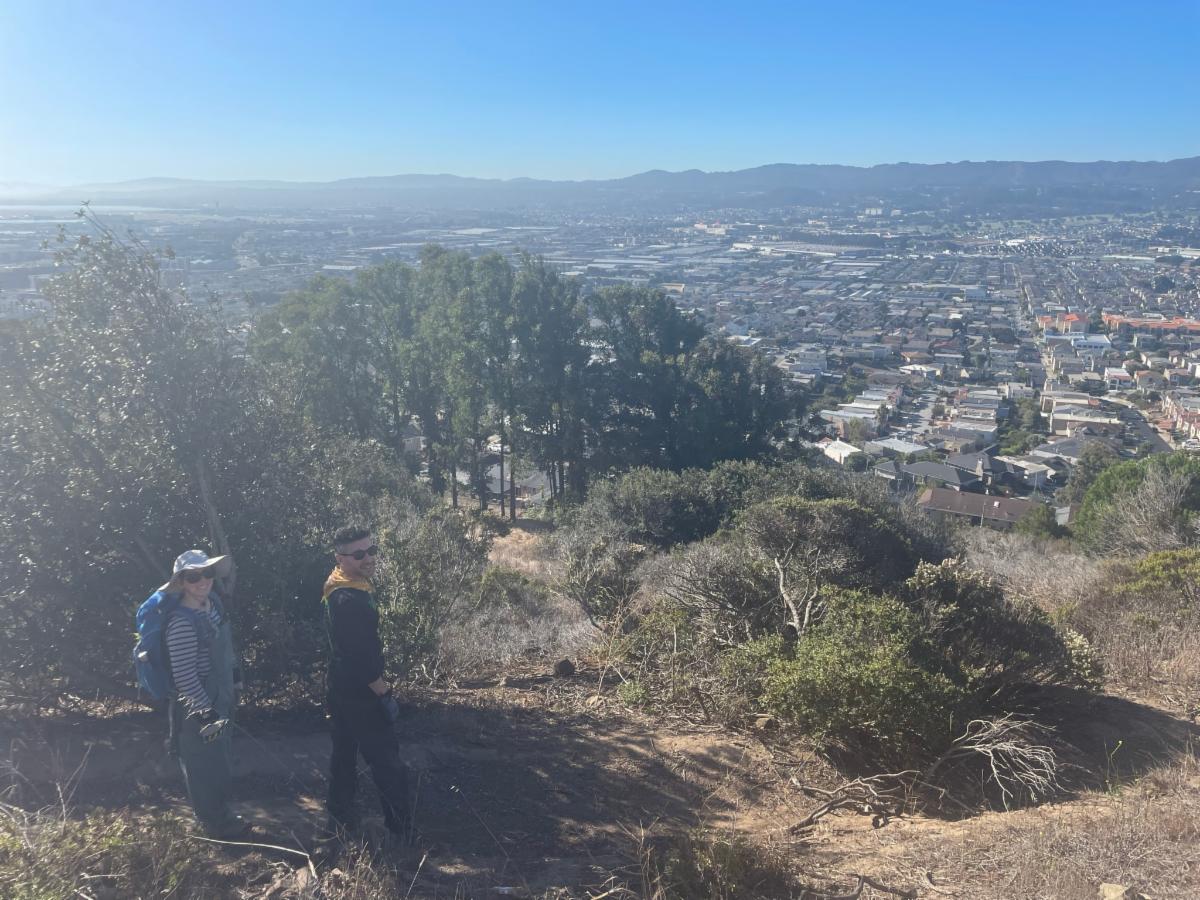
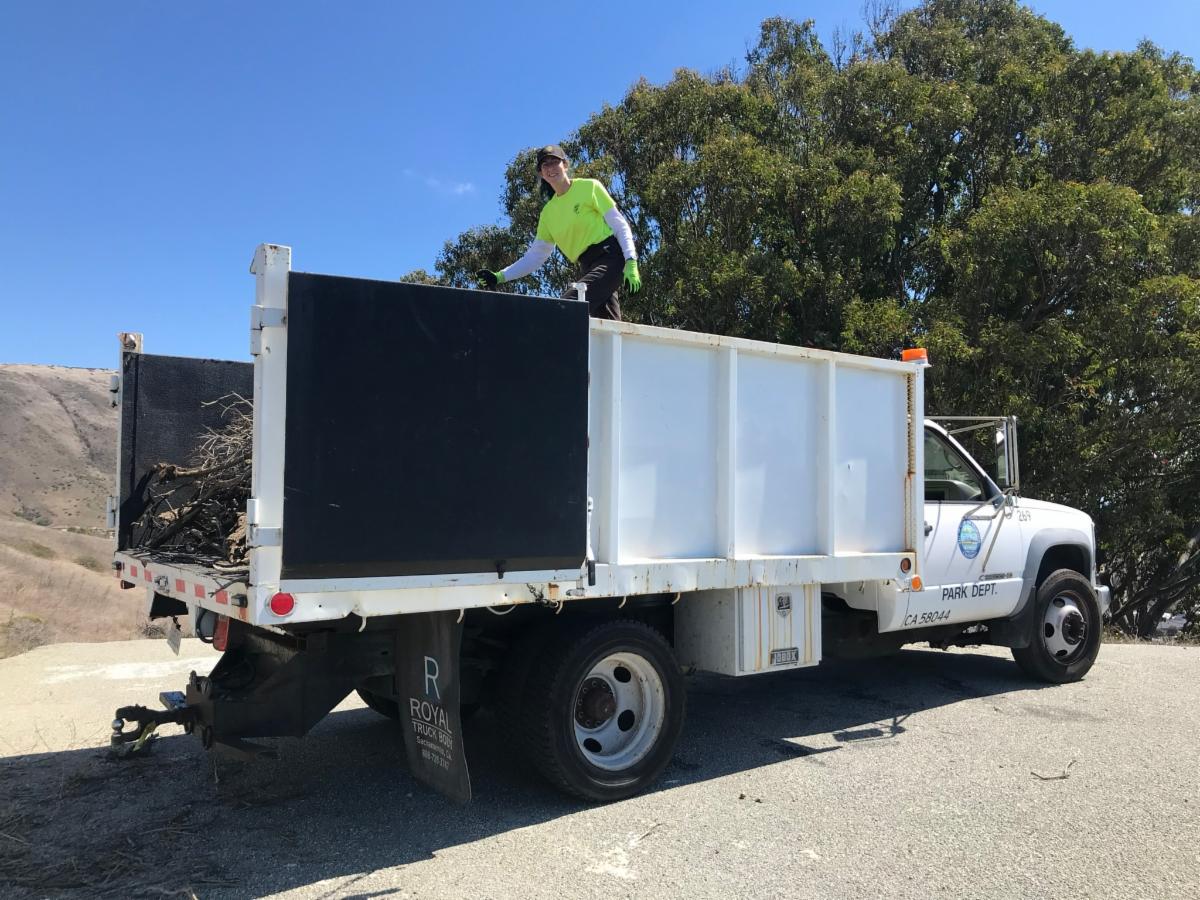
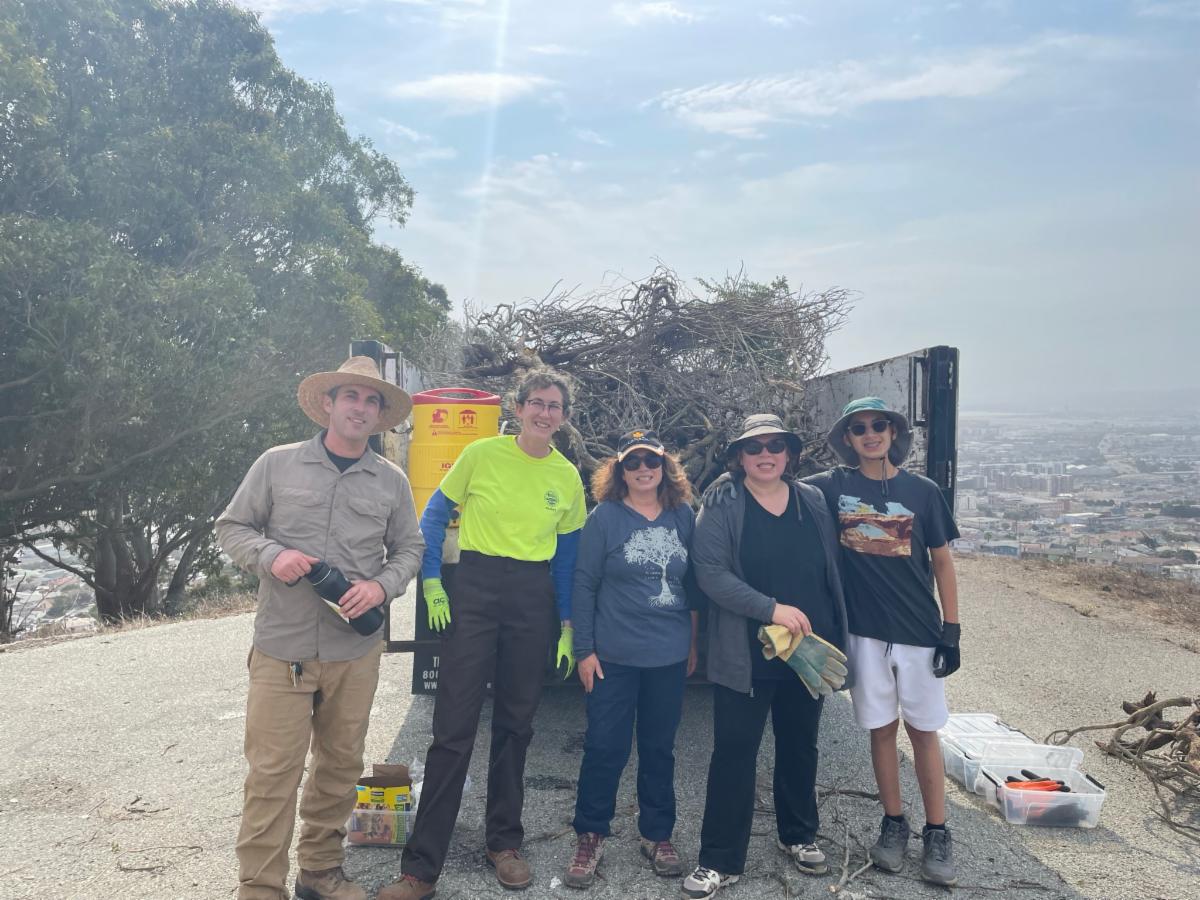
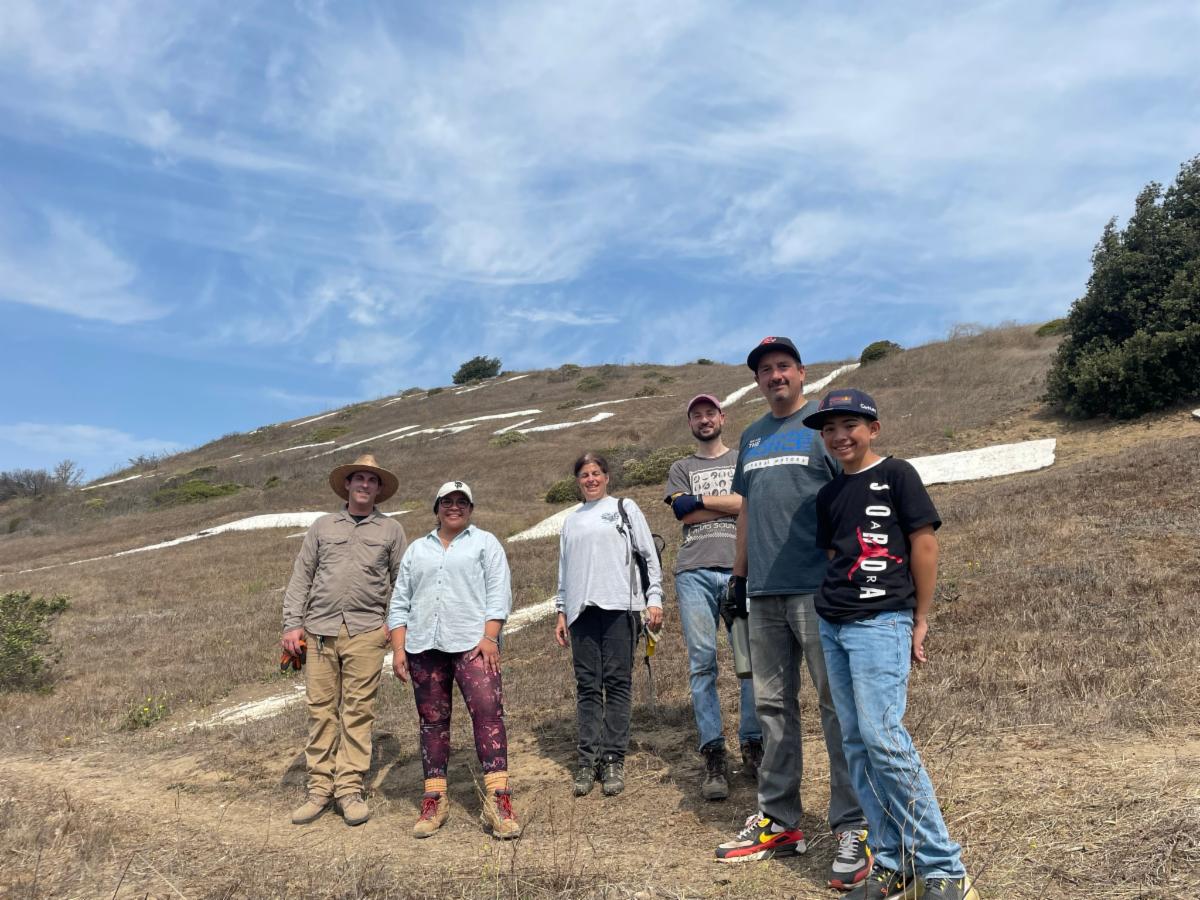
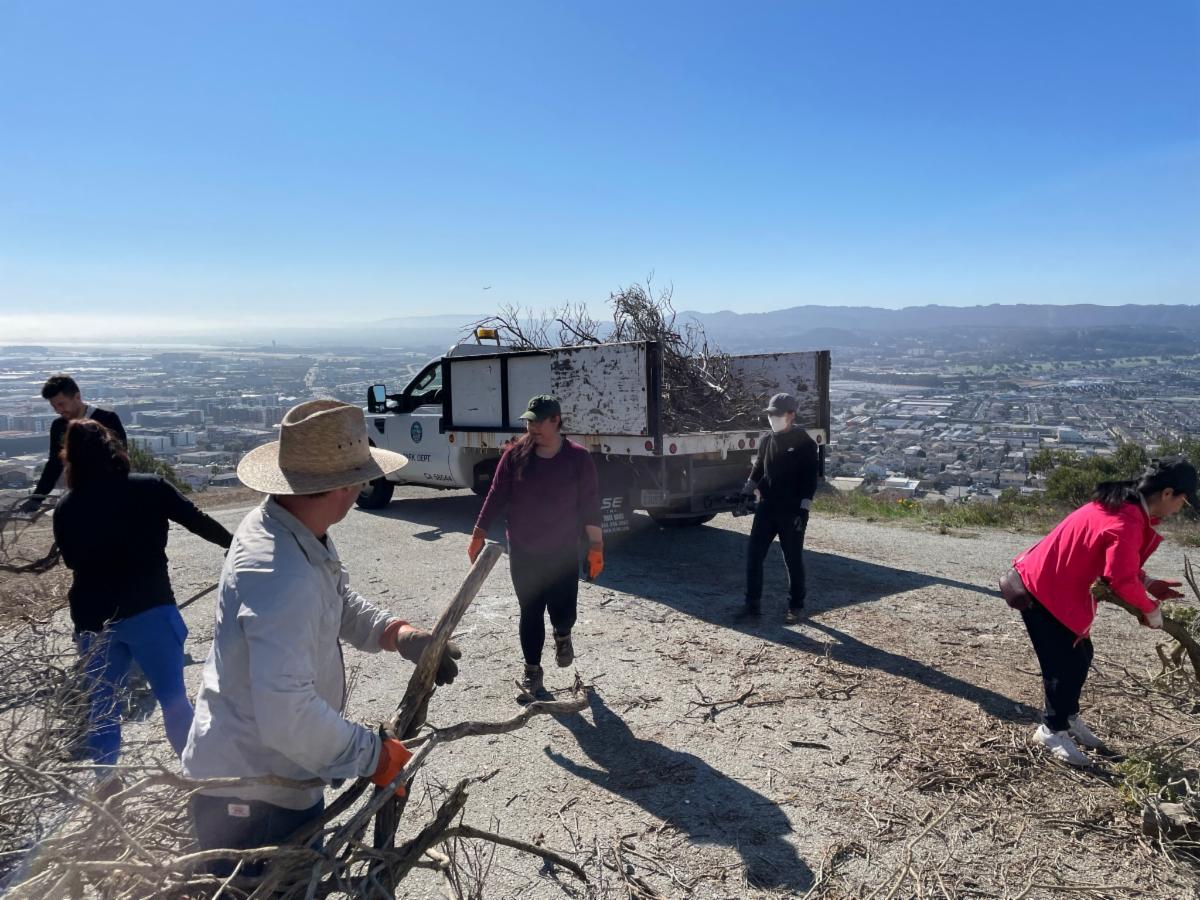
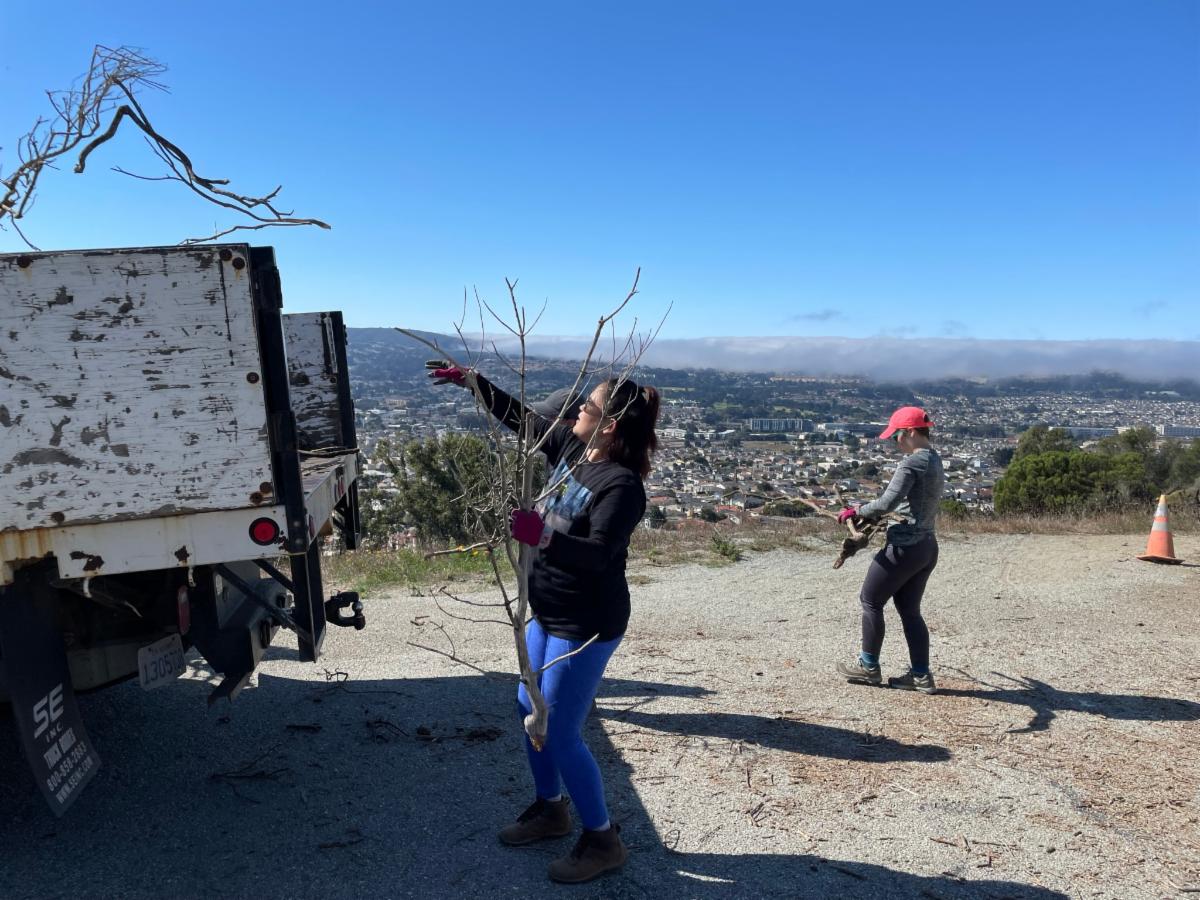
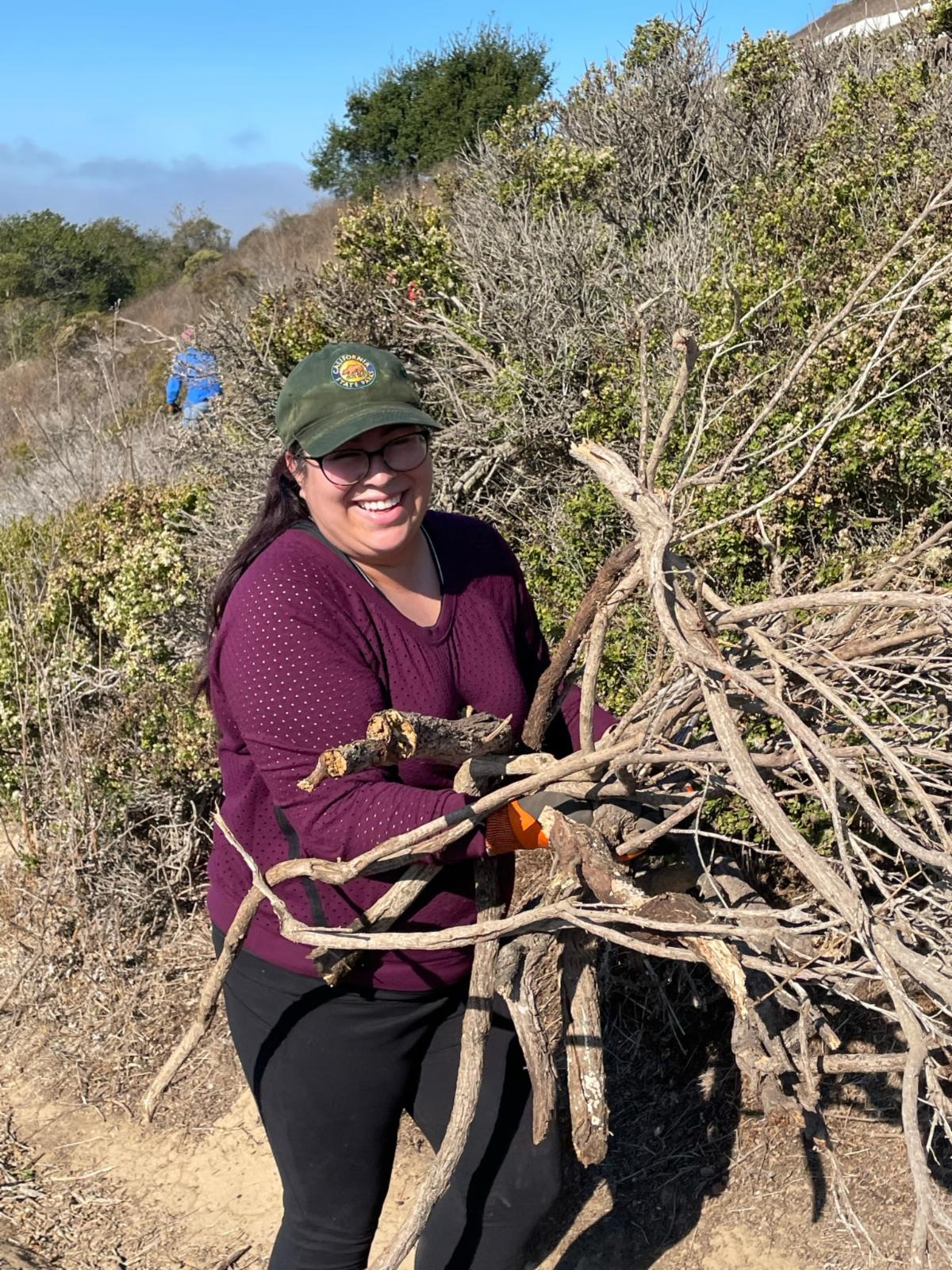
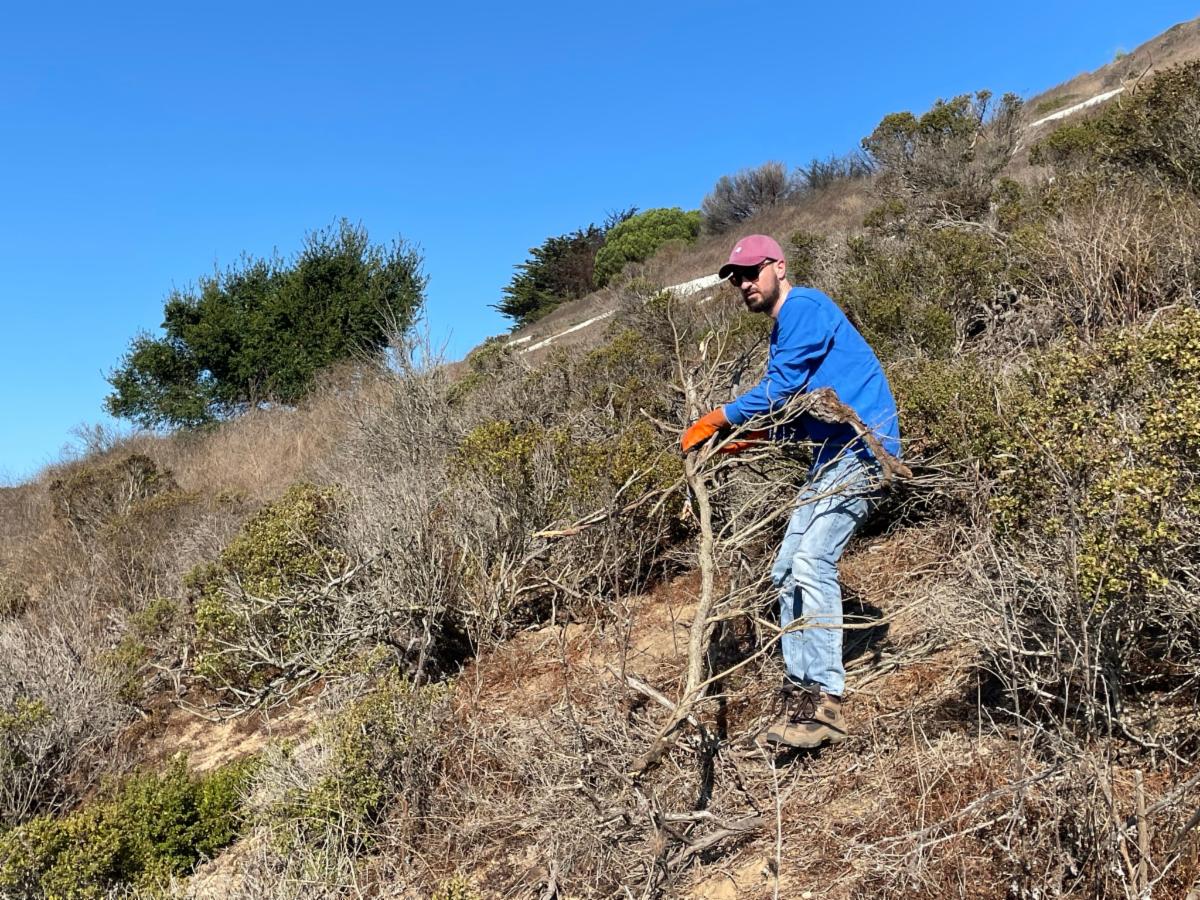
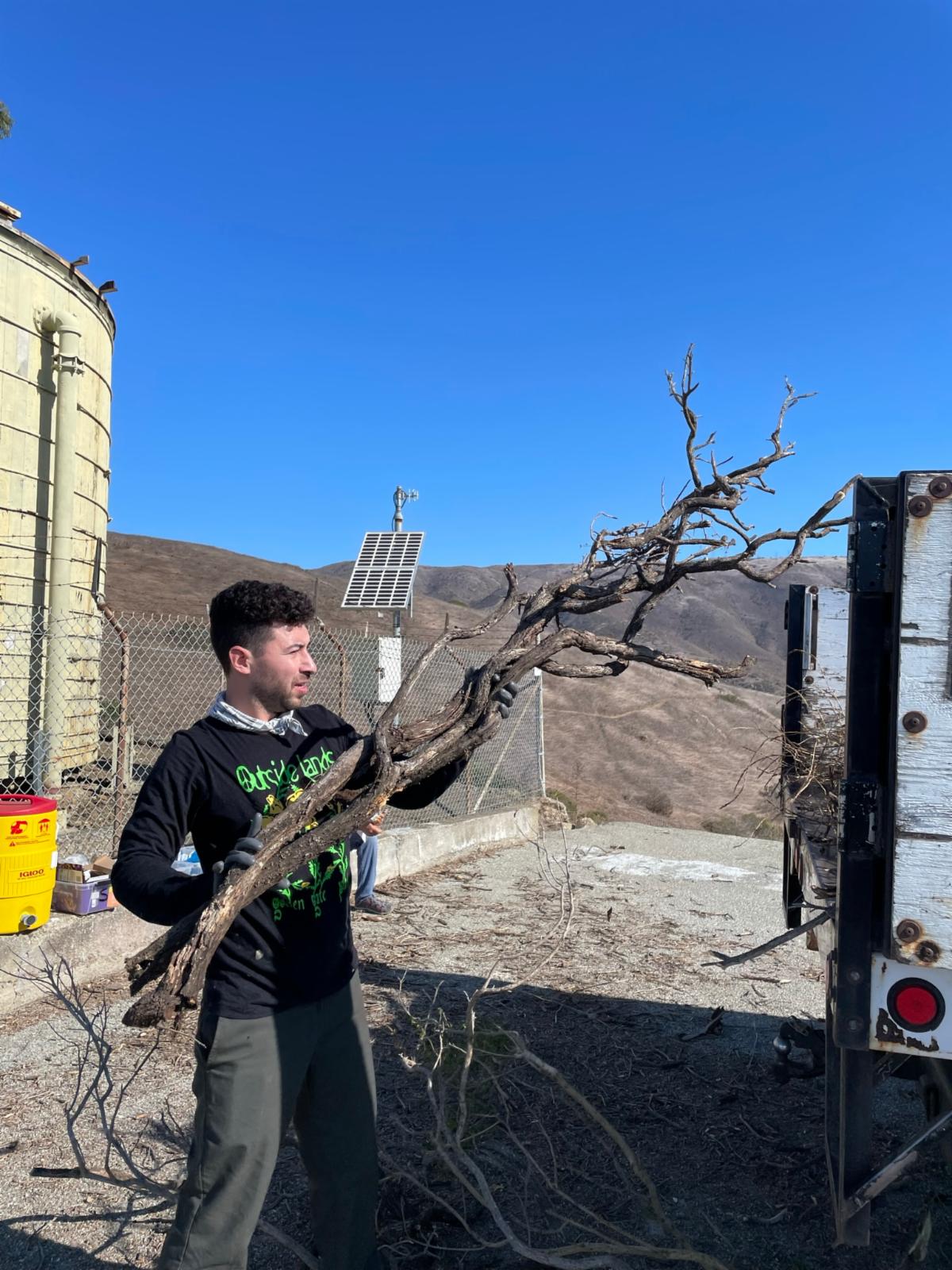
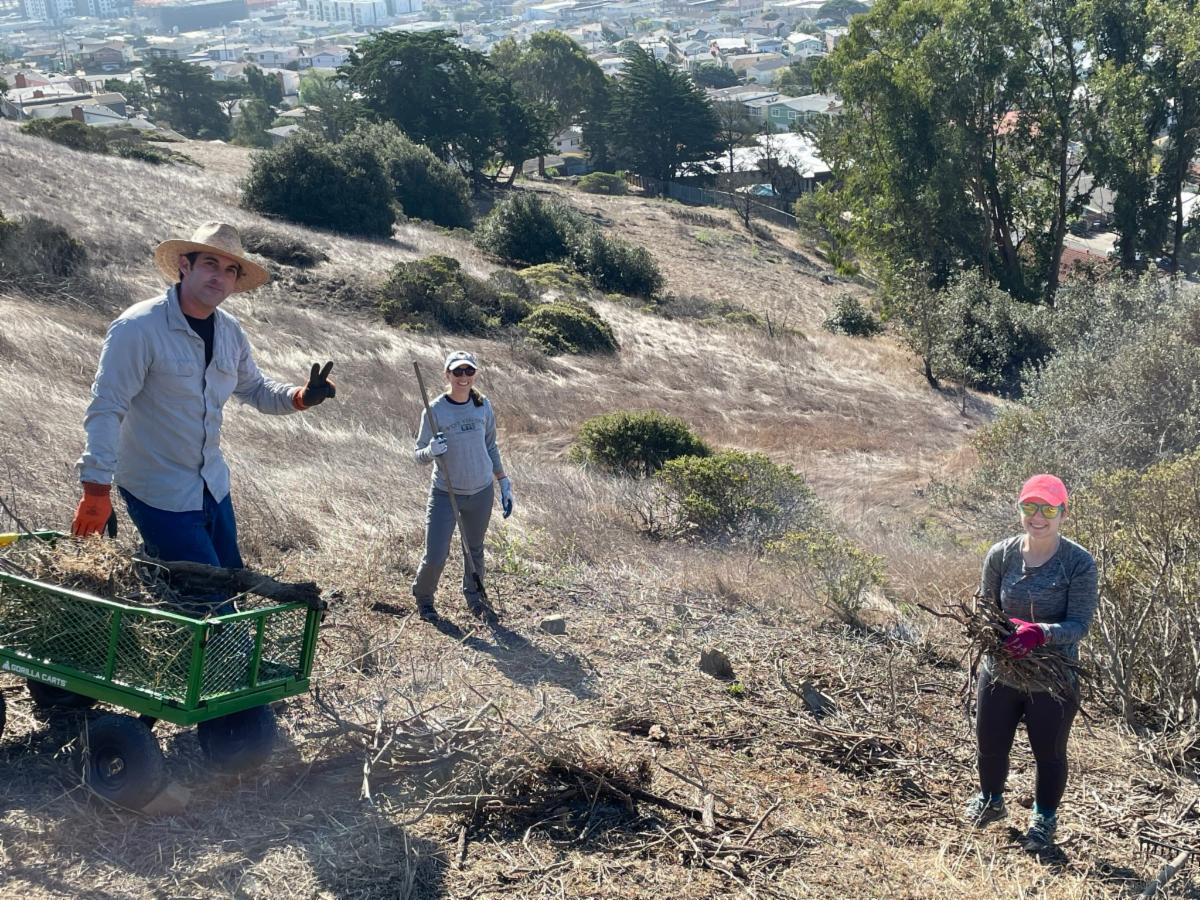
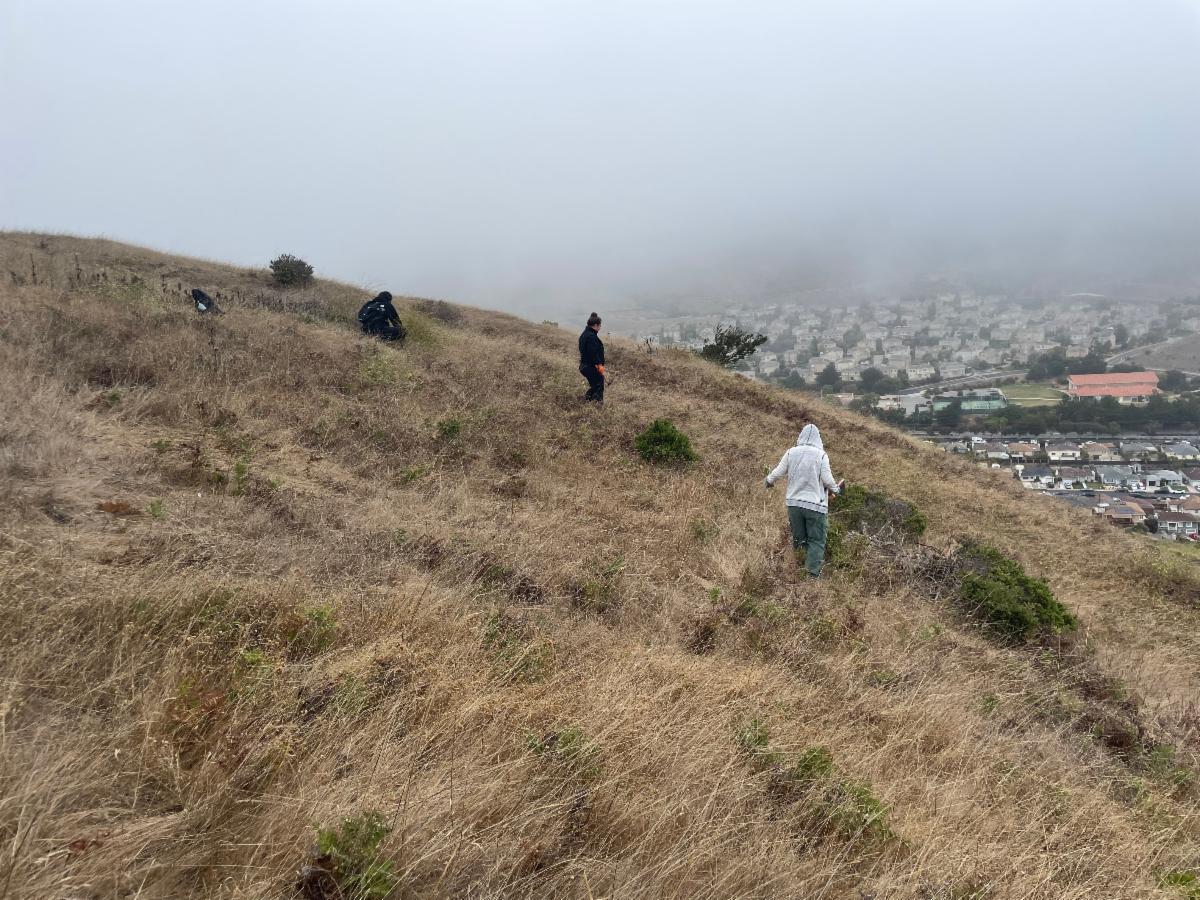
Over the last few weeks, So. San Francisco Parks staff and Sign Hill Stewards volunteers have contributed approximately 90 person-hours into clearing several large truckloads full of dry brush from a heavily scrub-encroached area below the hillside letters. While we are thinning the coyote bush and removing woody debris, our hands do the work of a burning fire and the canopy is opened for grassland plants to return to the landscape. The removal of woody debris also reduces the amount of fuel in the event of a wildfire, a threat not abated even by our recent touch of unseasonable rainfall.
I hope you will take time to experience the changing seasons from atop Sign Hill on a casual hike, or helping with the next truckload of brush!
Candace LaCroix
Natural Resource Specialist
Leading the Sign Hill Restoration Project
|
|
Sign Hill Stewards Remove Dry Brush to Restore Grassland |
|
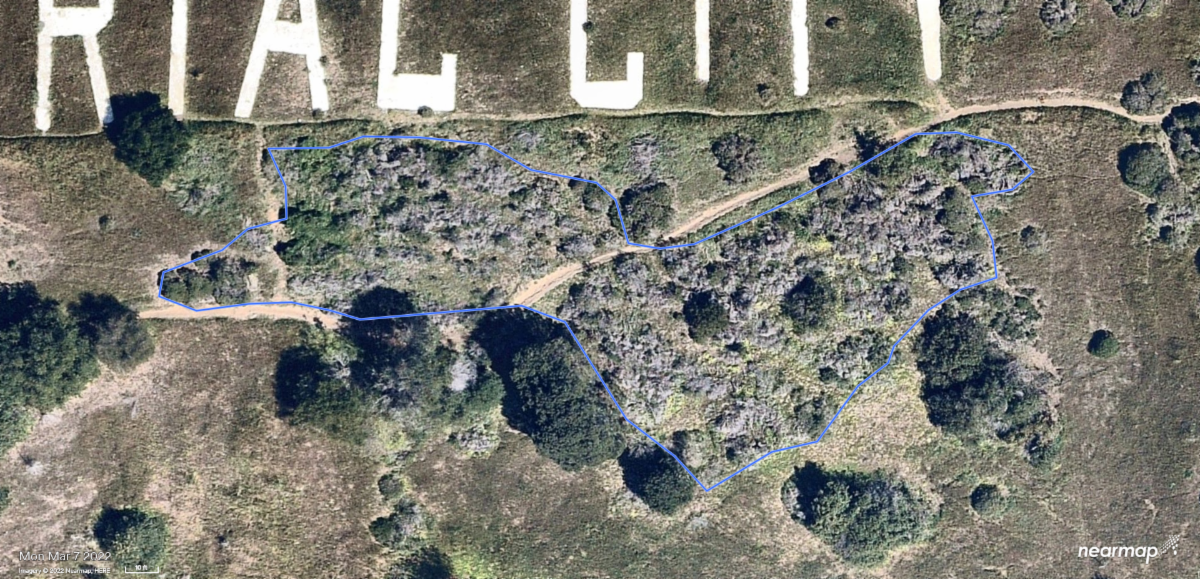
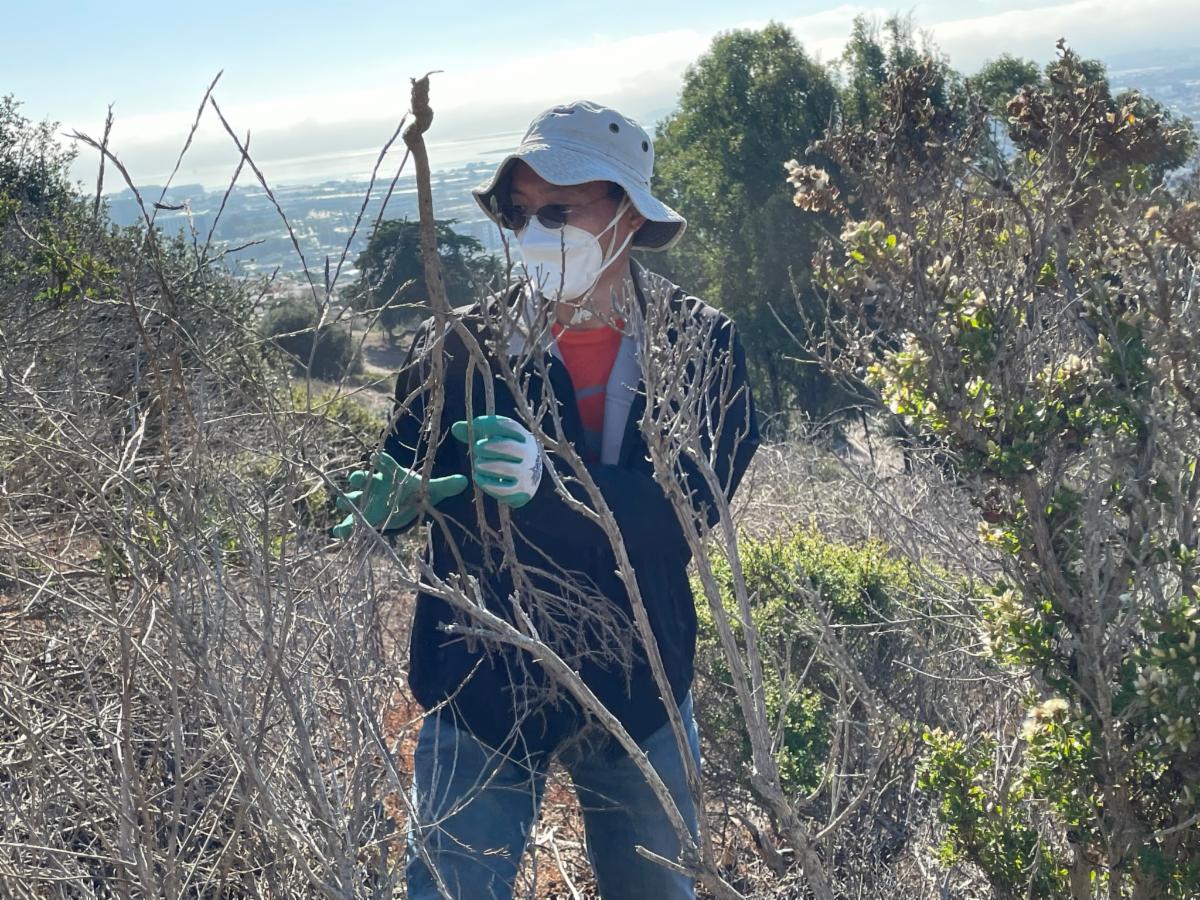
Along the Letters Trail, a dense patch of coyote brush has become established. In the absence of fire, many of the coyote brush plants have died back over the years, leaving a tangle of dry branches.
Not only do theses dead branches shade the ground below and prevent most grassland plants from growing there, they also increase the fuel load should a fire break out. Since this area is near some of Sign Hill's most occupied mission blue butterfly habitat, it is especially important to keep these shrubs from continuing to encroach into critical habitat.
It is so encouraging to see the community coming together to help protect this endangered species. A big thank you to these volunteers!
|
|
Butterfly Raffle at Concert in the Park |
|
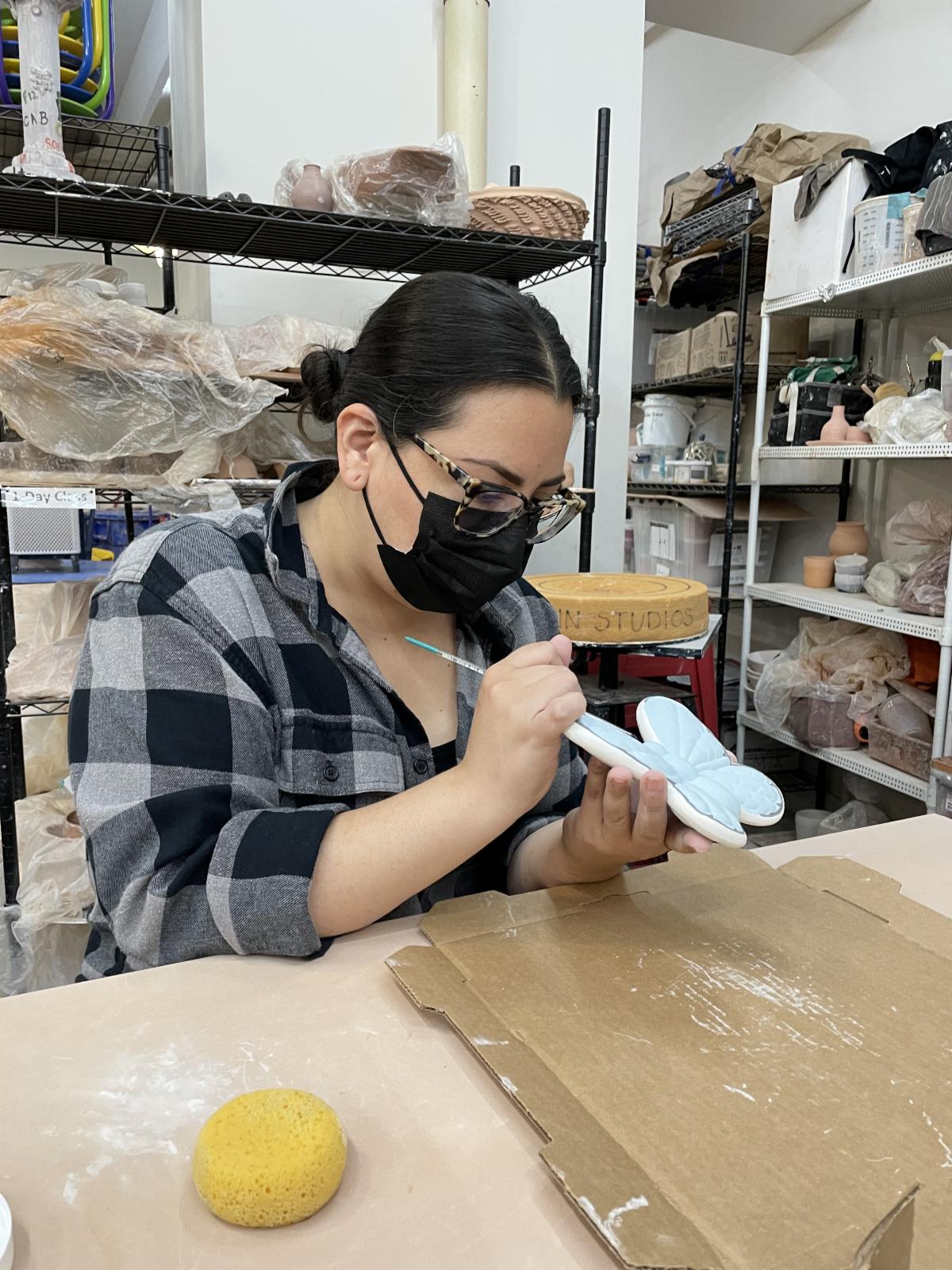
Friendly ceramic artist volunteers to support project by brushing on some finishing touches. |
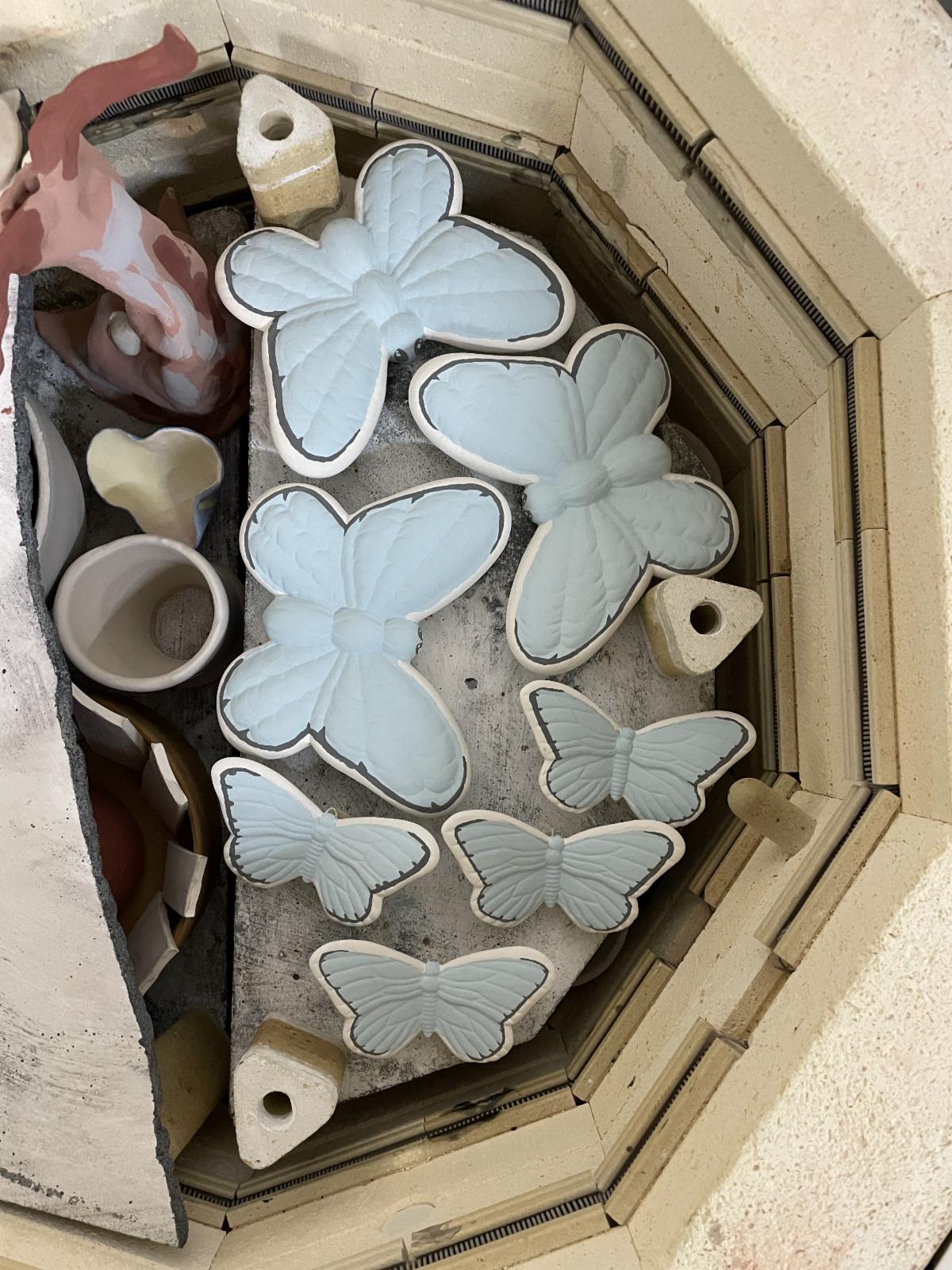
Ceramic butterflies in the kiln awaiting firing. |
|
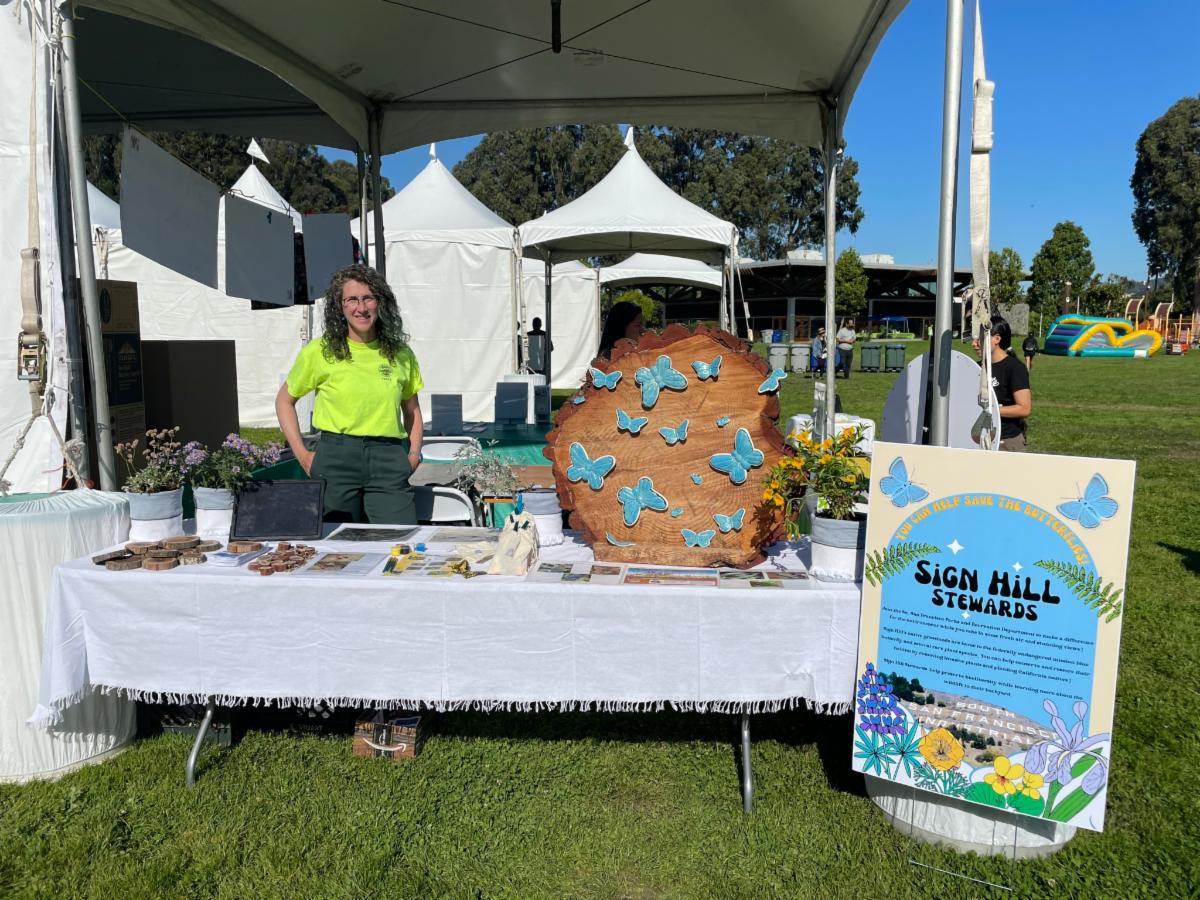
So. San Francisco's Park's Department showcased the Sign Hill Stewards volunteer program at this year's Concert in the Park. It was a wonderful opportunity to connect with the community while grooving to music from Stone City Band and Pacific Mambo Orchestra!
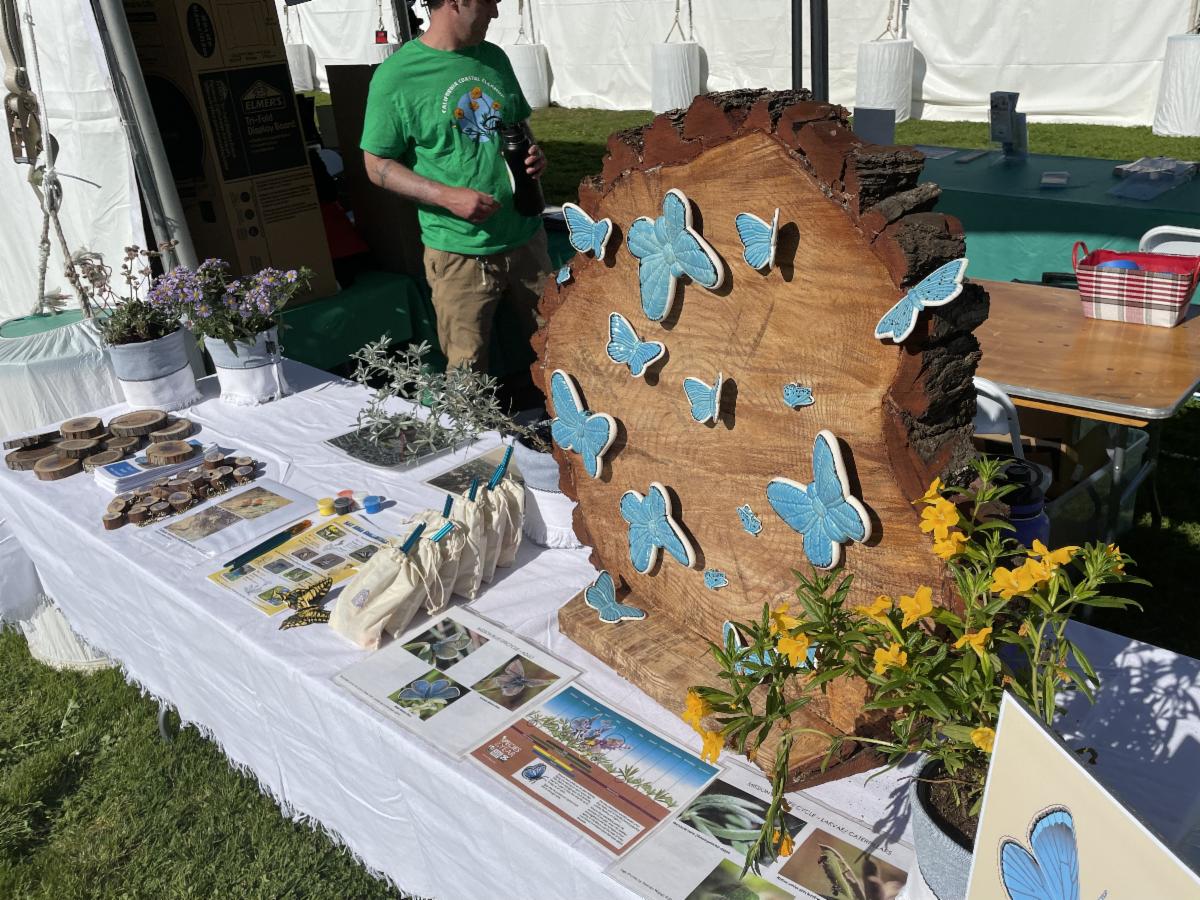
In order to raise awareness about the federally endangered mission blue butterfly, and welcome the community to get involved in our restoration work, we created an attractive display with handmade artwork, California native plants, free raffle prizes, and gifts.
The table was adorned with handmade ceramic mission blue butterflies hung on a large pine trunk slice. The wood was harvested from the ongoing tree work on Sign Hill and masterfully cut with a chainsaw by Parks Staff. We also created Bay Area Swallowtail educational craft packs which included a blank ceramic swallowtail butterfly, brushes, paints, and information about the various swallowtails observed in So. San Francisco to offer in the free prize raffle. Handmade wooden keychains and coasters with mission blue butterflies stamped on them were given away as we chatted with table visitors.
Following the event, the ceramic butterflies were raffled to participants who stopped by our table and signed up for the Sign Hill Stewards newsletter. We were elated to have 75 people sign up for the newsletter and congratulate 22 lucky prize winners! If you stopped by the table, make sure to check your inbox to see if you received an award email!
|
|
A warm welcome to those of you who are receiving your first Sign Hill Stewards newsletter! |
|
Sign Hill Stewards volunteer stands ready to answer park visitors' questions about the program. |
|
Sign Hill Resident Spotlight:
Red-tailed Hawk
|
|
If you happen to spot a hawk while driving down the open highway and or hiking in your local park, there is a good chance you have seen a red-tailed hawk (Buteo jamaicensis). They are one of the most common hawks in North America, with a range that spans from coast to coast.
Red-tailed hawks can be identified by their distinctive reddish-brown tails, however their plumage can vary quite bit from dark brown to almost white. These hawks seek out habitats that have open ground and tall perches like tall trees or roadside poles. They may also be seen soaring over open fields, at times appearing to hover motionless before diving down and capturing prey in their sharp talons. It is not unusual to hear them before you see them as they frequently let out long and distinctive high pitched screams.
|
|
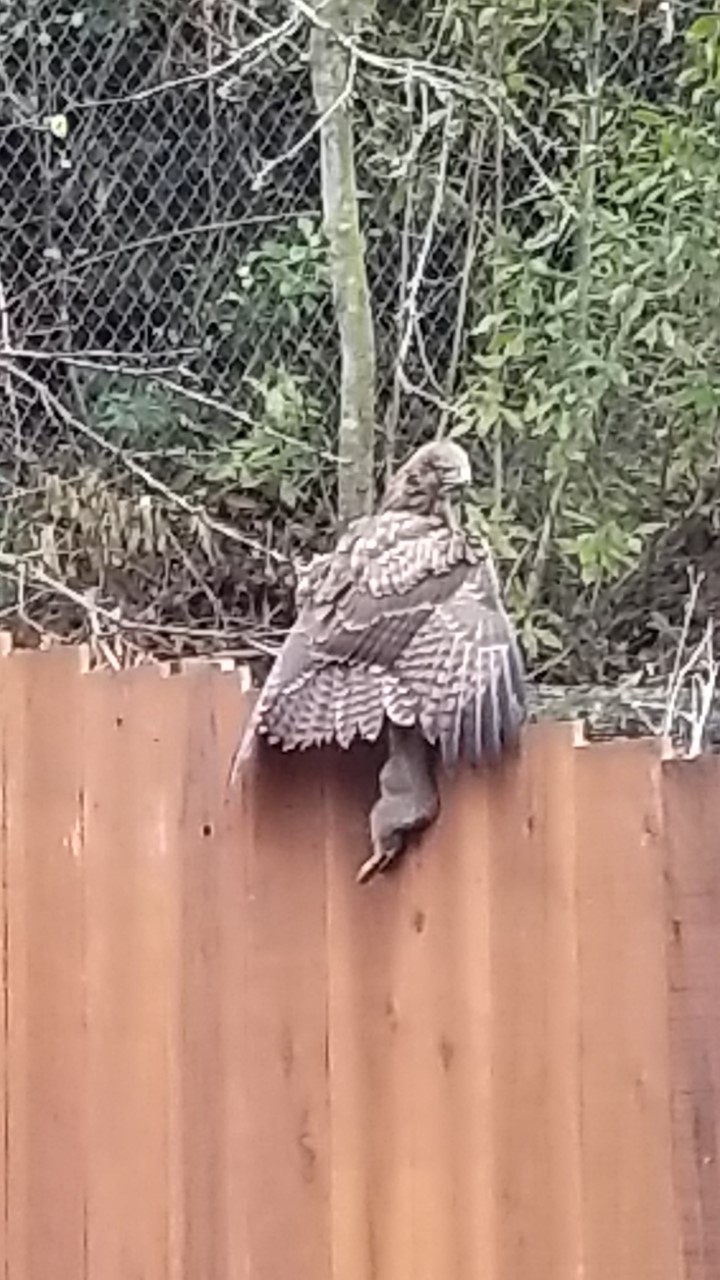
Nearby resident, David Gallagher, submitted this photo of a red-tail hawk with a freshly killed rabbit likely hunted on Sign Hill. |
|
These sights and sounds are not at all uncommon on Sign Hill as we have several resident red-tailed hawks. The mixed open grasslands and tall trees make the park ideal hunting grounds and where they can pick up rabbits, mice, gophers, birds, and reptiles like lizards and snakes.
During courtship, these hawks can be seen soaring in pairs high in the sky, males circling and making impressive maneuvers to impress females. Once mated, these birds share the responsibilities of parenthood, building the nest together generally in tall trees or cliff sides out of sticks and leafy branches. For the first few weeks after their young have hatched, the males do most of the hunting while females stay close and help feed the babies by tearing food into smaller bits.
|
|
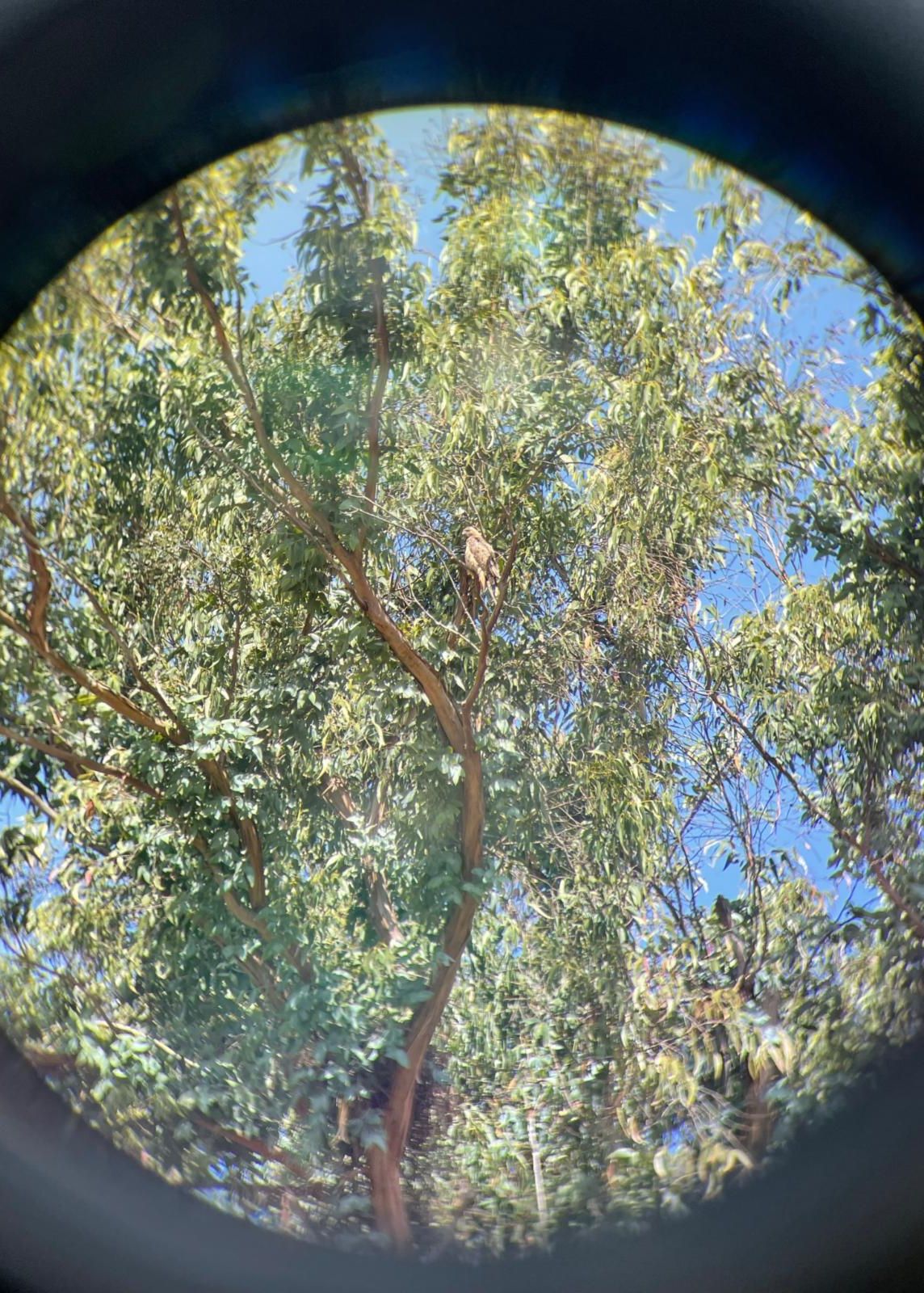
This photo was taken by lining up a cell phone camera with a binocular lens to get a closer view of a red-tail hawks nest, high up in a eucalyptus tree.
Take a look at the photo to see if you can find the nest!
|
|
|
|
|
|
Were you able to spot the nest?
|
|
|
|
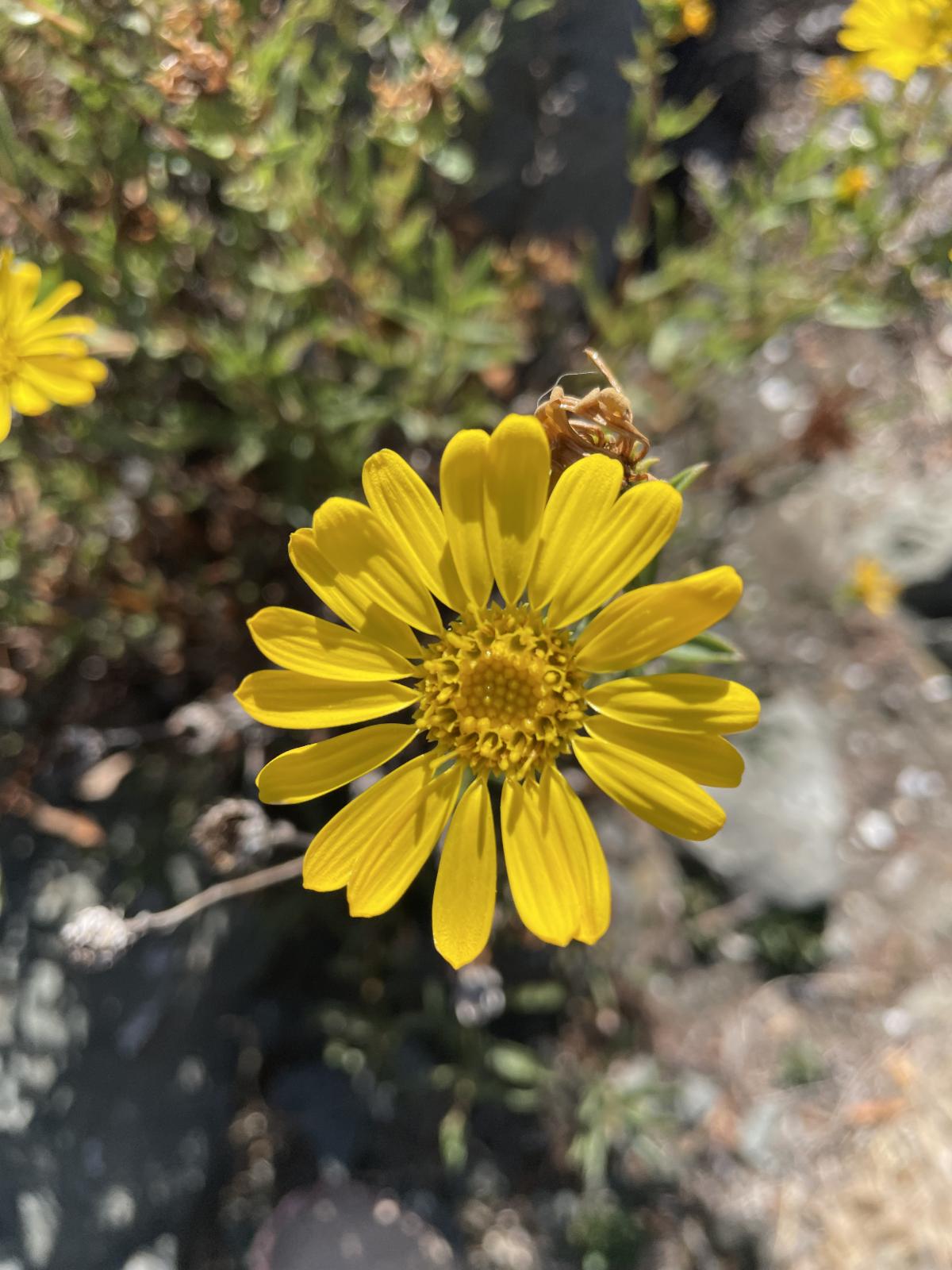
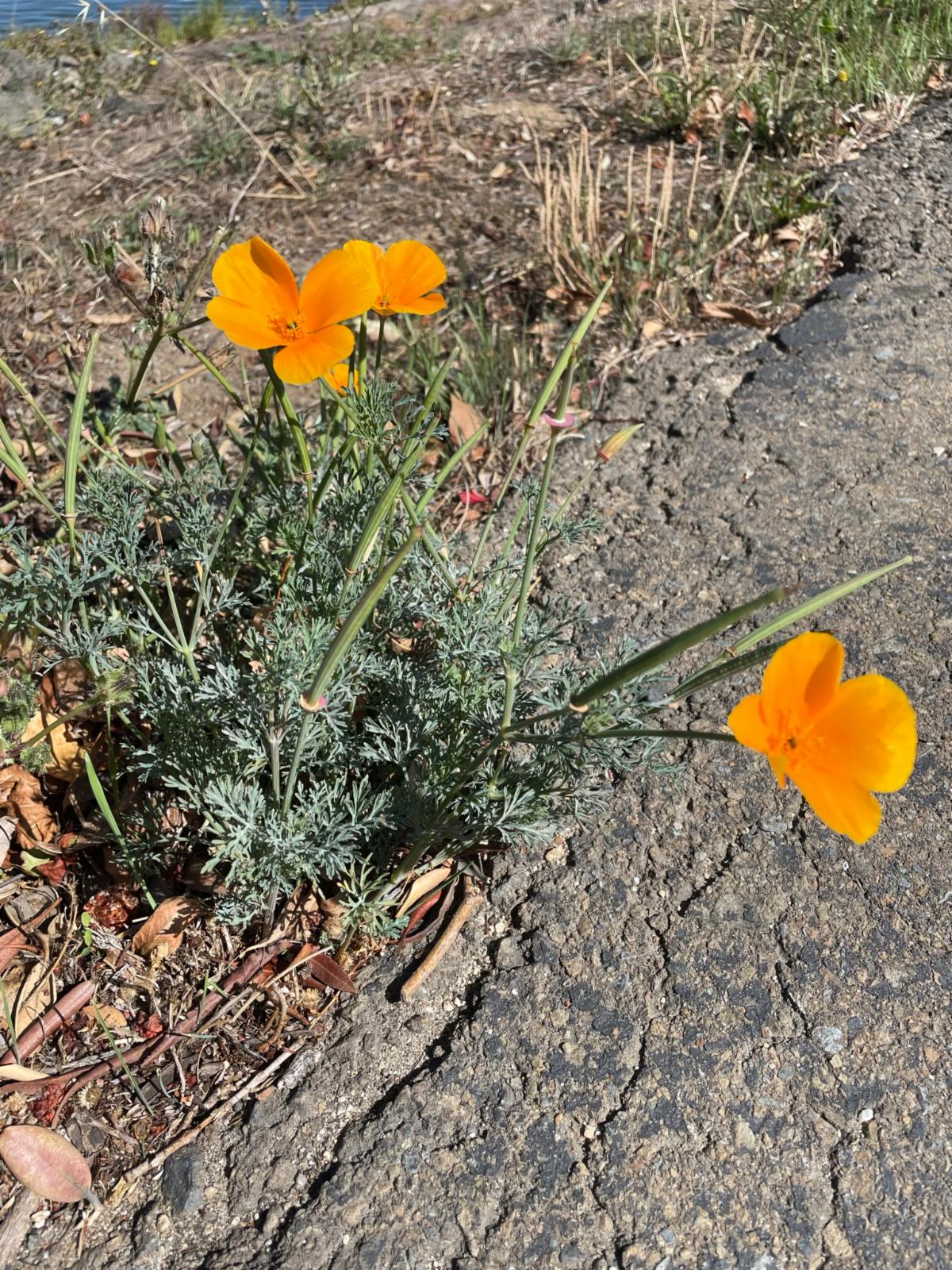
As the seasons change, so do the wildflowers. Some of our summer wildflowers have finished flowering and produced seed, while many flowers continue to bloom or are just beginning to put on their show. Here are some of the flowers that are blooming now.
Remember not to pick wildflowers and take pictures instead in order to protect sensitive habitat and ensure that everyone can enjoy the beautiful wildflowers of Sign Hill.
|
|
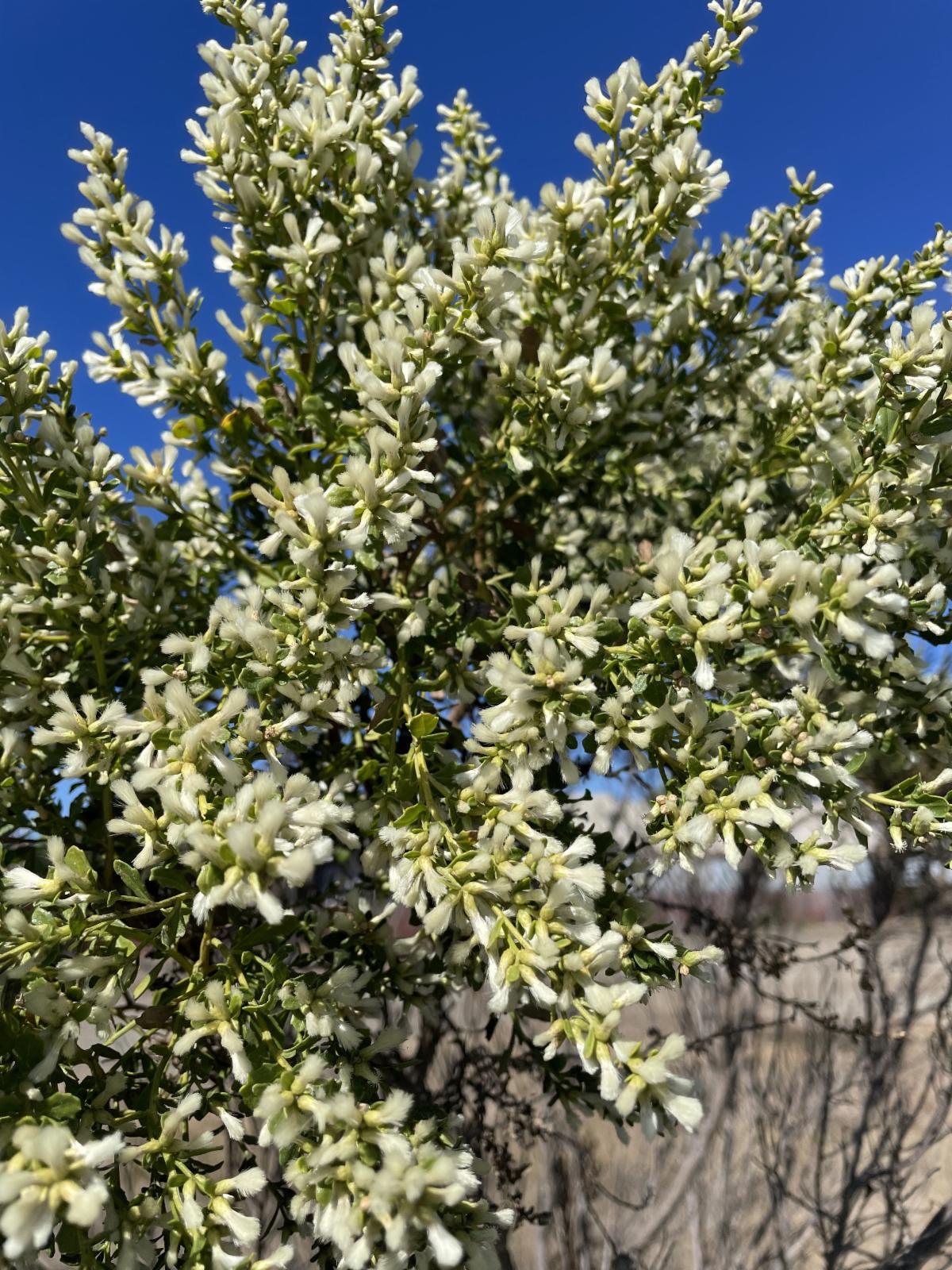
Coyote Brush
(Baccharis pilularis)
Just blooming
|
|
'San Bruno Mountain' Golden Aster (Heterotheca sessiliflora ssp. bolanderi)
|
Common gumplant
(Grindelia camporum)
|
|
California Goldenrod
(Solidago velutina spp. californica)
|
California Poppy
(Eschscholtzia california)
|
|
Click on a flower to learn more about it on Calflora.org! |
|
Tree Work Progress Report |
|
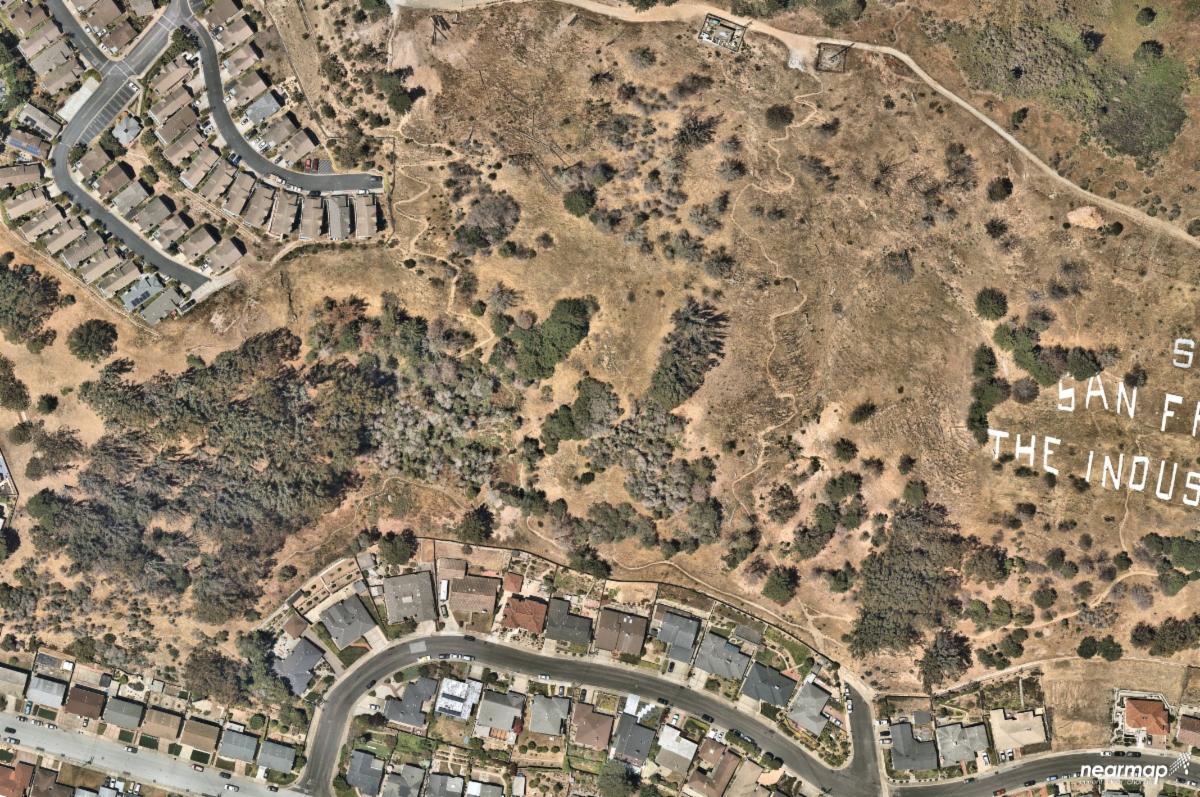
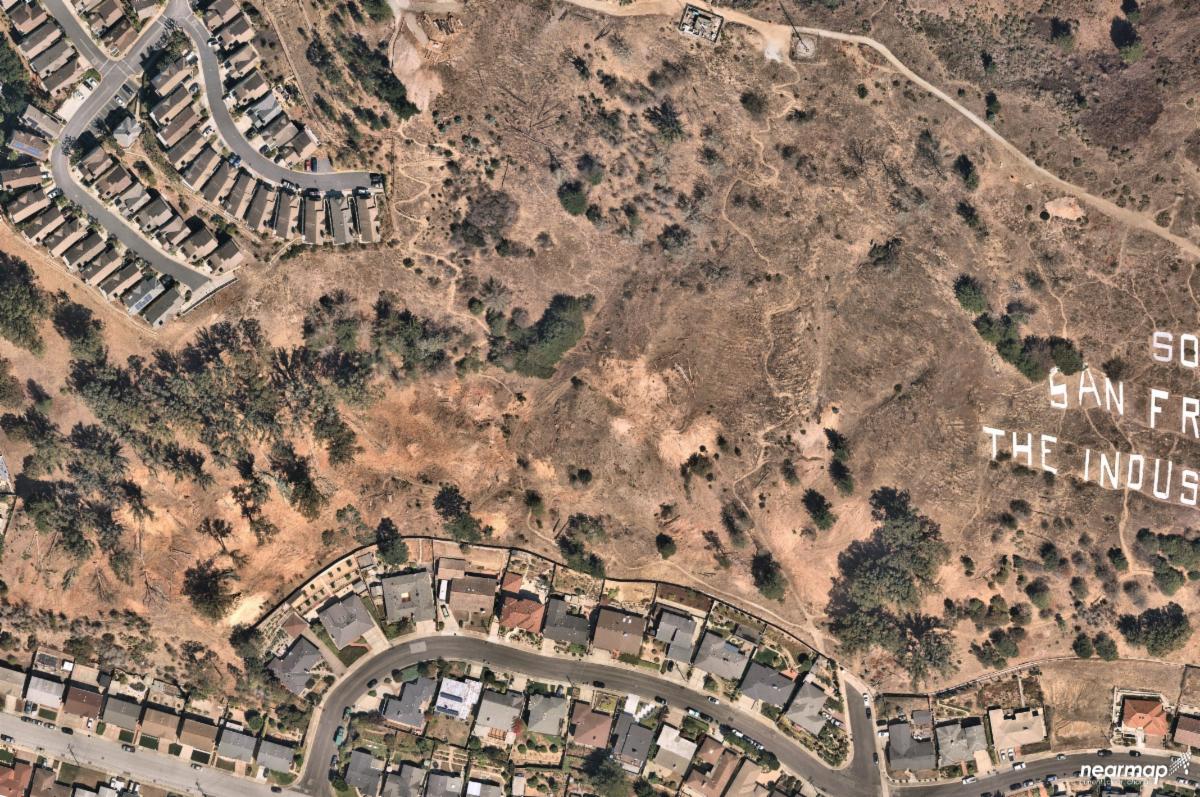
Many local residents, especially those living close to Sign Hill, will likely have noticed some changes over the past few months. There are meaningful steps being taken to restore Sign Hill's native coastal prairie habitat.
It may be hard to imagine that Sign Hill was once a completely open grassland, virtually devoid of shrubs or trees. Disturbance from wildfires and large grazing animals helped to prevent the establishment of larger woody species. Several native plants and animals require this coastal prairie habitat to thrive, and what remains today is critical habitat for the endangered mission blue butterfly.
|
|
Sign Hill, 1930. So. San Francisco Public Library
|
|
From the 1960's to the 1990's thousands of trees were planted on Sign Hill with the intention of beautifying the park. While planting trees can be good for the environment, these made changes to the local ecology. By changing Sign Hill's grasslands into woodlands, habitat for grassland species was diminished.
|
|
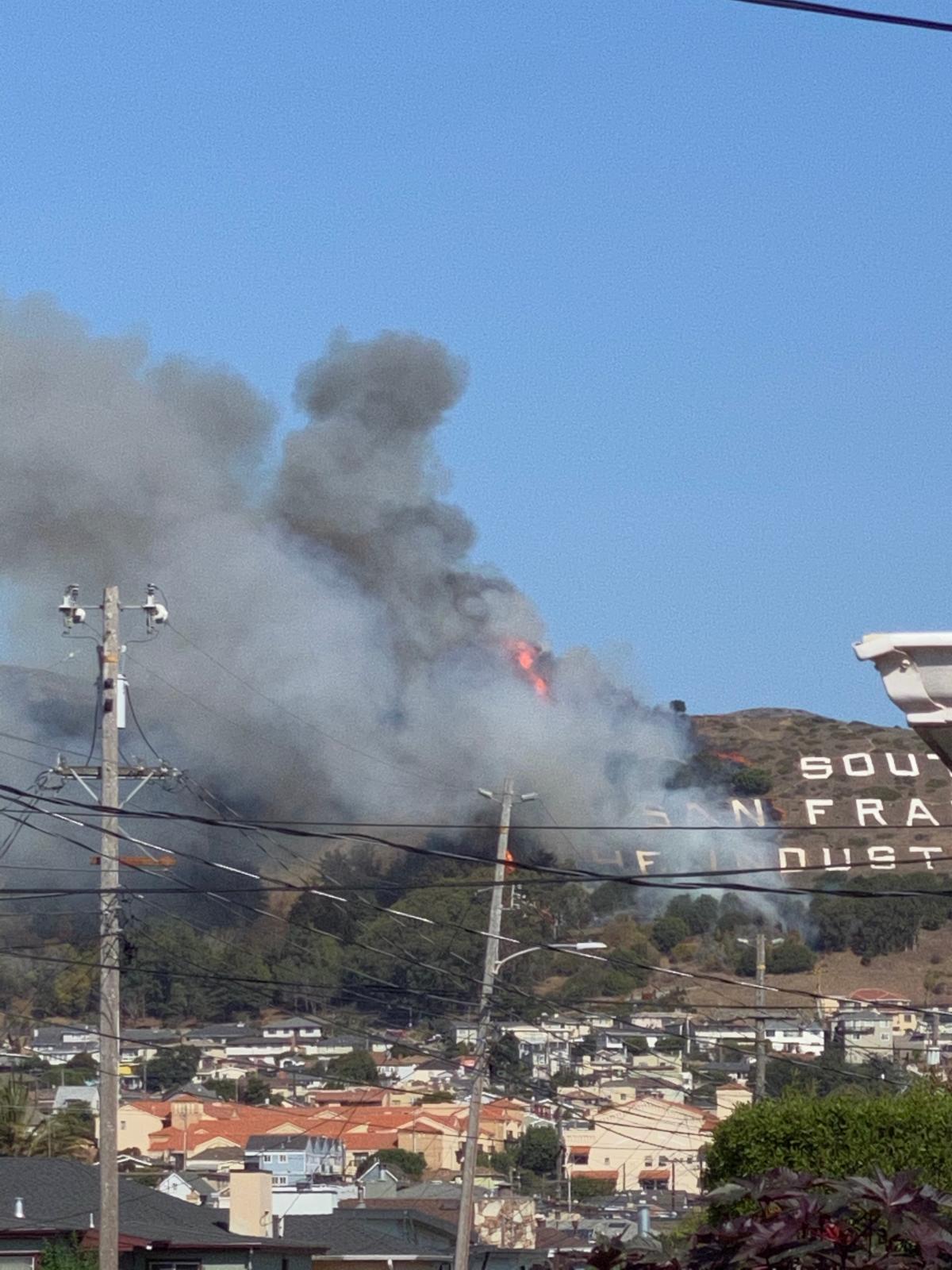
Photo submitted by local resident, Mauricio Garcia, who witnessed the Diamond Fire of 2020. |
|
These invasive trees create additional concerns for local residents; the fuel load is increased in case of wildfires. When there is more woody material, fires grow larger and hotter, and connecting tree canopy's let fires spread faster. The Diamond Fire of October 2020 helped to set in motion The City of So. San Francisco's Parks Department's plan to reduce fire risk and protect native species.
Following the fire, tree workers were contracted to begin removing charred trees, and parks staff took action to help stabilize soils and reestablish native plant communities. This year, we have begun a second phase of tree removals. Contracted tree workers are collaborating with wildlife biologists to safely remove trees from Sign Hill without disrupting nesting birds.
|
|
These aerial images show the progress made over the last few months toward removing non-native and invasive trees to create firebreaks and restore open grassland. Wooded areas on the southwest side of the hill have been cleared or thinned.
|
|
It will be exciting to work with Sign Hill Stewards to restore these areas with California native grassland species and defend them from invasive plants when the tree work is complete! |
|
Volunteer with Sign Hill Stewards! |
|
When: Every other Friday and the 2nd Saturday of each month from 9am-12pm. Only cancelled for heavy rains.
Registration: Registration is required. Volunteers under the age of 18 must have a youth waiver signed by a parent/guardian. Youth under the age of 15 are welcome and must be accompanied by an adult. Click the link below to RSVP on Eventbrite.
What to bring: To prepare for working outdoors, please bring work gloves, plenty of water, sturdy shoes, long pants and long sleeves, a hat/sunscreen, and a completed waiver for each volunteer. Volunteers should expect some hiking on steep terrain.
|
|
|
|
|
|
|