Wednesday, October 7, 2026

FEDERAL NEWS

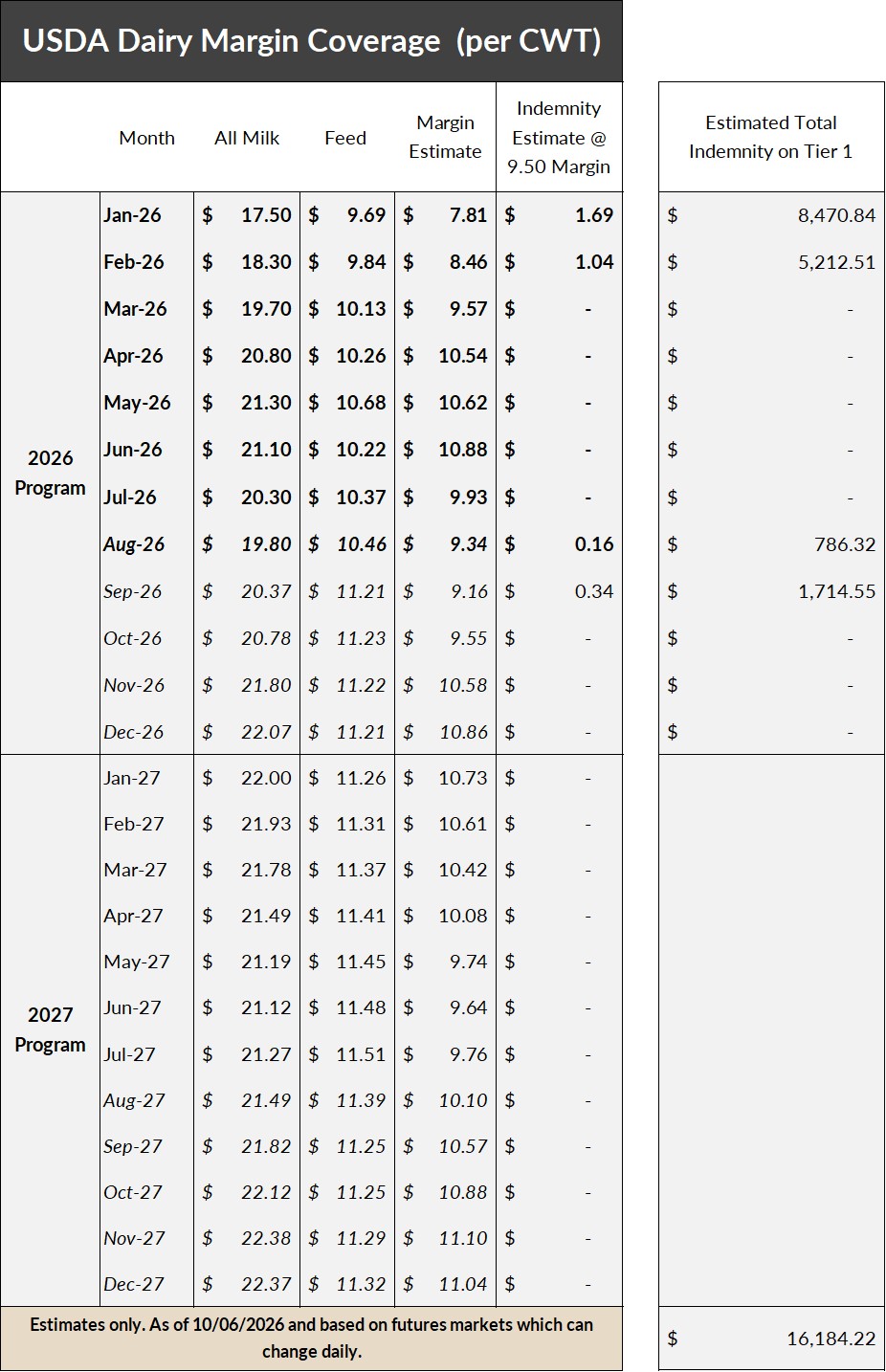
2027 Dairy Margin Coverage Enrollment Now Open


USDA has opened enrollment for the 2027 Dairy Margin Coverage (DMC) program, with sign-ups running through December 18, 2026. The voluntary risk management program was recently strengthened to provide greater risk protection for dairy producers.


WUD’s Weekly Update includes a DMC payment estimator with projections for 2027 based on current futures values. Producers should keep in mind that these projections fluctuate daily as market conditions change.


Producers who took advantage of the 25% premium discount last year already have their coverage levels locked in, but action is still required for 2027. Producers must certify that they are commercially marketing milk, sign a DMC contract and pay the $100 administrative fee for the program year.


Members with questions about DMC or their coverage options can contact Tiffany LaMendola at 209-213-2680.


ASSOCIATION NEWS

New on Seen & Herd: Keeping Dairies Running with Central California Power


In this episode of Seen & Herd, we sit down with Jeremiah Morris of Central California Power (CCP), a Western United Dairies business sponsor, to talk about equipment, service and keeping dairies running when something goes down.


Central California Power has been serving the Central Valley for more than 40 years, working with engines, generators, repairs and repowers. More recently, CCP has added JCB equipment and developed a dairy loader program specifically for dairy producers.


Jeremiah walks through the new program, including special dairy pricing, equipment demonstrations and a 12-month price hold that gives producers more flexibility when considering a new loader. He also talks about CCP's service team, coverage throughout the Central Valley and the importance of having reliable support when equipment goes down.


We also cover CCP's generator and emergency power services, electric equipment options and its participation as an authorized dealer in California's CORE program.


If you're considering a new loader or looking for another resource for equipment, power or service on your dairy, this episode is a good introduction to what CCP has to offer.


STATE NEWS

ICYMI: New Farmworker Wage Law: What Dairies Need to Know About AB 2646


Governor Newsom signed AB 2646 (Krell) on September 30, setting a new minimum wage of $19.75 an hour for some farmworkers. The new wage applies to farms that hire H-2A guest workers, and to their California workers who do the same jobs. For most dairies, it will not change anything.


What the bill does

  • Starting January 1, 2027, covered workers must be paid at least $19.75 an hour. The current state minimum wage is $16.90 and will be $17.40 on January 1, 2027.
  • The rate goes up every January 1 by the same percentage as the Social Security cost-of-living increase.
  • The bill was sponsored by the United Farm Workers. It responds to a 2025 federal rule change that lowered H-2A wage rates in California.


The law covers two groups of workers.

  • Guest workers: workers who live outside California and are approved to work here on a temporary or seasonal basis through a state-approved job order. In practice, this means the H-2A program.
  • "Corresponding" workers: California workers who do the same or substantially similar work, at the same time, for the same employer, in the same county as those guest workers.


Most dairies are not affected because they cannot use H-2A. The H-2A program only covers jobs that are temporary or seasonal. Milking, feeding and caring for cows are year-round jobs. If your operation has no H-2A workers, AB 2646 does not apply to you, and your workers stay under the regular state minimum wage and overtime rules.


Members who also farm crops should take a closer look. AB 2646 can apply to that side of the business.


  • If you use H-2A workers for planting, harvest or other seasonal work, those workers must be paid at least $19.75.
  • Your California workers doing the same kind of work, at the same time, in the same county, must also get $19.75. The law does not define "substantially similar," so a worker who splits time between crop and dairy work may be a gray area.
  • If you get H-2A workers through a farm labor contractor, check with your contractor and your labor attorney on how this applies.


WUD did not take a position on AB 2646. Because the bill is aimed at farms that use H-2A workers, we let the farm groups most directly affected, including the California Farm Bureau and Western Growers, take the lead in opposing it.


If you have questions about how AB 2646 applies to your operation, email us at info@wudairies.com or call the office.


MARKET UPDATE

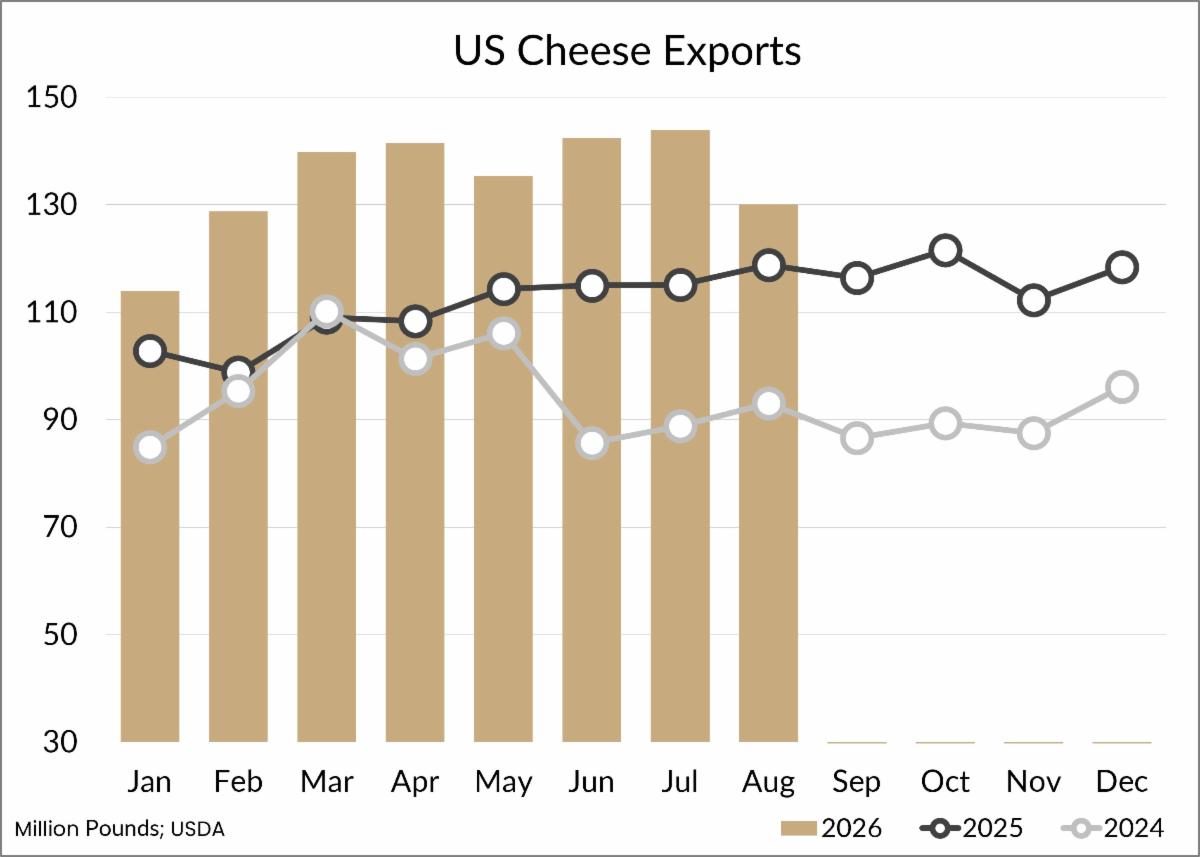
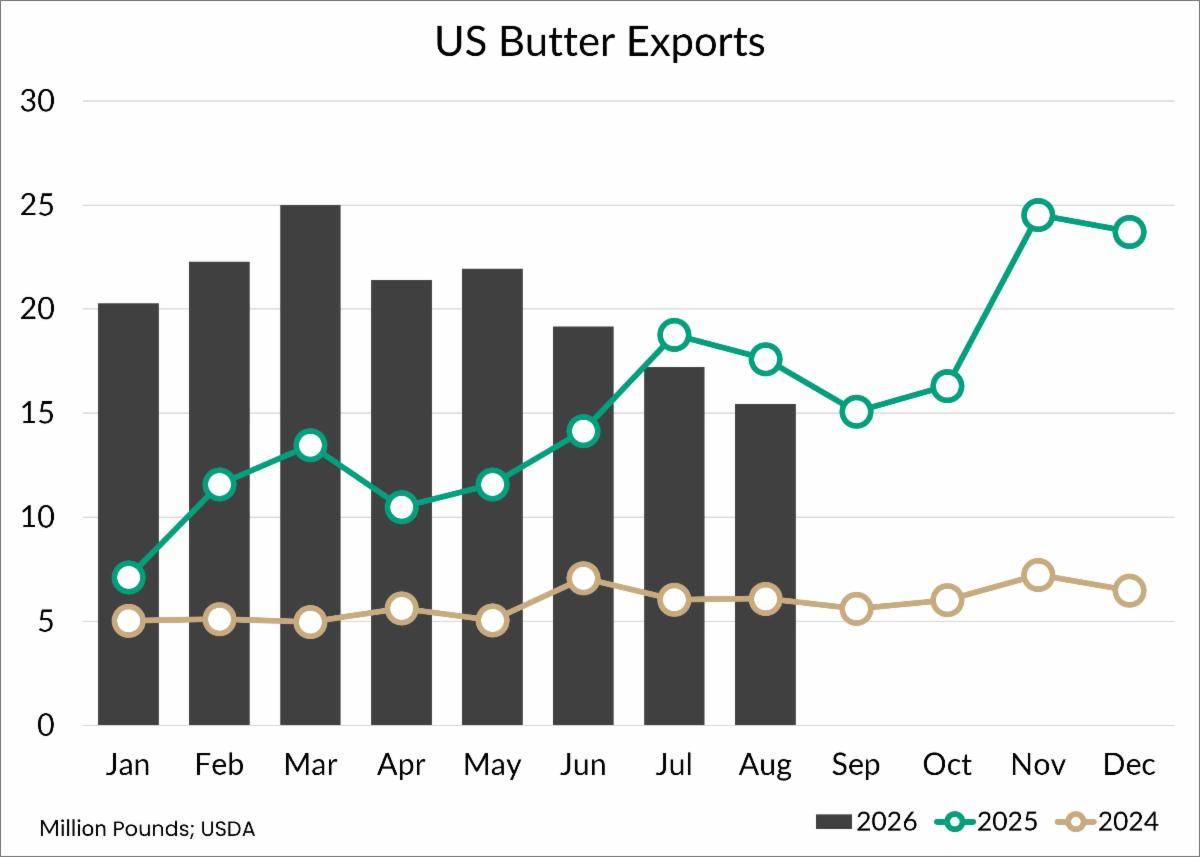
US cheese exports totaled 130 million pounds in August, up 9% from prior-year levels but slower year-over-year gains than in previous months. This was the lowest monthly volume shipped since February. US butter exports reached 15 million pounds, down 12% on the year and the lowest monthly volume recorded so far this year.

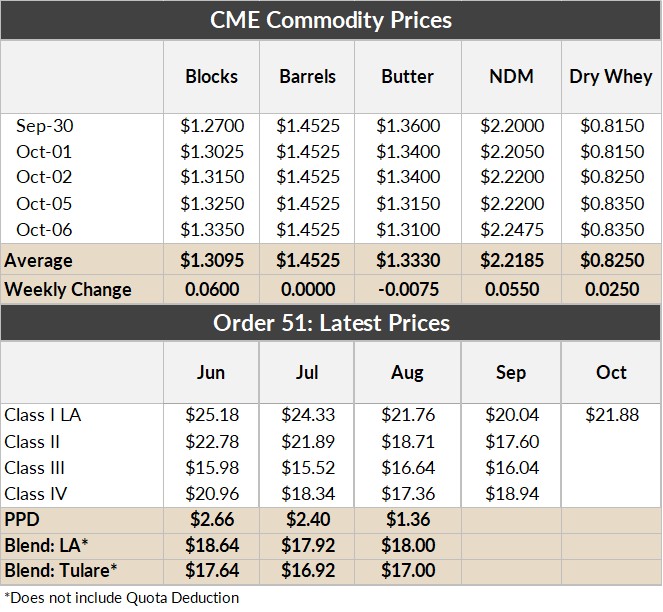
  • Outbound nonfat dry milk volume decreased year-over-year again in August, with US product among the most expensive in the world. At the CME, spot NDM continued its climb upward, closing Tuesday in the mid-$2.20s. Reports indicate tight supply in the East, putting upward pressure on prices.


  • The CME block market dipped as low as $1.2700 per pound, a price not seen since May 2020. Prices have rebounded slightly since then to the low 1.30s per pound. Ample supply continues to put downward pressure on prices.


  • The CME butter market moved lower over the past week, falling from the mid-$1.30s to the low $1.30s. Retail demand remains decent, but supply is plentiful and fewer exports the past two months are keeping inventories well stocked.
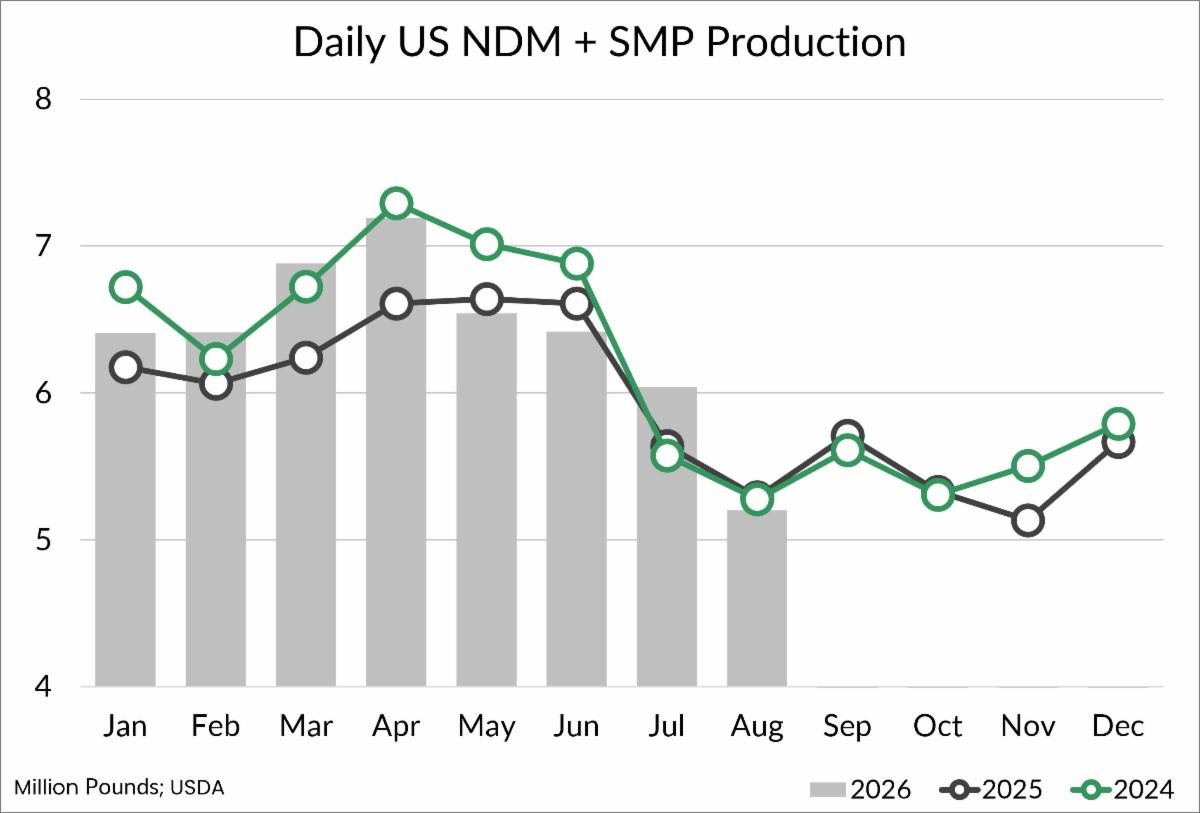
  • According to USDA’s Dairy Products report, cheese and butter increased in August versus 2025 output. NDM production declined from year-ago levels and stocks were down 3.6% from last year.


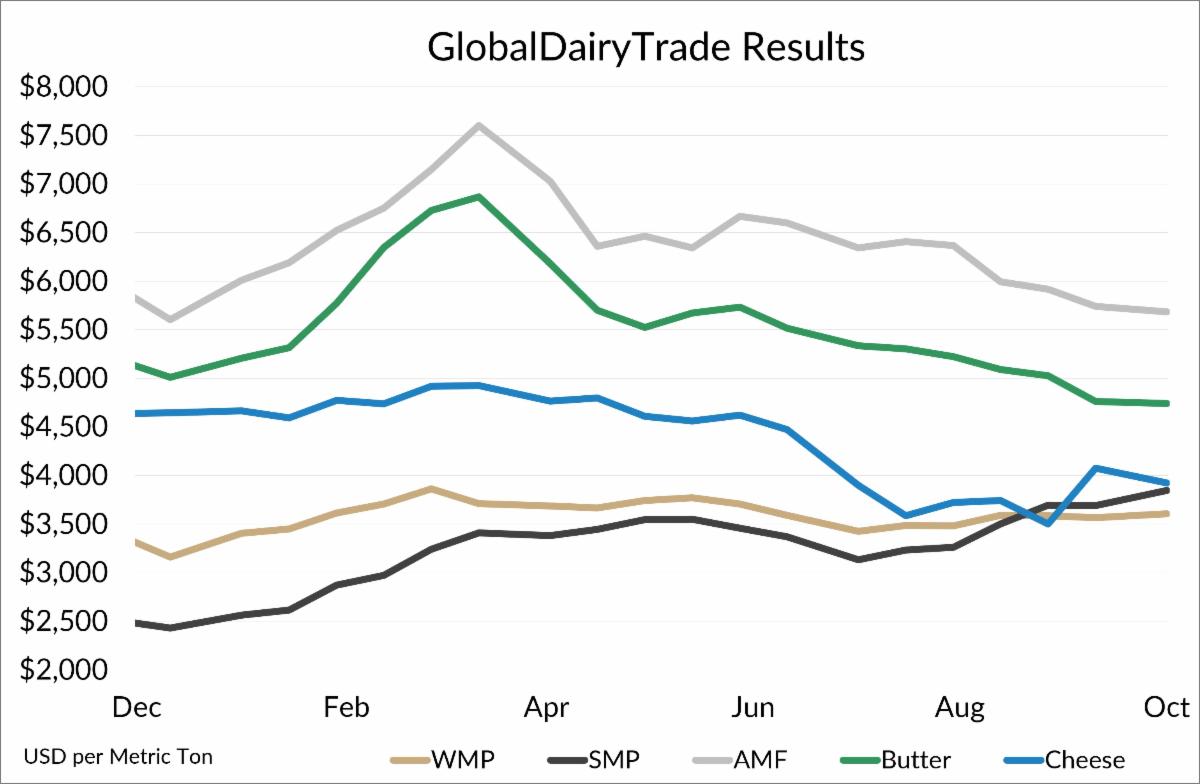
  • At this week’s Global Dairy Trade auction, skim milk powder climbed 4.3% to $1.74 per pound, slightly above the GDT Pulse event average last week. Cheddar slipped 3.7% to $1.78 per pound, while mozzarella fell 4.0% to $1.74 and butter eased 0.4% to $2.15.


  • Volatility persists in other areas important to producer margins. After last week's decline in prices, grains clawed back higher on Tuesday. Cattle markets are up to their highest levels since July.


THANK YOU TO OUR CURRENT SPONSORS


Facebook  Instagram  LinkedIn  Web