Rail & Labor News from RWU
| | Weekly Digest Number 52 - December 23, 2025 | | Welcome to the RWU Rail & Labor News! This news bulletin is produced and emailed out each Tuesday morning. We hope you find each week's news and information useful. If so, please share with co-workers, friends, and colleagues. If you like, you can sign them up to get all the news from RWU HERE. Or forward them the link. Got a hot tip? Please forward the article and a link to raillabornews@gmail.com. Note: If you read over this news bulletin each week, you will be sure to never miss the important news of what is going on in the railroad world from a worker's perspective! | | THIS WEEK'S RAIL AND LABOR NEWS | | Editor's Note: Railroad Workers United (RWU) has pounded the drum against this ill-conceived mega-merger since the beginning back in August, We have launched a full-blown Campaign to Stop the Merger and have built an effective Anti-Merger Committee of working rails, retirees, and concerned citizens to block the merger from being approved by the STB in the coming year. Great to see the Teamster rail conference affiliates - BLET and the BMWED - unite for a change instead of fight one another, and come together in opposition to the merger. | |
Trains Magazine / December 17th
The Brotherhood of Locomotive Engineers and Trainmen and the Brotherhood of Maintenance of Way Employes Division will oppose the Union Pacific-Norfolk Southern merger despite UP’s promises of lifetime job protection.
“This debt-ridden tie-up won’t make rail more competitive with trucks as merger proponents claim,” BLET National President Mark Wallace said in a statement on Wednesday (Dec. 17). “We believe this transcontinental railroad will make shipping by rail less attractive as the merged carrier passes off rail lines that serve small towns, factories, and farms to short line railroads while running miles-long slow-moving trains on the main line. For rail customers it will be a choice between ‘hell or the highway.’”
The two Teamsters unions — which represent 53% of the combined UP and NS craft workforce — are the largest to come out against the $85 billion merger. The Transportation Workers Union, which represents carmen across Norfolk Southern’s northern tier, signaled its opposition to the deal when it was announced on July 29.
| |
Trains Magazine / December 20th
Union Pacific and Norfolk Southern currently have more than 2,300 locomotives in storage and anticipate, at least initially, a further reduction in motive-power needs if the railroads are allowed to merge, the railroads say in their application to the Surface Transportation Board.
But the combined railroad would need more than 1,000 additional locomotives by year 3 of the merger, based on its growth projections. Those would come from storage, not new purchases. The merged railroad similarly anticipates a slight initial decrease in its active railcar fleet, with the car count growing as traffic increases.
Plans also call for idling or reducing operations at four locomotive maintenance facilities — Decatur, Ill; Ft. Wayne, Ind.; Inman (Atlanta); and Louisville, Ky. Positions from those facilities would be relocated. Consolidations are also expected in locations where both railroads have facilities.
| | Editor's Note: It is refreshing to see a commenter on the rail industry, call out UP-NS for its baseless statements, in this case, the baseless claim by the carrier that there would be no "adverse impact to passenger operations." It is apparent that there will be all kinds of adverse impacts upon passenger operations. And any promises of adding sidings to mainlines, siding lengthening, or double-tracking are hollow. One need to look no further than the UP-SP merger from 30 years ago to see that these promises will more than likely go unfulfilled. | |
Trains Magazine / December 20th
The Union Pacific-Norfolk Southern merger application filed with the Surface Transportation Board on Friday attempts to explain away adverse effects on passenger trains by vague promises of future “targeted infrastructure enhancements,” but generally doesn’t outline what those might be. In one case, a combined UP-NS proposes adding nine daily freights to a single-track route.
Following a series of maps explaining the creation of cross-country intermodal trains to bypass time-consuming terminal interchanges, a section of the massive filing addresses “Impacts on Passenger Operations.” (This begins on page 637 in Vol. 2 of the four-volume filing.) It begins with a patently false statement: “The UP/NS merger will not result in any adverse impact to passenger operations.”
That would only be true if the merged railroad promises to coordinate the new expedited intermodal moves with passenger train schedules, present and future. Instead, a review of each passenger route currently operated by either UP or Norfolk Southern is accompanied by the caveat that the merged system would “ensure compliance with existing passenger obligations.”
|
| Editor's Note: The train wreck and subsequent disaster at East Palestine, OH in 2023, changed the lives of virtually everyone in that town, not least of whom is Jess Conard the author of the piece below and founder of the group RailWatch. After the town was wrecked by the disaster, Jess became a dedicated activist for improved rail safety nationwide. While never having been a railroader - and as such, not knowing everything that a rail worker knows - she has done her homework and makes a hard-hitting case. She deserves the support of all working railroaders. Feel free to supply her with feedback and inuit from your frontline experiences with rail safety or the lack thereof. | |
The Hill / December 18th
I became an expert on trains the hard way. On a quiet night three years ago, a 149-car train pulled by three locomotives carrying tons of toxic chemicals derailed in East Palestine, Ohio, my home town.
Suddenly, my family and all of my neighbors were forced from our homes with our children coughing and vomiting for hours. Right away, the members of my community began agonizing over what this disaster would mean for the water we drink, the air we breathe and the ground under our feet.
The scars — physical, emotional and economic — remain today, along with a sense of fear and disappointment that more hasn’t been done to prevent the next train derailment disaster.
What happened in my little Ohio town is widely known. But perhaps many don’t know that train derailments happen on average three times a day. The safety protocols that exist are ineffective and woefully outdated, yet the standards that would make railroads operate safely are ignored.
| |
Trains Magazine / December 12th
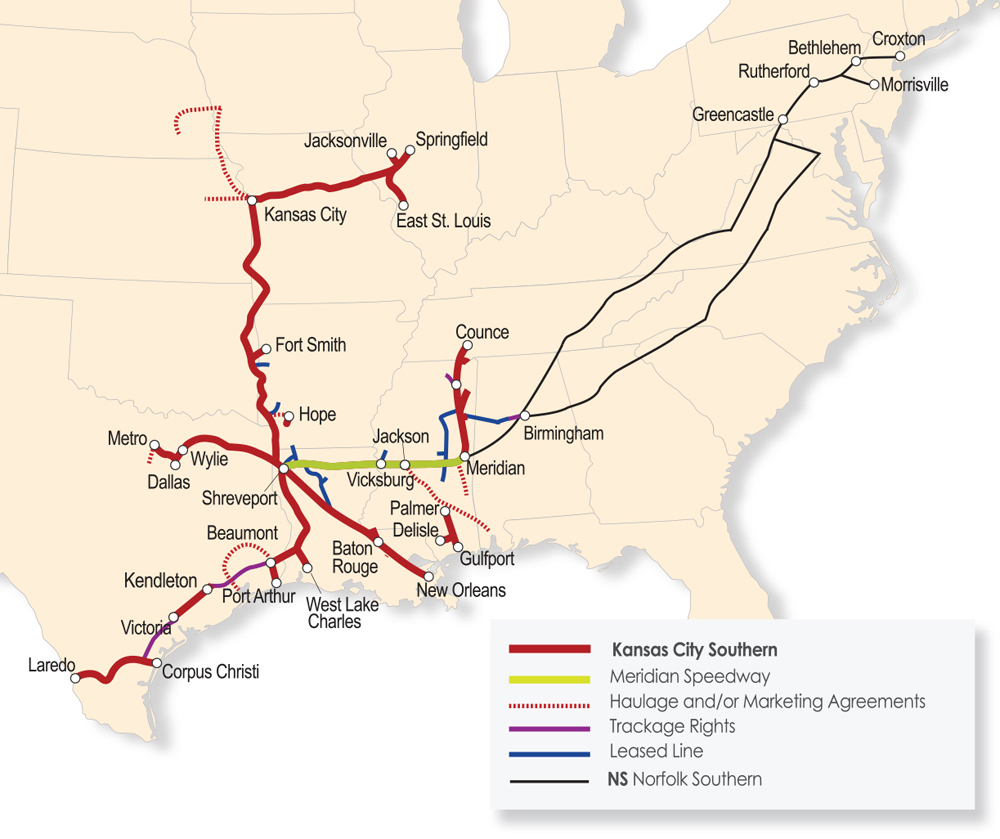
Norfolk Southern told federal regulators this week that it hopes to smooth over its dispute with Canadian Pacific Kansas City regarding operations over their joint Meridian Speedway.
But NS also said it disagrees with nearly everything CPKC has told the Surface Transportation Board about service over the 302-mile corridor that runs from Meridian, Miss., to Shreveport, La., and is a shortcut linking the Southeast and Southwest.
NS claims CPKC’s service has not been up to snuff since the Canadian Pacific-Kansas City Southern merger in 2023. In September NS asked the STB to enforce CPKCs merger-related promise to uphold service on the corridor, which carries NS intermodal trains linking Atlanta and Dallas as well as interline Union Pacific-NS stack trains connecting the West Coast and Atlanta. [See “Norfolk Southern claims Meridian Speedway service woes push freight to trucks,” Trains.com, Oct. 3, 2025]
CPKC claims it has lived up to its service commitments with the exception of a brief disruption that followed its troubled May 3 computer system cutover in former KCS territory in the U.S., and blames slow transit times on underpowered UP-NS trains. [See “CPKC disputes NS and UP complaints…,” Trains.com, Nov. 26, 2025]
| | Editor's Note: As the year 2025 draws to a close, it is worth noting that an obscure little labor union - the Brotherhood of Sleeping Car Porters (BSCP) - helped change the course of labor history 100 year ago. Every railroad worker should familiarize themselves with its history and its important work. | |
Jacobin / December 6th
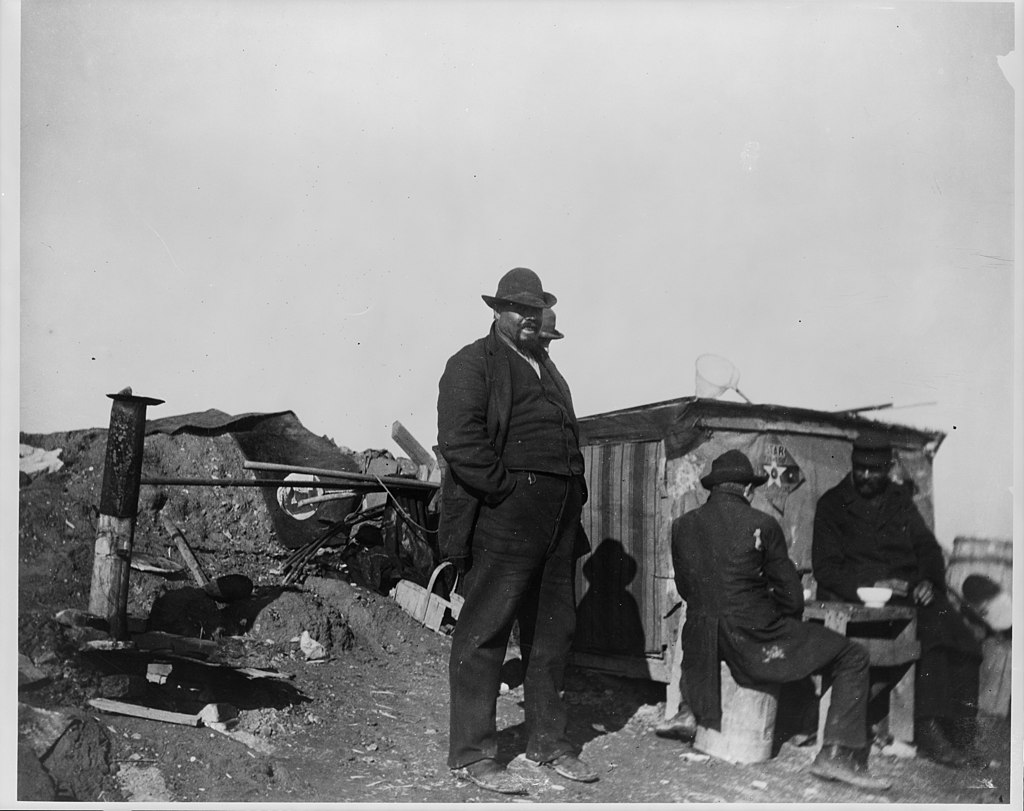
The fact that the meeting was even happening was enough to produce an air of subversive excitement. On August 25, 1925, a century ago this year, black sleeping car porters hoping to form a union at the Pullman Company packed the room at the Elks Hall in Harlem. Though we’ll never know how many, Pullman company spies were undoubtedly among the audience.
In fact, to combat the presence of these spies, no porters even spoke during the meeting. Instead, A. Philip Randolph, then an eccentric soapbox socialist with a string of failed unionization attempts behind him, led the meeting. He argued that a union was the only way to confront the company, address the porters’ grievances, and reclaim their manhood. And that he should be the man to lead them.
Common wisdom and past precedent suggested this campaign would go like so many before it: a flurry of enthusiasm followed by dashed hopes and a sober return to reality. But instead, this gathering initiated a twelve-year struggle to form the Brotherhood of Sleeping Car Porters and win a first contract against a corporate giant.
| |
Reuters / December 15th
BNSF Railway, one of the crown jewels of Warren Buffett’s sprawling Berkshire Hathaway conglomerate, calls itself an environmental leader in the U.S. rail industry with the cleanest locomotive fleet in North America.
“When you see our orange locomotives’ and freight cars’ steel wheels moving on steel rails, think green,” BNSF says in its latest sustainability overview.
But the company is the largest player in an industry that has a pollution problem: U.S. freight railroads are a major source of pollution, chuffing out more nitrogen oxide, the primary component of smog, than all the nation’s coal-fired power plants combined, according to a Reuters calculation using government data.
U.S. railroads together produced about 485,000 tons of nitrogen oxide in 2024, compared to 452,000 tons emitted by U.S. coal-fired power plants, according to a Reuters calculation of reported annual fuel consumption multiplied by the EPA’s 2023 weighted-average emission rates.
| |
BLET / December 19th
Today, on an issue of importance to BLET members and following direct outreach from BLET National President Mark Wallace, U.S. Transportation Secretary Sean P. Duffy announced that the Federal Railroad Administration is cracking down on the cross-border train operations of both Union Pacific and Canadian Pacific Kansas City Limited. The FRA has determined that a lack of basic English language proficiency exhibited by Mexican train crews operating trains into the United States for the two railroads poses a serious safety risk.
“Whether you’re operating an 80-ton big rig or a massive freight train, you need to be proficient in our national language – English. If you aren’t, you create an unacceptable safety risk,” said U.S. Transportation Secretary Sean P. Duffy.
In conducting routine regulatory oversight of cross-border operations this past fall on CPKC and UP, FRA inspectors discovered instances in which inbound Mexican crew members appeared to have difficulty interpreting General Track Bulletins and communicating safety requirements in English with inspectors.
| |
Solutionary Rail / December 13th
We recently released Episode Four of our main Reconnect America series. It explores in depth the story of the unique U.S. experiment in private ownership of the critical national infrastructure that railroads constitute, and the concessions we have made over the course of a century and a half to sustain that system. If you haven’t listened to it yet, we highly recommend you check it out.
As we prepare to continue the story into the present day with Episode Five, we are exploring the experiences of shippers who depend on railroads to move their products, by speaking with some of the folks who represent these businesses in negotiations with railroads and before the Surface Transportation Board (STB).
Emily Regis is one of these people. Emily is president of the Freight Rail Customer Alliance, an “alliance of freight rail shippers impacted by continued unrestrained freight rail market dominance over rail-dependent shippers.” Emily is also Fuel Resource Administrator for the Arizona Electric Power Cooperative and President of the National Coal Transportation Association.
| | Editor's Note: This homemade production from three years ago contains some interesting footage and insights into what was going on in the summer of 2022 on the nation's railroads. | |
Progressive Railroading / December 15th
Transport Canada last week announced that the first segment of the proposed Alto High-Speed Rail (HSR) corridor will be established between Ottawa, Ontario, and Montreal, Quebec.
In February, then-Prime Minister Justin Trudeau announced that Canada will support the development of a 621-mile electrified HSR corridor between Toronto and Quebec City. If fully developed, the service will slash passenger-rail travel times on VIA Rail Canada Inc. in half to just three hours.
Alto is the contracting authority leading the development, implementation and oversight of the HSR corridor project on behalf of the Canadian government. Alto is also the name and branding of the future rail system. Cadence was selected as the project's design, build, financing, operation and management partner.
| | Editor's Note: This ambitious project of the Mexican government was completed in just a few years. One could argue that the government might have started the passenger train revitalization in more developed, industrialized, and populated regions of the country. Whatever the case, like the rails that came before it, the Maya Train will assist in the development of the Yucatan - hauling passenger AND freight. Ultimately the hope is that the region's existing highways will be freed of millions of vehicles, and the rail line will preclude the building of new ones (which are far more environmentally intrusive than rail in such a gorgeous part of the world). | |
Trains Magazine / December 16th
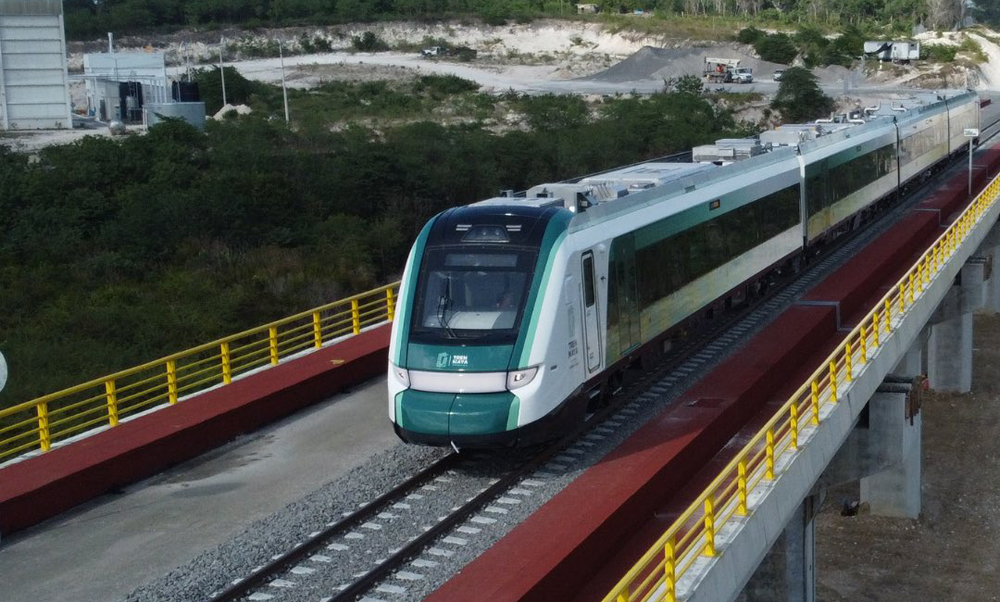
Mexico’s Maya Train continues to sustain massive losses as it marks two years of operation, and one year as a completed route. Latest figures show subsidies are nearly 10 times the operation’s revenue from tickets and merchandise, according to a report by the newspaper Reforma.
Mexico News Daily, quoting the paywalled Reforma report, says January-to-September financial statements for the tourism-oriented rail operation on the Yucatan Peninsula show revenue of 387 million pesos ($21.5 million) and public funding of 3.345 billion pesos ($186 million). Iberoamericana University professor told Reforma the government has no choice but to subsidize the rail line “since at the current rate, it will take 10 to 20 years to become profitable.” Over the next decade, those subsidies could reach 25 billion pesos, or about $1.39 billion, he said.
The Yucatan Times reports that the project’s debts reached 2.47 billion pesos ($140 million) as of September, a 298% increase from the debt figure of 620 million pesos ($35.6 million) in January. Those debts reportedly include money owed to construction companies, equipment manufacturers, and workers.
| | Editor's Note: It is high-time that we had a national rail program like most nations in the world that are forging ahead with public infrastructure to connect their people and industries across the country. | |
High Speed Rail Alliance
Momentum for fast trains is growing!
The country needs a federal railway-aid program, structured like the Interstate Highway program, to take full advantage of the community, economic, and environmental benefits of trains.
Please join with us in asking Congress to create a national rail program to re-connect America with fast, frequent, and affordable trains.
| |
High Speed Rail Alliance / December 19th
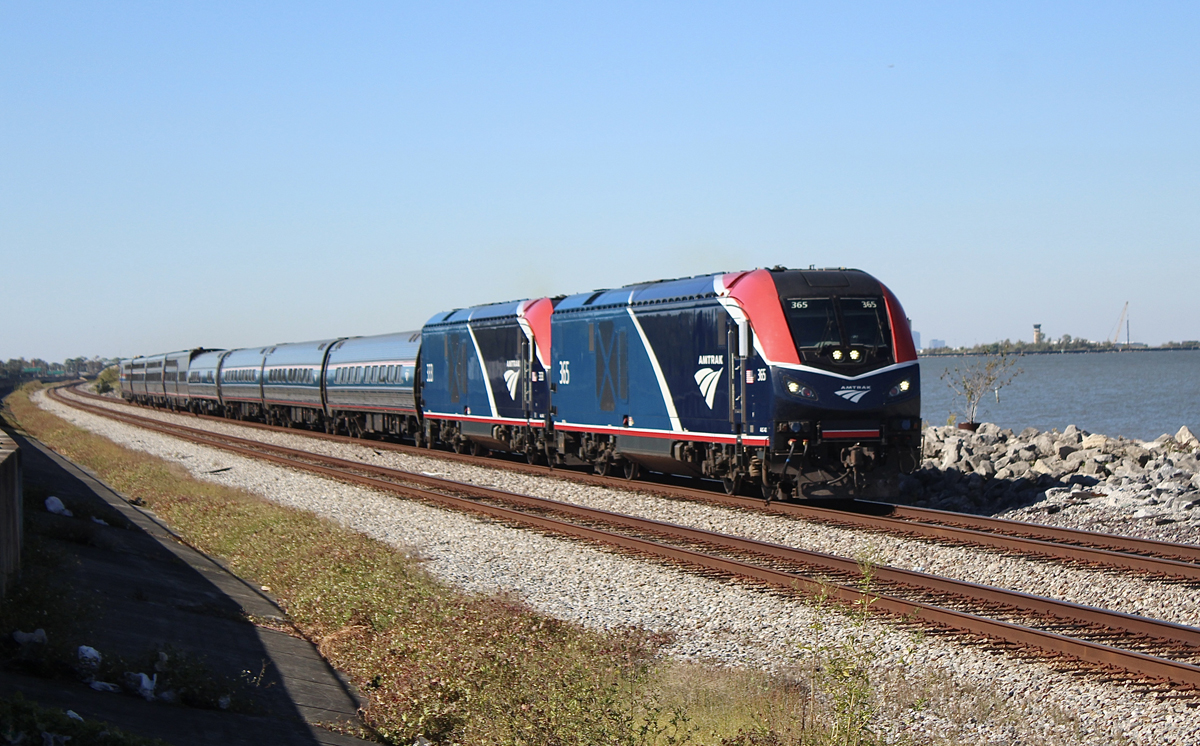
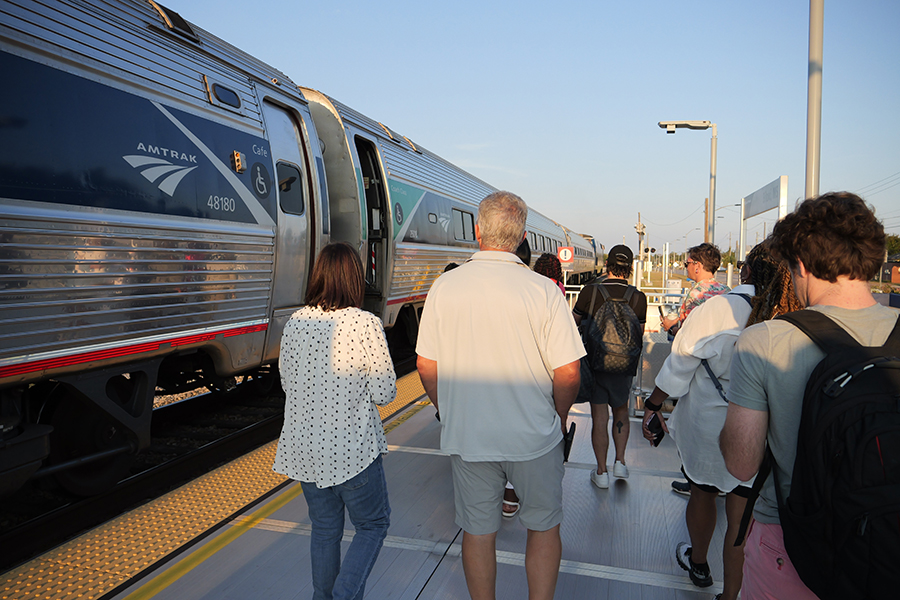
Amtrak is boasting about the early success of its Mardi Gras service – two round trips a day between Mobile, AL and New Orleans, with four intermediate stops in Mississippi: Pascagoula, Biloxi, Gulfport and Bay St. Louis.
The service started rolling in August. In its first three months, the Mardi Gras has carried 46,000 passengers, averaging 458 riders per day and achieving a customer satisfaction rate of 96%, the highest customer satisfaction rate of any Amtrak route. This is despite the limited number of trains and the leisurely average speed of 39 mph.
“The success of Amtrak Mardi Gras Service truly shows what we and the champions of this project have believed for years: passenger rail is essential to the future of mobility along the Gulf Coast,” Knox Ross, chairman of the Southern Rail Commission, said at the commission’s quarterly meeting in Bay Saint Louis. “This service is connecting communities, strengthening local economies, and giving travelers a reliable and enjoyable way to experience our region.”
| | NEWS FROM AROUND THE LABOR MOVEMENT | | Each week, RWU includes a few articles about advances and developments in the larger labor movement that are of interest to railroad workers. Got an artcile to submit for possible inclusion next week? Email it along to raillabornews@gmail.com. Thank you! | |
Freight Waves / December 16th
Layoffs across the manufacturing, logistics and transportation sectors continue to mount heading into 2026, affecting more than 4,200 workers nationwide over the last several weeks.
The job losses span food manufacturing, automotive and EV supply chains, trailer production, ports, warehousing and automated fulfillment networks — underscoring continued strain across industrial employment even as some freight indicators stabilize.
The largest mass layoffs included all 1,600 employees at a new Ford Motor Co. electric vehicle battery plant in Glendale, Kentucky. Ford plans to convert it to manufacture batteries for data centers and other utilities, the Wall Street Journal reported Monday.
| | Editor's Note: Working class people from both the U.S. and Canada are fed up with politicians and political parties that are rich and powerful and simply serve the interests of the rich and powerful. We need a working class political party led by working people. In Canada, a 30-year veteran of the docks is seeking to win the leadership of the New Democratic Party - a party that may have potential to be a party of, by, and for the working class of Canada. | |
Canadian Dimension / December 10th
For years, critics inside and outside the New Democratic Party have warned that the party is drifting away from its historic base. In election after election, the NDP has struggled to connect with the very voters it was founded to represent: the people who work in Canada’s warehouses, schools, docks, offices, hospitals, and factories—and who increasingly feel abandoned by a political class that speaks past them.
It is into this debate that longshoreman and union leader Rob Ashton has launched his candidacy for the NDP leadership. A political newcomer in the traditional sense, Ashton has never held elected office. But he has spent more than three decades on the docks and in union halls, rising to become national president of the International Longshore and Warehouse Union (ILWU). In an era when Canada’s Parliament is dominated by lawyers, consultants, and professional managers, Ashton represents something increasingly rare in federal politics: a leader who comes directly from the rank and file.
Ashton’s candidacy is a bet that the party can reconnect with working class voters only if it is led by someone who speaks their language—not as a rhetorical tactic, but as lived experience. He argues that the NDP must once again name class conflict for what it is, and fight unapologetically for the people being squeezed by corporate power and political complacency.
| | |
More Perfect Union
In March, Donald Trump issued an executive order that the AFL-CIO described as “the single biggest act of union-busting in American history.”
The order attempted to strip nearly 1 million federal workers from their right to join a union and collectively bargain.
Now, the House of Representatives just passed a rebuke to President Trump’s order -- the Protect America’s Workforce Act -- which restores union rights to the people who process Social Security checks, take care of veterans, and make sure our planes stay in the air. This bill has bipartisan support, but it’s going to take all of our voices to make the Senate take it up.
Send a message to your Senators: Pass the Protect America’s Workforce Act and stand up for workers!
The House only passed this bill because of overwhelming pressure from people like you. Our coalition sent more than 100,000 messages to representatives in the House urging them to sign the discharge petition that forced Speaker of the House Mike Johnson to bring the bill to the floor. It took months, but our pressure worked.
| | WEEKLY DERAILMENT DEPARTMENT | | Each Tuesday in this news bulletin, RWU does our best to present a picture of what has been happening over the course of the previous week in terms of derailments in North America, and investigation determinations of previous accidents. NOTE: This list is by no means comprehensive. Smaller and less consequential mishaps are generally not reported here. If the wreck results in injury or fatality, or is especially damaging/extreme, a full article will appear as a feature in the dozen or so rail articles above. Know of a train wreck? Please feel free to forward a link to raillabornews@gmail.com for possible inclusion next week. Thanks! |
| | | |