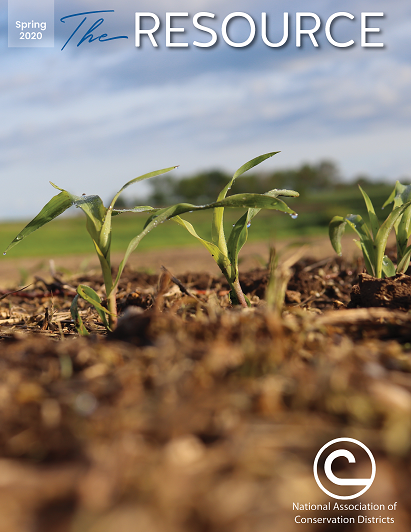
NACD's Spring 2020 Edition of
The Resource
is here! Despite it being an unprecedented spring season, NACD has been busier than ever, as its partners and member conservation districts have learned to adapt in the face of the COVID-19 (coronavirus) pandemic. In this edition, you'll find a letter from members of NACD's Executive Board detailing the national association's response, resources for conservation districts and how you can support NACD moving forward.
This publication covers events since the beginning of the calendar year, from our 74th Annual Meeting in Las Vegas to the 65th annual Stewardship Week and our recent letter to Congress advocating for additional support for conservation districts in upcoming legislation.
All across the nation, our member conservation districts have been hard at work, from the
Beadle Conservation District’s
Diversity Farm, which is growing produce sustainably
in South Dakota; to how the
Association of Texas Soil and Water Conservation Districts
has expanded access to soil health education; to how the
Hendry Soil and Water Conservation District
in Florida has utilized drone technology to compliment social distancing.
This edition also includes updates on many of NACD's successful programs, including our Stewardship and Education program and its newly debuted Conservation Education Hub and Pollinator Field Day Guide; our inaugural Friends of NACD District Grants Program; a recap of February's Annual Meeting held in Las Vegas; and more! Additionally, Natural Resources Conservation Service (NRCS)
Chief Matt Lohr
authored the Another Perspective, describing ways individuals from NRCS field offices and conservation districts have persevered in continuing to deliver locally-led conservation.
We hope you'll enjoy this edition and be inspired by your peers in the conservation district family. From all of us at NACD, we're proud to be your national voice and be united in our dedication to improve natural resources for future generations.
To download a copy of this edition, please click the cover above. Browse past editions of
The Resource
on
NACD's website
and
please let us know
if you have any questions or comments about this edition.
|
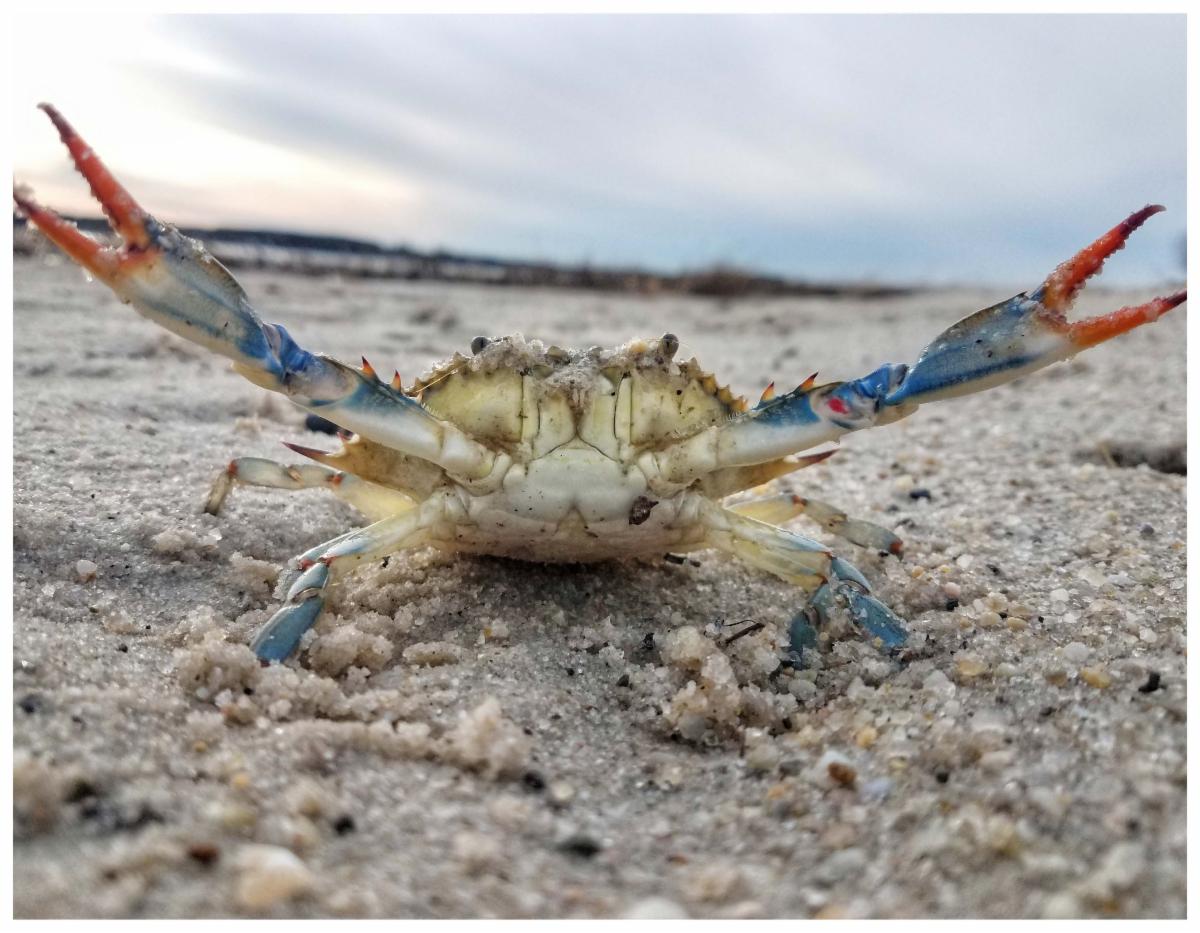
JUNE IS NATIONAL OCEAN MONTH; AND NACD WANTS TO HEAR FROM YOU
|
During the month of June, show your support of National Ocean Month with a post on Facebook, Instagram or Twitter highlighting your conservation district’s coastal conservation activities and include the hashtag #DistrictsConserveCoasts.
Whether you’re a conservation district on the coast or the Great Lakes, or an upstream district engaged in activities that impact coastal conservation and resilience, we want to hear from you! What are your district’s coastal conservation activities, the natural resource concerns you address, and the partners you’re working with? Show us what you’re up to with photos or videos.
NACD’s Social Media Guidelines and Best Practices provide guidance for posting content and engaging online.
Each conservation district that posts with the #DistrictsConserveCoasts hashtag will be automatically entered once into a raffle to win a pair of Conservation C
Yeti Mugs for their office from the NACD Marketplace. The winning district, and a summary of posts, will be shared in the June 30, 2020 edition of eResource.
|
TECHNICAL ASSISTANCE
FOR WATERSHED IMPROVEMENT IN NEBRASKA
|
Since 1972, the
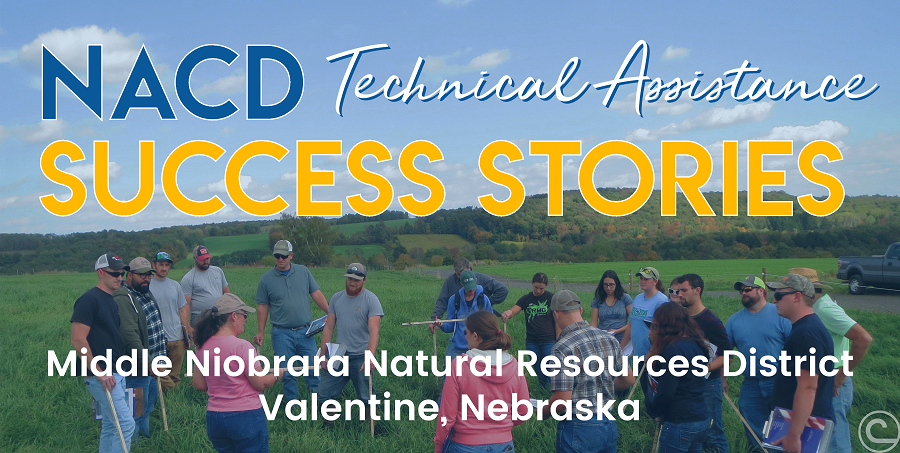
Middle Niobrara Natural Resources District (MNNRD)
has been devoted to helping solve natural resource issues in their area. Many of those issues revolve around erosion and water quality in the Long Pine Creek Watershed. This watershed, which is found in north central Nebraska, encompasses approximately 332,000 acres, many of which are designated for agriculture.
To help with these issues and improve the watershed, the district has utilized a variety of programs, including the USDA-NRCS Environmental Quality Incentives Program (EQIP), along with grants through the Environmental Protection Agency’s (EPA) Nebraska Department of Environment and Energy (NDEE) 319 Nonpoint Source and Nebraska Environmental Trust (NET) programs. However, even with the funds from these programs, MNNRD found they lacked the technical support needed to complete projects.
That changed in 2018 when the district received its first
NACD Technical Assistance Grant
, which allowed them to bring on
Chandler Schmidt
as their watershed coordinator. Schmidt, who previously worked for NRCS in Illinois and Nebraska and with the U.S. Fish and Wildlife Service in Mississippi, has assisted in the completion of a multitude of diverse projects.
One of the major projects Schmidt’s been working on is the SD-14 Rehabilitation Project, which is aiming to maintain stream elevation, reduce erosion, and decrease excess sediment. The project is putting in a three-tier engineered rock riffle structure in Sand Draw Creek to prevent stream degradation. The project was completed this past May.
“We were able to assist in replacing the structure to manage water and enhance the water course,”
Schmidt said.
|
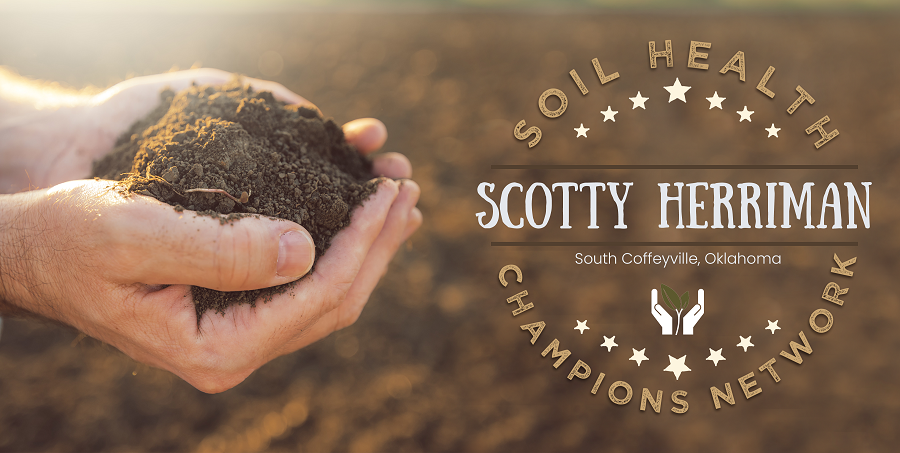
Scotty Herriman, a life-long, full-time farmer and a veteran of the U.S. Army, owns and operates Herriman Farms in South Coffeyville, Okla., with his wife
Jo. After farming for over 50 years, Herriman has seen many extreme weather events and experienced their devastation. It wasn’t until 2010, however, that he visited the USDA-Natural Resources Conservation Service (NRCS) field office and decided to switch to a no-till operation with the assistance he received through the Environmental Quality Incentives Program (EQIP). After decades of conventional farming, Herriman said they switched overnight.
At first, the Herrimans described their field as the ugliest in the county due to the crop residue from no-tilling. But after experiencing the many benefits of a no-till operation, the Herrimans just had to adjust their opinions on what constitutes an “ugly” field. The benefits they saw included a decrease in fuel and equipment costs and a reduction in their fertilizer usage. The health of the land also improved – the crop residue was protecting the soil from extreme temperatures and erosion. So, now, the Herrimans see exposed soil without residue to be an eyesore.
In 2016, Herriman decided he wanted to take things further and incorporate cover crops into his operation. This past year, due to flooding, Herriman decided he had to plant soybeans even though he wouldn’t be able to harvest them until nearly the first frost. Normally, he would plant his cover crops as he harvested the beans, but this new timeline was too late in the fall to get his cover crops established. Not only was Herriman looking to fight soil compaction with his cover crops, but he had a contractual obligation with EQIP to get them planted. So, Herriman had the idea to aerial seed his cover crops instead, which was successful.
If you or someone you know would like to become an NACD Soil Health Champion, please contact NACD North Central Region Representative
Beth Mason at
beth-mason@nacdnet.org or 317-946-4463.
|
|
NACD Submits Comments to BLM
|
On June 1,
NACD submitted comments
to the Bureau of Land Management (BLM)'s Draft Programmatic Environmental Impact Statement (PEIS) for Fuels Reduction and Rangeland Restoration in the Great Basin. The PEIS would help streamline the National Environmental Protection Act (NEPA) process, allowing for faster implementation achieved by allowing local BLM field offices to meet the timelines and page limits set forth by the national BLM office.
Additionally, NACD urges BLM to expand more programmatic NEPA analysis for other BLM managed public lands improvement projects.
|
NACD Tips and Tricks
for Virtual Meetings
|
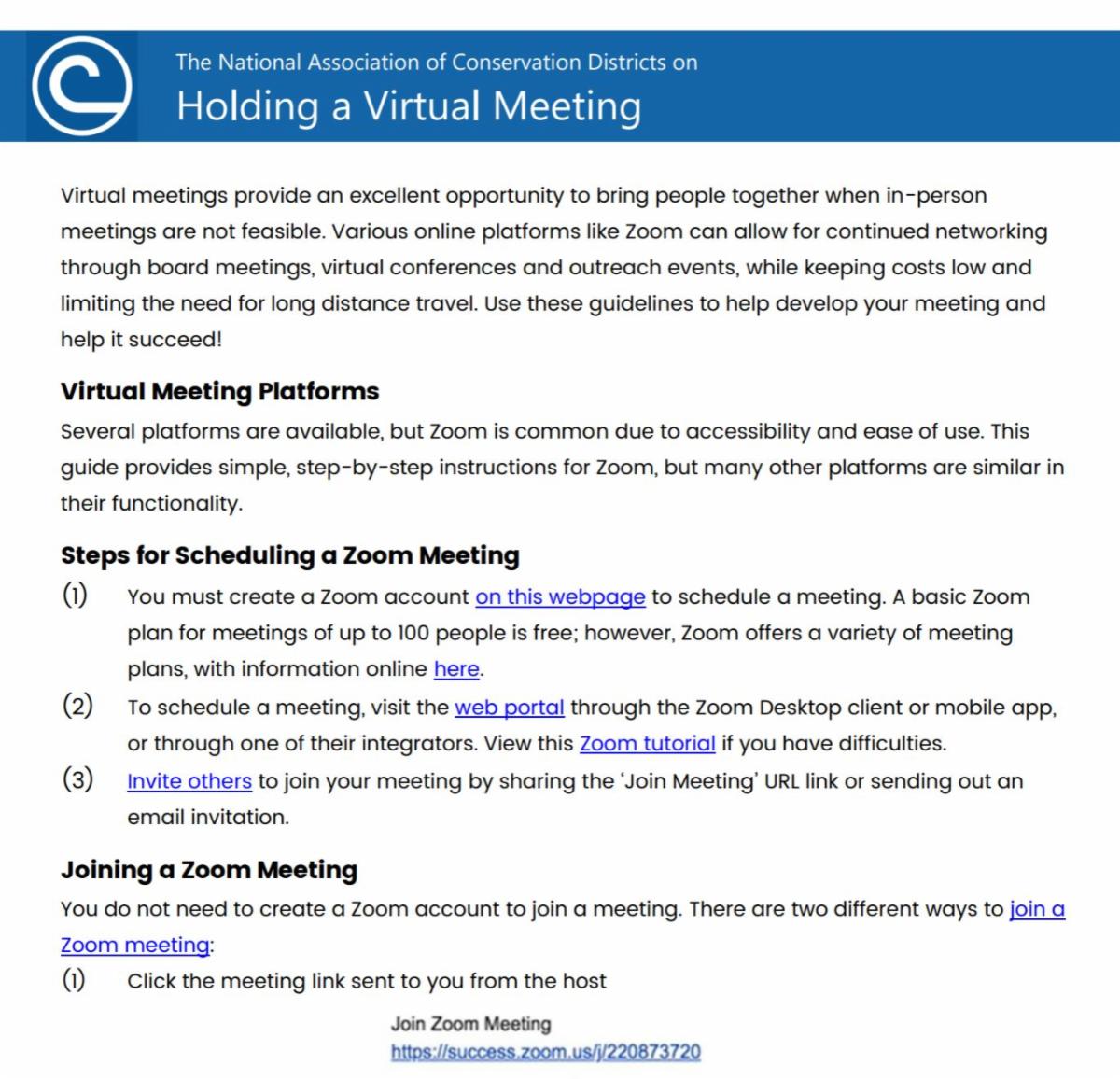
Virtual meetings provide an excellent opportunity to bring people together when in-person meetings are not feasible.
NACD has put together a
one-pager with virtual meeting tips and tricks – from scheduling and joining a meeting, to securing it and helping it run smoothly.
|
CPBC Update:
July Session Canceled
|
Due to COVID-19 (coronavirus) concerns, the July session of Conservation Planning Boot Camp (CPBC) is canceled.
NACD will continue to provide regular updates and information regarding future CPBC sessions.
|
Oklahoma Implements Flood Control Dams
|
With recent flooding in various parts of the country, Oklahoma state legislators are showing support for the rehabilitation of the state's 2,107 upstream flood control dams.
The Fiscal Year 2021 state budget includes $1 million for rural dam improvement, which will go toward the operation and maintenance of flood control dams. Rehabilitation of these aging dams is a priority in Oklahoma, so that they can continue to protect people's lives, property and natural resources for the years to come.
|
The Voice of a Future Conservationist
|
NACD's 2019 Conservation Careers Workshop Member
Mikayla Smolensky
recently created a podcast that showcases her experience as a college student at NACD's 2019 Annual Meeting in San Antonio, Texas.
A student with the University of Minnesota, Smolensky developed this podcast as a way of describing the work of NACD and what she gained as an attendee at the 2019 workshop. In the podcast, she spoke with Indiana's
Hamilton County Conservation District
and urban conservationist
Andrew Fritz
, who played a key role in the success of both the 2019 and 2020 workshops. To learn more and listen to the podcast, visit NACD's
Conservation Careers webpage
.
|
Register Today:
COVID-19 and
Invasive Species Programs Webinar
|
The Pacific NorthWest Economic Region (PNWER) and the Western Governors' Association (WGA) are co-hosting a webinar focusing on similarities of the COVID-19 virus and invasive species tomorrow, June 3, from 1:00-3:00 p.m. Mountain time.
The webinar will explore the impacts of COVID-19 to terrestrial and aquatic invasive species programs, as well as how you can adopt field work to adhere to physical distancing and safety requirements.
|
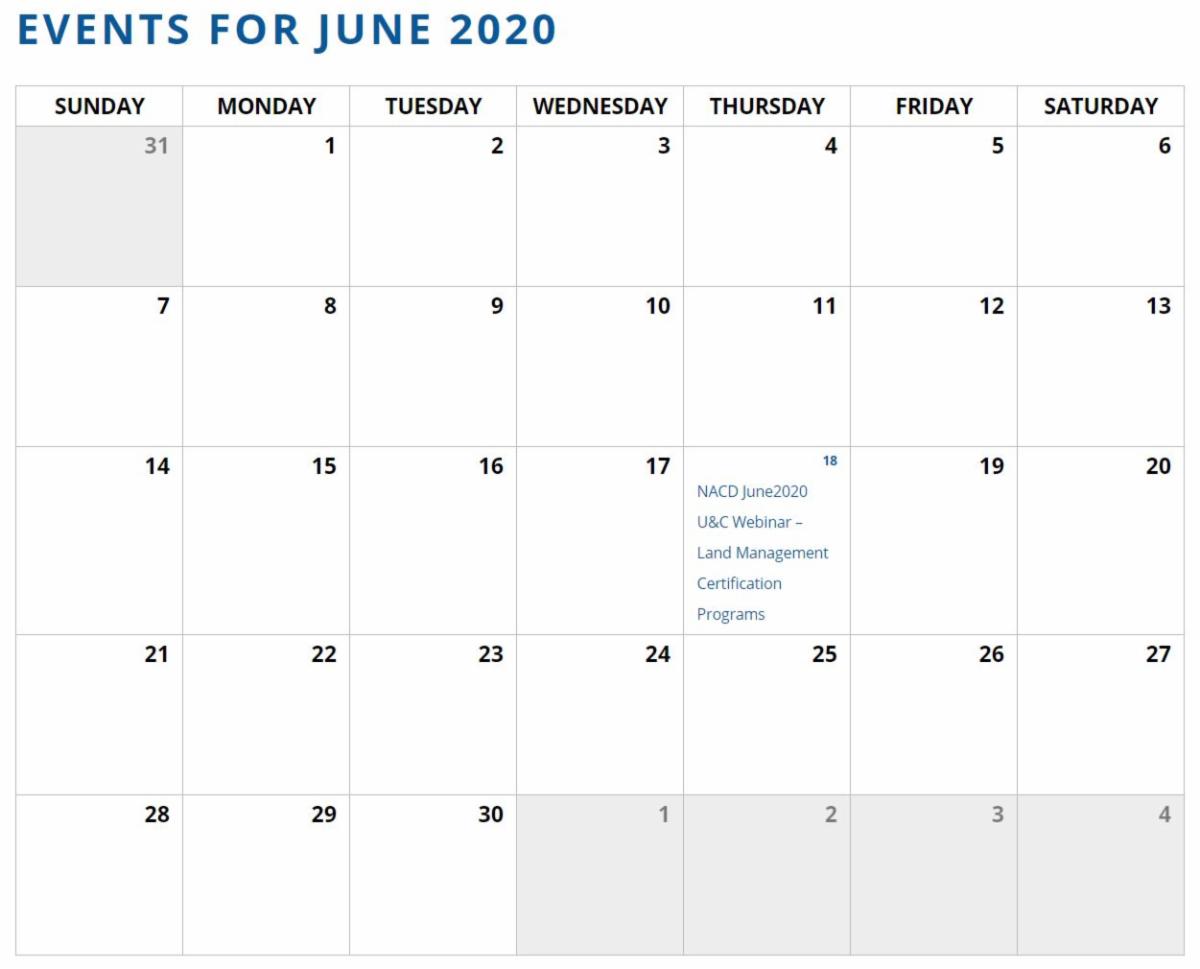
Promote your conservation district or state association's tree sale, annual meeting, webinar, field day or more on NACD's
Calendar of Events
!
|
|