Join Tomorrow’s RHC Funding Webinar
Through the Michigan Department of Health and Human Services’ Rural Health Transformation Program (RHTP), MCRH is offering three new funding opportunities for eligible Rural Health Clinics.
Join us tomorrow, October 9, from 11 a.m.–12:30 p.m. ET for an informational webinar covering:
- Chronic Disease and Collaborative Care Fund
- Rural Data Integration and Infrastructure Fund
- Upper Peninsula Community Health Worker Recruitment and Retention Fund
We will review eligibility, available funding, individualized implementation support and the application process. The session will be recorded for anyone unable to attend live.
Applications are due October 30, 2026. Clinics do not need a fully developed workplan or final performance measures to apply. Our team will work with selected clinics to finalize those details.
I encourage interested clinics to join us tomorrow, learn more and bring their questions.
Thanks,
Jill
| | |
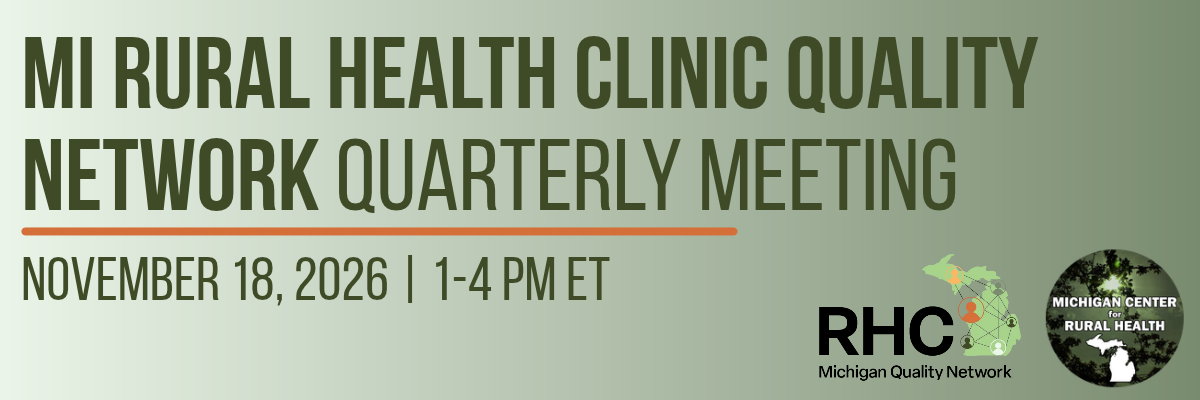
Connect with Rural Health Clinic colleagues from across Michigan for an afternoon of shared learning, discussion and updates to support your clinic’s work.
Wednesday, November 18, 2026
Virtual | 1–4 p.m. ET
The meeting will include updates on Michigan’s Rural Health Transformation Program (RHTP) and a presentation on community health workers in RHCs. More agenda details are coming soon.
Save your spot and join the conversation!
| | Medicaid Changes | Resources and Upcoming Webinar | | |
As Medicaid changes continue, rural healthcare organizations may receive questions from patients about how their coverage could be affected.
Resources for Medicaid Changes Affecting Noncitizens
Changes affecting some noncitizens took effect October 1. The Michigan Immigrant Rights Center and Protecting Immigrant Families Michigan have shared guidance for continuing access to care in English, Spanish and Arabic.
MDHHS Webinar: Navigating Work Requirements
Join MDHHS on Tuesday, October 20, from 3–4 p.m. ET to learn about the Healthy Michigan Plan work requirement process, the medical frailty exemption and a new screening tool for community partners.
Registration is limited to two participants per organization. The webinar will be recorded and shared by October 28. Register for the webinar
Order Educational Materials from NKFM
The National Kidney Foundation of Michigan offers materials about the upcoming Healthy Michigan Plan work requirements and kidney disease prevention. Contact mchammout@nkfm.org to request an order form.
Find More Resources
MCRH has gathered the MDHHS Community Partner Toolkit, webinar recordings and additional guidance on its Healthy Michigan Plan Work Requirement Resources page.
| | |
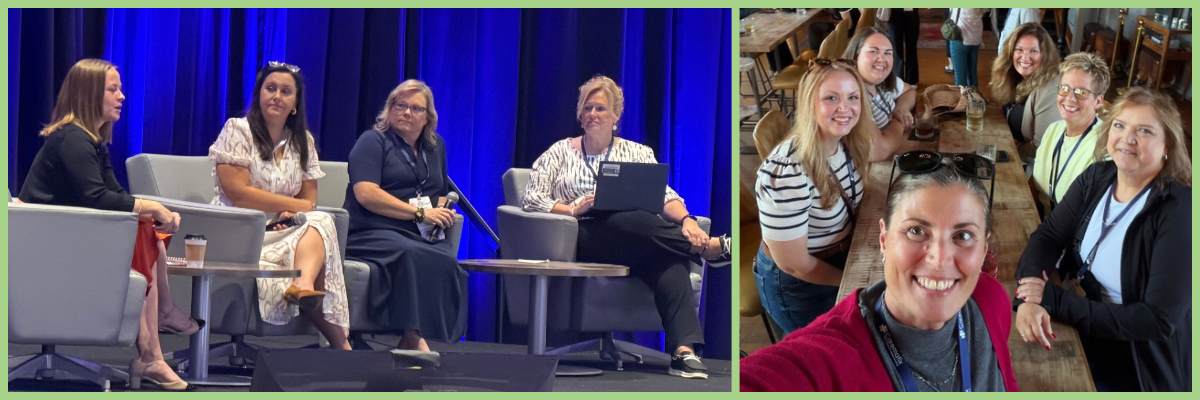
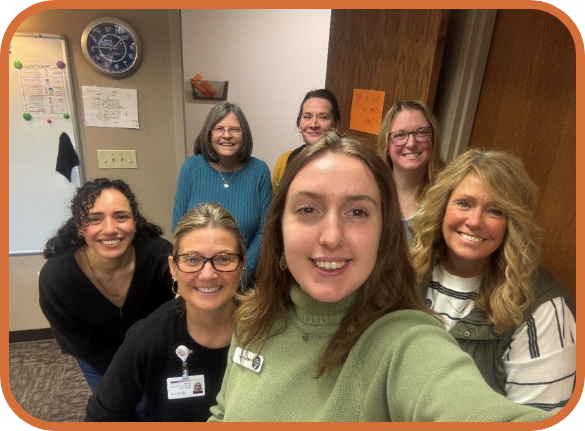
MCRH’s Jill Oesterle, Jeff Nagy, and Laurel Sawyer attended the National Association of Rural Health Clinics (NARHC) Conference in Louisville, Kentucky, bringing back practical tools and ideas to support Michigan’s RHCs. Jill also joined the Rural Health Transformation Program panel, contributing to the conversation on implementation.
Beyond the educational sessions, the conference offered valuable time to connect with members of the Michigan RHC Quality Network Executive Board and other Michigan RHC leaders, strengthening relationships and learning more about clinic priorities.
Read the Full Story
| | Finding Your Way Social Systems Navigation Manual Supports Stronger Connections Across Rural Communities | | |
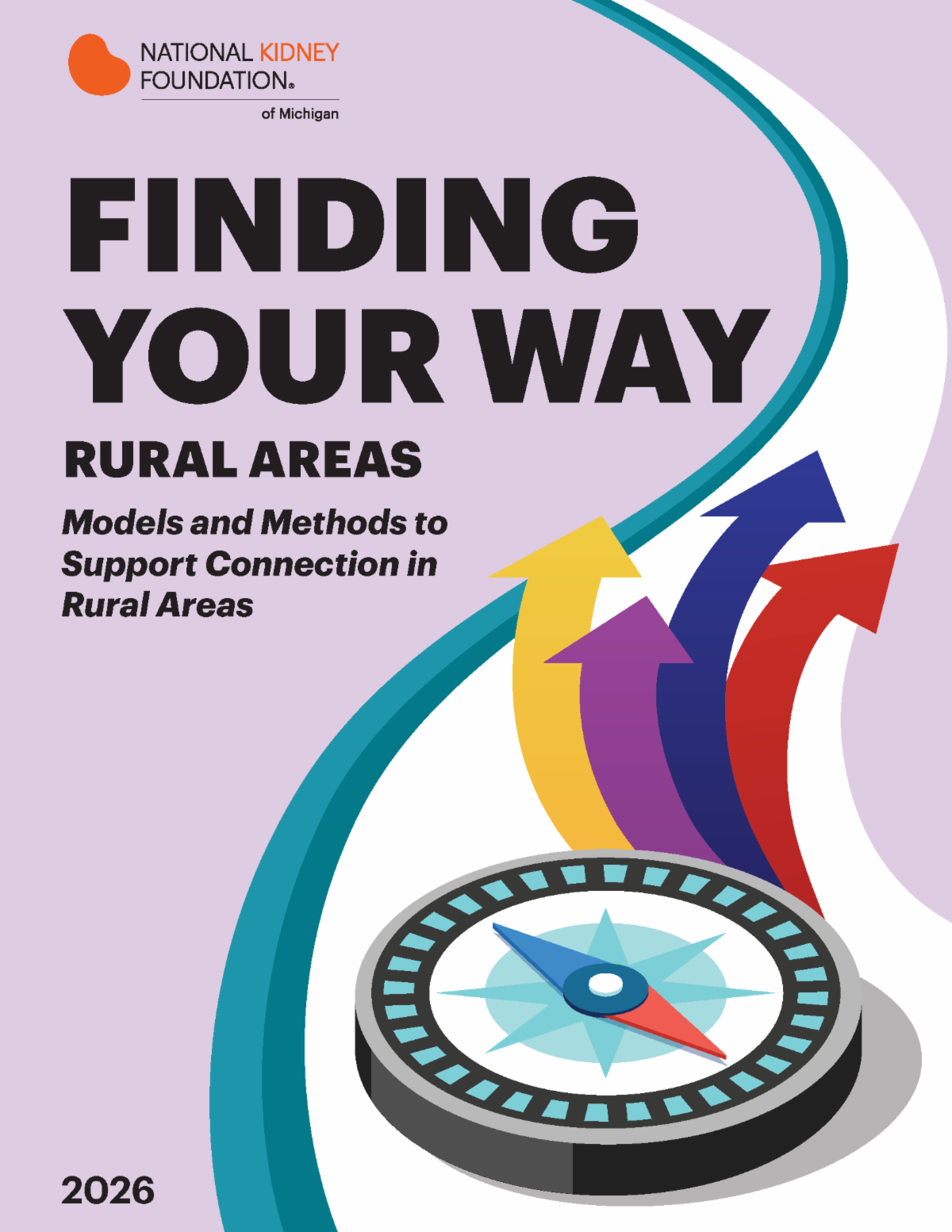
The National Kidney Foundation of Michigan (NKFM) has released Finding Your Way: Rural Areas, a new guide designed to help organizations strengthen communication, collaboration and access to resources across rural Michigan.
Rather than serving as a traditional resource directory, the guide provides adaptable models and practical strategies that communities can use to build stronger systems of support. Topics include cross-sector collaboration, asset mapping, emergency preparedness, regional and digital hubs, volunteer recruitment and communication best practices.
The guide also highlights the diversity of Michigan’s rural regions and emphasizes the importance of tailoring strategies to each community’s geography, culture, resources and existing relationships. It includes information from MCRH about statewide rural health networks and initiatives.
Rural Health Clinics can use the guide to identify new ways to connect patients with services, strengthen community partnerships and address gaps in local support systems.
| | Partner Spotlight | Trinity Medical Group | | |
The National Kidney Foundation of Michigan (NKFM) and MCRH have partnered to support six Rural Health Clinics across Michigan through the CKD Learning Collaborative. Clinic teams received education, practical tools, technical assistance, and patient education resources to strengthen the detection, diagnosis, and management of chronic kidney disease (CKD).
Trinity Medical Group focused on improving early CKD detection and management at its Hart, Whitehall, Ludington, and Shelby Medical Centers. Clinical staff received education about CKD risk factors and important kidney health tests, including uACR and eGFR.
“This initiative was a huge help in filling in gaps of education and awareness- both for providers and our patients!” – Trinity Medical Group
Read NKFM's Partner Spotlight.
For Health Professionals: Explore the Chronic Kidney Disease: Toolkit for Rural Providers developed through the NKFM and MCRH collaboration for resources to support chronic kidney disease care in rural communities.
| | |
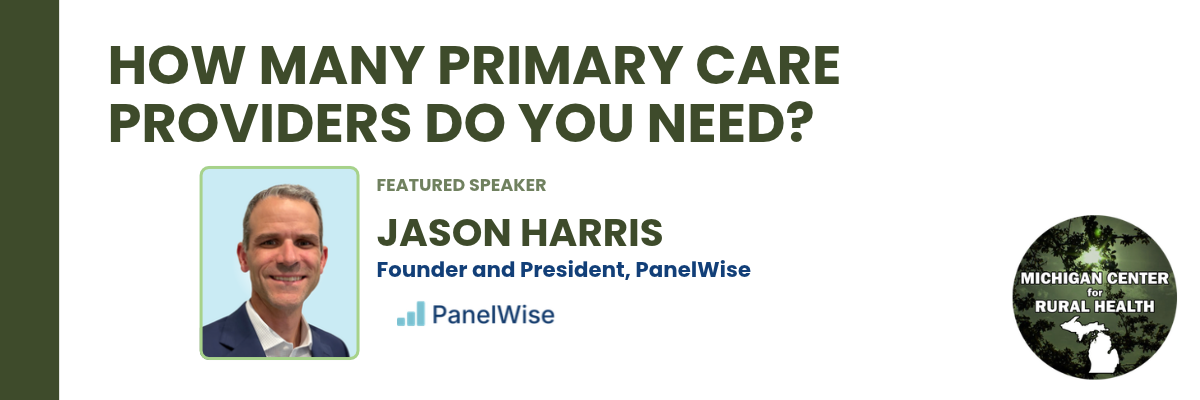
Between reimbursement pressures, provider shortages, and an aging patient population, a strong primary care plan matters more than ever. Primary care supports community health, drives hospital growth, and plays an important role in value-based care.
Join the Michigan Center for Rural Health for a webinar featuring Jason Harris, founder and president of PanelWise, on Wednesday, October 28, from 12:00–1:00 p.m. ET. Jason will share a practical framework to help organizations determine how many primary care providers they need, where they are needed, and how much capacity currently exists.
The session will help connect board-level strategy with clinic operations and appointment access. Registration is required.
| | Diabetic Retinopathy Toolkit Available to Michigan RHCs | | |
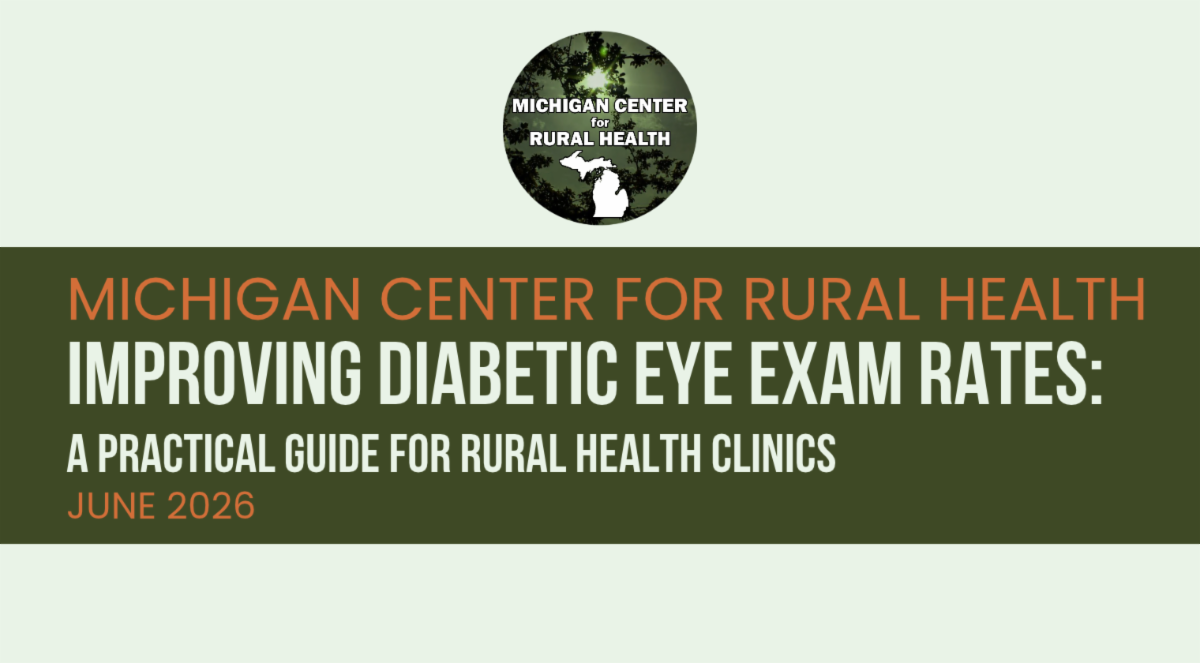
MCRH’s Diabetic Retinopathy Toolkit is available to help Rural Health Clinics strengthen screening workflows and connect patients with recommended diabetic eye exams. Developed through MCRH’s Diabetic Retinopathy Collaborative, the toolkit includes practical resources clinics can use to support implementation, staff education and patient outreach.
Michigan RHCs can access the toolkit online or order printed copies at no cost for use in their clinics.
| | Michigan Medicaid Enrollment Resources Now Available | | |
Beginning October 1, 2026, Michigan introduced a standardized credentialing and enrollment process for individual providers seeking to join Medicaid Health Plan networks. The Michigan Association of Health Plans (MAHP) has posted enrollment forms and supporting documents.
Already credentialed and contracted providers are unaffected, and recredentialing remains unchanged. CHAMPS enrollment is still required.
Health plans have 10 calendar days to check application completeness, 60 calendar days to issue a final credentialing decision, and 90 calendar days to decide whether to proceed with contracting and provide a draft contract if proceeding.
RHCs enrolling individual providers should review the resources and confirm submission instructions with each health plan.
| | MDHHS Releases Report to Strengthen Suicide Prevention Efforts Across Michigan | |
The Michigan Department of Health and Human Services (MDHHS) has released the Michigan Suicide Prevention Council Report, outlining recommendations to strengthen statewide suicide prevention efforts and support implementation of the Michigan Suicide Prevention Plan 2024–2027. Released in recognition of Suicide Prevention Month, the report highlights the continued need for coordinated prevention strategies. In 2024, Michigan recorded 1,443 suicide deaths, with suicide ranking as the second leading cause of death among individuals ages 10 to 34.
Developed in collaboration with statewide partners representing public health, behavioral health, education, tribal communities and other sectors, the report identifies two key priorities: establishing sustainable state funding for suicide prevention infrastructure and strengthening workforce education through professional training and licensure requirements aligned with core suicide prevention competencies. These recommendations emphasize a systems-level approach to improving risk recognition, screening and assessment across Michigan. To review the full report and additional resources, visit the MDHHS Suicide Prevention webpage.
| National Rural Health Day Essay Contest | |
In celebration of this year’s upcoming National Rural Health Day, recognized this year on November 19th, the Literacy Legacy Fund of Michigan, the Michigan Center for Rural Health (Michigan's State Office of Rural Health) and the Northern Michigan University Center for Rural Health, are partnering, once again, to sponsor and extend this essay contest to all high school seniors who reside and attend school in the Upper Peninsula of Michigan, are college/university bound in fall 2027, and intend to pursue a healthcare career in human medicine.
Students meeting these criteria are eligible to enter the contest regardless of what college or university they enroll in next fall.
The deadline to enter is October 14, 2026, and winners will be notified and announced on November 19th, 2026.
Questions? contact Elise Bur, Anna Christiansen or Matilda Schiewe.
| | |
Starting October 1, 2026, RHCs and FQHCs must bill for distant site telehealth services using individual CPT or HCPCS codes that describe the service furnished and the appropriate telehealth modifier, instead of the single HCPCS code G2025. See the list of telehealth services.
Report the HCPCS code along with one of the following modifiers:
- Modifier 93: Synchronous telemedicine service rendered via telephone or other real-time interactive audio-only telecommunications system
- Modifier 95: Synchronous telemedicine service rendered via a real-time interactive audio and video telecommunications system
The payment rate for telehealth services furnished by RHCs and FQHCs for CY 2026 is $97.53. The payment rate for these services will continue to be based on the average amount for all Physician Fee Schedule (PFS) services on the telehealth list, weighted by volume for those services reported under the PFS.
For more information, read the RHCs & FQHCs: Billing Distant Site Telehealth Services MLN Matters® article.
| | Proposed Medicaid Policy 2632 Public Comment Request | | |
MDHHS is requesting public comment on the 2632-Clinic - Medicaid Health Plan Clinic Prospective Payment System/All-Inclusive Rate Reimbursement Transition.
Comments may be forwarded to the e-mail noted on the policy's transmittal sheet. Proposed Medicaid policies can be accessed here.
| |
On November 19, 2026, the Michigan Center for Rural Health will join communities across the country in celebrating National Rural Health Day (NRHD). which recognizes the people, organizations, and partnerships that strengthen rural health every day.
This year also marks several important milestones: 35 years of MCRH and State Offices of Rural Health, and 15 years of NRHD. These anniversaries provide an opportunity to reflect on the progress made in rural health while recognizing the work that continues across Michigan.
MCRH will celebrate alongside rural healthcare organizations through site visits, recognition of Michigan’s 2026 Community Star, National Rural Health Day activities, and stories highlighting the people and communities making a difference across the state.
As November 19 approaches, we invite our partners, rural healthcare professionals, and communities across Michigan to join us in recognizing the Power of Rural and celebrating those who help make rural Michigan a healthier place to live, work, and grow.
| | MDHHS Hepatitis C Resources | | |
MDHHS has published a newsletter with resources and information for clinicians regarding Hepatitis C. Some resources included are:
Mary Nagy, RN and Viral Hepatitis Health Educator with MDHHS can be reached for questions and additional information.
| | ColoSense™ Colorectal Cancer Screening Test: HETS Update Coming in January | | Find out when your patient is eligible for colorectal cancer screening tests. Starting January 2027, the Medicare HIPAA Eligibility Transaction System (HETS) will return CPT code 0421U (non-invasive biomarker colorectal cancer screening test - ColoSense) history in eligibility responses. | | New Rural Public Health Practical Skills Training | | |
The NORC Walsh Center for Rural Health Analysis has released two training modules designed to help rural public health professionals apply policy and data skills in their everyday work.
Practical Approaches to Rural Public Health Policy walks through a six-step process, from identifying an issue and building support to implementing a policy and adjusting it based on lessons learned. Practical Data Skills for Rural Public Health covers how to collect, analyze, interpret, and communicate data to support local decisions. Both modules include real-world rural public health examples.
Continuing education credits are available through August 28, 2029. Find the courses on CDC TRAIN: policy module and data module.
| | Community Health Workers in Rural Communities | | |
Community health worker (CHW) initiatives are playing a prominent role in state Rural Health Transformation Program efforts across the country. RHIHub recently updated their Community Health Workers in Rural Settings topic guide includes FAQs about CHW roles, training, certification, and more. Use RHIHub's Community Health Workers Toolkit for guidance on planning, implementing, and sustaining a CHW program in your rural community.
| | Explore the Rural Child Well-Being Dashboards | |
Save the Children created the Rural Child Well-Being Dashboards to answer a simple question: How are children in rural America doing? Health Resources and Services Administration’s (HRSA) rural definition is applied to to publicly available data across a wide range of child well-being topics.
The dashboard provides data on the well-being of rural children and families compared with those in urban areas, covering topics including educational outcomes, family income, poverty, nutrition, household spending, disaster vulnerability, and more. Includes state and county data.
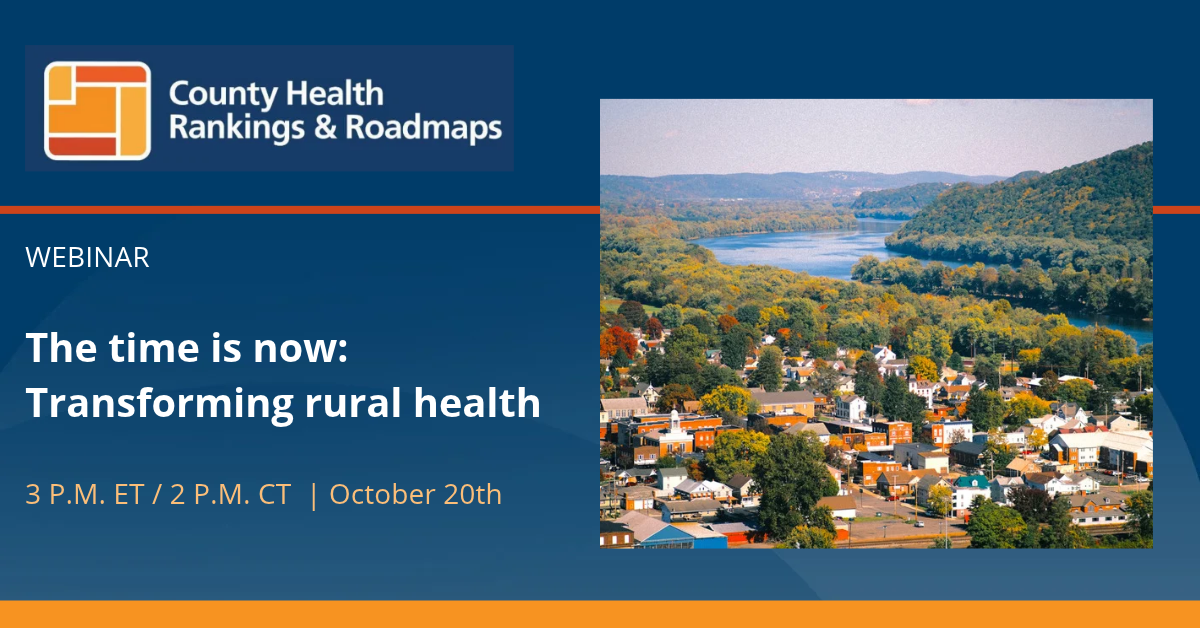
| New Rural Health Transformation Program Webinar | Join County Health Rankings & Roadmaps (CHR&R) for a conversation with John Eich, director of the Wisconsin Office of Rural Health, about what this moment means for rural health. Explore actions to accelerate meaningful change, build on existing efforts and navigate potential barriers. Eich will share insights from his work with rural communities, highlighting where he sees opportunities for greater coordination, collaboration and strategic focus. | RubinBrown's Rural Health Webinar Series | |
Free Webinar: Maximizing the Value of Rural Health Clinics
RubinBrown will host “Maximizing the Value of Rural Health Clinics: Revenue Cycle, Cost Reporting, and Reimbursement Strategies” on Wednesday, November 18, 2026, from noon–1 p.m. ET via Zoom.
Presented by Caren Puvalowski, Rural Healthcare Reimbursement Manager at RubinBrown, this session will explore practical ways RHCs can strengthen financial performance while working with limited staff and resources. Topics include the connection between daily revenue cycle activities, cost report accuracy, and reimbursement, along with strategies to reduce revenue leakage, improve cash flow, and prioritize activities with the greatest financial impact.
The webinar is designed for provider-based and independent RHCs, including clinic leaders, finance staff, and billing teams. Participants will leave with actionable approaches to support their clinics’ financial sustainability.
There is no fee to attend, and 1.0 CPE credit is available for participants who meet attendance and polling requirements.
| |
Beyond Resolution: Leveraging Conflict Styles for High-Trust Leadership
October 13th | 2 p.m
Using the Thomas-Kilmann framework, learn how conflict styles shape physician relationships, trust, and team engagement.
| |
Finding $1.5 Million in Revenue Opportunity: Strengthening Point-of-Service Collections
October 14th | 2 p.m
Practical strategies to strengthen point-of-service collections and reduce bad debt while maintaining a positive patient experience.
| |
Rural Partnership Case Studies: Examining the Promise and Peril of Rural Partnerships
November 3rd | 2 p.m
Through real-world case studies, examine the factors that determine whether a rural hospital partnership strengthens an organization or limits its future options.
| |
Reducing Futile Transfers by 20%: The Potential Impact of AI in Rural Healthcare
November 12th | 2 p.m
Explore where AI is already creating measurable value in rural healthcare — and a practical framework for evaluating AI solutions before adopting new technology.
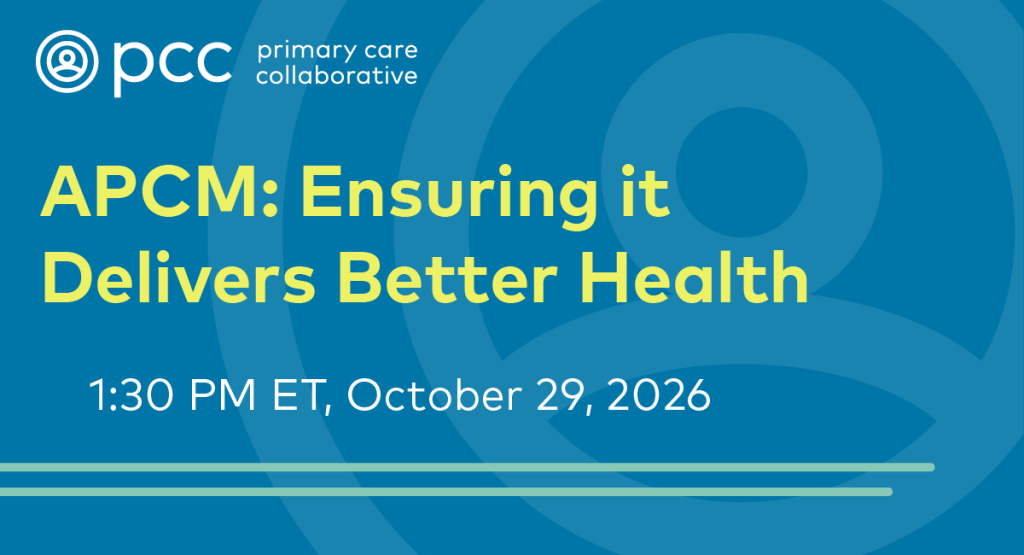
| Advanced Primary Care Management Services Report Released | |
In January 2025, Medicare began covering Advanced Primary Care Management (APCM) services. According to the Center for Medicare and Medicaid Services (CMS), APCM services and related billing codes were designed to “better describe advanced primary care management services broadly, to provide more stability in payment and coding for practitioners.
In its 2026 Evidence Report, the PCC dives into the current state of APCM adoption; what factors are driving adoption; what challenges early adopters have faced; and how the primary care community perceives CMS’s latest effort to address chronic conditions.
Join in-person or virtually, for the release of this report.
|
CDC Request for Information: Data Intermediaries to Strengthen Public Health
| |
The Centers for Disease Control and Prevention (CDC) seeks feedback from the public to inform their approach to a secure, standards-based public health data exchange for preventing disease, detecting emerging threats, and strengthening public health at the community level and nationwide. For the purposes of this RFI, a public health data intermediary is defined as a trusted organization, network, platform, or governed service that enables exchange and stewardship of health-related data among data sources and public health authorities.
To make data actionable, data intermediaries may provide additional services such as analytics, visualization, technical assistance, and community engagement. The CDC especially wants rural input on questions of standards and technical capabilities, funding and sustainability of shared infrastructure, governance, implementation, and ongoing evaluation of effectiveness.
Comment by November 20th.
| | |
News:
Funding Opportunities:
Other Resources:
| | |
This newsletter is designed for Rural Health Clinics in mind, but we know the value doesn’t stop at your inbox.
If you find these updates helpful, consider forwarding the newsletter to others on your team or in your network who work in or support Rural Health Clinics. Whether it’s a provider in your primary care clinic, a biller or coder managing RHC claims, or a colleague interested in rural health - sharing is a simple way to strengthen connections and keep everyone informed.
Know someone who should be added to the list? They can subscribe here or reach out to us directly.
| |
A SPECIAL THANK YOU TO MCRH'S
2026 ORGANIZATIONAL SPONSORS
| | Stay updated by visiting the Michigan Center for Rural Health's website and following us on social media. | | | | |