Official Newsletter of BERTOLINO LLP | |
|
|
Our Firm
Tony R. Bertolino, Esq.
Managing Partner
Sheri L. Middlemas
Chief Operating Officer
Troy Beaulieu, Esq.
Director of Legal Services
LaJuana Acklin, Esq.
Senior Associate Attorney
Kerry Bloodsaw, Esq.
Associate Attorney
London de la Teja
Accounts Receivable Manager
Melissa Hooper
Team Lead, Paralegal [Certificated]
Lesa Surber
Paralegal [Certificated]
Cimone Murphree
Project Liaison
Jasen Dalus
Client Success Liaison
Dena Lackey
Marketing Specialist
| |
|
Can My Licensing Board Suspend My Professional License on an Emergency Basis without a Hearing?
By Tony Bertolino, Esq.
| |
Sanctions for violating rules and laws that apply to your profession can result in the suspension of your professional license. In some cases, your licensing board or agency can even temporarily suspend your professional license before a hearing is held.
Temporary or Emergency Suspensions of Professional Licenses
Many professional licensing boards or agencies can move to suspend professional licenses on a temporary or emergency basis if they have cause to believe that continued practice by the individual could cause an imminent threat to the public. In routine license suspension cases, licensees are entitled to due process protections, such as notice of the allegations against them and a hearing before the licensing agency before any suspension occurs. However, in emergencies where public safety is at stake, most licensing boards can issue an emergency or temporary suspension without notice or a hearing.
Nonetheless, when an agency issues an emergency or temporary license suspension, it typically must give notice to the licensee and schedule an immediate hearing.
The Texas Board of Nursing
For instance, the Texas Board of Nursing (BON) can issue a temporary suspension of a nursing license without notice. Under Texas law, the BON can temporarily suspend or restrict a nursing license if a majority of the BON or a designated three-member committee of BON members determines, based on the evidence provided, that continued practice by the licensee would “constitute a continuing and imminent threat to the public welfare.”
To temporarily suspend a nurse’s license without notice, the BON must initiate proceedings for an immediate hearing before the State Office of Administrative Hearings (SOAH) simultaneously with the temporary license suspension or restriction. SOAH must hold a preliminary hearing not more than 17 days after the date of the temporary suspension or restriction to determine whether probable cause exists that a continuing and imminent threat to the public welfare continues to exist. Furthermore, the SOAH must hold a final hearing not more than 61 days after the date of the temporary suspension or restrictions.
The Texas Medical Board
The Texas Medical Board (TMB) can also hold a hearing without notice to determine whether to temporarily suspend or restrict a physician’s license. In the hearing, a three-member panel of the TMB decides whether allowing the physician to practice would pose a “continuing threat to the public welfare,” which is defined as a “real danger to the health of a physician’s patients or the public caused through the physician’s lack of competence, impaired status, or failure of care adequately for the physician’s patients.” In making this determination, the TMB must find that the physician’s continued practice poses an actual risk of injury to others based on their actions or inaction.
If the TMB panel temporarily suspends or restricts a physician’s license without notice, it must give immediate notice of the suspension or restriction to the physician. Furthermore, it must schedule a hearing on the temporary suspension on the earliest possible date. The physician must have at least ten days’ notice of the hearing.
Following the hearing, if the TMB panel affirms the license suspension or restriction, the TMB shall schedule an informal compliance meeting to be held as soon as possible. If the physician cannot show compliance at the informal compliance meeting, the TMB must file a formal complaint as soon as possible.
However, if, after the hearing, the TMB decides that the temporary suspension or restriction is unwarranted, the facts that served as the basis for the temporary suspension or restriction cannot be used as the sole basis for a future temporary suspension or restriction proceeding.
The Texas State Board of Pharmacy
Texas law allows the Texas State Board of Pharmacy (TSBP) to temporarily suspend or restrict a pharmacist or pharmacy license. The president of the TSBP must appoint a three-person disciplinary panel to determine whether a pharmacist’s license should be temporarily suspended or restricted. The panel may temporarily suspend or restrict the license either:
- After a hearing conducted by the panel after the 10th day after the date, a notice of the hearing is provided to the license holder.
- Or without notice or hearing if, at the time the suspension or restriction is ordered, a hearing before the panel is scheduled to be held not later than the 14th day after the date of the temporary suspension or restriction to determine whether the suspension or restriction should be continued.
If the panel temporarily suspends or restricts the pharmacist’s license, the TSBP shall initiate formal disciplinary proceedings against the pharmacist no more than 90 days after the date of the temporary suspension or restriction.
The State Office of Administrative Hearings (SOAH) also must hold a contested case hearing within that timeframe. Failure of SOAH to hold a hearing within this timeframe will result in the suspension or restriction of the pharmacist’s license being automatically lifted.
In conclusion, temporary or emergency suspensions of professional licenses are powerful tools that licensing boards and agencies in Texas can use to protect public safety when they believe a professional’s continued practice poses an imminent threat. While these suspensions can occur without prior notice or a hearing, due process protections remain in place through expedited hearings and strict timelines to ensure fairness.
Whether issued by the Texas Board of Nursing, the Texas Medical Board, or the Texas State Board of Pharmacy, temporary suspensions are subject to immediate review, providing license holders an opportunity to contest the action.
Understanding the procedures and timelines involved in these cases is critical for professionals facing such actions, as swift, informed responses can significantly impact the outcome of their cases and their ability to continue practicing.
| |
|
Texas Behavioral Health Executive Council v. WJ
Facts: WJ received a second complaint from BHEC regarding failure to submit supervision records in a timely manner. The complaint came from WJ’s former supervisee, whom she terminated. The supervisee was upset with WJ and filed a complaint against her with malicious intent and included an inaccurate timeline of events.
Outcome: The firm provided a response with evidence that included the certified mailing certificate for the supervision records. The response also included an argument regarding why WJ’s records were sent late and how the lateness was due to the complainant’s own delays. After almost a year of review by BHEC, BHEC dismissed the case with a warning and issued no public disciplinary action.
| |
|
Texas Board of Nursing v. JM
Facts: TT received a complaint from BON alleging inappropriate conduct with a patient. The complaint alleged that TT had a relationship with the parent of a patient. The report came from another family member of the alleged victim.
Outcome: The firm provided a response including evidence that TT would never cross boundaries or cultivate an inappropriate relationship with a patient. Based on sections of the Texas Administrative Code and the Texas Occupations Code, the firm argued that TT did not violate any legal provision and that BON had no jurisdictional authority to act. BON reviewed the response and dismissed the complaint, taking no disciplinary action against TT.
| |
|
Texas Medical Board v. RL
Facts: RL hired the firm to review his application for licensure. RL applied for licensure with TMB before, but his application was denied based on a termination from his residency program several years prior.
Outcome: The firm drafted supplements to RL’s application to explain his prior termination. The firm provided evidence and argument regarding the rationale for the termination, the limited evidence supporting the termination, and RL’s intention not to work within the limited field of his prior residency. After analysis of the application, TMB approved RL for licensure without any restrictions or conditions.
| |
|
Texas Health and Human Services v. AA
Facts: RL hired the firm to review his application for licensure. RL applied for licensure with TMB before, but his application was denied based on a termination from his residency program several years prior.
Outcome: The firm drafted supplements to RL’s application to explain his prior termination. The firm provided evidence and argument regarding the rationale for the termination, the limited evidence supporting the termination, and RL’s intention not to work within the limited field of his prior residency. After analysis of the application, TMB approved RL for licensure without any restrictions or conditions.
| |
|
Do I Need to Report This?
by Troy Beaulieu, Esq.
| |
|
As a license holder and someone who may own a business or operate a professional practice, you may discover potential legal issues that expose you, your business, or your practice to compliance risks. It is important to recognize when these problems arise and not avoid or ignore them. Many times, as a license holder, you have an affirmative duty to report these situations to the government, and failing to do so can expose you to increased legal risk in a variety of settings. This article will discuss reporting obligations, when they may arise, how they can impact your license, business, or practice, and the proactive steps you can take to minimize your legal risks.
The Obligation to Report and Potential Legal Risks
Whether it involves you directly or an employee or contractor who works for your business, certain types of activities that may violate the law will require you, as a license holder, to notify the government about the situation. So significant are these obligations that, in many cases, they can expose you to disciplinary action, civil or even, in rare cases, criminal liability if you fail to report the situation.
There are two significant distinctions to consider: whether (1) the situation involves you and your duty to self-report your matter or (2) the situation involves someone else and your duty to report that person. In either case, it is important to remember that both scenarios can expose you to legal risk and potential disciplinary action if you do not satisfy your reporting obligation.
Self-Reporting Criminal Matters
The obligation to report yourself is almost universally triggered when a license holder is convicted of a criminal offense. If you have been convicted, you typically have a limited amount of time to notify your licensing agency and provide them with information and documentation about the nature of the conviction. This is usually required even if you intend to appeal the conviction and dispute the validity of the criminal conviction. If the conviction involves your incarceration, your license will be revoked by operation of law. It is important to remember that most state agencies require deferred adjudication criminal matters to be reported (cases where the criminal court does not adjudicate you as guilty of an offense but instead postpones making a decision while you complete a period of probation/community supervision and if completed, the court will dismiss the case). This is because most agencies often treat deferred adjudication situations as if you were convicted of the offense. Sometimes, agencies require you to report the criminal matter within a certain number of days of pleading guilty or no contest. A smaller but still significant number of regulatory agencies require you to report merely being charged with a crime (even if the case is still pending) or when you accept a pre-trial diversion program that results in the dismissal of your criminal case. Some agencies even have the authority to seek discipline for the underlying conduct (regardless of any criminal prosecution) and may require disclosure of the incident.
As you can see from these situations, it’s extremely important to consult an attorney who handles regulatory/license defense matters about your situation immediately because the legal landscape is complicated, has knots of varying situations, is very confusing, and the consequences of failing to act promptly can have a profound and irreversible impact on your license. Do not wait – if you’ve been arrested, be proactive and consult an attorney who is experienced with regulatory/administrative law/license defense matters. While your criminal lawyer may be fine for handling your criminal defense, they are often not knowledgeable about the implications and consequences to your occupational, professional, or business license because they do not practice administrative law. Make sure you are talking with the right type of lawyer for this area of law in which you need help. Unfortunately, I have too often seen detrimental consequences to clients who fail to hire the right type of lawyer. If you have a criminal matter, I encourage you to watch a recent edition of the Know Your Regulator podcast on this crucial topic of the crossroads between criminal law and your license.
Reporting Potential Crimes or Misconduct
As a license holder, you often observe misconduct that may trigger an obligation to report the information to the government. Sometimes, this is an obligation to notify a specific government agency, law enforcement, or your own regulator. For example, the Texas Family Code requires certain types of license holders (such as teachers, mental health professionals, or medical professionals) to report suspected child abuse. Failure to do so can expose you to regulatory liability, a possible civil suit, and even criminal liability. Licensed mental health professionals are required to report situations where another practitioner has abused a client, licensed professional engineers and real estate appraisers have an obligation to report identity theft involving misuse of their seal or their license, and lawyers are required to report misconduct by their peers in certain situations when they become aware of the problem. Accountants, lawyers, and medical professionals are required to inform clients and patients when personal confidential information is stolen or accidentally released.
Do not ignore problems or instances where you know an employee or professional colleague has crossed boundaries. Contact an attorney who handles license defense and get skilled legal counsel so you can stay out of trouble.
Situations That Require Your Attention and a Lawyer’s Help
Some common situations you should consult a license defense attorney about include:
- Instances where a crime has occurred, such as child, elderly, or patient/client abuse.
- Sexual assault or misconduct.
- Situations involving fraud, theft, or embezzlement.
- Theft, data breaches, or accidental disclosure of personal identifying or confidential information.
- Matters involving unlicensed activity by an individual.
- Circumstances where you have been arrested, charged with a crime, placed on deferred adjudication, or convicted.
Proactive Measures to Protect Your License and Your Business
License holders and business owners can significantly reduce their risk profile by proactively addressing these issues differently. This includes:
-
Identifying expectations for employees and those you supervise, manage, or oversee and keeping them regularly updated. This includes providing periodic training so everyone understands what those expectations are. You may request free legal education from Bertolino LLP, where we can provide instruction on these obligations to your business, trade group, or association.
- Develop written processes and procedures for reporting when the obligation is triggered so managers, supervisors, and leaders know how to address the issue as soon as possible.
- Hire qualified license defense/regulatory compliance lawyers with the experience and knowledge to protect your license, business, and livelihood.
Takeaways for Reporting
License holders must be aware of and identify reporting obligations that impact their legal risk profile. Key situations include reporting criminal history matters, misconduct or criminal acts, unlicensed activity, identity theft, and theft of personal identifying or confidential information, as well as situations that expose your clients, patients, or customers to risk or harm. Staying proactive and investing in written expectations, processes and procedures, training, and a knowledgeable license defense/regulatory attorney are all proactive measures that can help reduce your risk of legal problems. Do not ignore problems and avoid employee/contractor misconduct; address the issue directly and with the advice and counsel of a regulatory attorney.
| | |
|
Engage with your regulatory agency like never before! Navigating the laws that govern your license and profession can be challenging. That’s why we’ve created Know Your Regulator, an educational resource designed to help license holders take charge of their careers. Stay informed with important agency updates, gain valuable insights, and discover opportunities to enhance your professional license.
Don’t miss our weekly podcast! Each episode dives into key topics, from navigating complex regulations to tips for building a successful career in your field. Tune in for practical advice and expert interviews.
Empower your license and career, and stay ahead in your industry. Take advantage of our free educational resources by visiting Know Your Regulator today!
| |
Learn how you can proactively protect your license by engaging with your regulator and staying informed about regulatory developments in your industry.
With Bertolino LLP's insights regulatory insight, suggestions, and information, we can help you minimize your compliance risk profile and stay ahead of your competition by engaging with your regulator.
| |  |
|
Professional Recognition Days:
February Calendar
Team Bertolino is grateful for the expertise and dedication of these professionals. Thank you for your outstanding contributions to your respective industries.
February 8th: National Women Physicians Day
February 11th: Armed Forces Day
February 16th: National Engineers Week
February 19th: U.S. Coast Guard Reserve Birthday
February 23rd: National Hospitality Workers Appreciation Day
February 24th: World Bartender Day
| |
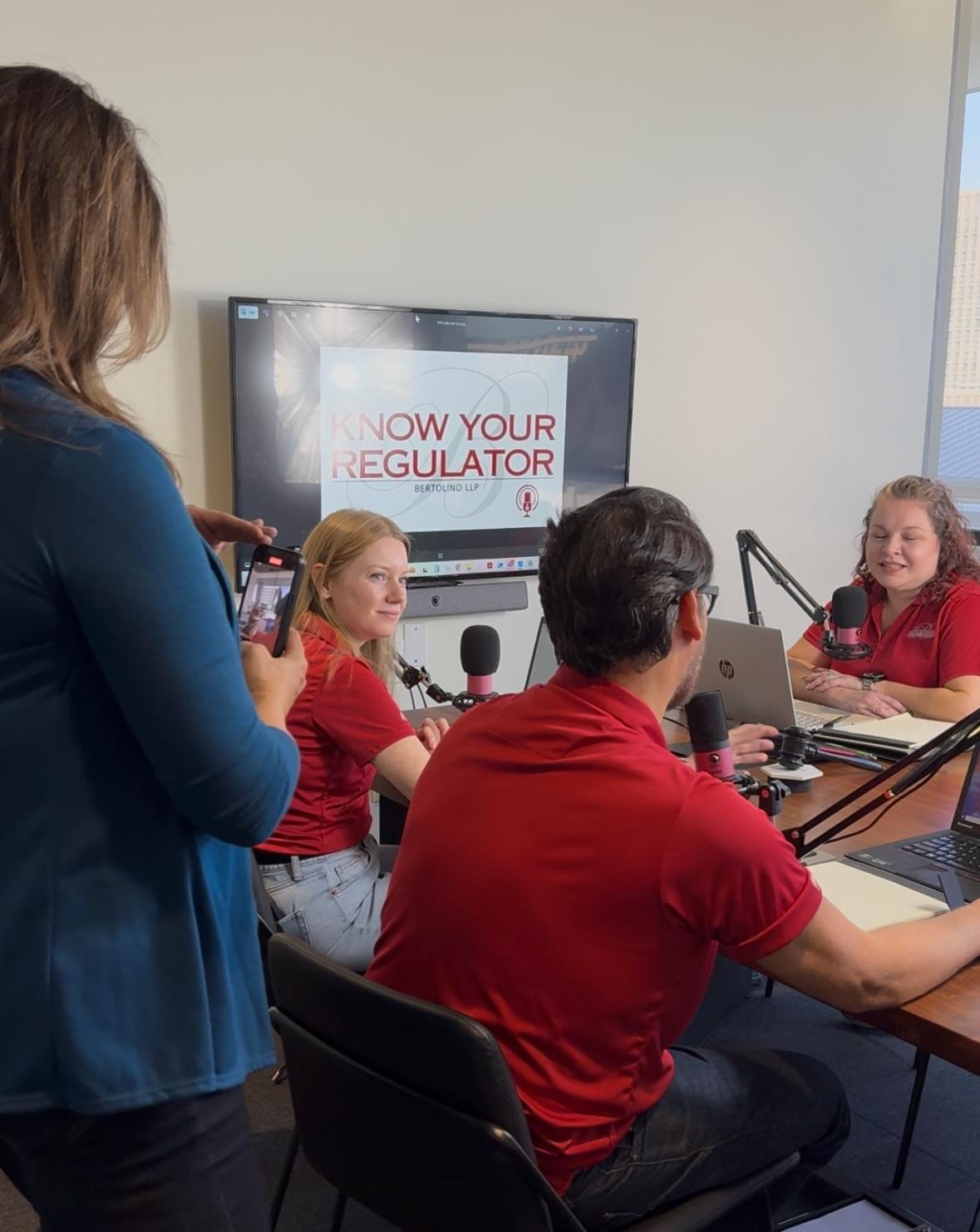
Sheri directing the scene "Know Your Regulator" Podcast with MJ, Tony and Cimone. | |
|
Tony and Cimone creating the magic that
is the "Know Your Regulator" Podcast .
| |
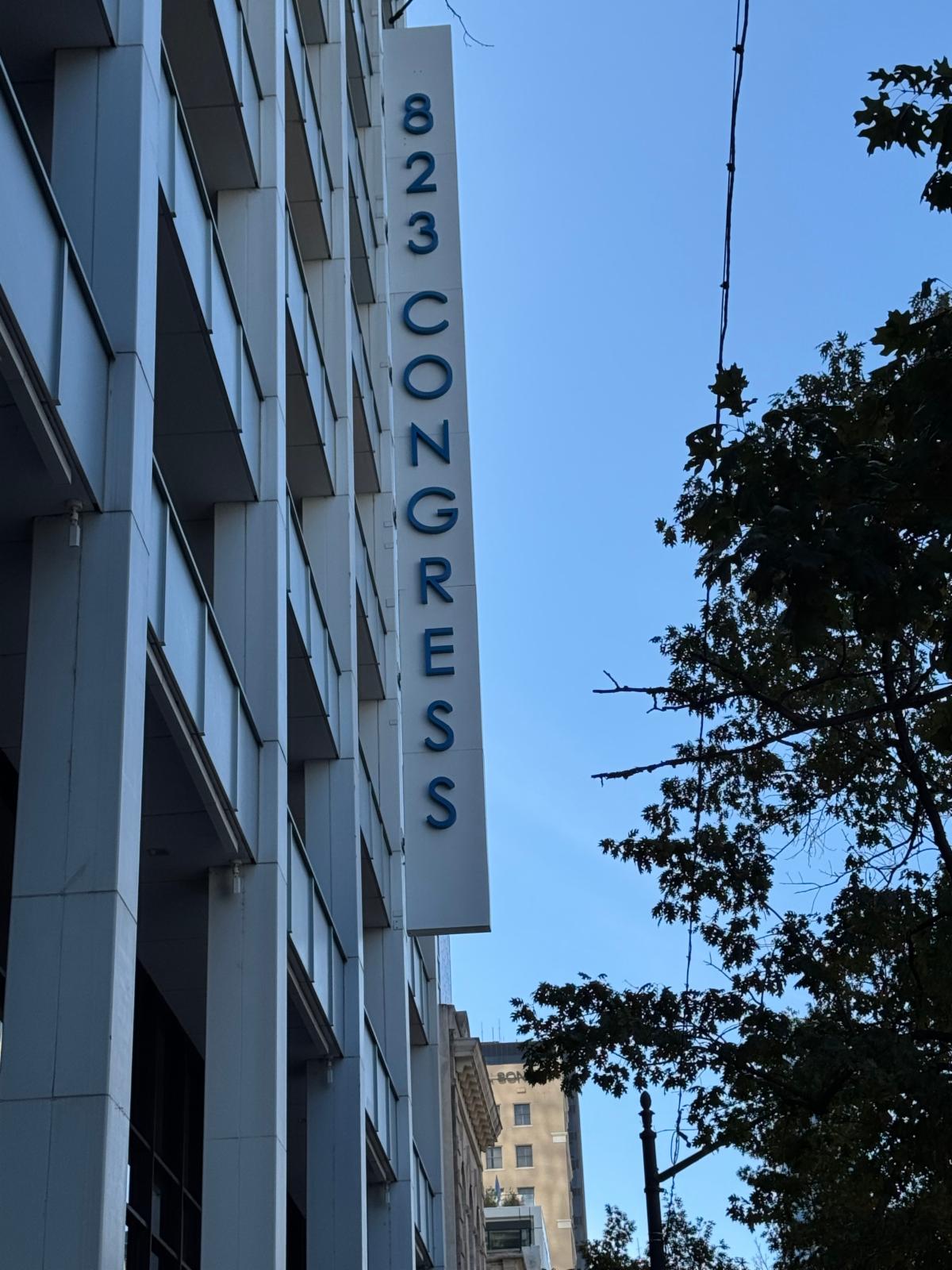
The Austin office location on a bright day in January 2025! | |
BERTOLINO LLP | (512) 476-5757 | 823 Congress Avenue, Suite 300, Austin, TX 78701 www.bertolinolaw.com | info@bertolinolaw.com | | | | |