|
“Play is often talked about as if it were a relief from serious learning.
But for children, play IS serious learning.
Play is really the work of childhood.”
~ Fred Rogers
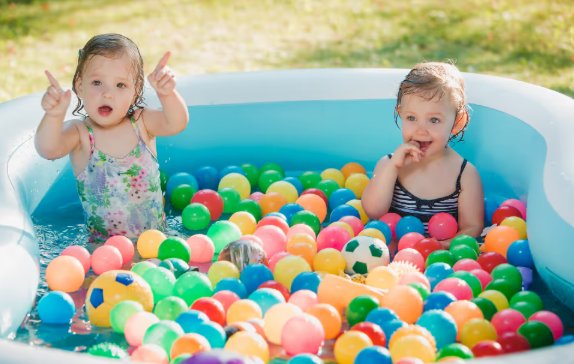
| | Research shows that play and nature-based learning is crucial for whole-child development. This newsletter offers actionable ideas, resources, and research that supports child-led play and nature connection for educators and families. | | 💦 July is for Water Play!💦 | |
The Benefits Of Water Play In Early Childhood Development | Park N Play Design | Water play isn't just about making a splash; it's a significant part of early childhood development. This interactive form of play fosters a wide range of crucial skills for young children. From hand-eye coordination to problem-solving skills, let's dive into how water play can enhance a child's abilities. | | | |
Water Play; What are children learning? | TeachingBrave | Children learn through play. By providing a fun, open-ended experience, water play has numerous developmental benefits. What are they? Read on. | | | |
Printable Infosheet on Water Play | Natural Learning Initiative | Water offers endless, multi-sensory, interactive play and learning opportunities like floating leaves and other "floatables", manipulating flow with movable stones, pouring from containers, splashing, "painting" with water, and more. The sound of running water with sunlight glinting off ever-moving water surfaces increases sensory impact. | | | | 💦 Water Play DIY Features & Activity Ideas💦 | |
Looking for a simple, do-it-yourself water play feature? Minnesota Adventure Family shares a clever DIY bucket well made from a whiskey barrel, hand pump, and screened lid—perfect for mud kitchens and nature play. Easy to build and endlessly fun, this setup encourages independent, creative water play for toddlers to school age children. Check out the full post for materials, instructions, and inspiration! | | | |
Loose Parts Play: Discover Joy and Creativity! | Miriam Beloglovsky | Discover engaging loose parts play ideas perfect for summer! This blog post provides educators and families with creative activities, including water play, mud play, ice play, complete with practical tips and safety guidelines. Explore now! | | | |
How to Add a Water Pump to a Mud Kitchen (or anywhere else!) | |
"Just add water." A simple solution for engaging children on a hot day! This blog post shares how to make an easy, DIY water pump for an outdoor play kitchen or as a stand-alone water source.
*Find our "Build Your Own Outdoor Play Kitchen" resource below.*
| | | |
Inside this post we share how we made this easy DIY outdoor water wall for kids in just a few minutes! It's such a fun water play activity! | | | |
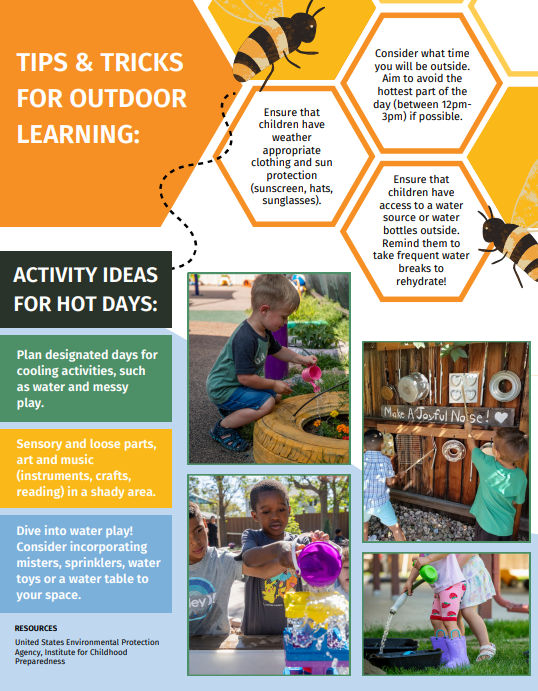
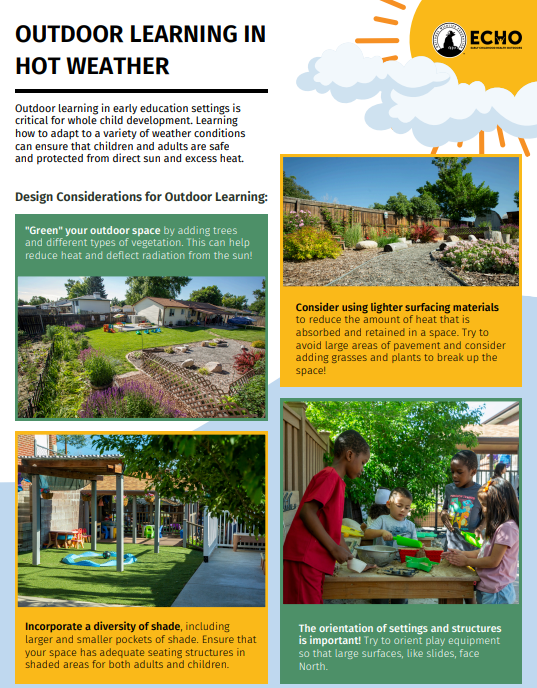
From Happy Toddler Playtime | DIY Water Wall is an amazing STEAM activity for children this summer! It's a great (and easy) way to beat the summer heat! | | | | Outdoor learning in early education settings is critical for whole child development. Learning how to adapt to a variety of weather conditions can ensure that children and adults are safe and protected from direct sun and excess heat. Download the infosheets below for ideas and recommendations for outdoor spaces on hot days. | | Upcoming Conferences & Webinars | | |
Natural Start Alliance Virtual Conference: July 14-18, 2025 | The Nature-Based Early Learning Conference brings professionals together to explore and promote nature-based learning for young children. Attendees include teachers, program administrators, higher education faculty, researchers, education consultants, landscape designers, and others who are committed to or interested in bringing nature, outdoor learning, and environmental education to young children’s education. The program focuses on nature-based education for preschoolers (ages 3-5), early elementary students (ages 5-8), and infants and toddlers (ages 0-3). Professionals, parents, and caregivers who are just learning about a nature-based approach to education, or may be interested in starting a nature-based early education program, are welcome. | | | |
Outside the Fence: Let's Go on a Nature Walk! | Tuesday, July 15, 2:00-3:30 | Children love playing and learning outdoors. There are countless health benefits for young children during time spent outdoors. In this 1.5-hour training, participants will learn how to think beyond the fenced outdoor space to find pockets of nature in the spaces children spend time daily. Participants will learn skills and ideas for taking children on an exploratory walk of their community to find plants, animals, and natural elements in all environments. Participants will also review safety guidelines and best practice in exploring beyond the licensed space. Through exploration of their local environments, children will begin to see and experience their communities in new ways. | | | |
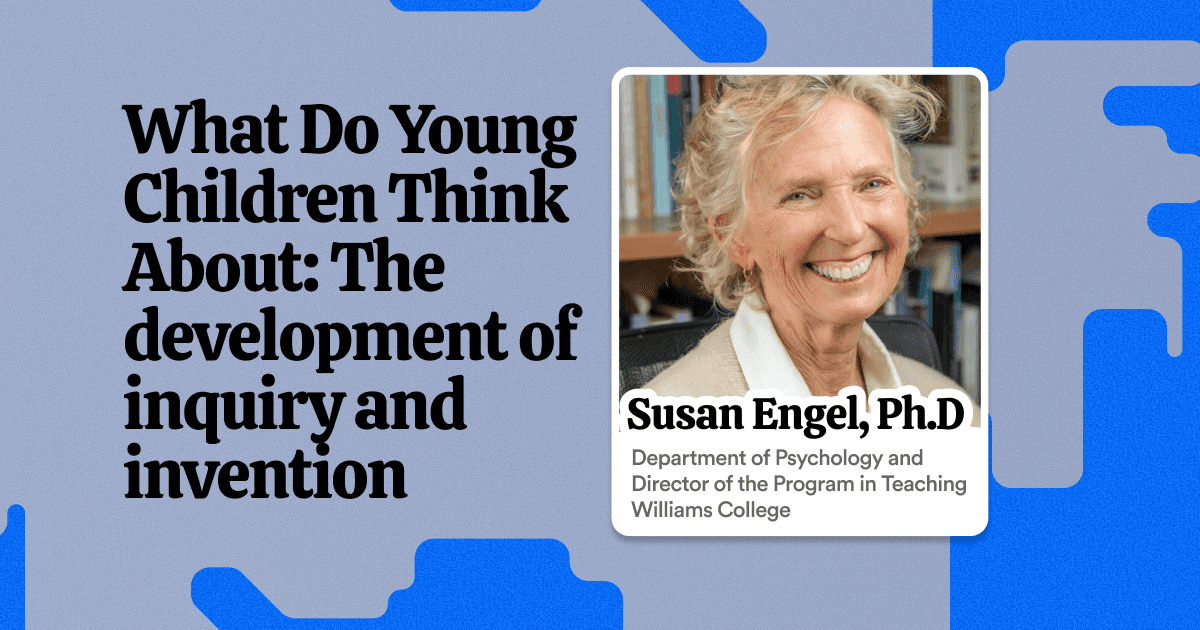
What Do Young Children Think About: The development of inquiry and invention by Susan Engel, Ph.D. | July 23, 2 PM | |
In this fascinating interview-style webinar, renowned author, researcher, and lecturer, Susan Engel, Ph.D., will describe the development of curiosity and invention and discuss how the social and physical environment either encourages or discourages the process. Susan will guide you in exploring how schools can build on children's early capacities to inquire and invent, and how this paves the way for children to pursue ideas. She will talk with us about why the capacity to pursue ideas should be at the center of the process of education.
*These webinars are recorded, so register even if you cannot watch live.
| | | |
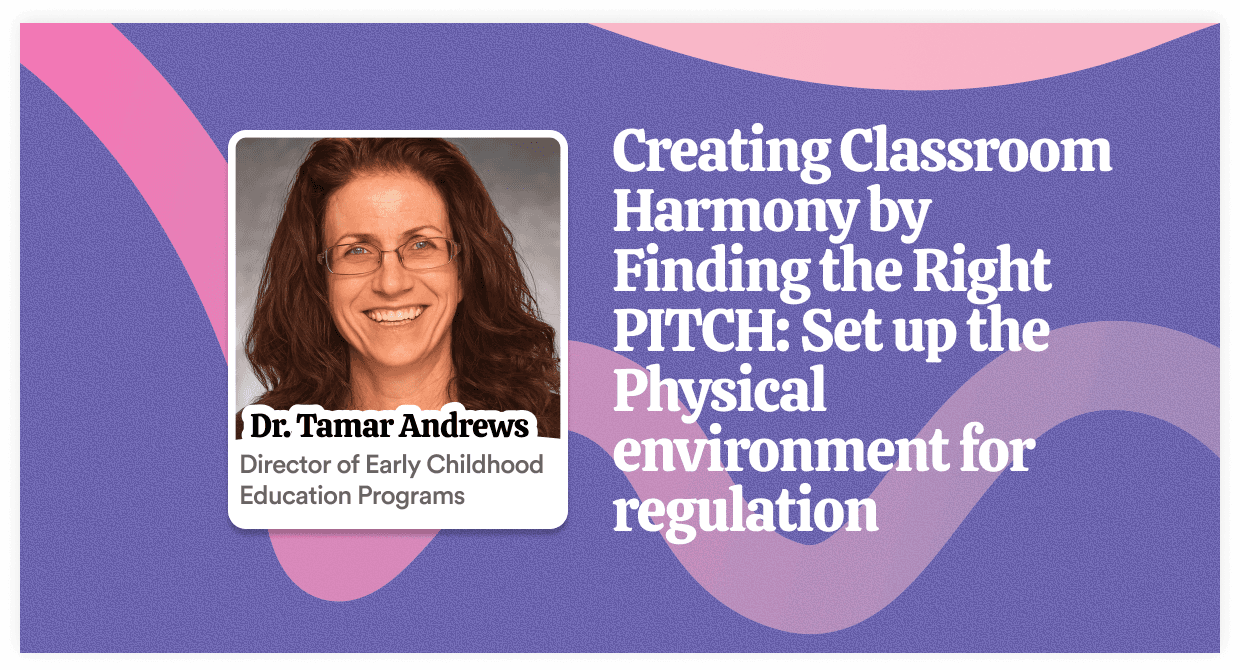
Creating Classroom Harmony by Finding the Right PITCH: Set up the Physical environment for regulation by Dr. Tamar Andrews | August 6, 2 PM | |
You might be picking up on an imbalance in the P.I.T.C.H. — a framework that identifies four key environments that shape early childhood programs: the Physical, Interpersonal, Temporal, and Curricular environments. When these four elements are in sync, your program strikes the right PITCH—creating a sense of flow, regulation, and well-being for children and staff alike. But when they’re out of tune, the whole environment can feel disjointed and overwhelming. This inspiring webinar, presented by Tamar Andrews, Ed.D., is the highly requested second part of our PITCH series (Physical, Interpersonal, Temporal and Curricular environments) to increase harmony and decrease dysregulation. Walk with us through a classroom and see what the components of high-quality physical environments are designed.
*These webinars are recorded, so register even if you cannot watch live.
**If you'd like to watch part 1, (which we highly recommend!) here is the link: Thriving Temporal Environments for Young Children and Educators: Unlocking the Right P.I.T.C.H., by Dr. Tamar Andrews and Lindsay Astor Grant, MA, OTR/L
| | | |
The Power of Pretend Play: How you can support young children's power, identity and agency through play by Mike Huber | August 7, 2 PM | |
In this inspiring and practical session, you will learn how pretend play allows children to practice executive function skills at a slightly more mature level than they might otherwise, or as child development theorist Lev Vygotsky put it, when children play, they are “a head taller.” You will discover that when children immerse themselves in a character they tend to stay regulated longer, maybe because they are slightly dissociated from themselves—“I’m not Mike, I’m Omega Supreme.” Children are emotionally regulated even as they embody characters who are in conflict. They are playing out the emotions while not experiencing them. This allows them to use mental flexibility rather than getting stuck in a dysregulated state as they might if it were an actual conflict.
*These webinars are recorded, so register even if you cannot watch live.
| | | | Access our Nature-Based Play Resource List on the Keystone Kids Go website. | | Check out the "Inspiring Nature-Based Early Learning" webinar here. This training counts for 1 hour of PQAS PD (and can count toward STARS indicator EC 3.4.6). | | | |
Quest for Quality Podcast
Part 1: The Benefits of Outdoor Learning and How to Start Small
Research shows that children thrive outdoors and have opportunities for learning, development and self-regulation that cannot be achieved indoors. In this podcast, Susan and Elizabeth discuss how nature play supports the health and well-being of children and adults alike, the features of an Outdoor Learning Environment compared to a playground, the barriers that may limit how much time children spend outdoors, and small-step solutions anyone can take to get started.
| | | | |
Quest for Quality Podcast
Part 2: Diving Deeper into Outdoor Learning Practices
In part 2 of this outdoor learning series, Susan and Elizabeth do a deeper dive into what outdoor play really looks like, including some additional areas you can set up, how to easily connect outdoor play to learning standards, and our role as the adult in this type of play-based, child-led exploration.
Click here for part 1 and 2 resources.
| | | Our Favorite E-Newsletters and Blogs | |
Looking for more information?
Technical Assistance Coach Elizabeth Marcello and Outdoor Learning & Play Consultant Susan Chlebowski can partner with you to provide center-based or individual classroom coaching and professional development in the topics of play-based learning, nature-based learning, classroom management and challenging behavior support, or innovative solutions to barriers. Complete a "Consultation Request" through your PD Registry Organization Page's Keystone STARS tab to request coaching.
*For early learning providers in ELRCs 8, 9, and 10 only.
| | | | Keep in Touch with Community Connections for Children! | | | | |