|
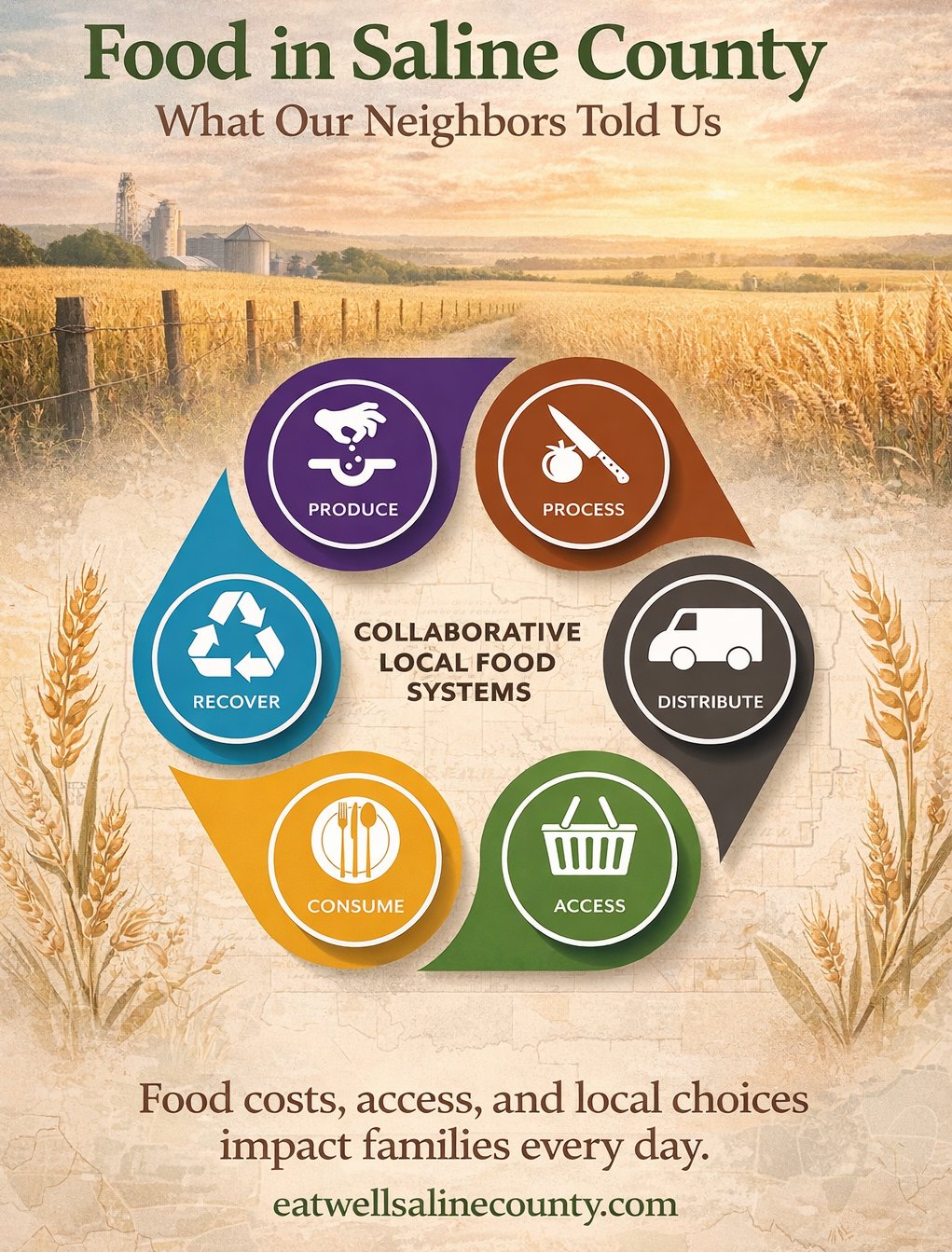
Food in Saline County: What Our Neighbors Told Us
Key findings from the Saline County Food System Assessment
Food touches all our lives. Shopping for groceries, cooking at home, or eating out; these everyday choices are shaped by how our food system works. It affects our health, our spending, and our routines.
In the past year, the Saline County Food Action Community Team (FACT) and Wichita State University listened to what people in Saline County had to say about food. The Saline County Food System Assessment gathered surveys, interviews, and feedback from residents, farmers, and local food businesses.
Here’s what our neighbors shared.
What Is a Food System?
A food system includes everything that brings food from the farm to your table. This means growing, processing, transporting, selling, making sure people can buy it, preparing, eating, and reducing waste. If one part has problems, the whole system feels it.
Cost Is the Biggest Barrier
One thing stood out: food costs are tough for many families. About half of the people surveyed said their food budget doesn’t last all month. Price is the main reason people choose certain foods, and many families buy cheaper, processed options because they cost less and are easier to find. Even people who want to eat healthy or buy local food said cost often gets in the way.
Access to Healthy Food Matters
People across Saline County said their biggest unmet need is getting healthy food. Most shop at grocery stores and drive themselves, but about one in ten said transportation makes it harder. Seniors, families with kids, and people living paycheck to paycheck have the hardest time. Many also said healthy food isn’t available in every neighborhood. Where you live and how much you earn can affect what food you can get.
People Value Local Food — But Don’t Buy It as Often
Many people said they value local food, but not everyone feels the whole community supports it. Residents want to buy more local food, but often can’t afford it. Local farmers said they need more regular customers, more places to sell, and better partnerships with stores and restaurants. There is clear interest in local food, but the system needs more support to make it easier and more affordable for everyone. Community leaders and organizations can help by offering food vouchers for farmers’ markets, running "buy local" campaigns, or holding special events that connect shoppers with local producers. Supporting more farmers’ markets, encouraging stores and restaurants to stock local products, and sharing information about where to find local food can all help.
Residents can also take simple steps to support local food. Try visiting a farmers' market or local farm stand in your area, ask your grocery store to carry more local products, or choose a local item next time you shop. Even small actions can help local farmers and strengthen our food system.
Education Is a Big Opportunity
During the assessment, people asked for more ways to learn about food. They want practical tips for cooking healthy meals on a budget, growing their own food, preserving it, and cutting down on waste. Many also said it’s important to teach kids and teens about food, so healthy habits start early and last.
Local resources are available to anyone who wants to learn more. K-State Research and Extension in Saline County provides classes and workshops on nutrition, cooking, and gardening. The Salina Public Library regularly hosts events and has a collection of cookbooks, gardening guides, and nutrition information. You can also find programs through the local health department and community gardens. For up-to-date schedules and details, visit these groups’ websites or reach out directly.
Why This Matters for Families Right Now
For many families, getting food is harder than it used to be. Prices are higher, budgets are tight, and time is short. Parents are trying to stretch groceries, feed their kids, and pick healthy options while juggling work, school, and rising costs. This assessment shows these problems affect many people in Saline County, not just a few. Understanding what families face helps the community find ways to make healthy, affordable food possible for everyone.
What Happens Next?
This assessment is just the start. What we learned will help shape community programs, partnerships, local food projects, education, and long-term plans for better food access and affordability. A stronger food system means healthier families, a better local economy, less food waste, and a more resilient Saline County.
Want to Learn More?
The full Saline County Food System Assessment is open to everyone. To see the data, stories, and ideas from your neighbors, visit the Saline County Food Action Community Team (FACT) website at eatwellsalinecounty.com. Let this be a call to action to share your own experiences, ideas, and suggestions to help strengthen our community's food system. Don’t hesitate to reach out to FACT to get involved and help shape the future of food in Saline County. Together, we can make a difference.
|