UCC PIN MARCH E-NEWS
In this issue:
- Resolution Implementation Step Seven: Advocate for the Right of Return
- "The Weaponization of Antisemitism": Webinar with Mark Weber
- Upcoming Webinars:
- Moving from Words to Action, March 16th
- Ticking the Boxes of Occupation & Dispossession, March 21
- Breaking the Stories, curated by the Rev. Loren McGrail
|
|
Follow UCC Palestine Israel Network |
|
Resolution Implementation Step Seven: Advocate for the Right of Return |
|
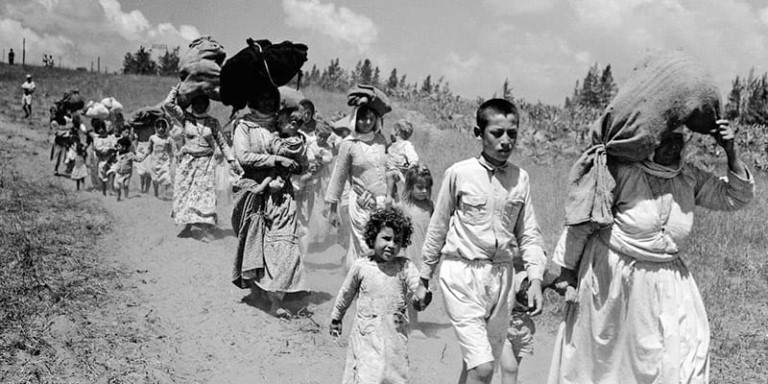
Palestinians fleeing the violence of Jewish militias in 1948 |
|
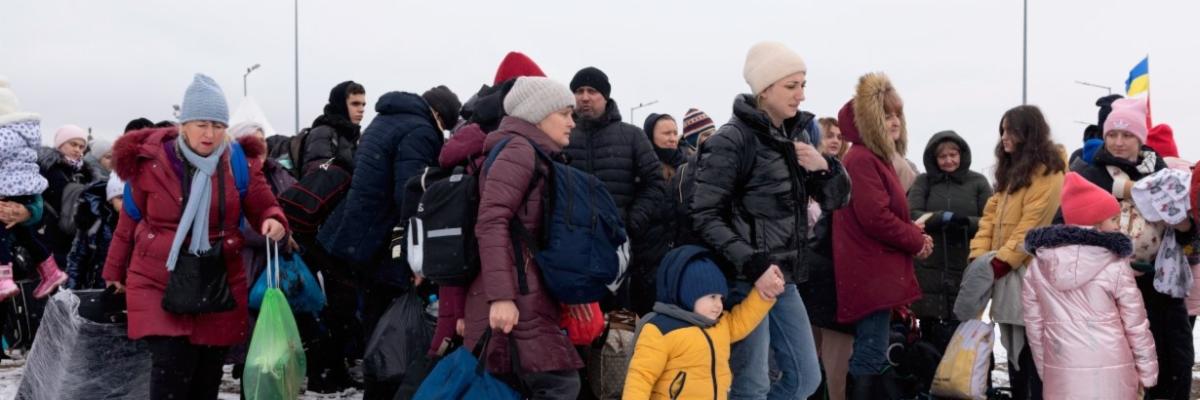
Ukrainians fleeing the violence of the Russian military in 2022 |
|
The photos of Ukrainians, bundled against the cold, pulling roller bags, grasping the hands of children, all desperate to escape the violence of Russia’s war, fleeing for their lives with what little they can take, are harrowing and haunting. The world is laser-focused on the brutality of Putin’s demented design to occupy Ukraine and effectively erase its sovereignty, claiming it not just for, but as, Russia. Globally, hearts, borders, and pocketbooks are opening wide. Rightly so. The Russian military’s attacks on Ukraine’s civilian population are criminal, calculated, and craven. This is a humanitarian crisis of enormous proportions and import.
Condemnation of Russia has been swift and furious, including boycotts of Russia goods. NATO countries including the United States have been united in imposing wide-reaching sanctions that are savaging Russia’s economy. And the Ukrainian leadership and people are being lauded for their courageous resistance and fierce determination to protect their homeland and for taking up arms in self-defense. And rightly so.
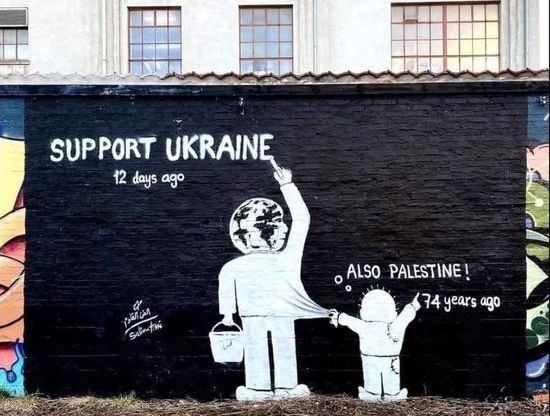
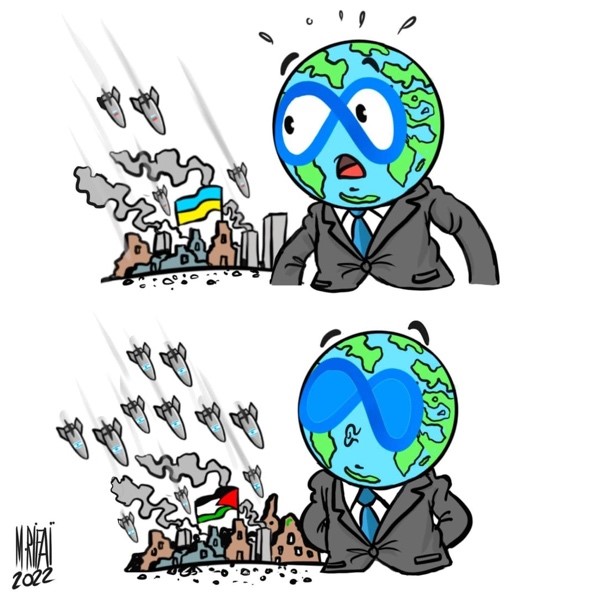
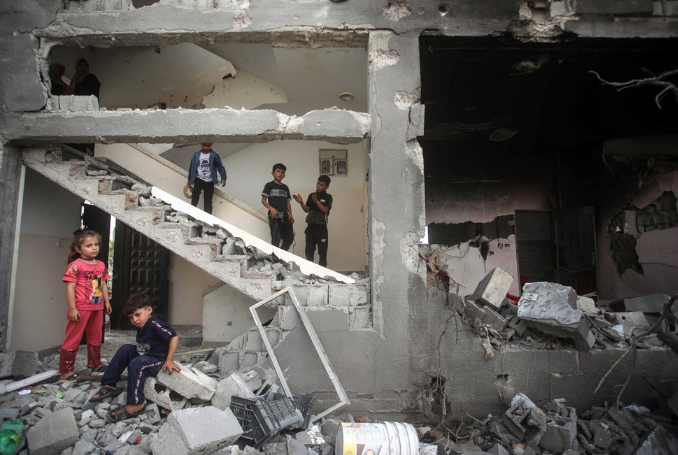
Today’s escalating Ukrainian refugee crisis is bringing into sharp relief, by way of contrast and comparison, the still on-going Palestinian refugee crisis first precipitated in 1948 when Jewish militias attacked Palestinian cities and villages, violently expelling over 750,000 Palestinians from their homes. Those attacks were similarly criminal, calculated, and craven. But there the similarities end and the disparities begin.
|
|
There is no comparable international outrage, or sufficient mobilization, in defense of Palestinians. To the contrary, as Peter Makari wrote recently, in response to Israel’s decades long occupation of Palestine, “Sanctions are not on the table. Boycotts have been made illegal in some of the same US states that now support boycotts of Russian products. Palestinian resistance to occupation is maligned, and Palestinian refugees are marginalized.” Similarly, Ilan Pappé observes (see the link to his article in Breaking the Stories) that the “massive solidarity of the West” and its “official empathy is nowhere to be found when similar, and worse, violence is directed against non-Europeans, in general, and toward the Palestinians, in particular.”
For far too long, outrage about the ongoing refugee crisis for Palestinians has been variously rebuked, dismissed, or suppressed, if voiced at all. The stones are crying out for this injustice and violation of international law to be addressed also.
Step Seven for the Implementation Guide for the Declaration for a Just Peace Between Palestine and Israel – Advocate for the Right of Return speaks to this imperative. As the UCC, we are now on record and have explicitly affirmed, as the Declaration states, “the rights of Palestinian refugees to return to their homes if they so choose or to be compensated for their loss of property, consistent with the UN General Assembly resolution #194.”
How do we turn these words into action? This month’s Global Ministries’ Third Thursday Alert offers one action step we can take immediately: “Tell US leadership to apply consistency in upholding international law and human rights.”
|
|
The Weaponization of Antisemitism:
UCC PIN Webinar with Mark Weber
Wednesday, March 30, noon ET
|
|
Accusations of antisemitism often can be used to shut down conversation. The definition of antisemitism put forth by the International Holocaust Remembrance Alliance (IHRA), and subsequently adopted by the U.S. State Department, does just that, contributing to the stifling of free speech. To be sure, antisemitism is a pernicious reality. But the IHRA does a disservice by confounding criticism of the state of Israel with, or collapsing it into, hatred of people because they are Jewish.
As Holocaust historian Omer Bartov wrote a year ago in an Haaretz op-ed, Criticism of Israel and Its Policies Isn’t Antisemitism, “by these lights, opposing the occupation is considered antisemitic, BDS is antisemitic, criticism of Zionism is antisemitic, and the International Criminal Court in the Hague is of course without a shadow of a doubt antisemitic.”
This amounts, in effect and perhaps by design to the weaponization of the term ‘antisemitism.’
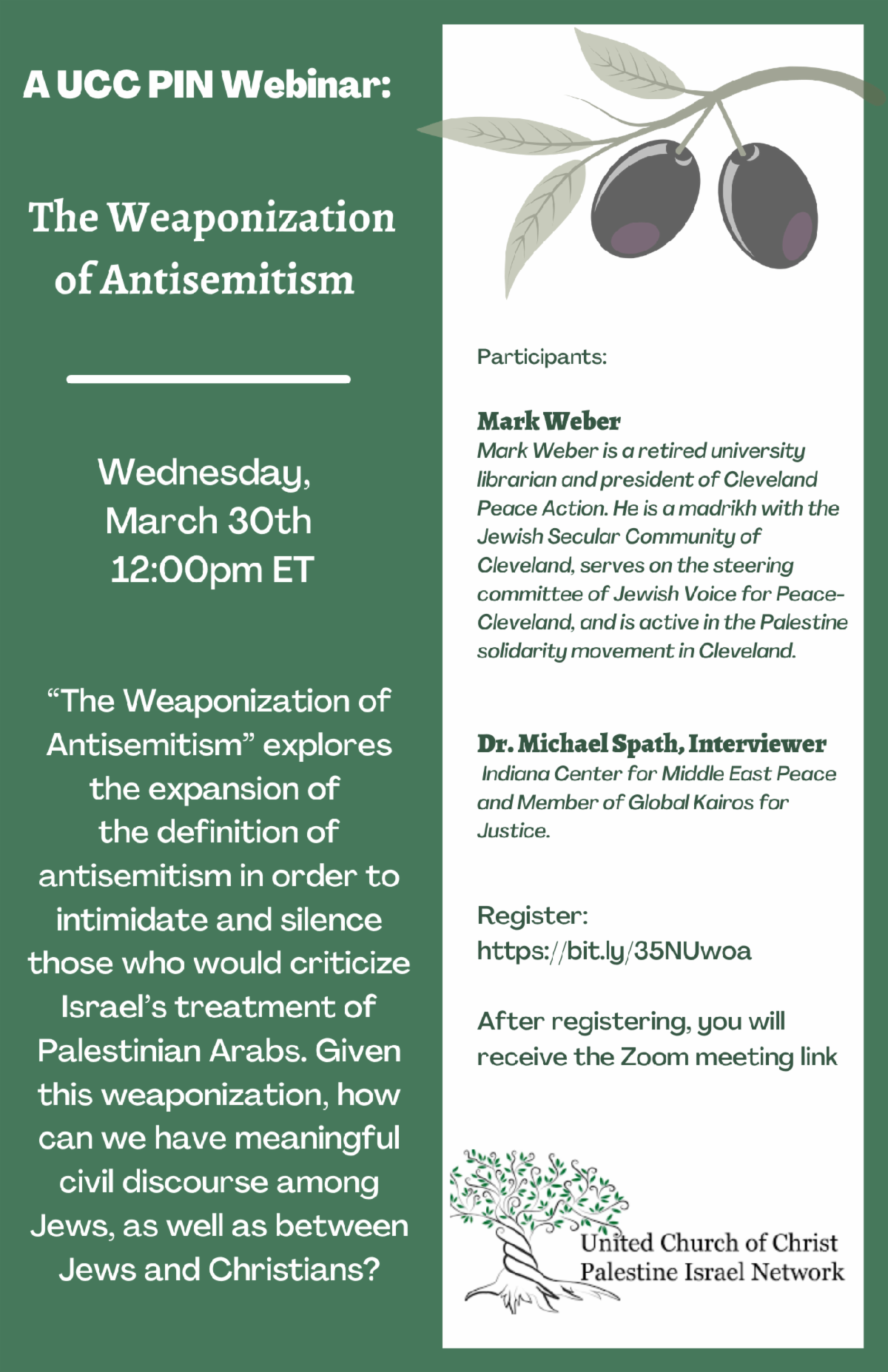
To delve into this topic, UCC PIN is offering a webinar on Wednesday, March 30th. Mark Weber, a madrikh with the Jewish Secular Community of Cleveland and a steering committee member of Jewish Voice for Peace-Cleveland, will address the expansion of the definition of antisemitism in order to intimidate and silence those who criticize Israel’s treatment of Palestinian. In an interview conducted by UCC PIN member and colleague Michael Spath, Mark will help us consider ways to keep discourse about Israel and Palestine open and civil. The Indiana Center for Middle East Peace.
will be hosting this UCC PIN sponsored webinar.
To register, go here. After registering, you will receive the Zoom meeting link.
As a companion to this webinar, we recommend UCC PIN's newly issued resource, "Engaging Difficult Conversations with Interfaith Colleagues." Created by UCC PIN steering committee member Elice Higginbotham, this resource is now up on the home page of our UCC PIN website, www.uccpin.org, or you can access it here. We welcome feedback about where and when you use this resource and whether it has been helpful. Please let us know by emailing: info@uccpin.org.
|
|
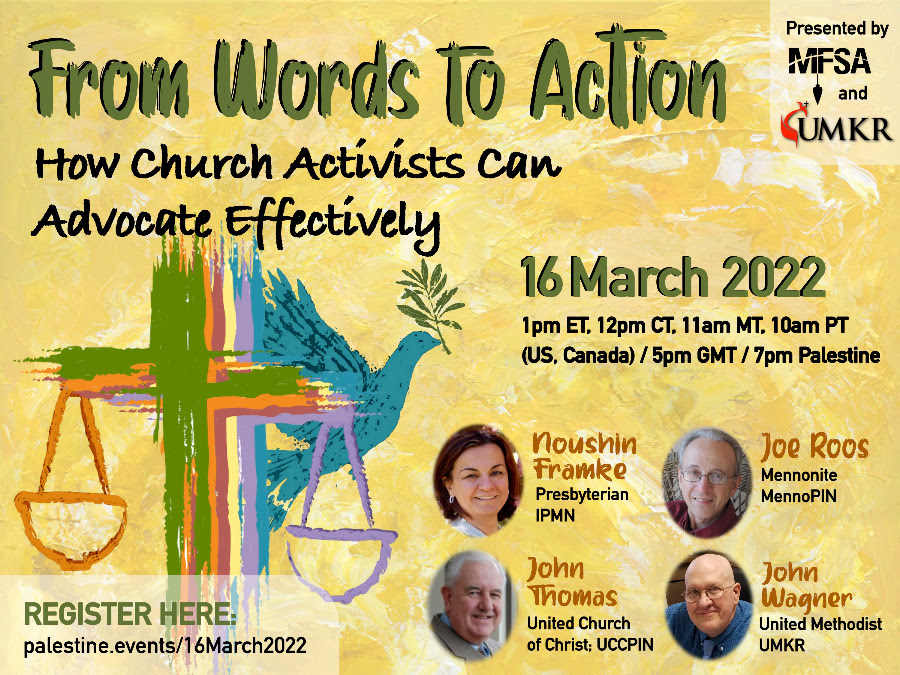
Webinar: Moving from Words to Action - How Church Activists Can Advocate Effectively for Palestine/Israel
March 16, 1 pm ET
|
|
Steering committee member John Thomas will be one of three panelists addressing the challenge of "Moving from Words to Actions" on a webinar organized by United Methodists for Kairos Response (UMKR) and Methodist Federation for Social Action (MFSA) on Wednesday, March 16th at 1 pm ET. John will be joined by Joe Roos from MennoPIN (Mennonites) and Noushin Framke with the Israel/Palestine Mission Network (Presbyterian) in a conversation moderated by the Rev. John Wagner, co-founder and co-chair of UMKR, retiring after many years this June. Together they will be discussing ideas and describing strategies for how denominational activists are organizing their own constituencies to advocate for justice and peace in Palestine and Israel. |
|
Webinar: “Ticking the Boxes of Occupation and Dispossession,” with Rev. Brian Brown
Monday, March 21, 12 noon ET
|
|
On Monday, March 21, Indiana Center for Middle East Peace (ICMEP) Executive Director Michael Spath will be interviewing pastor and theologian, Rev. Brian Brown, about his recently published book, "Apartheid South Africa! Apartheid Israel!" A South African born retired Methodist minister, Rev. Brown was banned for 13 years by South Africa’s apartheid regime until Nelson Mandela’s 1990 release from jail. In his book’s preface, Rev. Brown explains, “My motivation to write about Israel’s replication of South Africa’s policy of Grand Apartheid is bound up with a lifetime of challenging those who deny apartheid’s reality and its grievous hurt.”
As Steve France writes in his Mondoweiss review of Apartheid South Africa! Apartheid Israel!, Rev. Brown “calls on Christian churches, not just to recognize that Israel is an apartheid state, but to declare that total opposition to that apartheid is mandatory for any person or church that claims to follow the teachings of Jesus Christ.”
UCC Pin is one of several co-sponsors of this webinar.
To register for the webinar, go here. After registering, you will receive a confirmation email containing information about joining the meeting.
|
|
Breaking The Stories: March 2022
curated by the Rev. Loren McGrail,
UCC PIN Steering Committee
|
Navigating our Humanity: Ilan Pappé on the Four Lessons from Ukraine |
Israeli warplanes attacked hundreds of towers and civilian 'targets' in the Gaza Strip. (Photo: Mahmoud Ajjour, The Palestine Chronicle) |
|
The USA Today reported that a photo that went viral about a high-rise in the Ukraine being hit by Russian bombing turned out to be a high-rise from the Gaza Strip, demolished by the Israeli Air Force in May 2021. A few days before that, the Ukrainian Foreign Minister complained to the Israeli ambassador in Kiev that “you’re treating us like Gaza”; he was furious that Israel did not condemn the Russian invasion and was only interested in evicting Israeli citizens from the state (Haaretz, February 17, 2022). It was a mixture of reference to the Ukrainian evacuation of Ukrainian spouses of Palestinian men from the Gaza Strip in May 2021, as well as a reminder to Israel of the Ukrainian president’s full support for Israel’s assault on the Gaza Strip in that month (I will return to that support towards the end of this piece). Here
|
|
White House Says Ukranians Have the Right to Resist While Congress Moves to Send Israel $4.8 billion |
|
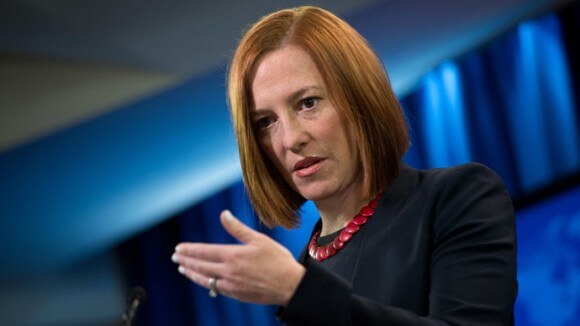
On March 7 Biden White House Press Secretary Jen Psaki told reporters that Ukrainians have the right to resist Russian occupation by any means necessary. Days later it was announced that Congress will include additional Iron Dome funding for Israel in its must-pass spending bill.
At Monday’s White House press briefing NPR correspondent Asma Khalid pointed out that Russia had shifted from a military takeover to an occupation in parts of southern Ukraine.
“Does the White House support the Ukrainian people’s right to resist the occupation and, essentially, through any means necessary?” Khalid asked Psaki. Here
|
|
Israel Surpasses 1,000 Demolitions in The Occupied West Bank Since Joe Biden Took Office |
|
Bulldozers demolish a Palestinian house in the West Bank city of Hebron on Dec. 28, 2021. Photo: Mamoun Wazwaz/Xinhua via Getty Images |
|
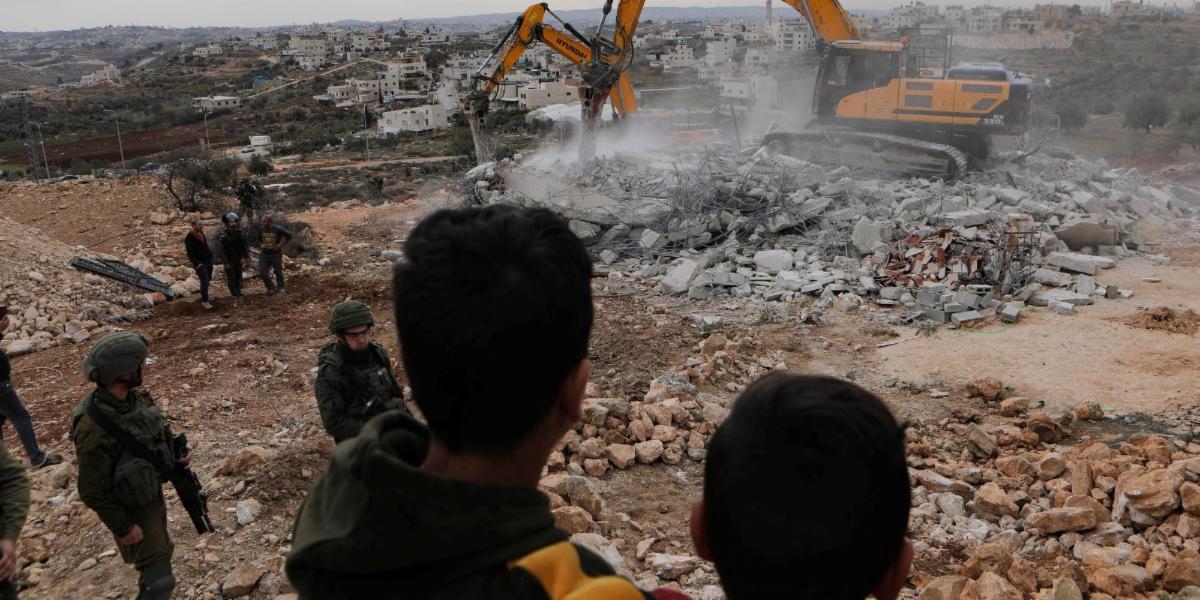
The rate of Israel's destruction of Palestinian-owned properties in the occupied West Bank is accelerating at a rapid pace under U.S. President Joe Biden and Israeli Prime Minister Naftali Bennett, according to data from the United Nations’s Office for the Coordination of Humanitarian Affairs. This week, the U.N.’s tally of demolitions carried out since Biden’s inauguration eclipsed 1,000.
In the 13 months since Biden took office, over 1,300 Palestinians, a majority of whom are children, have been displaced by the demolitions tallied by the U.N., which counts each permanent closure or destruction of a residential or commercial property or key piece of infrastructure. Here
|
|
Other Resources
US accused of hypocrisy for supporting sanctions against Russia but not Israel Here
Shunning Russia, EU snuggles up to Israel’s killer cops Here
What I Didn’t See as a Jewish Israeli Here
Israel to Decide for Palestinians Which Foreign Lecturers Can Teach at West Bank Universities Here
Egyptian Football Player Aboutrika Slams FIFA for Applying ‘Double Standards’ Here
Jordan: Prominent Palestinian journalist detained at airport under Cybercrime Law Here
Israeli Apartheid & the Climate Crisis Here
'We are living by the sword': The regrets of an Israel founder's son Here
Israel arrested me for protesting the Gaza siege. Here’s why I refuse to stand trial Here
‘Vogue’ adds ‘Palestine’ back to post about Gigi Hadid after backlash Here
Media Resources
The theme of the March 2022 issue of This Week in Palestine is “The Palestinian Thobe: Our Embroidered History.” Here
|
|
|
|
|
|
|