Coatings, WPC, and Surface Treatments Inside a Porsche Engine
Building a reliable Porsche engine is not only about choosing the right parts. It is also about choosing the right surface technologies for the areas where friction, oil film, heat, load, and wear matter most. Surface treatments and coatings are used throughout professional engine building to reduce friction, improve oil retention, resist scuffing, manage heat, and help critical components survive under boundary lubrication conditions.
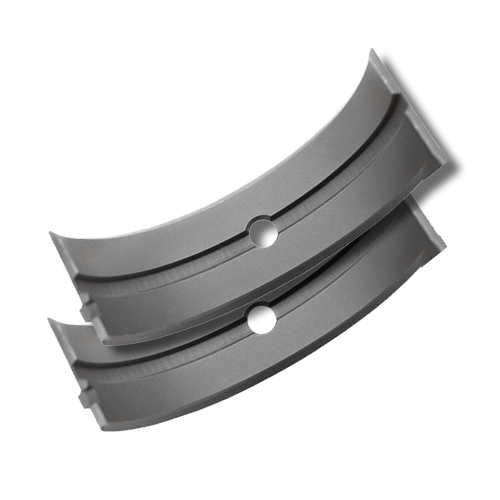
That is why LN Engineering offers and Flat 6 Innovations uses coated and WPC-treated Porsche connecting rod and main bearings for aircooled and watercooled Porsche engine builds.
| |
Surface Technology Is More Than a Coating
The word “coating” gets used broadly, but not every surface technology works the same way. Some treatments add a controlled layer of material to the part. Others modify the surface of the part itself.
Calico CT-1, CT-2, and CT-3 are applied coatings. Depending on the coating and application, they can be applied at controlled thicknesses to provide dry-film lubrication, scuff resistance, or thermal management.
WPC, by contrast, is not a coating. It is a micro-shot-peening surface treatment that modifies the metal surface itself. Because it does not add a measurable layer, WPC is considered non-dimensional. That makes it especially useful on close-tolerance parts where adding thickness could change clearances.
For engine builders, that distinction matters. A coating can be used where a sacrificial layer, added lubricity, or added thickness is beneficial. WPC can be used where improved oil retention, reduced friction, increased surface compressive stress, or improved fatigue resistance is desired without changing the part’s dimensions.
| |
Calico CT-1 for Porsche Rod and Main Bearings
The CT-1 dry film lubricant coating is designed to reduce friction and abrasive wear while providing intermittent dry lubrication. It is engineered for high-performance engine environments and is commonly used on engine bearings, bushings, gears, camshafts, oil pumps, valve springs, and other components. For engine bearings, Calico lists a typical CT-1 coating thickness of approximately 0.00025 to 0.00030 inch, or roughly 6 to 7.5 microns.
That added dry-film layer can provide extra protection in the areas where bearings need it most, especially during startup, break-in, high-load operation, or moments when the oil film is not yet fully established. For Porsche engines, rod and main bearings live in one of the most demanding environments in the engine. They must support load, maintain oil film, manage heat, and survive repeated cycles of high RPM and high oil temperature.
A properly selected bearing coating is not a substitute for correct clearances, crankshaft condition, oil pressure, oil temperature control, or clean assembly. But it can add another layer of protection in an area where protection matters.With any applied coatings like those offered by Calico, the coating thickness likely will need to be taken into consideration, especially with the tight operating clearances within a modern Porsche engine.
| |
WPC Treatment: Non-Dimensional Surface Improvement
WPC is different from a traditional coating.
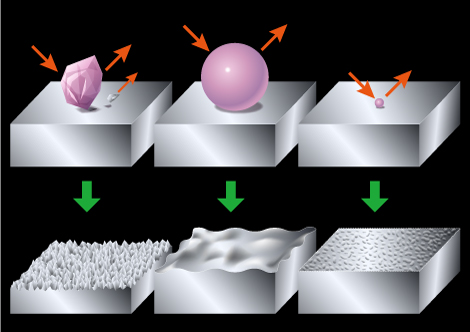
Instead of applying a layer to the part, WPC uses a controlled micro-shot-peening process to alter the surface of the metal. The result is a microscopic dimpled surface that can help retain oil and reduce metal-to-metal contact. Because WPC is non-dimensional, it can be used on close-tolerance components without adding measurable thickness. That makes it useful for bearings, crankshaft journals, piston skirts, wrist pins, gears, valve train components, and other parts where dimensions and surface finish are critical..
| Sand blasting (left), shot peening (middle) and WPC (right) | | WPC’s surface dimples are not visible to the naked eye, but they can act as microscopic oil reservoirs. The process also introduces compressive stress near the surface, which can help improve fatigue resistance and reduce crack initiation. This is why WPC is often used in racing, high-performance, and endurance applications where friction reduction, oil retention, and fatigue resistance are important and cost is not a consideration. | |
Calico CT-3 for Piston Skirts
Piston skirts are another area where surface technology can make a measurable difference.
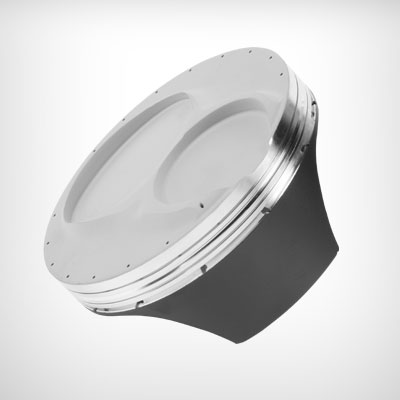
Calico CT-3 is a dry film lubricant coating used primarily on piston skirts. It is designed to help reduce scuffing, friction, and adhesive wear. Calico lists CT-3 as a black dry-film lubricant coating with a typical piston skirt thickness of 1 to 1.5 mil, or approximately 12 to 37 microns.
That thickness can be useful, depending on the application. In some cases, skirt coatings are used not only for lubricity and scuff resistance, but also to help tailor piston-to-cylinder clearance. Again, modern engines run very tight piston to cylinder clearances, we when using them we shoot for the minimum possible and set the clearance a bit tighter, knowing it will “adjust” itself during initial run in.
WPC can also be used on piston skirts, but it works differently. Since WPC does not add measurable thickness, it is used when the goal is surface modification, oil retention, and friction reduction without building up the skirt.
In other words, CT-3 and WPC can both be used on piston skirts, but they are not the same solution. The right choice depends on the piston, cylinder material, clearance target, intended use, and what problem the builder is trying to solve.
| |
Calico CT-2 Thermal Barrier Coating
Not every coating is used to reduce friction.
Calico CT-2 is a metallic ceramic thermal barrier coating used on parts exposed to combustion heat. Calico lists common applications including piston tops, combustion chambers, intake and exhaust ports, and valves. All super important in an aircooled Porsche engine. Hoffman Automotive Machine has found heads coated with CT-2 hold valve jobs longer and need less frequent valve adjustments.
CT-2 is designed for thermal management. It can help protect parts exposed to high heat and reduce heat transfer into the component. Calico lists typical CT-2 thickness from 0.5 to 2 mil, or approximately 12 to 50 microns.
In a performance engine, thermal barrier coatings can be used as part of a broader strategy to manage combustion heat, protect parts, and improve consistency. As with any coating, the application has to be chosen carefully. Coating selection should match the component, operating environment, and engine build goals.
| |
Why This Matters in a Porsche Engine Build
Porsche engines are highly sensitive to clearances, oil control, surface finish, heat, and assembly quality. The right coating or surface treatment can help, but it cannot make up for poor machining, dirty assembly, incorrect clearances, or the wrong oil. These technologies work best when they are part of a properly planned engine build.
That means measuring everything. Cleaning everything. Verifying clearances. Confirming surface finishes. Choosing the right oil. Following proper break-in procedures. And selecting surface treatments that make sense for the application.
Used individually or together, these coating and surface treatment technologies can help improve lubrication, reduce friction, increase durability, and add protection in one of the most critical areas of the engine.
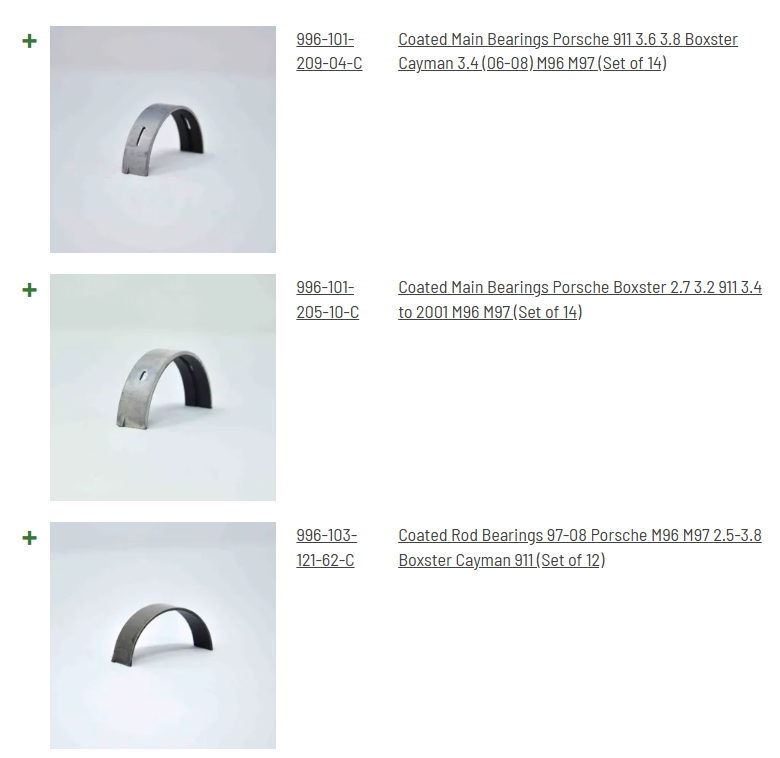
Performance Coated Porsche Rod and Main Bearings
LN Engineering recommends coated and/or WPC-treated main and connecting rod bearings for Porsche engine rebuilds. These bearings are available for a wide range of aircooled and watercooled Porsche applications and are especially valuable for high-performance street, track, and endurance use.
Benefits can include:
- Reduced friction
- Improved lubrication
- Added protection during startup and boundary lubrication
- Improved bearing durability
- Reduced wear
- Increased load-carrying capability
- Improved oil film stability
- Extra protection for performance and track applications
| | |
If you are rebuilding a Porsche engine, do not overlook the bearings. They are among the most critical wear surfaces in the entire engine.
Measure Bearing Clearances Before Final Assembly
Coatings and surface treatments can add protection, but they do not replace proper measurement.
Rod and main bearing clearances are among the most important measurements in an engine build. Too little clearance can reduce oil film thickness, increase heat, and risk bearing damage or seizure. Too much clearance can reduce oil pressure, increase bearing movement, and make it harder to maintain proper hydrodynamic lubrication. That is why bearing clearance should never be assumed based only on the bearing box, crankshaft size, or a published specification. Every crankshaft journal, connecting rod big end, case bore, bearing shell, and coated or treated surface should be measured as part of the final assembly process.
There are several ways to check rod and main bearing clearances.
- A common method is to measure the crankshaft journal with a micrometer, then measure the assembled bearing bore with the bearings installed and the rod bolts or case fasteners torqued to specification. This is typically done with a dial bore gauge set from the micrometer. The difference between the crankshaft journal diameter and the assembled bearing bore gives the actual oil clearance.
- For connecting rods, this means measuring the rod journal with a micrometer, installing the bearing shells into the rod and cap, torquing the rod bolts using the correct procedure, and then measuring the inside diameter of the assembled bearing bore with a dial bore gauge.
- For main bearings, the same principle applies. The crankshaft main journals are measured with a micrometer, then the main bearing bores are measured with the bearings installed and the crankcase or main bearing housing torqued as it would be during final assembly.
- Plastigage can also be used as a quick comparative check, but it should not be the only measurement method for a precision engine build. It can help identify a major issue, but it does not provide the same level of accuracy or repeatability as properly using calibrated micrometers and a dial bore gauge.
- For the most accurate results, parts should be clean, dry where required for measurement, at a stable temperature, and torqued exactly as they will be during final assembly. Fastener stretch, torque procedure, case condition, rod housing bore size, bearing crush, journal taper, journal out-of-round, and coating thickness can all affect final clearance.
The goal is simple: measure the parts as they will actually run.
A properly planned Porsche engine build does not rely on assumptions. It verifies bearing clearances, confirms crankshaft condition, checks housing bores, and documents the measurements before final assembly. Surface technology can help protect the engine, but accurate clearance measurement is what allows the oil film to do its job in the first place.
Assembly Lubrication
One final thing we need to touch on. Depending on how long the engine is going to sit before it’s installed and started up, what lube you use is important. If it’s going to be a matter of days or weeks, you are safe to use engine oil or a mix of engine oil and assembly lube, like Driven BR and HVL. If it’s going to sit an extended period of time, you might want to just stick to HVL instead since it’s less likely to run out of those surfaces over time. And if you have the opportunity to pre-oil your engine before initial startup, even better!
| | |
New Feature in LN Customer Support:
Customers can now see and manage all their tickets in one place:
https://ln-engineering-llc.helpscoutportal.com/
| | | | |