Rail & Labor News from RWU
| | Weekly Digest Number 1 - January 6, 2026 | | Welcome to the RWU Rail & Labor News! This news bulletin is produced and emailed out each Tuesday morning. We hope you find each week's news and information useful. If so, please share with co-workers, friends, and colleagues. If you like, you can sign them up to get all the news from RWU HERE. Or forward them the link. Got a hot tip? Please forward the article and a link to raillabornews@gmail.com. Note: If you read over this news bulletin each week, you will be sure to never miss the important news of what is going on in the railroad world from a worker's perspective! | | THIS WEEK'S RAIL AND LABOR NEWS | |
Trains / December 29th
U.S. freight railroads transported 487,138 carloads and intermodal units in the week ending Dec. 20, down 7% compared with traffic in the same week in 2024, according to Association of American Railroads data.
Total carloads declined 10.5% to 206,674, while intermodal units dropped 4.3% to 280,464 containers and trailers.
Two of the 10 carload commodity groups tracked by AAR each week posted increases in carloads. They were grain, up 5.9% to 23,272 carloads; and motor vehicles and parts, up 1.1% to 16,024.
Commodity groups that posted decreases included coal, down 15.7% to 51,534 carloads; miscellaneous carloads, down 88.7% to 1,044; and chemicals, down 10.4% to 31,508.
| |
Progressive Railroading / January 2nd
BNSF Railway, Canadian Pacific Kansas City, CN and CSX on Dec. 29 told the Surface Transportation Board that the merger application filed by Union Pacific Railroad and Norfolk Southern Railway is incomplete and therefore should be rejected.
Today, UP and NS filed a response to the comments filed with the STB by the four Class Is, as well as from the National Grain and Feed Association. The UP and NS reply to the comments on the completeness of their application can be read here.
In separate comments, the four rival Class Is said the merger application fails to include sufficient data and information that the STB requires and, as a result, the board should not accept the application. UP and NS filed their application on Dec. 19, 2025. The STB then called for public input on whether the application as filed is complete.
| |
Freight Waves / December 30th
Other Class I railroads have found no shortage of deficiencies in the Union Pacific-Norfolk Southern merger application and are urging the Surface Transportation Board to reject the document for its failure to address key aspects of the transcontinental combination.
Comments from interested parties on the completeness of the application were due on Monday. They do not address the merger itself, but whether the board should send the 6,692-page application back to UP and NS for more information. UP and NS filed the application on Dec. 19.
The other railroads were particularly critical that the application does not include the full UP-NS merger agreement. They also criticize its analysis of potential mergers that could follow the UP-NS transaction, and what they say is incomplete analysis of the merger’s effects on competition.
Canadian Pacific Kansas City’s filing says the two railroads “brazenly” have withheld key aspects of their merger agreement, including conditions over which NS can sue to require UP to accept or that can allow UP to walk away from the merger.
|
|
In These Times / December 31st
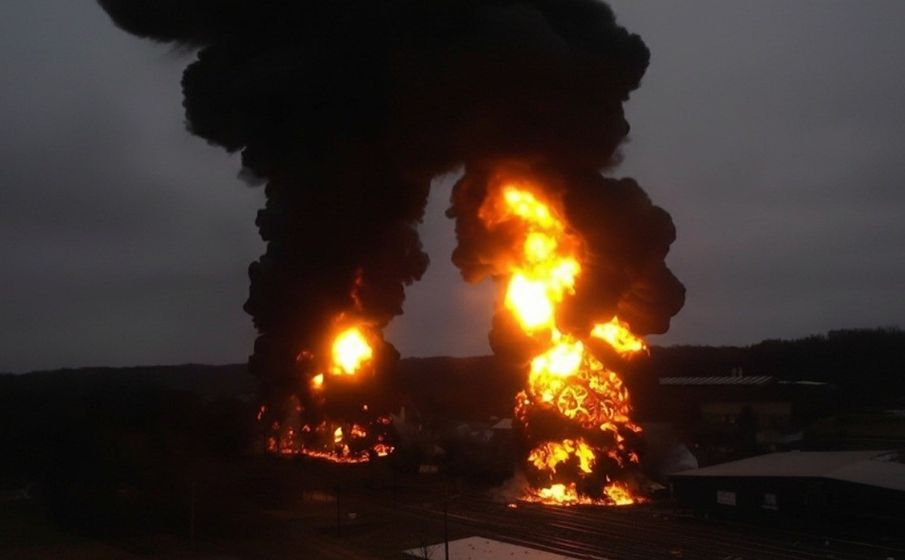
East Palestine, Ohio, is still, and will be for decades to come, poisoned, cast aside and forgotten, both by their elected officials and the corporate media who parrot those lies and empty promises. When corporate media did cover East Palestine, it was extractive and shallow. It was disinterested in the root causes or legitimate solutions, totally disinterested in the people, very ready to sacrifice them for the cause of a byline. The fault I find with most American newspapers is not the absence of dissent, it’s the absence of news. Max and Steve represent the presence of that news, the Real News, if you will, in their collaborative work, the short documentary “Train Wreck in ‘Trump Country’: Partisan Politics Hasn’t Helped East Palestine, OH.”
| |
WFMJ / December 30th
Some members of the $600 million class action settlement are expected to receive a partial award check in the coming days.
According to a notice on the East Palestine settlement's website, Epiq mailed an initial, partial award check to settlement members who submitted a valid personal injury claim on time and had not previously received a personal injury payment.
The payments were mailed out on Monday, December 29 and Tuesday, December 30.
According to the notice, Epiq is currently unable to determine the full award amount that may be issued in relation to members' personal injury claims. Values will be adjusted pending the completion of Epiq's review of the claims.
| |
National Railway Labor Conference / December 30th
The National Carriers Conference Committee (NCCC) announced today that members of the Brotherhood of Locomotive Engineers and Trainmen (BLET), the third largest freight rail union, have ratified a national collective bargaining agreement covering more than 12,000 freight rail employees. With this ratification, approximately 95% of the union-represented freight rail employees at railroads participating in national handling are now covered by twelve ratified collective bargaining agreements that follow the industry-wide pattern.
“We congratulate BLET members on their ratification vote,” stated Jeff Rodgers, Chairman of the NRLC and the NCCC. “With eleven unions and nearly all freight rail employees covered by a ratified agreement through 2029, employees have resoundingly endorsed this pattern agreement with 18.8% wage increases and enhanced benefits.”
| |
Business Insider / January 2nd
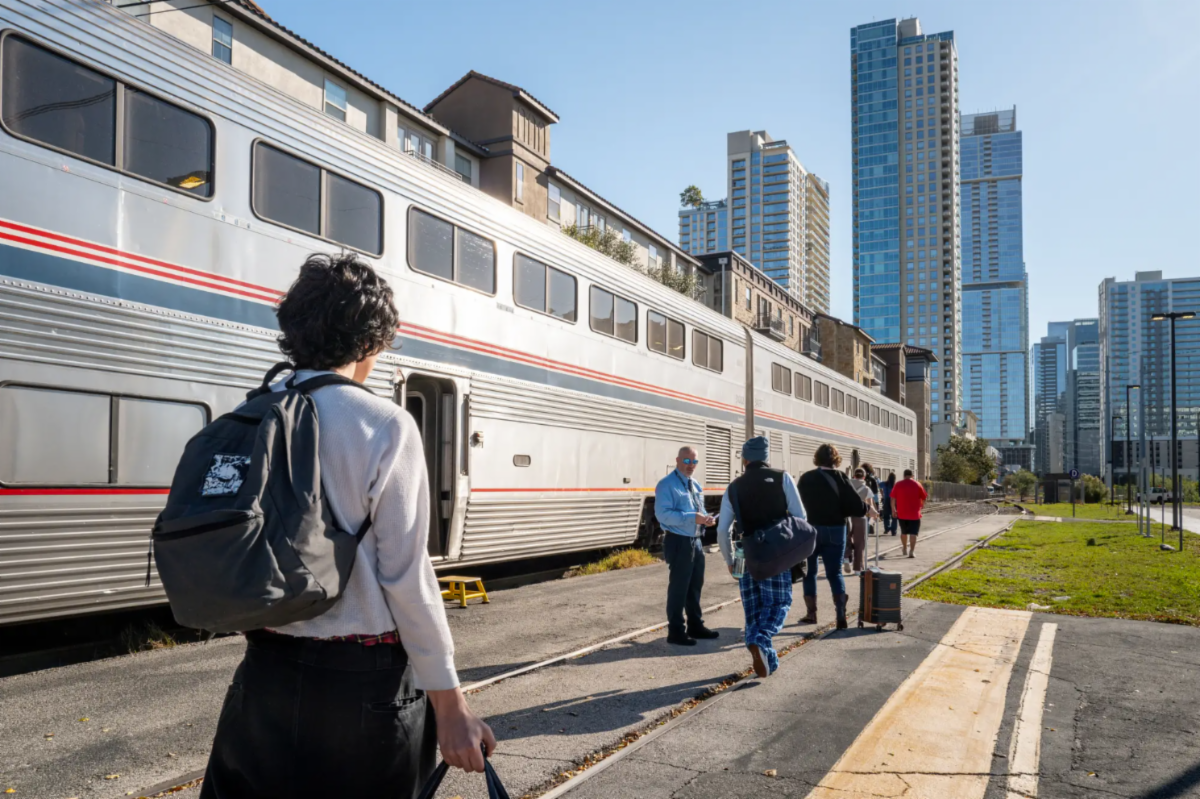
Amtrak had a record year in 2025, reporting more riders and higher revenue than ever before in its 54-year history. For its fiscal year, which ended in September, the quasi-public national rail service recorded 34.5 million customer trips and $2.7 billion in adjusted ticket revenue, representing a 10% year-over-year increase — even as the company relies on federal funding as it strives to become operationally profitable by 2028.
Something is happening on American rails, driven by investments in Amtrak, rising demand, and growing frustrations with flying and driving. As roads get more crowded and airlines pile on fees, more travelers are turning to trains as a calmer alternative that also aligns with rising interest in lower-emission and experience-driven travel.
| |
Statesman Journal / January 1st
The Oregon Department of Environmental Quality has fined Portland & Western Railroad $81,600 for polluting the Marys River when its trestle bridge collapsed in January 2025, causing a train derailment.
The derailment, in Corvallis, caused about 199 tons of urea pellets to be released into the river over nine days.
The pellets are an ingredient in fertilizer.
Urea can pollute waters by introducing excessive nitrogen, which promotes algal blooms, depletes dissolved oxygen and disrupts aquatic ecosystems, DEQ said in its penalty order. When urea breaks down into ammonia, it can be toxic to aquatic organisms.
| | NEWS FROM AROUND THE LABOR MOVEMENT | | Each week, RWU includes a few articles about advances and developments in the larger labor movement that are of interest to railroad workers. Got an artcile to submit for possible inclusion next week? Email it along to raillabornews@gmail.com. Thank you! | | Editor's Note: Six years ago, RUN adopted a Resolution opposed to this type of action in Venezuela. Here we are 6 years later and the US inb on the verge of all-out war with this country. | |
ITUC / January 3rd
The International Trade Union Confederation (ITUC) and the Trade Union Confederation of the Americas (TUCA) express their absolute and unequivocal rejection of the military operation carried out in today by the government of the United States of America on the territory of the Bolivarian Republic of Venezuela.
Given the gravity of the events, which include the bombing of facilities in Caracas and confirmation by the US government of the capture and kidnapping of President Nicolás Maduro, the international trade union movement declares:
- Condemnation of military intervention
- Defence of sovereignty and self-determination
- Demand for human guarantees
- Call for peace and dialogue
| |
American for Tax Fairness Action Fund
America's wealthiest families have gamed the system for decades, growing richer and more powerful without paying taxes on most of their income. While working people pay taxes on every paycheck, billionaires avoid taxes on the growth of their stock portfolios, real estate, and private business holdings.
Now, Congress has a chance to put an end to this two-tiered tax system. The newly introduced Billionaires Income Tax, championed by Sen. Ron Wyden and Reps. Don Beyer and Steve Cohen, would require billionaires and ultra-millionaires to pay a minimum 23.8% tax rate on all of their income, including both regular earnings and unrealized capital gains.
That means billionaires would finally pay taxes on the wealth they accumulate every year, just like workers pay on wages.
This legislation applies to only the top 0.01%, but it would raise an estimated $557 billion over the next decade. The bill also includes strong enforcement provisions and prevents billionaires from dodging taxes through shell companies and estate tricks.
| | |
Emergency Workplace Organizing Committee / December 15th
At a high point of membership in 1957, 37% of the U.S. workforce was in a union. More importantly, for non-union workers, about 40% of them enjoyed union conditions thanks to what analysts call “the spillover effect.” As unions raised workplace standards, employers had to keep up. While there were cultural conflicts about breadwinners and breadmakers, many households had one-income families with good wages, fully paid health insurance, defined benefit pensions, and a secure future.
By 2024, only about 11% of U.S. workers were in unions, down from the year before. Of those workers who were in unions, a little more than a third were public-sector workers, and less than 7% were private-sector workers.
According to columnist Anna Bernasek, “A generation ago, labor unions were often a familiar feature of the American workplace, but in private businesses across the country, unions have been shrinking.” Over the years, union membership dramatically reduced into a few states: In 2024, about 29% of union members lived in California and New York. However, these two states accounted for 17% of wage and salary employment nationally.
| | WEEKLY DERAILMENT DEPARTMENT | | Each Tuesday in this news bulletin, RWU does our best to present a picture of what has been happening over the course of the previous week in terms of derailments in North America, and investigation determinations of previous accidents. NOTE: This list is by no means comprehensive. Smaller and less consequential mishaps are generally not reported here. If the wreck results in injury or fatality, or is especially damaging/extreme, a full article will appear as a feature in the dozen or so rail articles above. Know of a train wreck? Please feel free to forward a link to raillabornews@gmail.com for possible inclusion next week. Thanks! |
| | | |