Sept. 10, 2026

Top stories

■ 9/11 changed the world in many ways. It also spawned the digital media era (Vanity Fair) / Associated Press journalists who witnessed Sept. 11 remember what they saw, 25 years later (Associated Press) / Ash-covered shoes and a president in crisis: A Reuters reporter remembers 9/11 (Reuters) / 25 years on, they haven't forgotten. How 9/11 changed these TV journalists' lives (Los Angeles Times) / Journalists reflect on the ‘responsibility to tell the news’ during the 9/11 attacks (Pittsburgh Post-Gazette) / For these journalism students, 9/11 was their first big story (WUSF) 


■ Jimmy Kimmel’s interview with James Talarico heading to YouTube to avoid FCC hassle (Hollywood Reporter) / ‘This marks the second time this year that a major late-night show has moved an interview with Talarico online rather than broadcasting it on television.’ (KERA News)


■ There’s an old-school newspaper war brewing in DC — and we all stand to benefit (CNN)


■ Seven months after its new chairman called layoffs a ‘bad’ word, Lee Enterprises cuts staff (Poynter)


■ Hong Kong court convicts Wall Street Journal publisher for seeking to block reporter from union role (Reuters)


■ Sky’s defense-news app could help old-school media launch offense against creators (Variety) 


■ AP names Craig Linder senior vice president and general counsel (Associated Press) / Charles Minshew named AJC deputy managing editor of data journalism, AI and newsroom innovation (AJC) / Bloomberg hires Chmielewski for LA bureau (Talking Biz News) / Rachel Fleitell joins Dow Jones (Dow Jones) / CEO, Publisher Chris Fitzsimon to step down, retire in June 2027 (States Newsroom) 


■ Scripps reorganizes local media into 11 regions (TV News Check)


■ New American Journalism Project report shows how nonprofit local news has moved beyond proof of concept (American Journalism Project)

CRAFT

Institute workshop empowers prospective news sources to engage confidently with journalists


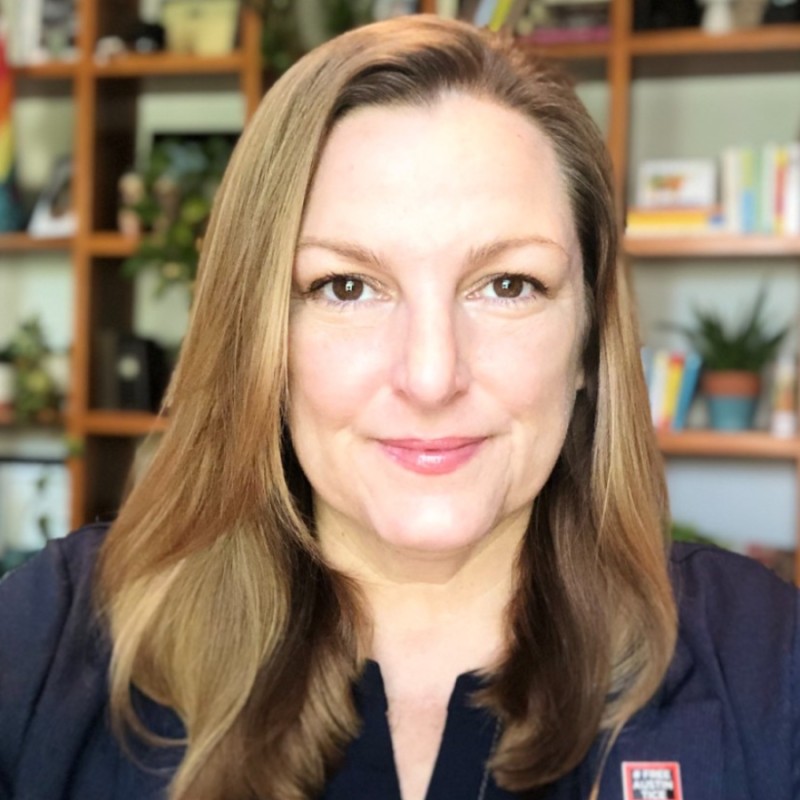
By Kris Seavers, Training Program Coordinator


For journalists, gaining sources’ trust — and using that trust to glean facts, discover new perspectives, and tell accurate stories — is a core component of the job. But how do sources who don’t often engage with news media know how and when they can trust reporters who approach them, often in times of crisis or with the expectation of an immediate response?


The Institute’s training program, “Source Power,” held virtually on Sept. 1, addressed this question and empowered members of the public across a broad range of sectors and backgrounds to share their stories with journalists.


In a survey that the Institute conducted ahead of the program, registrants reported their comfort level with speaking to journalists. The average comfort level was 3.4 out of 5, where 1 was not comfortable at all and 5 was very comfortable. In a survey conducted after the program, the average comfort level among participants rose to 4.5 out of 5.


Why lived experience matters in news media


The program came at a critical time for journalism, as trust in journalists is waning. A 2025 Pew Research Center survey found only 56% of U.S. adults have a lot of or some trust in the information they get from national news. In a 2024 survey from the News Literacy Project, 84% of teens described news media as “biased,” “boring,” or “bad.”


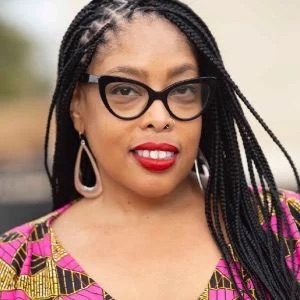
Sherri Williams, an associate professor and researcher of race, media, and communication at American University, told attendees of “Source Power” that the lack of trust may lead potential sources to feel reluctant to speak to journalists. But she emphasized that community members who have lived experience with issues in the media — from members of the LGBTQ community to faith leaders — contribute humanity to journalism. 

“You have valuable lived experience that is as equally worthy as an academic expert,” Williams said. “Lived experience experts open the door to hidden-in-plain-sight stories, interesting stories that give readers a glimpse into a world they would not ordinarily enter.” 


Williams, who worked as a reporter for The Associated Press, also described journalism as a record of history and noted that Civil Rights-era activists strategically shared information and soundbites with the news media to concisely convey movement leaders’ messages. 

How sources can feel empowered in interviews with journalists


To help members of the public who are less familiar with journalists understand how and why stories are reported, Beth Francesco, executive director of the Institute, explained news values including timeliness, impact, conflict, prominence, and novelty. 


“When a journalist asks you a question, they’re often trying to get several things at once: What happened? Why does it matter? What does this mean? What do we know — and what don’t we know?” Francesco said. “A strong source can change the direction of a story. You might tell a reporter something they hadn’t considered. You might connect them with another person. You might explain why assumptions about a situation are wrong.”

Acknowledging that speaking with a journalist for the first time can be intimidating and even carry risks, Francesco shared a checklist of questions potential sources can ask themselves before agreeing to an interview, including, “Who are you, and what outlet are you with? What is your story about? And, how will my comments and my name be used?” 


Francesco suggested laying ground rules and defining terms like “off the record” before agreeing to an interview. She also said it’s OK to set boundaries, such as declining to answer a question or to divulge certain personal details. Both Williams and Francesco noted that having a strategy before going into an interview can empower a source during the conversation.

“Source Power” attendees also saw lessons from the workshop come to life as volunteers acted out possible scenarios. The role-playing demonstrated how sources can slow reporters down during an interview and ask calmly for corrections after publication. 


“The next time a reporter calls, I hope your first reaction isn’t, “Oh no. What do they want?’” Francesco said. “Maybe it’s, ‘Let’s think. What are they trying to understand — and what do I need to know before I decide whether to help?’” 


Download a printable checklist of considerations for sources when speaking with journalists.

CAREER


Applying for a fellowship? Lead with the idea, not the project


“Sell the editor on the story idea first. If they want to publish it, it’s a no-brainer to back a fellowship that will help support the work and bring it to life. … And if an editor feels wishy-washy, either work with them to hone the idea into something they’re as excited as you about — or take it elsewhere. You’ll spare yourself a hassle in the long run by avoiding a publication that’s not 100% committed to showcasing your work.”


-- Anna Medaris and Jyoti S. Madhusoodanan, excerpt from “4 tips for getting an editor's letter of support for a fellowship” (Association of Health Care Journalists)


COMMUNITY

Rebecca Ellis of the Los Angeles Times honored with the Institute’s Sheehan Award for Investigative Journalism


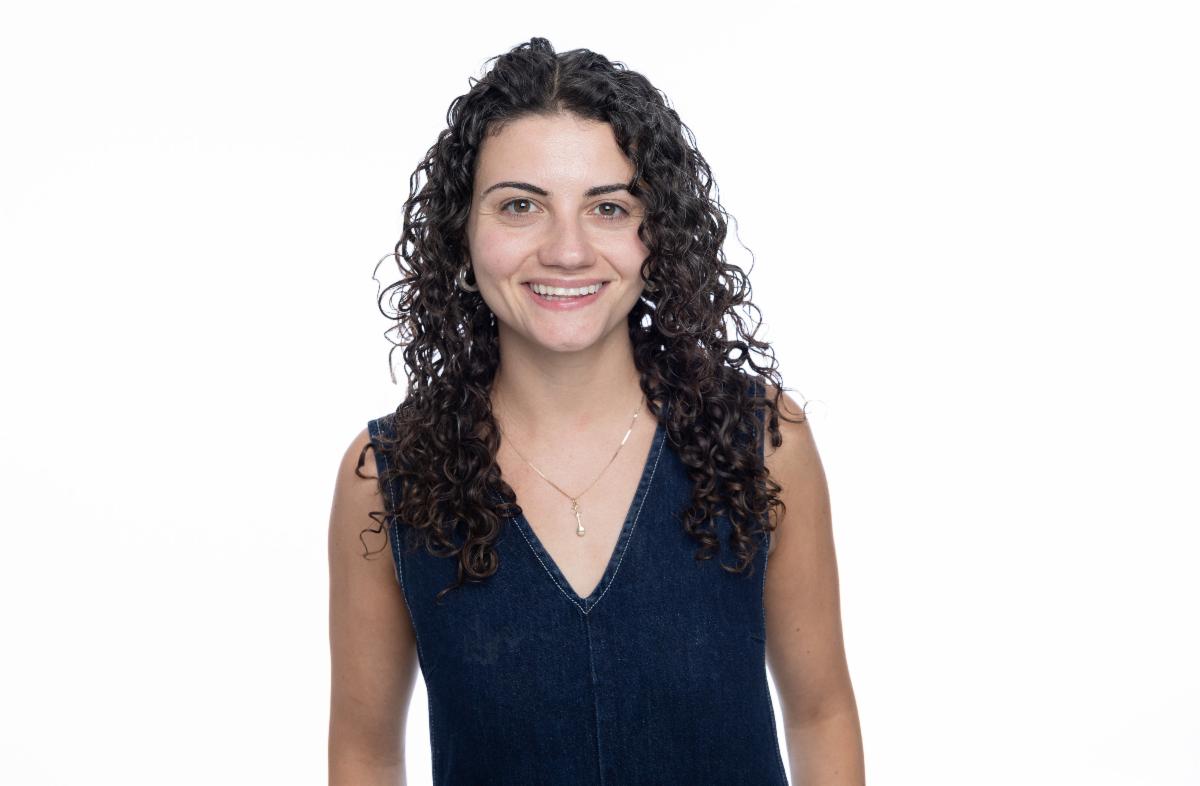
Rebecca Ellis, a Los Angeles Times staff writer whose work focuses on government accountability, investigations and legal affairs, will receive the National Press Club Journalism Institute’s 2026 Neil and Susan Sheehan Award for Investigative Journalism.

Ellis’s reporting uncovered evidence that people may have been recruited, and in some cases allegedly coached, to file sexual-abuse lawsuits they said were false, raising serious questions about the vetting of claims underlying the largest sex-abuse settlement in U.S. history. Her investigation has prompted a criminal fraud investigation, a State Bar probe, a new vetting process for thousands of sex abuse cases, and legislation to penalize unethical lawyers.

“Rebecca’s work took on an extraordinarily difficult and consequential subject, challenged assumptions surrounding a historic settlement and brought sustained scrutiny to a system with enormous implications for victims, institutions and the public,” said Mike Balsamo, president of the National Press Club Journalism Institute. “It is the kind of ambitious, deeply reported journalism that reminds us what investigative reporting can accomplish at its best.”


Each year, the Neil and Susan Sheehan Award for Investigative Journalism recognizes work that best reflects the Sheehans’ extraordinary commitment to the principle that a vibrant democracy depends on an informed citizenry and a free press. The award promotes the practice of investigative journalism exemplifying compassion, courage, and integrity.


The National Press Club and the Institute will confer the 2026 Sheehan Award, along with the John Aubuchon Press Freedom Awards, during its annual Fourth Estate Award Gala on Nov. 12 in Washington, D.C. Learn more.

Resources


This newsletter is written and edited by the National Press Club Journalism Institute staff. Send us your questions and suggestions for topics to cover.


Get this from a friend? Subscribe and view the archives.

Bluesky  Facebook  Linkedin  X  Youtube

DONATE TO THE INSTITUTE


The National Press Club Journalism Institute promotes First Amendment values by equipping journalists in Washington, D.C., and nationwide with the skills, knowledge, standards, resources and networks to empower and inform the public. As the non-profit affiliate of the National Press Club, the Institute powers journalism in the public interest. The Institute's tax ID number is 52-1750908.